
What if the secret to a factory-quality kitchen transformation isn’t the paint itself, but the air around it? Effective cabinet painting is 70% engineering and containment; without a negative-pressure HEPA system, achieving a professional finish without contaminating your home is nearly impossible. You likely worry about fine white dust settling inside your closets or chemical odors affecting your children and pets. This is a valid concern, as improper dust and fume control during cabinet painting can turn a simple upgrade into a multi-room cleaning nightmare.
We believe your kitchen should be treated like a laboratory-grade environment during the spray phase. You’ll learn the professional engineering and containment strategies used to keep your home clean and your family safe. We’ll explain how pros isolate HVAC systems and use off-site spraying for doors to minimize on-site fumes. This guide covers essential safety protocols, including adherence to the OSHA silica dust exposure limit of 50 micrograms per cubic meter. By the end, you’ll have the confidence to choose a contractor who prioritizes your indoor air quality as much as the final finish.
Key Takeaways
- Understand how identifying pollutants like fine particulate wood dust and VOCs is the first step in protecting your home’s air quality.
- Discover why floor-to-ceiling barrier systems and HVAC isolation are mandatory to prevent dust migration into living areas and furniture.
- Learn the technical role of negative air pressure and HEPA scrubbers in maintaining dust and fume control during cabinet painting.
- Identify how dustless sanding equipment and off-site spraying of doors minimize the chemical footprint within your kitchen.
- Obtain a list of specific equipment requirements and climate-related questions to ask any contractor before they begin your cabinet transformation.
The Impact of Dust and Fumes on Your Home and Cabinet Finish
Professional cabinet painting projects introduce two primary environmental hazards: fine particulate wood dust and Volatile Organic Compounds (VOCs). Wood dust is generated during the aggressive sanding phase required for proper adhesion. It’s fine enough to bypass standard household filters and settle into upholstery, electronics, or ductwork. VOCs are chemical vapors released as high-performance industrial coatings cure. Without rigorous dust and fume control during cabinet painting, these pollutants permeate your living space and create a mess that lingers for weeks.
Standard residential cleaning tools aren’t built for this level of debris. Traditional vacuuming is insufficient for capturing 0.3-micron paint particles. These microscopic solids are often redistributed into the air by vacuum exhaust fans, making the problem worse. Professional refinishing requires specialized HEPA-integrated systems designed to trap these particles at the source before they can travel through your home.
To better understand the mechanics of managing airflow during a project, watch this helpful video:
The Aesthetic Cost of Poor Containment
Airborne dust acts like a magnet to wet paint. When a technician sprays a topcoat, the static charge and wet surface attract floating debris. These particles create “dust nibs,” which are permanent textures embedded in the final finish. A professional spray finish should feel factory-smooth. If air scrubbing isn’t prioritized before the first coat, your cabinets might end up with a gritty texture that mimics a low-quality “hand-painted” look. Achieving a laboratory-grade environment is the only way to ensure the topcoat remains pristine, a standard upheld by professional teams like Platinum Painting & Coatings Inc. that specialize in high-quality interior and exterior finishes.
Health and Safety Considerations
Protecting your family requires more than just basic plastic sheets. High-durability cabinet coatings contain chemicals that can trigger respiratory sensitivities in children, the elderly, or pets. While masking tape and plastic sheets are the first line of defense, they don’t stop gas-phase chemicals from migrating through small gaps. Effective dust and fume control during cabinet painting involves EPA-rated filtration and negative air pressure. These systems ensure hazardous vapors are pulled out of the work zone and exhausted outside. It’s a procedural requirement for any contractor who values occupant safety as much as the aesthetic outcome. Beyond home safety, you can discover New Horizons Denver for primary care services that support your family’s overall well-being.
Advanced Dust Containment: Creating a Sealed Work Zone
Effective dust and fume control during cabinet painting requires more than hanging a few sheets of plastic. It involves building a pressurized, laboratory-grade environment that isolates the work area from the rest of your living space. Traditional masking focuses on protecting the floor, but engineered containment prevents microscopic airborne particles from migrating into adjacent rooms. This proactive approach is the only way to avoid the health risks of VOCs and the nuisance of fine white dust settling on your furniture.
Engineered Barrier Systems
Professional technicians use tension-pole systems to create floor-to-ceiling barriers. Unlike DIY methods that rely on blue tape and thin drop cloths, these systems maintain a constant, structural seal against the ceiling and walls. Industry standards require 6-mil plastic sheeting for these zones. This thickness is durable enough to withstand the air pressure generated by high-powered exhaust fans without tearing. Every gap at the crown molding and baseboards must be sealed with professional-grade masking to ensure no dust escapes through the perimeter. This level of detail is a standard requirement for any high-quality kitchen cabinet painting project.
Sealing HVAC vents and return air ducts is a critical procedural step. If these vents remain open, the home’s furnace or air conditioning fan can pull paint dust into the entire ventilation system, distributing it to every bedroom in the house. To maintain the seal while allowing technician access, we install heavy-duty zipper-entry systems. These allow painters to enter and exit the kitchen without compromising the containment zone. Additionally, tacky mats are placed at every entry point to pull dust from work boots. This prevents technicians from tracking sanding debris onto your carpets or hardwood floors.
Protecting the Unpainted Surfaces
Countertops, appliances, and backsplashes require specialized protection. We use high-performance floor protection materials that are impact-resistant to guard against dropped tools. If the interiors of the cabinet boxes aren’t being painted, they are individually sealed to prevent overspray from entering your storage areas. In dry climates like Denver, managing static electricity is vital. Low humidity can cause dust to cling to plastic barriers and then release onto the wet paint during the final coat. We utilize anti-static techniques and grounding to keep the environment stable. This meticulous preparation ensures your home remains clean while your cabinets receive a factory-smooth finish.
Fume Mitigation and Air Quality Management Strategies
While physical barriers stop solid particles, managing chemical vapors requires active mechanical ventilation. Effective dust and fume control during cabinet painting involves manipulating airflow to ensure contaminants are captured or exhausted before they can migrate. This process relies on high-volume industrial equipment rather than standard residential fans. Professionals utilize a combination of negative pressure and HEPA filtration to maintain a safe environment for both the technicians and your family.
Negative Pressure Explained
Negative air pressure is the primary method used by professionals to ensure fumes move out of the house rather than into living quarters. To achieve this, high-velocity blowers are positioned to exhaust air directly outside, typically through a window or door. This creates a vacuum effect within the sealed kitchen zone. Because the pressure inside the kitchen is lower than in the rest of the house, air only flows into the work area, never out of it. Technicians monitor this airflow throughout the project to ensure the containment seal remains intact during active spraying.
HEPA Filtration Standards
Managing the air quality inside the containment zone requires industrial-grade air scrubbers. These machines are designed to circulate and clean the air 6-10 times per hour. Standard furnace filters are inadequate for this task. They don’t have the density required to stop the microscopic particulates generated during a spray application. Professionals utilize HEPA filters with a 99.97% efficiency rating, meaning they capture particles as small as 0.3 microns. Following EPA’s best practices for indoor air quality, these systems often include secondary activated carbon filters. These carbon stages are essential for absorbing the gas-phase chemical odors and VOCs that traditional filters miss.
Safety is a procedural priority when working with flammable materials. If solvent-based coatings are utilized, technicians employ explosion-proof fans to prevent electrical sparks from igniting concentrated vapors. However, many modern professionals are transitioning toward high-performance waterborne coatings. These materials offer industrial durability with significantly lower initial odors and VOC levels. By combining these advanced materials with off-site spraying for doors and drawers, the chemical footprint inside your home is reduced to the absolute minimum. This multi-layered strategy ensures that the air in your home remains breathable while your cabinets receive a factory-smooth finish.

The Professional Process: Preparation, Spraying, and Cleanup
The transition from setting up containment to active execution requires specialized equipment designed for source-level capture. Effective dust and fume control during cabinet painting is most successful when pollutants are handled at the moment of creation. This phase moves beyond passive barriers into active, tool-based mitigation to ensure your home remains habitable throughout the project duration.
Dustless Sanding Technology
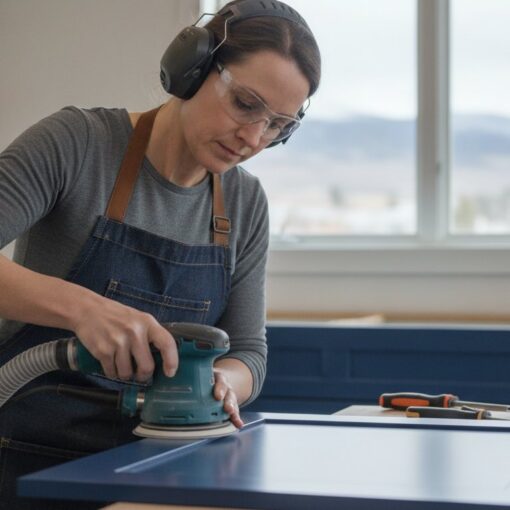
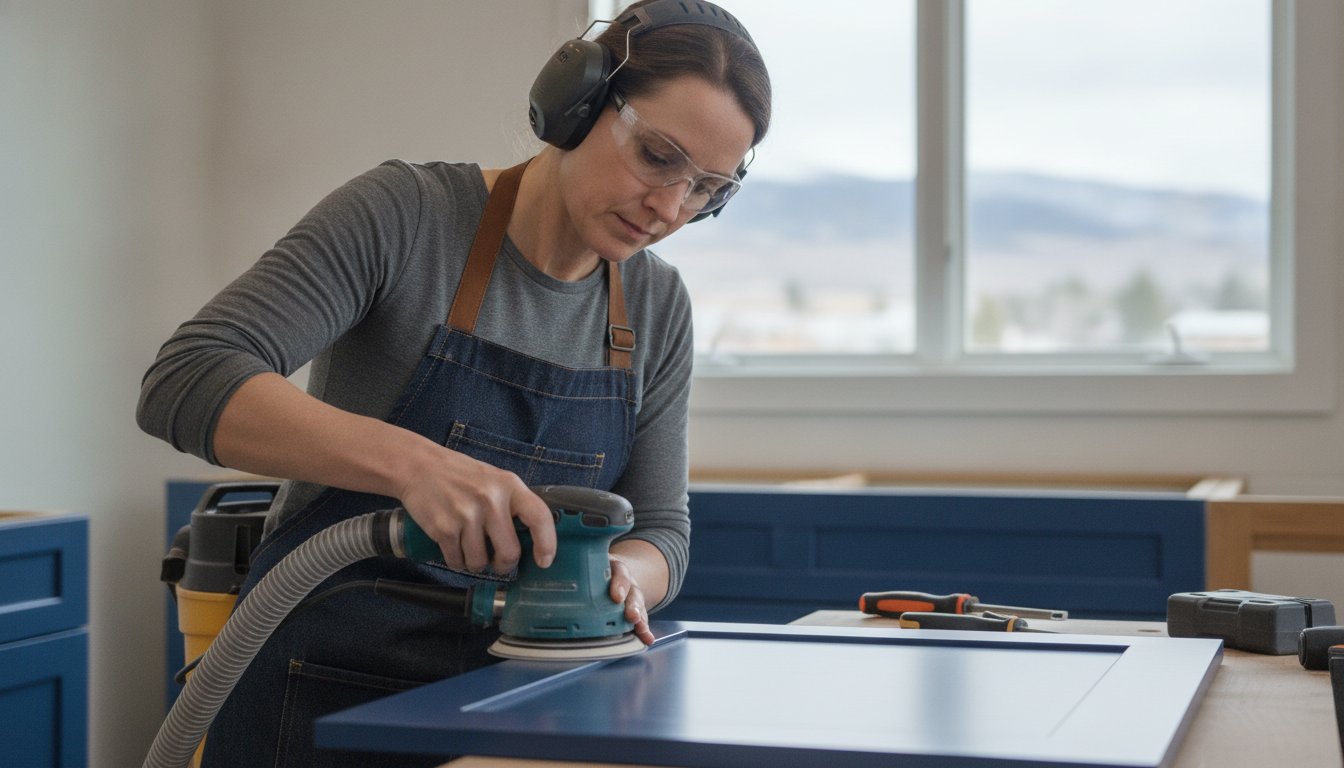
Professional technicians utilize vacuum-attached sanders that capture 90% or more of dust at the point of creation. Unlike traditional sanding, which relies on manual wiping and sweeping, these HEPA-integrated systems pull particulates directly into a sealed canister via vacuum-shrouded heads. This technology is critical for high-quality cabinet refinishing, as it ensures the substrate remains free of debris before the first primer coat. By reducing the volume of airborne particles, we minimize the risk of surface contamination and decrease the time required for manual cleaning between coats. This efficiency allows the project to proceed without the “dust clouds” associated with standard remodeling.
Off-Site vs. On-Site Spraying
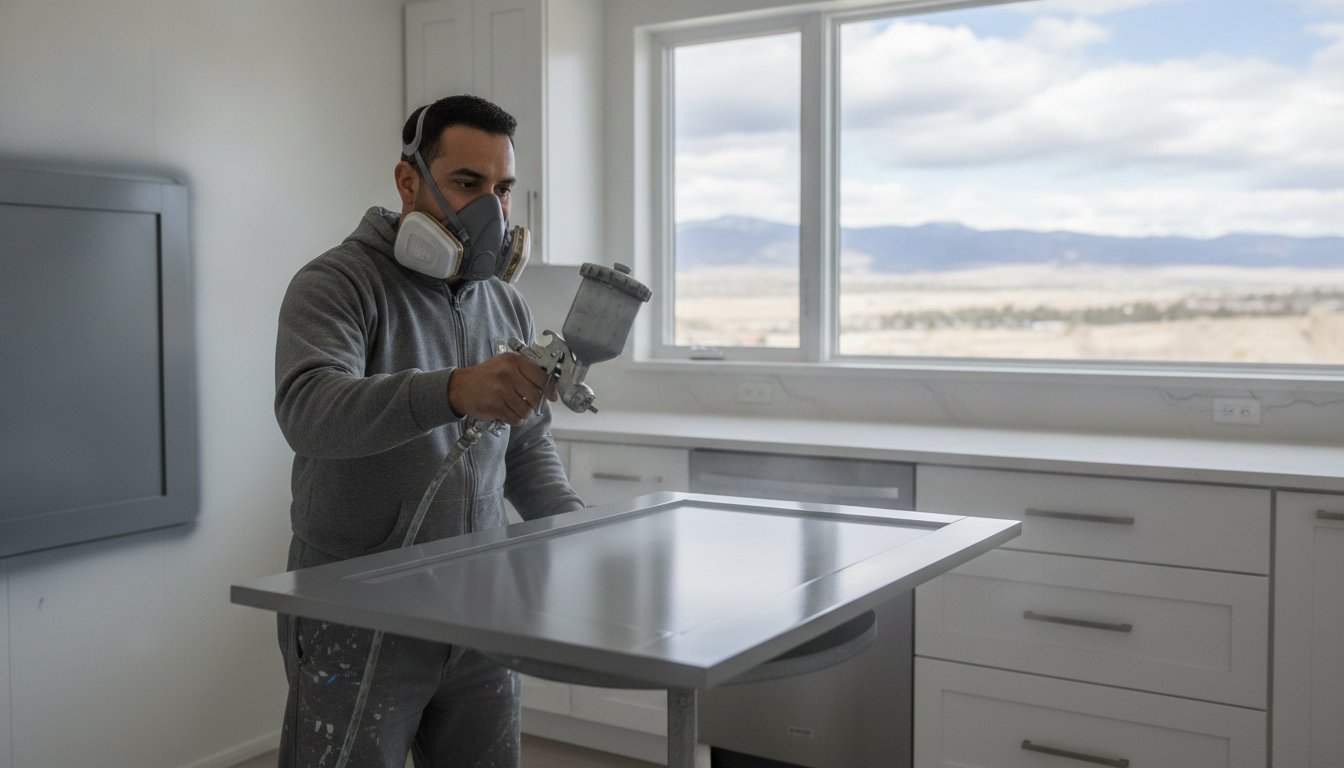
A significant portion of the work occurs outside the home to prioritize safety and air quality. Moving removable parts like doors and drawers to a dedicated shop reduces on-site fume duration by 70%. This logistical advantage allows for the controlled environment required for a flawless finish, free from common household contaminants like pet hair or lint. The remaining on-site frame painting is managed with the precision containment and air scrubbing systems previously described. This split process ensures industrial-grade results while keeping the chemical footprint in your kitchen to an absolute minimum.
Before the final clear coat is applied, technicians perform a rigorous inspection protocol. We search for micro-dust and “nibs” using high-intensity lighting that reveals surface imperfections invisible to the naked eye. Any issues are addressed immediately to maintain the factory-smooth standard. Once the project is complete, the removal of containment materials follows a strict procedural sequence. All plastic, tape, and floor protection are carefully folded inward to trap any settled dust. The professional standard involves returning a kitchen to the client in a move-in ready state, with all surfaces wiped down and the air scrubbed of remaining particulate.
If you are ready for a clean kitchen transformation, contact us to schedule your kitchen cabinet painting project today.
Choosing a Dust-Free Cabinet Painting Partner in Denver
Selecting the right contractor in the Denver metro area involves more than comparing labor costs. It requires a technical evaluation of their dust and fume control during cabinet painting. Because our regional climate presents specific environmental challenges, a one size fits all approach to containment often fails. You need a partner who understands the physics of airflow and the chemistry of modern coatings to ensure a safe, high-quality outcome.
The Denver Environmental Factor
Denver’s mile-high altitude and semi-arid climate create unique variables for interior refinishing. Low humidity levels cause high-performance coatings to dry much faster than in coastal regions. This rapid evaporation can lead to surface “skinning” or “orange peel” textures if airflow isn’t managed with precision. Additionally, dry air significantly increases static electricity. Static charges cause microscopic dust particles to cling aggressively to freshly sanded wood or plastic barriers. We counteract this by utilizing anti-static wipes and maintaining specific environmental controls within the containment zone to ensure the topcoat remains pristine.
Local regulations in Denver neighborhoods also dictate how VOC-laden air is managed. Exhausting unfiltered fumes directly into a neighbor’s yard is unprofessional and may violate local nuisance ordinances. A professional cabinet painting company utilizes multi-stage carbon filtration to neutralize odors before they exit the home. This procedural step protects your external environment as much as your internal living space.
Vetting Your Contractor’s Setup
Identifying a qualified contractor starts with asking the right technical questions. A major red flag is any contractor who relies solely on “fans in windows” without industrial HEPA air scrubbers. This setup often fails to create true negative pressure and can actually pull dust back into the home through small gaps in the masking. When interviewing companies, ask for photos of their previous containment setups. Look for structural tension poles and 6-mil plastic sheeting rather than loose drop cloths taped to the ceiling. Professional teams should be able to specify the brand of HEPA equipment they use and how many air changes per hour their system provides.
Safety certifications and insurance are non-negotiable. Verify that the company carries specific coverage for interior spray work and professional refinishing. These policies are distinct from standard “brush and roller” insurance. A team that invests in high-end dust and fume control during cabinet painting demonstrates a commitment to both their workers and your property. If you are ready to upgrade your kitchen with a team that treats your home like a laboratory, get a free quote from us today. We prioritize your air quality and the longevity of your finish at every stage of the process.
Secure Your Home’s Air Quality During Your Cabinet Transformation
Achieving a factory-smooth finish shouldn’t compromise your family’s health or leave your home covered in fine white dust. You now understand that professional dust and fume control during cabinet painting relies on engineered negative air pressure and HEPA-filtered containment. By isolating the work zone and utilizing off-site spraying for doors, the chemical footprint in your kitchen is minimized. These procedural requirements ensure that odors and particulates are managed at the source rather than being distributed through your HVAC system.
Every project requires specific adjustments for the Denver climate to manage static dust and rapid drying times. As local experts since 2026, we prioritize technical precision on every project. We utilize high-performance equipment to provide a factory-quality finish with a zero-mess guarantee. Don’t settle for contractors who rely on open windows and standard fans. Take the next step toward a cleaner, safer kitchen renovation today.
Request Your Professional Cabinet Painting Estimate in Denver
Frequently Asked Questions
Will the smell of paint linger in my house after the cabinets are finished?
Odors typically dissipate within 24 to 48 hours after the final coat is applied. Our use of HEPA air scrubbers with activated carbon filters actively removes chemical vapors from the air during the curing process. Since we spray doors and drawers at our off-site shop, the volume of wet paint in your home is significantly reduced. This strategy ensures the lingering smell is minimal compared to traditional on-site methods.
Do I need to empty my kitchen cabinets before they are painted?
Yes, you must completely empty your kitchen cabinets before the project begins. This allows technicians to clean, sand, and spray the frames without obstruction. It also ensures your dishes and cookware remain free from microscopic wood dust. We provide a laboratory-grade environment, but removing all items is the only way to guarantee a comprehensive finish on the interior edges of the frames.
Can I stay in my home while the kitchen cabinets are being sprayed?
You can stay in your home, but the kitchen will be inaccessible during the active spray phase. We establish rigorous dust and fume control during cabinet painting by using floor-to-ceiling plastic barriers and negative air pressure. These systems pull air out of the kitchen and exhaust it outside. This prevents fumes from migrating into other rooms, allowing your family to remain in the house safely.
How long does the containment system stay set up in my kitchen?
The containment system typically remains in place for three to five business days. This timeframe covers the entire on-site process, including cleaning, sanding, priming, and applying the final topcoats. We don’t dismantle the barriers until the coatings are fully dry to the touch. This protocol prevents household dust from landing on the wet finish and ensures the air is completely scrubbed before we leave.
Is the dust from cabinet sanding dangerous for my pets?
Wood dust and fine paint particulates can irritate a pet’s respiratory system, which is why we use HEPA-integrated vacuum sanders. These tools capture debris at the source before it becomes airborne. While our containment is highly effective, we recommend keeping pets in a different area of the home. This provides an extra layer of safety and prevents them from accidentally disturbing the plastic barriers.
What happens if dust gets into my HVAC system during the project?
Our protocol prevents dust from entering your HVAC system by sealing every vent and return air duct in the kitchen with specialized masking. We also require the HVAC system to remain off during active sanding phases. This prevents the furnace fan from pulling particulates into the ductwork. By isolating the kitchen’s air supply, we ensure that the rest of your home remains clean.
Are the fumes from cabinet painting toxic or just smelly?
Concentrated vapors from industrial coatings can be harmful if they aren’t managed with proper dust and fume control during cabinet painting. While we prioritize low-VOC waterborne options, we use high-volume exhaust fans to create negative pressure. This ensures that chemical odors move outdoors immediately. This process protects your indoor air quality and adheres to professional safety standards for residential refinishing.
How do you ensure the spray paint doesn’t get on my floors or appliances?
We protect your home using a comprehensive masking strategy that includes impact-resistant floor boards and 6-mil plastic sheeting. Every appliance, countertop, and backsplash is completely encased and sealed with professional-grade tape. This creates a laboratory-grade environment where the spray is restricted only to the cabinet frames. Our technicians perform a final walk-through to ensure every non-painted surface is fully protected before the spray equipment is brought inside.