Freshly painted cabinets can look flawless the day the painter packs up and still disappoint two weeks later. Doors that stick shut, a permanent ring where a coffee mug sat, a corner that scuffs when a fingernail catches it. Those complaints almost always trace back to the same misunderstanding: the paint was dry, but it was not cured. In a low-humidity climate like Denver’s, that gap between dry and cured behaves a little differently than it does in a steamy summer elsewhere, and understanding the difference keeps you from undoing a finish you already paid for.
Dry and Cured Are Two Different Things
Drying is mostly water or solvent leaving the paint film. It happens fast, often within an hour or two. Curing is the slower part of the process, where the coating develops its full hardness, adhesion, and resistance to sticking (painters call that blocking) and to household chemicals. Cabinets can feel completely dry to the touch and still be soft enough to take a print from a plate or a mug.
That is why rushed or DIY cabinet paint jobs so often end with doors sticking shut or a ring that will not wipe away a week after painting. The film had lost its water, but it had not finished hardening. Nothing about the color was wrong. The timeline was.
What to Expect When Expecting Cabinet Paint Curing: A Timeline
The numbers below reflect typical cabinet paint behavior. Product type, sheen, color depth, film thickness, and the number of coats all shift the schedule, so treat this as a working range and confirm the details with the manufacturer’s data sheet for the specific paint on your cabinets.
| Stage | Typical timing | What is safe |
|---|---|---|
| Dry to the touch | 1 to 2 hours | Nothing. Leave doors and drawers alone. |
| Light handling | About 24 hours | Careful handling; doors can be moved if needed. |
| Careful use | 48 to 72 hours | Gentle use only. Dark colors tend to need longer. |
| Rehang and light use | 3 to 5 days | Doors and drawers can be rehung and used lightly. |
| Full cure | 2 to 4 weeks | Maximum hardness and chemical resistance. |
| Full durability | Around 30 days | Most cabinet paints reach their final performance. |
How Denver’s Low Humidity Changes the Conversation
Faster flash-off does not mean faster hardness
In dry air, water leaves a water-based coating quickly. The surface can feel ready in what seems like record time. That speed applies only to the drying half of the process. Curing is a chemical reaction that depends on the coating’s own formulation, not on how thirsty the surrounding air happens to be. A cabinet door in Denver can feel bone dry at hour two and still be days away from the hardness you expect to live with for the next decade.
Why a dry climate can still leave you with a soft finish
Because the film sets up quickly, it is easy to rehang doors, stack drawers, and reload shelves earlier than you should. The finish feels done. It is not. In lower humidity, the tackiness that would normally warn someone to back off may never show up at all, which removes the natural cue homeowners rely on in more humid regions. The result is a finish that gets handled hard while adhesion is still developing, and that is when scuffs, scratches, and print marks get locked in.
What low humidity does not fix
Humidity is one variable among several. Coats applied too thick, cool shop temperatures, and thin or skipped surface prep can all slow or weaken curing no matter how dry the air is. Color depth matters too. Dark pigments typically call for extra patience before a door is handled normally.
Cure Times by Paint Type
Water-based and oil-based cabinet coatings cure on very different clocks, which is why two neighbors with similar kitchens can be told two different timelines.
- Water-based cabinet paint: full cure commonly runs about 21 to 30 days, with up to 30 days for maximum hardness.
- Oil-based cabinet paint: full cure typically falls in the 7 to 14 day range.
Ask which category your paint falls into before you plan a dinner party around it. The recoat window, meaning how long to wait before a second coat, is a separate number published by the manufacturer and should be followed exactly rather than guessed.
What the First 30 Days Should Look Like
- Days 1 and 2: hands off. No doors, no drawers, no wiping, even if the paint feels dry.
- Days 2 through 5: rehang doors and drawers once your painter confirms the film is ready. Open and close them gently, and use the handle rather than swinging the door from the edge.
- Week 1: keep use light. Slide dishes rather than dragging them, and avoid setting heavy items down hard on painted shelf surfaces.
- Weeks 2 through 4: normal use returns gradually. Keep standing water away from door bottoms and edges, where moisture lingers longest.
- Day 30 and beyond: clean with a soft cloth and a mild solution rather than an abrasive or solvent-heavy cleaner.
The Damage That Shows Up When Curing Is Rushed
Most post-project complaints are not about color. They are about a finish that failed under normal life because it was used too hard too soon. The recurring offenders are doors that stick shut, permanent rings left by a mug or a wet glass, and scuffs that appear the first week from everyday contact. Each of those is a symptom of a coating that was dry to the touch and still chemically unfinished.
Traditional refinishing methods can leave cabinets vulnerable for days or even weeks while the film cures, which is exactly the window where carelessness does the most damage. The risk is not that the paint will look wet. It is that it will look perfect and behave soft.
How to Tell the Finish Has Actually Cured
Time is the only reliable measure, and it starts from the final coat, not from the day the doors came off the hinges. Look for consistent hardness across every surface rather than one spot that feels ready. If a door still shows a print from a warm mug or sticks slightly at the edge, treat it as uncured and give it more time.
Your painter should be able to name the product used and the cure window its manufacturer specifies. That answer, not the calendar on your wall, sets the schedule. When in doubt, wait longer. Extra patience costs nothing, while a scratched door costs a repaint.
Why a Sprayed Finish Cures More Evenly
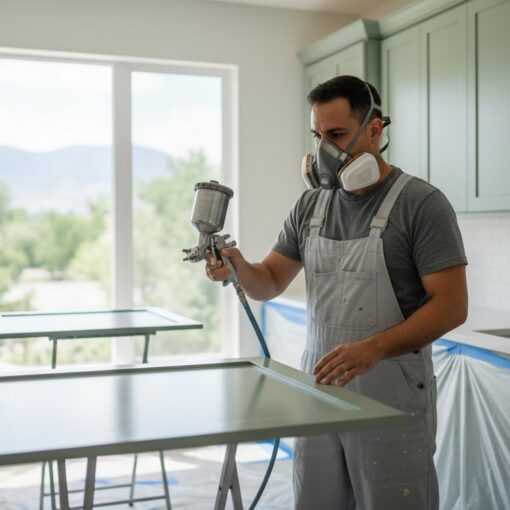
Thin, even coats cure more predictably than thick ones, and that is where application method matters. An HVLP sprayed finish lays down a uniform film across doors, drawer fronts, and frames, so no single area is left holding a heavy, slow-curing puddle of paint. Even film thickness means even hardness, which is what you actually see when you open a cabinet a month later. A professional job also comes with someone accountable for the cure window, which matters in a climate where the surface dries fast enough to fool you.
Frequently Asked Questions
How long does cabinet paint take to cure?
Cabinet paint is typically dry to the touch in one to two hours and safe for light handling within about 24 hours. Doors and drawers can usually be rehung and used lightly within three to five days. Full cure, the point of maximum hardness and chemical resistance, generally takes two to four weeks, and most cabinet paints reach full durability around 30 days.
Is it safe to use my kitchen cabinets after 24 hours?
At roughly 24 hours the finish is ready for careful handling, and doors can be moved if needed. That is not the same as normal daily use. Keep loads light, lift rather than drag items, and avoid setting wet or heavy objects on painted surfaces. Waiting until the three to five day mark for regular opening and closing is the safer choice.
Does Denver’s low humidity make cabinet paint cure faster?
Low humidity speeds up drying, not curing. Water leaves the film quickly, so the surface feels ready sooner than it would in a humid climate. Curing is a chemical process tied to the coating’s formulation, so the full hardness window of two to four weeks remains the same. The dry air simply hides how soft the finish still is.
Do water-based and oil-based cabinet paints cure at different speeds?
Yes, and the gap is significant. Water-based cabinet paints typically need about 21 to 30 days to reach maximum hardness, with up to 30 days for full durability. Oil-based cabinet paints usually cure faster, in the range of 7 to 14 days. Your painter should confirm which product was used on your cabinets.
What happens if I load my cabinets too soon?
The finish may look perfect and behave soft. Common results include doors that stick shut, permanent rings from mugs or wet glasses, and scuffs from ordinary contact during the first week. All of these trace back to handling a coating that was dry but not yet cured, and most require sanding and repainting to correct.