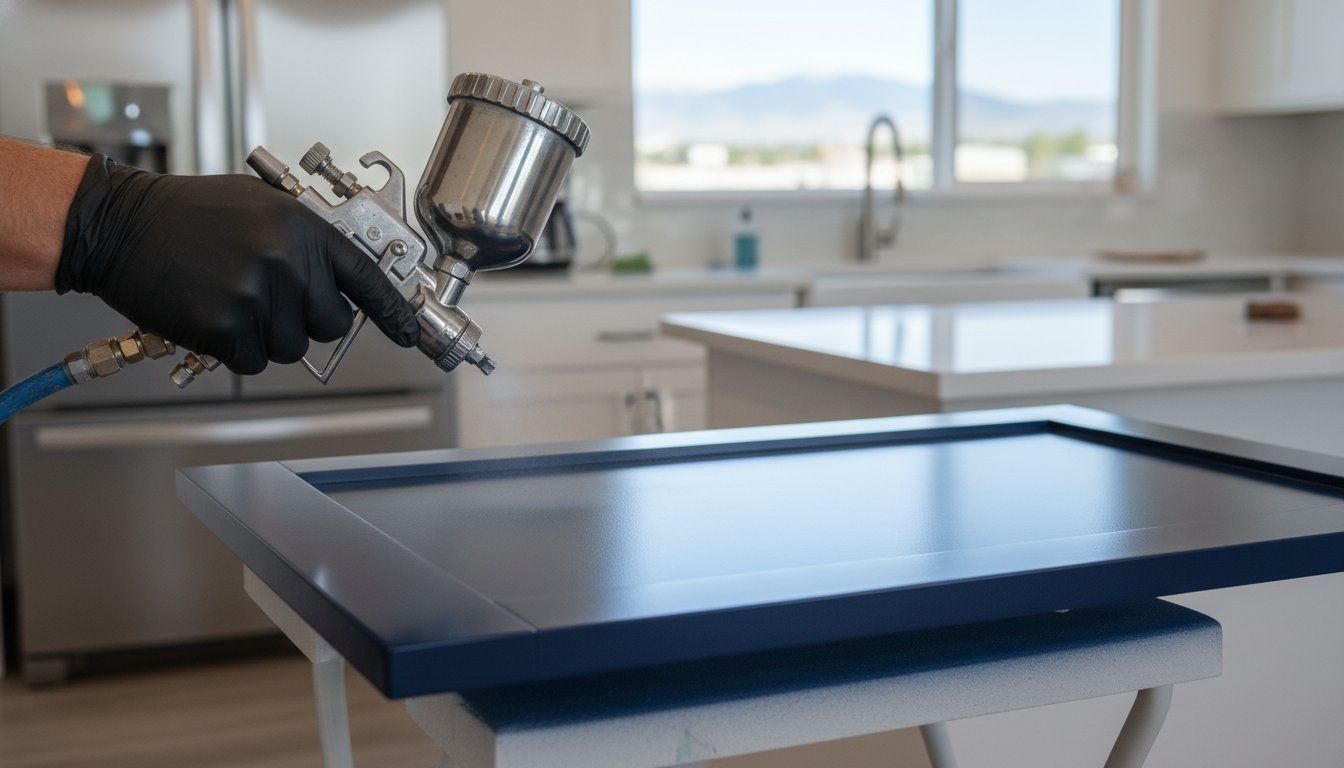

Winter in Denver has a way of pausing home improvement. Windows stay shut, the furnace runs constantly, and anything that needs ventilation or warm outdoor air gets pushed to spring. Cabinet painting is one of the few kitchen upgrades that does not have to wait, because the work happens inside your home rather than on your siding or deck. The catch is that winter introduces its own conditions, and knowing what those are before the first coat goes on is how you avoid disappointment in March.
Here is what a winter cabinet painting project actually looks like from the homeowner’s side of the kitchen, from the estimate through the final walkthrough.
Cold weather affects an indoor cabinet project far less than you would think
Cabinet refinishing happens entirely indoors. That single fact removes most of the weather risk that drives people to wait for spring. Rain, snow, and freezing temperatures outside do not touch doors that are being sprayed and dried inside a heated home. In many cases, winter’s lower humidity levels can actually improve results, because there is less ambient moisture competing with the coating as it cures.
The part that does matter is the condition of the space you are painting in, not the forecast. Some furnaces can absorb moisture from the air, and cabinets can crack if the surface is not completely dry before coating. In exceedingly cold weather, drying slows down. Paint that would normally set in a predictable window can stay soft longer, which means longer waits before doors go back on their hinges.
Cold storage and a cold house are two different problems. Cabinets sitting in an unheated garage over the winter are a genuine concern. Cabinets inside a home kept at a normal, livable temperature are not.
What the project timeline usually looks like
Most cabinet painting projects take between one and two weeks, depending on the size of your kitchen and the level of detail involved. A small galley with flat-front doors moves faster than a large kitchen with raised panels, glazing, and dozens of drawer fronts.
That stretch of time is rarely spent spraying. It breaks down into work you will notice and work you will not:
- An on-site consultation and estimate, where door style, finish condition, and color direction get sorted out.
- Cleaning and degreasing every surface that will be coated.
- Sanding, filling dents, and caulking seams where needed.
- Removing doors, drawer fronts, and hardware, then labeling everything so it returns to the right spot.
- Masking the cabinet boxes, walls, counters, and appliances.
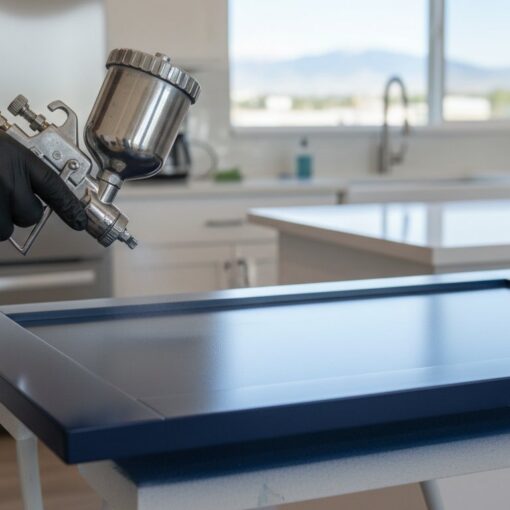
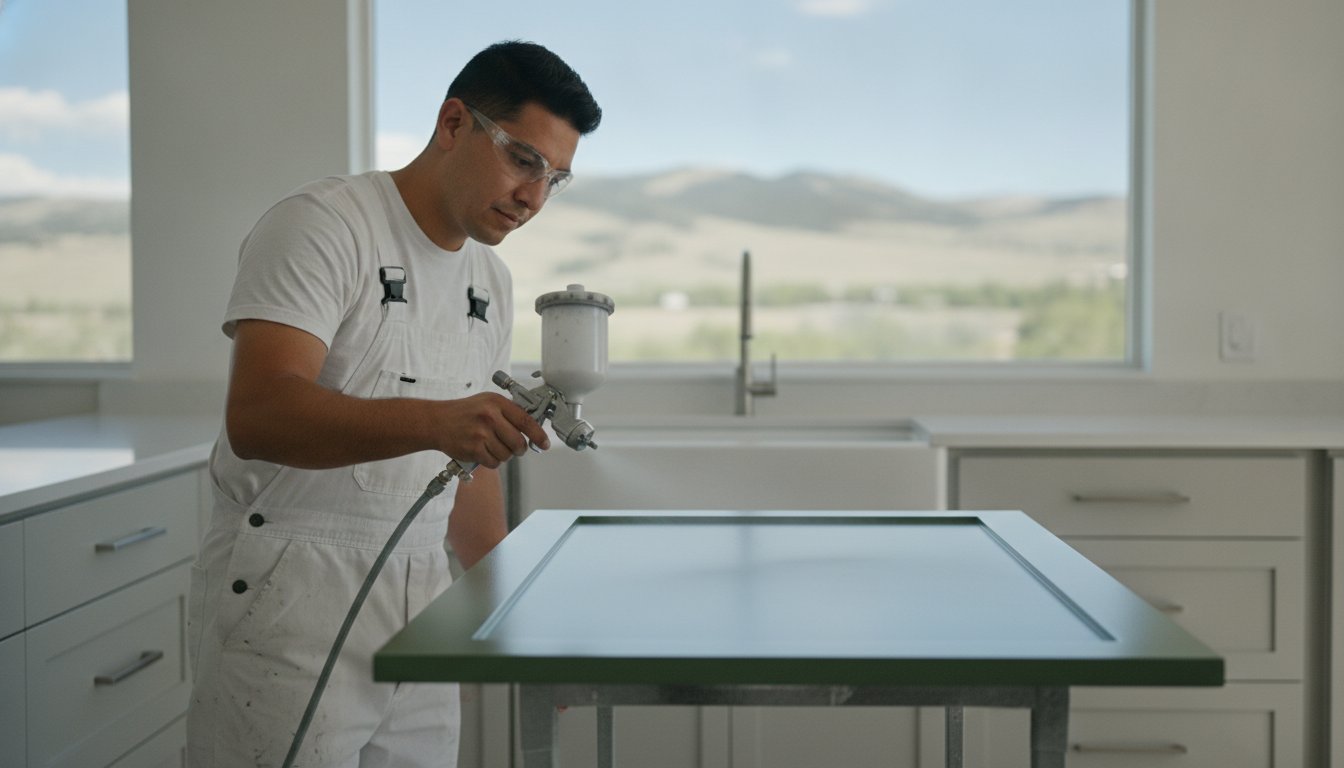
- Spraying multiple thin coats with proper dry time between each one.
- Curing before reassembly, then rehanging doors and reinstalling hardware.
Ask your contractor upfront how many coats are included, where the doors will be sprayed, and how long the finish needs before doors go back on. Those three answers tell you more about the schedule than any single number.
Prep work is the part that decides how long the finish lasts
A smooth and clean surface gives paint the best chance to dry evenly, grip tightly, and last longer through steamy bathrooms or busy kitchens. That is true in every season, and it is especially true in a kitchen that has been cooking holiday meals for weeks.
Kitchen grease is the quiet enemy of a cabinet finish. Cooking residue settles on doors and frames in a film you cannot always see, and paint applied over that film can fail early. Degreasing before any sanding is standard practice, and it is one of the main places a rushed job shows itself months later.
Winter adds a second prep consideration: the longer your kitchen sits partially disassembled, the more you are living around the project. If you host through the holidays, schedule the work for a stretch when cooking demands are lower, or plan for takeout and the microwave.
Temperature and airflow inside your home during the project
You do not control the Denver forecast, but you do control the environment your cabinets cure in. Keep the house at a consistent, livable temperature for the full duration of the project, including overnight. Turning the heat down to save money on the nights the doors are drying is one of the most common winter mistakes, because it slows the cure and can leave a softer finish.
Ventilation is the balancing act. You want air movement without freezing the room the paint is drying in. Running the range hood, keeping interior doors open for circulation, and letting your contractor manage masking and containment are all reasonable. Ask what they need from you before day one rather than guessing.
The surface has to be utterly dry before coating. In an exceedingly cold stretch, drying happens more slowly, so patience between coats is not wasted time. It is the difference between a finish that cures hard and one that stays tacky.
Denver’s dry winter air and what it can do to wood doors
Dry indoor air is a real winter factor for wood, and it is worth understanding before you blame the paint. When you paint a real wood door, the paint hardens into a shell. Wood underneath continues to move with changes in humidity. When that happens, the paint can develop visible lines or cracks at the seams of the panel.
Most people will not have this problem, and the issue that may appear during winter months is generally not an issue once warmer and more humid air returns. It is also far more common on certain door constructions than on others, and it shows up at seams rather than across flat faces.
What this means practically is that prep, priming, and proper film build matter more on paneled wood doors than on flat ones. If your kitchen has classic five-piece doors, ask your contractor how they handle seams and whether a filler or flexible caulk is part of the process.
Living in your kitchen while the work is happening
Expect your kitchen to be partly unusable for the bulk of the project. Doors and drawer fronts come off, and they have to go somewhere to dry. That means boxed-up contents, crowded counters, and a stretch of meals that do not involve the stove.
A few things make the days easier:
- Clear cabinets before the crew arrives, not the morning of.
- Move anything breakable off counters and out of the work zone.
- Plan simple meals or budget for takeout during the spray and cure days.
- Keep kids and pets away from drying doors, which are often leaning in a garage or spare room.
- Ask where the doors will be staged so you know which rooms to avoid.
Sink and appliance access usually returns before the doors do, so the disruption is front-loaded rather than evenly spread across the two weeks.
What a finished winter cabinet painting project should look like
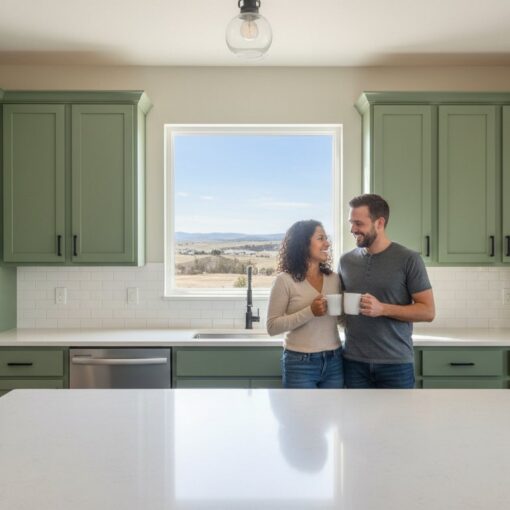
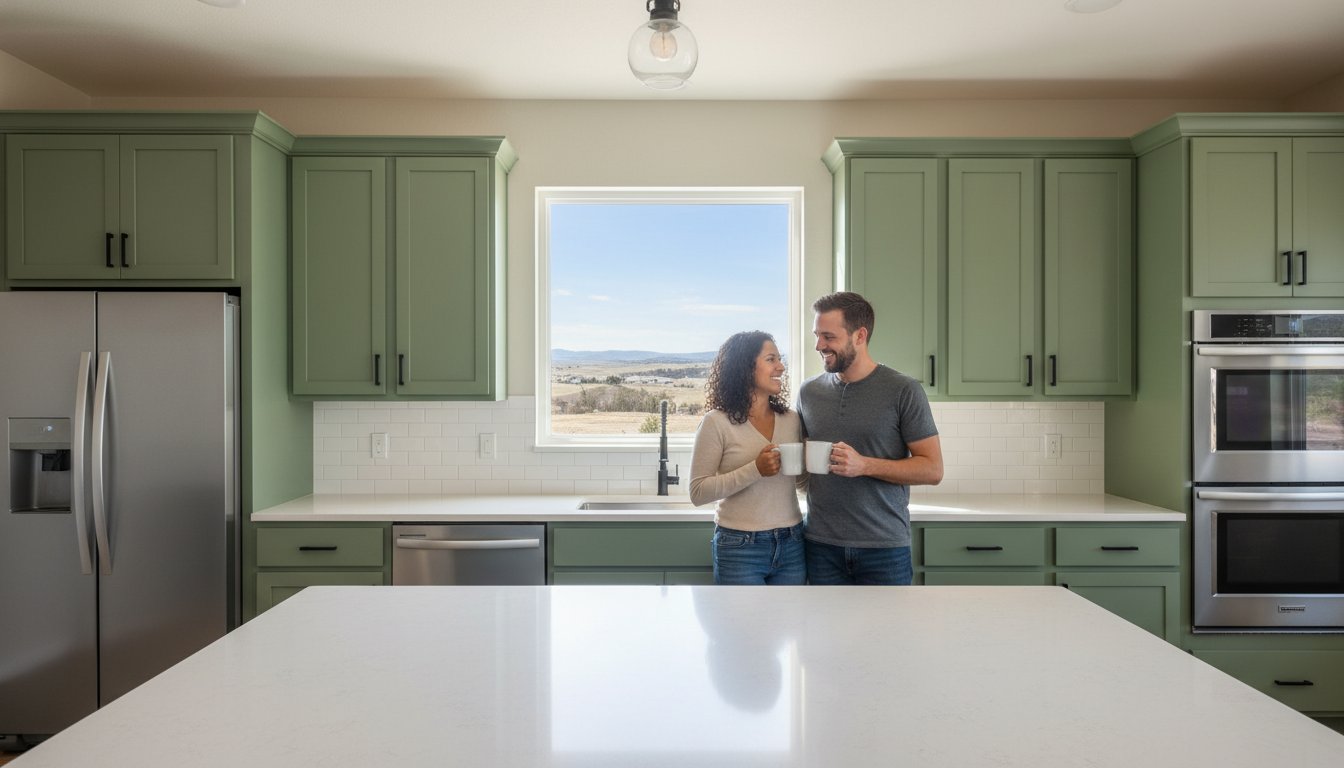
When the job is done, the finish should look like it came from a factory, not a brush. A sprayed finish applied in a controlled indoor environment is what makes that possible, and it is why winter is not a compromise season for cabinets.
Walk the kitchen and check these before you sign off:
- Consistent sheen across doors, drawer fronts, and visible cabinet boxes.
- No drips, runs, or heavy spots in corners and recessed panels.
- Coverage inside the frame where the doors meet, not just on the faces.
- Doors hung straight, sitting flush, and closing the way they did before.
- Hardware reinstalled evenly and with no paint-filled screw holes.
Cabinet Painting Denver delivers a factory-grade sprayed finish backed by a three-year workmanship warranty, which gives you a defined window to raise anything that looks off after the project. Note that the finish keeps curing after the crew leaves, so avoid aggressive cleaning products on new cabinets for the first stretch and ask what the recommended cure time is for your specific coating.
Why winter can be a smart time for this project in Denver
Two things converge in winter for Denver homeowners. Contractors are often less booked than they are in spring and summer, and the work itself is not weather dependent because it happens indoors. If you are planning to sell in spring, having the kitchen done by late winter means photos and showings land on a finished room rather than a work in progress.
Refinishing is also positioned as a lower-cost alternative to replacing cabinets, and the value story is part of why homeowners take it on. Figures published by Cabinet Painting Denver cite roughly $12,400 in added home value with a return in the range of 85 to 95 percent, which is a stronger return than a full tear-out and replacement typically delivers. Compare that against the cost of new cabinetry and the decision usually gets easier.
Questions to ask before you book a winter slot
A short conversation before the estimate turns into a contract will tell you whether a contractor actually understands winter conditions or is just repeating a summer script.
- How do you keep the workspace warm enough for proper curing?
- How many coats are included, and what product line do you spray?
- Where do doors and drawer fronts dry between coats?
- How long after the final coat before doors go back on?
- What does your warranty cover, and for how long?
- How do you handle panel seams on wood doors in dry winter air?
If the answers are vague, keep looking. The project takes one to two weeks either way, and the difference between a finish that holds up and one that does not is almost entirely in the prep and the environment.
Frequently Asked Questions
Can kitchen cabinets be painted in winter in Denver?
Yes. Cabinet refinishing happens entirely indoors, so outside weather does not affect the work, and winter’s lower humidity levels can actually improve results. The main requirement is that your home stays at a consistent, livable temperature while the finish dries and cures. Cold storage is a different situation, but cabinets inside a heated home are fine.
How long does a winter cabinet painting project take?
Most cabinet painting projects take between one and two weeks, depending on the size of your kitchen and the level of detail involved. Larger kitchens, paneled doors, and glazing or two-tone finishes take longer. In exceedingly cold weather, drying slows slightly, which can add time before doors are rehung. Ask your contractor for a schedule range in writing.
Will Denver’s dry winter air crack my cabinet paint?
It can happen on real wood doors, but most people will not have this problem. When paint hardens over wood that continues to move with humidity changes, it can develop visible lines or cracks at the seams of the panel. That issue typically resolves once warmer and more humid air returns. Proper prep and priming reduce the risk.
Do I need to move out of my house during the project?
No. You keep living at home, but your kitchen will be partly unusable for most of the project while doors and drawer fronts are off and drying. Clear cabinets beforehand, move breakables off counters, and plan for simple meals or takeout during the spray and cure days. Sink and appliance access usually returns before the doors do.
Should I turn down the heat to save money while the cabinets dry?
No. A consistent, livable temperature for the full duration of the project is what allows the finish to cure properly. Lowering the heat overnight while doors are drying can slow the cure and leave a softer finish. The surface also needs to be utterly dry before coating, and some furnaces can absorb moisture from the air.