
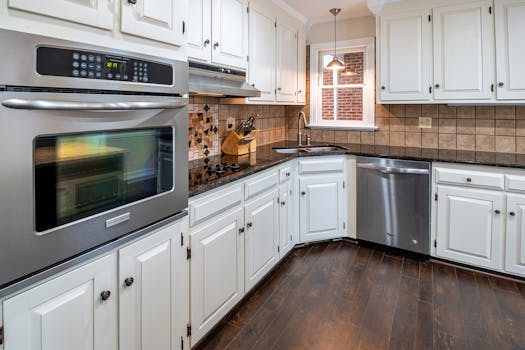
Most homeowners expect paint. A sprayed cabinet finish is closer to a manufactured surface: a thin, even film with no brush marks, no lap lines, and no roller stipple catching the light above the sink. Getting there is not a matter of buying a better brush. It is a sequence of cleaning, sanding, repairing, priming, and spraying, and each step depends on the one before it.
Sprayed Cabinets Versus Rolled Cabinets
Rolling is a legitimate way to change cabinet color, and plenty of homeowners do it as a weekend project. The limitation is texture. A roller deposits coating in a pattern, and on a flat cabinet door that pattern shows from across the room, especially under raking light from under-cabinet fixtures or a window.
Spraying breaks the coating into fine droplets and lays them down in overlapping passes, which produces a smoother, more uniform film. That difference in application is visible on a door face, but it matters even more on raised panel profiles, beadboard, and the inside corners of a frame where a roller struggles to reach without leaving buildup.
What spraying does not do is make the job easier. Painters who spray cabinets describe a real learning curve, significant prep and cleanup, and overspray that can travel a long way from the work area. The finish looks effortless because the invisible work happened before the gun was ever turned on.
Step One Is Cleaning, Not Painting
Cabinet surfaces get thoroughly cleaned with a degreasing solution before anything else happens. This is not a wipe-down for appearance. Kitchen cabinets collect a film of cooking grease, aerosolized oil, and everyday hand residue, and that film sits exactly where a new coating needs to bond. Skip it and the topcoat can fail from underneath.
After degreasing comes light sanding. The goal is not to strip the cabinet down to raw wood. It is to dull the existing surface so the new coating has something to grip, and to knock down any roughness, previous drips, or old finish edges. Minor repairs happen around the same stage: small dings, dents, cracks, and loose joints get filled or tightened while the doors are already off and the surface is exposed.
If your cabinets have deeper damage, this is the point in the schedule where it gets identified. Some damage can be repaired and refinished; some cannot. Ask for that conversation to happen before spraying begins, not after.
Primer and Topcoat Choices Drive Durability
Not all cabinet coatings behave the same way. Finishers who work on cabinetry point out that a true factory finish and factory-level durability generally require a pre-catalyzed or post-catalyzed product rather than a standard wall paint. Catalyzed finishes cross-link as they cure, which is what gives them hardness and resistance to repeated wiping.
A practical spraying job covers prep, primer, topcoats, technique, and drying times as one system. The primer creates the bond and blocks whatever color is underneath. The topcoat creates the color and the wear surface. Sanding or scuffing between coats knocks down dust nibs, and dust nibs are the enemy of a smooth finish because the topcoat magnifies whatever is under it.
Some finishes intended for spraying cure in an hour or less, according to finishers who use them regularly. That short window refers to handling and recoat times, not to the moment the cabinets are ready for heavy daily use. Those two things are different, and reputable contractors will separate them when they talk about your timeline.

Equipment Matters More Than Most Homeowners Realize
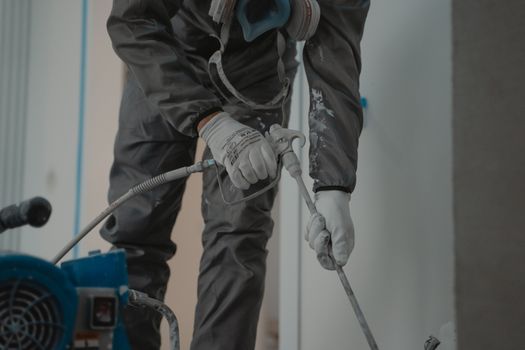
Spray results track closely with the sprayer. One experienced finisher put it bluntly: the more you spend, the better your finish will be, and recommended a specific high-end air-assisted setup for cabinet work. You do not need to know equipment model numbers, but you should understand why the equipment conversation exists.
An HVLP or air-assisted sprayer produces a finer, more controllable pattern than a cheap turbine unit or a rattle can. The result is a thinner, more even film with less chance of orange peel, runs, or dry spray. Poor atomization shows up as texture, and texture is exactly what a factory-grade finish is supposed to avoid.
Temperature and Cure Time Are Not Optional
Coatings need the right conditions to cure properly. As one finisher noted about cold weather work, you need steady heat to get the finish to cure correctly. Cold surfaces, drafts, and swinging temperatures can slow curing, soften the film, and leave you with a finish that feels tacky or scratches too easily weeks later.
Denver’s seasonal swings make this a real planning item, not a technicality. If your project happens during a cold stretch, ask how the workspace will be kept warm and ventilated at the same time. Curing chemistry and airflow both matter, and they can pull in opposite directions. Confirm the specific temperature requirements with your contractor and with the coating manufacturer’s published data rather than relying on rules of thumb.
Masking, Overspray, and Protecting the Rest of the House
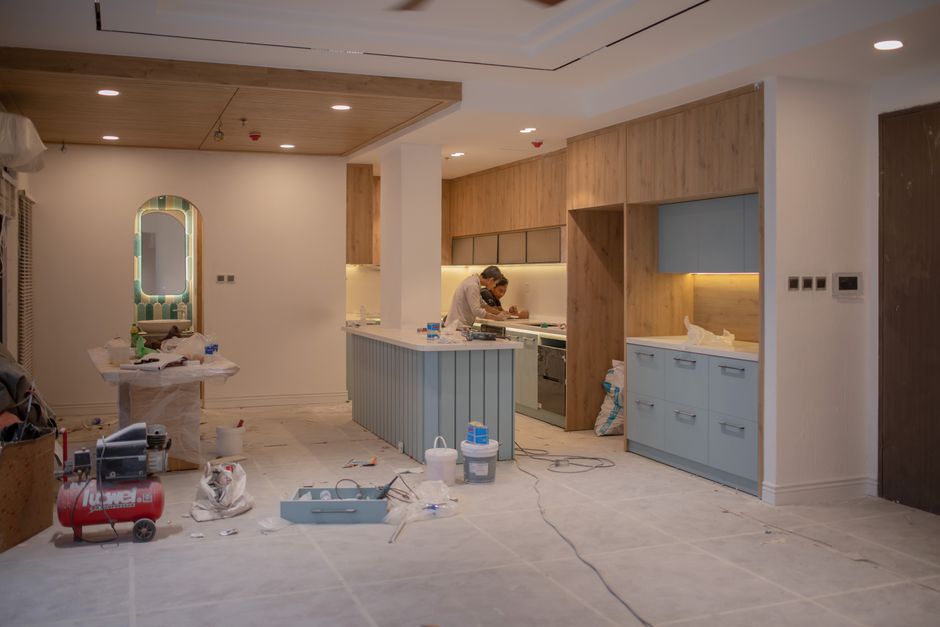
Overspray travels. That is one of the consistent warnings from people who spray cabinets, and it is the reason a professional job involves significant masking time before any coating is mixed. Floors, countertops, backsplashes, appliances, windows, light fixtures, and adjacent walls all need protection, and cabinet interiors need protection too if they are not being refinished.
This is also why a sprayed finish takes longer to set up and longer to clean up than most homeowners expect. The visible spraying may be a small fraction of the total hours on site.
The Typical Sequence of the Work
Every shop organizes the job slightly differently, but the stages themselves are consistent. Here is the general order of operations you should hear described at your estimate.
| Stage | What Happens | Why It Matters |
|---|---|---|
| Degrease | Surfaces cleaned with a degreasing solution | Removes kitchen grease film that blocks adhesion |
| Sand and repair | Light sanding and minor repairs as needed | Creates a gripping surface and fixes small damage |
| Mask and protect | Floors, counters, appliances, and interiors covered | Contains overspray and dust |
| Prime | Primer applied, then scuffed or sanded | Bond and color blocking |
| Topcoat | Multiple sprayed coats with sanding between | Color, smoothness, and wear resistance |
| Cure | Doors and drawers rest before reassembly | Finish hardens before daily use |
What Living Through the Project Feels Like
Doors and drawers come off, and that changes your kitchen more than most people anticipate. Plan for the contents of your cabinets to be somewhere else, and plan meals that do not depend on the cabinets being back in place.
Ask three questions before work starts: which days the kitchen will be unusable, where the doors and drawers will be staged while they cure, and how much dust and odor to expect. A free on-site consultation is the right moment for those answers, because a contractor who has seen your kitchen can speak to your layout instead of a generic schedule.
Why the Warranty Should Be Part of Your Decision
A sprayed finish is a cost-effective alternative to replacing cabinetry, and the value of that choice depends on how well the finish holds up. Cabinet Painting Denver backs its factory-grade sprayed finish with a three-year workmanship warranty across the Denver metro area, including Arvada, LoHi, RiNo, Cherry Creek, Park Hill, Aurora, and Lakewood.
When you compare estimates, compare what is covered and for how long. A lower bid that leaves you repainting in two years is not the cheaper option.
Questions to Ask Before the Spray Gun Comes Out
- Which products will be used, and are they pre-catalyzed or post-catalyzed?
- How will the workspace be heated if temperatures drop during the project?
- What is the plan for masking floors, counters, and appliances?
- What repairs are included, and what would cost extra?
- How long until the cabinets can handle normal daily wiping and use?
Frequently Asked Questions
Is spraying cabinets better than rolling them?
Spraying produces a smoother, more even film with no roller texture, which is why it is associated with a factory-grade look. Rolling can work for a basic color change, but it leaves a pattern that shows on flat doors under direct light. Spraying also requires far more prep, masking, and cleanup, which is why it is usually a professional job.
How long does a sprayed cabinet finish last?
Longevity depends on the coating system, the prep work, and how hard the kitchen is used. Finishers report that factory-level durability comes from pre-catalyzed or post-catalyzed products, not standard wall paint. Cabinet Painting Denver backs its sprayed finish with a three-year workmanship warranty, so ask any contractor what their warranty covers before you commit.
Can I use my kitchen during the project?
Expect at least part of the project to disrupt normal use, since doors and drawers come off and the workspace needs protection from overspray and dust. Ask your contractor to identify the specific days the kitchen will be out of service, and plan your meals and cabinet contents accordingly before work begins.
How cold is too cold to spray cabinets?
Coatings need steady heat to cure properly, and cold conditions can slow curing or leave a soft film. Denver’s seasonal temperature swings make heating and ventilation a real planning step. Ask your contractor how the workspace will be kept at the right temperature, and confirm the coating manufacturer’s published requirements for the products being used.