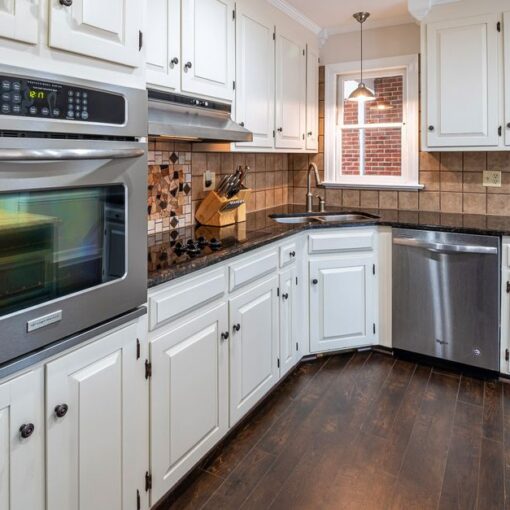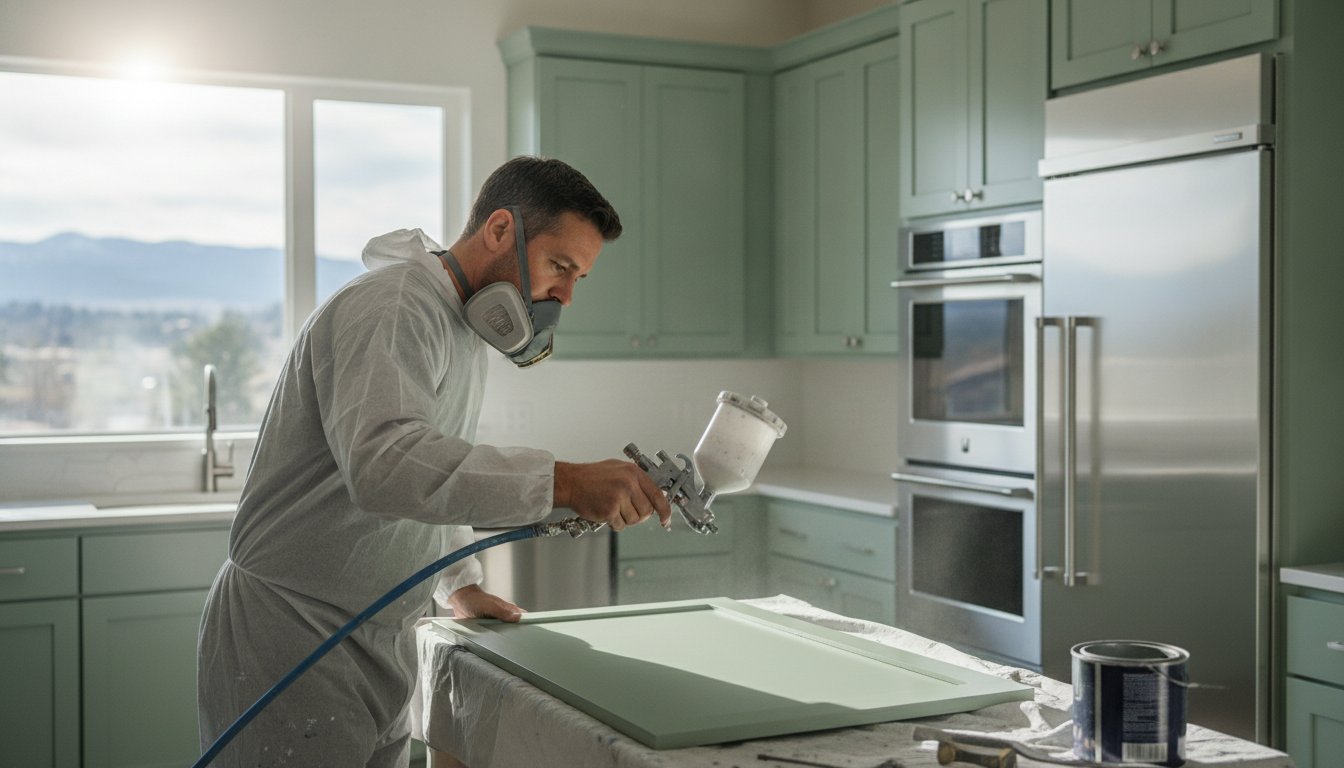

Yes, for most Denver-area homeowners a factory finish is worth it because it delivers a harder, smoother, longer-lasting coating than brush-and-roll paint at roughly a fraction of replacement cost. A factory finish means doors and drawer fronts are sprayed in a controlled shop booth, then cured, so the coating lays flat with no brush marks or roller stipple. Cabinet Painting Denver has sprayed Front Range cabinets since 1984 and completes most kitchens in 5 to 7 days.
Table of Contents
- What is a factory finish versus standard brush-and-roll cabinet painting?
- Why does off-site door spraying make such a big difference?
- What does your 6-step Denver cabinet painting process actually look like?
- How durable is a sprayed cabinet finish compared to a DIY paint job?
- What does cabinet painting cost in Denver in 2026 versus refacing or replacement?
- How does Cabinet Painting Denver deliver a factory finish in 5–7 days?
- Which cabinet colors are trending in Denver right now?
- Which Denver-area cities do you serve, and how long before I can use my kitchen?
- Key Takeaways
- References
What is a factory finish versus standard brush-and-roll cabinet painting?
A factory finish is a sprayed, shop-cured coating system, not brush-and-roll paint. Doors and drawer fronts are sprayed in a controlled shop booth, then cured, so the coating lays flat with no brush marks, roller stipple, or lap lines. The result looks like the cabinet came from the manufacturer with that color already applied.
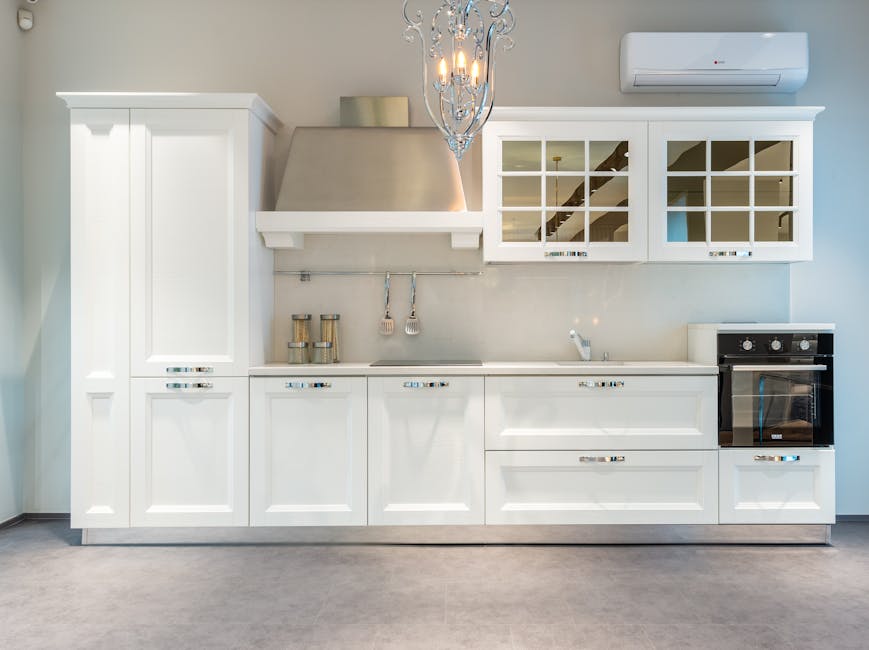
Standard brush-and-roll cabinet painting applies latex house paint on-site. That paint stays soft, shows texture, and tends to chip or peel within 6 to 12 months on high-touch cabinets, according to Cabinetspainting.com. The coating difference matters. Cabinet Painting Denver uses an industrial water-borne acrylic system with one primer coat plus two satin topcoats, according to Cabinet Painting Denver. Standard latex is a wall paint, not a cabinet coating.
The term factory finish refers to the application method and cure, not to the cabinets being new. A homeowner can keep existing cabinet boxes and still get a factory-like result on the doors and drawer fronts. Two Painters and a Brush describes a typical brush-and-roll process as cleaning, sanding, priming, then painting, which leaves a different final texture than a sprayed booth finish.
Why does off-site door spraying make such a big difference?
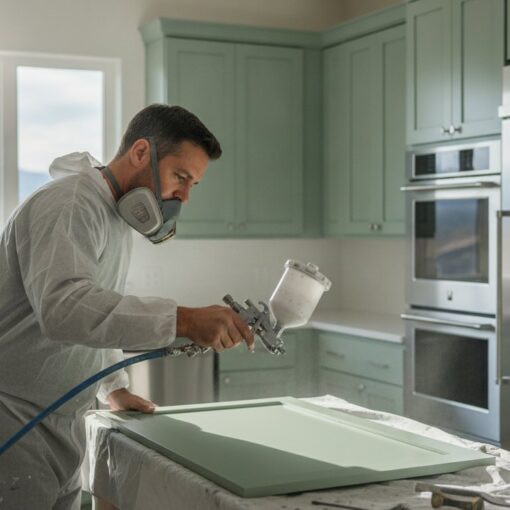
Off-site door spraying makes a big difference because it removes the two biggest enemies of a smooth cabinet finish: dust and overspray. Doors and drawer fronts leave the house and get sprayed in a shop booth, so no dust nibs settle into the wet coating. No overspray film lands on your counters, floors, or appliances.
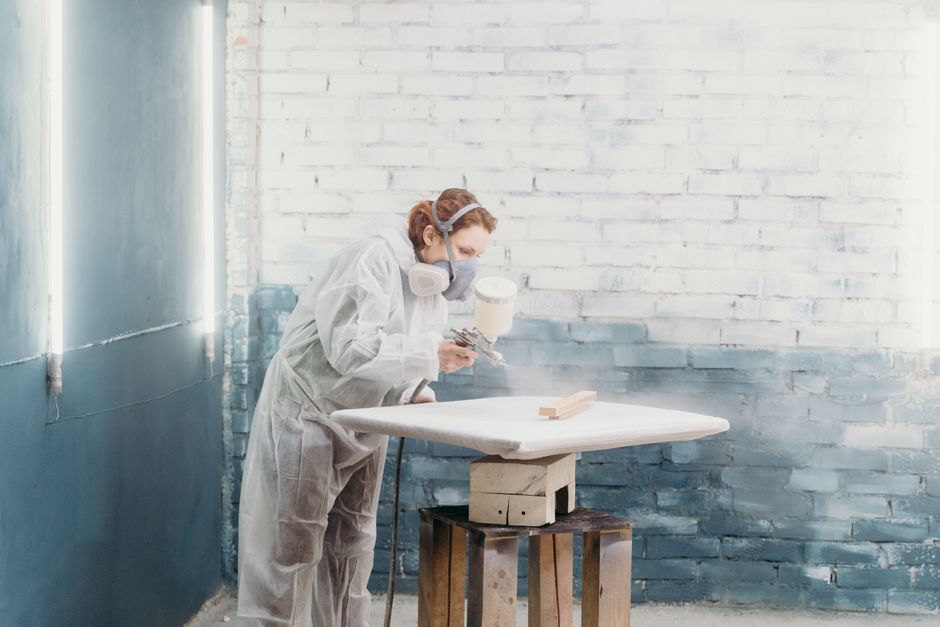
Cabinet boxes are masked and sprayed or rolled in place, so the kitchen stays usable and the layout never changes. Cabinetspainting.com states it removes doors and drawers to its Denver shop and sprays boxes on-site. N-Hance of Denver follows a similar model, refinishing cabinet frames on-site while transporting doors and drawer fronts to its facility for spray-booth finishing.
Shop spraying means consistent millage and an even sheen across every door face, edge, and back. A spray gun applies the coating at a controlled thickness that a brush or roller cannot match. Denver's dry air and open-window season make in-home spraying a real risk for dust and uneven cure. The booth removes that variable entirely, which is why Cabinet Painting Denver lists off-site cabinet door spraying as part of its Factory Finish Cabinet Painting process.
What does your 6-step Denver cabinet painting process actually look like?
The 6-step Denver cabinet painting process starts with labeling and removing every door and drawer front, then transporting them to the shop. Step one protects the order of every piece so reinstallation is exact. Step two is a deep degrease and clean to strip cooking oil, grease, and residue that would otherwise cause adhesion failure.
Step three is sanding and scuffing for mechanical bite, then spot-filling and repairing swollen or damaged doors. Two Painters and a Brush lists cleaning with degreaser and TSP, sanding, priming, then painting as its core sequence. Colorado Cabinet Painting states each cabinet gets one coat of primer and two coats of paint front and back with sanding between coats.
Step four is a pre-catalyzed lacquer primer as the bonding layer. That primer grips the sanded surface and gives the topcoats something stable to hold. Step five is the industrial water-borne acrylic sprayed in one primer coat plus two satin topcoats, with sanding between coats, according to Cabinet Painting Denver. Step six is curing in the shop, then reinstalling doors and drawers and replacing hardware.
How durable is a sprayed cabinet finish compared to a DIY paint job?
A sprayed cabinet finish is significantly more durable than a DIY brush-and-roll paint job. A sprayed precatalyzed finish is chemically cross-linked, so it resists chipping, peeling, and yellowing far better than brush-applied latex. Cabinetspainting.com states that house painters who brush latex produce finishes that chip in 6 to 12 months, versus its sprayed precatalyzed lacquer that lasts 10-plus years.
Denver's low humidity swings are hard on soft coatings. A cured hard film handles seasonal expansion and contraction better than a soft latex layer that flexes and eventually fails. N-Hance of Denver uses a Lightspeed Nano Curing System that it states eliminates the need for sanding and produces fewer VOCs, which points to how much cure method affects final hardness.
Low-VOC and non-toxic coating options are available for households with kids, pets, or chemical sensitivity. Cabinet Painting Denver offers low-VOC and non-toxic coating options as part of its Cabinet Refinishing service. That matters in a closed-up Denver house during winter months when ventilation is limited.
What does cabinet painting cost in Denver in 2026 versus refacing or replacement?
Most Denver kitchens run $3,500 to $7,500 to spray with a factory-grade finish, according to Cabinetspainting.com. Full cabinet replacement in the Denver market typically runs $20,000 to $45,000, based on the same source. That gap is the main reason painting remains the most common first step for Front Range homeowners who want a kitchen update without a gut remodel.
Refacing sits in the middle but still replaces door and veneer material, so it costs more than painting and takes longer. Painting keeps your existing boxes and layout, which is where most of the replacement cost lives. Cabinet Painting Denver lists its Kitchen Cabinet Painting service as a way to keep the existing cabinet structure while changing the finish.
The cost spread also reflects labor and material differences. Replacement means new boxes, new doors, new hardware, and often new countertops. Painting means surface preparation, spray application, and cure time. For a standard Denver kitchen, the painted route typically saves tens of thousands of dollars.
How does Cabinet Painting Denver deliver a factory finish in 5–7 days?
Cabinet Painting Denver delivers a factory finish in 5 to 7 days by running a shop-based spray process that has been refined since 1984. The shop uses an industrial waterborne acrylic system: one primer coat plus two satin topcoats, sprayed off-site for doors and drawer fronts. Cabinet boxes are masked and sprayed in place, so the kitchen stays intact while the doors cure in the booth.
The service list includes Cabinet Painting Denver, Cabinet Refinishing, Kitchen Cabinet Painting, Factory Finish Cabinet Painting, Off-Site Cabinet Door Spraying, Custom Color Matching, Cabinet Hardware Replacement, and Bathroom Vanity Painting. Swollen cabinet door repair and low-VOC, non-toxic coating options are available on request. The 5 to 7 day window covers removal, prep, spraying, curing, and reinstallation.
Free estimates and project scheduling are available by phone or text at 303-591-2089. Homeowners can also email photos to factoryfinishcabinet@gmail.com with their name, location, number of doors, number of drawers, and photos. That information lets the shop give a realistic timeline and price before the first visit.
Which cabinet colors are trending in Denver right now?
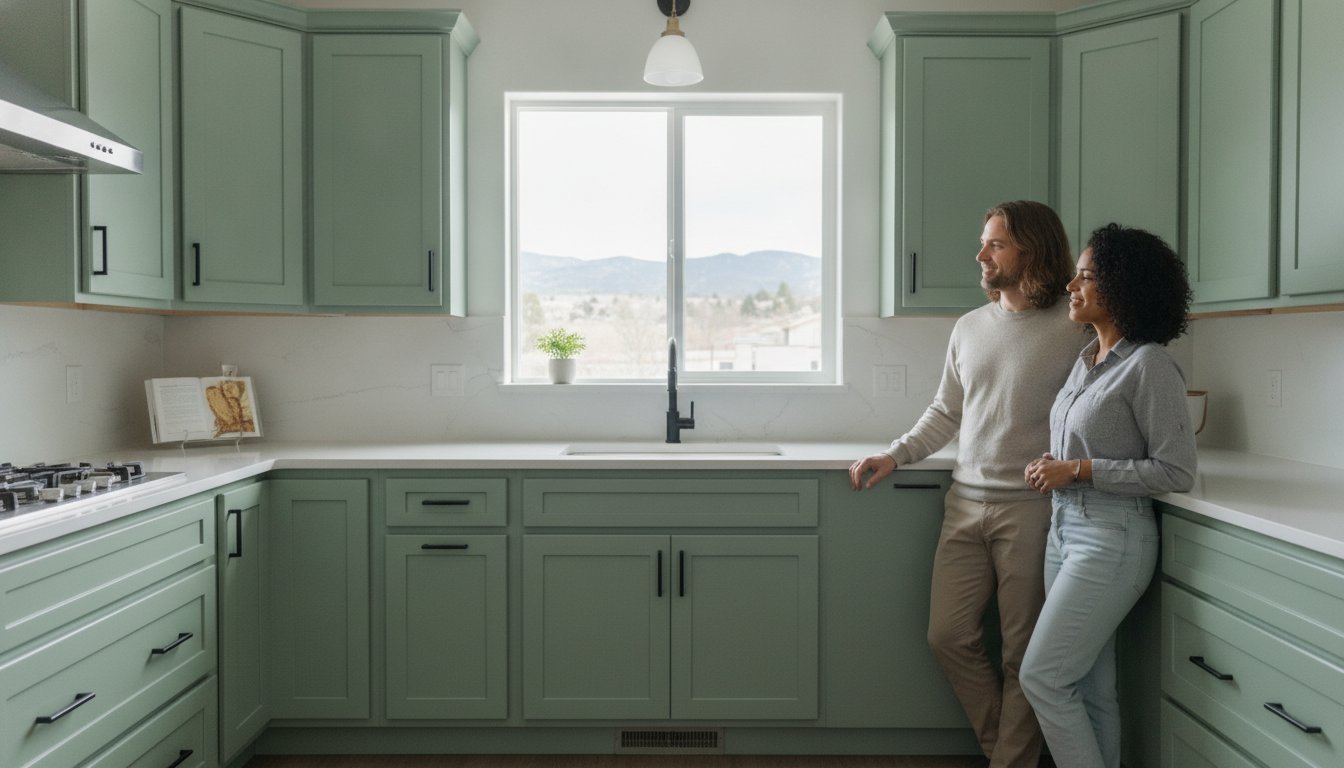
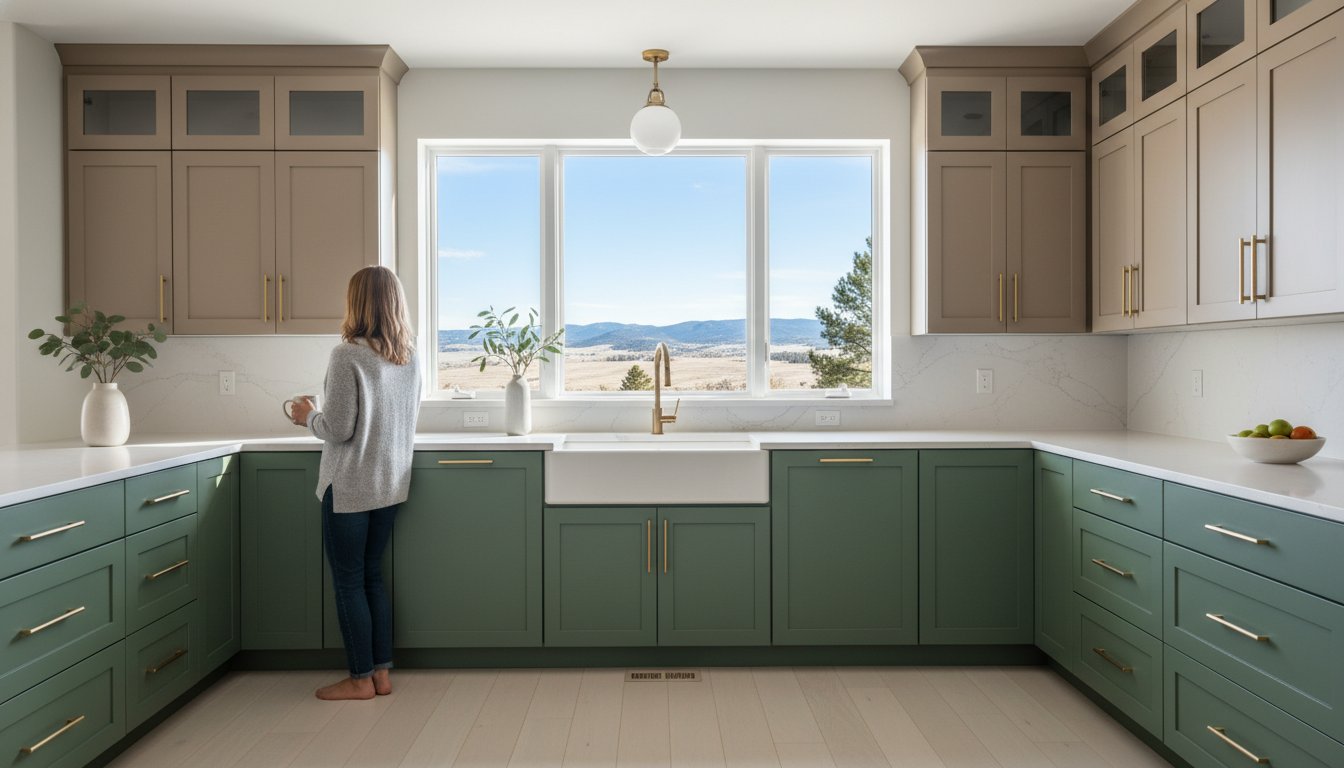
Cabinet Painting Denver lists 2025 to 2026 trending cabinet colors as sage green, navy blue, warm white, charcoal, and forest green. Warm white and greige remain the safest resale choices for Denver-area kitchens because they read neutral under both natural and artificial light.
Green and navy read well against Denver's natural light and warmer wood floors. Those deeper tones give a kitchen a grounded feel without going as dark as black. Two Painters and a Brush notes that semi-gloss has been the go-to cabinet finish for years while matte finishes have been gaining popularity, which affects how any color reads on the final surface.
Custom color matching lets a homeowner hit an exact existing color or a specific brand swatch. Cabinet Painting Denver includes Custom Color Matching as part of its service list, so a homeowner can match a color from a paint deck, a tile, or a piece of furniture.
Which Denver-area cities do you serve, and how long before I can use my kitchen?
Cabinet Painting Denver serves Denver, Aurora, Centennial, Parker, Castle Rock, Littleton, Lakewood, Thornton, Arvada, Westminster, and Wheat Ridge. The typical timeline follows a Monday-to-Friday pattern: doors picked up early in the week, sprayed and cured in the shop, then reinstalled by the end of the week. Colorado Cabinet Painting states its typical job finishes in 5 days, starting Monday with door pickup and finishing Friday with door installation.
Cabinet boxes are painted on-site, so the kitchen stays in place throughout. N-Hance of Denver states most projects are completed in five days or less. Cabinetspainting.com states its process takes 3 to 5 days and offers a 3-year warranty.
Plan on waiting up to 24 hours after reinstallation before normal use, and longer for heavy daily handling. Two Painters and a Brush states paint should dry up to 24 hours before cabinets are used. A sprayed shop finish is cured before reinstallation, but the on-site box coating needs that final day to settle.
Key Takeaways
- A factory finish means doors and drawer fronts are sprayed and cured in a shop booth, not brushed or rolled in your kitchen.
- Brush-and-roll latex on cabinets commonly chips or peels within 6 to 12 months, while a sprayed shop finish is expected to last 10-plus years.
- Off-site spraying eliminates dust nibs and overspray inside the home.
- Cabinet Painting Denver has sprayed Front Range cabinets since 1984 and completes most projects in 5 to 7 days.
- Cabinet Painting Denver uses an industrial waterborne acrylic system with one primer coat and two satin topcoats.
- Most Denver kitchens cost $3,500 to $7,500 to spray versus $20,000 to $45,000 to replace.
- Cabinet Painting Denver lists sage green, navy blue, warm white, charcoal, and forest green as its 2025 to 2026 trending colors.