Search for cabinet painters in Parker, Colorado and you get a long list of names. Directory pages for the area mix dedicated refinishing companies with full-service painters who also handle interior and exterior walls, deck staining, fence work, and concrete sealing. Some crews have been painting for decades, and some companies were founded as recently as a few years ago. None of that tells you which one will leave you with a kitchen you love and which one will leave you with peeling paint around the dishwasher.
The way to sort them out is not a gut feeling about the estimate. It is a short list of things you can verify before anyone touches a door. This guide walks through what to check, what to ask, and what a good answer sounds like.
The Parker market is crowded, so compare the same things
Local listings for Parker show painting companies that advertise cabinet refinishing as a standalone service, plus general painters who take cabinet work between wall jobs. Both types can deliver good results. The risk is comparing a quote from a cabinet specialist against a quote from a painter who added cabinets to the menu last month and assuming the lower number means the same job.
Ask each company what percentage of their work is cabinets. A crew that sprays cabinet doors every week has already solved problems a general painter will meet for the first time in your kitchen, including grain raise on oak, bonding over factory finish, and keeping overspray out of a pantry.
Get a written scope, not a number on a business card
A cabinet painting estimate should describe work, not just a total. If the quote is one line and one price, ask for the breakdown in writing before you compare it to anything else. The list below covers what a complete scope usually names.
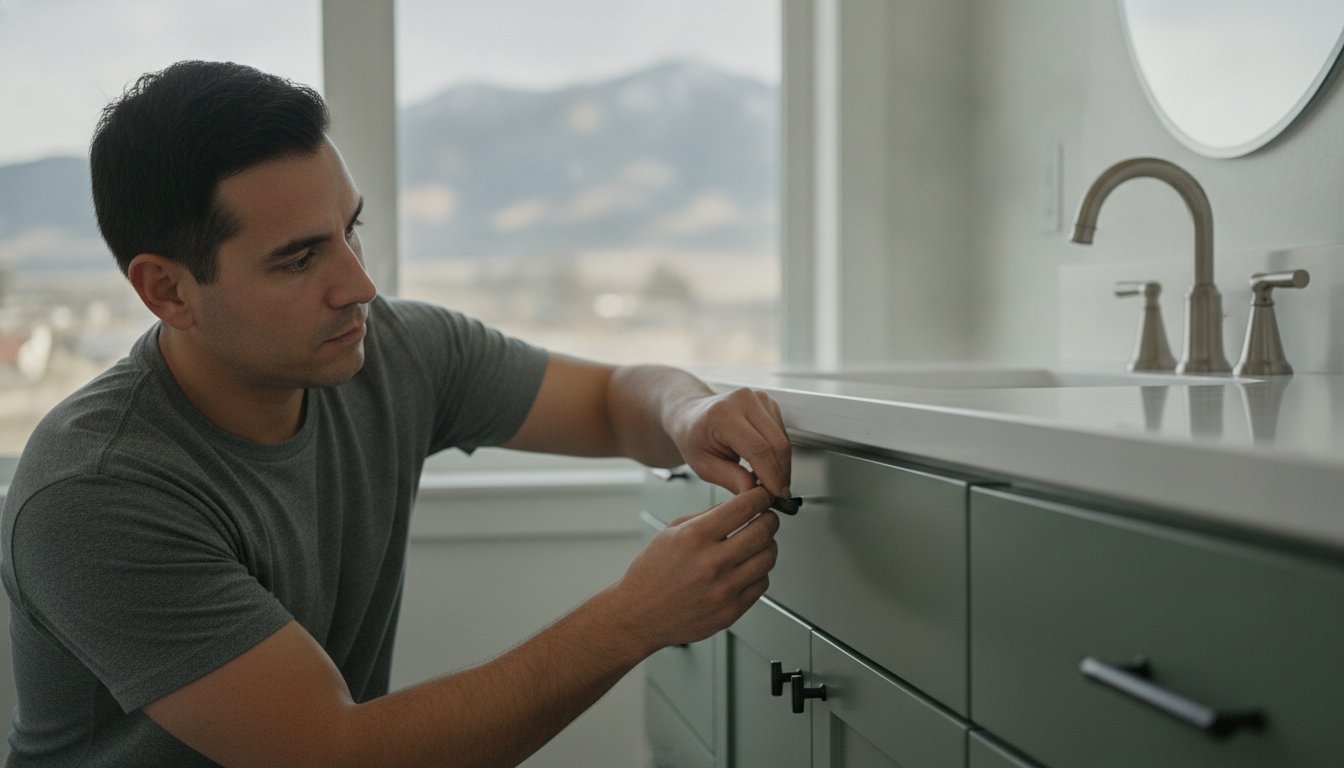
- Whether doors and drawer fronts come off, and how they are labeled and stored
- Whether cabinet boxes, face frames, and interior shelves are included or excluded
- Hardware removal, reinstallation, and whether new hardware holes are drilled
- Caulking, filling, and repair of dings, dents, and old hardware holes
- How many coats of primer and how many coats of finish
- Color and sheen specified separately for boxes, doors, and any island or accent area
- Masking, floor protection, and dust containment
- Cleanup, debris removal, and reinstallation
- Warranty terms and what the warranty covers
Two quotes with the same total can describe very different amounts of work. The scope is what you actually buy.
Confirm insurance, business identity, and local accountability
Ask for a certificate of insurance before work starts, and confirm the policy is current. If a company advertises that it is licensed, bonded, or both, ask to see the documentation behind that claim rather than taking the line on a website at face value. Requirements vary by state and by the type of work, so verify what applies to your project instead of assuming.
Also check that the name on the estimate matches the name on the insurance certificate and the name that appears in reviews. A crew working under one name while insured under another can make a claim complicated if something goes wrong. Confirm a phone number and a business address you can actually reach, and ask who the point of contact will be once the job starts.
Ask how the finish will be applied
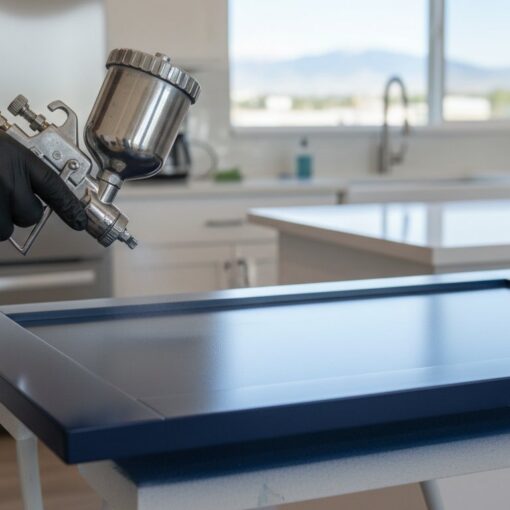
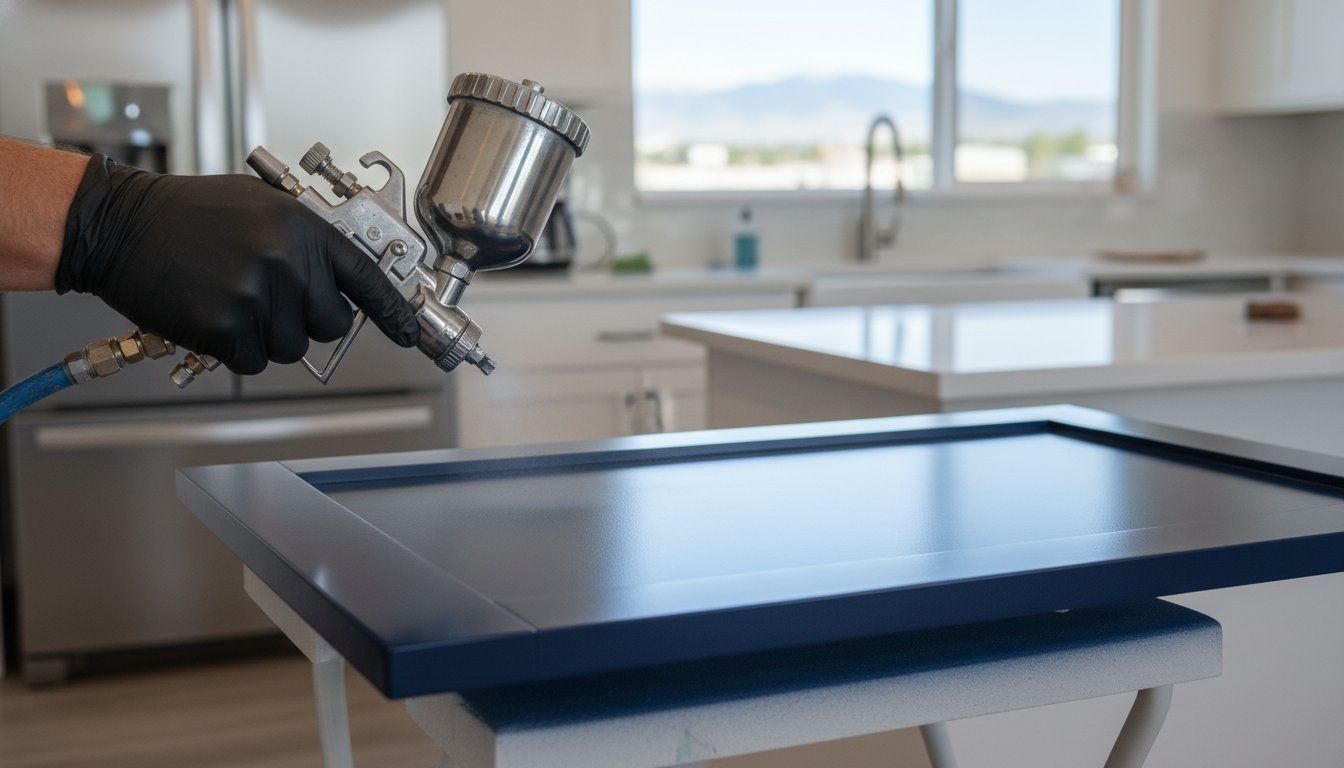
Cabinet paint fails most often at the application stage, not at the paint can. Brushing and rolling can work, but it leaves texture. A sprayed finish, usually described as HVLP spraying, lays down smoother and shows less of the grain and stipple that brush marks create on flat doors.
If a company sprays, ask where the spraying happens. Some shops spray doors off site and return them cured. Others spray on site with containment. On-site spraying can be excellent, but it needs plastic sheeting, sealed openings, and a plan for overspray that reaches beyond the kitchen. Ask how they protect adjacent rooms, what they do about the HVAC return, and how long the kitchen stays unusable.
Prep and protection are the real test
Any painter can make a cabinet look good for a month. The prep determines whether it looks good in year three. Ask each company to walk you through their prep steps in order, and listen for the specifics.
- Degreasing every surface, including the tops of doors and the area above the range
- Scuffing or sanding the existing finish so the new coating can bond
- Filling cracks, dents, and old hardware holes before primer
- Priming with a product matched to the existing finish, whether that is lacquer, conversion varnish, or painted wood
- Masking the kitchen thoroughly, including floors, counters, appliances, and windows
- Bagging and labeling hardware so it goes back on the right door
- Controlling dust during sanding rather than sweeping up at the end
A company that answers this question in general terms, without naming steps, is worth a second conversation before you sign.
Compare sheen and color using a real sample
Color and sheen both change in a kitchen’s light. A white that looks crisp in a showroom can read gray in a north-facing Parker kitchen, and a semi-gloss that photographs well can highlight every imperfection in an older door. Ask to see a sprayed sample in the sheen you are considering, and look at it in your own kitchen at different times of day.
| Sheen | What it does well | What to consider |
|---|---|---|
| Matte or flat | Soft look, hides imperfections in older doors | Shows fingerprints and smudges more readily in busy kitchens |
| Satin | Middle ground that cleans up easily | Reflects some light, so prep quality becomes visible |
| Semi-gloss | Wipeable surface, classic look on trim and panel doors | Highlights dents, sanding marks, and uneven filling |
Read the warranty before you compare totals
Warranty language is where cheap work and careful work separate. Ask how long the workmanship warranty runs, what it covers, what voids it, and how a claim gets handled. A warranty that covers peeling and cracking from poor adhesion is worth far more than one that only covers defects in the paint itself, since the manufacturer already stands behind the product.
Ask whether touch-ups after the first few months are included and whether the company supplies a small amount of leftover paint labeled with the color and sheen. Also ask what response time they promise if a door starts to peel. If the answer is vague now, it will be vaguer when you actually need it. For reference, Cabinet Painting Denver backs its sprayed cabinet finish with a three-year workmanship warranty, which is the kind of specific term worth using as a benchmark while you shop.
Questions about scheduling and daily life
Cabinet painting disrupts a kitchen more than most homeowners expect. Doors come off, contents come out, and counters become a workspace. Ask how many working days the project takes, whether doors are sprayed on site or in a shop, and whether the kitchen stays usable throughout. If spraying happens on site, ask which days you need to stay out of the room and when the finish is safe for normal use.
Get the cure time in writing. Paint that feels dry is not the same as paint that has hardened, and putting heavy dishes back into a cabinet too early can leave marks that never come out. Ask about pets, about water to the sink if the area is masked, and about who moves the refrigerator.
Compare quotes side by side
| Line item | Why it matters | Question to ask |
|---|---|---|
| Surfaces included | Boxes, interiors, and end panels change the labor | Are cabinet interiors included or extra? |
| Coats and products | Coverage and durability depend on the system | Which primer and topcoat, and how many coats of each? |
| Application method | Sprayed and brushed finishes look different | Do you spray, and where? |
| Hardware | Removal, reinstallation, and new holes vary | Is hardware included, and do you drill for new pulls? |
| Warranty | Protects you after the crew leaves | What is covered, for how long, and what voids it? |
| Schedule | Affects how long your kitchen is out of service | Start date, working days, and cure time? |
Red flags worth walking away from
- A verbal estimate with no written scope or terms
- No certificate of insurance, or reluctance to provide one
- No sample door or sprayed sample panel available
- Vague answers about primer, sanding, or the number of coats
- Requests for full payment in cash up front
- No local references and no photos of recent cabinet work
- A warranty you are told about but never shown in writing
- Pressure to sign the same day to lock in a price
Check the finished work in raking light
Plan a final walkthrough with the crew lead before the last payment. Bring a flashlight and look across door faces at a low angle, which is where drips, sanding scratches, and uneven sheen show up. Open and close every door and drawer to confirm alignment and smooth travel. Look inside the boxes, along the edges, and around the hardware for missed spots.
Before the crew leaves, collect the touch-up paint, the warranty document, and written cure instructions. Confirm the final invoice matches the approved scope. A company that handles the walkthrough calmly and fixes what you point out is a company that will still answer the phone next year.
Frequently Asked Questions
Can cabinets be painted instead of replaced?
Yes. Painting and refinishing are standard alternatives to replacement, and local Parker listings include companies that offer cabinet refinishing as a standalone service rather than part of a full remodel. The existing boxes need to be structurally sound and the doors need to be in reasonable condition. If boxes are water damaged or doors are warped, replacement may be the better path.
How long does a cabinet painting project take?
Timelines depend on the number of doors and drawers, the condition of the existing finish, and whether spraying happens in a shop or on site. Ask for a written schedule with a start date, the number of working days, and the cure time before you reload the cabinets. Get that schedule attached to the estimate so it stays part of the agreement.
Is a sprayed finish better than brushed cabinets?
A sprayed finish usually lays down smoother and shows fewer brush marks, especially on flat panel doors where texture is most visible. That does not make brushing a bad choice for every cabinet. The bigger factor is prep, since poor adhesion will fail regardless of how the paint was applied. Ask about both the application method and the prep steps.
What should a Parker cabinet painting estimate include?
A complete estimate names the surfaces covered, whether interiors and end panels are included, hardware removal and reinstallation, filling and caulking, the primer and topcoat products, the number of coats, masking and cleanup, the schedule, and the warranty terms. If any of those items are missing, ask for them in writing before you compare the total to another quote.
Do I need to empty the kitchen first?
Plan to empty the cabinets being painted, since doors and drawer fronts come off and the crew needs access to the boxes. Counters and appliances also need to be clear enough for masking. Ask the company how much clearance they need, where contents should go, and whether the refrigerator or range will be moved during the project.