Cabinet painting inside a Denver condo or high-rise looks like a simple swap on paper. Same doors, same drawers, same sprayed finish as a house in Park Hill or Arvada. In practice, the paint work is the easy part. The complicated part is everything around it: getting a crew and equipment up to the twentieth floor, keeping spray mist out of a sealed unit, working inside a building schedule you do not control, and finishing before the elevator reservation runs out.
If you own a unit in LoHi, RiNo, Cherry Creek, or any of the tower clusters along the Denver metro, this guide walks through what a 2026 cabinet painting project actually involves, from the first walkthrough to the day the doors go back on.
The finish is the same, the logistics are not
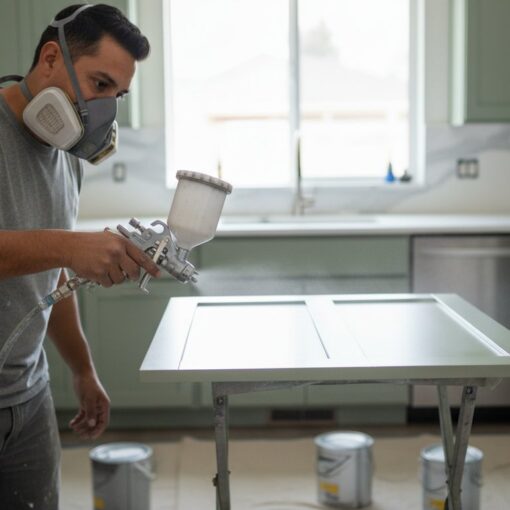
A proper cabinet refinish follows the same core sequence in a condo as in a single-family home. Doors and drawer fronts come off and get labeled, surfaces get cleaned, degreased, sanded, and primed, and the coating goes on as a sprayed finish rather than a brushed one. A factory-grade sprayed finish through an HVLP setup gives you the smooth, even surface that brush marks never quite match. Hardware holes and small dings get addressed before any color goes on, and the whole assembly goes back together once the coating has cured.
What changes in a high-rise is the envelope around that work. There is no garage to convert into a spray booth, no side yard to stage materials, and no back door for a truck to pull up to. Every step has to fit through a shared entrance, a service corridor, and an elevator that other residents also need.
Access, elevators, and building coordination
This is where most condo projects are won or lost. Denver high-rises and mid-rises typically control move-in and vendor access through a front desk or building manager, and many require advance notice before any contractor arrives with equipment. Expect to handle a few of these items before the first day of work:
- Reserving a freight or service elevator for delivery, staging, and removal days
- Confirming whether the building requires a certificate of insurance from the contractor
- Checking loading dock hours and whether a loading zone permit is needed for the truck
- Notifying neighbors or the HOA, if your building asks for that
- Confirming where materials can sit between work days without blocking common areas
Ask your building manager which of these apply to your unit specifically rather than assuming a standard. Buildings differ, and the rules that matter are the ones written in your own association documents and vendor policy, not the ones a neighbor remembers from their remodel three years ago.
Dust, overspray, and ventilation in a sealed unit
Spray equipment atomizes coating into fine particles, and in an open-plan condo kitchen those particles will travel. Good containment is not optional. A professional crew should mask off the kitchen from adjoining living space, seal doorways and return vents, cover floors with a protective layer, and set up airflow so that air moves out of the work zone rather than into bedrooms and hallways.
Ventilation is a second concern. Condo units often have limited operable windows and shared HVAC systems, so odors can linger and can drift into neighboring units through corridors. Ask in advance how the crew plans to ventilate, which products they intend to use, and whether those products are appropriate for an occupied building. If your building restricts odor-producing work to certain days or hours, that constraint should be on the schedule from day one, not discovered on the morning the sprayer comes out.
Denver’s climate and what it means for cure times
Denver’s dry air, seasonal temperature swings, and altitude are real factors in how a sprayed finish behaves. Coatings need a stable temperature range to cure properly, and a unit that runs cold in winter or gets direct afternoon sun through large west-facing glass can change drying times from one room to the next. In a high-rise, exterior glass and shared building systems often make indoor conditions less predictable than a house with its own furnace and thermostat per floor.
Practically, that means the crew should be checking conditions in your unit rather than assuming a fixed dry time. It also means you should not plan to put the kitchen back into heavy use the same evening the last coat goes on. Respect the cure window the contractor gives you before hanging doors, reinstalling hardware, and wiping surfaces down.
A realistic project timeline
Every unit is different, but the sequence below is what a typical condo cabinet painting project follows. Treat the phases as the order of operations rather than a fixed calendar, since door count, damage repair, and building access rules all shift the total.
| Phase | What happens | Your part |
|---|---|---|
| On-site consultation | Free estimate and walkthrough of the kitchen, cabinet condition, and access route | Confirm building contact and any vendor requirements |
| Pre-project coordination | Scheduling around elevator reservations and building work hours | Book the elevator, submit insurance paperwork, notify the HOA |
| Prep and protection | Containment, masking, floor protection, cabinet cleaning and sanding | Clear countertops and remove personal items from the work zone |
| Repair and prime | Scratch and damage repair, then primer coats | Stay out of the containment area |
| Spray and cure | Color coats applied by sprayer, then a full cure window | Keep the unit ventilated and avoid heavy kitchen use |
| Reassembly | Doors and drawer fronts rehung, hardware reinstalled, final walkthrough | Inspect the finish and raise anything that needs attention |
What cabinet painting costs in the Denver market in 2026
Cabinet coating work in the Denver area has been quoted in a range from roughly $2,500 to $15,000, which is a wide spread for a reason. Door and drawer count drives the number more than square footage does. So does the condition of what you are starting with: an oak, maple, or pine cabinet with heavy grain and old finish takes more prep than a flat-painted surface in good shape. Particle board components need their own handling.
In a condo, add access to the equation. A unit where the crew can park, load, and ride a reserved elevator directly to the floor is a different job than one requiring long corridors, multiple trips, and tight scheduling windows. Ask for a written estimate that separates the cabinet work from any access-related costs so you can see what you are paying for. Refinishing remains a lower-cost route than replacing cabinets, and it keeps the existing layout, plumbing, and footprint untouched.
Questions worth asking before you book
The right contractor for a high-rise job is one who has done high-rise jobs and can talk about the constraints without being prompted. Before signing anything, get clear answers on these:
- How will you contain overspray in an open-plan unit, and what does the containment look like?
- Which products will you use, and how long will odor be noticeable in a sealed condo?
- How many elevator trips will the project require, and what do you need from my building?
- What happens if a door or drawer front is damaged during the process?
- What does your workmanship warranty cover, and for how long?
Cabinet Painting Denver backs its sprayed finish with a three-year workmanship warranty, which is a fair benchmark to compare against other quotes. Ask any contractor you consider for the same detail in writing, along with proof of insurance your building manager can review.
Planning ahead for a 2026 project
Condo remodels in Denver tend to bunch up around the same windows. Boards want work done outside peak move-in periods, elevators get booked by multiple owners, and crews fill their calendars faster than homeowners expect. If you already know you want the kitchen refreshed before a spring listing or a summer of entertaining, start the conversation early enough that scheduling is a choice rather than a scramble.
Get your building’s requirements in writing before the estimate is finalized, keep the contractor and the building manager in the same email thread for access details, and leave a buffer around the cure window. Do those three things and the project becomes a paint job instead of a logistics problem.
Frequently Asked Questions
How long does cabinet painting take in a condo?
Most condo cabinet projects run across several days rather than a single visit, because doors and drawer fronts need time to be sprayed and cured before they can be rehung. Elevator reservations, building work hours, and the size of your kitchen all affect the total. Your contractor should give you a phase-by-phase schedule during the on-site estimate.
Do I need to move out during the project?
Most homeowners stay in the unit, but the kitchen itself will be out of service while doors are off and coatings cure. Containment keeps dust and overspray out of adjoining rooms. If odor sensitivity is a concern in a sealed condo, ask about ventilation plans and product choices before the project starts.
Will my HOA or building manager need to approve the work?
Many Denver buildings have vendor access rules, insurance requirements, and elevator reservation procedures that apply to any contractor working inside the building. Check your association documents and speak with your building manager about what notice and paperwork they require. Get those requirements in writing before scheduling.
Is cabinet painting worth it compared with replacing cabinets?
Refinishing keeps your existing cabinet boxes and layout, which means no demolition, no plumbing changes, and no weeks without a functioning kitchen. Cabinet coating work in the Denver market has been quoted anywhere from about $2,500 to $15,000 depending on scope and access, which is generally less than a full replacement.
What should I do to prepare my unit before the crew arrives?
Clear countertops and empty the cabinets that will be worked on, remove small appliances from the work zone, and confirm that the elevator and loading access are booked. Move fragile items away from the kitchen and hallway path. Your contractor should give you a short prep checklist specific to your unit.