Oak is an open-grained wood, so paint alone cannot hide its pores. The grain telegraphs through the finish no matter how many coats you add. The fix is factory grain fill applied before primer. That step is what separates a smooth, lasting white finish from a textured one in Lakewood, Arvada, Wheat Ridge, Golden, and Denver homes.
Table of Contents
-
How does Cabinet Painting Denver deliver a factory finish on oak cabinets?
-
Is grain filling worth it compared with replacing oak cabinets?
Why does grain show through white paint on oak cabinets?
Oak is an open-grained species, so its pores stay visible under paint and telegraph through the finish. According to Google, oak is described as an open-grained species, so paint alone lets pores telegraph through the finish.
White and light colors reveal grain and shadowing more than dark colors do. The contrast between the painted surface and the recessed pores becomes more obvious under bright kitchen lighting. Darker paints absorb shadow, but white paint reflects it.
Adding more paint coats does not fix grain. A creator testing the process states the grain cannot be fixed by simply adding more paint, according to YouTube. Extra coats only build film over the pores. The texture remains visible underneath.
1970s-era oak cabinets in Lakewood, Arvada, and Wheat Ridge are the most common case homeowners ask about. These kitchens often have honey-toned oak with deep, pronounced grain. Homeowners want a modern white finish, but the grain keeps showing through without proper preparation.
What is the best grain filler for oak cabinets?
Aqua Coat White Cabinet Grain Filler is an acrylic product, not clay-based. The source says acrylic gives easier application and sanding, better adhesion, and a surface less prone to cracking, according to YouTube. Acrylic fillers also create a paintable surface that accepts primer and topcoat cleanly.
Timbermate filler diluted to a loose, spreadable consistency is another option. Most times one coat is enough with Timbermate, according to Google. After drying, excess is sanded off and filler remains packed into the grain pores.
Filler is applied across the grain with a plastic knife to work material into the pores. The source used a plastic Bondo knife and smeared across the grain, according to YouTube. This cross-grain motion pushes filler into every pore rather than skipping over them.
Two to three coats are typical. Two coats plus occasional spot filling was adequate in one real-world test, according to YouTube. The goal is a completely flat surface before primer touches the wood.
How do you prep oak cabinets before grain filling?
Wipe the surface with a cloth dampened with mineral spirits, then sand lightly with 150 grit. This removes grease, old polish, and loose fibers that would prevent filler from bonding. The source followed this exact sequence before applying grain filler, according to YouTube.
Sand the first filler coat with 220 grit after it dries an hour or more, then apply the second coat. The directions call for two to three coats of grain filler, according to YouTube. Light sanding between coats keeps the surface level without cutting through the filler.
Use an oil-based primer to block oak tannins. Water-based primer sometimes let dark spots peek through even after a third coat, according to YouTube. Oil-based primer seals the wood so tannins cannot bleed into white topcoats.
Two primer coats, lightly sanded with 220 grit after the second, set up a flat surface for topcoat. The source applied two coats of primer with a roller, then lightly sanded after the second coat dried, according to YouTube. This creates a smooth base for the enamel finish.
Can you fill grain on face frames without dust everywhere?
Pore filling is a dusty procedure. That is why one source skipped face frames and cabinet boxes inside the home, according to Google. Sanding filler creates fine dust that spreads through a kitchen. Many homeowners do not want that mess in their living space.
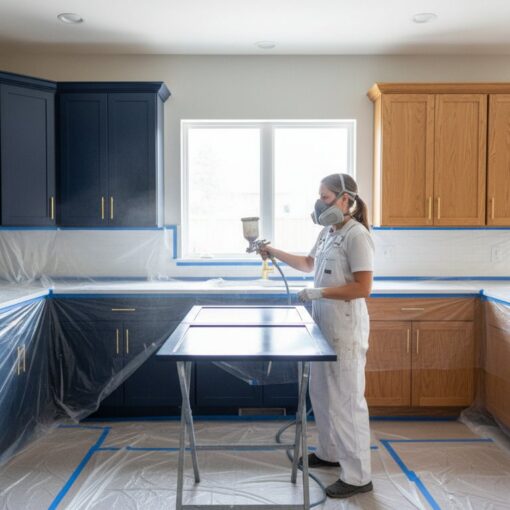
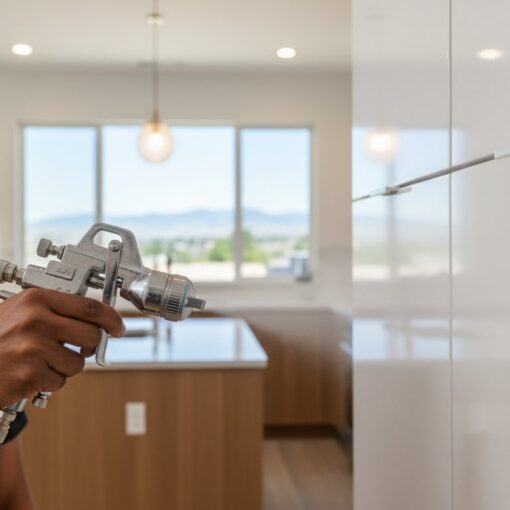
Doors and drawers were removed and sprayed with an HVLP turbine system away from the kitchen. The source sprayed doors and drawers with a turbine HVLP system, according to Google. Spraying away from the home keeps overspray and dust contained in a controlled space.
Face frames and boxes were finished on-site with brush and roller in that DIY approach. The source painted face frames and cabinets with brush and roller, according to Google. This approach avoids filling grain on face frames, which means those surfaces may show texture.
A shop-based process keeps sanding dust out of your kitchen while still filling every door and drawer front. Professional refinishers remove doors and drawers to a dust-free shop. The grain fill, sanding, and spraying happen away from your home.
How does Cabinet Painting Denver deliver a factory finish on oak cabinets?
Cabinet Painting Denver removes doors and drawers, labels everything, and transports them to a dust-free shop. There, the team degreases, sands, repairs, grain fills, and applies pre-catalyzed lacquer primer and industrial water-borne acrylic enamel in 2-3 coats. The result is a true factory finish on every door and drawer front.
Boxes are sprayed on-site. Total turnaround is 5-7 days and your kitchen stays usable throughout. You can do light cooking after Day 2, and your dishes go back in 24-48 hours after reinstall. The process is built around minimal disruption.
Cabinet Painting Denver is family-owned since 1984, with W-2 crews, no subs, no app workers. The company has painted over 1000 kitchens in the Denver metro area. This level of experience matters when grain filling oak cabinets that need consistent, even results.
Pricing runs $89-$149 per opening, not per kitchen. The service area includes Denver, Littleton, Centennial, Englewood, Roxborough, Ken Caryl, and Highlands Ranch. Professional Kitchen Cabinet Painting with Factory Finish – Denver starts from $3,200 per kitchen and is best for 15-40 doors and drawers in oak or maple kitchens from the 1990s-2010s.
How long does a filled and painted oak cabinet finish last?
A true factory finish with proper grain fill and primer is built for 10+ year durability in Colorado’s dry climate. Cabinet Painting Denver states this durability for its industrial water-borne acrylic enamel system. The finish resists the cracking and wear that come from Colorado’s low humidity and temperature swings.
Skipping filler leaves pores that collect dirt and shadow, making wear more visible over time. Those open pores trap cooking grease, dust, and moisture. A filled surface stays smoother and easier to clean.
Cabinet interiors are typically left unpainted because painted interiors wear from dishes and glasses, according to Google. The interior of a cabinet sees constant contact from stacked plates and bowls. Paint can chip or scuff in those conditions.
Topcoating with a high-performance clear adds protection in high-use kitchens. The source used General Finishes High Performance as a topcoat when cabinets were in a high-use environment, according to Google. A clear topcoat adds another layer of protection against daily wear.
Is grain filling worth it compared with replacing oak cabinets?
Refinishing preserves your existing boxes and layout at a fraction of replacement cost. Replacing cabinets means demolition, new boxes, new counters sometimes, and weeks of disruption. Grain filling and painting keeps your kitchen intact while transforming the look.
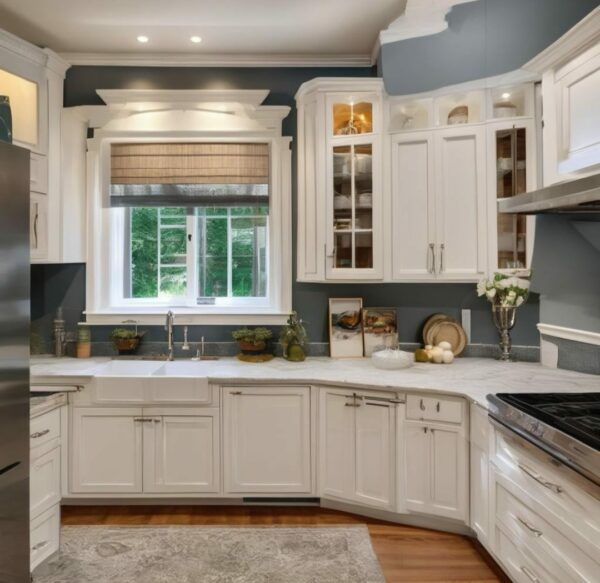
Grain fill is the step that makes white paint read as smooth rather than textured. Without it, white paint on oak looks like painted wood grain. With it, the cabinets look like they came from the factory with a smooth, modern finish.
1990s-2010s oak and maple kitchens with 15-40 doors and drawers are the best candidates. These kitchens have solid wood boxes worth preserving. The layout often works well, and the cabinet structure has decades of life left.
Some cabinets are not good candidates for painting, and an honest assessment should come before any quote. Water damage, delamination, or failing joinery can make painting a poor investment. A professional should inspect the cabinets before recommending grain fill and paint.
Key Takeaways
-
Oak is open-grained, so paint alone lets pores telegraph through a white finish.
-
More paint coats do not hide grain; grain filler applied before primer is the fix.
-
Acrylic grain fillers like Aqua Coat sand easier and adhere better than clay-based products.
-
An oil-based primer blocks oak tannins that water-based primer can let bleed through.
-
Pore filling is dusty, which is why doors and drawers are often sprayed away from the kitchen.
-
Cabinet Painting Denver is family-owned since 1984 and uses W-2 crews, no subs, no app workers.
-
Pricing runs $89-$149 per opening, with a 5-7 day turnaround and 10+ year durability.
References
-
How to Paint Grainy Oak Cabinets and get a SMOOTH Finish! — 2024-04-11
-
Painting Outdated Oak Cabinets — 2020-06-16