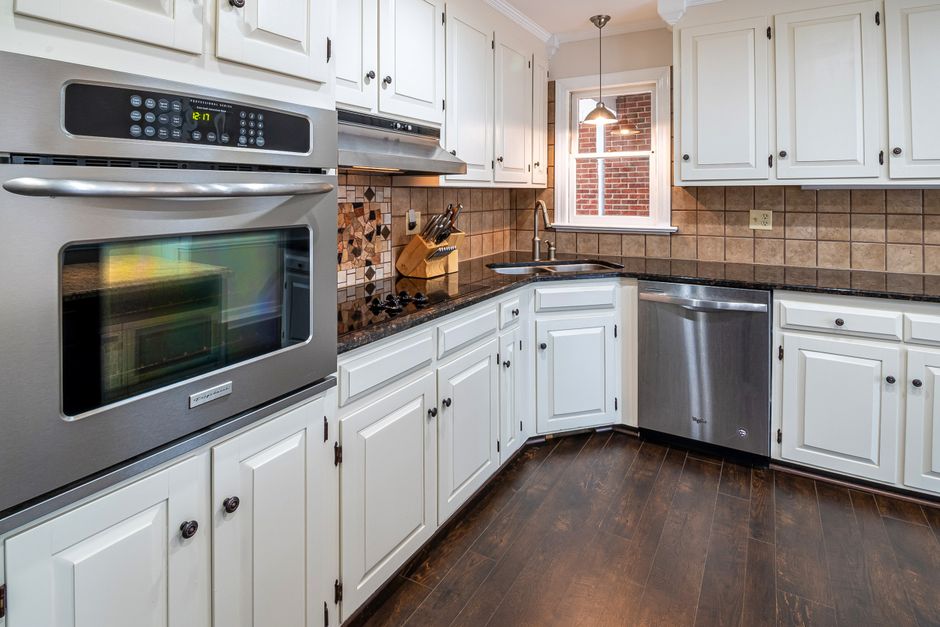

Most Denver sellers reach the same conclusion somewhere between the first walkthrough and the listing photos: the kitchen decides how the rest of the house is read. Cabinets take up more visual square footage than any other surface in that room, and buyers notice tired doors, yellowed finishes, and mismatched hardware before they notice anything else. A pre-listing cabinet update is one of the few improvements that changes how a whole room photographs without touching the layout or the plumbing.
What follows is a realistic picture of the process, from the first on-site estimate through the day your doors go back on, plus the scheduling decisions that keep an open house from landing in the middle of a curing finish.
Why cabinets carry so much weight in a Denver listing
Kitchen photos are usually the first interior images a buyer scrolls past, and the kitchen is typically the room where showings slow down. A dated cabinet finish reads as a project to a buyer, and buyers price projects into their offers. Since August 2024, Colorado listings have also carried more visible detail about what a seller would pay an agent who brings a buyer to the table, according to Denver Post coverage of the commission changes. That means listing details get read closely, and anything that signals deferred maintenance stands out.
None of that requires a full remodel. Updating the finish on cabinets that are structurally sound addresses the largest visual surface in the room without the cost or the timeline of replacement.
Step one is an on-site assessment, not a phone quote
A cabinet update starts with someone standing in your kitchen looking at the actual boxes, doors, and drawer fronts. Photos help, but they hide grease film, peeling edges, and prior paint jobs that change how much prep is required. Local providers typically offer free estimates and on-site consultations, including Cabinet Painting Denver, which can be reached at 720-219-9716. Use that visit to get a scope in writing rather than a single number.
What the assessment should look at
- Door and drawer front material, and whether the panels are solid wood, veneer, or a composite.
- Current finish condition, including grease buildup, cracking, peeling, and any previous repaint.
- Box condition, squareness, and whether hinges and drawer slides are worth keeping.
- Total door and drawer count, since that drives both labor and schedule.
- Whether hardware will be reused, replaced, or filled and re-drilled.
Painting, refinishing, or staining: choosing the right scope
These terms get used interchangeably in listings, but they describe different work. Knowing which one your kitchen needs keeps expectations and quotes comparable.
Painting for a color change
Painting is the route when the goal is a different color or a clean, uniform look. It covers grain and previous finishes when the prep is done properly, and it works on doors that are sound but visually dated.
Refinishing when the wood is solid
Refinishing focuses on restoring the surface rather than simply covering it. When doors are structurally fine but the finish is worn, dull, or damaged, refinishing is often the lower-cost alternative to cabinet replacement that homeowners are looking for.
Staining when you want to keep the grain
Staining keeps the wood look and adjusts tone rather than hiding the grain. It suits kitchens where the cabinet material is worth showing and the color is the only real problem.
When replacement is the honest answer
Some kitchens need cabinetry work rather than a finish. Warped boxes, water damage, and a layout that buyers will want to change are all reasons to talk to a cabinetry company about repair, refacing, or new construction before spending money on paint. A good estimator will tell you when a finish will not solve the problem, and you should take that answer seriously.
The prep work is most of the job
Sprayed finishes look effortless in photos. Almost all of the durability comes from what happens before the first coat. Expect the crew to treat prep as its own phase, not as a quick wipe-down.
- Doors and drawer fronts are removed and labeled so they go back in the right places.
- Surfaces are degreased and cleaned. Kitchen grease is the single most common reason a painted cabinet fails early.
- Counters, floors, appliances, and backsplash get masked and protected.
- A spray environment is set up to control overspray and dust.
- Hardware holes are filled or re-drilled if you are changing pulls.
Ask during the estimate how the crew handles cleaning and masking, because it is the clearest signal of how the finish will hold up two summers from now.
What “factory spray, no brushes” means for the result
Brush-and-roll work leaves texture. A sprayed finish lays down flatter, which is why Cabinet Painting Denver markets a factory-grade sprayed finish with no brushes and backs the work with a 3-year warranty. In practical terms, a sprayed door shows fewer lap lines, less stippling, and a smoother sheen across large flat panels, which matters when a camera flash or a bright window hits the cabinet fronts during listing photography.
Ask any contractor you interview which application method they use and how they handle doors: sprayed on site, sprayed in a controlled area, or sprayed flat and then rehung. The answer should match what you were promised.
Color choices that photograph well
Listing photography rewards contrast and clean edges more than it rewards bold color. Whites, soft off-whites, warm grays, and deeper greens or charcoals all photograph differently depending on the light in your kitchen. Look at samples in your own room at the time of day your photos will be taken, not in a showroom, and look at them against your counter and backsplash before you commit.

How to plan around the work itself
Cabinet work means your kitchen is out of service for part of the project. Doors come off, surfaces need to be accessible, and finishes need time to cure before normal use. The exact number of days depends on door count, door style, and the condition of what is underneath, so get the schedule in writing from your contractor rather than estimating it yourself.
Denver’s dry air and wide seasonal temperature swings are worth mentioning during scheduling. Ask how the crew manages cure time in your conditions and how long they want before heavy use, cleaning products, or steamy cooking resume.
Sequencing the update around your open house
Work backward from your listing date. Photos come before showings, showings come before the open house, and the finish has to be fully cured before photos so that doors are hung, hardware is on, and nothing is still tacky. Booking the cabinet work too close to your photography date is the most common pre-listing mistake, because it leaves no cushion if a door needs a second pass.
Ask your contractor two direct questions: when will the kitchen be fully reassembled, and when is the finish safe for normal use. Then leave a buffer between that date and your photographer.
What a cabinet update will not fix
- A layout that buyers will want to change, such as a closed-off kitchen or missing storage.
- Structural problems in the boxes, sagging shelves, or water damage.
- Worn flooring, dated countertops, or lighting that makes the room feel dark.
- Missing or non-functional appliances.
Be clear with yourself about which problems are visual and which are functional. A finish solves the visual ones well.
Questions to ask before you sign
| Ask this | Why it matters |
|---|---|
| What exactly is included in the scope? | Prep, masking, hardware holes, and reassembly can be listed or left out. |
| Which application method do you use? | Sprayed and brushed finishes are not equivalent. |
| What does the warranty cover? | Workmanship coverage and product coverage are different things. |
| When will the kitchen be usable again? | You need this date to schedule photos and your open house. |
| Are you licensed and insured? | Confirm it directly rather than assuming. |
Get the warranty and schedule in writing
Cabinet Painting Denver advertises a 3-year warranty on its work, and the details are worth reading before the job starts. Ask what is covered, what voids coverage, and who to call if a door edge fails months later. Pair that with the written schedule and the scope, and you have a paper trail that protects both your timeline and your resale disclosures.
Frequently Asked Questions
How far in advance should I book a pre-listing cabinet update?
Start earlier than feels necessary. You need time for the estimate, color selection, the work itself, and a cure period before photography. Build a cushion between the day the kitchen is reassembled and the day your photographer arrives, because a second pass on a door is easier to absorb when the open house is still weeks away rather than days.
Will painted cabinets hold up in a Denver kitchen?
Durability depends far more on prep and application than on altitude or climate. When surfaces are properly degreased, sanded, and sprayed, a factory-grade finish performs well in daily use. Ask specifically how the crew cleans and primes, and confirm what the workmanship warranty covers if an edge or panel fails.
Do I need to empty my kitchen for the project?
Plan on limited access rather than a fully empty room. Crews need to reach the cabinet faces, which usually means clearing counters and removing items stored in the cabinets being worked on. Ask your contractor which cabinets stay in service and how much of the kitchen they need blocked off on spraying days.
Can cabinets be painted if they were already painted before?
Often yes, but the existing coating has to be evaluated first. Peeling, chalking, or poorly adhered paint needs to be addressed before a new finish goes on, or the new coat will fail along with the old one. This is one of the main reasons an on-site assessment matters more than a phone quote.
What does the 3-year warranty actually cover?
Coverage terms vary, so read the document rather than the headline. Confirm whether the warranty covers workmanship, the coating product, or both, what maintenance is required to keep it valid, and how claims are handled. Cabinet Painting Denver lists a 3-year warranty, and getting the specifics in writing before work begins prevents confusion later.