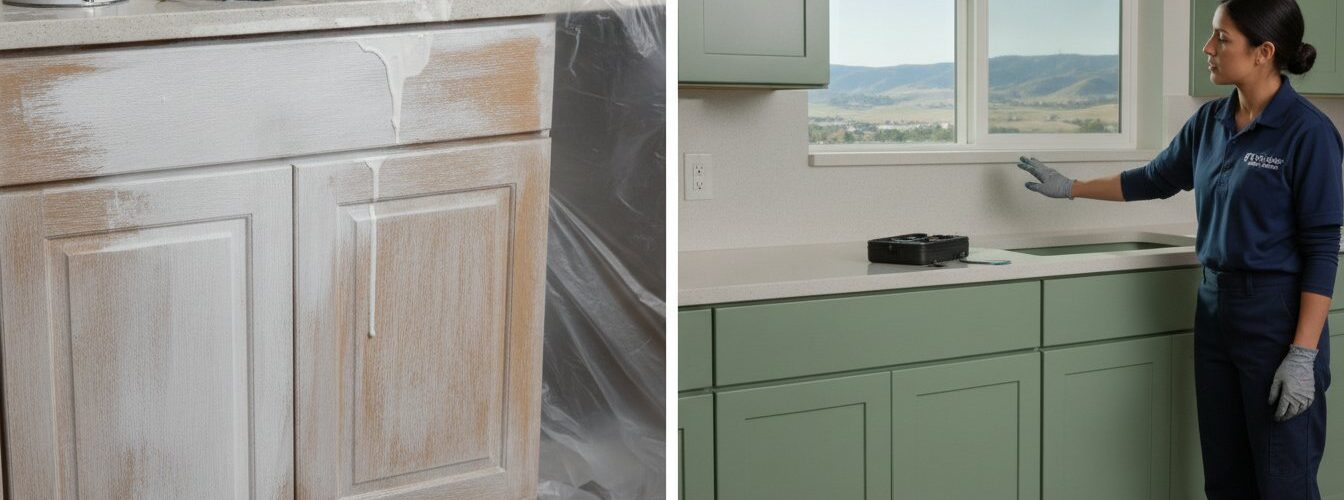
Is saving a few hundred dollars on materials worth the risk of permanently ruining $25,000 worth of kitchen cabinetry? Most homeowners start a renovation project with high hopes, but they often find themselves overwhelmed by a 40 plus hour time commitment and the anxiety of visible brush marks. When evaluating diy vs professional cabinet painting, the choice impacts more than just your weekend plans. It determines whether your kitchen achieves a professional remodel look or remains a source of frustration.
Cabinet Painting Service Areas in Denver & Surrounding Cities, Cabinet Refinishing in Denver County,
Serving Aurora CO, Lakewood, CO, Littleton, CO, Golden, CO, Roxborough Park CO. Ken Carl Ranch CO, Washington Park Area,
Arvada, CO, Wheat Ridge, CO,
and Cherry Hills CO, CO. Englewood CO.
Cabinet Painting in Arapahoe County, CO
Including Centennial, CO, Greenwood Village, CO,
You likely want a factory-smooth finish that doesn’t chip, providing the appearance of new cabinets without the high cost of a full replacement. This guide provides a transparent look at the differences in cost, quality, and longevity between doing it yourself and hiring an expert. We examine the technical requirements for industrial coatings, the procedural benefits of off-site spraying, and how to secure a high return on investment for your home. This overview ensures you have the objective information required to make a confident decision for your kitchen in 2026.
Key Takeaways
- Analyze the initial cost gap between retail materials and professional services to calculate the long-term value of your investment.
- Discover the professional preparation steps, including de-glossing and grain filling, required to achieve a factory-smooth result.
- Compare the 80-hour DIY time commitment against professional off-site spraying to minimize disruption in your home.
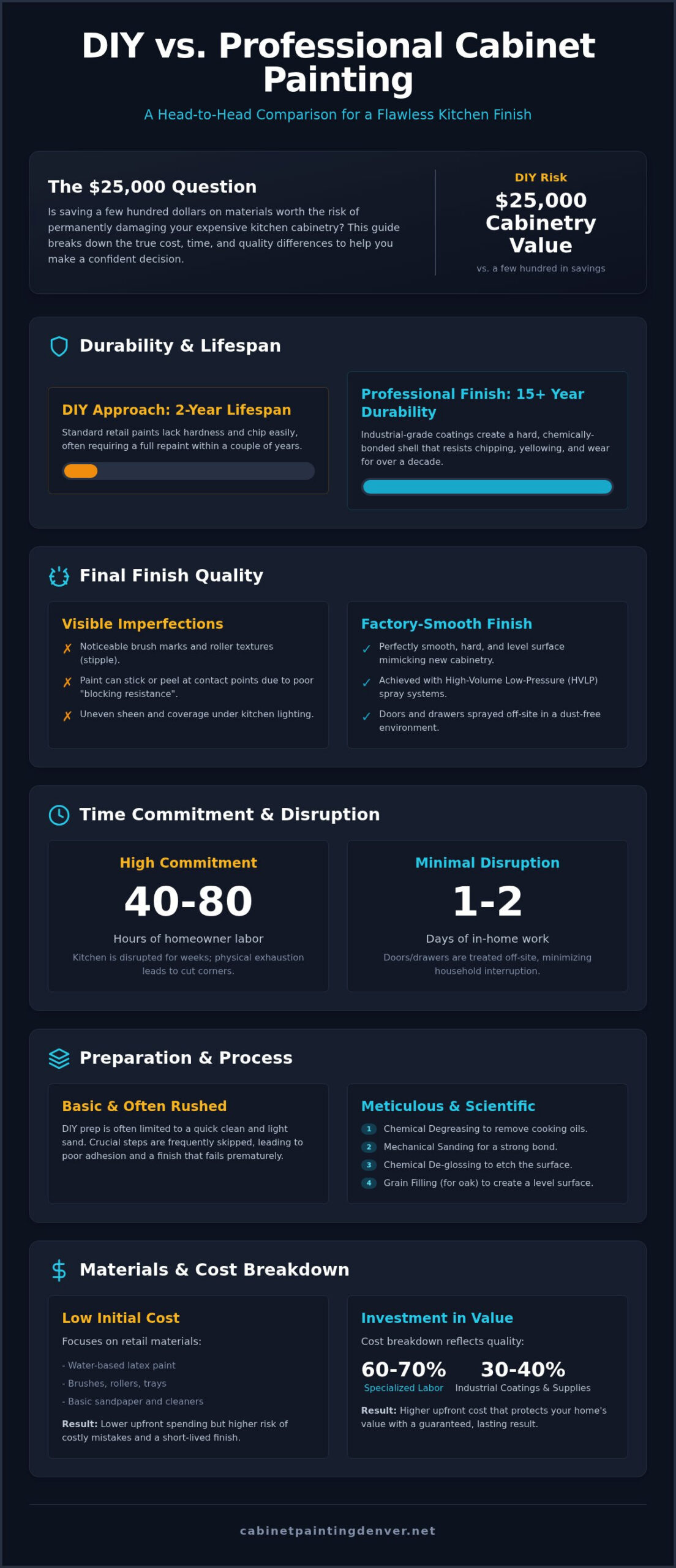
- Evaluate the longevity of diy vs professional cabinet painting by contrasting the 2-year lifespan of standard paint with the 15-year durability of professional coatings.
- Identify the specific skill sets and tools necessary to decide if your project is suitable for a DIY approach or requires professional expertise.
DIY vs. Professional Cabinet Painting: Understanding the Core Differences
Choosing between diy vs professional cabinet painting requires understanding the technical distinction between applying a layer of color and executing a full refinishing process. While "painting" implies a simple cosmetic change using brushes or rollers, professional refinishing adheres to the science of wood finishing. This involves a multi-stage preparation and industrial coatings that bond directly to the wood substrate. The initial cost gap is significant. DIYers spend mostly on retail-grade paint and basic tools. Professional investment covers specialized labor and commercial equipment that standard homeowners cannot access easily.
The emotional trajectory of this project is predictable. Most homeowners begin with high energy. They envision a weekend transformation that looks like a magazine cover. By the time they reach the mechanical sanding of the 40th door, fatigue sets in. Physical exhaustion often leads to corner-cutting. When you skip cleaning or rush the drying time, the final result suffers. The gap between a DIY project and a professional service is most visible in the "factory finish" benchmark. A factory finish mimics the original appearance of new cabinetry. It features a hard, level surface that resists chipping and looks perfectly smooth under kitchen lighting.
The DIY Appeal: Why Homeowners Consider the Solo Route
Financial savings drive the decision for many. By eliminating labor costs, which typically account for 60% to 70% of a professional quote, the project becomes accessible on a modest budget. There’s also a distinct sense of personal satisfaction in completing a major home improvement task. Working in small increments allows for flexibility. You can manage the project around your personal schedule without having contractors in your home for consecutive days. It’s a viable path if you have a high attention to detail and plenty of patience.
The Professional Standard: Why Experts Are in Demand
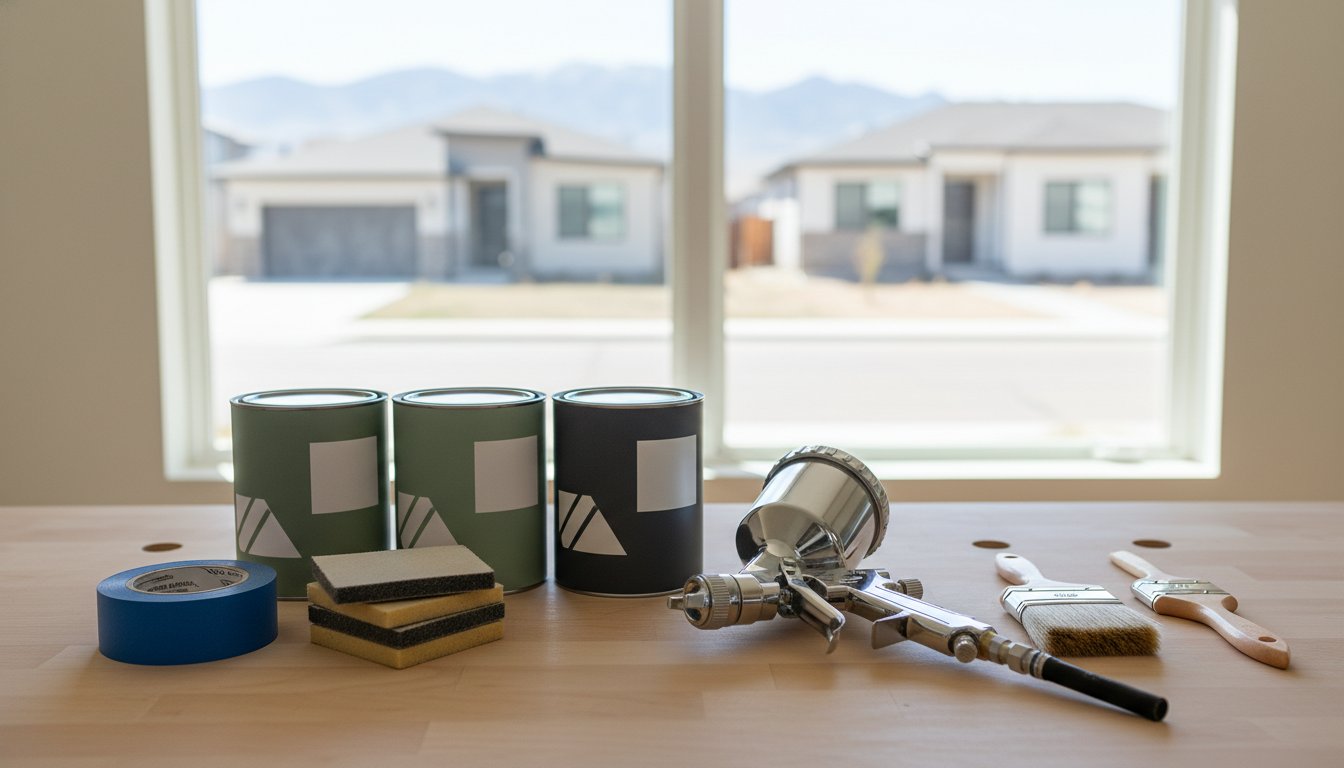
Experts provide access to resources that aren’t sold at local hardware stores. Professional refinishing utilizes industrial-grade coatings, such as pigmented lacquers or urethane enamels. These offer superior resistance to kitchen grease, steam, and heat. Professionals use high-volume low-pressure (HVLP) spray systems to achieve a surface free of the brush marks and roller textures common in DIY attempts. The professional process includes several critical steps:
- Chemical degreasing to remove years of accumulated cooking oils.
- Mechanical sanding to ensure the coating creates a strong mechanical bond.
- Off-site spraying of doors and drawers in a controlled, dust-free environment.
- Professional re-installation and alignment of all hardware.
The Technical Reality: Equipment, Prep, and Material Science
Professional preparation is the foundation of a durable finish. It begins with industrial degreasing to remove stubborn cooking residues that accumulate over years. Technicians then perform mechanical sanding and chemical de-glossing to ensure the new coating creates a permanent bond. For wood species with heavy textures like oak, grain filling is utilized to create a perfectly level surface. This level of preparation is rarely achieved in DIY projects due to the specialized chemicals and labor required. When evaluating diy vs professional cabinet painting, the longevity of the project depends entirely on these invisible first steps.
Industrial Coatings vs. Consumer Paint
Standard water based latex paint is designed for walls, not high touch cabinetry. It lacks "blocking resistance," which is why DIY cabinets often stick shut or peel at the contact points after they are closed. Professional Italian pigmented lacquers create a hard, chemically bonded shell. These industrial coatings resist the yellowing and chipping common in household paints. In Denver’s dry climate, the altitude can accelerate drying times. Professionals adjust their mixtures to ensure proper "flash off" and leveling, a technical nuance that prevents the coating from becoming brittle.
Application methods create the primary visual difference between a "painted look" and a "factory finish." DIYers typically use brushes or rollers. While some sources claim high quality rollers can mimic a spray finish, they always leave a texture known as stipple. Professionals use High Volume Low Pressure (HVLP) or airless sprayers. These tools atomize the coating into a fine mist, resulting in a surface free of brush marks or roller hair. If you want to achieve this level of precision for your kitchen, you can consult with local specialists about the refinishing process.
The Role of Professional Spray Booths
Achieving a mirror smooth finish requires a controlled environment. Professional spray booths eliminate dust and airborne particles that ruin wet paint. Spraying doors and drawers horizontally prevents the drips and sags that often plague vertical DIY attempts. This off-site processing also significantly reduces fumes, noise, and mess inside the home. By taking the most labor intensive components to a specialized facility, professionals ensure a dust free result that is impossible to replicate in a standard kitchen or garage. This technical separation is the secret to a flawless, factory quality result that withstands daily use.
Hidden Costs: Time Investment and the Price of Mistakes
The most common misconception regarding diy vs professional cabinet painting is the belief that the project can be completed in a single weekend. While social media tutorials often compress the process into a few minutes, the reality for a standard 20-linear-foot kitchen involves 50 to 80 hours of intensive labor. This timeline doesn’t account for the "kitchen downtime" that occurs when your primary meal preparation area becomes a taped-off construction zone. For many homeowners, the hidden cost isn’t just the materials; it’s the exhaustion and the loss of a functional home for several weeks.
Mistakes made during the DIY process are expensive to correct. If the initial cleaning or sanding is insufficient, the paint will begin to peel within months. Stripping poorly applied paint is significantly more difficult and time-consuming than painting fresh wood. Furthermore, the impact on home resale value is a critical factor. Potential buyers in the Denver market often have a keen eye for detail. Cabinets that show visible brush marks, drips, or uneven textures can deter offers or lead to requests for price reductions to cover a professional replacement or refinishing.
The True DIY Timeline: A Step-by-Step Hourly Breakdown
To understand the scope of the work, you must break the project down into its functional phases. A typical DIY schedule for a medium-sized kitchen looks like this:
- Labeling and removal (3-5 hours): Every door, drawer front, and piece of hardware must be removed and meticulously labeled to ensure proper re-installation.
- Cleaning and degreasing (5-8 hours): Scrubbing every surface with industrial cleaners to remove cooking oils.
- Sanding and priming (15-20 hours): Mechanical sanding of all surfaces followed by the application of a high-adhesion primer.
- Topcoats and drying (20+ hours): Applying multiple thin coats and waiting for proper curing between layers.
- Re-installation and alignment (5-10 hours): Hanging doors and adjusting hinges for perfect gaps.
Opportunity Cost: What is Your Time Worth?
When you choose the solo route, you’re essentially trading two to three full weekends of your life for a lower upfront price tag. It’s important to calculate your personal hourly rate against the cost of professional service. Additionally, the material budget often expands beyond paint. You must factor in the rental costs for professional sanders or high-quality sprayers. In the Denver area, renting a professional-grade airless sprayer can add significant expense to your project. When you add the cost of premium primers, specialized sandpaper, and protective gear, the financial gap between DIY and professional results begins to narrow quickly.
Quality and Longevity: How Long Will the Finish Last?
Longevity serves as the primary metric for assessing the value of your home improvement investment. When comparing diy vs professional cabinet painting, the timeline for potential failure varies significantly. A standard DIY project using consumer-grade materials typically shows signs of wear, such as peeling or staining, within 2 years. Professional refinishing is engineered to maintain its structural and aesthetic integrity for 10 to 15 years. This durability gap exists because industrial coatings are formulated specifically to withstand kitchen stressors like constant steam, cooking grease, and fluctuating heat from ovens.
Proper bonding is essential to prevent peeling around high-touch areas. The surfaces around handles and the moisture-rich environment near sinks are the most vulnerable points. While DIY paint sits on top of the wood, professional coatings create a chemical bond with the substrate. This makes the finish harder to chip during daily use. If a chip does occur, the cured industrial surface is much easier to clean without removing the color. Consumer paints often wipe away or become gummy when scrubbed with standard household cleaning chemicals.
Durability in High-Traffic Zones
The areas surrounding the dishwasher and stove are usually the first to fail in a DIY scenario. These zones experience regular exposure to high temperatures and humidity, which causes standard latex paint to soften and lose its grip. Professionals adhere to KCMA (Kitchen Cabinet Manufacturers Association) standards, which involve rigorous testing for chemical and heat resistance. Adhesion testing is the professional method for ensuring paint won’t peel by measuring how strongly the coating attaches to the wood surface. This technical validation ensures the finish remains intact despite the heavy use common in a busy home.
Aesthetic Excellence: The ‘No Brush Mark’ Guarantee
Visual quality is just as important as physical durability. Professional spraying eliminates the brush strokes, lap marks, and roller stipple that are unavoidable with manual DIY tools. This process ensures a uniform sheen and color consistency across all surfaces, regardless of the lighting in your kitchen. You can see our work in the Denver kitchen cabinet painting gallery for visual evidence of this factory-grade finish. Achieving this level of aesthetic precision requires specialized equipment and a controlled environment that DIYers cannot replicate in a residential setting. If you are ready to upgrade your home with a permanent, high-quality finish, contact us for a professional assessment of your cabinetry.
Conclusion: Making the Best Decision for Your Denver Home
The decision regarding diy vs professional cabinet painting depends on your specific goals for quality and your available time. If you have a high level of technical skill, access to professional HVLP sprayers, and a minimum of 80 hours to dedicate to the project, the DIY route offers substantial upfront savings. These "green flags" indicate you might achieve a functional result. However, most homeowners encounter "red flags" that necessitate professional intervention. These include working with high-end wood species, managing a tight deadline, or preparing a home for the Denver real estate market where a "DIY look" can negatively impact your final sale price.
Professional refinishing serves as the strategic middle ground in home improvement. It provides the durability and aesthetic of a factory finish without the $25,000 investment required for a full kitchen replacement. By choosing a professional service, you ensure the use of industrial coatings that are designed to last 10 to 15 years. This approach maximizes your return on investment by providing a remodel-quality transformation at a fraction of the cost of new cabinetry.
The Denver Climate Factor
Denver’s unique environmental conditions play a significant role in the success of a refinishing project. The region’s low humidity levels cause coatings to dry much faster than in coastal areas. If the paint flashes off too quickly, it can lead to cracking or an orange-peel texture. Local experts understand how Colorado-specific wood expansion and contraction affect coating adhesion over time. You can learn more about these technical requirements in Cabinet Painting Denver’s ultimate guide. Hiring a team that specializes in the local climate ensures your cabinets won’t fail during the first dry winter season.
Why Choose Cabinet Painting Denver?
We specialize in transforming kitchens through a rigorous professional spraying process. By utilizing off-site door and drawer refinishing, we minimize the disruption and fumes inside your home. This method ensures each component receives a factory-quality finish in a dust-free environment. Our services for kitchen cabinet painting, bathroom cabinet painting, and bookshelves cabinet painting offer a cost-effective alternative to full renovations. If you are ready to secure a durable, smooth finish for your cabinetry, you can Get Your Free Cabinet Painting Quote in Denver today. We provide the expertise needed to ensure your kitchen remains the centerpiece of your home for years to come.
Final Steps Toward a Factory-Quality Finish
Deciding on the right path for your cabinetry involves weighing the 80 hour DIY time commitment against the precision of industrial equipment. The technical differences in diy vs professional cabinet painting determine whether your kitchen resists grease and steam for two years or fifteen. Professional refinishing provides a surface that is chemically bonded to the wood, ensuring it won’t peel around high touch areas like handles and sinks. This ensures your investment adds measurable value to your property.
Utilizing professional HVLP spraying and off-site refinishing allows you to achieve a factory smooth finish without the significant mess of a traditional remodel. This specialized Denver, Colorado local expertise ensures your project is completed with procedural clarity and durable results. By removing doors and drawers for processing in a controlled environment, we minimize in-home disruption while delivering a mirror smooth surface that is impossible to replicate with a brush.
Transform your kitchen with a professional factory finish—Get a free quote from Cabinet Painting Denver today! Your kitchen is the centerpiece of your home, and it deserves a finish that reflects its value.
Frequently Asked Questions
Is it cheaper to paint cabinets yourself or hire a professional?
The upfront material cost is lower for DIY, but professional refinishing is often more cost-effective over time. DIY projects require purchasing specialized tools and premium paints that can add up quickly. If a DIY finish peels within two years, the cost to professionally strip and correct the surface is significantly higher than the original investment in a professional service.
What is the biggest mistake people make when DIY painting cabinets?
The most common error is insufficient cleaning and degreasing of the wood surfaces. Kitchen cabinets accumulate layers of invisible cooking oils and proteins over time. If you don’t use industrial-strength degreasers to remove these contaminants, the new coating will fail to bond. This results in immediate peeling around high-touch areas like handles and drawer edges.
How long does a professional cabinet painting project take compared to DIY?
A professional team typically completes a kitchen transformation in three to five days. When evaluating diy vs professional cabinet painting, most homeowners find they spend between 50 and 80 hours of active labor. Because professionals use off-site facilities for doors and drawers, your kitchen remains functional for a much larger portion of the project duration.
Do I need to sand my cabinets if I use a professional-grade primer?
Yes, mechanical sanding is a requirement for a durable, professional result. Even high-adhesion primers need a "profile" or texture on the surface to grip the wood effectively. Skipping the sanding phase is a primary cause of coating failure. Proper sanding ensures that industrial coatings create a permanent mechanical bond with the cabinet substrate.
Will DIY painted cabinets hold up as well as factory-finished cabinets?
No, DIY cabinets using consumer-grade paint lack the chemical resistance of a factory finish. Consumer paints are designed for walls and trim, not for the heat, steam, and grease of a kitchen. Professional coatings undergo chemical cross-linking as they cure. This process creates a hard shell that resists impact and moisture much better than standard latex or acrylic paints.
What kind of paint do professional cabinet painters use?
Professionals utilize industrial-grade pigmented lacquers or specialized waterborne urethane enamels. These materials are not typically sold at retail hardware stores. These coatings are formulated for high blocking resistance, which prevents cabinet doors from sticking shut. They provide the smooth, hard surface required to meet manufacturers’ standards for cabinetry.
Can I spray my own cabinets to get a professional look?
You can rent a sprayer, but achieving a factory-smooth look in a residential garage or kitchen is difficult. Without a dust-free spray booth, airborne particles will settle in the wet paint and create a gritty texture. Professional systems require specific air pressure settings and material thinning ratios that require significant technical experience to master.
Is professional cabinet painting worth it for home resale value?
Professional refinishing offers a high return on investment because buyers perceive it as a full kitchen remodel. In the diy vs professional cabinet painting debate, the professional option avoids the visible brush marks and drips that can deter potential buyers. A high-quality finish suggests the home has been well-maintained, which supports a higher asking price.