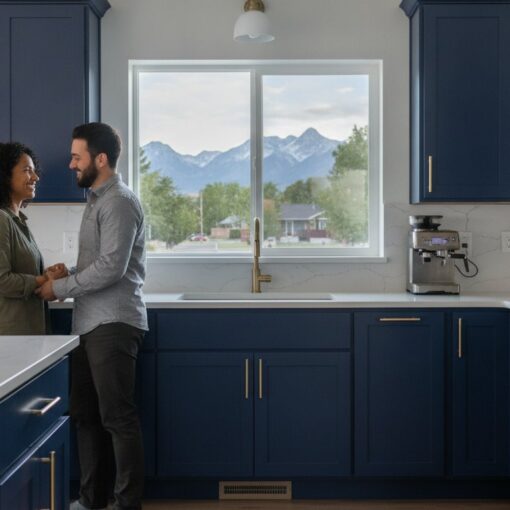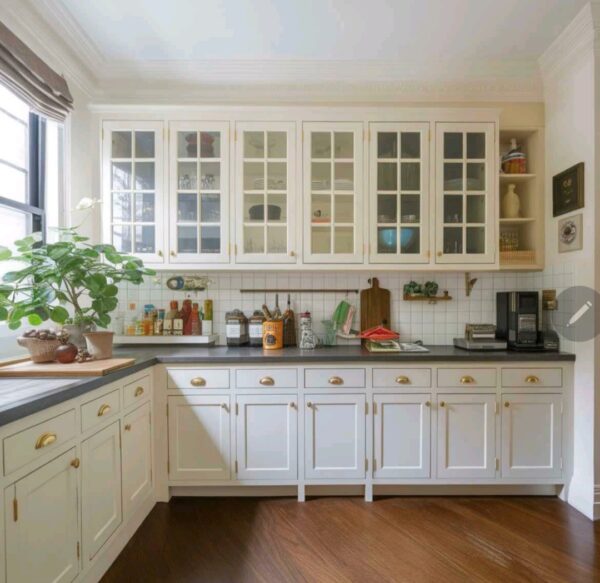
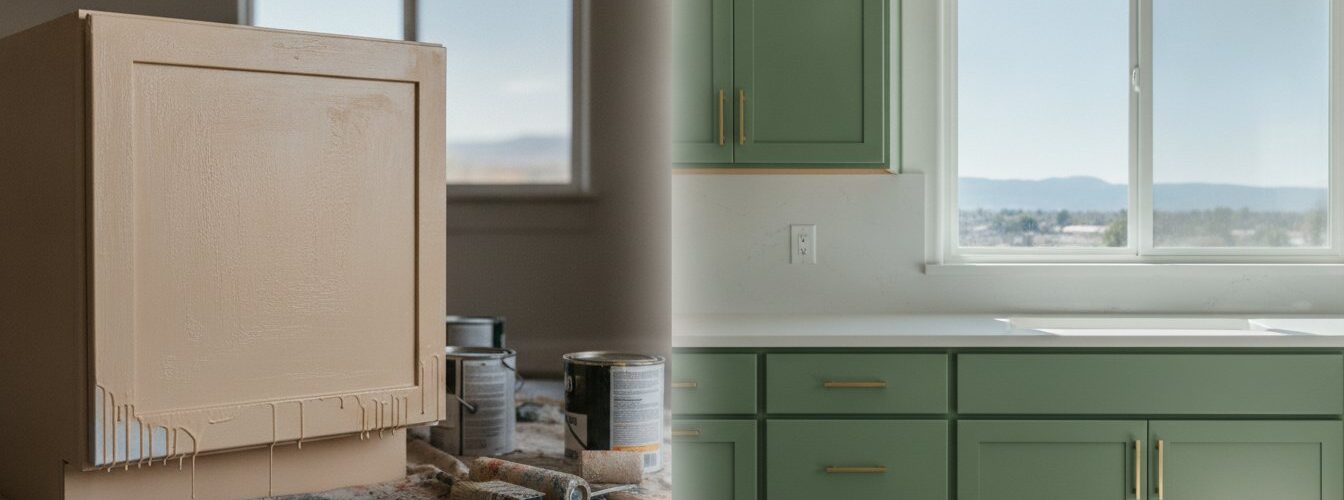
The $500 you spend on DIY supplies might actually cost you thousands in home equity. It’s a common dilemma for homeowners looking to modernize their kitchen without the massive expense of a full remodel. You likely want a high-end look that stands up to daily wear, but the fear of a streaky, amateur finish is real. When weighing professional cabinet paint vs diy, the choice involves more than just a price tag. It’s about whether you want a kitchen that looks “painted” or one that looks brand new.
We’ll help you navigate this decision by comparing the critical differences in cost, quality, and durability. You’ll discover how 2026 VOC regulations affect your paint choices and why industrial-grade coatings like the Sherwin-Williams Gallery Series offer a level of protection that standard retail paints can’t match. This guide provides clarity on the time commitment required for a professional result and the long-term impact each option has on your home’s value. We’ll examine the technical requirements of factory-smooth finishes so you can make the most informed investment for your cabinetry.
Key Takeaways
- Understand why industrial-grade coatings and HVLP sprayers deliver a factory-smooth finish that standard retail tools cannot achieve.
- Calculate the real investment of a DIY project, including the 60+ hours of labor typically required for a standard kitchen.
- Compare professional cabinet paint vs diy using a decision matrix that evaluates your cabinet material and the availability of a dust-free workspace.
- Learn how Denver’s unique climate affects paint curing and why off-site spraying is the most effective method for local homeowners.
- Discover how professional refinishing serves as a cost-effective alternative to a full kitchen remodel while ensuring long-term durability.
Professional Cabinet Paint vs. DIY: The High Stakes of Kitchen Refinishing
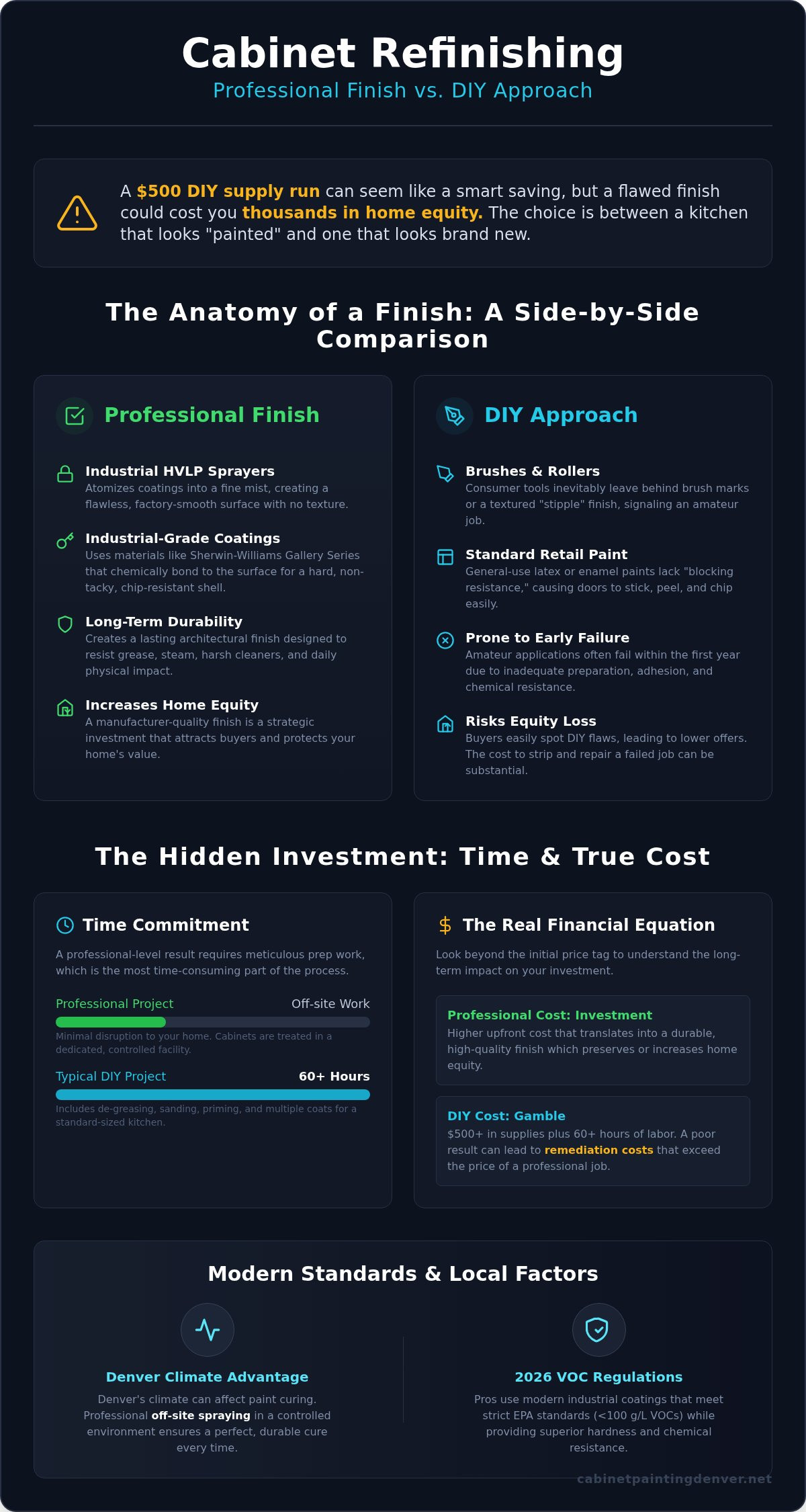
Professional cabinet refinishing is a technical process that requires precision beyond standard home maintenance. It’s not just “painting” in the traditional sense. When you compare professional cabinet paint vs diy, you’re looking at the difference between a temporary color change and a long-term architectural finish. Kitchen cabinets are the most difficult surfaces in a home to treat because they serve as both furniture and high-traffic work surfaces.
The primary objective of a professional project is to achieve a factory-smooth finish. This surface must resist grease, steam, and constant physical contact. An amateur application often fails within the first year because it lacks the industrial-grade durability required for the kitchen environment. Achieving this result requires more than just a brush; it requires a controlled environment and specialized coatings.
Why Cabinets Aren’t Like Painting Your Walls
Wall paint is designed for static, vertical surfaces that rarely face physical contact. Cabinets are different. They endure constant physical impact, friction from hinges, and exposure to oils. The complexity of Cabinet construction and finishing means that simple adhesion isn’t enough. Professional coatings rely on chemical bonding. This process fuses the new finish to the substrate, creating a hard shell that doesn’t chip when struck by a pot or pan.
- Gravity and Verticality: Painting vertical doors without creating drips or “sags” requires specialized equipment and technique.
- Chemical Resistance: Kitchen cleaners can dissolve standard consumer paints. Industrial coatings are formulated to withstand harsh detergents.
- Preparation: Cabinets require deep de-greasing and mechanical sanding that goes far beyond what is needed for drywall.
The 2026 Home Value Factor
Real estate trends in 2026 show that the kitchen remains the focal point for home buyers. A high-quality finish is a strategic investment. Buyers can easily identify a DIY job by the presence of brush marks or roller stipple. These visual flaws can lead to lower offers, as buyers factor in the cost of professional remediation. Opting for professional kitchen cabinet painting ensures the result looks like it came straight from a manufacturer’s showroom. This factory-quality finish protects your equity by providing a durable surface that looks intentional rather than accidental. A poor DIY finish can actually result in equity loss. The cost to strip and repair a failed paint job is often higher than the original cost of professional refinishing.
The Technical Gap: Industrial Sprayers vs. Consumer Tools
The visual difference between a high-end kitchen and an amateur renovation often comes down to the tools used for the application. Most homeowners rely on high-density foam rollers or synthetic brushes. While these work for interior walls, they create a distinct texture known as “stipple” on cabinetry. In the professional cabinet paint vs diy debate, the equipment determines the final texture of the wood. Professionals use High-Volume Low-Pressure (HVLP) sprayers to atomize the coating into a fine mist. This technology results in a level of smoothness that manual tools simply cannot replicate.
Industrial Coatings: Beyond the Gallon
Retail paints are designed for general use and ease of application. They dry slowly to allow for “leveling,” but they often lack a critical property called blocking resistance. This is why DIY cabinets often stick to the frames after they are closed, eventually leading to peeling. Professionals use industrial-grade waterborne alkyds or precatalyzed lacquers. These materials cure through a chemical process to a hard, non-tacky finish that resists heat and moisture.
Modern paint for cabinets must also meet 2026 VOC regulations. New EPA standards limit non-flat coatings to 100 g/L. While DIYers might use standard latex, professionals utilize industrial coatings like the Sherwin-Williams Gallery Series that balance these low emissions with extreme durability. When working with older cabinetry, following lead-safe work practices is essential during the preparation phase to ensure the home remains a healthy environment.
The Spray Finish Advantage
A “factory finish” is characterized by the absence of visible brush marks or “orange peel.” Orange peel is a bumpy surface caused by improper paint thickness or inconsistent drying times. Professional spraying creates a microscopic, uniform layer across the entire surface of the door. This precision is difficult to achieve in a home environment where dust and airflow are uncontrolled.
One critical factor in this process is mil thickness. Mil thickness refers to the measurement of the dry paint film, where one mil equals one-thousandth of an inch. Proper mil thickness ensures the coating is thick enough to protect the wood but thin enough to remain flexible without cracking or chipping. Cabinet Painting Denver performs door and drawer refinishing in a shop-controlled environment to prevent dust contamination. If you want a result that looks like it came from a showroom, consider a professional cabinet refinishing service for your kitchen.
The Hidden Math: Calculating the Real Cost of DIY
The financial appeal of a DIY project often vanishes when you calculate the “Total Cost of Ownership.” Many homeowners focus solely on the price of a few gallons of paint. However, a successful kitchen transformation requires a significant investment in professional-grade tools and materials. When evaluating professional cabinet paint vs diy, you must account for the specialized equipment needed to mimic a factory finish. This includes HEPA-certified vacuums for dust extraction, orbital sanders with specific grit sequences, and high-quality personal protective equipment (PPE). Without these, the finish is easily compromised by airborne debris or poor surface preparation.
The “Botched Job Tax” is another hidden expense. If an amateur coating fails, the cost to remediate the cabinetry is significantly higher than the original project. Stripping failed paint requires specialized chemicals and double the labor. It’s often more economical to hire a professional from the start than to pay for a professional to undo an amateur mistake. A failed DIY attempt can lead to permanent damage to the wood substrate, further devaluing the home.
Equipment and Material Expenses
Achieving a durable surface requires more than a standard synthetic brush. You need grain fillers to smooth open-grain woods like oak and tack cloths to remove microscopic particles before each coat. Retail “primer and paint in one” products often fail on cabinetry. You must invest in high-adhesion bonding primers that are compatible with industrial topcoats. Cutting corners on these preparation tools is the most common reason for early coating failure. The cost of purchasing these professional materials individually often approaches the labor cost of hiring a specialist.
The Opportunity Cost of Your Time
A standard kitchen requires approximately 60 hours of labor for a DIY project. This includes cleaning, sanding, priming, painting, and drying time. If you work a full-time job, this project can easily stretch over three or four weeks. During this time, your kitchen remains a non-functional construction zone. The return on investment for kitchen remodeling isn’t just about equity. It’s also about the “happiness factor” of maintaining a functional home environment.
Consider your own hourly rate. When you calculate 60 hours against your personal value, the perceived savings of DIY often disappear. A professional service like Cabinet Painting Denver completes the work in a fraction of that time while maintaining a clean workspace. To see how these labor hours stack up against professional rates, view our cost to paint kitchen cabinets guide. This comparison helps you decide if the labor trade-off is truly worth the effort.
The Homeowner’s Decision Matrix: DIY or Pro?
Deciding between professional cabinet paint vs diy requires an objective look at your project’s technical requirements. Start with your cabinet material. Solid wood, laminate, and MDF each react differently to various coatings. Laminate and MDF are non-porous surfaces that require specific bonding primers to prevent the topcoat from peeling off in sheets. Solid wood, particularly species like Oak or Hickory, often needs extensive grain filling to prevent the natural wood texture from showing through the finish. If your workspace isn’t a dedicated, dust-free environment, achieving a factory finish is nearly impossible. Dust particles settle on wet paint, creating a textured surface that ruins the aesthetic and feels rough to the touch.
Consider your personal “Finish Standard.” If you’re comfortable with visible brush marks or slight imperfections, DIY is a viable path. However, if you want a kitchen that looks like it came from a high-end showroom, professional intervention is necessary. Your timeline is another factor. A DIY project typically requires 10 to 14 days of uninterrupted time for a standard-sized kitchen. During this period, your kitchen remains a construction zone and is largely unusable. Professionals often take doors off-site to a controlled shop, reducing the in-home disruption to just a few days. Finally, look at the warranty. DIY offers no protection against failure, whereas professionals provide peace of mind through service agreements that cover issues like chipping or premature peeling.
When DIY Makes Sense
A DIY approach is often appropriate for low-visibility areas or low-stakes environments. Laundry rooms, basement kitchenettes, or rental properties where the goal is a quick refresh rather than a long-term investment are ideal candidates. It’s also a great way to learn the craft if you have a genuine interest in woodworking and finishing techniques. You should avoid DIY for high-end kitchens or if you plan on putting your home on the market in the near future. A poor finish can turn off potential buyers and may lead to lower offers as they calculate the cost of professional remediation.
When Hiring a Pro is Mandatory
Complex projects demand professional expertise to ensure the longevity of the finish. Open-grain woods like Oak are notoriously difficult to paint because the grain remains visible and “thirsty” without specialized industrial fillers. High-gloss finishes and dark colors are also unforgiving; they highlight every drip, dust speck, and uneven layer. Before you commit to a project, you should review a cabinet painter’s portfolio to verify their experience with your specific material and color choice. If you want a result that mirrors a factory installation, hiring a specialist is the most reliable path. For homeowners who want a guaranteed, durable result without the weeks of labor, reaching out to a professional cabinet painter is the best strategic move.
Why Denver Homeowners Choose Professional Refinishing
Residents of the Mile High City face unique environmental challenges that complicate home improvement projects. In the debate of professional cabinet paint vs diy, the local climate often acts as the deciding factor. Denver’s low humidity levels cause coatings to dry at an accelerated rate. For a DIYer using a brush or roller, this rapid drying often results in “flashing” or visible lap marks because the paint cannot level before it sets. Professional spraying bypasses this issue by applying a fine, even mist that settles perfectly even in dry conditions.
Cabinet Painting Denver utilizes a specialized workflow designed for these specific atmospheric conditions. By removing doors and drawers for off-site refinishing, the process minimizes in-home disruption and airborne dust. This off-site approach allows for a controlled environment where temperature and airflow are optimized for industrial-grade spraying. While the doors are being treated, the stationary cabinet frames are finished on-site using the same high-performance materials. This ensures a cohesive look across the entire kitchen without the logistical headache of a full construction zone in your home.
The Local Denver Advantage
The Denver air is notoriously dry, which increases static electricity and attracts dust to wet surfaces. Local professionals implement advanced dust-containment systems and HEPA filtration to ensure a clean finish that isn’t compromised by airborne particles. Expertise in cabinet refinishing in Colorado also involves selecting the right chemistry. Denver pros use coatings specifically tested for high-altitude environments to ensure long-term color stability and resistance to UV exposure. This local knowledge prevents the yellowing or brittle cracking that can occur when using standard retail products at 5,280 feet.
The Transformation Experience
The Cabinet Painting Denver process follows a structured timeline to return your kitchen to full functionality quickly. The transformation begins with a systematic removal of all doors and drawers, which are transported to a dedicated shop environment. While the off-site components receive multiple coats of industrial finish, the in-home frames are prepared and sprayed with equal precision. Once all parts are fully cured, the team handles the re-installation and precise hardware adjustment. This step is critical. Many DIY projects fail during the re-assembly phase when hinges aren’t properly aligned, leading to rubbing and premature chipping. A professional service includes this technical calibration as part of the final walk-through. This comprehensive approach provides a level of durability and aesthetic precision that standard home kits cannot match. Homeowners are encouraged to view a local gallery of Denver kitchen transformations to see how these professional techniques maintain their integrity in the local climate.
Secure Your Kitchen’s Long-Term Value
Choosing between professional cabinet paint vs diy is a decision that impacts your home’s aesthetic and financial standing for years. While the lower upfront cost of a DIY project is tempting, the technical requirements of a factory finish are difficult to meet without industrial equipment. A successful kitchen transformation requires more than just a color change. It requires a chemical bond that resists the heat, grease, and friction of a high-traffic environment. Professional refinishing ensures your cabinetry remains durable and visually appealing through 2026 and beyond.
For Denver homeowners, the challenges of low humidity and high altitude make professional intervention even more critical. You can avoid the weeks of labor and the risk of a non-durable finish by choosing a specialist who understands the local environment. Cabinet Painting Denver utilizes local Denver expertise to provide a professional HVLP spray finish and off-site door refinishing. This process ensures a factory-quality result without the disruption of a full remodel. Take the next step toward a durable, beautiful kitchen by visiting us to Get Your Free Cabinet Painting Quote in Denver. Your modernized kitchen is within reach.
Frequently Asked Questions
Is it cheaper to paint cabinets yourself or hire a pro?
Upfront material costs are significantly lower when you handle the labor yourself. However, the long-term investment often favors a professional. DIYers must purchase sprayers, sanders, and safety gear that pros already own. If a DIY finish fails within two years, the cost of repair exceeds the initial savings. Professionals provide a durable coating that maintains its integrity for over a decade, making it a more cost-effective choice for home equity.
Can I get a factory finish if I paint my cabinets at home?
Achieving a factory finish at home is nearly impossible without a dust-free, shop-controlled environment. Standard home ventilation allows microscopic particles to settle on wet paint, creating a gritty texture. Consumer-grade rollers also leave a “stipple” pattern that lacks the glass-like smoothness of industrial HVLP sprayers. Professionals use specialized drying racks and climate-controlled booths to ensure the finish cures without any environmental contamination or physical imperfections.
How long does professional cabinet painting take compared to DIY?
Professional refinishing usually takes five to seven business days from start to finish. This timeline includes off-site door spraying, which keeps your home functional. In contrast, a DIY project for a standard kitchen typically requires 60 or more hours of active labor. For most homeowners, this stretches across three or four weeks of weekends and evenings. Hiring a specialist drastically reduces the time your kitchen remains a non-functional construction zone.
What is the biggest mistake people make when DIY cabinet painting?
The most common error is insufficient surface preparation, specifically the failure to remove hidden kitchen grease. Cooking oils penetrate the wood and prevent new paint from bonding, leading to immediate peeling. Many DIYers also rely on “all-in-one” retail paints that lack the chemical hardness of industrial coatings. Without proper de-glossing and mechanical sanding, the new finish won’t have the necessary profile to grip the substrate for long-term durability.
Do I need to sand my cabinets before painting them?
You must sand your cabinets to ensure the new coating adheres properly. Sanding removes the existing topcoat and creates a microscopic texture for the primer to bond with. If you skip this step, the paint will sit on top of the old finish rather than fusing with the wood. Professionals use orbital sanders connected to HEPA vacuums. This equipment captures 99% of dust, keeping your kitchen clean while preparing the surface.
Can you fix a bad DIY cabinet paint job?
A failed DIY project can be fixed, but the remediation process is complex. It involves chemically stripping the amateur paint or performing aggressive mechanical sanding to reach a stable surface. This labor is more intensive than a standard refinishing job and often costs more due to the extra preparation required. It’s often more efficient to hire a specialist initially than to pay the “botched job tax” to fix a DIY mistake.
What kind of paint do professionals use for kitchen cabinets?
Pros use industrial-grade coatings such as waterborne alkyds or precatalyzed lacquers that meet 2026 VOC regulations. These materials are different from the latex paint found at hardware stores. They are designed to cure into a hard, chemical-resistant shell that doesn’t stick when doors are closed. When weighing professional cabinet paint vs diy, the primary technical advantage is the use of these high-performance products that provide superior blocking resistance and longevity.
Will painting my cabinets myself decrease my home’s value?
A low-quality paint job can decrease your home’s value by creating a visual “red flag” for buyers. Amateur finishes often show brush marks, drips, or uneven sheen, which suggests a lack of professional maintenance. Buyers may subtract the cost of a full kitchen remodel from their offer if the cabinets look poorly handled. In the professional cabinet paint vs diy comparison, a professional finish protects your equity by providing a showroom-quality aesthetic.