Dreaming of a kitchen transformation but terrified of a DIY disaster? The fear is real. Choosing a paint that ends up chipping, peeling, or showing every single brushstroke can turn an exciting project into a costly regret. When you’re faced with a wall of cans and confusing terms like alkyd, enamel, and urethane, it’s easy to feel overwhelmed. Selecting the perfect paint for cabinets is the single most important decision for achieving a finish that looks professionally sprayed, not hastily rolled, and will stand up to daily life.
This is where we cut through the noise. In this professional painter’s guide, we’re sharing the trade secrets to a flawless, long-lasting cabinet finish. You’ll discover the exact types of primers, paints, and sheens the pros use to create that durable, factory-like surface. By the end, you’ll have the confidence to tackle your project or know precisely what to ask for when hiring a painter, ensuring a beautiful result that elevates your entire home.
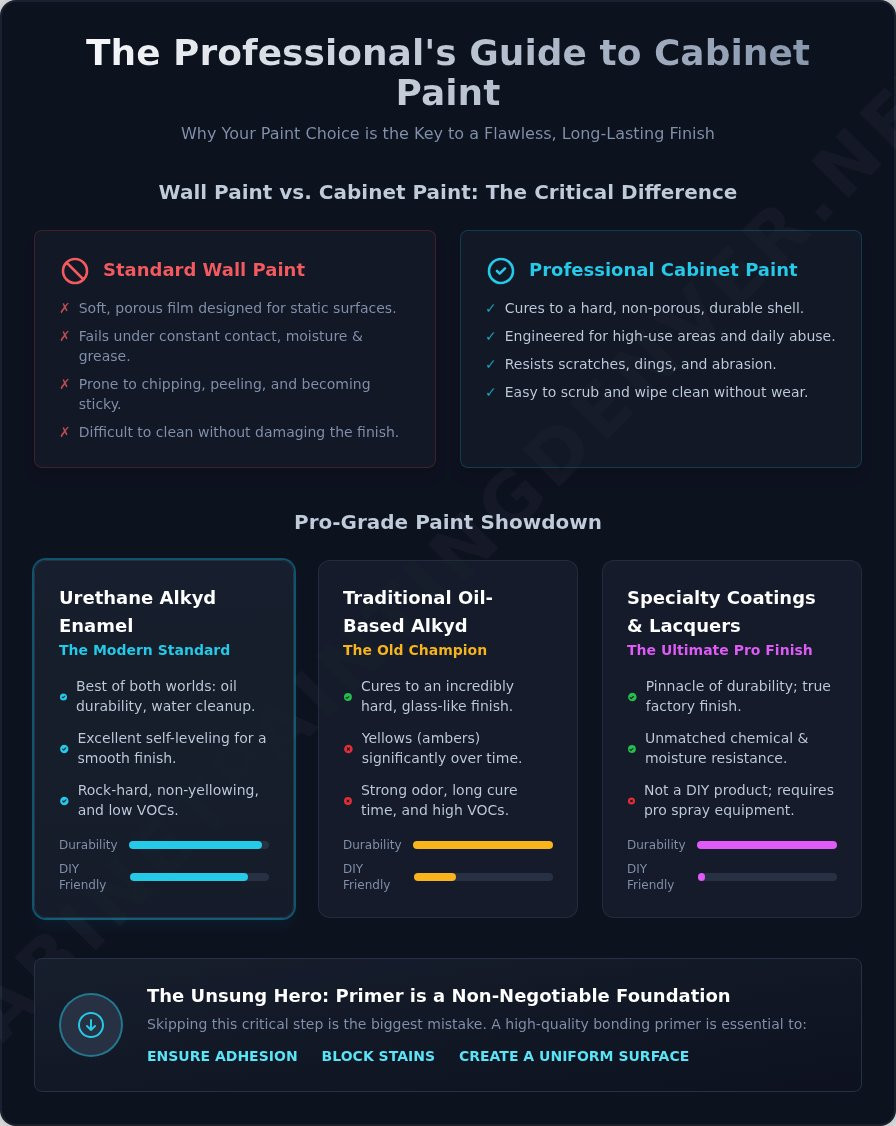
Why You Can’t Use Regular Wall Paint on Cabinets
It’s a tempting shortcut: you have half a can of wall paint left from your last project, so why not use it on your kitchen cabinets? Unfortunately, this common mistake can lead to a finish that fails within months. Cabinets are not static walls; they are high-use, functional furniture that endures a level of daily abuse your walls never will.
Think about what your cabinets go through every day:
- Constant Contact: Hands-often greasy or wet-opening and closing doors and drawers.
- Environmental Stress: Steam from boiling pots, grease splatters from frying pans, and moisture from the sink.
- Aggressive Cleaning: Frequent wiping and scrubbing to remove food spills and grime.
Standard interior wall paint is simply not formulated to withstand this kind of wear and tear. Using it is a recipe for chipping, peeling, and a perpetually sticky surface that attracts dirt.
The Science of Hardness and Durability
The core difference between wall paint and a high-quality paint for cabinets lies in how it cures. Wall paint is designed for coverage and color, drying to a relatively soft, porous film. Cabinet paint, however, is engineered to cure into a hard, non-porous shell. The secret is in the formulation. While all paints share the basic components of paint like pigments and solvents, the resins in cabinet coatings are specifically designed to create a tougher, more durable surface that can resist scratches, dings, and abrasion from daily use.
Resisting Grease, Grime, and Cleaning
Your kitchen is a battleground of airborne particles, especially grease. Over time, these oily residues settle on surfaces and can degrade a standard latex paint, making it feel tacky and difficult to clean. Professional cabinet paints are formulated to be non-porous, creating a smooth, sealed surface that grease and grime can’t penetrate. This makes them exceptionally easy to wipe clean without damaging the finish. Attempting to scrub food splatters off a wall-painted cabinet will quickly wear away the paint, while a proper cabinet coating is built to handle routine cleaning for years to come.
Pro-Grade Cabinet Paint Types Explained
When you want a cabinet finish that looks and feels factory-new, the secret lies in using professional-grade products. While hardware stores offer a wide array of options, professional painters rely on specific categories of coatings engineered for the unique demands of cabinetry. The right paint for cabinets depends heavily on your material, your budget, and the durability you require. Major publications like Good Housekeeping have detailed guides on the best paints for cabinets, often highlighting the same pro-level categories we use. Let’s break down the types we trust for guaranteed results.
Urethane Alkyd Enamels: The Modern Standard
This is the go-to choice for most high-end cabinet refinishing projects today. Urethane alkyd enamels, often called waterborne or hybrid alkyds, offer the best of both worlds: they have the extreme durability and self-leveling properties of traditional oil-based paint but with the convenience of water-based cleanup and low VOCs (Volatile Organic Compounds). This technology results in a rock-hard, non-yellowing finish that resists chipping and scuffing, making it perfect for busy kitchens. Its ability to lay down perfectly smooth, even when brushed or rolled, eliminates brush marks for a flawless look.
Traditional Oil-Based Alkyd Paints
For decades, oil-based alkyds were the undisputed champions of durability. Known for curing to a glass-like, incredibly hard finish, they created a protective shell that was second to none. However, their popularity has waned significantly due to major drawbacks. These paints emit a powerful odor, require harsh mineral spirits for cleanup, and have exceptionally long cure times. More importantly, they tend to yellow or “amber” over time, which is especially noticeable on white and light-colored cabinets. Stricter VOC regulations have also limited their availability and use in many areas.
Specialty Cabinet Coatings and Lacquers
For the absolute pinnacle of durability and a true factory finish, professionals turn to specialty coatings like pre-catalyzed lacquers and conversion varnishes. These are not paints in the traditional sense but rather chemical-curing coatings that form an incredibly tough, non-porous surface. Application is complex, requiring professional-grade HVLP (High Volume, Low Pressure) spray equipment and extensive ventilation due to their potent fumes. While not a DIY option, a lacquer finish provides unmatched resistance to chemicals, moisture, and wear. Not sure which is right for your kitchen? Ask our Denver experts for advice.
The Unsung Hero: Why Primer is Non-Negotiable for a Lasting Finish
While choosing the perfect color gets all the attention, the real secret to a durable, professional-looking cabinet finish is the step that happens before a single drop of paint is applied: priming. Skipping this foundational stage is the single biggest mistake you can make. It’s not just ‘base paint’; a high-quality primer is a specialized formula designed to solve problems and ensure your topcoat performs flawlessly. Comprehensive guides on how to properly paint cabinets always emphasize this critical prep work for a reason.
Primer serves three essential functions:
- Ensures Adhesion: It creates a tenacious bond between the cabinet surface and the new paint.
- Blocks Stains: It prevents stubborn wood tannins, knots, or old stains from bleeding through your new color.
- Creates a Uniform Surface: It provides a smooth, even base, so your final color looks rich and consistent.
Adhesion: Making Paint Stick to Any Surface
Cabinets are often made from slick, non-porous materials like laminate, thermofoil, or have a glossy, factory-applied finish. Regular paint simply can’t grab onto these surfaces. This is where a bonding primer is essential. It’s chemically engineered to adhere to difficult substrates, creating the perfect anchor for your topcoat. Without it, even the best paint for cabinets will be prone to chipping, scratching, and peeling with minimal use.
Stain Blocking: Preventing Wood Tannins and Knots from Bleeding Through
If you’re painting over natural wood, especially oak, cherry, or mahogany, you risk “tannin bleed.” This is when natural oils in the wood leach through water-based coatings, creating ugly yellow or brown stains. To prevent this, you need a shellac-based or oil-based stain-blocking primer. These formulas create an impermeable seal that water-based primers often can’t, ensuring your crisp white or light gray finish stays true to its color.
A final word of caution: Avoid “paint and primer in one” products for this project. While convenient for interior walls, they lack the powerful bonding and stain-blocking capabilities required for the demanding job of refinishing kitchen cabinets. Always use a separate, dedicated primer for results that stand the test of time.
Selecting the Perfect Sheen for Durability and Style
Once you’ve chosen your color, the next critical decision is the paint’s sheen. Sheen refers to the level of gloss in the finish, and it directly impacts both the final look and the long-term performance of your cabinets. There’s a simple rule to remember: the higher the sheen, the greater the durability and washability. However, that extra shine also tends to highlight any surface imperfections, from minor dings to subtle wood grain.
Choosing the right finish is a balancing act between aesthetics and practicality. For a project as important as this, using a high-quality paint for cabinets with the correct sheen is non-negotiable for achieving a beautiful, lasting result.
Satin Finish: The Most Popular Professional Choice
Often considered the “goldilocks” of finishes, satin offers a delicate, velvety glow that isn’t overly reflective. It strikes the perfect balance, providing excellent durability and scrubbability without the harsh shine of glossier options. This makes it fantastic at hiding minor surface flaws, which is why it’s the go-to recommendation for most kitchen and bathroom cabinet projects. It delivers a sophisticated, modern look that’s also incredibly practical for daily life.
Semi-Gloss Finish: For Maximum Durability
If your cabinets are in a high-traffic, high-moisture, or high-mess zone (think a busy family kitchen or a child’s bathroom), a semi-gloss finish is an excellent choice. This sheen creates a harder, more durable shell that is exceptionally easy to wipe clean. Grease, fingerprints, and splatters come off with minimal effort. The trade-off? Its reflective surface will magnify any pre-existing dents, unevenness, or brush strokes in the underlying surface.
Why Professionals Avoid Matte and Eggshell Finishes
While matte and eggshell finishes are popular for walls, they are a poor choice for cabinetry. Their low-sheen, porous surfaces act like a magnet for dirt, grease, and fingerprints. Worse yet, they are notoriously difficult to clean; attempting to scrub them often results in “burnishing,” which creates unsightly shiny patches and ruins the uniform finish. Simply put, these sheens lack the resilience needed to withstand the daily wear and tear that kitchen and bathroom cabinets endure.
Need help deciding on the perfect sheen for your project? Our team of experts can guide you to a finish that’s both beautiful and built to last.
Beyond the Can: Why Application & Curing Are Crucial
You’ve selected the perfect color and the highest-quality paint. But the journey to beautiful, durable cabinets doesn’t end there. Even the best product in the world can fail if applied incorrectly or rushed back into service. The two factors homeowners most often underestimate are the application method and the critical patience required for the paint to fully harden.
Spraying vs. Brushing/Rolling: The Secret to a Factory Finish
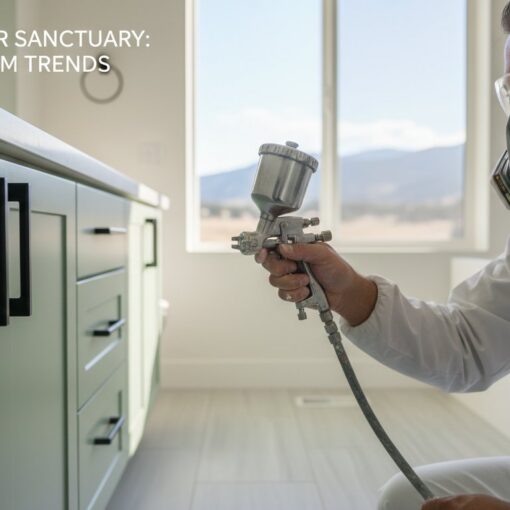
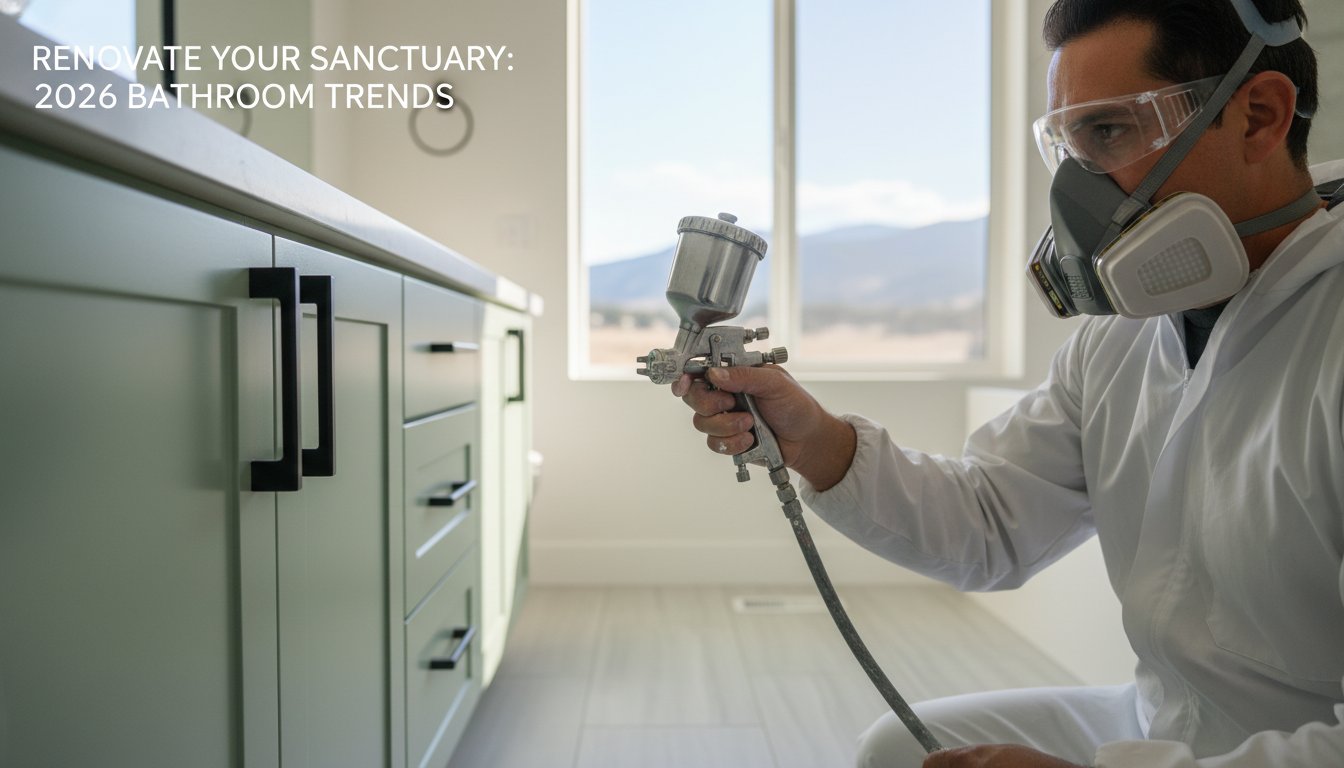
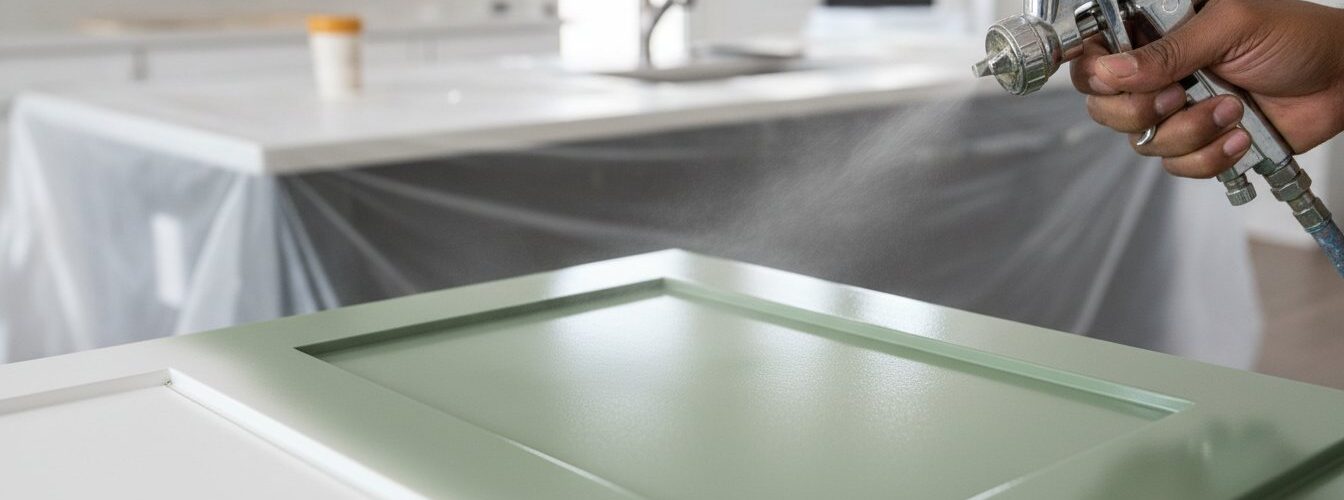
Have you ever admired the perfectly smooth surface of brand-new cabinets? That’s a factory finish, and it’s achieved with professional spray equipment. Spraying atomizes the paint for cabinets, laying down thin, even coats that self-level into a flawless, hard-wearing surface without any brush strokes or roller texture. In contrast, DIY methods often leave behind tell-tale marks that detract from the final look. Professionals remove doors and drawer fronts to spray them horizontally in a controlled, dust-free environment, ensuring a pristine finish on every surface. Want that perfect, factory-smooth look? Get a free quote from our team.
The Importance of Proper Curing Time
One of the most common mistakes is confusing “dry to the touch” with “fully cured.” While your cabinets may feel dry in a few hours, the paint is still soft and vulnerable underneath. Curing is a chemical process where the paint hardens and bonds completely to the surface, achieving its maximum durability. This process can take anywhere from two to four weeks.
Rushing to re-install hardware or placing heavy items on shelves can lead to permanent damage:
- Dents and Scratches: A soft finish is easily marred by everyday use.
- Chipping: The paint can chip easily, especially around knobs and pulls.
- Sticking: Doors and drawers can stick to the cabinet frames, peeling the new paint off when opened.
A professional process always includes clear guidance on curing. We ensure you know exactly how to care for your new finish so the premium paint for cabinets you’ve invested in lasts for years. Patience is the final, essential ingredient for a lasting transformation.
Transform Your Kitchen: The Final Word on Cabinet Paint
As we’ve explored, achieving a durable, beautiful cabinet finish goes far beyond picking a color. It’s about understanding that specialized cabinet coatings are fundamentally different from wall paint and that a high-quality primer is the essential foundation for a lasting bond. The right paint for cabinets, combined with the proper sheen and meticulous application, is the secret to a transformation that looks professional and stands up to daily life.
While a DIY approach is possible, achieving that perfectly smooth, factory-like finish requires expertise. We eliminate the guesswork by using a professional spray application, premium high-durability cabinet coatings, and expert prep work to guarantee a flawless result that lasts. Why settle for less when a professional touch is within reach?
Ready for a flawless finish? Get your free cabinet painting quote in Denver today! Let us help you bring your vision to life and create the kitchen you’ve always dreamed of.
Frequently Asked Questions
What is the most durable type of paint for kitchen cabinets?
The most durable options are acrylic urethane enamel or modern waterborne alkyd paints. These formulas are engineered to cure into a hard, non-porous shell that resists chipping, scuffs, and staining. This factory-like finish stands up well to the daily wear and tear of a busy kitchen, including frequent cleaning. Unlike standard wall paint, these products provide the resilience needed for high-touch surfaces like cabinetry, ensuring your finish lasts for years.
Do I really need to sand my cabinets before painting?
Yes, sanding is a critical, non-negotiable step for a professional and lasting paint job. You don’t need to strip the old finish completely; a light “scuff sand” is usually sufficient. This process de-glosses the existing surface and creates a microscopic texture, or “tooth,” for the primer and new paint to grip onto. Skipping this step is the most common cause of peeling and chipping, as the new paint will have nothing to adhere to properly.
Is water-based or oil-based paint better for cabinets?
Both have their advantages, but modern technology favors water-based options. Traditional oil-based paints offer a very hard finish but have strong fumes and can yellow over time. High-quality water-based paints provide excellent durability, low VOCs, and easy cleanup without yellowing. The best of both worlds is a waterborne alkyd, which offers the smooth, durable finish of an oil paint with the user-friendly properties of a water-based product. This is a top choice when selecting paint for cabinets.
How can I prevent my white painted cabinets from turning yellow?
The primary cause of yellowing is the use of traditional oil-based paints, which naturally amber as they age. To prevent this, your best defense is to choose a high-quality, non-yellowing water-based acrylic enamel or a waterborne alkyd paint for your project. These modern formulas are designed to remain color-stable. Additionally, avoid harsh chemical cleaners and protect the cabinets from prolonged, direct sunlight, which can also contribute to discoloration over time.
What paint finish is best for hiding imperfections on old cabinets?
A satin or matte finish is your best choice for camouflaging flaws on older cabinets. High-gloss and semi-gloss sheens reflect a lot of light, which accentuates every dent, ding, and uneven surface. In contrast, lower-sheen finishes like satin diffuse light, making minor imperfections much less noticeable. Satin provides a great balance, offering excellent hide while still being durable and easy to clean, making it a popular and practical option for cabinet refinishing.
Can you paint laminate or thermofoil cabinets?
Absolutely, but proper preparation is crucial for success. These slick, non-porous surfaces require a special high-adhesion bonding primer. First, thoroughly clean and de-grease the cabinets, then lightly scuff the surface with fine-grit sandpaper. Apply a shellac-based or water-based bonding primer designed for glossy surfaces. Once the primer has cured, you can apply your chosen cabinet paint, which will now have a solid foundation to adhere to for a durable, long-lasting finish.