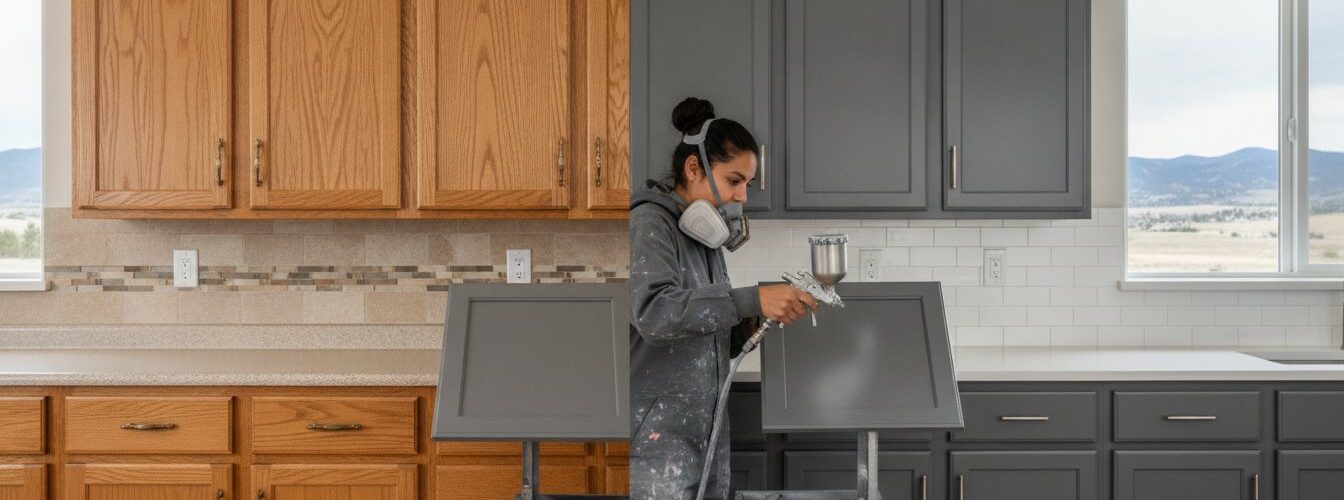
What if the heavy, orange-toned grain currently dominating your kitchen didn’t require a $30,000 tear-out to disappear? Many homeowners seeking a modern update find that refinishing oak cabinets denver is the most efficient path to a high-end aesthetic. It’s common to feel frustrated by yellowed wood and deep textures that seem impossible to mask, especially when clear coats have worn thin near handles and high-use areas.
You don’t have to settle for the high cost of a full remodel to achieve a factory-like finish. This 2026 guide provides professional clarity on how specialized techniques transform outdated honey oak into a durable, contemporary masterpiece. We’ll detail the objective requirements for prepping wood in Colorado’s dry climate, the multi-step process for blocking tannins, and how professional spraying creates a smooth surface that significantly increases your home’s market value. This procedural overview ensures you understand the technical standards required for a long-lasting kitchen transformation.
Key Takeaways
- Identify the technical requirements for managing heavy wood grain and open pores common in Denver’s residential oak cabinetry.
- Understand the multi-step priming process necessary to block tannins and prevent finish discoloration in light-colored kitchens.
- Evaluate the procedural differences between solid color painting and staining when refinishing oak cabinets denver for a modern look.
- Learn how Denver’s high-altitude climate dictates specific standards for coating adhesion and professional factory-quality spraying.
- Recognize the financial advantages of cabinet painting as a durable, high-ROI alternative to expensive full-scale kitchen remodels.
Understanding the Oak Cabinet Challenge in Denver Homes
Oak dominated the residential landscape in Denver suburbs for decades, serving as the default choice for builders from the 1980s through the early 2000s. Most local homes feature red oak, known for its prominent, porous grain and pinkish undertones, or white oak, which offers a denser structure. Understanding the properties of oak wood is essential because its open-pore nature directly impacts how modern coatings adhere. The “honey oak” phenomenon, characterized by an amber or orange-toned finish, has become the primary driver for homeowners seeking professional refinishing oak cabinets denver services. This orange hue isn’t just the wood’s natural color; it’s often the result of aging oil-based clear coats that have yellowed over time.
Refinishing involves restoring or altering the cabinet surface through mechanical preparation and the application of specialized coatings. It’s a functional approach that preserves the existing structural integrity of the wood boxes while completely updating the exterior appearance. To better understand how professionals handle the specific texture of this wood, watch this helpful video:
The Aesthetic Shift: From Traditional to Modern
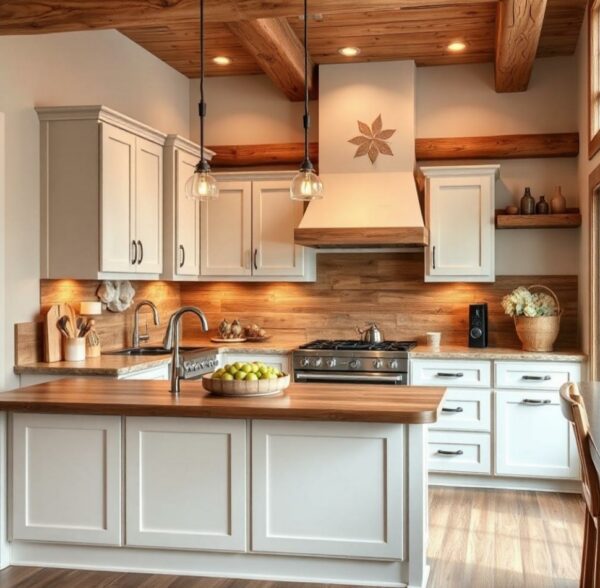
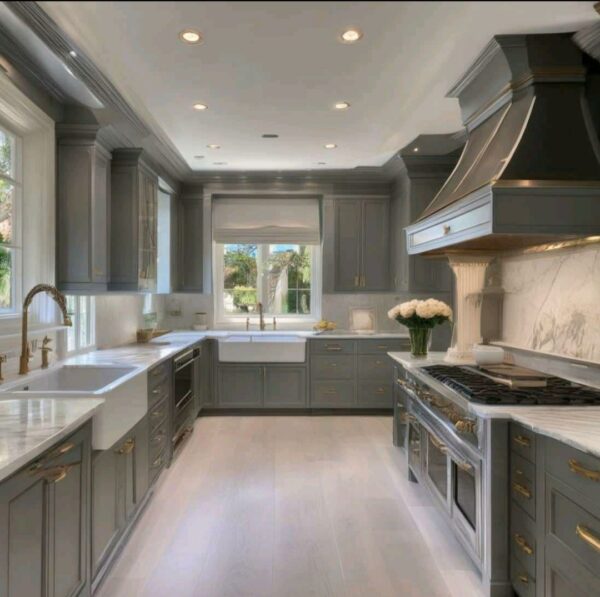
The “cathedral” grain patterns that once signaled quality now often feel outdated in 2026. Modern Denver design trends prioritize muted palettes like sage green, clay, and sand, often in matte finishes. Professional refinishing allows homeowners to transition away from the heavy texture of traditional oak toward these contemporary aesthetics. This process maintains the durability of solid wood while masking the dated yellow tones that occur as original clear coats age and oxidize. It’s a way to keep the strength of 1990s construction while achieving a 2026 look.
Refinishing vs. Replacing: A Denver Cost Analysis
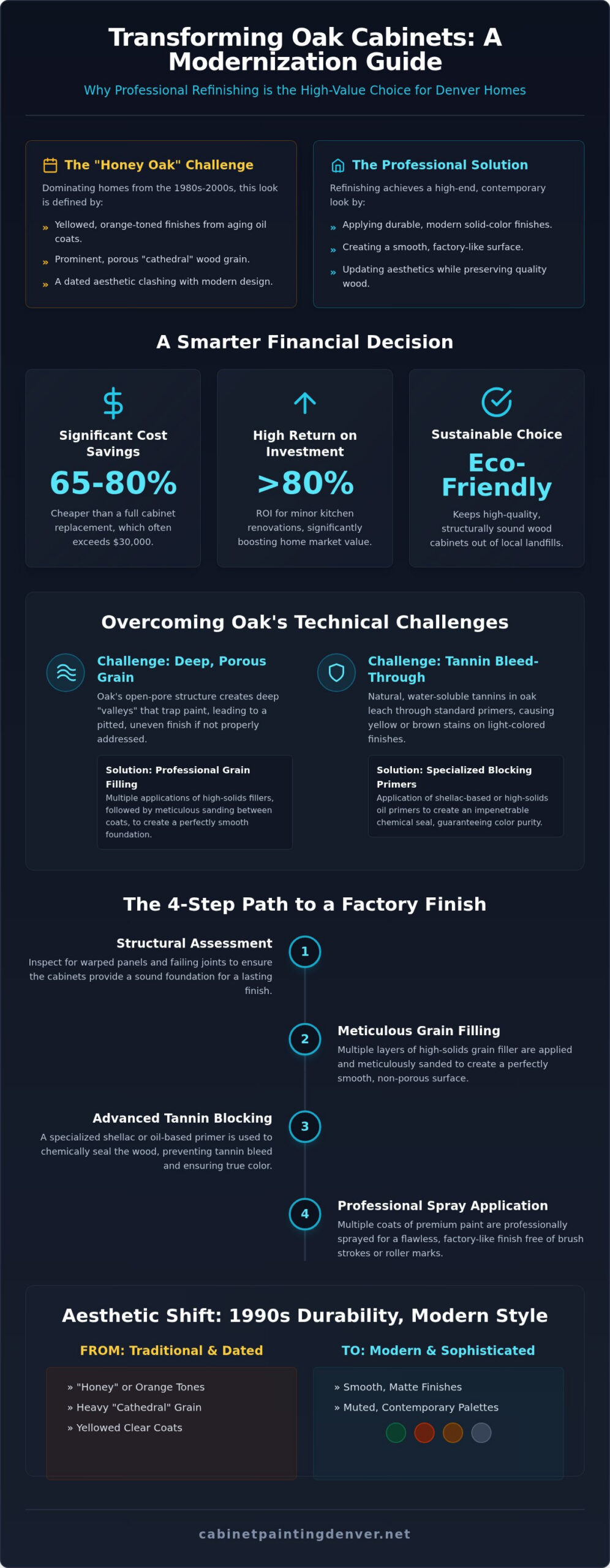
Choosing to update existing cabinets is a strategic financial decision. A full kitchen tear-out in the Denver metro area often exceeds $30,000, but professional refinishing typically costs significantly less. Research from early 2026 indicates that refinishing existing cabinets is 65% to 80% cheaper than a full replacement. Beyond the immediate savings, this method provides an environmental benefit by keeping high-quality wood out of local landfills. In the current Denver real estate market, professional cabinet updates can yield a return on investment exceeding 80% for minor kitchen renovations. This makes refinishing oak cabinets denver a high-value alternative for those prioritizing both budget and visual impact.
Technical Challenges of Refinishing Oak: Grain, Tannins, and Climate
Oak is a ring-porous wood. Its deep grain is its defining feature but also its biggest obstacle in modern refinishing. Before starting any project, we assess the structural integrity of the boxes. We check for warped panels or failing joints that often occur in older homes. Most solid oak cabinets from the 1990s are structurally superior to modern particle-board alternatives, making them ideal candidates for refinishing oak cabinets denver. This assessment ensures the foundation is sound before applying high-end coatings.
Grain Filling: The Secret to a Smooth Finish
Managing the deep “valleys” of oak requires specific grain fillers. Water-based fillers are common for ease of use, but high-solids solvent-based fillers often provide better leveling for deep cathedral grain. This labor-intensive process involves multiple applications and meticulous sanding between coats. Refinishing oak cabinets denver projects require this level of detail to ensure the final product looks like a new installation rather than a painted-over antique. Skipping this step leads to a “pitted” look in the final coat, where the paint settles into the pores rather than sitting flat on the surface.
Tannin Blocking and Priming Strategies
Oak contains high concentrations of water-soluble tannins. When using light-colored finishes, these tannins can bleed through, creating unsightly yellow or brown stains. Standard DIY primers are insufficient for this task. We utilize professional wood finishing techniques involving shellac-based or high-solids oil primers to create a chemical seal. This barrier is a requirement for a lasting white or off-white kitchen. Without a proper primer, the chemical reaction between the wood and the paint will eventually ruin the aesthetic.
Denver Climate Factors: Drying and Expansion
Denver’s climate adds another layer of complexity. At 5,280 feet, the air is thin and exceptionally dry. This environment accelerates the evaporation of solvents and water in coatings. While this speeds up project timelines, it requires precise spray techniques to avoid “dry spray.” This occurs when the finish dries before it has a chance to level out smoothly. Wood also moves more significantly in Colorado’s low humidity, causing solid wood panels to “breathe” or shift within their frames. This movement can lead to visible cracking at the joints if not managed correctly. Off-site spraying in a climate-controlled environment for doors and drawers ensures the finish cures under stable conditions. If you’re unsure if your cabinets can handle the local environment, consulting with a specialist in Denver cabinet painting provides clarity on the best approach for your specific home.
Choosing the Right Method: Refinishing vs. Painting Oak
Deciding how to handle the visual texture of oak is a critical step in the project planning process. While previous sections detailed the technical challenges of wood grain, your aesthetic goal dictates whether you should choose a solid color or a transparent stain. Both methods are effective for refinishing oak cabinets denver, but they yield vastly different results in terms of style and long-term maintenance. In the 2026 Denver market, professional updates offer a significant return on investment, often exceeding 80% for minor kitchen improvements. This makes the choice of finish a strategic decision for both lifestyle and home value.
Modern industrial coatings used in professional applications offer superior durability compared to standard retail products. Industrial-strength lacquers and pre-catalyzed primers are required to withstand Denver’s intense sunlight and dry climate. Matte finishes have become the standard for Front Range homes in 2026. They provide a sophisticated look that hides fingerprints and minor wear better than high-gloss alternatives. Maintenance for painted surfaces involves simple cleaning with non-abrasive detergents, while stained surfaces may require occasional conditioning to prevent drying in Colorado’s low humidity.
When to Choose Painting for Your Oak Cabinets
Painting is the objective choice for those wanting to eliminate the “dated” feel of honey oak entirely. By utilizing professional kitchen cabinet painting, homeowners can achieve a smooth, factory-like surface that completely masks the wood’s orange undertones. This method is essential for creating the popular “Tuxedo” kitchen, which pairs white upper cabinets with deep navy or charcoal lowers. Solid colors provide a sleek, modern aesthetic that aligns with current trends favoring earth tones like muted sage or clay. It’s the most effective way to transform the look of the room without the high cost of a full remodel.
When to Choose Refinishing/Staining
Homeowners who appreciate the organic feel of wood but dislike the amber hue of aged oak should opt for staining. Modern cabinet refinishing techniques allow for color shifts into contemporary grays or dark espresso tones without losing the wood’s character. This approach is common in transitional or rustic-modern designs where natural textures are a requirement. Toning, a process of adding color to the clear topcoat, allows professionals to shift the wood’s hue without the labor-intensive requirement of stripping the wood to its bare state. This is a cost-effective way to modernize refinishing oak cabinets denver projects while maintaining the high-quality feel of solid wood.
The Professional Refinishing Process: Step-by-Step to a Factory Finish
The transition from honey oak to a factory-quality finish requires a disciplined, multi-stage process. Many homeowners assume that simply applying paint is enough, but professional refinishing oak cabinets denver projects rely on meticulous surface preparation to ensure long-term adhesion. Brushes and rollers are never used in this professional process because they leave textures that sabotage a modern look. Instead, industrial spray equipment is used to achieve a smooth, uniform surface that mirrors the quality of new cabinetry. This procedural clarity ensures that the finished product meets the high standards required for Denver’s residential interiors.
Preparation: The Foundation of Quality
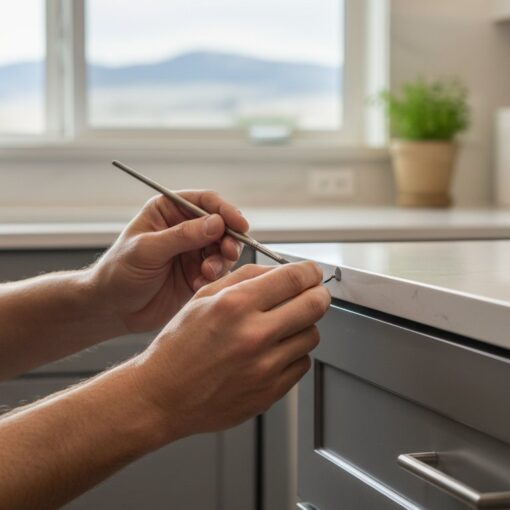
The process begins with the total removal of all doors, drawer fronts, and hardware, including hinges and felt bumpers. We then perform a thorough degreasing and cleaning to eliminate decades of kitchen oils and cooking residues that prevent coating bonding. Mechanical sanding follows to create a profile on the wood surface. This step is essential for mechanical adhesion. We also address structural imperfections by repairing dents, scratches, and outdated hardware holes before any coatings are applied. Masking and containment systems are used to protect the rest of your home from overspray during the on-site phase of the project.
The Spraying and Finishing Phase
We utilize HVLP (High Volume Low Pressure) spraying for all components. This technique allows for precise control and a finer atomization of the coating compared to standard airless sprayers. We apply multiple thin coats rather than one thick layer. This method prevents runs and ensures a more durable, flexible finish. We perform inter-coat sanding between every layer to remove any microscopic imperfections and maximize the bond between coats. Homeowners typically select from Matte, Satin, or Semi-gloss sheens. In 2026, matte and satin remain the preferred choices for Denver projects due to their ability to diffuse light and hide the underlying oak grain.
Re-Installation and Final Inspection
Proper curing is a requirement before re-hanging doors to prevent sticking or blocking. While modern coatings dry quickly, they need time to reach full hardness. We provide a final walk-through to ensure finish consistency, proper door alignment, and the correct installation of updated hinges or pulls. This phase completes the kitchen transformation, providing a result that is 65% to 80% cheaper than a full cabinet replacement. To begin your kitchen transformation, you can schedule a professional assessment for refinishing oak cabinets denver and receive a detailed project scope.
Why Local Expertise Matters for Denver Oak Cabinet Projects
Denver’s geography creates a unique set of variables for wood finishing. At high altitudes, the atmospheric pressure and low humidity levels change how coatings evaporate and how wood fibers react to moisture. A cabinet painting denver specialist understands these local environmental factors. They ensure that the wood is properly acclimated and that the selected industrial coatings are rated for Colorado’s intense UV exposure. This localized knowledge prevents common failures like premature cracking or peeling that often occur when using products designed for more humid, sea-level climates.
Direct communication is a requirement for successful projects. We provide clear procedural updates regarding timelines and site preparation. Supporting a local business means working with a team that has extensive experience with the specific oak cabinetry styles found in neighborhoods across the Front Range. This expertise ensures that the project moves from an objective assessment of conditions to a high-quality result without the delays often associated with general contractors who lack specialized cabinet experience. Refinishing oak cabinets denver projects require this specific focus to ensure the finish remains durable in our dry climate.
Professional Spraying vs. DIY Attempts
Many homeowners consider DIY painting to save money, but the technical requirements of refinishing oak cabinets denver often lead to complications. Retail paints applied with brushes or rollers frequently result in an “orange peel” texture or visible brush strokes that highlight rather than hide the oak grain. Fixing a failed DIY attempt is significantly more expensive than hiring professionals initially. It often requires the complete chemical stripping of the incorrect product, which increases labor costs and extends project timelines.
Professional cabinet painters utilize HVLP spraying systems and shop-grade finishes that retail stores don’t sell. These coatings are designed to cure to a hard, factory-like surface that resists the oils and heat found in a working kitchen. The long-term durability of a professional finish provides a much higher return on investment than a temporary DIY solution that may chip within the first year. Choosing a professional ensures the aesthetic shift is permanent and adds measurable value to your property.
Ready to Transform Your Denver Kitchen?
Preparing for a professional crew is a straightforward process. We require all items to be removed from the cabinets and countertops to facilitate the masking and containment process. This ensures a dust-free environment for the spraying phase. To receive an accurate quote, homeowners should provide the total number of doors and drawer fronts. This is the standard metric for project pricing in the Denver market as of 2026. The transformation of your kitchen starts with a technical evaluation of your existing oak boxes. This ensures that the foundation is sound and ready for a modern upgrade. Schedule your professional cabinet refinishing consultation today. to receive a clear project scope and professional guidance on color and sheen.
Modernizing Your Denver Kitchen with Professional Precision
Transforming dated honey oak into a modern masterpiece requires technical surface preparation and climate-specific coatings. A smooth, factory-quality result depends on a specialized oak grain management process that eliminates heavy texture and tannin bleed. Choosing a professional approach for refinishing oak cabinets denver ensures the final finish withstands the unique challenges of Colorado’s dry environment.
As a locally owned and operated business in Denver, we utilize a professional HVLP spray finish to provide durability and visual clarity. This process preserves your solid wood cabinets while increasing home value. Ready to update your home? Request Your Free Denver Cabinet Refinishing Quote to begin your kitchen’s transformation. Your existing cabinetry is a high-quality foundation that’s ready for a professional update.
Frequently Asked Questions
How much does it cost to refinish oak cabinets in Denver?
Project costs for refinishing oak cabinets denver are calculated based on the total number of openings, which includes each door and drawer front. Other variables include the current condition of the wood and the complexity of the chosen finish. This professional service remains a cost-effective alternative to full remodels, typically costing 65% to 80% less than a total cabinet replacement in the 2026 market.
Can you really hide the grain on oak cabinets?
Yes, the deep, open pores of oak can be effectively masked through a specialized grain-filling process. This involves applying high-solids fillers that level the wood’s surface before the priming phase. While some subtle texture may remain under close inspection, the result is a smooth, factory-like finish that eliminates the dated “cathedral” look. Professional spraying ensures the coating sits flat rather than settling into the grain.
How long does the cabinet refinishing process take?
A professional project typically requires five to seven business days for completion. The first phase involves on-site masking and frame preparation, while doors and drawer fronts are processed off-site in a climate-controlled environment. This timeline is significantly faster than a full kitchen remodel, which can take four to eight weeks. Denver’s dry climate facilitates efficient drying times, allowing for a streamlined re-installation process once the coatings have cured.
Is it better to paint or refinish oak cabinets for resale value?
Both options provide a high return on investment, but solid color painting is often preferred for 2026 real estate trends. Muted earth tones and matte finishes appeal to a broader range of buyers seeking a modern aesthetic. Minor kitchen updates can yield a return exceeding 80%. If the home has a rustic or traditional design, shifting the oak to a modern gray or espresso stain is also an effective strategy.
Do I need to empty my cabinets before the refinishing starts?
Yes, we require homeowners to remove all items from the cabinets and clear the countertops before the crew arrives. This is a procedural requirement to ensure a dust-free environment and to facilitate the masking of the cabinet interiors and surrounding surfaces. Emptying the units also protects your belongings from airborne particles during the preparation and spraying phases. Professional containment systems are used, but a clear workspace is essential for efficiency.
Will the paint or stain smell up my whole house?
Modern industrial coatings do produce odors, but these are managed through professional ventilation and containment strategies. We utilize high-performance exhaust systems to move air out of the home during the on-site spraying phase. Since the majority of the coating application occurs off-site for doors and drawers, the in-home odor is minimized. Most homeowners find that the smell dissipates within 24 to 48 hours after the final application is completed.
How long will a professional oak refinishing job last?
A professional refinishing oak cabinets denver project typically lasts ten to fifteen years with proper maintenance. The use of industrial-strength lacquers and pre-catalyzed primers ensures a bond that resists chipping and peeling. Unlike DIY projects, these factory-grade finishes are designed to withstand the heat, moisture, and daily use typical of a residential kitchen. Regular cleaning with non-abrasive detergents will preserve the sheen for over a decade.
Can I change my cabinet hardware during the refinishing process?
Yes, the refinishing phase is the ideal time to update hinges, knobs, and pulls. If you’re switching to a different size or style, we fill the existing holes during the preparation stage before applying the new finish. This allows for the seamless installation of modern hardware without visible remnants of the old setup. Homeowners should have the new hardware available before the project begins to ensure proper alignment during the final re-installation phase.