The contractor who painted your drywall to perfection is often the wrong professional to spray your kitchen cabinetry. Cabinet finishing requires industrial benchwork and specialized coatings rather than standard architectural wall techniques. Knowing the precise questions to ask a cabinet painter denver contractors must answer will protect your investment from peeling paint, visible brush strokes, and messy kitchen downtime.
You want a durable, smooth transformation without the disruption of a structural remodel, but evaluating vague quotes and conflicting prep methods can feel overwhelming. In this guide, you will discover the exact technical, contractual, and regional criteria needed to evaluate local specialists and ensure a resilient, factory-grade finish. Here is your definitive checklist to verify prep protocols, off-site spraying capabilities, and local Denver climate considerations before signing a contract.
Key Takeaways
- Learn the essential questions to ask a cabinet painter denver homeowners must use to separate dedicated wood finishing specialists from standard house painters.
- Identify the chemical degreasing, mechanical sanding, and industrial-grade priming standards required to stop premature peeling at the source.
- Understand why off-site shop spraying for doors and drawer fronts delivers a cleaner, dust-free finish than brushing or rolling on-site.
- Evaluate how specialized coating systems accommodate Denver’s high altitude, dry air, and seasonal wood movement without cracking.
- Verify written warranty coverage, containment standards, and precision hardware re-alignment details before signing any project contract.
Core Qualification Questions: Verifying Specialized Cabinet Painting Experience
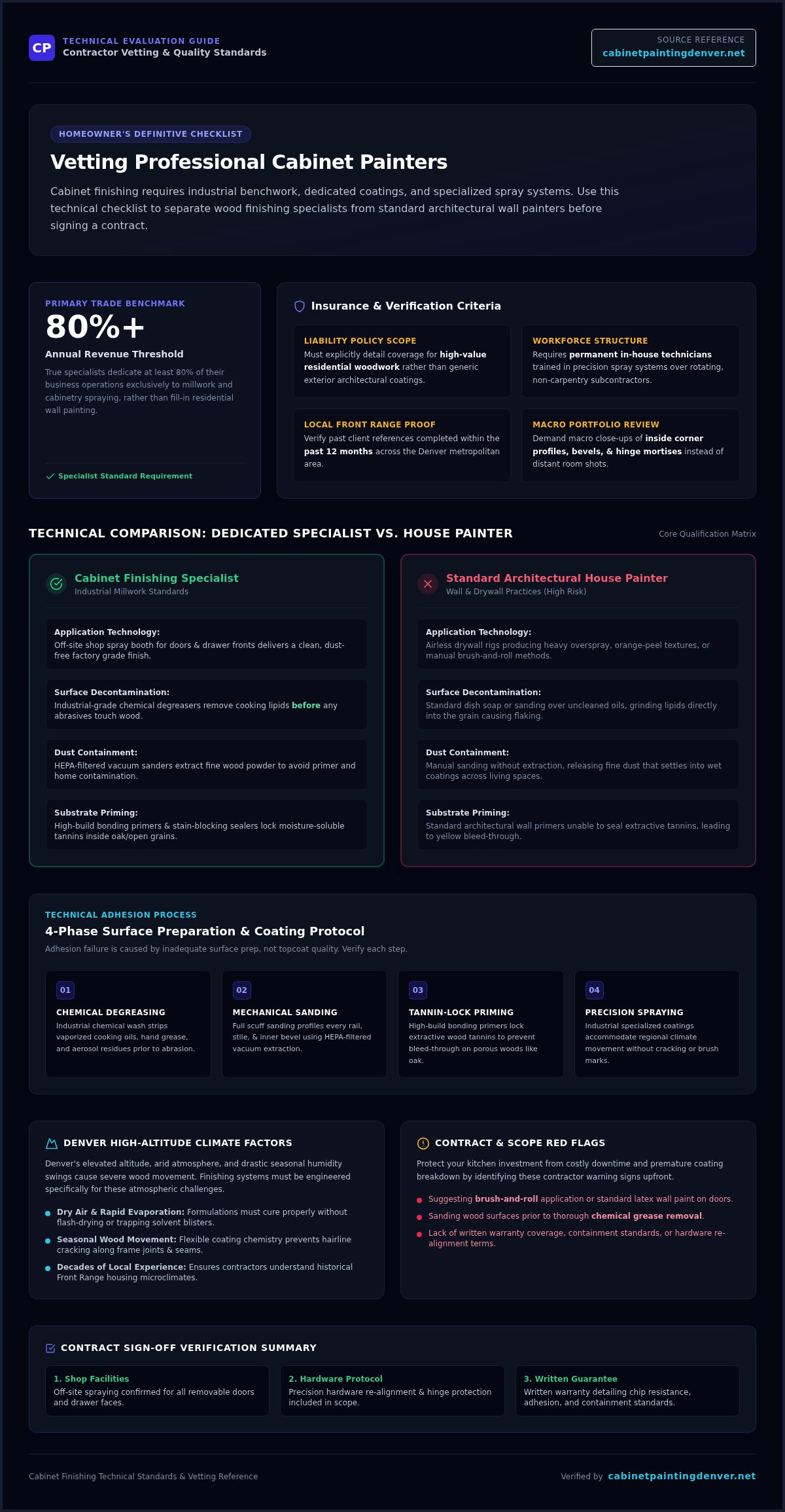
General architectural painting differs fundamentally from cabinet craftsmanship. While walls tolerate standard latex rolled over drywall, cabinetry demands rigorous benchwork and millwork expertise. Understanding the process of wood finishing is vital because kitchen millwork experiences physical friction, grease exposure, and continuous movement. When vetting contractors, your initial inquiries must confirm that cabinet finishing represents their primary trade rather than an occasional fill-in project.
Start by verifying operational credentials. Request a certificate of commercial liability insurance that explicitly details coverage for high-value residential woodwork rather than standard exterior coatings. Clarify crew staffing upfront. Specialized firms employ permanent in-house technicians trained in precision spray systems, whereas general contractors often rely on rotating subcontractors who lack finish-carpentry backgrounds.
Question 1: Are You a Dedicated Cabinet Specialist or General Painter?
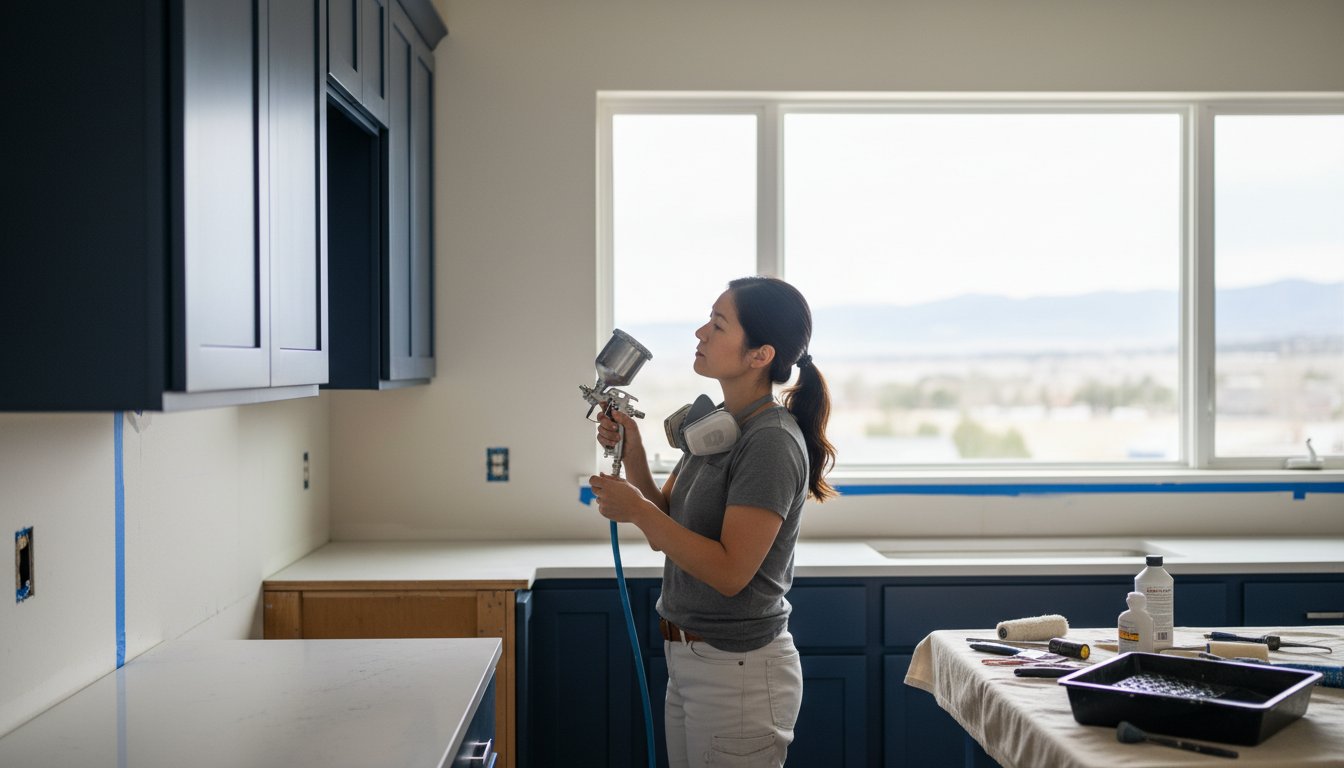
House painters typically rely on airless rigs suited for high-volume drywall application. These tools produce heavy overspray and an uneven orange-peel texture on fine wood. When considering hiring professional cabinet painters, ask what percentage of their annual revenue comes solely from kitchen, bathroom, and bookshelf cabinetry.
- Specialist standard: At least 80% of company operations focus on millwork and cabinetry spraying.
- Red flag: Contractors who suggest brush-and-roll applications or plan to apply generic architectural latex to your doors.
- Macro portfolio: Require close-up photographs of inside corner profiles, bevel edges, and hinge mortises rather than distant room angles.
Question 2: Can You Provide Verifiable Local Denver References?
Reputable local trades maintain active community records. Among the critical questions to ask a cabinet painter denver homeowners evaluate, verify that their client references reflect jobs completed within the Front Range over the past twelve months. Ask past clients about long-term durability, chip resistance near drawer pulls, and whether the crew preserved crisp seams along frame joints.
Long-term reviews reveal how finishes endure seasonal humidity shifts. Prioritize contractors with decades of local experience across the Denver metropolitan area, as they understand how regional housing conditions impact cured coatings. Direct contractor references should validate reliable scheduling, clean containment practices, and clear communication from project start to completion.
Technical Process Questions: Surface Preparation, Primers, and Application Methods
Adhesion failure almost always stems from inadequate surface preparation rather than poor topcoat quality. Kitchen cabinetry collects vaporized cooking oils, hand grease, and aerosol residues over years of service. If a contractor sands before chemically removing these contaminants, they grind oils directly into the wood grain, which causes flaking later. Reviewing clear technical workflows aligns with standard FTC consumer advice on hiring contractors, ensuring you receive fully documented, professional scope commitments rather than vague promises.
Question 3: What Is Your Decontamination and Mechanical Sanding Protocol?
Standard dish soap is insufficient for stripping years of cooking lipids. True specialists apply industrial-grade chemical degreasers before touching wood with abrasives. Once cleaned, crews must profile every rail, stile, and inner bevel using mechanical scuff sanding. Ask whether they use HEPA-filtered vacuum sanders. Dust extraction prevents fine wood powder from contaminating wet primer coats and settling across the rest of your home.
Question 4: What Primer Chemistry Do You Use to Prevent Tannin Bleed?
Standard architectural wall primers cannot seal extractive tannins found in open-grain woods like oak. These woods demand high-build bonding primers or stain-blocking sealers that permanently lock moisture-soluble tannins inside the substrate. When reviewing the chemistry of paint for cabinets, confirm the contractor sprays industrial-grade undercoats rather than low-solids waterborne primers that cause yellow tannin bleed-through months down the road.
Question 5: Do You Spray or Use Brushes and Rollers on Site?
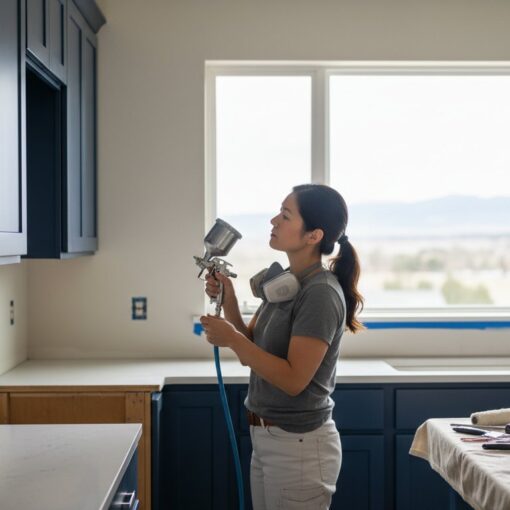
Microfiber rollers leave stippled orange-peel patterns, while brushes leave directional marks across face frames. A durable, furniture-grade surface requires fine-finish spray systems, such as air-assisted airless or HVLP gear. Among the core technical questions to ask a cabinet painter denver residents must prioritize, confirm that doors, drawer faces, and structural face frames receive spray applications rather than manual brushing. For high-end kitchen cabinet painting, consulting dedicated finishing teams like Cabinet Painting Denver ensures seamless, brush-free execution across every visible surface.
Logistics and Workspace Questions: On-Site Masking vs. Off-Site Spray Facilities
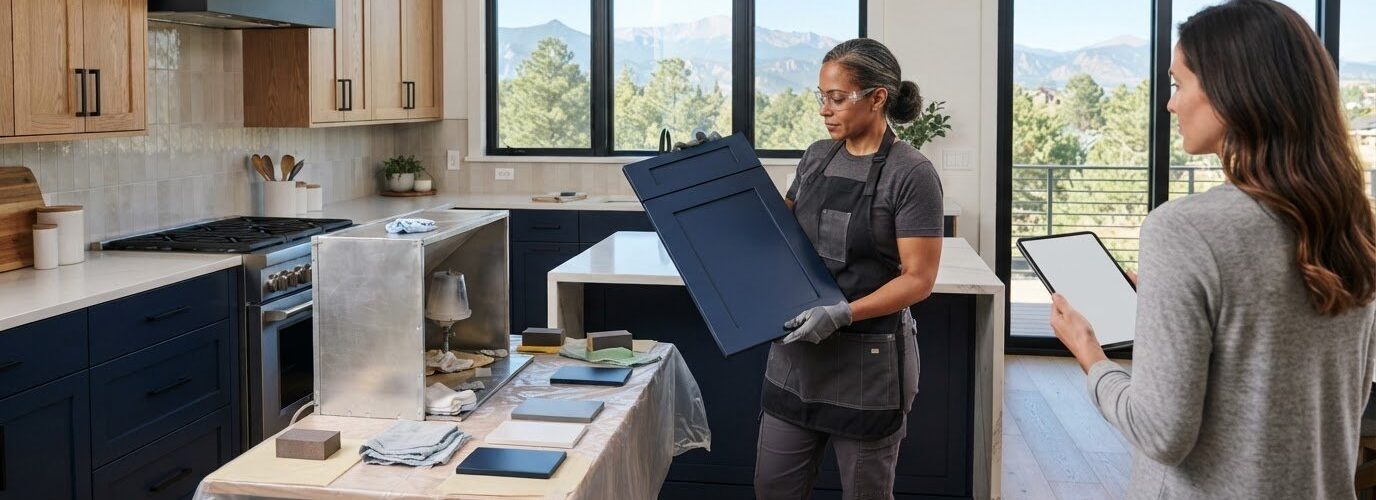
Precision finishing requires an environment free from household contaminants. While structural cabinet frames must be treated in place, finishing doors and drawer fronts inside an occupied home introduces significant risks. Examining jobsite containment and transit workflows is a vital part of the technical questions to ask a cabinet painter denver homeowners rely on. Reviewing the standard operational model at Cabinet Painting Denver illustrates how combining clean on-site containment with dedicated off-site spraying safeguards your living space.
Question 6: Where Will Doors and Drawer Fronts Be Sprayed?
Spraying doors in a residential garage or driveway exposes wet coatings to windblown dust, pollen, and insect debris. Temperature swings in an unconditioned garage also compromise curing chemistry. Professional shops transport removable faces to controlled off-site facilities equipped with dedicated spray booths, horizontal drying racks, and calibrated exhaust filters. Inquire about their transit protocols. Components must be fully dry, wrapped in protective foam, and secured to prevent surface abrasions during return delivery.
Question 7: How Do You Protect My Home During Frame Spraying?
Face frames require meticulous masking before paint hits wood. Contractors must isolate the kitchen using ceiling-to-floor plastic sheeting, sealed zipper access doors, and heavy masking paper taped over floors. Verify that their setup includes active ventilation:
- Negative air pressure: Heavy-duty exhaust fans vent atomized overspray and solvent vapors directly outdoors.
- Complete enclosure: Interior cabinet boxes, countertops, appliances, and adjacent ceilings remain hermetically sealed behind poly film.
- Clean air quality: Sealing prevents fine primer fog from traveling through home HVAC air returns.
Question 8: What Is the Total Project Timeline and Kitchen Downtime?
Project schedules must reflect realistic operational stages rather than rushed single-day claims. Inquire specifically about the duration of restricted kitchen access. Most specialized transformations take several business days, divided between on-site masking, frame degreasing and spraying, shop finishing for doors, and final reinstallation. Require a timeline that outlines hardware labeling, off-site curing windows, and precise door realignment at the end of the project.
Denver Climate and Durability Questions: Altitude, Dry Air, and Finish Resilience
Denver’s mile-high altitude and semi-arid climate create demanding conditions for fine wood finishes. Low winter humidity pulls moisture from solid timber, driving continuous expansion and contraction across frames and doors. High altitude also speeds up solvent evaporation during spray passes, which risks rough dry-spray texture if gun pressures and reducers aren’t dialed in. When compiling technical questions to ask a cabinet painter denver specialists should answer, coating elasticity must top your list. Understanding these regional realities, as detailed in our guide to cabinet refinishing, ensures your investment will not fail during dry seasonal shifts.
Question 9: How Do Your Coatings Handle Denver Low Indoor Humidity?
Five-piece Shaker doors feature separate rails, stiles, and center panels that shift constantly as forced-air heating dries the home. Rigid architectural enamels crack along these moving seams by mid-winter. Inquire how the contractor manages wood movement through flexible primers and controlled dry film thickness. Specialized coatings move with the underlying wood fibers, preserving joint integrity through Denver’s freezing, dry winters and humid summer rains without splitting along seams.
Question 10: What Specific Coating Product Will Be Applied to My Cabinets?
Standard retail trim paints remain vulnerable to household chemicals, steam, and skin oils. Professional kitchen cabinet painting requires industrial wood coatings, such as two-component (2K) polyurethanes or catalyzed finishes. These chemical-cure products create a dense, cross-linked barrier that easily repels acidic food splatters, hot grease, and daily handling. Confirm the contractor utilizes low-VOC, factory-grade formulations engineered specifically for high-touch architectural woodwork rather than off-the-shelf wall paint.
Question 11: What Hardware and Alignment Procedures Do You Follow?
Disassembling an entire kitchen without a meticulous tagging system causes severe alignment errors during final installation. Technicians must document and label every hinge, drawer box, and screw back to its exact cabinet opening. Ask whether final assembly includes reveal adjustments, hinge tension tuning, and soft-close calibration. If you plan to update pulls or knobs, verify their protocol for doweling old holes and drilling precise new bore patterns. To protect your investment with proven Front Range finishing methods, request an expert cabinet evaluation from Cabinet Painting Denver.
Contract, Warranty, and Scope Questions: Protecting Your Remodeling Investment
A comprehensive contract prevents unexpected billing disputes and clarifies operational expectations before work begins. Vague estimates often conceal exclusions that surface mid-project as expensive change orders. When finalizing your evaluation, these legal and procedural questions to ask a cabinet painter denver contractors must answer will ensure complete project transparency and hold your chosen team accountable to rigorous standards.
Question 12: What Does Your Written Warranty Cover and Exclude?
Warranty terms must differentiate between standard substrate expansion and actual coating adhesion failure. Denver’s dry winters can cause minute hairline fissures at wood joints, which differ fundamentally from peeling, blistering, or flaking film. Secure a written warranty that guarantees adhesion against premature chipping and bubbling. Verify the exact claim procedure, required response windows, and whether labor and materials are both covered for remedial touch-ups.
Question 13: What Is Included in the Itemized Project Estimate?
Detailed proposals leave zero room for assumptions. Your written quote should explicitly itemize door counts, drawer fronts, exposed end panels, toe kicks, and crown molding. Review our detailed guide on kitchen cabinet painting to see how documented project scopes prevent misunderstandings. Verify that site protection, hardware removal, masking tape, and daily cleanup are fully accounted for upfront rather than billed as separate jobsite fees.
Question 14: How Are Change Orders and Substrate Repairs Handled?
Hidden damage occasionally surfaces once grease is removed or hardware is detached, especially around water-exposed sink bases. Professional contractors establish a formal change-order protocol before addressing compromised wood or delaminating veneer:
- Written documentation: Any newly discovered substrate damage must be photographed, explained, and submitted in writing.
- Prior authorization: Supplementary repairs require homeowner approval before technicians execute the work.
- Final release: Final project payments should remain withheld until a complete walk-through inspection and punch-list verification occur.
Question 15: What Are the Care and Maintenance Instructions After Curing?
While newly sprayed coatings feel dry within hours, chemical cross-linking takes several weeks to achieve maximum hardness. Inquire about specific cure windows and safe post-project cleaning procedures. Harsh chemical sprays, abrasive sponges, and ammonia-based cleaners can mar fresh coatings during the first month. Reliable contractors provide care guidelines along with labeled touch-up containers matched to your exact custom color and sheen for long-term maintenance.
Secure Lasting Value for Your Denver Cabinet Investment
Choosing the right contractor determines whether your kitchen transformation yields lasting durability or premature peeling. Armed with these critical questions to ask a cabinet painter denver homeowners can confidently separate general architectural painters from true wood-finishing specialists. Prioritizing dust-free off-site spray facilities ensures glass-smooth, durable finishes without brush marks. Rigorous chemical decontamination and flexible primers engineered for Denver’s dry climate protect your millwork against seasonal wood movement.
Never leave high-value woodwork to vague estimates or unvetted crews. Demanding clear written scopes, defined warranties, and proven alignment protocols guarantees procedural accountability from start to finish. With decades of dedicated experience across the Denver metropolitan area, our team delivers factory-grade kitchen cabinet painting, bathroom updates, and bookshelf transformations built to endure. When you’re ready to move forward, Request an Itemized Denver Cabinet Finishing Estimate and get your project underway with complete confidence.
Frequently Asked Questions
Why shouldn’t I hire a regular house painter for my kitchen cabinets?
Regular house painters specialize in architectural wall coatings and high-production rollers, not precision benchwork. Cabinetry experiences continuous physical handling, grease contact, and moisture exposure. Wall latex applied with brushes or standard rollers creates heavy stipple and peels quickly under kitchen conditions. Professional cabinet finishing demands industrial spray equipment, chemical degreasing, and specialized bonding primers that general painters rarely carry in their standard truck setups.
Is it better to spray cabinet doors on-site or off-site in a shop?
Spraying doors off-site in a dedicated finishing facility yields far superior results. A climate-controlled shop eliminates household dust, cooking residues, pet hair, and airborne fibers that ruin wet finishes. Shop spraying allows technicians to position doors horizontally on drying racks, preventing runs and sags. It also dramatically minimizes chemical odors, overspray risk, and kitchen disruption in your Denver home during the refinishing process.
How does Denver’s climate affect newly painted kitchen cabinets?
Denver’s high altitude and semi-arid climate create sharp humidity drops, especially during winter heating months. These dry conditions pull moisture from solid wood stiles and rails, inducing natural movement at door joints. Standard brittle paints snap along these seams. Coatings formulated for the Front Range must retain flexibility to breathe with changing timber dimensions while resisting rapid solvent flash-off during application.
How long does a professional kitchen cabinet painting project take?
A standard kitchen cabinet painting project typically requires several business days from initial teardown to final hardware tuning. On-site crews spend the initial days masking surfaces, cleaning grease, sanding, and spraying cabinet boxes under containment. Meanwhile, doors and drawer fronts undergo multi-step shop spraying and curing off-site. Final reinstallation and door realignment conclude the process before you regain complete kitchen access.
What type of paint finish is most durable for kitchen cabinets?
Industrial two-component (2K) polyurethanes and catalyzed conversion varnishes provide the highest durability for residential cabinetry. These coatings cross-link chemically to form a hard, glass-smooth shell that resists acidic food spills, boiling steam, and abrasive handling. Matte or satin sheens are particularly effective, as they conceal minor surface scratches and natural substrate imperfections much better than high-gloss enamels.
What should I look for in a cabinet painter’s warranty?
Insist on a written warranty that covers physical film failure, such as peeling, blistering, and premature flaking. While seasonal hairline fractures along solid wood seams stem from natural humidity shifts, finish detachment indicates substandard preparation. As you assemble questions to ask a cabinet painter denver contractors must address, verify that warranty terms explicitly outline coverage duration, claim protocols, and both labor and material touch-up responsibilities.
How do I tell if a cabinet painter is cutting corners on surface prep?
Skipping chemical degreasing or using household dish soap is an immediate warning sign. If a contractor sands raw or finished surfaces without prior industrial degreasing, oils embed permanently into the grain. When vetting candidates with targeted questions to ask a cabinet painter denver homeowners rely on, verify they use mechanical dustless sanders and stain-blocking bonding primers rather than standard wall primers applied with brushes.