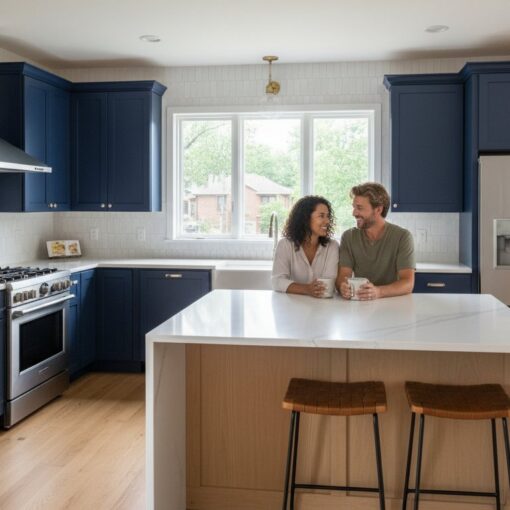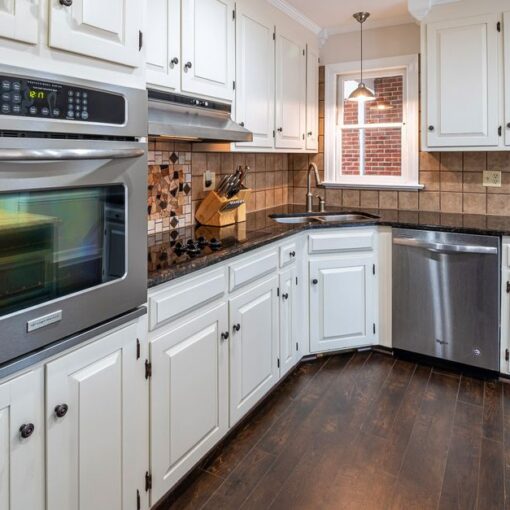
According to the Environmental Protection Agency, indoor air concentrations of some pollutants are often 2 to 5 times higher than typical outdoor concentrations. Much of this stems from the volatile organic compounds (VOCs) found in traditional industrial lacquers. You shouldn’t have to choose between a designer kitchen and the health of your family. By choosing eco-friendly cabinet refinishing, you can achieve a factory-grade transformation that keeps your indoor air clean and prevents 500 pounds of wood waste from hitting the local landfill.
You probably feel skeptical that “green” paints can handle the grease and heat of a busy kitchen. This guide proves that 2026 coating technology delivers a durable, scrubbable surface that rivals any chemical-heavy alternative. We’ll explore bio-based performance data and the exact steps to reduce your renovation’s carbon footprint by 70 percent compared to a full replacement. You’re about to discover how to get a high-end look that protects both your home and the planet.
Key Takeaways
- Learn why refinishing is the ultimate sustainable choice by diverting usable materials from landfills and reducing the carbon footprint of your kitchen remodel.
- Discover how modern eco-friendly cabinet refinishing utilizes high-performance, waterborne coatings to protect your family’s indoor air quality without sacrificing a premium aesthetic.
- Compare the durability of green finishes against traditional solvent-based lacquers to see how they stand up to daily kitchen hazards like coffee, citrus, and household cleaners.
- Identify the essential standards for vetting Denver contractors, including the necessity of HEPA-filtered dust containment and low-VOC material certifications.
- Explore how professional industrial spray techniques minimize overspray and material waste to deliver a flawless, factory-like finish that meets 2026 sustainability standards.
What is Eco-Friendly Cabinet Refinishing?
Eco-friendly cabinet refinishing represents a shift from the “disposable kitchen” culture toward a circular economy model. It focuses on three core pillars: material conservation, the use of low-toxicity coatings, and ethical labor practices. Instead of tearing out functional structures, this process revitalizes existing wood using modern chemistry that prioritizes indoor air quality. True sustainability in 2026 requires homeowners to distinguish between vague marketing claims and certified practices that actually reduce a home’s environmental footprint. Approximately 85% of kitchen cabinet structures remain structurally sound even when the finish fails, making replacement an unnecessary waste for the majority of renovations.
To better understand how this process works in a professional setting, watch this helpful video:
The circular economy in kitchen remodeling moves away from the traditional “take-make-waste” linear model. By choosing eco-friendly cabinet refinishing, you keep high-value wood in use for another 15 to 20 years. This prevents the premature harvesting of timber and reduces the logistics-related emissions of shipping heavy cabinetry across the country. It’s a method that values the energy already embedded in your home’s existing materials.
Refinishing vs. Replacing: The Environmental Impact
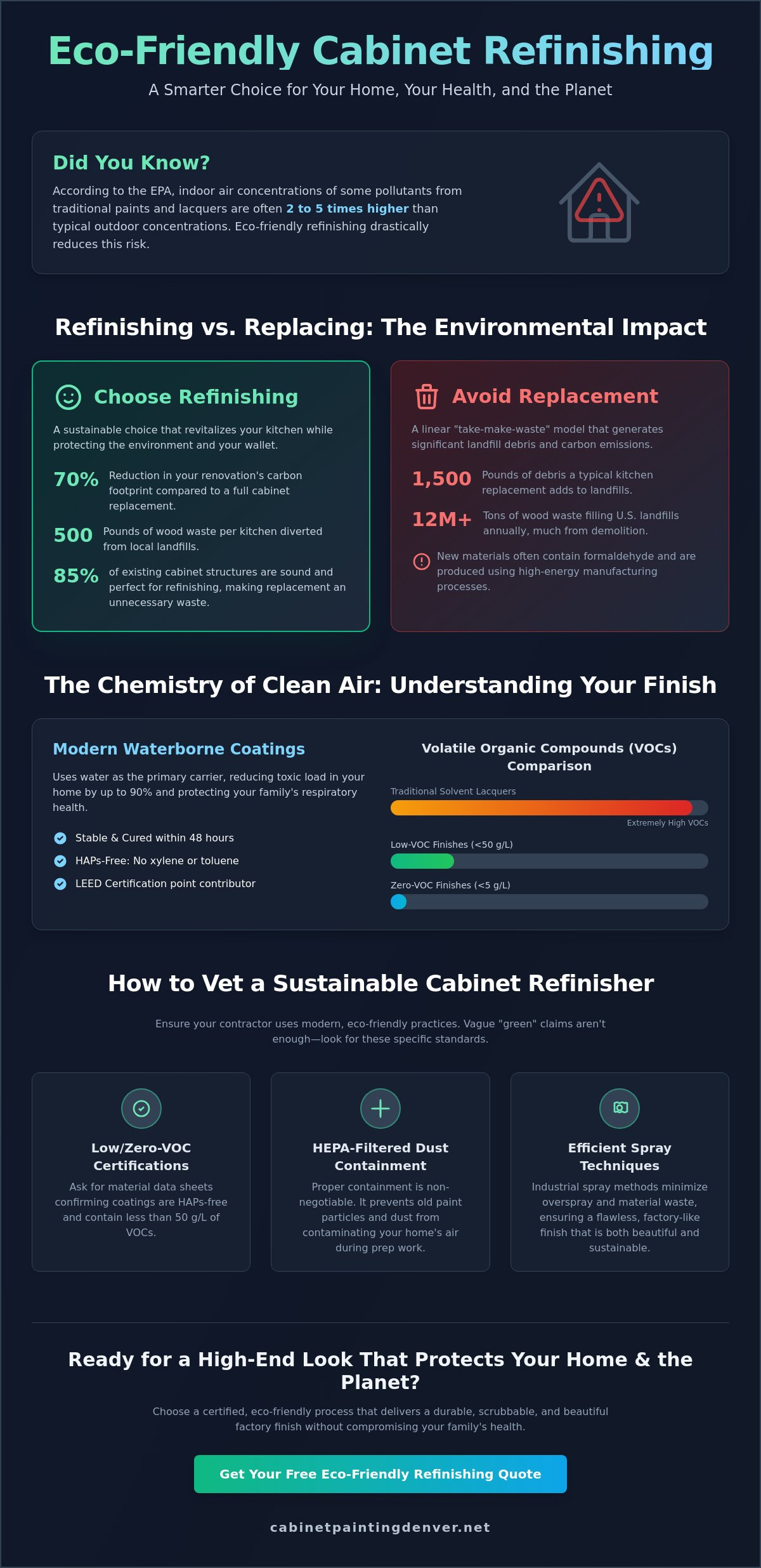
The Environmental Protection Agency (EPA) reports that wood waste accounts for over 12 million tons of landfill content annually in the United States. A typical kitchen remodel contributes roughly 1,500 pounds of debris to this total. Choosing to refinish rather than replace eliminates the need for new particle board and plywood. Manufacturing these materials involves high-energy processes and adhesives that often contain formaldehyde. Saving the cabinet “box” is the most impactful green choice you can make, as it bypasses the carbon-heavy manufacturing cycle of new cabinetry entirely.
Common Eco-Friendly Terminology You Should Know
Understanding specific labels helps you avoid greenwashing. The most critical term involves Volatile Organic Compounds (VOCs), which are gases emitted from certain solids or liquids. Standard finishes often release these for years, but eco-friendly alternatives offer better options:
- Low-VOC vs. Zero-VOC: Low-VOC finishes contain fewer than 50 grams per liter of volatile substances, while Zero-VOC options fall below 5 grams per liter.
- HAPs-free coatings: These eliminate Hazardous Air Pollutants like xylene and toluene, which are common in traditional solvent-based lacquers.
- LEED Certification: For those pursuing Leadership in Energy and Environmental Design (LEED) status, using these materials contributes points toward the Indoor Environmental Quality category in residential projects.
By focusing on these specific standards, you ensure that your kitchen renovation protects both the planet and your family’s respiratory health.
The Chemistry of Green: Low-VOC and Water-Based Coatings
The cabinet painting industry shifted significantly after the 2010 EPA Lead-Safe Certification Program, but the real revolution in eco-friendly cabinet refinishing arrived with the perfection of waterborne coatings. Traditional solvent-based lacquers rely on heavy chemical evaporation to dry. These systems release high levels of Volatile Organic Compounds (VOCs) that degrade air quality and create a pungent, lingering odor. Modern professional coatings use water as the primary carrier. This change reduces the toxic load in your home by up to 90% compared to 1990s-era oil finishes.
Understanding VOCs and Indoor Air Quality
Volatile Organic Compounds are carbon-based chemicals that evaporate at room temperature and react with nitrogen oxides in the presence of sunlight to create ground-level ozone. While traditional oil-based paints can off-gas for 30 days or more, modern green coatings reach a stable state within 48 hours. This rapid stabilization is vital for protecting residents from the health effects of VOCs, which often include respiratory irritation and persistent headaches. For families managing asthma or chemical sensitivities, these advancements make kitchen remodeling a safe reality rather than a health risk.
The Science of Cross-Linking
A common myth suggests that water-based finishes are soft or less durable. This was true in 2005, but 2026 technology utilizes advanced chemical cross-linking. As the water evaporates, polymer chains within the coating bond together to create a rigid, three-dimensional lattice. This molecular structure provides a surface hardness that rivals traditional conversion varnishes. Professional-grade finishes like those used in eco-friendly cabinet refinishing utilize industrial catalysts that DIY “green” paints from big-box stores lack. While a hardware store paint might peel under heat, a cross-linked professional coating withstands the 140-degree temperatures often found near kitchen stoves.
Sustainable Primers and Sealers
The foundation of a lasting finish lies in the primer. High-performance green primers now use advanced resins to block tannins from woods like oak or cherry without relying on heavy solvent shellacs. These low-odor sealers create a moisture-resistant barrier that protects against the 60% humidity levels common in active kitchens. It’s a technical process that requires precision, so you might want to explore professional refinishing options to ensure the bond is permanent. These sustainable sealers don’t just protect your health; they preserve the structural integrity of the wood for decades.
Performance Comparison: Eco-Friendly vs. Traditional Solvent Finishes
The belief that green coatings lack the “bite” of traditional solvents is a relic of the early 2000s. Modern chemistry has flipped the script. Today, professional eco-friendly cabinet refinishing utilizes high-performance water-borne urethanes that often exceed the physical properties of old-school nitrocellulose lacquers. While traditional oil-based finishes rely on heavy evaporation of volatile organic compounds to cure, modern aqueous systems use complex resin cross-linking to create a molecular bond that’s incredibly difficult to break.
Chemical resistance is a primary concern for any high-traffic kitchen. Professional-grade green finishes are tested against the Kitchen Cabinet Manufacturers Association (KCMA) standards. These coatings survive 24-hour exposure to common household agents like lemon juice, vinegar, and coffee without swelling or discoloration. Unlike solvent-based finishes that can soften when exposed to grease, modern eco-friendly resins remain inert. Research into the performance of low-VOC paints and coatings shows that reducing harmful solvents doesn’t equate to a drop in protective quality. Instead, it often results in a finish that’s more resilient against the acidic spills common in a busy kitchen.
In Colorado, the climate presents a unique challenge for wood. Relative humidity can fluctuate from 50 percent in the summer to below 15 percent during a dry January. This causes wood to expand and contract significantly. Traditional solvent finishes are often brittle; they don’t move with the wood, which leads to hairline cracks at the joints. Eco-friendly water-based urethanes possess superior elasticity. They flex alongside the wood fibers, maintaining a seamless seal even as the cabinets react to the mountain air. Additionally, these finishes are non-yellowing. Oil-based products contain resins that oxidize over time, turning crisp white cabinets into a muddy amber. Water-based acrylics stay crystal clear for their entire lifespan.
Durability and Scratch Resistance
Modern green finishes consistently hit a 2H or 3H pencil hardness rating, matching the scratch resistance of industrial lacquers. By meeting KCMA standards, these coatings prove they can withstand 25,000 door-swing cycles and extreme temperature swings. Choosing a long-lasting finish is a vital part of eco-friendly cabinet refinishing because it prevents the need for frequent recoating, which keeps more material out of local landfills. A finish that lasts 10 to 15 years is the ultimate form of sustainability.
Maintenance and Long-Term Care
Maintaining eco-friendly cabinets is straightforward and safer for your family. You don’t need harsh degreasers or ammonia-based cleaners that can damage the environment. A simple mixture of warm water and mild dish soap is enough to preserve the luster. If a chip does occur, water-based systems are much easier to touch up than solvent systems. They don’t require the same aggressive sanding or high-odor solvents for repairs. You can expect a professional project to maintain its structural integrity and color for over a decade with basic care.
How to Vet Sustainable Cabinet Refinishers in Denver
Selecting a contractor for eco-friendly cabinet refinishing requires looking past the portfolio. You need to verify their chemical standards and waste management protocols. Start by asking for the Technical Data Sheets (TDS) of their preferred coatings. High-performance green professionals typically use water-borne industrial finishes with Volatile Organic Compound (VOC) levels below 50 grams per liter. If a contractor cannot name their coating brand or provide VOC data, they likely aren’t prioritizing your home’s air quality.
Waste diversion is another hallmark of a truly green business. In Denver, proactive companies partner with organizations like Bud’s Warehouse or Resource Central to ensure old hinges and pulls don’t end up in the landfill. A 2025 analysis of local renovation trends indicated that diverting metal hardware can reduce a kitchen project’s landfill contribution by approximately 12 percent. Ask your refinisher if they have a documented plan for leftover solvents and paint solids, as these require specialized hazardous waste disposal rather than standard trash pickup.
Denver’s Green Building Landscape
The local regulatory environment in Colorado is shaped by the Air Quality Control Commission’s Regulation Number 7. These rules strictly limit emissions from architectural coatings to combat ground-level ozone in the Front Range. Because of these standards, cabinet painting denver has emerged as a local standard-setter for compliant, low-emission craftsmanship. Choosing a local expert also means they likely source materials from regional distributors, which slashes the carbon emissions associated with heavy freight transport.
The “No-Sand” vs. “Dustless Sanding” Debate
You’ll often choose between chemical stripping and mechanical sanding. Chemical “no-sand” methods frequently rely on harsh solvents like benzyl alcohol or N-Methyl-2-pyrrolidone (NMP). While they save time, they introduce toxins into your living space. Dustless sanding is the superior green alternative. This process uses industrial vacuum systems equipped with HEPA filtration to capture 99.97 percent of particles. This technology prevents fine wood dust from entering your HVAC ducts and circulating throughout your home for months after the project ends. It protects your indoor air quality while providing a perfectly smooth surface for eco-friendly cabinet refinishing coatings to bond with.
- Ask for HEPA-certified vacuum attachments on all orbital sanders.
- Verify that technicians use low-VOC cleaners for surface degreasing.
- Check if the company holds a Lead-Safe Certification from the EPA if your home was built before 1978.
Don’t settle for surface-level promises. You deserve a kitchen that’s as healthy as it is beautiful. Contact cabinet painting denver to discuss your sustainable kitchen goals today.
The Cabinet Painting Denver Approach to Green Refinishing
Cabinet Painting Denver prioritizes a sustainable future for Colorado homeowners. We use the highest-rated industrial coatings that meet or exceed LEED v4.1 requirements. These low-VOC finishes ensure your kitchen remains a healthy space for your family. Traditional oil-based paints can off-gas for months, but our water-borne alkyd resins dry quickly and leave minimal chemical footprints. By choosing eco-friendly cabinet refinishing, you’re investing in a solution that protects both your indoor air quality and the local environment.
Our Eco-Conscious Process
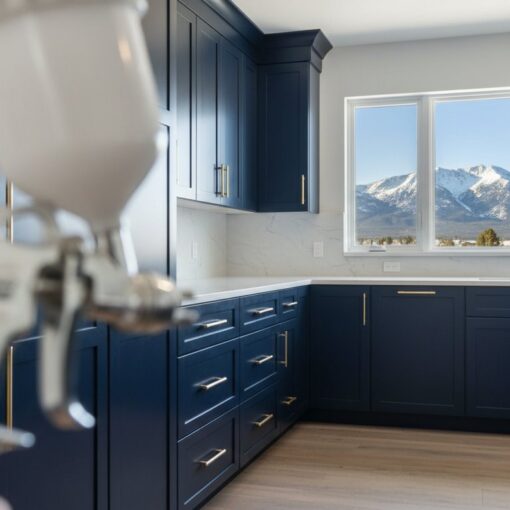
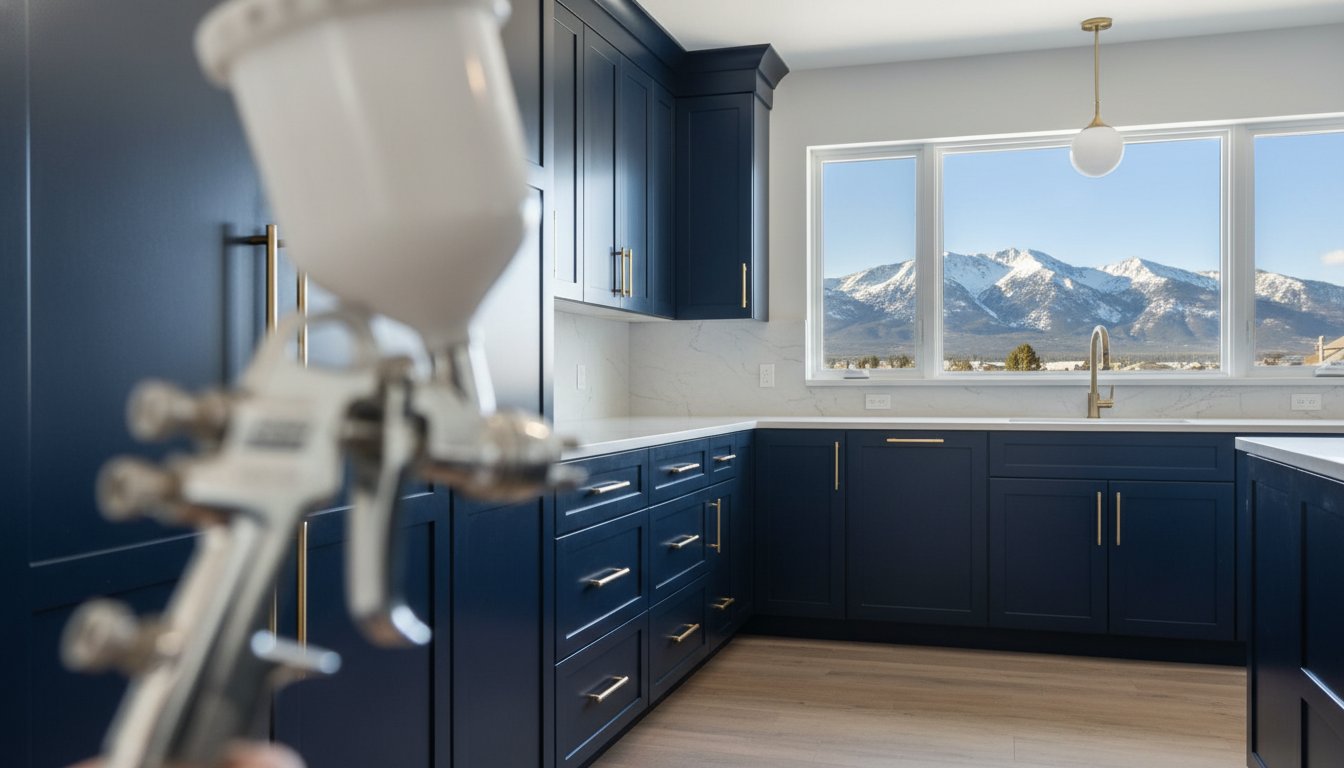
We move the most intensive parts of the project to our specialized shop. This off-site spraying happens in a controlled environment equipped with advanced filtration systems. We use High-Volume Low-Pressure (HVLP) technology for every project. This equipment increases transfer efficiency to approximately 65%, which is a 25% improvement over standard airless sprayers. This precision reduces material waste and ensures every drop of coating serves a purpose. You can explore our full cabinet refinishing workflow to see how we balance speed with environmental responsibility.
The Denver climate is notoriously dry, with humidity levels often dropping below 20% during the winter months. These conditions cause wood to shrink and expand aggressively. Our local expertise allows us to select coatings that maintain flexibility under these specific atmospheric stresses. Because our finishes are factory-grade, they don’t chip or peel like standard house paint. This durability keeps your cabinets out of the landfill for an additional 10 to 15 years. Extending the lifecycle of your existing furniture is the most effective way to reduce your carbon footprint during a remodel.
Start Your Sustainable Kitchen Transformation
Starting your project is simple and transparent. During your green consultation, we analyze your kitchen’s current state and discuss your aesthetic goals. We provide a detailed quote that outlines our low-VOC product selections and our waste-reduction protocols. You don’t have to choose between a beautiful kitchen and a healthy planet. Our team manages the logistics so you can enjoy a refreshed space without the environmental guilt. Schedule your eco-friendly cabinet refinishing consultation today to see the difference a professional, green approach makes for your Denver home.
Transform Your Kitchen for a Sustainable 2026
Updating your home doesn’t have to compromise the air you breathe or the health of the planet. By choosing eco-friendly cabinet refinishing, you’re opting for high-performance waterborne coatings that offer the same durability as traditional solvents without the toxic off-gassing. Modern HEPA-filtered dust containment systems ensure your home stays clean during the process. You’re also keeping hundreds of pounds of wood waste out of local landfills while achieving a factory-grade finish.
Cabinet Painting Denver brings over 15 years of local Denver refinishing expertise to your doorstep. We specialize in high-performance, low-VOC waterborne coatings that meet the strict environmental standards of 2026. Every project we handle includes HEPA-filtered dust containment to protect your family’s indoor air quality throughout the entire transformation. It’s time to give your kitchen a professional, durable finish that aligns with your values and stands the test of time.
Get a Free Quote for Your Eco-Friendly Cabinet Project
Your dream kitchen is just a sustainable choice away.
Frequently Asked Questions
Is eco-friendly cabinet refinishing more expensive than traditional methods?
No, eco-friendly cabinet refinishing often costs the same as traditional methods because material prices have leveled out. According to a 2023 industry report from the American Coatings Association, the price gap between high-VOC and low-VOC coatings has shrunk to less than 5 percent. You’ll also save money on specialized ventilation equipment and heavy-duty personal protective gear. Most professional contractors now use these sustainable products as their primary standard.
How long do I need to wait before it’s safe for my pets to be in the kitchen?
You can usually let your pets back into the kitchen within 4 to 6 hours after the final coat is applied. Low-VOC and zero-VOC paints emit 90 percent fewer harmful vapors than traditional oil-based products. While the surface feels dry to the touch quickly, wait until the faint scent is completely gone. This timeline ensures your pets aren’t exposed to lingering airborne particles or wet surfaces.
Will eco-friendly paint peel off my cabinets after a few years?
No, eco-friendly paint won’t peel if applied correctly, as modern waterborne alkyd resins provide 100 percent adhesion to properly prepped surfaces. These formulas are designed to expand and contract with humidity changes. This flexibility prevents the cracking common in older, brittle finishes. Professional-grade sustainable coatings now meet the same KCMA durability standards as traditional solvent-based finishes used in 2020.
Does eco-friendly refinishing require more time to complete?
Eco-friendly cabinet refinishing typically takes 3 to 5 days, which is actually faster than traditional oil-based projects. Water-based products dry in 2 hours, while oil-based paints often require 24 hours between coats. This faster drying time allows technicians to apply multiple layers in a single day. You’ll get your kitchen back 40 percent faster than you would with conventional solvent-based methods.
Can I get any color I want with low-VOC cabinet paints?
Yes, you can choose from over 3,500 colors using modern low-VOC tinting systems. Major manufacturers like Benjamin Moore and Sherwin-Williams use zero-VOC colorants that don’t compromise the paint’s chemical profile. These systems match any swatch with 99.9 percent accuracy. You don’t have to sacrifice your specific design vision to maintain a sustainable home environment or follow the 2026 color trends.
What is the difference between water-based and waterborne finishes?
Waterborne finishes contain a small amount of solvent to help with flow, while water-based finishes use water as the primary liquefying agent. Waterborne options often provide a harder finish that’s 20 percent more resistant to household chemicals. Both options fall under the eco-friendly umbrella. They both clean up with simple soap and water rather than harsh mineral spirits or toxic paint thinners.
How do you handle the old cabinet hardware in an eco-friendly way?
We recommend recycling old metal hardware at a scrap metal facility or donating it to organizations like Habitat for Humanity ReStore. About 80 percent of cabinet pulls and hinges are made of brass, steel, or zinc, which are infinitely recyclable. If the hardware is still functional, donating it keeps 5 to 10 pounds of metal out of local landfills. Refurbishing your existing hardware is another sustainable alternative.
Is it possible to refinish cabinets that were previously painted with oil-based paint?
Yes, you can transition to eco-friendly coatings by using a high-adhesion transitional primer after proper surface preparation. Technicians use a 220-grit sanding process to scuff the old surface, followed by a bonding primer designed to bridge the gap between oil and water-based layers. This method ensures a permanent bond. It allows you to upgrade to a non-toxic finish without stripping the wood down to its bare state.