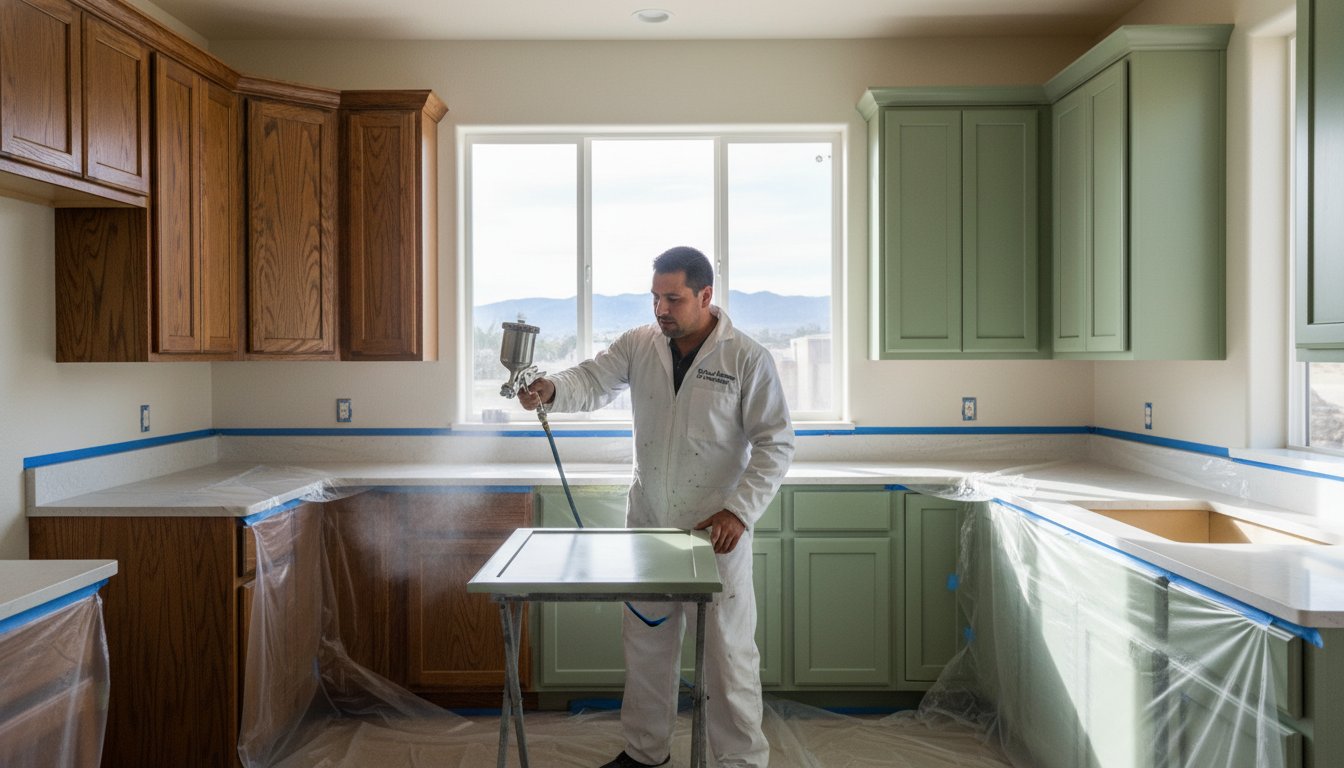

A two-week window before listing photos is a common squeeze for sellers with dated cabinets. The encouraging part is that cabinet painting turnaround time is usually measured in days, not months, so two weeks gives you room for the work itself plus the drying time that follows it. What determines whether the schedule holds is the size of the kitchen, the condition of the existing finish, and the order in which the days are sequenced.
What Cabinet Painting Turnaround Time Usually Looks Like
Timelines published by painting contractors cluster in a fairly narrow band. Most describe a project that runs several days to a week, with the final number driven by how many doors and drawers are involved and how much prep the current finish needs. Some companies publish tighter ranges. One contractor quotes one to five days depending on the number of cabinets being updated. Another describes a typical kitchen at four to six working days from start to finish. Others report that most cabinet painting projects wrap in just a few days when the scope is straightforward.
Smaller jobs compress further. Trade sources note that some small kitchens finish in as little as one or two days, while many customers report two to four days when prep is done properly. For contrast, a homeowner who tackled the work alone described spending about a week on sanding and dry time and stretching the whole project across roughly three full weekends. That gap between a professional crew and a solo DIY effort is the reason a two-week listing window is workable for a hired job and risky for a self-managed one.
Why Two Weeks Is a Buffer, Not a Rush Job
The working days are only part of the calendar. Waterborne cabinet enamels feel dry within hours, but full cure generally takes several weeks, and using doors normally right away can press fingerprints into the finish. That cure period does not block your listing, since the cabinets look finished long before they are fully hardened. It does change how you use the kitchen during the days after reassembly.
A two-week window absorbs that reality. The spraying can finish early in the window, the cabinets can go back together, and the remaining days give the finish time to harden before a stager moves in with props and before an agent walks buyers through. Rushing that last stretch is how fresh paint ends up with a fingerprint map on the most-used drawers.
A Practical View of How the Days Break Down
The phases below are consistent across contractor timelines. Treat the sequencing as the planning skeleton and confirm the specific schedule with the company you hire, since cabinet count and condition shift the length of each block.
| Phase | What It Involves | Where It Lands in the Window |
|---|---|---|
| Protection and teardown | Doors, drawer fronts, and hardware come off, and counters, floors, and appliances get masked | Front of the window |
| Cleaning and sanding | Grease and residue removed, surfaces scuffed, dings and dents filled | Front to middle, usually the slowest stretch |
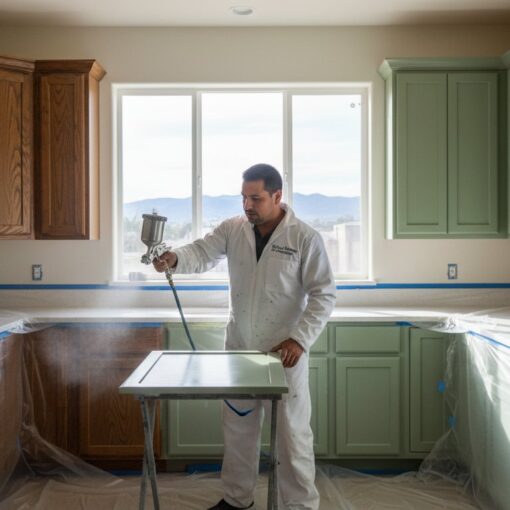
| Priming and spraying | Bonding primer, then thin enamel coats applied with a sprayer, with drying between coats | Middle of the window |
| Reassembly | Doors and drawers reinstalled, hardware back on, touch-ups made | Back half of the window |
| Cure | Finish hardens over days and weeks, so the kitchen gets careful use | Runs past the job and into listing prep |

Prep Is the Phase That Decides the Finish
Prep days feel slow because nothing visible is happening. They are also the reason a cabinet finish survives the first year of use. A trade write-up on shortcut work describes the pattern clearly: the result looks acceptable from across the room for the first month, then within a year it is chipping at the handles and peeling near the sink. For a seller, that failure mode is worse than a longer schedule, because a buyer inspection happens months after closing, not on photo day.
When you compare quotes, ask what happens during prep rather than how fast the job runs. Degreasing, sanding, and filling are the steps that let the topcoat bond, and they are the steps that get cut when a crew is chasing an unrealistic deadline.
Do the Cabinets Have to Be Completely Empty?
No. Painting contractors regularly work with cabinets that still hold their contents, and one company states plainly that you do not have to completely empty them. Practically, you will want counters clear, sink areas accessible, and fragile items moved out of the rooms where masking and spraying happen. Confirm the expectations with your painter before the start date so nothing on the first morning turns into a delay.

Where a Two-Week Timeline Slips
Most deadlines that fail were never realistic to begin with. These are the usual pressure points:
- Scope larger than estimated, since cabinet count and complexity are the two factors contractors name most often when explaining duration.
- Prep that takes longer than planned because the existing finish needs more sanding or repair than a walkthrough revealed.
- Misreading cure time as completion time, which leads to heavy use of doors and drawers too soon.
- Booking a start date too late in the window, leaving no room for the touch-up visit after reassembly.
- Coordinating stagers, photographers, and cleaners before the cabinets are actually back together.
Scheduling Around Photos and Showings
Book the painting first and let everything else fall after it. Once you have a confirmed start date, work backward: allow the working days the contractor quotes, add a few days for the finish to harden, and only then schedule photography and the first showings. If the schedule is tight, ask whether the crew can spray doors and drawer fronts off site or in a garage setup, since that can shorten the time your kitchen is unusable. Get the answer before you sign, not during the job.
Questions to Ask Before You Book
A short conversation covers most of the risk in a compressed timeline.
- Given my cabinet count and current finish, where does your range land, closer to a few days or closer to a week?
- How many coats of primer and finish are included, and what product is being sprayed?
- What are your instructions for using the kitchen during cure, and when can I put everything back inside the cabinets?
- Do I need to empty the cabinets, and what should be cleared from counters and walls?
- What does your warranty cover, and how do I request touch-ups if something gets marked during move-in?
Cabinet Painting Denver serves the metro area with an HVLP sprayed finish, free on-site estimates, and a 3-year workmanship warranty, which means the conversation above can happen at your kitchen counter rather than over the phone.

Building In a Realistic Cushion
Two weeks is enough time for professional cabinet painting, provided you treat the working days as the middle of the window rather than the whole of it. Contractors consistently quote several days to a week for a typical kitchen, with smaller jobs landing nearer one to five days. Book early, protect the prep phase, and let the finish cure on its own schedule. Your listing photos will look the same either way, and the cabinets will still look right a year after closing.
Frequently Asked Questions
Is two weeks enough time to paint kitchen cabinets before listing?
For most kitchens, yes. Contractors commonly quote several days to a week of working time, and some report a typical kitchen at four to six working days. Two weeks leaves room for the job plus several days of curing before photography and showings. The main risk is booking a start date too late in the window, so confirm the schedule early.
How long will my kitchen be out of commission?
Shorter than most homeowners expect. Reported ranges run from one to five days depending on cabinet count, with many customers describing two to four days for thorough prep and finishing. Full cure continues for several weeks after that, but the kitchen is usable during cure as long as you handle doors and drawers carefully and avoid pressing on fresh surfaces.
Can I use my cabinets right away after painting?
Wait. Waterborne cabinet enamels feel dry within hours, but the finish is still soft and full cure generally takes several weeks. Opening doors normally too soon can press fingerprints into the paint. Follow the drying guidance your painter provides, keep heavy items light on the shelves at first, and plan a gentle first week of use before the listing photos.
Why do some cabinet painting projects take longer than a week?
Scope and prep drive duration. Contractors point to the number of cabinets and the type of existing finish as the biggest variables. A large kitchen with worn or heavily coated doors needs more sanding, filling, and drying time between coats. Projects that stretch past a week usually involve more prep than a walkthrough could predict.
Should I paint cabinets myself to save time before a sale?
Rarely a time saver. One homeowner reported spending about a week on sanding and dry time and stretching the work across roughly three full weekends, which is longer than most professional timelines. A rushed DIY job also carries the chipping and peeling pattern that shows up within a year at handles and around the sink.