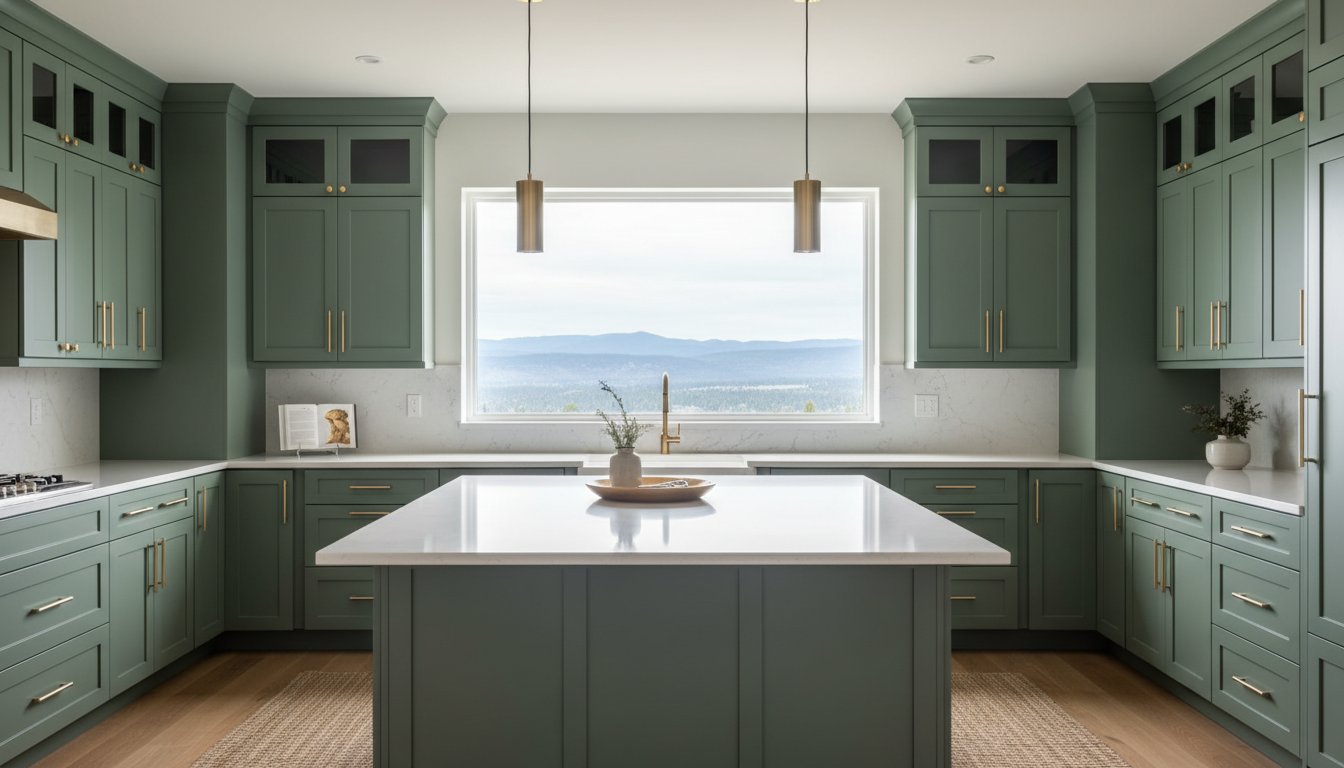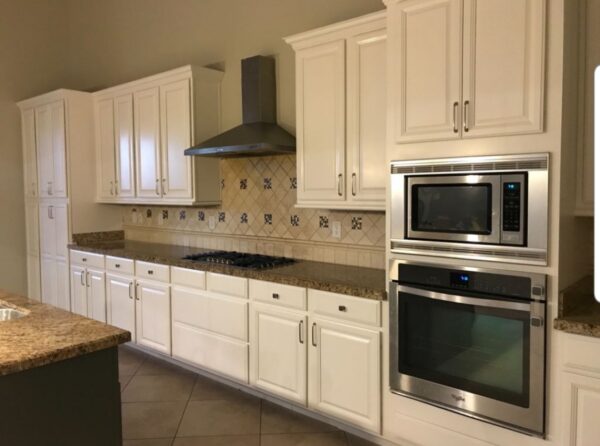
Anyone who has rolled paint onto a cabinet door knows the letdown. It looks fine from across the kitchen and rough up close: brush lines, a slightly tacky feel, and edges where paint pooled in the corners. Professional refinishers in Denver solve that with the same idea cabinet manufacturers use, a factory finish. The gap between a homeowner repaint and a factory-grade result comes down to three things: surface prep, spray equipment, and the coating itself. That last part is where 2K waterborne acrylics pull away from the wall paint sitting in your garage.
What Factory Finish Actually Means on a Cabinet Door
A factory finish is a coating applied in a controlled environment rather than on site. That is how cabinets are finished before they ever reach a home. The shop setting matters because dust, airflow, temperature, and humidity all affect how a sprayed film lays down and cures, and those variables are managed instead of left to chance.
Factory cabinets are not simply painted. Professional finishers mix and catalyze their coatings, pour them into a spray gun or spray system, and apply them in consistent passes across every surface. That is a different process from opening a can, stirring it, and rolling it on.
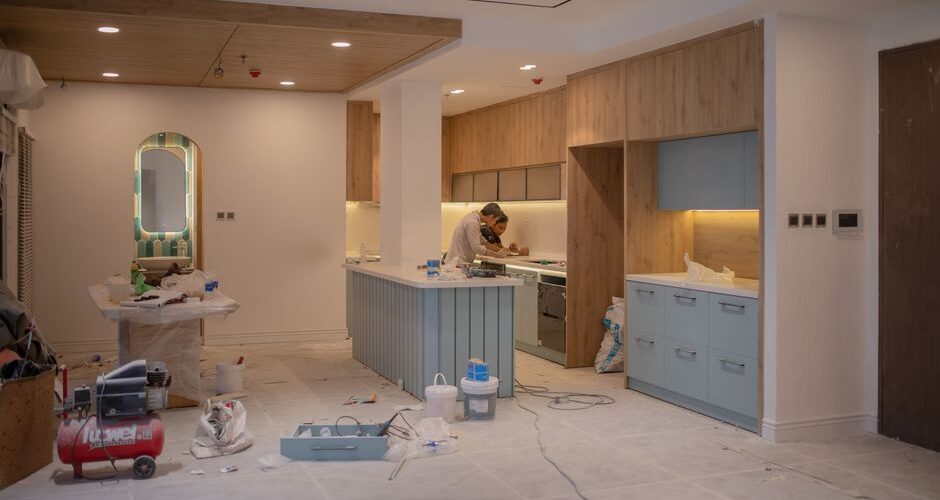
In a Denver kitchen, the factory approach gets adapted into a hybrid: doors and drawer fronts are removed and finished in a controlled shop space, while the cabinet frames are masked off and sprayed in place. The goal is one continuous film that reads as a single surface rather than a collection of repainted panels.
Why Wall Paint Falls Short on Cabinets
Wall paint is formulated for walls. Walls are large, vertical, low-contact surfaces that mostly sit there. Cabinet doors are the opposite. They get grabbed, bumped, wiped with a damp cloth, splattered with grease, and slammed shut dozens of times a day.
That mismatch shows up in the film itself. Interior wall products tend to stay relatively soft and flexible after they dry, which is fine on drywall but wrong for a door panel. A soft film scuffs, shows every fingerprint, and can feel tacky or stick where a door meets the frame. Because it never develops the hardness of a properly cured cabinet coating, it also tends to fail at the edges and around hardware first.
There is also the application problem. Without professional spray equipment, getting the smooth, level look of a factory finish is close to impossible. Brush and roller work leaves texture, and texture is exactly what separates a repaint from a factory-grade result.

What 2K Waterborne Acrylics Bring to the Job
The “2K” stands for two components. A 2K waterborne acrylic arrives as a base and a separate hardener or catalyst, and the two are mixed shortly before spraying. Once mixed, a chemical reaction begins that continues after the water carries the coating onto the surface. What is left behind is a crosslinked film rather than one that simply dries by evaporation.
Waterborne means water is the primary carrier in the coating. That keeps the working characteristics friendlier than traditional solvent-heavy systems while still producing the hard, durable film cabinets need. The mixed product has a working window, so it has to be applied within a set period after catalyzing, which is one reason this is finisher territory rather than a Saturday afternoon project.
Product specifications vary widely between manufacturers. Dry times, recoat windows, cure schedules, and performance ratings are not universal, so the manufacturer’s technical data sheet is the source to check before anyone commits to a system. A contractor should be able to produce that document on request.
How a Factory-Grade Finish Gets Applied in Your Kitchen
The shop stage
Doors, drawer fronts, and hardware come off first, and each piece gets labeled so it returns to the same opening. The parts travel to a controlled shop space where they are cleaned, sanded, primed, and sprayed. Working flat and in controlled conditions is what allows the coating to flow out into a smooth, even film with no runs and no brush texture.
The on-site stage
Cabinet boxes stay where they are, because removing and reinstalling full cabinetry is a remodel rather than a refinish. The frames are masked to protect the surrounding kitchen, then sprayed in place so the color and sheen match the doors. This is the step where a careful contractor protects floors, counters, backsplash, and appliances before a single pass is made.
The cure stage
Reassembly happens after the coating has cured enough to handle. A finish that is dry to the touch is not the same as a finish that has fully cured, and rushing that window is how cabinets end up with fingerprints pressed into a door or doors that stick for weeks. Follow the contractor’s guidance on when to put the kitchen fully back into service.
Prep Is Where the Finish Is Won or Lost
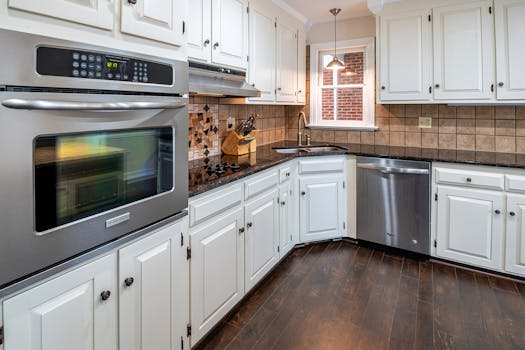
Spraying is the visible part. Prep decides whether the coating stays on the cabinet or peels off it in sheets a year later.
- Cleaning and degreasing to strip kitchen grease, cooking residue, and furniture polish from every surface.
- Scuffing or sanding so the new coating has something to bite into, especially over factory-finished cabinets.
- Repairing dings, dents, scratches, and dried-out joints before any coating goes on.
- Priming with a product chosen for the substrate, whether that is bare wood, a factory finish, or an existing paint job.
- Managing wood moisture. For superior adhesion, bare wood should be dried to a range of roughly 4.2 to 4.7 percent moisture content.
That moisture point is one of the clearest dividing lines between shop and job site work. A finisher asking about your cabinets’ moisture content is telling you they intend the coating to stay put.
Wall Paint vs. 2K Waterborne Acrylic at a Glance
| Factor | Standard wall paint | 2K waterborne acrylic |
|---|---|---|
| Formulation | Single component, made for drywall and ceilings | Two parts mixed and catalyzed before spraying |
| Application | Brush, roller, or light-duty sprayer | Professional spray equipment and controlled conditions |
| Film character | Stays relatively soft and flexible | Crosslinks into a harder, more durable film |
| Where it belongs | Walls and other low-contact surfaces | Doors, drawer fronts, and cabinet frames |
| DIY practicality | Easy to buy and apply | Difficult to mix, apply, and cure without shop controls |
A typical factory-style sequence on a refinishing project runs through cleaning, surface preparation, a primer coat, and multiple finish coats, with sanding or scuffing between stages. The count matters less than the discipline behind it.

Questions Worth Asking a Denver Cabinet Painter
The answers tell you more about the outcome than the color sample does.
- Will the doors and drawer fronts be finished in a shop or on site, and how do you match the two?
- Which coating system do you use, and can I see the manufacturer’s technical data sheet?
- How do you test adhesion over my existing factory finish before committing to the full job?
- What does your prep process include, and how do you handle grease and polish residue?
- How do you protect floors, counters, and appliances while spraying on site?
- What does your workmanship warranty cover, and for how long?
If the cabinets themselves are still in good shape, painting them is a practical alternative to a full remodel. Kitchen cabinets that feel dated but have sound doors and boxes do not need to be torn out to change the look of the room. Refinishing avoids the cost, downtime, and mess of replacement, which is why it has become the default first option for a Denver kitchen update. Cabinet Painting Denver backs its sprayed work with a three-year workmanship warranty, which is a reasonable baseline to compare other estimates against.
Expect the kitchen to be out of normal service while doors and drawer fronts are at the shop. Ask any contractor for their actual schedule rather than a ballpark, since cure time, not spraying time, is what determines when you can load the shelves again.
Frequently Asked Questions
What is a factory finish on cabinets?
A factory finish is a coating applied in a controlled environment rather than on site, which is how cabinets get finished before they reach a home. In refinishing, the same idea means doors and drawer fronts are finished in a shop with professional spray equipment while the frames are masked and sprayed in place. The result is a smoother, more consistent film than brush and roller work.
Can you paint over factory-painted cabinets?
Usually yes, provided the existing finish is sound, clean, and properly abraded so the new coating can grip. Factory finishes are typically hard and non-porous, which makes prep the deciding factor. A contractor should test adhesion in an inconspicuous spot, degrease thoroughly, and use a primer or coating system designed for that surface. Any loose or failing finish has to be addressed first.
Why not just use wall paint on kitchen cabinets?
Wall paint is made for low-contact surfaces, not doors that get grabbed, wiped, and bumped daily. It tends to stay softer, which shows scuffs and can feel tacky where a door meets the frame. It also lays down with brush and roller texture, so the finish reads as a repaint rather than a factory look. Cabinet coatings are formulated for the wear cabinets actually take.
Is 2K waterborne acrylic better than oil-based cabinet paint?
Not automatically. A catalyzed waterborne acrylic delivers a hard, crosslinked film with water as the main carrier, and many finishers prefer it for cabinets. Oil-based products behave differently and have their own strengths and tradeoffs. Performance depends on the specific product, the substrate, and the spraying conditions, so ask for the technical data sheet and compare it against your cabinets.
How do I know if my cabinets qualify for refinishing instead of replacement?
If the doors and boxes are still in solid condition, refinishing is typically the more practical path. Painting avoids the cost, downtime, and mess of a full replacement while still transforming the look of the kitchen. A contractor can confirm whether the frames are sound, the existing finish is stable, and any damage can be repaired before spraying begins.