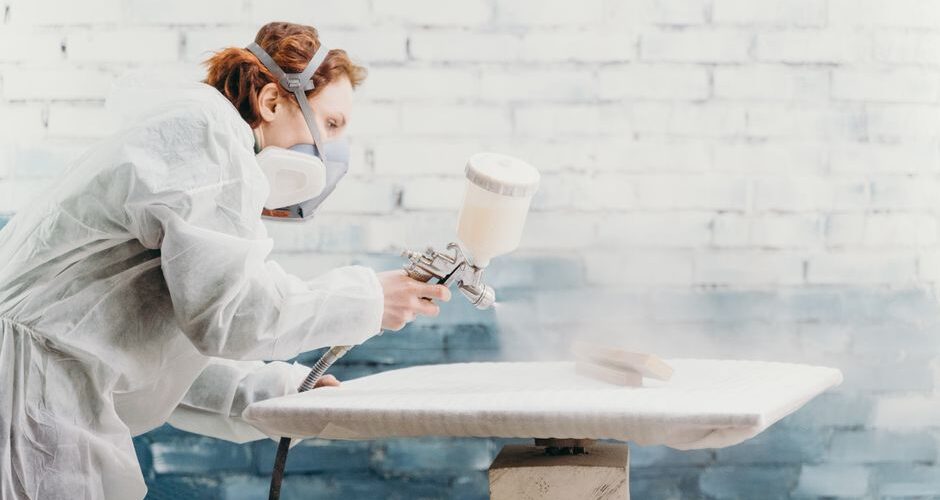
The most durable cabinet finish comes from spraying factory-grade 2K polyurethane coatings in a controlled shop environment, not from brushing or rolling house paint at home. Prep work matters as much as the coating itself: degreasing, sanding, and a high-adhesion bonding primer determine whether the finish lasts. Denver's dry climate makes cure control part of the durability equation.
Table of Contents
- Why do most DIY cabinet paint jobs fail?
- What does a true factory finish actually mean?
- What is the best step-by-step way to paint kitchen cabinets for a durable finish?
- Why does spraying beat brushing and rolling for cabinet durability?
- Which coatings hold up best — and why not just use house paint?
- How does Cabinet Painting Denver deliver a durable factory finish?
- What does cabinet painting cost in Denver in 2026?
- Key Takeaways
- References
Why do most DIY cabinet paint jobs fail?
Most DIY cabinet paint jobs fail because of three common problems: chipping at door edges and drawer pulls, visible brush and roller texture, and paint that stays soft or tacky for weeks. These failures are predictable when the wrong product meets the wrong surface.
House paint is formulated for low-traffic drywall, not for a surface that gets grabbed, wiped, and slammed daily. Wall paint lacks the hardness and chemical resistance that cabinet surfaces need. According to Style by Emily Henderson, even careful DIYers see edge wear quickly when using architectural paints on cabinets.
Skipped or rushed prep is the root cause behind most peeling and flaking. Grease left on the surface prevents adhesion. No bonding primer means the topcoat has nothing to grip. According to Hartley Home Design, sanding and priming are non-negotiable steps for any finish that needs to survive daily use.
Denver's low humidity pulls moisture out of water-based coatings too fast. This rapid drying can trap a soft film underneath a surface that feels dry to the touch. The result is a finish that never fully hardens and starts showing wear within months. According to The Palette Muse, proper degreasing with a product like Krud Kutter is the first step most homeowners skip.
What does a true factory finish actually mean?
A true factory finish means zero texture: no brush marks, no roller stipple, no orange peel. It means uniform sheen across every door and drawer front, and a hard film that resists scratches and cleaning chemicals. This is the standard that professional cabinet painters aim for.
Factory cabinets are finished with catalyzed industrial coatings, not architectural house paint. These are the same category of products used on commercial millwork. According to Hartley Home Design, even high-end DIY paints like Benjamin Moore Advance take 30 days to fully cure, which is far longer than industrial coatings.
2K polyurethane is a two-part coating that chemically cross-links as it cures. This chemical reaction produces a harder, more chemical-resistant film than a one-part enamel. The "2K" refers to the two components that are mixed before spraying, and the result is a finish that behaves more like the original factory coating on new cabinets.
Finish quality comes from the combination of coating chemistry, spray application, and a dust-controlled drying space. The paint alone does not create a factory finish. A professional video creator with experience since 2001 demonstrates on YouTube that even skilled painters need the right environment to produce a smooth result.
What is the best step-by-step way to paint kitchen cabinets for a durable finish?
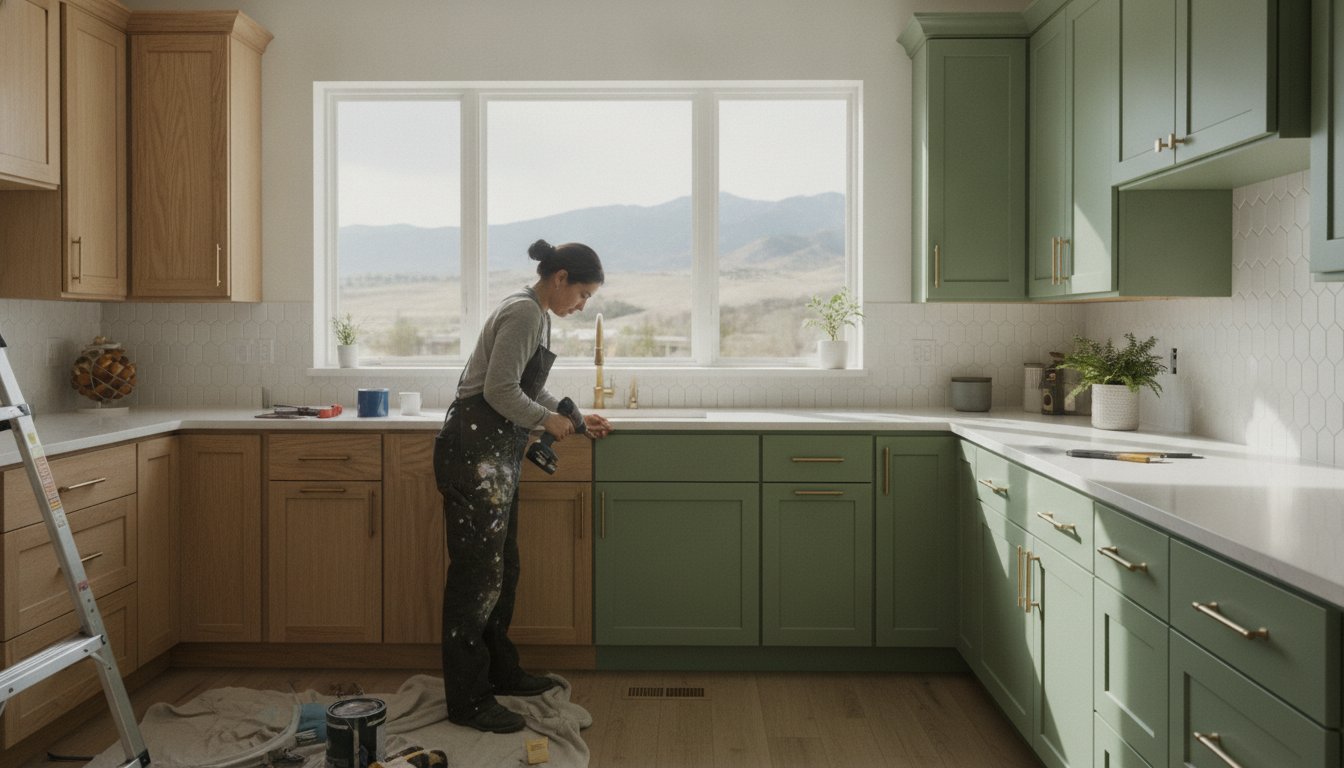
The best step-by-step way to paint kitchen cabinets for a durable finish follows a strict sequence: degrease and clean every surface, sand and repair, apply a high-adhesion bonding primer, remove doors and drawer fronts to a controlled spray booth, spray with an HVLP or airless unit using an industrial coating, and let the coating cure fully before reinstalling.
Step one is degreasing and cleaning every surface. Kitchen cabinets accumulate grease, cooking oil, and hand oils that block adhesion. According to The Palette Muse, a heavy-duty non-toxic degreaser like Krud Kutter removes the invisible film that causes paint to peel later.
Step two is sanding and repair. Fill dents, fix swollen or water-damaged doors, and sand the surface so the primer can grip. According to Hartley Home Design, 220 grit sandpaper creates the right profile for primer adhesion without leaving deep scratches.
Step three is applying a high-adhesion bonding primer. This is the layer that locks the finish to the cabinet. According to Style by Emily Henderson, labeling every door and drawer front before removal prevents a frustrating reinstall later.
Step four is removing doors and drawer fronts and moving them to a controlled spray booth. This keeps dust, pet hair, and kitchen debris out of the wet finish. Step five is spraying with an HVLP or airless unit using an industrial coating. The sprayer lays down a thin, even film that a brush cannot match.
Step six is letting the coating cure fully before reinstalling. Rushing this step ruins the finish. Spraying the boxes on-site while doors cure in the shop is what makes the schedule work for a lived-in home.
Why does spraying beat brushing and rolling for cabinet durability?
Spraying beats brushing and rolling for cabinet durability because a sprayer lays down an even, thin, uniform film with no lap marks or stipple. That is what a factory finish looks like up close. The coating flows out and levels before it dries, leaving a surface that feels smooth to the touch.
Brush and roller application leaves a thicker, uneven film that dries at different rates. Thick areas stay soft underneath while thin areas cure faster. Under raking light, brush strokes and roller texture become obvious. According to Hartley Home Design, even a careful roller job with a mohair roller shows more texture than a sprayed finish.
Sprayed edges and profiles get full, consistent coverage. These are the parts you actually touch every day: door edges, drawer fronts, and routed profiles. A brush struggles to coat these areas evenly, which is where chipping starts first.
Spraying requires masking, containment, and a dedicated drying area. Most homeowners cannot replicate this in a live kitchen. That is why professional cabinet painters use shop booths for doors and drawer fronts, while masking and spraying boxes on-site.
Which coatings hold up best — and why not just use house paint?
The coatings that hold up best are industrial 2K polyurethanes like Milesi, Renner, and Envirolak. Standard wall paint is the softest option and is not built for cabinets. One-part urethane enamels like Benjamin Moore Advance or Sherwin-Williams Emerald Urethane are a real step up, but they still require a 14 to 16 hour recoat time and a 30-day full cure, according to Hartley Home Design.
Industrial 2K polyurethanes are catalyzed coatings that chemically cross-link as they cure. This produces the hardest film and the best chemical resistance for kitchen use. These products are made for commercial millwork, not for brushing at home. They require proper PPE and ventilation, which is another reason they are a shop product.
Low-VOC and non-toxic options exist within the industrial category. These matter for families with kids or sensitivities. The coating chemistry has improved enough that low-VOC products now deliver durability that older solvent-based products once held exclusively.
No coating survives abuse forever. Durability is coating plus prep plus cure, in that order. A premium 2K polyurethane over a greasy, unprimed surface will still fail. The coating is only as good as the preparation underneath it.
How does Cabinet Painting Denver deliver a durable factory finish?
Cabinet Painting Denver delivers a durable factory finish by spraying doors and drawer fronts in a controlled shop booth and painting the cabinet boxes on-site. This split approach lets you keep your kitchen functional while the finish cures properly in a dust-free environment.
The company offers kitchen cabinet painting, cabinet refinishing, cabinet staining, bathroom cabinet painting and refinishing, and swollen cabinet door repair. Color matching and consultation help homeowners choose a finish that works with their existing kitchen. Low-VOC and non-toxic coating options are available for families who want a safer finish.
Cabinet Painting Denver uses industrial spray coatings and a high-adhesion primer system. The shop accounts for Denver's dry climate in the cure schedule, which prevents the soft-film problem that happens when water-based coatings dry too fast. This local experience matters for Front Range homes.
The company provides free estimates and project scheduling. Cabinet Painting Denver is a family-run shop serving Denver, Aurora, Lakewood, Arvada, and nearby suburbs. Homeowners who want a factory finish without a full remodel can get a written quote that spells out the coating system and timeline.
What does cabinet painting cost in Denver in 2026?
Cabinet painting in Denver in 2026 costs a fraction of full cabinet replacement. Full cabinet replacement starts around $10,000 on the low end, according to Style by Emily Henderson. Professional painting or refinishing keeps the existing boxes and costs significantly less.
The quote depends on the number of doors and drawers, the condition of the cabinets, the coating choice, and whether any repair work is needed. Water damage, swollen doors, and heavy oak grain all add prep time. According to YouTube, cabinets with UV yellowing and water damage around the sink require more sanding and repair before coating.
DIY saves money upfront but often costs more over time. A soft or chipped finish has to be redone, which means stripping, sanding, and repainting. The second job costs more than doing it right the first time.
A written, itemized estimate should spell out the coating and primer system included. Ask what industrial coating is being used, how many coats are included, and how long the cure schedule runs. That information tells you more about durability than the bottom-line price alone.
Key Takeaways
- The most durable cabinet finish comes from spraying a catalyzed industrial coating in a controlled space, not from brushing house paint at home.
- Prep, including degreasing, sanding, and a high-adhesion bonding primer, determines whether the finish lasts as much as the paint does.
- House paint is formulated for drywall, while cabinet-grade urethane enamels and 2K polyurethanes are formulated for surfaces that get touched daily.
- Denver's dry climate speeds up water-based cure, which can leave a soft film if the coating and schedule are not matched to the conditions.
- Full cabinet replacement starts around $10,000 on the low end, while professional painting or refinishing preserves the existing boxes for far less.
- Cabinet Painting Denver sprays doors and drawer fronts in a shop booth and paints boxes on-site, using low-VOC and non-toxic coating options.
- Labeling doors and drawer fronts before removal is a small step that prevents a frustrating reinstall.
References
- The RIGHT Way To Paint Your Kitchen Cabinets and Save — Style by Emily Henderson — 2021-04-15
- Kitchen Cabinet Painting Start to Finish | Full DIY Process, Tools, Cost & Tips — YouTube — 2025-07-30
- The Best Way to Paint Kitchen Cabinets (No Sanding!) — The Palette Muse
- How to Paint Cabinets and Get Pro Results (Without a Sprayer!) — Hartley Home Design — 2022-04-28