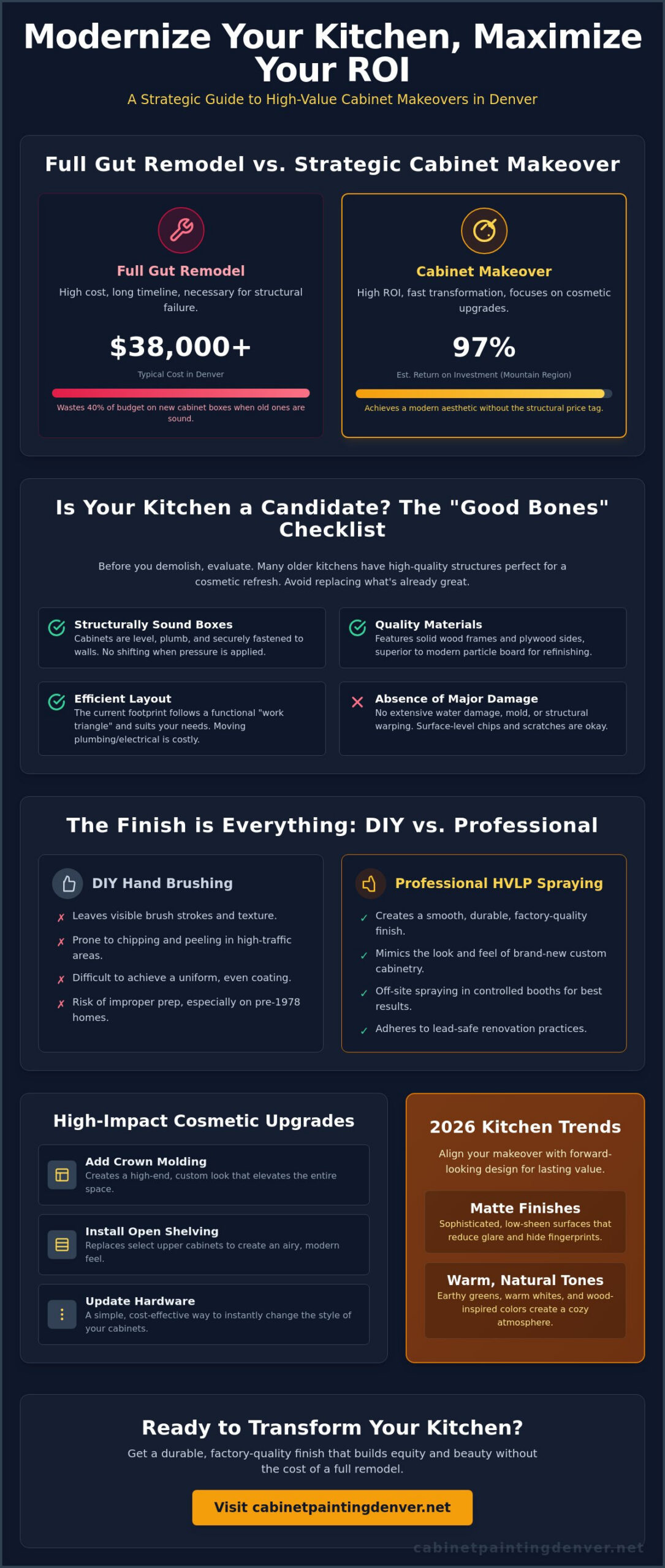
The most expensive component of your kitchen renovation might actually be the one you should keep. While a full gut-remodel in Denver can exceed $38,000, a strategic fixer upper kitchen cabinet makeover offers a path to a modern aesthetic without the structural price tag. It’s common to feel overwhelmed by the high cost of custom cabinetry or the fear of over-improving for your specific neighborhood. You require a functional layout and a durable, factory-quality finish, but you shouldn’t waste 40% of your budget on brand-new boxes when the existing ones are structurally sound.
In the Mountain region, a minor kitchen remodel currently yields an estimated 97% return on investment. This guide provides the procedural clarity you need to transform your outdated space using high-ROI cosmetic updates. We’ll explore the transition toward 2026 trends like matte finishes and warm, nature-inspired tones. You’ll learn how to prioritize professional kitchen cabinet painting to achieve a high-end look while maintaining a strict contingency fund for other essential upgrades.
Key Takeaways
- Learn how to distinguish between cosmetic flaws and structural cabinet failure to avoid the high cost of full replacement.
- Discover why a professional fixer upper kitchen cabinet makeover is the most effective way to build home equity without a full gut-remodel.
- Identify strategic layout improvements, such as adding crown molding or open shelving, to modernize your kitchen’s flow.
- Understand why Kitchen Cabinet Painting using off-site spray booths is essential for achieving a durable, factory-quality finish.
- Evaluate the technical requirements for a renovation that withstands Denver’s unique climate and altitude.
Evaluating Your Fixer-Upper Kitchen: Structural Needs vs. Cosmetic Potential
Assessing a fixer-upper requires a clinical approach to separate aesthetic dissatisfaction from functional failure. Many older homes contain high-quality materials that are no longer standard in modern, mid-range builds. Before committing to a full teardown, you must inspect the “bones” of the space, specifically the cabinet boxes and the current placement of utility lines. A functional layout is often hidden beneath layers of dated wallpaper and dark wood stains.
A successful fixer upper kitchen cabinet makeover relies on the integrity of the existing structures. If the cabinet boxes are leveled, plumb, and securely fastened to the wall studs, they are primary candidates for a cosmetic refresh. Surface-level issues like chipped paint or worn hardware are easily addressed. However, if you find extensive water damage under the sink or structural warping in the shelving, the cost of repair might outweigh the benefits of preservation. You must determine if the current footprint provides an adequate workflow for your cooking habits before investing in finishes.
To better understand the structural assembly of cabinetry during a renovation, watch this helpful video:
Identifying “Good Bones” in Outdated Cabinetry
Older cabinetry often features solid wood frames and plywood sides, which provide a more stable substrate for finishing than modern particle board. When evaluating your units, check the kitchen cabinet construction to determine if they are framed or frameless. Framed cabinets are typically more durable for long-term use in a busy household. If the wood grain is intact and the boxes don’t shift when pressure is applied, the cabinetry is worth keeping. Inspect the shelving supports and drawer glides; while glides can be replaced, the box itself must be square to ensure a factory-quality finish later in the process.
When to Keep the Existing Kitchen Layout
Changing the footprint of a kitchen is the fastest way to inflate a renovation budget. In Denver, moving a sink or adding new electrical outlets requires specific permits and can extend your project timeline by up to 180 days for approval. If the current layout follows an efficient work triangle, it’s more cost-effective to maintain the footprint during your fixer upper kitchen cabinet makeover. You can often achieve an open feel by removing a single non-load-bearing wall or replacing select upper doors with open shelving. A strategically placed island can also fix flow issues without the need for expensive plumbing or gas line relocations.
By focusing on these structural foundations, you ensure that every dollar spent on cosmetic updates builds genuine equity. Once you’ve confirmed that the bones of the kitchen are solid, you can move forward with high-impact visual changes that modernize the space without the waste of a total demolition.
The Most Cost-Effective Update: Professional Cabinet Refinishing
Professional refinishing serves as the primary driver for high-ROI renovations. While structural changes consume the majority of a budget, a strategic fixer upper kitchen cabinet makeover focuses on the surfaces buyers notice first. In the Denver market, a factory-quality finish on existing cabinetry significantly increases home equity without the requirement for a full demolition. This approach is particularly effective for homes with solid wood frames that simply require a modern aesthetic update.
The technical difference between brush-painting and professional HVLP (High Volume Low Pressure) spraying is substantial. Hand-brushing often leaves visible textures and is prone to chipping in high-traffic areas. Professional spraying provides a smooth, durable surface that mimics the appearance of brand-new custom cabinetry. When working on older properties, you must adhere to lead-safe renovation practices to ensure the safety of the household during the preparation phase. This procedural step is non-negotiable for properties built before 1978.
Painting vs. Replacing: The Fixer-Upper Math
Choosing to refinish rather than replace has a direct impact on both your timeline and the environment. Cabinetry accounts for 29% to 40% of a total kitchen remodel budget; replacing these units entirely often leads to unnecessary landfill waste. When you analyze the cost to paint kitchen cabinets, the savings compared to new custom installations are significant. A professional refinishing project typically concludes within 5 to 7 days, whereas a full replacement can disrupt a home for several weeks.
Choosing the Right 2026 Colors for Resale Value
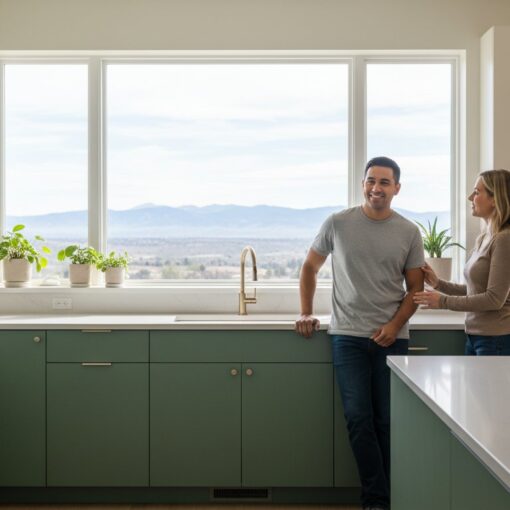
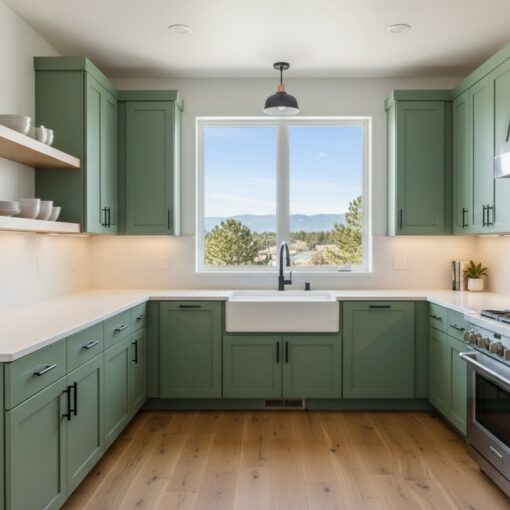
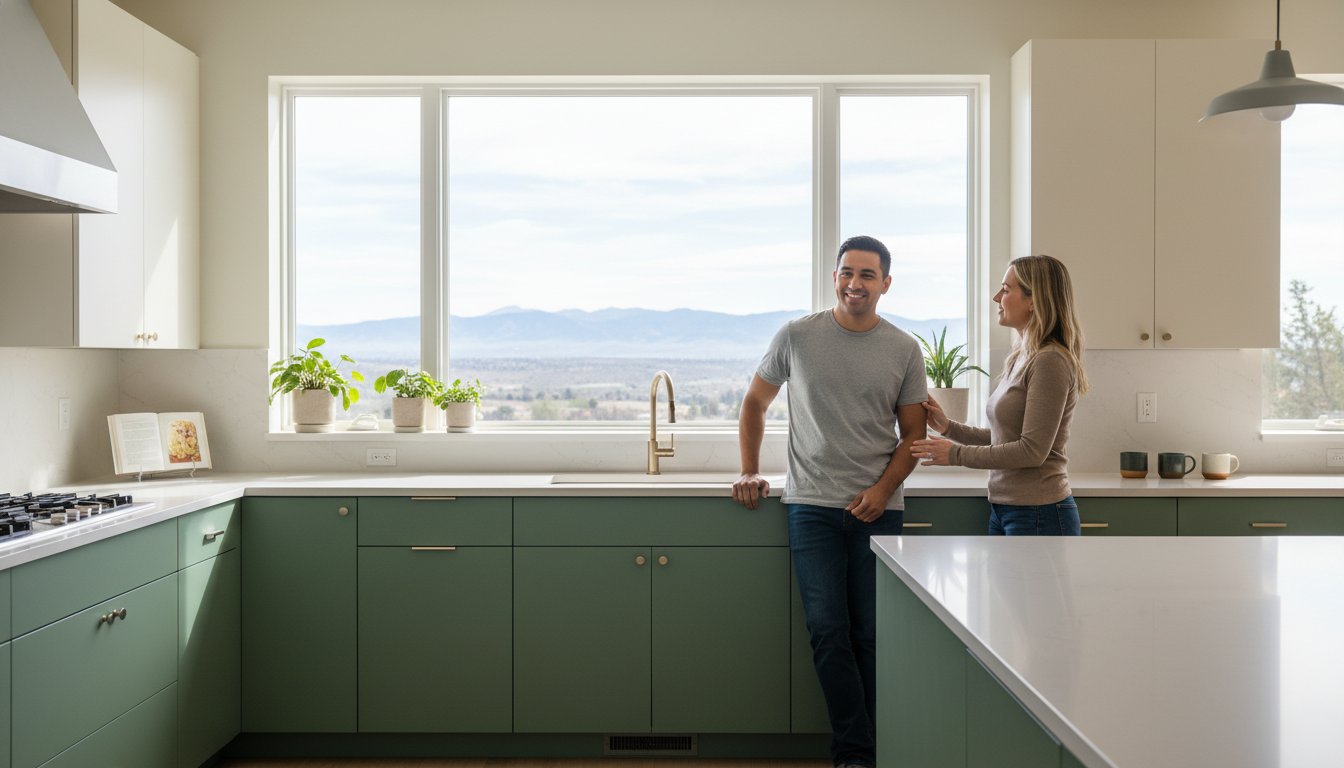
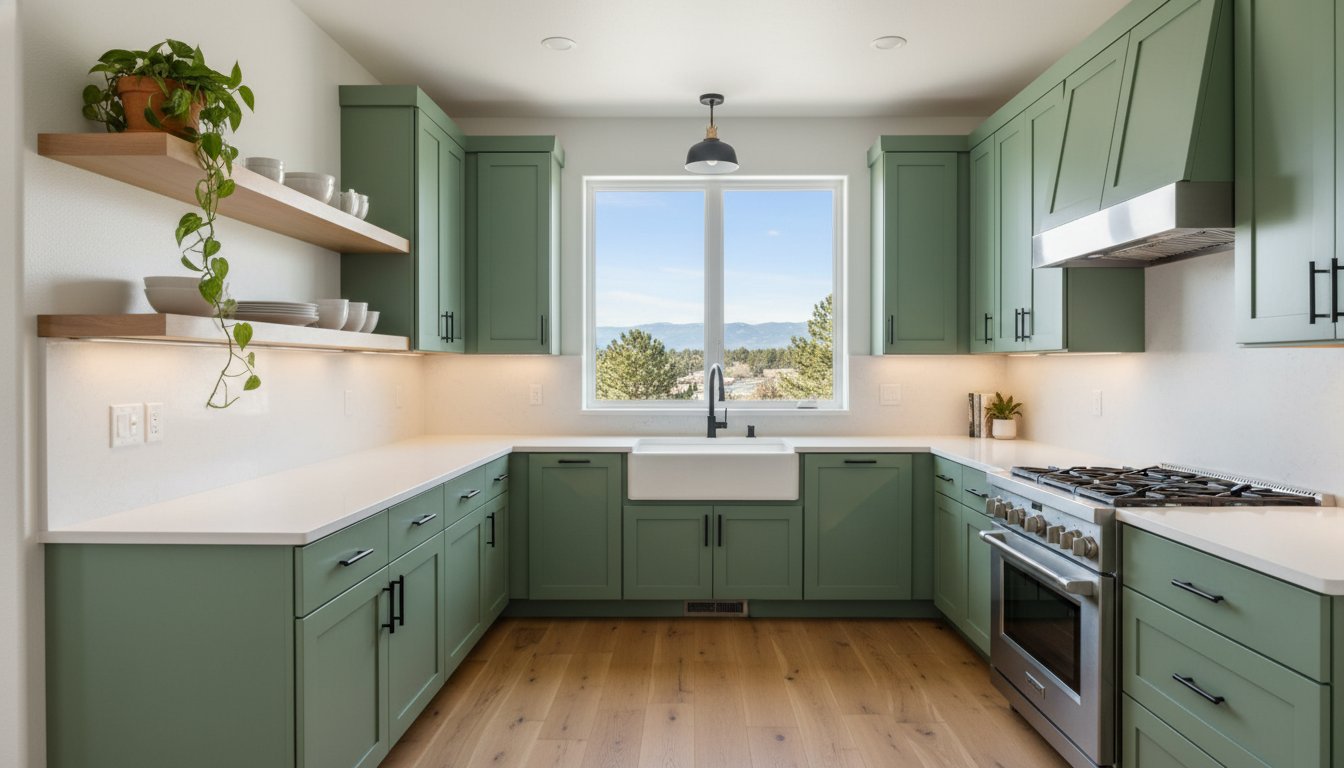
Current design trends for 2026 indicate a shift away from stark whites toward warmer, more organic tones. Creamy whites, mushroom, and muted olive greens are currently favored for their ability to make a space feel both modern and approachable. Selecting the best paint for cabinets ensures these colors remain vibrant and resistant to daily wear. Using lighter shades in a cramped fixer-upper helps reflect light, creating the illusion of a larger, more open kitchen layout. If you are planning a project, Kitchen Cabinet Painting provides the most direct path to achieving these specific 2026 aesthetic standards.
Strategic Kitchen Modernization: Layout and Flow Improvements
A successful fixer upper kitchen cabinet makeover involves more than just a surface refresh. You can significantly alter the kitchen’s perceived value by addressing minor layout inefficiencies that don’t require moving structural walls or plumbing lines. Modifying the physical interaction with your kitchen allows for a more modern cooking experience without the expense of a full gut-remodel. According to industry advice on a successful kitchen remodel, planning for workflow and storage efficiency is just as critical as selecting the right finishes.
You can create a custom, high-end look by adding crown molding or decorative trim to the top of existing cabinet boxes. This simple addition closes the gap between the cabinets and the ceiling, providing a built-in appearance that is standard in modern luxury homes. Inside the cabinets, installing pull-out organizers or “lazy Susans” improves functionality immediately. These features maximize the utility of deep base cabinets that are otherwise difficult to access in older, narrow layouts.
Open Shelving and Functional Adjustments
Removing select upper cabinet doors is an effective strategy for opening up a cramped fixer-upper. You can paint the interior of the cabinet box to match the exterior or install natural wood shelves to create a textured, two-tone aesthetic. This approach is particularly useful for converting awkward corner cabinets into functional display areas. If your kitchen includes soffits, removing them can add several inches of visual height. This modification makes the ceiling feel higher and provides space for taller upper cabinets if you choose to extend the frames during your fixer upper kitchen cabinet makeover.
Integrating Modern Appliances into Old Spaces
Older kitchen footprints were rarely designed for the massive proportions of modern appliances. You must measure carefully for counter-depth refrigerators to prevent them from protruding into the walkway of a narrow floor plan. Retrofitting existing cabinet openings is often necessary to accommodate standard-sized dishwashers or modern microwave drawers. This might involve trimming the face frames of your cabinets or adjusting the height of the toe kick. Ensure your electrical capacity meets the demands of 2026 smart appliances. Many older homes require updated circuits to safely power induction cooktops or high-efficiency refrigerators without tripping breakers. Check your panel capacity before purchasing new equipment to avoid unexpected utility costs.
Completing the Transformation: Counters, Backsplashes, and Hardware
The visual success of a fixer upper kitchen cabinet makeover depends on how secondary elements interact with the newly finished surfaces. While the cabinets provide the foundation, the countertops and backsplash act as the finishing layers that define the room’s character. Coordinating these materials requires an objective analysis of color temperature and texture. For example, if you choose a warm mushroom tone for your cabinets, selecting a countertop with subtle gold or beige veining creates a cohesive, intentional look. You should balance the backsplash design to avoid overwhelming a small space, especially in older homes where the kitchen footprint is limited.
Lighting serves as the “jewelry” of the kitchen. It draws the eye toward updated features and ensures the workspace is functional for daily use. In older fixer-upper homes, existing lighting is often insufficient or poorly placed. Strategically updating these fixtures provides a high visual impact for a relatively low investment compared to structural changes. You can use pendant lights over an island or sink area to create a focal point that complements your new cabinet hardware.
Low-Cost Backsplash and Countertop Alternatives
Budget management is critical when renovating an older property. While the average cost to replace kitchen countertops is approximately $3,138, you can reduce this expense by searching stone yards for quartz remnants. These smaller pieces are ideal for the narrower footprints found in many Denver fixer-uppers and cost significantly less than purchasing a full slab. Choosing professional cabinet refinishing allows you to reallocate funds that would have been spent on new cabinetry toward these higher-quality countertop materials. For the backsplash, subway tile remains a standard choice because it offers a clean, timeless look at a material cost often between $20 and $50 per square foot, providing a durable surface that doesn’t compete with the cabinetry.
The Power of Updated Hardware and Lighting
Hardware is a functional requirement that doubles as a design statement. Switching from dated, exposed hinges to modern concealed hinges immediately updates the cabinet profile. For 2026, matte black and brushed gold finishes are the primary trends for handles and pulls. These finishes bridge the gap between traditional cabinet styles and modern expectations. Additionally, under-cabinet LED lighting is a necessary addition to any fixer upper kitchen cabinet makeover. It eliminates shadows on the workspace and highlights the factory-quality finish of your painted cabinets. To ensure your renovation meets these professional standards, schedule a consultation for professional Kitchen Cabinet Painting to secure a durable, modern finish.
Executing Your Denver Kitchen Remodel: DIY vs. Professional Painting
Executing a fixer upper kitchen cabinet makeover in Denver requires an understanding of the local climate and the specific architectural styles of the region. Many fixer-uppers in neighborhoods like Park Hill or the Highlands feature historic Tudors and Bungalows with original cabinetry that has endured decades of use. While the DIY route appears cost-effective, Denver’s extremely dry air presents a significant technical challenge. Low humidity causes standard retail paints to dry too rapidly; this leads to visible lap marks and an uneven texture that compromises the final aesthetic.
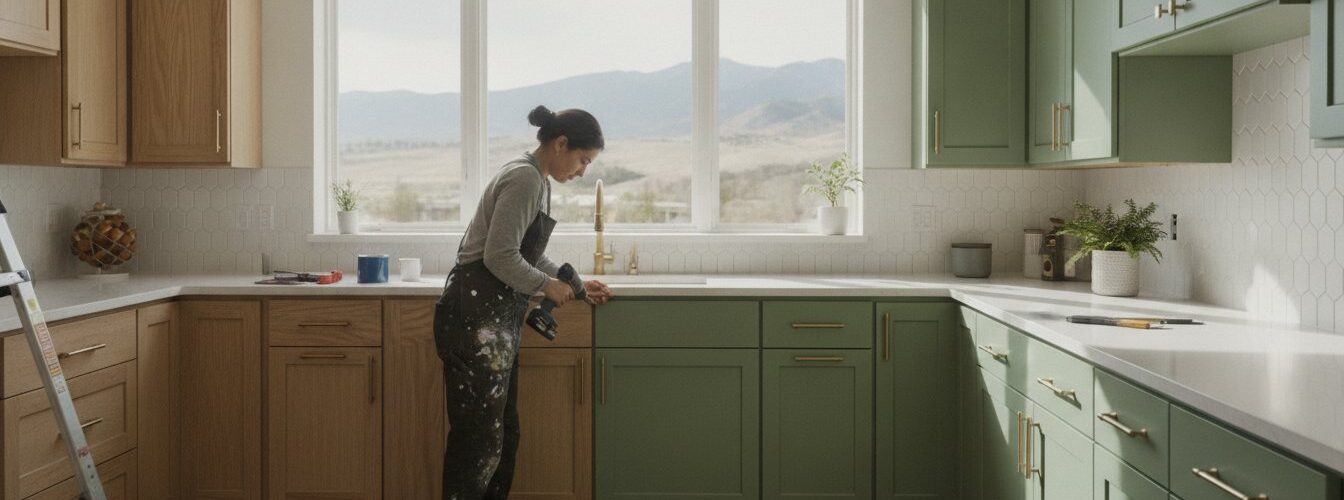
A professional approach mitigates these risks through controlled preparation and application. The process begins with exhaustive cleaning to remove years of kitchen grease, followed by mechanical sanding and the application of high-adhesion primers. When you are ready to select a contractor, it’s essential to vet a cabinet painter based on their experience with older substrates. Professional crews utilize specialized equipment to ensure the finish remains durable against Denver’s temperature fluctuations and high altitude conditions.
Why Spraying Cabinets is the Gold Standard
Achieving a factory-quality finish on old, textured wood requires industrial-grade coatings that aren’t available at local hardware stores. These coatings are specifically formulated for maximum adhesion and resistance to household chemicals. Professional HVLP spraying eliminates the brush marks and roller textures common in DIY projects. By using an off-site spray booth for doors and drawer fronts, professionals ensure a dust-free environment. This procedural step is critical for a flawless finish that adds tangible value to your fixer-upper renovation.
Planning Your Renovation Timeline in Denver
Coordination is vital to prevent project delays and ensure a clean workspace. You should schedule Cabinet Painting Denver only after heavy construction, such as floor sanding or wall removal, is complete. This sequence prevents airborne dust from settling on your new finish during the application phase. While the actual painting typically takes 5 to 7 days, you must account for curing times which vary based on current humidity levels. Preparing your home involves clearing countertops and ensuring the workspace is accessible for the crew. This direct approach minimizes household disruption and ensures the project remains on schedule for its 2026 completion date.
Realizing Your 2026 Kitchen Transformation
Transforming an outdated space requires a balance between preserving solid structural foundations and implementing modern cosmetic updates. A successful fixer upper kitchen cabinet makeover hinges on selecting high-ROI projects that increase home equity without the requirement for a total gut-remodel. You’ve learned that evaluating the integrity of existing cabinet boxes and strategically updating hardware can yield a functional, contemporary layout at a fraction of the cost of new cabinetry. These procedural steps ensure your kitchen meets both current design trends and long-term durability standards.
In the specific Denver market, achieving a factory-quality finish requires more than standard retail paint. We provide specialized Denver kitchen expertise to help you navigate these local environmental challenges. Our team utilizes a professional HVLP spray finish and a detailed preparation and cleaning process to guarantee a smooth, resilient surface that withstands daily use. Get Your Free Fixer-Upper Cabinet Painting Quote in Denver to begin your project today. Your renovation can achieve a modern, high-end aesthetic while maintaining a responsible budget.
Frequently Asked Questions
Is it worth updating a fixer-upper kitchen if the cabinets are 30 years old?
Updating 30-year-old cabinets is often worth the investment if the structural boxes remain level and plumb. Older units frequently feature solid wood frames and plywood sides that are more durable than modern, mid-range particle board alternatives. If the layout is functional for your needs, a fixer upper kitchen cabinet makeover is a smarter investment than a total replacement. You preserve high-quality materials while achieving a contemporary look through professional refinishing.
How much can I save by painting cabinets instead of replacing them?
You can save a significant portion of your renovation budget by painting instead of replacing, as cabinetry typically consumes 29% to 40% of a remodel’s total cost. This cost-effective strategy allows you to redirect your funds toward other high-impact upgrades like quartz countertops or modern appliances. While new custom cabinetry requires extensive lead times and labor, professional painting provides a factory-quality finish in a fraction of the time.
What is the best color for a small fixer-upper kitchen to make it look bigger?
Light, warm neutrals are the most effective colors for making a small kitchen appear larger. Shades like creamy white, mushroom, and greige reflect natural light and create an airy atmosphere. These 2026 trends avoid the clinical feel of cool grays while providing a modern backdrop for your hardware and backsplash. Choosing a matte finish also helps hide minor surface imperfections common in older, fixer-upper cabinetry.
Can you paint laminate or thermofoil cabinets in a fixer-upper?
You can paint laminate or thermofoil cabinets, but the process requires specialized bonding primers and mechanical sanding to ensure adhesion. If the thermofoil is peeling, you must remove the loose material to reach the stable MDF substrate underneath before starting the painting process. Professional application is essential here to ensure the paint sticks to these non-porous surfaces. This approach is a viable part of a fixer upper kitchen cabinet makeover when the underlying boxes are sound.
How long does a professional cabinet painting project take to complete?
A professional cabinet painting project usually takes 5 to 7 days to complete. This timeline includes the removal of doors for off-site spraying in a dust-free booth and the on-site preparation of cabinet frames. In contrast, a full cabinet replacement can disrupt your home for several weeks due to demolition and installation. Professional crews manage the curing process carefully to ensure the finish is durable before you resume normal kitchen activities.
Should I replace my countertops before or after painting my cabinets?
You should install new countertops before the final painting of your cabinet frames. Heavy stone installation can occasionally cause minor nicks or scratches to the cabinetry during the maneuvering of large slabs. By completing the countertop work first, your painters can ensure a seamless finish and protect the new stone during the application process. This sequence also allows for precise color matching between the cabinetry and the countertop veining.
Does painting kitchen cabinets really increase home resale value in Denver?
Painting cabinets significantly increases resale value, especially given the 97% ROI for minor kitchen remodels in the Mountain region. Denver buyers prioritize modern, move-in-ready spaces with clean aesthetics and updated finishes. A high-quality, professional finish suggests that the home has been well-maintained. It provides a luxury feel without the high cost of a full gut-remodel, making your property stand out in Denver’s competitive real estate market.
What are the most common mistakes when updating a fixer-upper kitchen?
The most common mistakes include ignoring structural issues, over-improving beyond neighborhood comps, and failing to account for Denver’s dry climate. DIY projects often suffer from visible brush marks because the paint dries too quickly in low humidity. Additionally, many homeowners forget to set aside a 10% to 20% contingency fund for unexpected plumbing or electrical updates required by updated building codes. Proper planning and professional help prevent these expensive errors.