What Denver Homeowners Really Pay For Cabinet Painting
For most Denver-area kitchens, professional cabinet painting typically costs $2,000 to $6,000, with many projects landing in the $3,000 to $4,500 range. Smaller condo kitchens or partial cabinet projects can come in closer to $1,500, while large custom kitchens in areas like Cherry Creek or Highlands Ranch can reach $7,000+, especially with specialty finishes.
Those ranges include labor, materials, prep, and finishing, but not new countertops or cabinet modifications.
If you are trying to decide between a full kitchen remodel, cabinet replacement, or painting, understanding what actually drives price in the Denver market is essential. Altitude, dry climate, housing stock, and local labor rates all influence what you will pay, and why quotes from different companies can vary by thousands of dollars.
This guide breaks down real-world cost ranges, what affects your price, where you can save money without sacrificing quality, and how cabinet painting compares to other options like cabinet refinishing or full replacement.
Key Takeaway: In Denver, expect cabinet painting to cost roughly $90 to $150 per door and drawer front equivalent, depending on condition, finish system, and contractor quality.
Typical Cabinet Painting Costs In Denver
The fastest way to estimate cost is by the size and complexity of your kitchen. Here are realistic ranges based on current Denver metro pricing.
Cost ranges by kitchen size
| Kitchen type | Typical door/drawer count | Approx. price range* |
|---|---|---|
| Small condo / galley kitchen | 15 to 25 | $1,800 to $3,000 |
| Average Denver family kitchen | 25 to 40 | $3,000 to $4,800 |
| Large / semi-custom kitchen | 40 to 60 | $4,500 to $7,500 |
| Luxury or highly detailed kitchen | 60+ | $6,500 to $10,000+ |
*Assumes professional spray finish, quality products, and standard prep in 2025 pricing.
For bathrooms, laundry rooms, or built-ins, many Denver painters have a minimum project fee between $750 and $1,500, even if there are only a few doors. This covers travel, setup, and spray equipment time.
What is usually included
A professional Denver cabinet painting quote generally covers:
- Removal and reinstallation of doors and drawer fronts
- Labeling and hardware removal
- Cleaning, degreasing, and sanding
- Priming with stain-blocking or bonding primer
- Spray finishing doors and drawers off-site or in a controlled booth
- Brushing and rolling or spraying cabinet boxes on-site
- Patching minor dings and nail holes
- All materials and shop time
If you want a deeper dive on these components, the article on Cabinet Painting Denver Cost breaks down line-item examples from actual projects.
Pro Tip: Always ask whether the estimate is all-inclusive or whether there are separate shop charges, mileage fees, or additional charges for extra coats.
Key Factors That Change Your Cabinet Painting Price
Even within the same size range, two Denver homeowners can get quotes that differ by thousands of dollars. These are the main drivers.
Number of doors, drawers, and exposed panels
Painters typically price cabinets by:
- Door and drawer front count
- Linear footage of boxes
- Or a hybrid system that accounts for complexity
More fronts and more exposed sides or panels mean more labor and more materials. A simple 30-door kitchen with flat fronts is faster and cheaper than a 30-door kitchen with glass inserts, applied moldings, and end panels that need detailed work.
Wood species, age, and existing finish
Older homes in Denver neighborhoods like Washington Park, Park Hill, or Congress Park often have:
- Thick lacquer or oil-based finishes that require heavier prep
- Oak with deep open grain that needs filling for a glassy finish
- Yellowed maple or cherry that may need stain blocking to prevent bleed-through
Heavier prep and specialized primers can add 10 to 25 percent to total cost.
Color choice and number of colors
Cost increases when you:
- Use two or more colors for uppers and lowers
- Choose very dark colors that may need extra coverage
- Request tinted primers or specialty hues
A standard one-color white or soft gray system is usually the most economical. Adding a second color, for example navy lowers, can add $250 to $600 depending on size.
Finish system and eco-friendly products
Environmentally conscious Denver homeowners often ask for low-VOC or waterborne products that still perform like industrial coatings. These coatings cost more per gallon but off-gas less and cure harder than retail paints.
Expect a 5 to 15 percent premium if you choose:
- Professional-grade waterborne enamels
- Conversion varnish alternatives with low VOC
- Specialty matte or ultra-smooth finishes
Labor, Materials, And What You Are Really Paying For
Understanding where your money goes will help you compare quotes more confidently and avoid underpriced, corner-cutting bids.
Typical cost breakdown
In the Denver metro area, cabinet painting budgets usually split roughly:
- Labor: 65 to 75 percent
- Materials: 15 to 25 percent
- Overhead and profit: 10 to 20 percent
Materials for an average kitchen often run $350 to $800, including:
- Degreasers, fillers, caulks
- Sandpaper and abrasives
- High-adhesion primers
- Topcoat enamel or lacquer
- Masking plastic, tape, and paper
If one quote seems dramatically cheaper, it is often because:
- Fewer coats are being applied
- Lower grade “wall paint” is being used on cabinets
- Spraying is skipped in favor of basic brushing and rolling
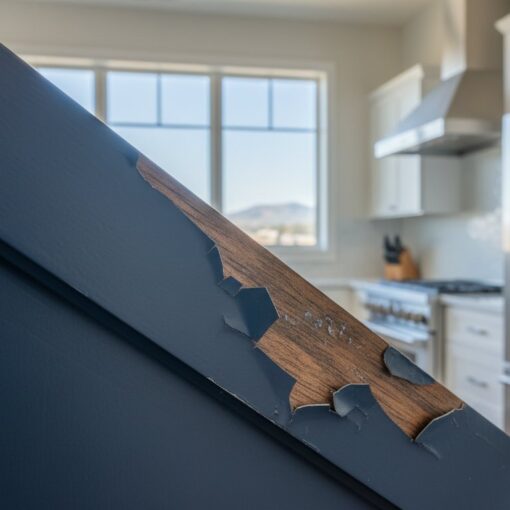
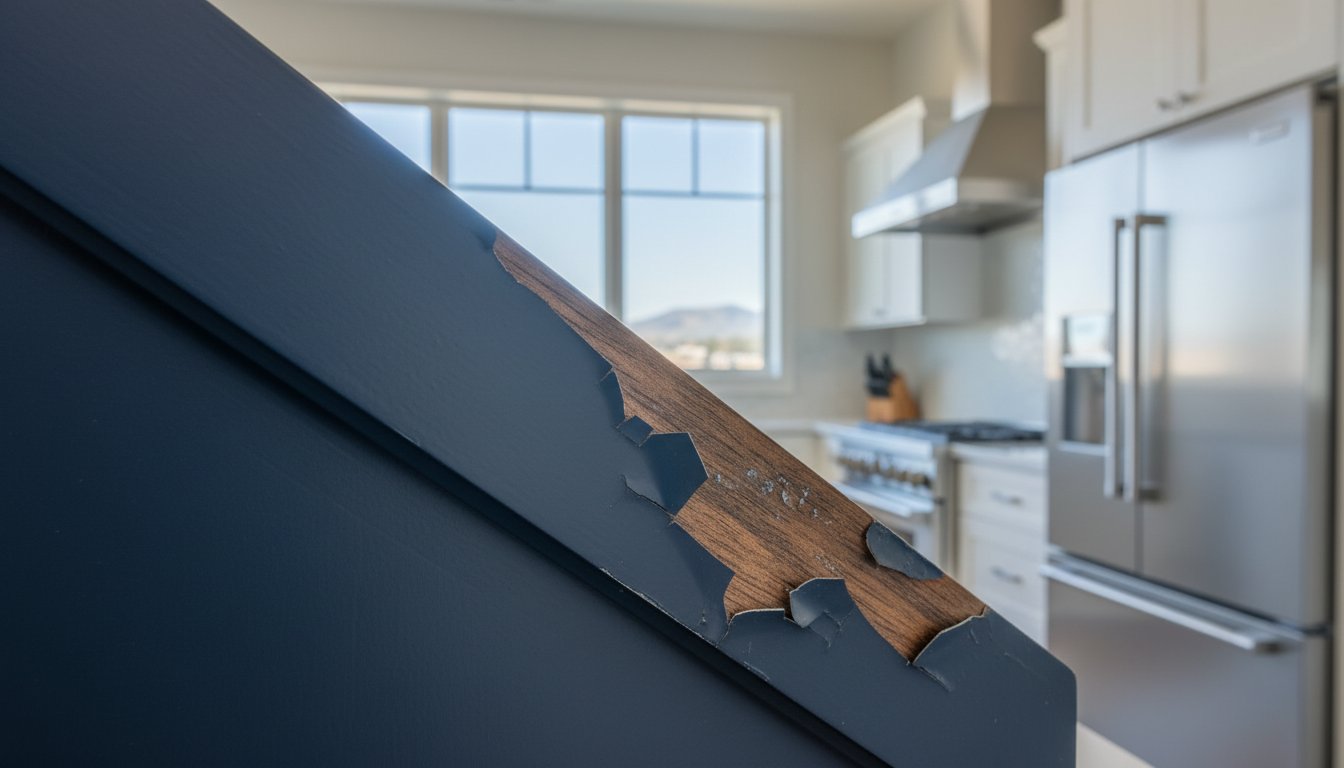
Important: Cabinets take abuse. Cheap paint or rushed prep often leads to peeling around handles within 12 to 24 months, which can cost more to fix than doing it right once.
Labor time for a typical Denver kitchen
For an average 30 to 40 front kitchen, a pro team might spend:
- 1 day: Set up, label, remove doors and drawers
- 1 to 2 days: On-site cleaning, sanding, priming, and first coat on boxes
- 2 to 3 days: Shop work spraying doors and drawers with multiple coats
- 1 day: Reinstall, adjust doors, touch-ups, cleanup
Weather and humidity in Denver are generally favorable for drying times, which keeps project timelines efficient compared with more humid markets.
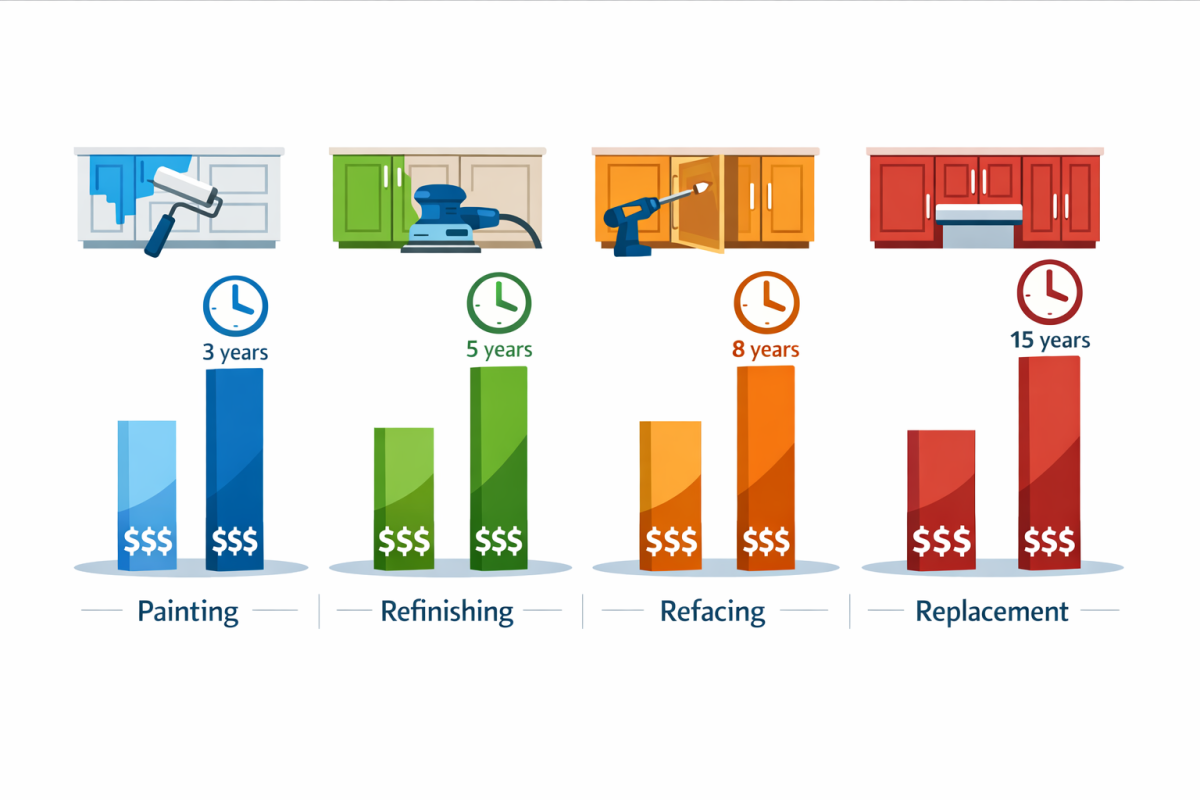
Comparing Cabinet Painting, Refinishing, And Replacement Costs
Most Denver homeowners considering cabinet painting are also weighing other options. Here is how the main choices compare.
Cost and impact comparison
| Option | Typical Denver cost (average kitchen) | What it includes | Best for |
|---|---|---|---|
| Cabinet painting only | $3,000 to $4,500 | New color, same doors, no stain change | Solid cabinets that just look dated |
| Cabinet refinishing (new stain) | $4,000 to $7,000 | Strip or sand, new stain, clear topcoat | Quality wood you want to showcase |
| Cabinet refacing | $8,000 to $15,000+ | New doors, veneer on boxes, new hardware | Layout is good but doors are outdated |
| Full cabinet replacement | $15,000 to $35,000+ | New boxes, doors, installation, often counters | Major layout change or failing cabinets |
If you are debating between painting and refinishing, this guide on Cabinet Painting Cabinet Refinishing In Denver explains when each approach makes the most sense for Denver’s housing stock.
When painting makes the most financial sense
Cabinet painting is usually the best value when:
- Your cabinets are structurally sound and properly installed
- You want a modern, resale-friendly look quickly
- You are flipping or prepping to sell in 1 to 5 years
- You want to keep counters and layout as-is
For move-up buyers, flippers, and empty nesters modernizing a long-term home, painting often delivers 70 to 80 percent of the visual impact of a full remodel at 20 to 30 percent of the cost.

How To Get Accurate Quotes And Avoid Surprise Costs
Denver’s cabinet painting market has everything from solo painters to specialized finishing shops. A little preparation will help you get cleaner, tighter bids.
Measure and count before you call
Before requesting quotes, gather:
- Number of doors and drawer fronts
- A few photos of each wall or run of cabinets
- Notes on current finish type, if known (oak stain, factory enamel, etc.)
- Any issues like peeling finish, water damage, or smoke staining
Having this ready lets contractors give you a ballpark range by phone or email and quickly determine whether your budget aligns with their service level.
Questions to ask Denver cabinet painters
Ask each company:
- What prep steps are included in your standard cabinet painting process?
- What specific primers and topcoats do you use, and are they low-VOC?
- Do you spray doors and drawers, or brush and roll them?
- How long have you been doing cabinet-specific work in the Denver area?
- Can you show before-and-after photos of similar local projects?
Key Takeaway: Choose a contractor who can clearly explain their process, not just their price. Process clarity usually predicts finish quality and durability.
Common add-ons and change orders
Be aware of extra charges that may appear:
- Repairing water-damaged sink bases or swollen particleboard
- Adding new crown molding or trim before painting
- Changing hinge styles or filling old hardware holes
- Upgrading to soft-close hardware
Discuss these possibilities up front and ask for separate line items so you can decide what is worth the extra cost.
Budgeting Tips For Denver Homeowners
Once you have rough numbers, you can fine tune your scope to match your budget and goals.
Smart ways to save without sacrificing quality
You can often reduce cost while still getting a professional result by:
- Keeping uppers and lowers the same color
- Skipping inside painting of cabinet boxes unless doors are glass
- Handling simple hardware swaps yourself after painting
- Avoiding extreme color changes that require heavy priming
Trimming even 5 to 10 percent from labor hours and material complexity can bring a borderline project back under budget.
When to invest a little more
You should consider spending a bit more if:
- You plan to live in the home for 10+ years
- You are in a competitive resale neighborhood where kitchens sell homes
- Your cabinets get heavy daily use from a large household
In those cases, choosing a higher durability finish or more intensive prep can easily extend the life of your cabinets by 5 years or more, which improves long-term value.
Example Cost Scenarios From The Denver Metro
To make this concrete, here are realistic scenarios that reflect current pricing ranges.
Park Hill bungalow, prepping to sell
- 24 doors and drawers, oak cabinets, no damage
- One color, satin enamel, standard prep
- Basic new brushed nickel hardware installed by homeowner
Approximate cost: $2,800 to $3,400
Impact: Transforms honey oak into a neutral white that photographs well and appeals to buyers, with minimal downtime before listing.
Highlands Ranch family home, long-term stay
- 38 doors and drawers, maple cabinets, some wear
- Two colors, white uppers and navy lowers
- Extra grain filling on island, upgraded low-VOC waterborne enamel
Approximate cost: $4,500 to $5,800
Impact: Modernizes a 1990s kitchen and pairs well with existing granite. Higher quality finish for a household with kids and pets.
Capitol Hill condo flip
- Small galley, 18 fronts, builder-grade cabinets
- One color, sprayed doors and boxes, quick timeline
- Basic hardware swap included
Approximate cost: $2,000 to $2,600
Impact: Fast turnaround that significantly increases perceived value without touching layout or appliances, ideal for investors.

CTA: Transforming Your Cabinets In The Denver Metro
If you are ready to go beyond rough estimates and want a detailed, transparent cabinet painting quote tailored to your Denver home, Cabinet Painting and Cabinet Refinishing Denver focuses specifically on high-quality cabinet finishes in the metro area.
They can help you:
- Evaluate whether painting or refinishing is better for your existing cabinets
- Choose low-VOC, durable finishes suited to Colorado’s dry climate
- Plan a project timeline that minimizes kitchen downtime
To see project galleries, current pricing guidance, and service details, visit Cabinet Painting and Cabinet Refinishing Denver and Learn more.
For inspiration and a deeper look at transformation options, their guide on Transform Your Kitchen With Professional Cabinet Painting And Cabinet Refinishing In Denver Metro Area is a valuable next read.
Frequently Asked Questions
Is cabinet painting worth it before selling my Denver home?
In most Denver neighborhoods, professionally painted cabinets are one of the highest return-on-investment upgrades. They dramatically improve listing photos, help your kitchen compete with newer builds, and typically cost far less than replacement. For move-up sellers and investors, spending around $3,000 to $4,000 can make a dated kitchen feel move-in ready, which often shortens time on market and supports stronger offers.
How long does cabinet paint last in Denver’s climate?
With solid prep and professional-grade products, you can expect 7 to 10 years of serviceable life, sometimes more, depending on use. Denver’s low humidity is generally favorable for coatings, though it can accelerate drying during application, which is why experienced local pros adjust their process. Heavy daily use, kids, and pets can shorten that lifespan, while careful use and gentle cleaning can extend it.
Do painters need to take cabinet doors off, or can they paint in place?
For a smooth, durable finish, reputable Denver cabinet painters almost always remove doors and drawer fronts. These are then sprayed horizontally in a controlled environment, which reduces drips and improves adhesion. Boxes are typically painted on-site. Painting doors in place can save a little time but usually results in visible brush marks, less even coverage, and more risk of chipping at hinges and edges.
Can I paint my cabinets myself to save money?
You can, and many handy homeowners do, but there are trade-offs. High-quality DIY projects may save 40 to 60 percent of labor costs, yet they often require several weekends of work, careful masking, and investment in tools and materials. The most common DIY issues are adhesion failures, visible brush marks, and rough dust nibs. For high-traffic kitchens or resale-driven projects, professional work is usually the safer bet.
My Review of Graco FFLP Tips for Spraying Cabinets
How far in advance should I book a cabinet painting project in Denver?
Lead times vary by season. Spring and early summer often book out 4 to 8 weeks for established cabinet specialists, especially during peak real estate activity. Late fall and winter can be more flexible, sometimes with openings in 2 to 4 weeks. If you have a tight deadline, such as a closing date or holiday event, contact contractors as early as possible and discuss schedule constraints during your first call.