Most homeowners assume a painter is a painter, but treating your kitchen cabinets like a bedroom wall is the fastest way to ensure your finish peels within a year. It’s understandable to feel anxious about kitchen downtime or frustrated by quotes that vary by thousands of dollars. You want a durable, factory-quality finish that stands up to daily use, not a result that requires constant touch-ups. Learning how to hire a cabinet painter who specializes in high-performance coatings is the only way to protect your investment and avoid the stress of a failed project.
This guide provides the exact criteria, essential questions, and specific red flags you need to identify a true professional. We’ll examine Denver licensing requirements, EPA lead-safe certifications, and the professional spraying processes that create a smooth, lasting surface. You’ll learn why professional off-site spraying for doors and drawers is the industry standard for a flawless result. By the end, you’ll have the transparency needed to choose a contractor with total confidence and ensure a professional, durable result for your kitchen cabinets.
Key Takeaways
- Differentiate between general house painters and fine-finish specialists to prevent common issues like peeling or premature wear.
- Discover how to hire a cabinet painter by prioritizing contractors who use mechanical sanding and thorough chemical degreasing for maximum paint adhesion.
- Assess technical capabilities by confirming the use of professional spray booths and specialized equipment for all removable components.
- Review contractor portfolios for finish quality rather than just color, ensuring they meet specific Denver licensing requirements.
- Account for Denver’s low humidity and local wood types to select the most appropriate coating systems for the regional climate.
Understanding the Difference: Cabinet Specialist vs. General Painter
Choosing the right contractor begins with the realization that cabinet painting is a specialty trade. A general house painter typically focuses on large surface areas like drywall or siding. These surfaces are static and do not face the same physical demands as a kitchen. When you research how to hire a cabinet painter, you are looking for a finishes specialist who understands industrial coating chemistry. A generalist might offer a lower price, but they often lack the equipment and technical knowledge required for high-traffic woodwork.
Many homeowners fall into the “Wall Paint Trap” by hiring painters who use standard latex products. While latex is excellent for walls, it is too soft for cabinetry. It remains slightly tacky, which causes doors to stick to frames. Over time, hand oils and kitchen heat break down the chemical bonds of consumer-grade paint, leading to inevitable peeling. To understand the risks, it is helpful to review the fundamentals of paint; wall paint is designed for breathability, whereas cabinet coatings must be non-porous and extremely hard to withstand daily use.
There is also a significant distinction between a “refresher” and a professional refinisher. A refresher might simply apply a new topcoat over an old finish without proper bonding. A specialist focuses on refinishing existing wood through a rigorous multi-step process. This approach ensures the new coating becomes part of the substrate rather than just a layer sitting on top of it. This procedural clarity is what separates a short-term cosmetic fix from a long-term kitchen upgrade.
The Chemistry of Cabinet Coatings
Professional specialists utilize industrial-grade coatings such as 2K polyurethanes or waterborne acrylic-urethanes. These products are formulated for maximum chemical resistance. In a kitchen environment, surfaces are constantly exposed to grease, steam, and harsh cleaning agents. Consumer-grade paints cannot withstand these elements without softening. Furthermore, specialists use high-solids primers specifically designed to block tannins. Without these professional primers, wood grains from species like oak will eventually “bleed” through the paint, creating unsightly yellow or brown stains.
Equipment Matters: Brushes vs. HVLP Sprayers
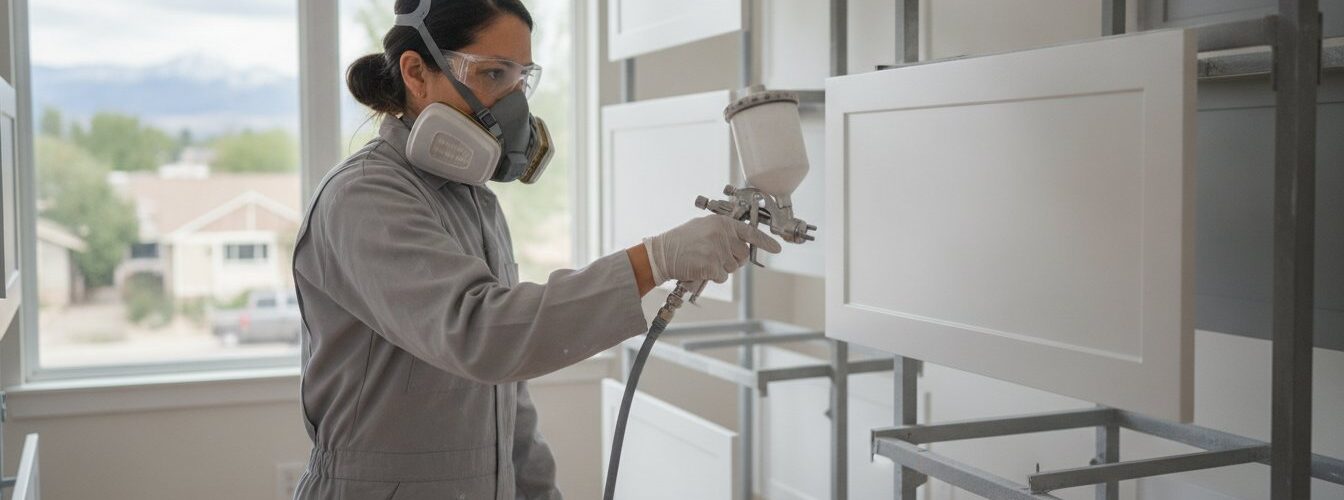
Visible brush marks or “orange peel” textures from rollers are the hallmarks of an amateur job. Achieving a factory-quality finish requires High-Volume Low-Pressure (HVLP) spraying equipment. This technology allows the technician to apply a fine, even mist that levels out perfectly as it dries. When you learn how to hire a cabinet painter, always ask about their facility. A professional specialist performs off-site spraying for doors and drawers in a controlled, dust-free environment. This ensures that the most visible parts of your kitchen are cured under ideal conditions, free from the airborne particles found in a typical home.
The Professional Process: Red Flags vs. Green Flags
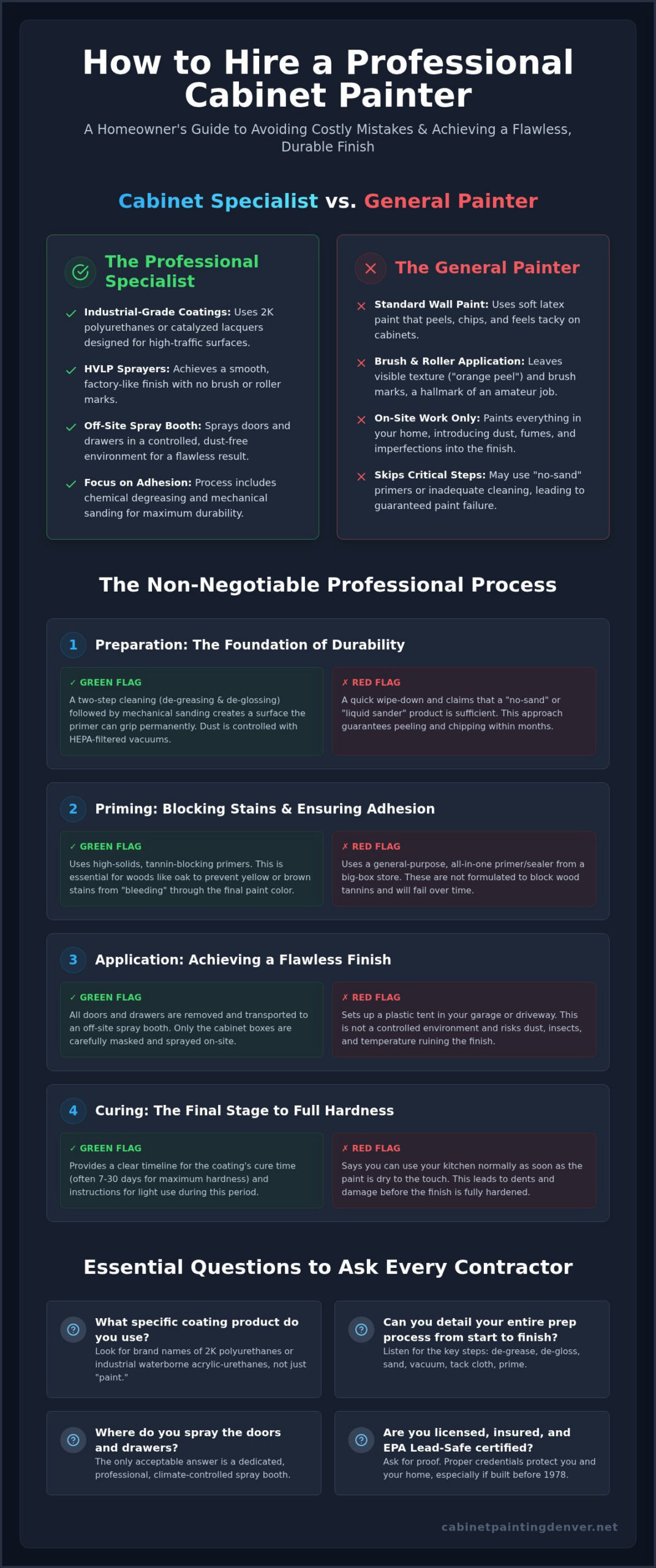
Understanding the procedural standards of a specialist is the most important part of learning how to hire a cabinet painter. While the final color is what you see, the “invisible” work determines the longevity of the finish. A significant green flag is a contractor who insists on a two-step cleaning process. Kitchens are environments saturated with atomized cooking oils and steam. Without thorough de-greasing and de-glossing, even the most expensive industrial coating will fail to bond. Reviewing guides on Hiring a Contractor can help you identify standard business practices and verify that your choice follows professional protocols.
Mechanical bonding is equally non-negotiable. If a contractor claims they use a “no-sand” primer, consider it a major red flag. Professional refinishing requires sanding to create a “profile” or physical texture for the primer to grip. This is known as mechanical bonding. A pro also prioritizes dust containment. They use HEPA-filtered vacuums attached to sanders and extensive masking to protect your home from fine overspray. When you’re ready to see a professional kitchen cabinet painting workflow in action, look for these specific containment measures.
Finally, manage your expectations regarding the timeline. While surfaces may be dry to the touch in hours, professional-grade coatings often require several days or even weeks to achieve full hardness and durability. A specialist will provide clear instructions on when you can safely resume heavy kitchen use to prevent damage during the curing phase.
Preparation: The Foundation of the Finish
A professional always removes doors and drawer fronts to take them to a controlled spray booth. Painting around hinges or leaving doors hanging is a sign of an amateur job. Proper organization is also vital. A specialist uses a systematic labeling system to ensure every piece fits perfectly during re-installation. This phase includes repairing minor dings and grain filling. If you have oak cabinets, grain filling is the only way to achieve the smooth, modern look that many homeowners desire.
The Priming and Sanding Cycle
The best finishes result from a repetitive cycle of priming and fine-grit sanding. This multi-stage process removes any raised wood grain and ensures maximum adhesion between layers. After each round of sanding, the painter must use a tack cloth to remove microscopic debris that could ruin the finish. The fingertip test is a simple way to verify this work: the surface should feel as smooth as glass before the final topcoat is applied.
How to Evaluate a Cabinet Painter’s Portfolio and Credentials
Hiring a contractor based on a single Instagram photo is a common mistake. When you research how to hire a cabinet painter, look for evidence of technical durability rather than just a trendy color choice. A high-quality photo might hide poor adhesion or rough textures that only become apparent upon close inspection. You need to verify that the painter possesses both the technical skills and the business stability to support their work long-term. For a deeper dive into industry standards, read our Hiring Professional Cabinet Painters: The Ultimate 2026 Guide.
Insurance is a critical verification step. A professional should carry general liability insurance to protect your property from damage. However, you should also ask about specific contractor bonds. These provide an extra layer of financial protection if the contractor fails to complete the work or meet the terms of the contract. Requesting a current certificate of insurance is a standard procedural requirement that any legitimate specialist will fulfill without hesitation.
Local references are invaluable, particularly in the Denver area. Ask for contacts who had their cabinets refinished at least two years ago. This timeframe allows you to see how the finish handles Denver’s dry climate and daily kitchen use. If the paint is still adhering perfectly after 24 months, it’s a strong indicator of professional prep work. A contractor who cannot provide long-term local references may not have the experience necessary for a high-end kitchen project.
Spotting Quality in Before-and-After Photos
Examine high-resolution photos for “bridging” at the seams. This occurs when paint fills the gap between the cabinet panel and the frame, which eventually cracks as the wood expands. Check the hinges and hardware in the “after” shots. Clean hinges indicate the doors were removed properly, while overspray on metal is a sign of a rushed job. Finally, look for consistency in sheen. A professional finish should be uniform without dull spots or variations in light reflection across different light angles.
Credentials and Business Stability
A physical shop location is a major indicator of a professional operation. Off-site spraying requires a dedicated spray booth to achieve a factory finish. Contractors working exclusively out of a garage or your driveway cannot provide the same level of dust control. Always insist on a written contract. This document must detail the specific preparation steps, the exact materials used, and clear warranty terms. You can also verify the company’s standing with local Denver trade organizations to ensure they are active participants in the regional business community.
The Interview: 10 Essential Questions to Ask Every Candidate
The interview phase is the final filter in your search for a specialist. Learning how to hire a cabinet painter requires asking technical questions that reveal a contractor’s true expertise. A generalist might give vague answers, but a specialist will provide procedural clarity. Use these five core questions to start your evaluation:
- What is your specific process for removing kitchen grease before painting? Listen for mentions of industrial degreasers or TSP substitutes. If they suggest just a light sanding, the finish won’t last.
- Do you use a spray booth for the doors and drawers? Professional results require a controlled, off-site environment to prevent dust contamination.
- What brand and line of coating will you be using? Ask if the product is KCMA (Kitchen Cabinet Manufacturers Association) rated. Standard house paint does not meet these durability standards.
- How do you handle the cabinet boxes inside the home to minimize fumes? They should explain their ventilation and masking protocols to protect your air quality.
- Can I see a sample door of your work to feel the finish? You’re looking for a smooth, non-porous surface that feels like a factory finish, not a painted wall.
Deep-Dive Questions on Durability
Ask the contractor to explain the difference between “dry time” and “cure time.” A finish might be dry to the touch in an hour, but it often takes several days to achieve full chemical hardness. You also need to know their touch-up policy. Because wood is a natural material that expands and contracts, minor cracks at the joints can occur over time. A professional should offer a clear plan for future maintenance. Understanding these technical details is as vital as knowing the Cabinet Painting Cost: A Full 2026 Price Breakdown before you sign a contract.
Logistics and Communication
Verify exactly who will be in your home. Ask if the project is managed by the owner or a sub-contracted crew. You also need to know how they plan to seal the kitchen. A professional setup involves floor-to-ceiling plastic barriers and HEPA filtration. Finally, discuss the payment schedule. It’s standard to pay a deposit, but avoid contractors who demand more than 33% to 50% upfront. This protects your interests and ensures the project moves forward as scheduled. When you’re ready to proceed with a vetted local expert, book your cabinet painting consultation to discuss your specific kitchen layout.
Hiring in Denver: Local Factors and Final Decisions
The final step in understanding how to hire a cabinet painter involves accounting for the specific environmental challenges of the Mile High City. Denver’s semi-arid climate creates unique variables that national contractors often overlook. Local expertise is essential because the atmospheric conditions here directly influence the behavior of industrial coatings. For a complete overview of regional standards, consult our Cabinet Painting Denver: Your Ultimate Guide to a Flawless Finish. This localized knowledge ensures that your kitchen upgrade survives the seasonal shifts common in Colorado.
A professional quote must be comprehensive to avoid unexpected costs. Verify that the re-installation of hardware is explicitly included in the written scope of work. A specialist handles the delicate task of realigning doors and drawers after the off-site spraying is complete. This procedural clarity prevents the frustration of trying to adjust hinges yourself. When you determine how to hire a cabinet painter, prioritize those who manage the entire project from initial de-greasing to the final hardware check.
Climate and Curing in the Mile High City
Denver’s low humidity poses a specific risk during the application phase. If the air is too dry, professional coatings can flash off or dry too quickly. This prevents the paint from leveling out properly, which results in a rough, “orange peel” texture instead of a smooth factory finish. Specialists mitigate this by controlling the environment in their spray booths and adjusting their application techniques to suit the regional air quality. Temperature control is also vital during the winter months, as consistent heat is required for coatings to bond correctly to existing wood surfaces. Wood movement in Colorado’s fluctuating climate requires flexible, pro-grade coatings that can expand and contract without cracking at the joints.
Making the Final Selection
Comparing quotes requires looking beyond the bottom line. A significantly lower price often indicates that a contractor plans to skip essential prep steps, such as mechanical sanding or multi-stage cleaning. These omissions lead to premature peeling that costs more to repair than the initial savings provided. Trust your observations regarding professional communication. A contractor who provides clear, declarative answers and detailed documentation is more likely to deliver a successful project. To get started with a vetted local specialist, contact Cabinet Painting Denver for a transparent, professional quote. This ensures your project receives the technical attention required for a long-lasting, durable result.
Secure Your Kitchen’s Long-Term Value
Your kitchen cabinets are a significant investment that requires technical precision to maintain. A successful project depends on choosing a specialist who understands the chemical requirements of industrial coatings and the physical demands of Denver’s semi-arid environment. By following these steps on how to hire a cabinet painter, you can avoid common issues like peeling paint or rough textures. A professional approach ensures your cabinets receive specialized HVLP spraying for a factory-quality finish that stands up to daily use.
A reputable contractor manages the entire process from deep de-greasing to the final re-installation of hardware. This level of procedural clarity protects your property and guarantees a durable result. Our team of local Denver experts provides a transparent experience tailored to the specific needs of Colorado homes. Ready to transform your kitchen with confidence? Get Your Free Professional Cabinet Painting Quote in Denver today. We look forward to helping you achieve a flawless finish that revitalizes your home.
Frequently Asked Questions
How much should I expect to pay for a professional cabinet painter?
Professional costs vary based on the number of openings, the condition of the wood, and the specific coating system selected. While industry data provides broad ranges for labor and specialty materials, your final investment depends on the complexity of the prep work required for a factory finish. Factors like grain filling for oak or the need for multi-stage sanding will influence the total. Requesting a detailed quote is the most accurate way to determine the budget for your specific kitchen layout.
Is it better to paint or refinish my existing cabinets?
The choice depends on your aesthetic goals for the space. Kitchen cabinet painting is ideal if you want to hide the wood grain and achieve a solid, modern color. Refinishing is the preferred option when you want to revitalize the existing wood grain while updating the color or sheen. Both processes involve deep cleaning and professional spraying to ensure a smooth, durable surface that withstands daily kitchen activity in Denver.
How long does a typical professional cabinet painting project take?
A typical professional project usually requires five to ten business days. This timeline accounts for the detailed preparation of cabinet boxes in your home and the off-site spraying of doors and drawers in a controlled booth. Proper curing time between coats is essential for a lasting finish. While the kitchen remains partially accessible, the most intensive work occurs during the first few days of masking and cleaning.
Do I need to empty my cabinets before the painters arrive?
You should empty all drawers and clear off the countertops before the project begins. While some contractors allow items to remain inside the cabinet boxes, removing everything prevents dust contamination and ensures the technician has full access to the frames. Clearing the workspace also protects your belongings from the cleaning agents and sanding debris generated during the preparation phase. It’s a standard requirement for maintaining a clean work environment.
Can you paint laminate or thermofoil cabinets, or only wood?
Professional painters can apply coatings to laminate and thermofoil cabinets if the substrate is in good condition. The process requires specific high-adhesion primers designed to bond with non-porous surfaces. However, if the thermofoil is peeling or bubbling, it must be removed or repaired before the painting process begins. Many homeowners find that painting these surfaces is a cost-effective alternative to full replacement when the underlying structure remains sound.
What is the most durable finish for kitchen cabinets in 2026?
In 2026, 2K polyurethanes and waterborne acrylic-urethane coatings are considered the industry standard for durability. These industrial-grade products provide superior resistance to chemicals, grease, and physical impact compared to standard retail paints. They’re specifically formulated to handle the expansion and contraction of wood in Denver’s dry climate. A specialist will select a coating system that meets KCMA standards for long-term performance in high-traffic kitchens.
Should I buy the paint myself to save money on the project?
You shouldn’t purchase the paint yourself when learning how to hire a cabinet painter. Professionals use specialized industrial coatings that aren’t available at standard retail hardware stores. These products require specific mixing ratios and professional spraying equipment to apply correctly. By allowing the contractor to provide the materials, you ensure the coating system is compatible with their primers and application methods, which also preserves your project warranty.
How do I clean my cabinets once they have been professionally painted?
Clean your professionally painted cabinets using a soft microfiber cloth and a solution of mild dish soap and warm water. It’s important to avoid abrasive scrubbing pads, ammonia-based cleaners, or harsh chemicals that can dull the finish over time. Always dry the surfaces immediately with a clean towel to prevent moisture from sitting on the edges. Regular, gentle maintenance is the best way to preserve the factory-quality smoothness of your refinished cabinetry.