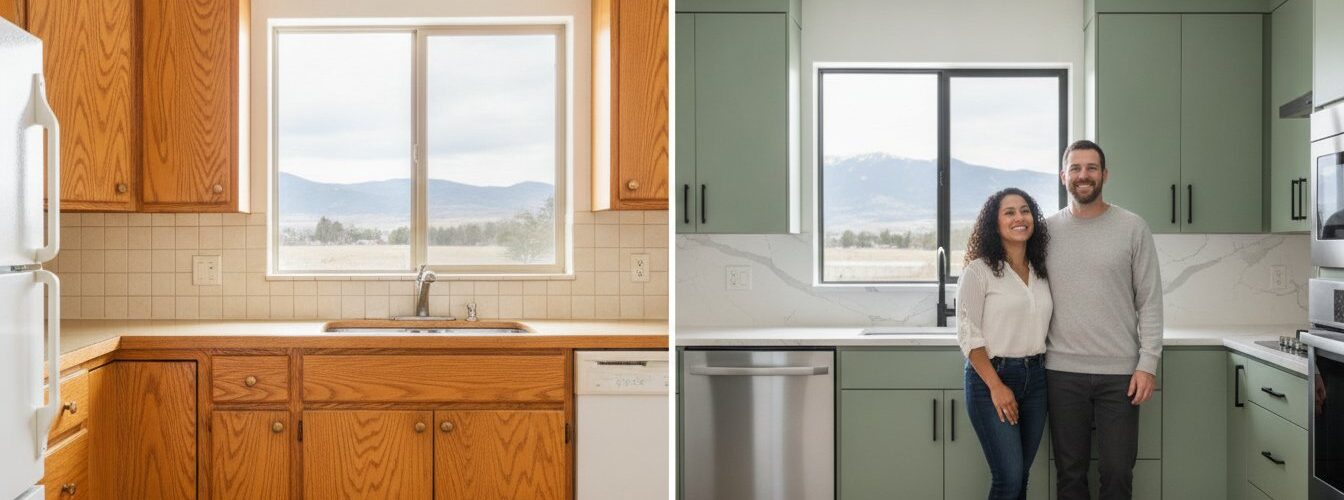
That honey-orange oak in your kitchen is practically indestructible, but its heavy, dated grain makes your home feel stuck in 1994. You likely appreciate the structural integrity of your solid wood doors, yet the deep ridges and yellowed finish don’t align with a modern aesthetic. Achieving a smooth, grain-free look requires more than a simple coat of paint. When researching painting oak cabinets denver homeowners often struggle with tannin bleed and texture that standard DIY methods cannot hide.
We understand that a successful transformation depends on specialized preparation and climate-controlled curing. This guide provides a clear roadmap to achieving a factory-quality finish designed to last in Colorado’s unique environment. As a local authority serving the area since 1984, we know that professional grain-filling and off-site spray booths are essential for a modern look. You will learn how to select a color palette that remains durable against high altitude UV exposure and why a 3-year warranty is the standard for professional results in our dry climate. From blocking stubborn wood tannins to achieving a level-five smooth finish, this 2026 guide covers every requirement for professional Kitchen Cabinet Painting.
Key Takeaways
- Professional grain-filling techniques are required to transform the open-pore structure of honey oak into a smooth, modern surface.
- Projects involving painting oak cabinets denver require specific paint formulas and curing processes to withstand the region’s low humidity and high UV levels.
- Utilizing an off-site professional spray booth ensures a factory-quality finish that is free from the dust and imperfections common with on-site applications.
- Professional cabinet painting offers a significantly higher return on investment compared to full replacement, particularly for homes in neighborhoods like Highlands Ranch and Cherry Creek.
- A 3-year warranty serves as a critical benchmark for durability, providing assurance that the finish will remain intact despite Colorado’s atmospheric conditions.
The Challenge of Painting Oak Cabinets in Denver Homes
Many homes across the Denver Metro area, particularly in suburbs like Highlands Ranch and Aurora, feature original honey oak cabinetry. While these cabinets are structurally sound, their orange undertones and heavy texture often clash with current design trends. Successfully painting oak cabinets denver requires a specific technical approach that differs from standard wall painting. You can’t just apply a fresh coat of white paint and expect a smooth result.
Why Honey Oak is a Denver Staple
Residential developments along the Front Range during the 1990s and early 2000s relied heavily on red and white oak. Builders selected this material because of its incredible durability and resistance to wear. Today, these cabinets remain in excellent physical condition, but the “honey” stain has aged into a dated, orange aesthetic. Homeowners often want to keep the high-quality wood while updating the color to modern whites, greys, or navy. Refinishing is a logical choice because it preserves the structural integrity of the kitchen while completely altering its visual impact.
Understanding Oak’s Open Grain Structure
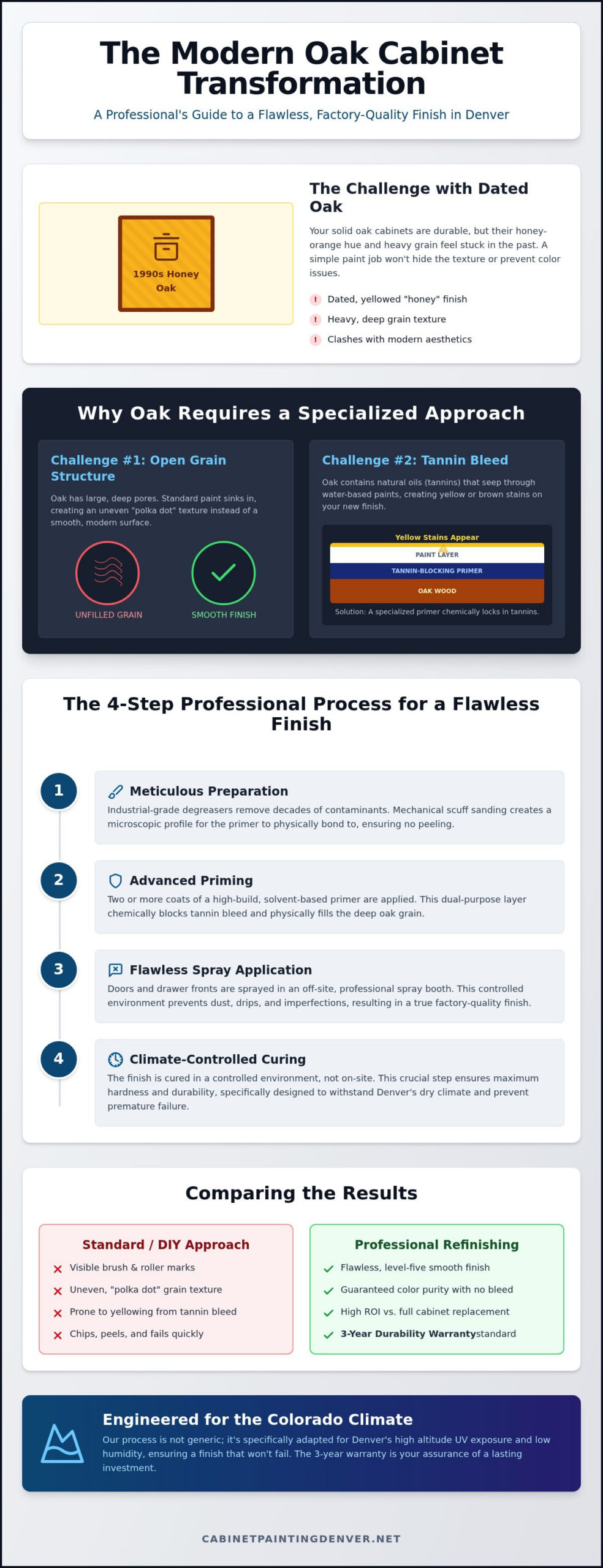
Oak is an open-grain hardwood. This means it has large, visible pores that remain even after the wood is cut and sanded. The wood finishing process for oak is uniquely difficult because paint naturally settles into these deep pores. If a contractor uses standard latex paint without proper filling, the result is a “polka dot” effect. This occurs when the paint fills the deep ridges but leaves the higher wood fibers exposed, creating an uneven and distracting texture. This texture prevents the smooth, factory-like finish most homeowners expect from a high-end remodel.
Professional oak refinishing is a procedural restoration, not just a cosmetic change. It involves degreasing, mechanical sanding, and the application of specialized high-build primers. We focus on Kitchen Cabinet Painting as a specialized trade because standard house painting techniques fail on this specific wood species. Homeowners must understand the difference between a “natural oak” look, where the grain is painted but still textured, and a “grain-free” look, which requires intensive filling. We prioritize transparency about these results. Achieving a level-five smooth finish on oak is labor-intensive, and managing expectations regarding wood grain visibility is the first step in any successful project.
The Professional Process for a Flawless Oak Finish
Achieving a smooth surface when painting oak cabinets denver requires a rigorous technical sequence. While many homeowners follow a step-by-step pro process for standard woods, oak demands additional layers of intervention to manage its deep grain. Tannin blocking is the essential step for oak that uses specialized primers to seal in natural wood oils and prevent them from migrating through the paint surface.
Preparation: Degreasing and Mechanical Bonding
Oak cabinets in older Denver homes have often accumulated decades of cooking grease and skin oils. These contaminants nestle deep within the wood’s open pores. Failure to remove these oils leads to catastrophic adhesion failure. We employ industrial-grade degreasers followed by mechanical scuff sanding. This process creates a “profile” on the wood, allowing the primer to bond physically to the fibers. These cleaning protocols are standard for professional cabinet painters who prioritize longevity over speed.
Priming to Stop Tannin Bleed
Oak is rich in tannins, which are acidic chemicals that react with water-based paints. Without a proper barrier, these tannins will bleed through the finish, creating unsightly yellow or brown stains on white cabinetry. According to the U.S. Forest Service’s Guide to Wood Finishing, wood properties like extractives significantly impact how a finish performs over time. To combat this, we use solvent-based shellac or high-build primers. These primers serve two purposes: they chemically lock in tannins and physically fill the wood’s pores. Often, two full coats are necessary to ensure the grain is adequately suppressed before the first drop of color is applied.
Professional Spraying vs. Brush Application
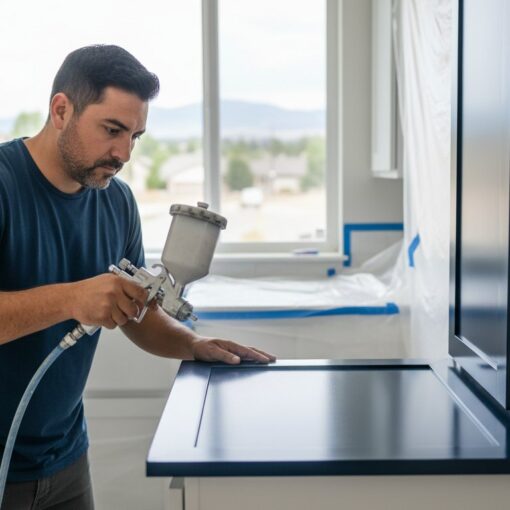
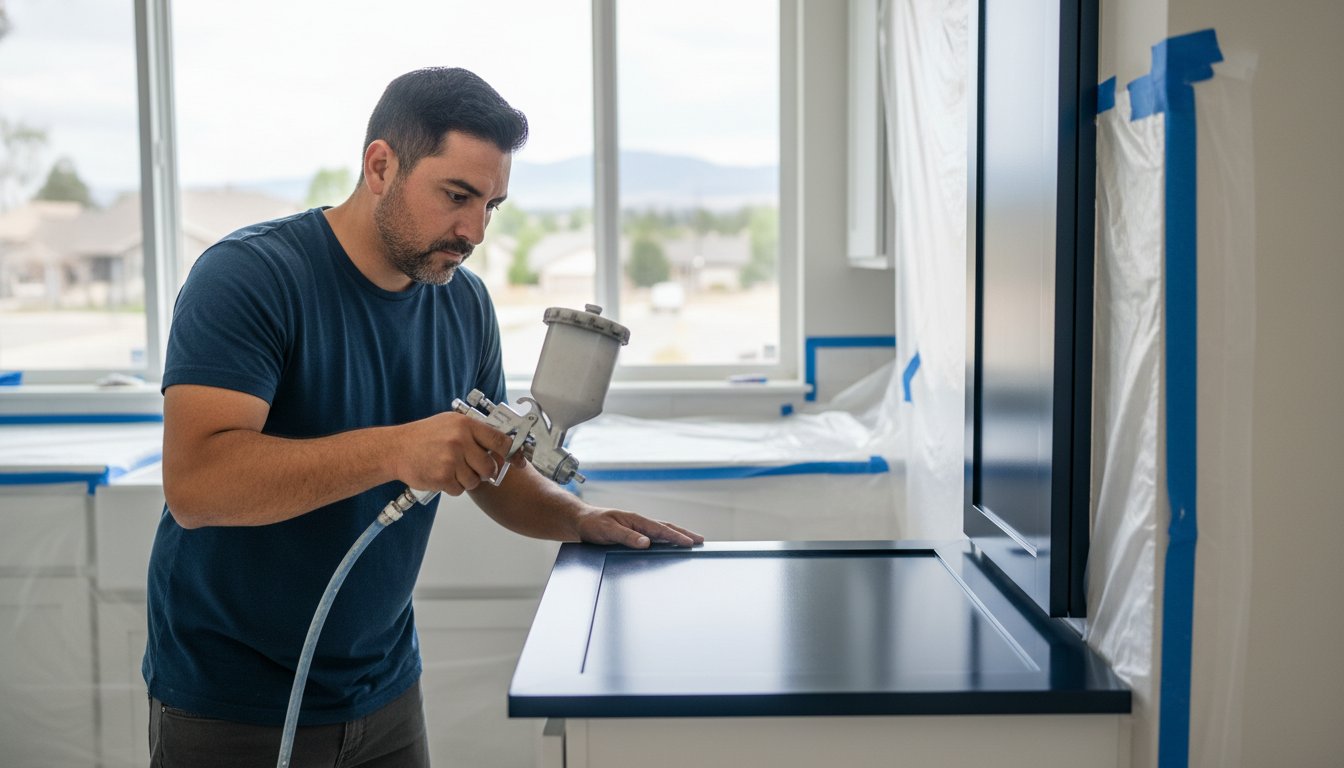
A brush or roller will inevitably leave marks and fail to penetrate the deep recesses of oak grain uniformly. We utilize High Volume Low Pressure (HVLP) spraying to achieve an atomized finish. This technology allows for a thin, even application that levels out before drying. While we spray cabinet boxes inside the home under strict containment, we process doors and drawer fronts in an off-site professional spray booth. This controlled environment is free from dust and household hair, which is vital for the “factory finish” Denver homeowners expect. If you want to see how this process translates to your kitchen, you can explore our Kitchen Cabinet Painting services to see the results of professional spraying.
Grain-Fill vs. Natural Texture: Choosing Your Look
Homeowners must decide on the desired level of surface smoothness before the project begins. This choice directly influences the labor requirements and the final cabinet painting cost. While some prefer a completely flat surface, others appreciate the subtle organic texture that identifies the material as real wood. Both options provide a durable finish, but they offer distinct visual outcomes for your kitchen. When homeowners prioritize a sleek aesthetic for painting oak cabinets denver, they typically opt for the grain-fill method.
The Full Grain-Fill Option
Achieving a grain-free finish requires the manual application of a specialized grain filler. Technicians hand-apply this material into the open pores of the oak, allowing it to dry before sanding it flush with the wood surface. This process often requires multiple applications to ensure every ridge is leveled. The result is a surface that mimics the smoothness of maple or high-end MDF, providing a clean canvas for modern colors.
This option is ideal for homeowners seeking a total modern reset. Removing the heavy grain is often necessary to match the sleek lines of modern hardware and stone countertops. According to Remodeling’s 2023 Cost vs. Value Report, minor kitchen remodels like these offer a high return on investment because they provide the look of new cabinetry at a fraction of the replacement price. It’s the most effective way to eliminate the 1990s aesthetic entirely.
The Natural Texture Option
The natural texture approach focuses on changing the color while allowing the wood’s character to remain visible. This method omits the grain-filling stage, making it a more budget-friendly approach to refinishing. The paint still seals the wood and provides a durable, easy-to-clean surface, but the “hills and valleys” of the oak grain will be visible under the light. This creates a more traditional, painted-wood look rather than a solid, monolithic surface.
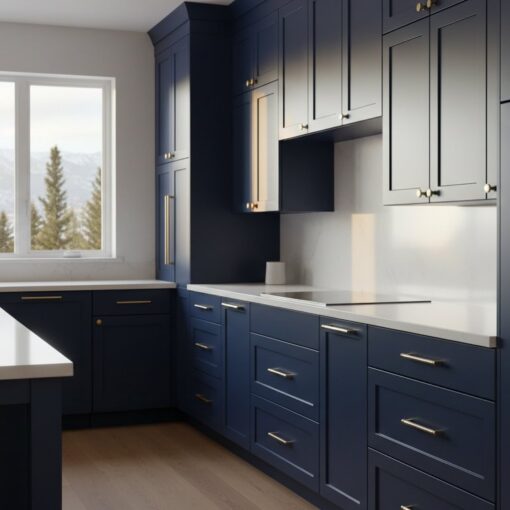
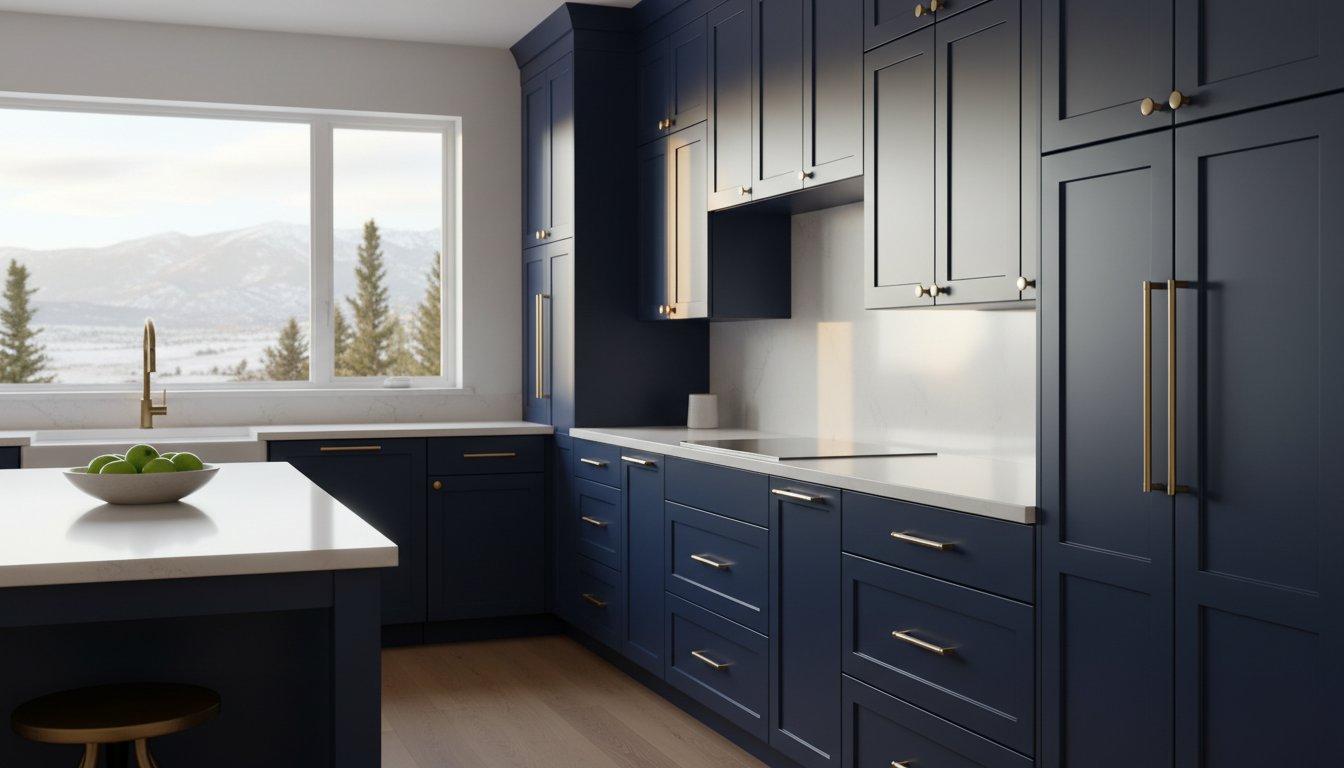
Color selection plays a vital role in this option. Darker colors, such as charcoal or navy, tend to mask the grain more effectively than bright whites. In contrast, a bright white finish on natural oak highlights the grain, often creating a farmhouse or “shabby chic” aesthetic. If you prefer the look of real wood over a plastic-like factory finish, this is the appropriate choice. It maintains the organic feel of the home while successfully painting oak cabinets denver to eliminate dated orange tones. Regardless of the texture chosen, our professional spraying process ensures the finish remains resilient against the Colorado climate.
Denver’s Climate: Altitude, Humidity, and Paint Curing
Denver’s atmospheric conditions present technical hurdles that standard painting methods don’t address. When painting oak cabinets denver, the high altitude and low humidity significantly alter how finishes level and cure. Rapid evaporation in Denver can lead to ‘orange peel’ texture if not managed, which ruins the smooth, factory-like aesthetic homeowners desire. These climate factors require specific chemical adjustments and environmental controls to ensure a durable, professional result.
Managing Rapid Dry Times
In the Front Range, humidity levels frequently drop below 20%. This dry air pulls moisture or solvent from the paint too quickly, preventing it from flowing out into a flat surface. To combat this, we utilize retarders. These additives slow down the drying process just enough to allow the finish to level properly. Maintaining strict temperature control in the kitchen during the spray phase is also required. Without these precautions, the risk of “dry spray” increases. This occurs when paint particles dry mid-air before hitting the cabinet, resulting in a gritty, sandpaper-like feel. Hiring local cabinet painting Denver experts ensures these variables are monitored in real-time.
UV Protection and Color Stability
Altitude plays a secondary but equally critical role in finish longevity. Denver’s 5,280-foot elevation means cabinets are exposed to more intense UV radiation than those at sea level. This intense sunlight accelerates the degradation of chemical bonds in low-quality coatings. Cheap paints often yellow or become brittle within a few years due to this exposure. We select industrial topcoats specifically formulated with UV inhibitors. These stabilizers prevent the color from shifting and protect the underlying layers from cracking. This level of protection is vital for south-facing kitchens or homes with large windows.
Specialized knowledge of these atmospheric conditions is why we have served the Denver Metro area for over four decades. We understand how to balance chemistry and technique to provide a finish that survives our dry climate. Our 3-year warranty serves as a mark of durability, ensuring your investment remains protected against the local climate. To ensure your kitchen transformation withstands the Colorado sun, get a professional quote for Kitchen Cabinet Painting today.
Investing in Your Denver Home: ROI of Oak Refinishing
Modernizing a kitchen requires a significant financial commitment. For many homeowners, the structural integrity of 1990s oak cabinetry makes full replacement unnecessary and wasteful. Professional painting oak cabinets denver residents invest in provides a factory-quality aesthetic without the high costs of demolition. Data suggests that professional refinishing typically costs 50% to 70% less than a full cabinet replacement. This cost efficiency directly improves your home’s equity, especially in competitive markets like Cherry Creek or Highlands Ranch.
Refinishing vs. Replacing in Today’s Market
Choosing to keep your existing oak frames is a sustainable and fiscally responsible decision. While new cabinets involve long lead times and high material costs, cabinet refinishing allows you to repurpose high-quality wood that is already acclimated to Colorado’s dry climate. In the Denver area, a minor kitchen remodel can yield a return on investment of up to 113%. This high ROI is driven by the immediate visual impact of modern colors like satin whites or deep charcoals. You avoid the waste of a full demolition while achieving a look that appeals to 2026 buyers who prioritize move-in-ready interiors.
Why Choose Cabinet Painting Denver?
We have served the Front Range community since 1984. Our team specializes in the technical requirements of Denver’s atmosphere, ensuring your finish doesn’t fail due to low humidity or intense UV exposure. We provide a 3-year warranty on all projects, which serves as a mark of our confidence in the durability of our work. Every project includes an off-site professional spray booth for doors to ensure a factory-finish guarantee that DIY methods cannot replicate. We prioritize transparency and procedural clarity from the first contact. You can contact us through our website to schedule your free local estimate for Kitchen Cabinet Painting, Bathroom Cabinet Painting, or bookshelves cabinet painting.
Service Areas and Logistics
Our professional crews provide coverage across the entire Denver Metro area, from Boulder to Castle Rock. We understand that a kitchen is the heart of the home, so we have refined our 1-week transformation process to minimize disruption. Most of the intensive work, including door and drawer spraying, happens at our specialized facility. Before our team arrives, we ask homeowners to clear their countertops and empty the cabinet interiors. This preparation allows us to focus on the precision required for a flawless grain-free finish. If you are ready to update your dated honey oak, visit our homepage to begin your project assessment.
Modernize Your Home with a Professional Finish
Updating your kitchen doesn’t require a full demolition. By choosing professional painting oak cabinets denver homeowners can achieve a contemporary look while preserving high-quality wood structures. This process demands specialized grain-filling techniques and coatings designed to withstand Colorado’s low humidity and intense UV exposure. Our team has been serving the Front Range community since 1984, providing the technical expertise required for a lasting transformation. We utilize an off-site spray booth to ensure a factory-quality spray finish that remains durable for years.
Your investment is protected by our 3-year warranty on all projects. Whether you prefer a grain-free surface or a natural wood texture, we provide the procedural clarity and professional results your home deserves. Take the next step in revitalizing your living space. Get Your Free Oak Cabinet Transformation Quote Today and discover how simple a modern kitchen update can be. We look forward to helping you achieve a flawless finish that adds lasting value to your home.
Frequently Asked Questions
Can you really make oak cabinets look smooth?
Yes, oak can achieve a smooth surface through a professional grain-filling process. We apply specialized fillers that settle into the open pores of the wood. After these fillers dry, we sand the surface flush to create a level plane. This preparation is combined with high-build primers and off-site spraying. The final result mimics the uniform texture of high-end materials like maple or MDF rather than traditional textured oak.
How long does it take to paint oak cabinets in a typical Denver home?
A typical transformation for a Denver kitchen takes about one week. We manage the project in two stages to minimize disruption. Our team prepares and paints the cabinet frames in your home, which usually takes two to three days. During this time, your doors and drawers are processed in our professional spray booth. This coordinated effort ensures a factory-quality finish is achieved within a concise, seven-day timeframe.
Will the paint peel off my oak cabinets in Colorado’s dry air?
Adhesion failure is a common concern in dry climates, but our specialized process prevents peeling. We utilize solvent-based primers and mechanical sanding to ensure the paint bonds deeply with the oak fibers. Since 1984, we’ve refined our techniques to handle Denver’s low humidity and high UV levels. This experience allows us to offer a 3-year warranty on every project. Your cabinets will remain resilient against the specific atmospheric conditions found in Colorado.
Why is painting oak more expensive than other wood types?
Oak requires more labor than other woods due to its deep, open-pore structure. When painting oak cabinets denver professionals must spend extra time on grain-filling and sanding to ensure a level surface. Additionally, oak is prone to tannin bleed, which requires expensive solvent-based primers to seal. These material and labor requirements make the process more intensive than painting a tight-grain wood like maple, which naturally has a smoother surface.
What are the best colors for painting oak cabinets in 2026?
Satin finishes are the preferred sheen for 2026, appearing on approximately 65% of professional projects. Popular color choices include:
- Warm whites and creamy off-whites
- Deep navy blue for lower cabinets or islands
- Muted earth tones like sage green or charcoal
These shades provide a modern look that complements stone countertops. Darker colors are especially effective for homeowners who want to minimize the visual impact of the wood grain.
Do I need to grain-fill my oak cabinets before painting?
Grain-filling is not required, but it is recommended for a modern aesthetic. If you skip this step, the paint will highlight the natural texture and “valleys” of the oak wood. This creates a farmhouse or traditional look. For homeowners who want a smooth, factory-quality finish, grain-filling is a necessary part of the painting oak cabinets denver process. We help you choose the texture level that best matches your home’s design.
How do I clean and maintain my newly painted oak cabinets?
Use a clean, damp microfiber cloth with a small amount of mild dish soap for regular cleaning. It’s important to avoid abrasive sponges or cleaners containing ammonia, as these can damage the paint’s protective topcoat. Always dry the surface with a soft towel after cleaning to prevent water spots. Our professional spray finish is highly durable, but treating it with care will ensure the color and sheen remain vibrant for many years.
Is it worth painting 30-year-old oak cabinets?
Painting 30-year-old cabinets is often the best investment for an older home. Oak is a robust hardwood that remains structurally stable long after other materials fail. By refinishing the existing boxes, you save 50% to 70% compared to the cost of a full replacement. You retain the high-quality craftsmanship of the original wood while gaining a modern look. It’s a sustainable way to increase your home’s equity without a major renovation.