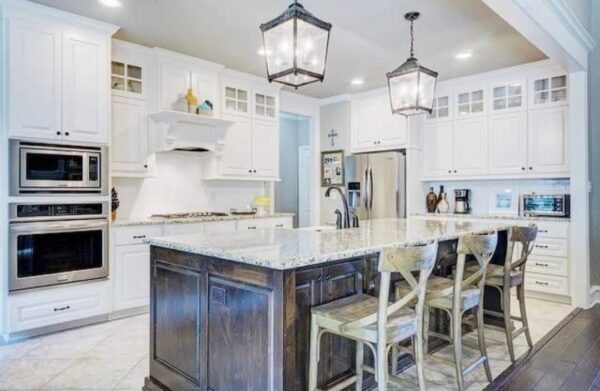

The difference between a kitchen that looks “refreshed” and one that looks “factory-new” comes down to the application of a professional lacquer finish for cabinets. While standard latex paints sit on the surface, a professional-grade catalyzed lacquer creates a chemical bond that mimics the durability of high-end manufacturing. Many homeowners in Denver worry that the region’s dry climate and sudden temperature swings will cause their cabinet finish to crack or peel within a few seasons. It’s a valid concern, especially when comparing the performance of DIY spray cans to industrial-strength materials.
You likely want the mirror-smooth aesthetic of custom cabinetry without the $15,000 to $30,000 investment required for a full cabinet replacement. We understand that durability against heat and moisture is just as important as the final look. This guide explains why a professional lacquer finish remains the gold standard for achieving a factory-quality surface that stays easy to clean for years. You’ll learn about current 2026 trends like the shift toward matte finishes and how new Colorado air quality regulations impact the products used in your home.
Key Takeaways
- Understand the technical differences between a professional lacquer finish for cabinets and standard retail paints to achieve a factory-quality result.
- Learn how catalyzed lacquer systems provide the necessary flexibility to prevent cracking in Colorado’s dry and high-altitude environment.
- Compare the build and texture of lacquer against polyurethane to determine which coating offers the best balance of hardness and ease of cleaning.
- Identify the critical preparation steps, such as industrial degreasing and enclosed spray application, that ensure a mirror-like finish without dust contamination.
- Gain clarity on how modern waterborne and solvent-based lacquers comply with 2026 air quality standards while providing superior durability.
What Is a Professional Lacquer Finish for Cabinets?
A professional lacquer finish for cabinets is a fast-drying, high-solids coating designed to create a hard, durable film. Unlike standard paints that dry through simple evaporation, industrial lacquers rely on specific chemical structures to provide superior protection. Lacquer is a thermoplastic polymer finish used for high-end woodwork. To understand the foundational properties of these coatings, it’s helpful to ask What Is Lacquer? in the context of modern chemistry. In its professional form, this finish provides a depth of color and clarity that standard latex or acrylic products cannot replicate.
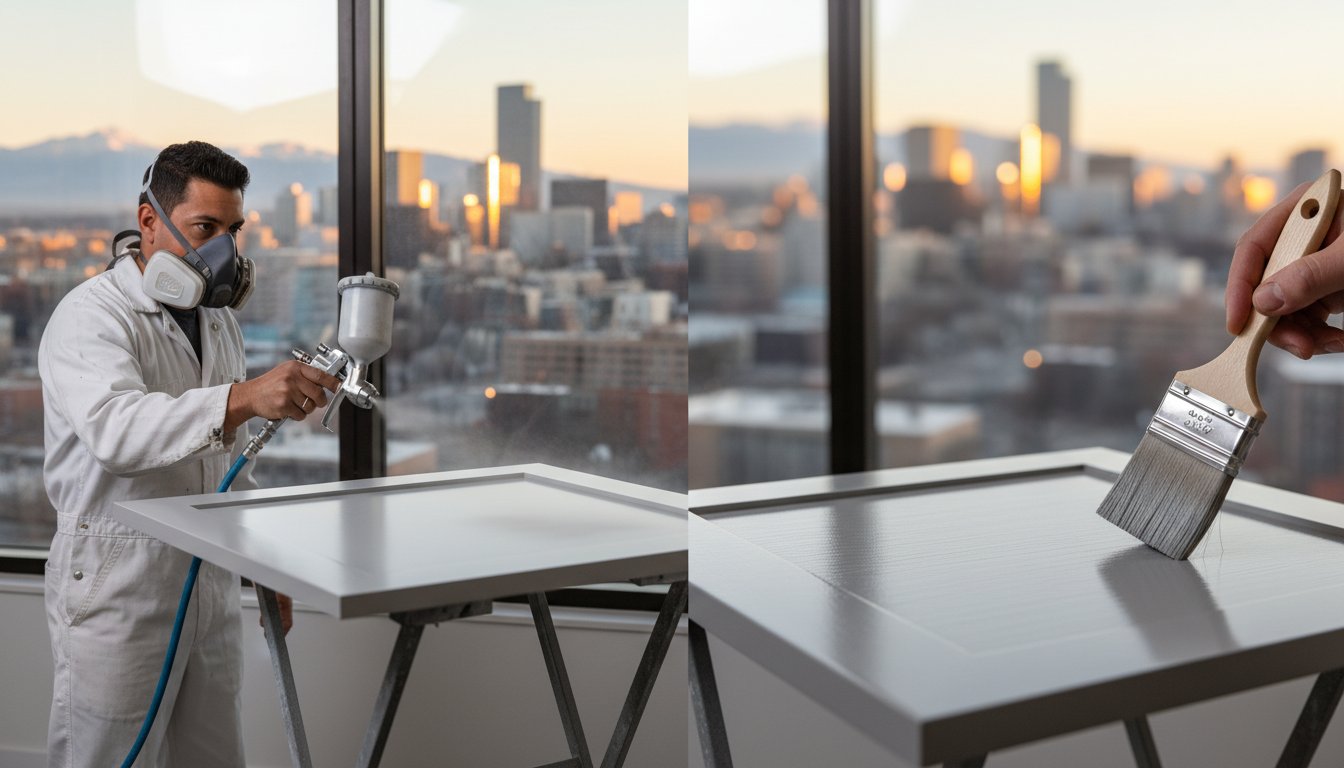
In 2026, the industry has shifted toward high-performance waterborne lacquers to meet strict Colorado Air Quality Control Commission regulations. These rules, updated in April 2026, target air toxic contaminants and formaldehyde. Modern finishes must balance environmental compliance with the “factory-finish” durability homeowners expect. A true factory-quality surface is achieved through a high-pressure spray system in a controlled environment. This process ensures the coating is smooth to the touch and entirely free of brush marks or roller textures.
To see how these materials are applied in a professional setting, watch this video:
The Chemistry of a Smooth Surface
One unique property of lacquer is its ability to “melt” into previous layers. This creates a seamless bond between coats, resulting in a single, cohesive film rather than distinct layers that might delaminate over time. A professional lacquer finish for cabinets typically features a high solids content. This is critical for “edge build,” which ensures the sharp corners of cabinet doors receive enough material to resist wear and moisture penetration. The result is a surface that feels like a single piece of molded material rather than a painted board.
Luster Options: From Matte to High-Gloss
Choosing the right sheen level is essential for your kitchen’s aesthetic. While high-gloss was once the standard for modern looks, 2026 trends favor matte finishes that provide a natural, “raw” appearance. Lacquer is known for its exceptional clarity. It avoids the “milky” or cloudy look often associated with thick coats of standard paint, allowing the underlying color to remain crisp. Additionally, lacquer is easier to spot-repair than many paints. Because new layers bond chemically to the old ones, professionals can often fix small scratches without stripping the entire door.
Lacquer vs. Paint vs. Polyurethane: Which Is Best?
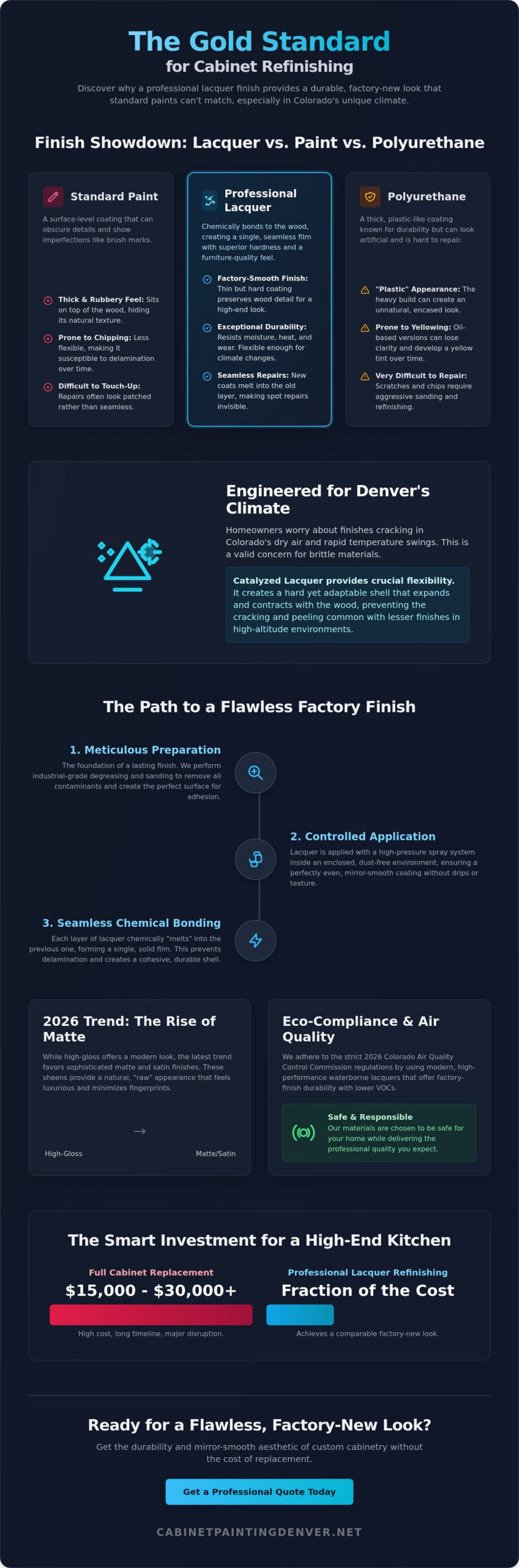
Choosing between lacquer, paint, and polyurethane depends on your desired texture and long-term maintenance goals. Some industry voices claim lacquer is only used because it dries quickly. This is a narrow view that ignores the material’s structural benefits. High-end furniture makers prioritize a professional lacquer finish for cabinets because it offers a refined “build” that standard acrylic paint cannot match. Acrylic paint is often thick and rubbery. This thickness can obscure the natural details of the wood. In contrast, lacquer provides a thin but extremely hard film that feels like a part of the wood rather than a coating sitting on top of it.
Polyurethane offers significant thickness, which might seem like a benefit for durability. However, this extra thickness can become a drawback. It often creates a “plastic” look and is notoriously difficult to touch up if it chips or scratches. For homeowners in Denver, the cost-to-value ratio favors professional lacquer. It provides the high-end look of new custom units at a fraction of the cost of replacement. Over a 10-year period, lacquer remains easier to maintain because it doesn’t lose its clarity or yellow like some oil-based polyurethane products.
Aesthetic Differences in the Final Look
A professional lacquer finish for cabinets results in a furniture-like appearance. While standard paint tends to fill in and hide wood grain, lacquer highlights the natural texture of the substrate. The key to this look is the application method. Spraying is the only way to achieve a truly smooth surface. This method eliminates the brush and roller marks that are common with standard house paints. If you’re interested in preserving the character of your wood while updating its color, you can read more about cabinet refinishing for wood-grain preservation.
Durability and Chemical Resistance
Kitchens are harsh environments. Your cabinets must withstand grease, food acids, and frequent cleaning with household chemicals. Lacquer is specifically engineered for this type of chemical resistance. It also handles the natural expansion and contraction of wood better than many rigid paints. This flexibility is vital in Denver, where humidity levels fluctuate wildly between seasons. A finish that cannot flex with the wood will eventually crack at the joints. If you’re planning an update, reviewing the procedural requirements for kitchen cabinet painting will ensure you choose a material that lasts.
The Catalyzed Difference: Why Modern Lacquer Is Not “Brittle”
Older lacquer formulas, such as nitrocellulose, earned a reputation for cracking over time. Modern 2026 systems have solved this issue through the use of catalysts. A professional lacquer finish for cabinets now relies on chemical cross-linking to ensure longevity. This process creates a structural bridge between extreme surface hardness and the flexibility required for wood movement. It’s a technical advancement that allows the coating to remain intact even as environmental conditions change.
In Denver, the dry climate often causes wood to shrink and expand significantly between seasons. Catalyzed lacquers are specifically engineered to flex with the substrate. This prevents the joint cracking that homeowners often worry about when researching cabinet finishes. Professional installers prioritize these products because they include moisture-resistant additives. These additives are vital for protecting “splash zones” near sinks and stoves from steam, grease, and standing water. Without this chemical reinforcement, a standard paint would eventually soften and peel in high-moisture areas.
Pre-Catalyzed Lacquer: The Industry Standard
Pre-catalyzed (Pre-Cat) lacquer comes with the catalyst already added by the manufacturer. This setup offers high consistency and a stable shelf life. It’s an ideal choice for residential kitchen cabinet painting where a uniform, factory-quality finish is the primary goal. Pre-Cat systems are significantly more durable than any retail product found at a big-box store. They provide a level of chemical resistance that standard house paints simply don’t have, making them a reliable choice for high-traffic kitchens.
Post-Catalyzed Lacquer: The Maximum Protection
Post-catalyzed (Post-Cat) lacquer requires a catalyst to be mixed in immediately before the application begins. Once mixed, the product has a limited “pot life” before it hardens within the spray equipment. This system provides unmatched resistance to scratches and heavy impacts. Post-catalyzed lacquer reaches its full hardness through a chemical reaction, not just evaporation. This creates a high-performance film that is virtually impervious to household cleaners and oils. While the application requires strict procedural clarity, the result is a professional lacquer finish for cabinets that can withstand the most demanding kitchen environments.
The Professional Application Process in Denver
Achieving a professional lacquer finish for cabinets requires more than just high-quality material. It demands a rigorous, multi-stage application process tailored to the local environment. In Denver, the low humidity and high altitude present specific technical hurdles. If the lacquer dries too quickly, it can lead to “blushing,” where moisture gets trapped under the surface, or a textured “orange peel” effect. Professionals manage these conditions by using specific retarders or applying finishes in climate-controlled environments to ensure the coating levels out perfectly before it sets.
Preparation: More Than Just Sanding
Adhesion is the most common failure point in cabinet finishing. We begin with a comprehensive degreasing and de-glossing phase. This step is critical for removing kitchen oils, waxes, and silicones that naturally accumulate over years of use. If these contaminants remain, they cause “fish-eyes,” which are small circular craters in the wet lacquer. For open-pore woods like oak, we also employ grain filling techniques to create the flat, mirror-like surface associated with modern 2026 trends. You can review our step-by-step pro process to see how we handle every inch of the substrate.
The Spraying Environment
We perform the majority of the spraying off-site. Using an enclosed, dust-free spray booth is the only way to guarantee a factory-smooth surface. On-site spraying in a kitchen is rarely ideal because airborne particles can settle into the wet finish. We use High Volume Low Pressure (HVLP) sprayers. These tools provide exceptional control and a high transfer efficiency, ensuring an even coat without excessive overspray. This technology is essential for creating the thin, furniture-grade layers that define a professional lacquer finish for cabinets.
Our multi-coat system follows a strict procedural order. It starts with a high-build primer designed specifically for lacquer topcoats. We then apply the color layers, followed by the protective catalyzed topcoat. Each layer is fine-sanded to ensure maximum mechanical bonding. This meticulous approach ensures that the final surface is both beautiful and resilient against daily wear. If you’re ready to upgrade your home, contact us for professional kitchen cabinet painting services that utilize these industrial standards.
Choosing Cabinet Painting Denver for Your Lacquer Finish
Cabinet Painting Denver specializes in the application of industrial-grade catalyzed coatings. We understand that achieving a professional lacquer finish for cabinets requires specific environmental controls and technical expertise. Our team follows a standardized protocol to ensure every project meets factory-quality standards. We prioritize transparency in our methods and materials. This direct approach ensures that homeowners receive a durable, high-end result without the ambiguity often found in the home improvement industry.
We utilize a dedicated off-site spray booth for all removable components. This facility allows us to control temperature and dust levels, which is a critical requirement for a flawless surface. Attempting to spray lacquer in a residential kitchen often leads to airborne contaminants marring the finish. By moving the doors and drawer fronts to our controlled environment, we ensure the final product is smooth and resilient. Once the finish has fully cured, we handle the re-installation process with precision. This phase includes hardware adjustments and door alignment to ensure your cabinetry functions perfectly.
A Direct, Professional Approach
Our process begins with an objective assessment of your current cabinet condition. We examine the wood species, the integrity of the existing coating, and any necessary repairs. We don’t use “salesy” fluff or high-pressure tactics. Instead, we provide a functional overview of what your specific project requires for success. We maintain clear communication from the initial evaluation to the final walkthrough. You can refer to our cabinet painting Denver guide for more information on our service area and procedural standards.
Ready to Transform Your Kitchen?
Requesting a quote is a straightforward process. We provide direct, transparent pricing based on the scope of your project. During a professional consultation, we’ll discuss the technical requirements of your kitchen and provide a clear timeline for completion. We focus on delivering a professional lacquer finish for cabinets that stands up to the demands of a busy household. Our goal is to provide a factory-quality aesthetic through a disciplined, task-oriented workflow. Get a professional lacquer finish quote from Cabinet Painting Denver today.
Upgrade Your Kitchen with a High-Performance Finish
A professional lacquer finish for cabinets remains the premier choice for achieving a factory-quality surface in 2026. You now understand that modern catalyzed systems provide the essential flexibility needed for Colorado’s dry climate while offering superior chemical resistance. Achieving this mirror-smooth look requires a disciplined approach. This includes the use of specialized off-site spray booths and industrial-grade equipment. These procedural standards ensure your cabinets look factory-new without the significant investment required for a full replacement. Choosing a system designed for durability means you don’t have to worry about the chipping or yellowing associated with lower-grade materials.
Cabinet Painting Denver utilizes these advanced systems to deliver results that standard paints can’t match. We prioritize transparency and procedural clarity throughout every project. Our team is ready to help you achieve a durable, high-end aesthetic for your home. Request a Professional Lacquer Finish Consultation to begin your kitchen transformation today. We look forward to providing the expertise your cabinetry deserves.
Frequently Asked Questions
Is lacquer finish durable enough for a busy kitchen with kids?
A professional lacquer finish for cabinets is highly durable and suitable for busy households with children. The catalyzed chemical structure provides a hard, resilient surface that resists the scratches and scuffs typical of daily use. It also withstands the impact of toys or kitchen utensils better than traditional house paints. This makes it a functional choice for high-traffic areas where long-term durability and impact resistance are the primary requirements.
What is the difference between lacquer and paint for cabinets?
Lacquer differs from paint in its chemical composition and application thickness. While standard cabinet paint creates a thick, rubbery layer that can obscure wood grain, lacquer forms a thin, hard film that feels like a part of the wood. It provides superior clarity and depth of color. This material also bonds chemically to previous layers, whereas paint relies on a mechanical bond that can peel or delaminate more easily over time.
Does professional lacquer yellow over time?
Modern professional lacquers don’t yellow over time like older finishes did. Manufacturers now use high-quality resins and UV inhibitors to maintain color stability in both solvent and waterborne formulas. Older nitrocellulose lacquers were prone to ambering, but the 2026 industry standard for a professional lacquer finish for cabinets utilizes non-yellowing technology. This ensures your white or light-colored cabinets remain crisp and maintain their original hue for many years.
Can I touch up a lacquer finish if it gets scratched?
You can touch up a lacquer finish more effectively than most other coatings. Because new lacquer chemically “melts” into the existing finish, small repairs often become invisible once they dry and cure. This is a significant advantage over polyurethane or standard latex paint, which often require sanding and recoating the entire panel to hide a small scratch. This repairability makes it a practical choice for maintaining a perfect look in a busy home.
How long does the smell of lacquer last after the cabinets are installed?
The odor from a lacquer application typically dissipates within 24 to 48 hours in a well-ventilated home. Since we spray cabinet doors and drawer fronts in an off-site booth, the majority of the off-gassing happens before the components return to your residence. Any residual scent from the on-site frame application clears quickly. Modern waterborne lacquers have even lower VOC levels, which further reduces the time it takes for the smell to vanish completely.
Is lacquer more expensive than standard cabinet painting?
Lacquer is generally more expensive than standard house paint due to the specialized equipment and industrial materials required for application. The process involves multiple technical steps, including fine sanding between coats and precise catalyzed mixing. However, the long-term value is higher because the finish lasts longer and maintains its factory-quality appearance. It’s a more resilient investment than retail-grade paints that may require frequent touch-ups or complete repainting after only a few years.
How do I clean cabinets that have a professional lacquer finish?
Cleaning cabinets with a professional finish requires only a soft cloth and mild soap and water. You should avoid abrasive cleaners, scouring pads, or products containing high levels of ammonia. These harsh chemicals can dull the luster or scratch the surface over time. A simple wipe-down with a damp microfiber cloth is usually sufficient to remove grease and food residue. This easy maintenance is one of the primary benefits of choosing a high-quality lacquer surface.
Why do some painters say lacquer is bad for cabinets?
Painters who discourage lacquer often lack the specialized spray booths and ventilation required for safe, professional application. They may also be referring to outdated nitrocellulose products that were prone to cracking in dry climates. Modern catalyzed lacquers are specifically engineered for flexibility and durability. These industrial-strength coatings are the preferred choice for high-end cabinetry manufacturers worldwide because they provide a level of protection and finish quality that standard house paints can’t achieve.