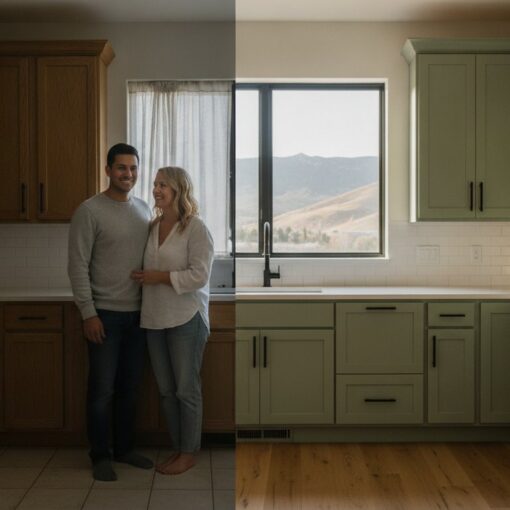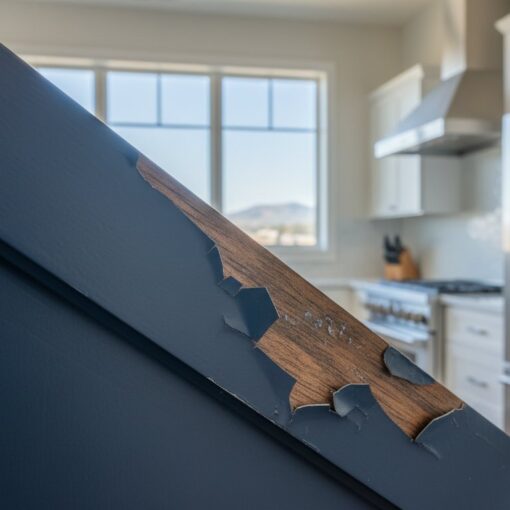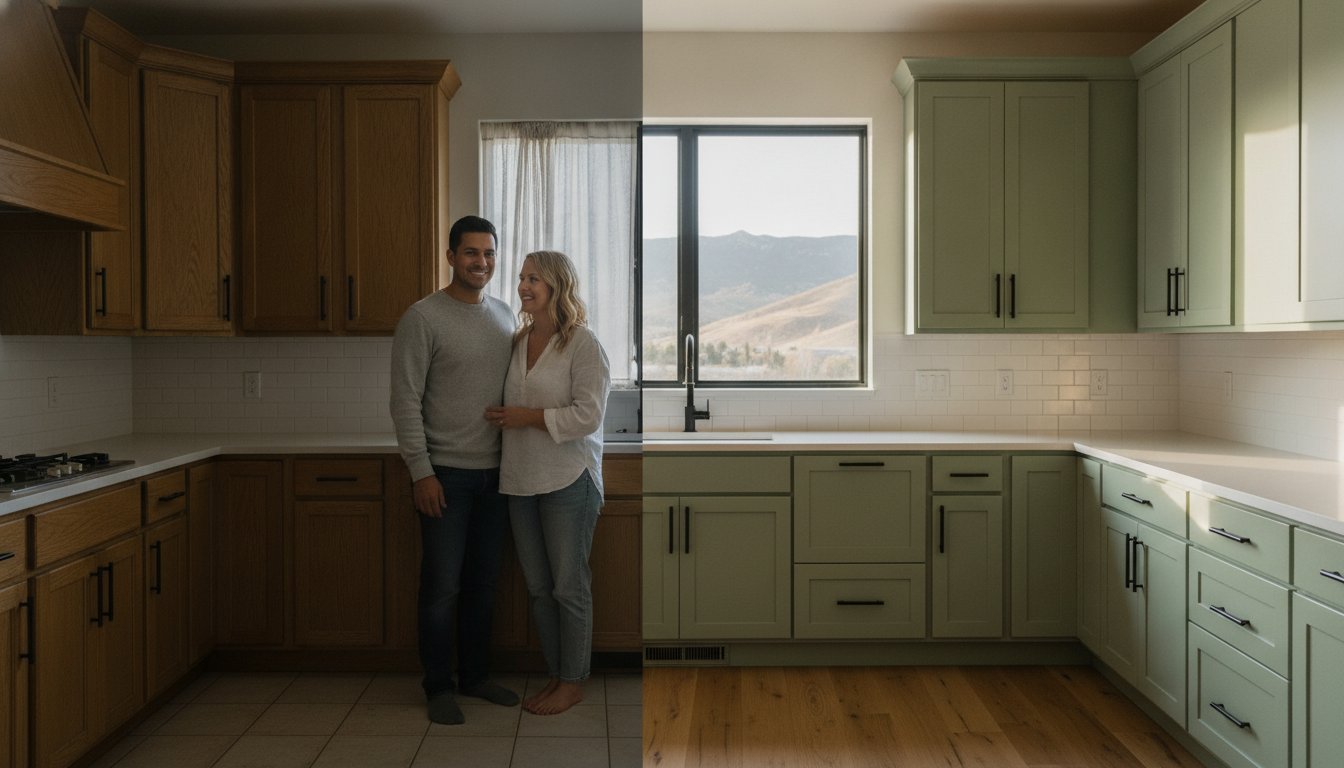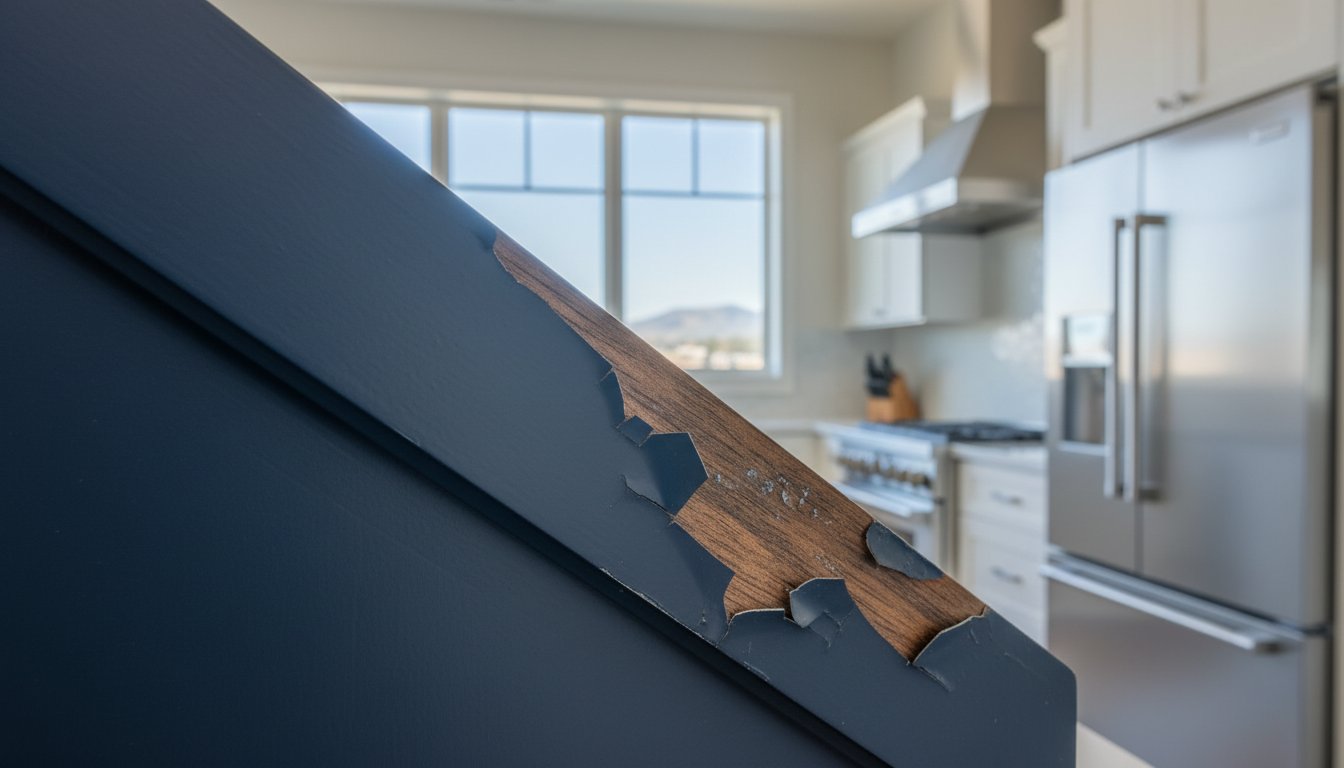
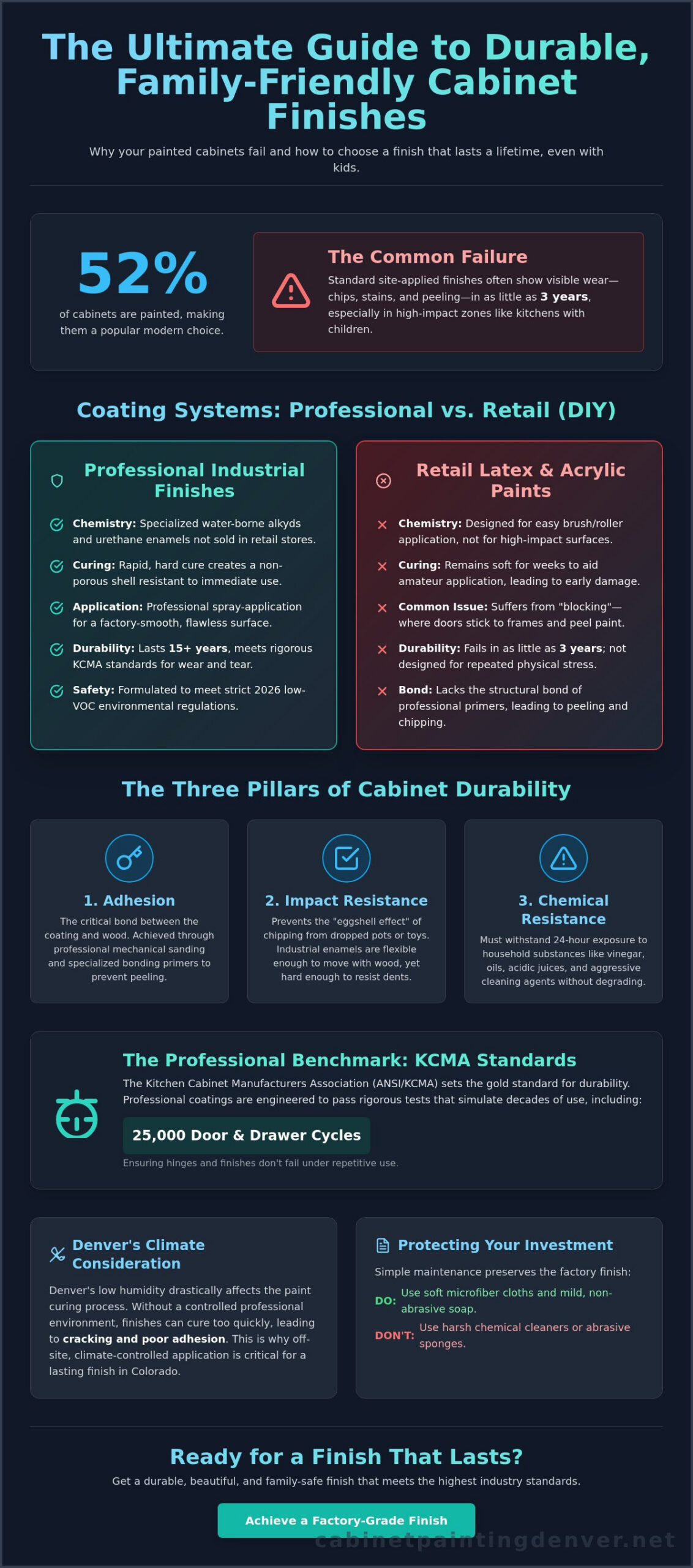
Did you know that while painted cabinets currently hold 52% of the market share, a standard site-applied finish often shows visible wear in as little as three years? For families with children, a kitchen isn’t just a showroom; it’s a high-impact zone where toys, spills, and markers are daily realities. You likely chose painted cabinets for their clean aesthetic, but you shouldn’t have to sacrifice indoor air quality to keep them looking new. Finding the most durable professional cabinet finish requires balancing industrial-strength impact resistance with the latest 2026 environmental safety regulations.
It’s frustrating to see a major investment chip or stain after only a few months of use. You deserve a finish that meets ANSI/KCMA A161.1-2022 standards for heat, humidity, and spill resistance without off-gassing harmful chemicals. This guide identifies the specific water-borne alkyds and urethane enamels professionals use to achieve a factory-smooth, easy-to-clean surface. We will examine the coating technologies that withstand 25,000 door cycles and comply with the newest EPA VOC limits, ensuring your home remains both durable and safe for your family.
Key Takeaways
- Identify the performance gap between retail products and industrial coatings that meet ANSI/KCMA A161.1-2022 durability standards.
- Learn why a professional spray application is the only way to achieve the most durable professional cabinet finish for high-traffic kitchens.
- Discover how modern water-borne finishes provide high-impact resistance while meeting strict 2026 low-VOC safety requirements.
- Understand the specific maintenance protocols, such as using microfiber cloths and mild soap, to protect your cabinet coating from premature wear.
- Recognize how Denver’s low humidity affects the curing process and why controlled environment application prevents cracking.
What Defines a Child-Proof Durable Cabinet Paint?
Homeowners often confuse “child-safe” with “child-proof.” While safety relates to chemical emissions and VOC levels, true child-proofing involves physical resistance. A child-proof finish must withstand high-velocity impacts, persistent moisture, and common household chemicals without degrading. Surface-level washability allows you to wipe away a marker; however, deep-bond structural durability ensures the paint doesn’t peel when that marker is scrubbed off.
Film hardness is the primary defense against toy car tracks and dropped pots. Standard interior paints lack the cross-linking technology required to achieve this level of protection. When selecting the most durable professional cabinet finish, professionals prioritize coatings that cure to a hard, non-porous shell. This prevents the finish from remaining soft, which is a common failure point in DIY-grade products.
To better understand this concept, watch this helpful video:
The Three Pillars of Cabinet Durability
Achieving a resilient finish requires a balance of three technical properties. If one pillar fails, the entire coating system is compromised.
- Chemical Resistance: Finishes must survive contact with acidic juices, oils, and aggressive cleaning agents. Professional coatings are tested for 24-hour exposure to substances like vinegar and lemon juice.
- Impact Resistance: This prevents the “eggshell effect” where the coating chips upon impact. While Powder coating is a standard for metal, wood cabinets require specialized industrial enamels that remain flexible enough to move with the wood while resisting dents.
- Adhesion: The bond between the coating and the wood substrate is more critical than the top coat itself. Professional Kitchen Cabinet Painting involves mechanical sanding and bonding primers to ensure this structural link.
KCMA Standards: The Professional Benchmark
The Kitchen Cabinet Manufacturers Association (KCMA) sets the performance requirements for the industry. Their tests include 25,000 door and drawer cycles to ensure hinges and finishes don’t fail under repetitive use. While standard latex paints are designed for static walls, professional industrial coatings are engineered to pass these rigorous environmental and physical stress tests. KCMA certification serves as the industry’s gold standard for verifying that a residential cabinet finish can withstand the rigors of daily household use.
Comparing Coating Systems: Retail Paints vs. Professional Industrial Finishes
Many homeowners assume that high-end retail trim paint is identical to the most durable professional cabinet finish. This is a common misconception. Retail products are designed for ease of application by amateurs, which requires the paint to stay “open” or wet for a longer period. While this helps a brush-applied finish look smoother, it results in a coating that remains soft for weeks. In contrast, professional industrial coatings are engineered for rapid curing and maximum hardness, creating a surface that withstands the rigors of a high-traffic kitchen immediately after installation.
The long-term value of a cabinet project depends on the chemistry of the coating. Professional kitchen cabinet painting utilizes products that aren’t available in big-box stores. These industrial finishes provide a structural bond to the wood that retail paints simply can’t replicate. If you want a result that lasts 15 years rather than three, understanding these chemical differences is essential.
The Problem with Standard Latex and Acrylic
Standard architectural paints often suffer from a failure known as “blocking.” This occurs when two painted surfaces, such as a cabinet door and its frame, stick together and peel when opened. It’s a frequent issue during humid months or in kitchens with high steam production. Retail enamels also have an incredibly long cure time. While they may feel dry to the touch in hours, they often require up to 30 days to reach full chemical resistance. During this window, the finish is highly susceptible to scratches and damage from common cleaners like Windex or disinfectant wipes, which can melt the uncured paint film.
Water-Borne Industrial Coatings
Professional shops have transitioned to water-borne industrial coatings that utilize cross-linking technology. This process creates a chemical reaction as the coating dries, linking molecules together to form a dense, plastic-like shield. These products are specifically formulated to meet the strict 2026 environmental standards for Volatile Organic Compounds (VOCs) without sacrificing durability. Because these coatings are applied via high-pressure spray systems, they create a non-porous, factory-smooth finish that resists oils and stains. This professional application ensures the coating is thin enough to look natural but hard enough to resist impact. To ensure your kitchen remains functional and resilient, it’s best to consult with experts who provide professional painting services using these advanced materials.
Safety Standards: Non-Toxic and Low-VOC Requirements for Families
Safety and durability were once at odds in the coating industry. Homeowners often assumed that a “child-safe” paint meant a soft, natural product like milk paint that would inevitably fail under kitchen moisture. Conversely, “indestructible” finishes were historically associated with high-solvent lacquers and harsh, lingering odors. In 2026, the industry has shifted. The most durable professional cabinet finish now utilizes advanced water-borne technology to provide industrial-grade protection without compromising indoor air quality.
Volatile Organic Compounds (VOCs) are the primary concern for indoor air quality. These chemicals evaporate at room temperature and can cause respiratory issues or headaches during the application and curing phases. Modern cabinet painters utilize coatings that comply with Colorado’s Regulation Number 21 and upcoming 2026 EPA standards. These regulations have pushed manufacturers to develop water-borne alkyds and urethanes that cure to a hard, inert film. Once this curing process is complete, the finish does not leach chemicals or continue off-gassing into your food preparation areas.
Identifying Family-Safe Certifications
Certification labels provide a transparent way to verify safety claims beyond marketing jargon. Greenguard Gold is the most respected standard for residential environments. It ensures that a product meets strict chemical emission limits for sensitive indoor spaces like schools or healthcare facilities. Additionally, professionals prefer HAPS-free coatings. These products are formulated without Hazardous Air Pollutants, ensuring that your home remains free from toxic solvents like toluene or xylene. It is vital to distinguish between “low-odor” and “low-VOC.” Some manufacturers use masking agents to hide the smell of high-VOC products. Always verify the actual VOC content on the technical data sheet to ensure the product meets the safety requirements for your family.
The Safety of Professional Application
Professional application further mitigates safety risks through procedural clarity. By removing doors and drawer fronts for off-site spraying, technicians keep the majority of the coating process in a controlled industrial environment. This prevents overspray and concentrated fumes from entering your home’s HVAC system. For the remaining cabinet frames, pros utilize high-efficiency particulate air (HEPA) filtration and localized exhaust systems to maintain air purity. Water-borne finishes have replaced solvent-based lacquers in cabinet refinishing because they offer the same level of chemical and impact resistance without the toxicity or flammability risks associated with traditional solvents.
Maintenance Strategies for High-Traffic, Kid-Centric Kitchens
Preserving the most durable professional cabinet finish involves more than just selecting the right product; it requires a disciplined maintenance strategy. While industrial-grade coatings are engineered to resist chips and stains, their longevity depends on how they are treated daily. The most critical rule for homeowners is the microfiber-only policy. Abrasive sponges or paper towels can create microscopic scratches that dull the finish over time, making it harder to clean. Microfiber is non-abrasive. It lifts dirt without scouring the surface.
Chemical safety is equally important for the coating’s health. Avoid harsh industrial degreasers or ammonia-based cleaners. These substances can chemically soften the finish, leading to a “tacky” feeling that attracts even more dirt. A simple mixture of mild dish soap and warm water is sufficient to remove grease and sticky residues without compromising the structural integrity of the paint. If you are looking to refresh your space with a high-performance coating, you can explore professional painting services that prioritize long-term durability.
Daily and Weekly Cleaning Routine
Spills and food acids, such as lemon juice or tomato sauce, should be addressed immediately. These substances can etch into the surface if left for more than 24 hours. When spot-cleaning, use a damp microfiber cloth and follow with a dry one to prevent “halo” marks or water streaks. Manage sticky fingers quickly. Residue from snacks can harden and become difficult to remove without aggressive scrubbing. Never use Magic Erasers on professionally painted cabinets. These tools are made of melamine foam and act as a fine-grit sandpaper, which will permanently strip the sheen from your cabinetry. For families with young children, a satin or semi-gloss sheen is the optimal choice. These sheens are significantly easier to wipe down than matte finishes, which tend to hold onto oils and fingerprints.
Long-Term Protection
Mechanical protection prevents the finish from failing at high-contact points. Installing larger finger pulls or handles minimizes direct skin-to-paint contact, reducing the transfer of natural oils and moisture from hands. Additionally, ensure all doors and drawers have high-quality felt or silicone bumpers. These absorb the impact of slamming, preventing the paint from chipping at the contact edges. For minor nicks, use a professional touch-up kit provided by your painter to seal the wood substrate and prevent moisture intrusion. Maintaining consistent indoor humidity levels is also vital. Significant fluctuations in moisture cause wood to expand and contract. This puts unnecessary stress on the paint film and can lead to hairline cracks at the joints.
Professional Cabinet Painting in Denver: Achieving a Factory-Grade Finish
Denver’s semi-arid climate presents specific challenges for wood coatings. Low humidity levels cause water-borne finishes to dry rapidly, which can lead to texture issues like “orange peel” if not handled by an expert. Achieving the most durable professional cabinet finish in this environment requires precise control over the application speed and the surrounding environment. Local expertise in Cabinet Painting Denver ensures that the coating cures correctly, creating a resilient bond that won’t crack as the wood naturally expands and contracts with the changing seasons.
Professional spraying is the only method that produces a truly non-porous, factory-smooth surface. Brushing or rolling leaves behind microscopic ridges and valleys that trap dirt and oils, eventually breaking down the paint film. A high-pressure spray application atomizes the coating, allowing it to lay perfectly flat and form a dense, protective shell. When evaluating the cost to paint kitchen cabinets, homeowners should consider the long-term value of a child-proof result. A factory-grade finish reduces the need for premature repainting, providing a much higher return on investment compared to budget-tier services that often fail within three years.
Our Denver-Specific Preparation Process
A resilient finish is 70% preparation. We begin by removing years of accumulated kitchen oils through a multi-stage de-greasing process. This ensures the primer makes direct contact with the wood fibers rather than floating on a film of grease. This is followed by mechanical sanding and grain filling to eliminate the deep pits found in oak or other open-grain woods. This step is essential for creating a smooth, kid-friendly surface texture that doesn’t trap grime or bacteria. Finally, we apply high-build bonding primers that are specifically formulated to resist the telegraphing of wood grain over time.
The Final Result: Beauty Meets Resilience
A factory-grade finish is identifiable by its tactile feel. It should be smooth to the touch, similar to a new car’s paint, with no visible brush marks, drips, or texture inconsistencies. This non-porous surface is what makes the coating truly child-proof, as it prevents markers, food dyes, and household chemicals from penetrating the film. Our process is the most reliable way to protect your kitchen investment against the daily chaos of a busy household. We invite you to view our local Denver project galleries to see real-world examples of how these industrial coatings maintain their beauty and resilience years after application.
Investing in a Resilient Home Environment
Protecting your kitchen cabinets from the rigors of a high-traffic household requires a shift from retail-grade solutions to industrial-standard coatings. You’ve learned that true durability involves more than just scrub-resistance; it requires a finish that meets KCMA-certified standards for impact and chemical resistance. Selecting the most durable professional cabinet finish is a strategic decision that protects both your kitchen aesthetics and your indoor air quality. By prioritizing water-borne industrial enamels and professional spray application, you ensure a non-porous surface that’s easy to maintain and safe for your family.
Our process focuses on achieving a professional spray-applied factory finish that withstands daily use in Denver’s unique climate. As a locally owned and operated business in Denver, CO, we understand the technical requirements of high-altitude curing and adhesion. You don’t have to choose between a beautiful kitchen and one that survives sticky fingers and toy collisions. Take the next step toward a resilient, child-proof kitchen today. We’re ready to help you transform your space into a functional and lasting environment.
Get Your Free Child-Proof Cabinet Painting Quote in Denver
Frequently Asked Questions
Is child-proof cabinet paint safe for pets and babies who might touch the surfaces?
Professional water-borne finishes are safe for pets and babies once they have fully cured. These coatings are formulated to be chemically inert, meaning they don’t leach toxins or off-gas harmful substances into your home after the initial drying phase. Many industrial products meet Greenguard Gold standards, ensuring they’re suitable for sensitive indoor environments where children and pets spend significant time.
How long does it take for professional cabinet paint to fully cure for heavy use?
Industrial coatings typically reach a functional hardness within 24 to 48 hours, but a full chemical cure takes approximately 30 days. You can use your kitchen carefully after the first few days. However, you should avoid heavy scrubbing or using aggressive cleaning agents during the first month. This waiting period allows the cross-linking technology to create the most durable professional cabinet finish possible.
Can I use a Magic Eraser to remove crayon or scuffs from my painted cabinets?
You should never use a Magic Eraser on your painted cabinetry. These sponges are made of melamine foam, which acts as a high-grit abrasive. Scrubbing with a Magic Eraser will permanently dull the sheen and strip away the protective top layer of the coating. It’s better to stick to a soft microfiber cloth and a diluted solution of mild dish soap to safely remove scuffs.
What is the best paint sheen for a kitchen with young children?
Satin is the most recommended sheen for kitchens with young children because it balances durability with ease of cleaning. Matte finishes can trap oils and fingerprints, while high-gloss surfaces highlight every scratch and smudge. A satin finish provides a smooth, non-porous surface that allows you to wipe away spills and grime without the paint becoming burnished or shiny over time.
Do I need to use a specific type of primer to make cabinet paint child-proof?
A high-quality bonding primer is required to ensure the paint doesn’t chip or peel under heavy impact. This primer acts as the structural bridge between the wood and the decorative topcoat. Without a dedicated bonding primer, even the hardest paint will eventually fail if it’s hit by a toy or bumped by furniture. Professionals use these primers to create a surface that resists delamination.
How does the Denver climate affect the durability of my new cabinet finish?
Denver’s low humidity can cause paint to dry too quickly, which requires specialized application techniques to ensure a smooth result. This rapid evaporation requires technicians to adjust their spray settings so the coating flows out correctly before it sets. Once applied, the dry climate helps maintain the finish by preventing the moisture-related wood expansion that often causes paint to crack at the joints.
What is the difference between scrub-resistant and stain-resistant paint?
Scrub-resistance refers to the coating’s ability to withstand physical friction from cleaning, while stain-resistance refers to its ability to block liquids from soaking into the film. A child-proof kitchen requires both properties to be effective. A stain-resistant finish prevents juice or markers from leaving a permanent mark, while scrub-resistance ensures that the act of cleaning those spills doesn’t wear down the paint film.
Will professional cabinet painting smell like harsh chemicals during the process?
Modern water-borne industrial coatings produce significantly less odor than traditional oil-based paints or solvent lacquers. While you’ll notice a slight scent during the application on your cabinet frames, it’s not the overwhelming chemical smell associated with older painting methods. Because the doors and drawer fronts are sprayed off-site in a controlled facility, the amount of product applied inside your home is minimal.