Choosing the most expensive renovation path doesn’t always guarantee the highest return on your investment. Many Denver homeowners assume that a complete kitchen overhaul is the only way to achieve a high-end look, but the reality of the 2026 market suggests otherwise. When evaluating the cabinet painting vs refacing cost, you likely want a modern, factory-quality aesthetic without the massive price tag or the weeks of construction dust that come with a full replacement. It’s common to feel stuck between the lower price point of a refresh and the structural changes of a total remodel.
We understand the frustration of navigating these technical differences while trying to avoid a finish that looks like a DIY project. This guide provides a transparent comparison of the cost-to-value ratios for both methods, specifically tailored for the Denver housing market. You’ll learn exactly how these updates differ in duration and durability, and how a professional spraying process delivers a finish that rivals brand-new cabinetry. We’ll outline how to choose the most efficient path to a modern kitchen that maximizes your home’s resale value with minimal disruption to your daily life.
Key Takeaways
- Identify the technical differences between professional refinishing and refacing to determine which process aligns with your kitchen’s structural needs.
- Analyze the cabinet painting vs refacing cost to see why painting offers a superior return on investment for Denver homes with sound cabinet boxes.
- Learn why off-site spraying is a non-negotiable requirement for achieving a smooth, durable, and factory-quality finish.
- Evaluate the long-term benefits of industrial-grade coatings compared to the labor-intensive process of applying veneers during a refacing project.
- Use our 2026 decision checklist to choose the most efficient update based on your cabinet material, age, and desired aesthetic outcome.
The Modern Kitchen Update: Defining Cabinet Painting vs. Refacing
Denver homeowners are increasingly prioritizing efficiency and high-quality aesthetics over the chaos of full-scale demolition. In 2026, the primary goal of any kitchen update is to achieve a modern look without the unnecessary waste of a complete tear-out. Understanding the technical differences between professional refinishing and refacing is the first step in managing your budget. While both methods improve the appearance of your space, they represent different levels of intervention and material use.
Professional cabinet painting involves the systematic refinishing of your existing kitchen cabinet structures. This process utilizes industrial-grade coatings specifically formulated for high-traffic surfaces. It isn’t a simple brush-and-roller application. Instead, it relies on high-volume, low-pressure (HVLP) spraying to create a factory-smooth surface. Cabinet refacing, by contrast, is a hybrid approach. It involves removing your existing door and drawer fronts and replacing them with new ones. To match the new doors, a thin layer of veneer or laminate is applied to the visible parts of the cabinet frames, a process often called “skinning.”
When calculating the cabinet painting vs refacing cost, homeowners must weigh the value of their existing materials. Refinishing preserves the original wood or high-quality substrate, while refacing adds new materials onto the old boxes. This distinction is vital for those seeking a sustainable renovation with a high return on investment. In the current Denver market, professional refinishing is often preferred because it delivers a modern aesthetic with significantly less environmental waste.
When to Consider Professional Painting
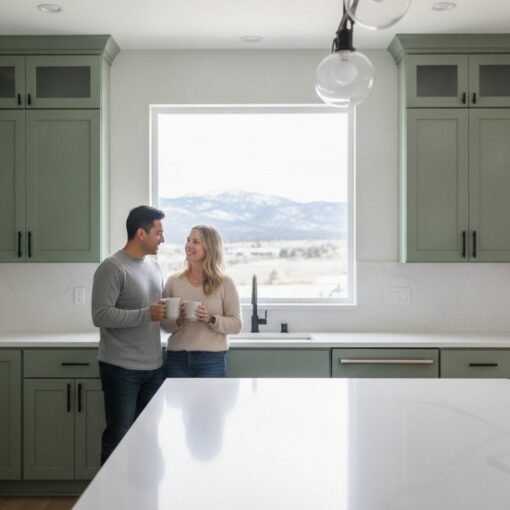
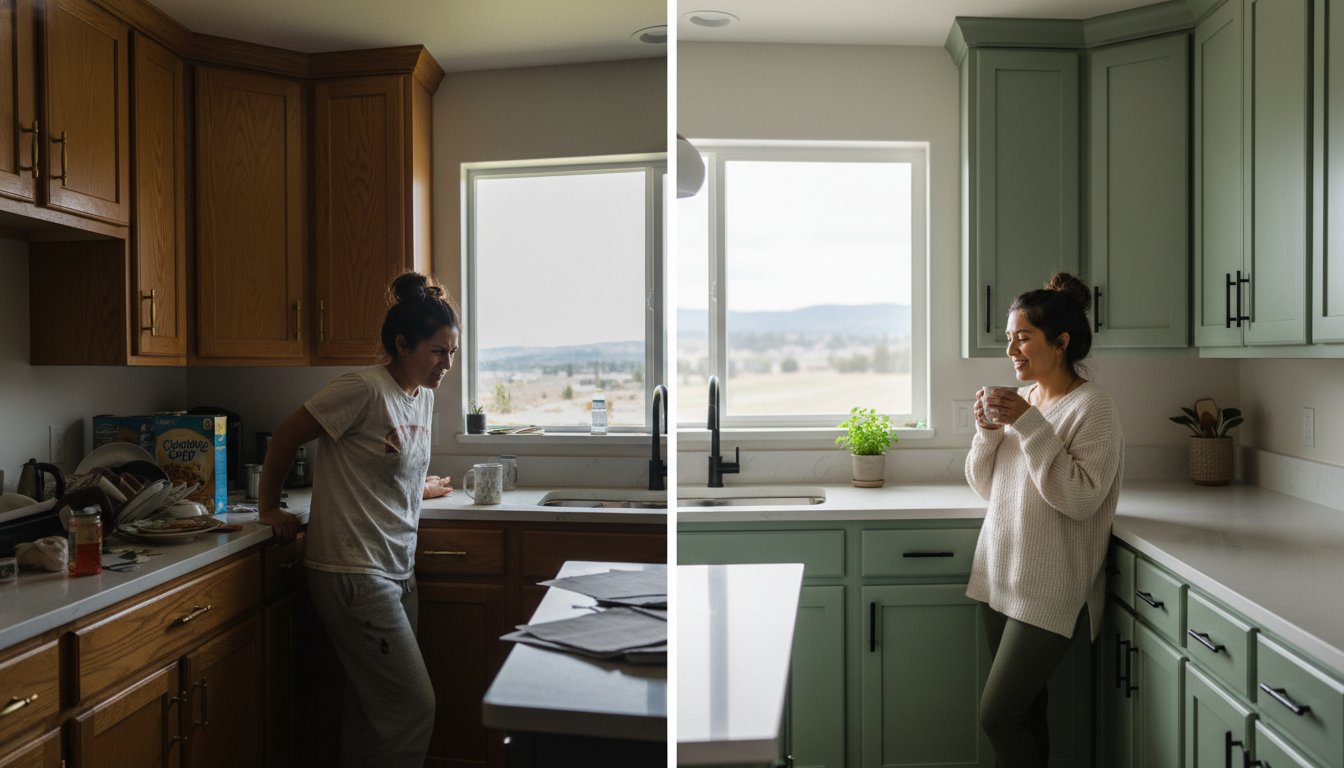
Professional painting is the ideal solution for kitchens where the layout is functional but the aesthetic is outdated. If your cabinet boxes are made of solid wood or high-quality MDF and remain structurally sound, there’s no technical reason to replace them. Many homeowners find that they love their current storage configuration but hate the honey-oak or dark-cherry finish. By choosing kitchen cabinet painting, you can achieve a dramatic transformation. This method allows for the use of 2026’s trending earthy tones while maintaining the integrity of your original cabinetry.
When Refacing Becomes an Option
Refacing remains a viable option only under specific conditions. It’s often necessary if your existing door styles are irreparably dated, such as cathedral arches that cannot be modernized through color alone. It’s also appropriate when the doors themselves have suffered physical damage, like warping or deep gouges, that sanding and filling cannot resolve. However, keep in mind that refacing generates significantly more material waste. Because you’re discarding all door and drawer fronts, the environmental footprint is larger. When you analyze the cabinet painting vs refacing cost, the added expense of these new materials and the labor-intensive veneering process often makes refacing 2 to 3 times more expensive than a professional painting project.
Professional Cabinet Painting: The Process and Investment Factors
Professional painting is a rigorous technical process that relies on meticulous preparation. It begins with deep cleaning and degreasing to remove years of cooking oils and residues. Technicians then perform surgical-grade masking of the kitchen interior. This level of detail ensures only the intended surfaces receive the coating. When evaluating the cabinet painting vs refacing cost, homeowners should consider that the cost to paint kitchen cabinets is primarily influenced by the door count and the current condition of the wood. High-performance primers and topcoats, specifically engineered for kitchen environments, are applied to ensure maximum adhesion and a smooth surface.
The “Off-Site Advantage” is a non-negotiable part of a high-quality project. By removing all doors and drawer fronts, we can spray them in a controlled, dust-free environment. This prevents airborne debris from contaminating the wet finish. It also allows for the use of industrial-grade equipment that isn’t feasible to operate inside a residential kitchen. This controlled process is why professional refinishing often looks superior to local brush-and-roll attempts.
The Importance of Professional Spraying
The visible difference between a DIY project and a professional result depends on the application method. Many house painters still use brushes or rollers, which inevitably leave textures behind. Professional refinishers utilize High Volume Low Pressure (HVLP) spraying systems to atomize the paint into a fine mist. This creates a perfectly even layer that mimics the appearance of brand-new cabinetry. A factory-quality finish is defined as a surface completely free of brush marks, lap lines, or textural imperfections. If you want a sleek look, reviewing our recent Denver projects can help you visualize the final result.
Durability and Longevity of Modern Coatings
Modern coatings have seen significant advancements by 2026. Polyurethane-based paints provide exceptional chemical resistance against common household cleaners and grease. When considering the cabinet painting vs refacing cost, durability is a key factor in the ROI calculation. A professional application typically lasts between 8 and 15 years, depending on the level of use. In the specific context of Colorado, professional cabinet refinishing helps protect wood from the shrinking and cracking caused by Denver’s dry climate. This durability makes professional painting a stable, long-term investment that rivals the longevity of more expensive refacing projects.
Cabinet Refacing: Materials, Installation, and Cost Drivers
Cabinet refacing is a more invasive process than professional painting. It involves the total replacement of all door and drawer fronts. To match these new components, technicians apply a thin veneer or laminate to the existing cabinet frames. This process, often called “skinning,” requires high precision and significant on-site labor. When analyzing the cabinet painting vs refacing cost, it’s clear that the purchase of new materials is the primary driver of the higher price point. You aren’t just paying for a finish; you’re buying entirely new exterior hardware and surfaces.
There’s a technical risk inherent in the skinning process. If the adhesive isn’t applied correctly by a specialist, the veneer can begin to lift or peel over time. This is especially common in high-heat areas near stoves or high-moisture zones around sinks. Unlike professional painting, which bonds to the original wood through an industrial spraying process, refacing adds a layered material that can fail if the bond is compromised. This potential for failure often makes homeowners question the long-term value of the investment.
Material Choices in Refacing
Refacing options range from solid wood doors to thermofoil or laminate alternatives. Solid wood provides a premium feel but increases the budget significantly. Thermofoil is a cheaper alternative, yet it’s prone to heat damage and can’t be easily repaired. A major drawback of this method is the environmental impact. Refacing requires discarding perfectly functional cabinet doors simply to change a style. This creates more landfill waste than a refinishing project. Homeowners also frequently encounter a “hybrid” look. If the new doors and the frame veneers don’t match perfectly in texture or sheen, the kitchen can look disjointed and artificial.
Labor and Complexity
Applying veneers to face frames and end panels is a meticulous task. It requires cutting and fitting materials on-site, which leads to higher disruption levels in your home. While professional painting involves off-site spraying for doors to minimize mess, refacing requires more days of active construction inside your kitchen. It’s also vital to realize that refacing doesn’t fix structural issues. If your cabinet boxes are sagging or have water damage, adding a new veneer is a cosmetic fix that ignores the underlying problem. When you compare the cabinet painting vs refacing cost, you must ensure your boxes are worth the high investment of new doors before proceeding.
Direct Comparison: Analyzing Cost Ratios and Long-Term Value
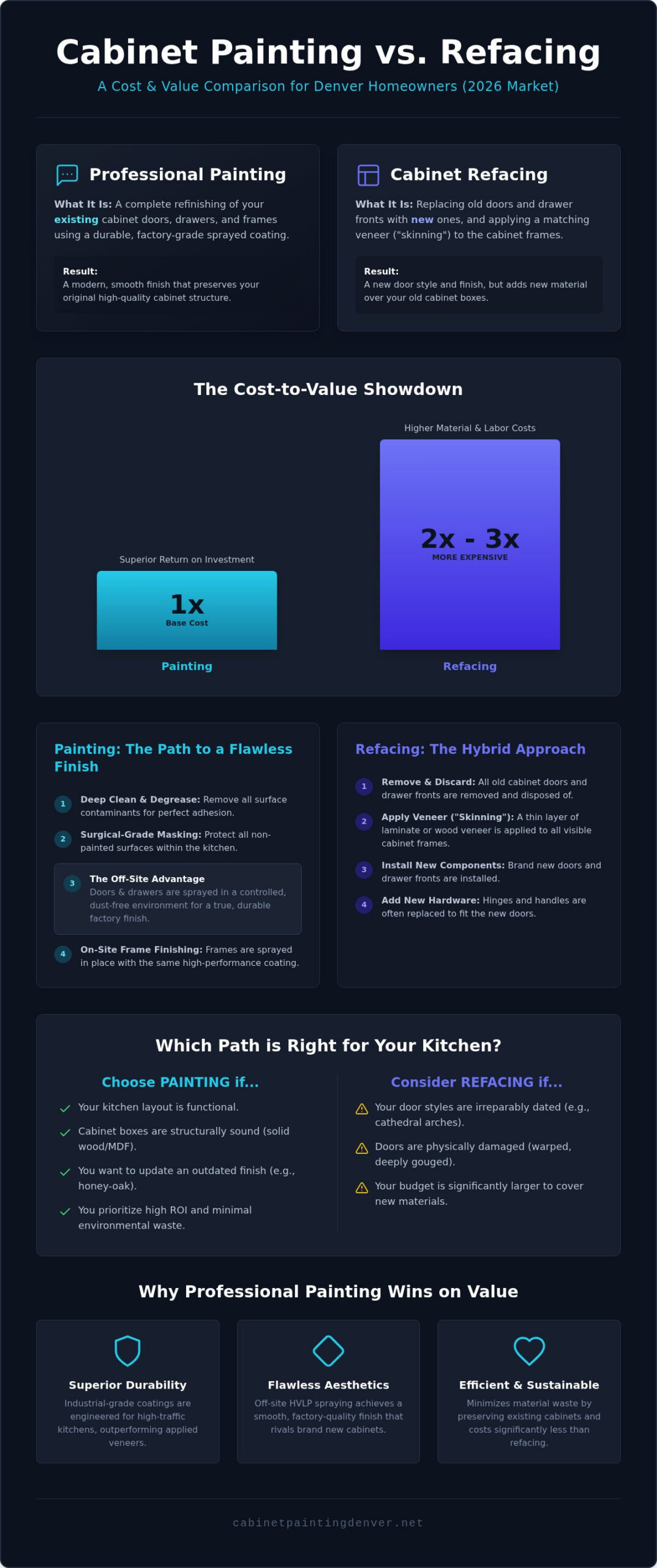
When evaluating the cabinet painting vs refacing cost, the most critical metric is the cost ratio. Industry data from 2026 indicates that refacing typically costs 2 to 3 times more than professional painting. This price gap exists because refacing requires the manufacturing, shipping, and installation of entirely new door components. Painting, however, utilizes your existing high-quality structures and transforms them with industrial coatings. For most Denver kitchens, the visual outcome of both processes is indistinguishable to the average home buyer. This creates a “value ceiling” where spending significantly more on refacing fails to yield a proportional increase in your home’s resale value.
The savings advantage of painting allows for a more comprehensive kitchen update. By choosing refinishing, you can reallocate the remaining budget to other high-impact upgrades. Many homeowners find that the money saved on doors allows them to install modern quartz countertops, premium tile backsplashes, or high-end lighting fixtures. This balanced approach to remodeling often results in a higher total return on investment than spending the entire renovation budget on cabinet door replacement alone.
The Investment Framework
To simplify the decision, consider a basic investment model for 2026. If professional painting represents a 1x investment, refacing sits at roughly 2.5x, while a full kitchen replacement reaches 5x or more. Choosing cabinet painting denver allows you to maximize your home equity by achieving a high-end, factory-quality look at the most efficient price point. Because the finish is smooth and durable, most buyers won’t perceive a difference between a painted door and a refaced one. This makes professional painting the superior choice for those looking to flip a home or update a primary residence without over-capitalizing on the renovation.
Timeline and Disruption Comparison
Project duration is another area where the cabinet painting vs refacing cost includes hidden “time expenses.” A professional painting project typically takes 5 to 7 days to complete. Because the doors are sprayed in a controlled environment off-site, you can often maintain partial use of your kitchen during the week. Refacing is more restrictive. It generally requires 10 to 14 days of on-site labor due to the meticulous nature of applying veneers to every visible surface of the cabinet frames. The painting process is also inherently cleaner. Professional masking and the lack of heavy construction debris mean significantly less post-project cleaning for the homeowner. If you want to see how a professional finish can transform your space with minimal downtime, schedule an assessment of your cabinetry today.
Choosing the Right Solution for Your Denver Home Remodel
Determining the best path forward requires an objective look at your existing kitchen assets. When you weigh the cabinet painting vs refacing cost, the decision often centers on the structural integrity of your cabinetry. If your cabinet boxes are solid and the layout meets your functional needs, professional painting is almost always the more efficient choice. It offers a low-risk, high-reward update that transforms the space without the unnecessary expense of new materials. Before committing to the higher cost of refacing, use this final decision checklist to evaluate your kitchen:
- Structural Integrity: Are the cabinet boxes free of water damage, sagging, or rot?
- Material Quality: Are the doors made of solid wood or high-quality MDF rather than thin particle board?
- Layout Satisfaction: Do you plan to keep your current kitchen footprint exactly as it is?
- Budget Allocation: Would you prefer to save 60 to 80 percent on cabinetry to fund new quartz countertops or high-end appliances?
- Visual Goals: Are you seeking the smooth, matte finish that is trending in 2026?
If you answered yes to these points, professional refinishing provides the most direct route to a modern aesthetic. The transparency of the painting process allows you to see the quality of the preparation and the application of industrial coatings. This approach avoids the technical risks of veneer failure and the “hybrid” look often associated with mismatched refacing components.
Why Denver Homeowners Prefer Professional Refinishing
The Denver market in 2026 shows a clear local preference for sustainable, refresh-oriented remodeling. Homeowners in Colorado are increasingly choosing to preserve high-quality wood structures rather than contributing to landfill waste. There is also a technical advantage to professional coatings in our specific climate. Colorado’s unique humidity fluctuations can cause wood to expand and contract rapidly. Industrial-grade paints are engineered with the flexibility to withstand these changes without cracking or peeling. This durability ensures your kitchen maintains its factory-quality finish despite the dry air and seasonal shifts. As local experts, we specialize in applying these high-performance systems to meet the demands of Denver homes.
Next Steps: Getting an Accurate Estimate
Achieving a flawless result starts with an accurate project assessment. While some companies offer over-the-phone quotes, these often fail to account for the specific condition of your wood or the complexity of your door styles. A professional consultation is essential for identifying the exact requirements of your project. To prepare for an estimate, a cabinet painter will typically need to know the total door and drawer count, the current material type, and whether the surfaces have been previously painted or stained. When you analyze the cabinet painting vs refacing cost through a formal quote, the financial benefits of refinishing become undeniable. You can transform your kitchen with a professional finish that maximizes your home’s value while minimizing the time and mess of construction. Reach out today to schedule your on-site evaluation and take the first step toward a modern, high-ROI kitchen update.
Maximize Your Denver Kitchen ROI in 2026
Deciding between these two renovation paths depends on your kitchen’s structural integrity and your long-term financial goals. Professional refinishing provides the same visual impact as a total replacement while preserving your high-quality cabinetry. When you analyze the cabinet painting vs refacing cost, it’s clear that painting offers a superior return on investment for Denver homeowners who want a modern look without the weeks of construction dust. By choosing a professional refresh, you avoid the high material waste and labor-intensive veneering process required for refacing.
Our team serves the entire Denver Metro area with a focus on procedural clarity and factory-quality results. We include detailed preparation and surgical-grade masking to protect your home throughout the project. By utilizing off-site spraying for all doors and drawer fronts, we deliver a smooth, durable surface that is indistinguishable from brand-new cabinets. This method ensures your kitchen remains functional while we handle the technical work in a controlled environment. It’s the most efficient way to achieve a high-end aesthetic.
Ready to start your transformation? Get Your Free Professional Cabinet Painting Quote in Denver today. We look forward to helping you achieve a stunning kitchen aesthetic that fits your budget and lifestyle perfectly.
Frequently Asked Questions
Is it cheaper to paint or reface kitchen cabinets?
Professional painting is the more cost-effective option because it utilizes your existing cabinet structures and doors. By contrast, refacing requires the manufacturing and installation of entirely new door and drawer fronts. When homeowners analyze the cabinet painting vs refacing cost, they find that refinishing typically requires 60 to 80 percent less of an upfront investment. This allows for a dramatic kitchen update without the high material expenses associated with a total exterior replacement.
How much more does cabinet refacing cost than painting?
Cabinet refacing generally costs 2 to 3 times more than professional painting. This price difference stems from the high cost of new door components and the labor-intensive process of applying veneers to the cabinet boxes. While painting focuses on high-performance coatings and professional spraying, refacing involves a more complex supply chain and longer on-site installation times. For most Denver homeowners in 2026, the additional expense of refacing doesn’t always translate to a better visual outcome.
Which is more durable: painted cabinets or refaced cabinets?
Both options offer high durability when executed by specialists. Professional painting uses industrial-grade polyurethane coatings that resist chemicals and grease for years. Refacing provides new surfaces that are also durable, but the veneers used on the frames can sometimes peel or lift if the adhesive bond fails. In Denver’s dry climate, professional coatings are specifically designed to flex with the wood, often providing a more stable long-term finish than layered laminate materials.
Can I change the look of my kitchen with just painting?
You can completely transform your kitchen’s aesthetic through professional painting. A change from dated oak to a modern 2026 earthy tone like dusty sage or warm mushroom creates a high-end look. When combined with new hardware, the results are often indistinguishable from brand-new cabinetry. Because the professional spraying process removes all brush marks, the cabinets achieve a factory-smooth texture that makes the entire room feel like a contemporary, professional remodel.
Does cabinet painting or refacing add more value to a home?
Both updates increase home value, but professional painting often provides a higher return on investment. Because the cabinet painting vs refacing cost ratio is so favorable, you recoup a larger percentage of your spending at the time of sale. Most buyers prioritize the visual freshness of the kitchen. Since a factory-quality painted finish looks identical to new cabinets to the average buyer, spending more on refacing rarely yields a higher appraisal value.
How long does professional cabinet painting last compared to refacing?
A professional paint job typically lasts between 8 and 15 years with proper care. High-quality cabinet refacing can last 15 to 20 years. However, the longevity of painting is often sufficient for homeowners who plan to update their kitchen’s style again within a decade. The industrial coatings used in 2026 are highly resistant to chipping and fading, ensuring the finish remains vibrant and smooth throughout its functional lifespan in a busy household.
Can all types of cabinets be professionally painted?
Most cabinet types, including solid wood, oak, maple, and high-quality MDF, are excellent candidates for professional painting. The key is the preparation process, which involves deep cleaning and specialized primers to ensure maximum adhesion. However, cabinets with significant structural rot or very thin, peeling thermofoil may require more extensive repairs. A professional evaluation is necessary to determine if the substrate can support a factory-quality sprayed finish that will endure daily use in your home.
What are the hidden costs of cabinet refacing?
Hidden costs in refacing often include the price of new hinges, drawer glides, and disposal fees for the old doors. Additionally, if the cabinet boxes require structural leveling or repair before the veneers can be applied, labor costs will increase. Homeowners must also consider the potential cost of repairing peeling veneers in the future. Professional painting is often more transparent, as it focuses on refinishing existing components without the need for complex material surcharges.