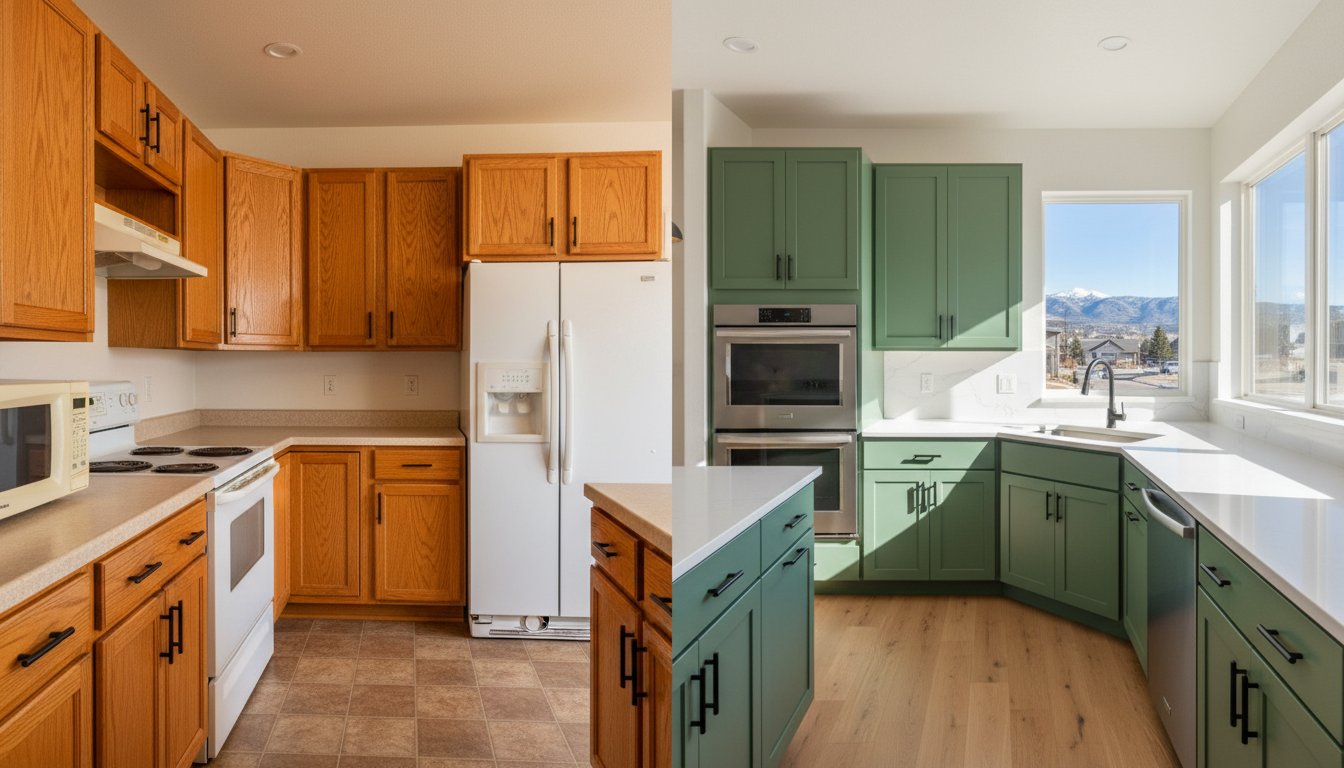
What if the peeling plastic on your kitchen doors isn’t a signal to spend $30,000 on a full replacement? Many homeowners believe that once vinyl begins delaminating from the MDF core, the only solution is the landfill. However, painting thermofoil cabinets denver is a precision industrial bonding process that salvages high-density MDF cores. You likely feel frustrated by yellowing surfaces or edges that catch on your sleeves, and you’re right to worry that standard paint won’t stick to these slick, non-porous surfaces.
We recognize the concern that a refinishing project might fail on plastic-like surfaces. This 2026 guide explains how to professionally transform outdated thermofoil into a durable, factory-grade finish using specialized bonding techniques. We’ll examine the industrial coatings suited for Denver’s unique climate, the benefits of off-site spray booths, and the importance of a 3-year performance warranty. This overview provides the procedural clarity you need to decide between replacement and restoration.
Key Takeaways
- Understand why painting thermofoil cabinets denver is a precision industrial process that salvages high-density MDF cores.
- Learn the multi-stage bonding steps required to create a permanent “tooth” on non-porous vinyl surfaces.
- Discover how specialized primers protect cabinets from the delamination caused by Denver’s low humidity.
- Compare the financial advantages of professional kitchen cabinet painting against the high cost of full cabinet replacement.
- Recognize the importance of off-site spray booths and a 3-year performance warranty for achieving a factory-grade finish.
Can You Paint Thermofoil Cabinets? The 2026 Denver Reality
Thermofoil isn’t wood. It’s a plastic-like vinyl laminate that is pressure-bonded to a medium-density fiberboard (MDF) core. To understand the material’s composition, you can read more about What is Thermofoil? Many Denver homeowners mistake these cabinets for painted wood because the surface is smooth and uniform. You often don’t realize it’s a wrap until the edges begin to lift or the white finish turns a dull yellow. This yellowing is a chemical reaction in the vinyl that cleaning cannot fix.
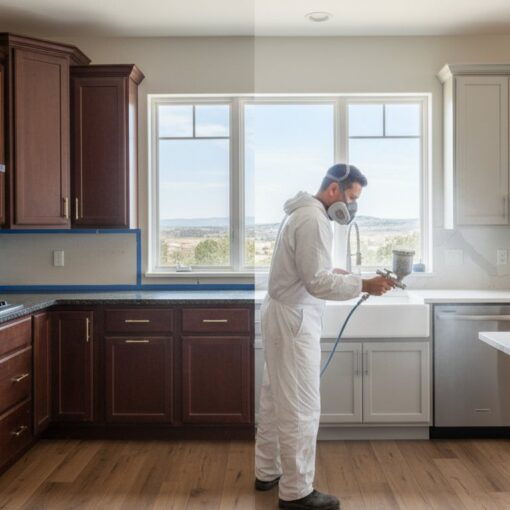
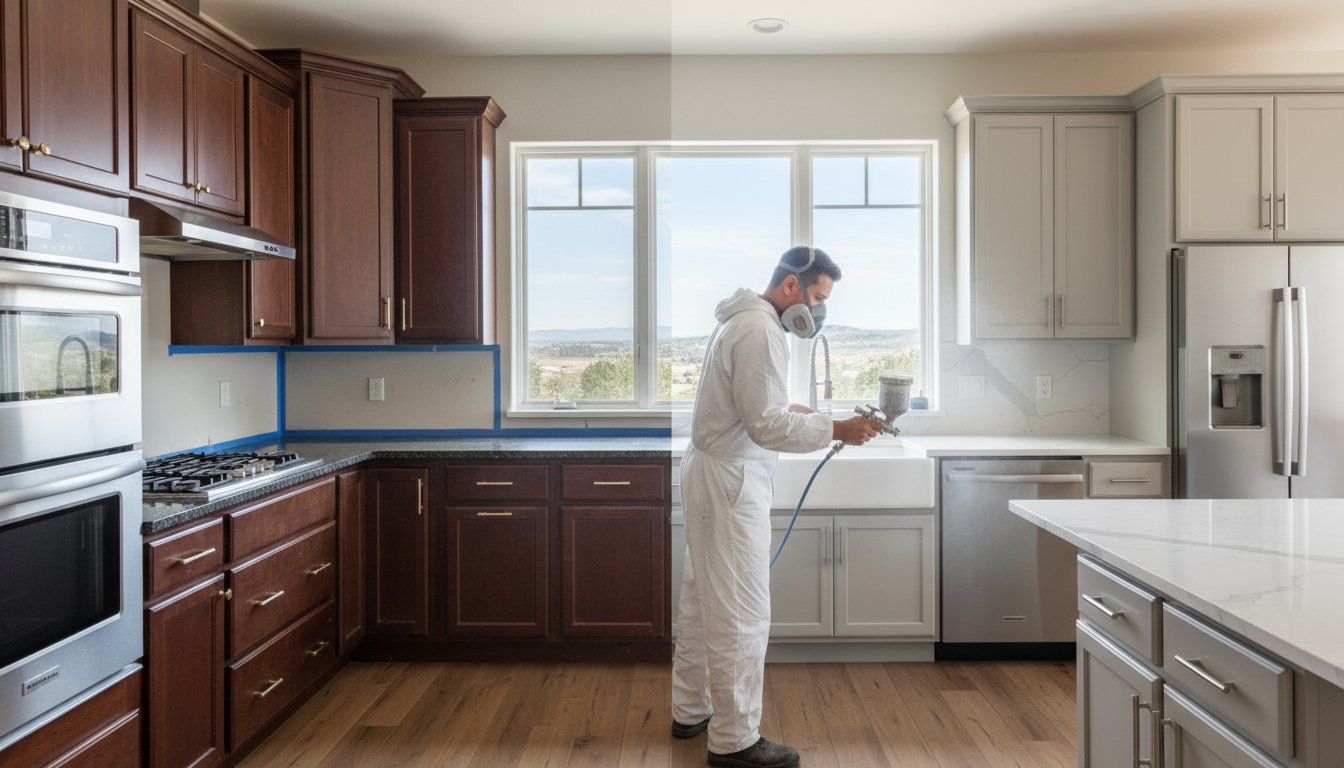
The verdict for 2026 is clear: yes, you can achieve professional results with painting thermofoil cabinets denver. Success depends on the structural integrity of the underlying MDF core. If the core remains dry and solid, we apply industrial bonding agents to create a permanent finish. This process effectively solves the yellowing issue common in older kitchens, providing a modern look without the cost of a full tear-out.
To better understand this concept, watch this helpful video:
The Peeling Problem: Repair vs. Removal
When the vinyl wrap begins to delaminate, you face a choice: repair or remove. If the peeling is localized, we can often secure the edges. However, if the adhesive has failed across the entire door, the best path is complete removal. We strip the loose vinyl to reveal the pristine MDF underneath. Painting the underlying MDF often results in a smoother, more durable finish than the original vinyl wrap because the paint bonds directly to the wood fibers rather than sitting on top of a plastic film.
Thermofoil vs. Wood: Key Differences for Denver Homeowners
Thermofoil differs from natural wood because it lacks the organic grain of oak or maple. This lack of texture allows for a true factory-flat look that many modern designs require. However, the non-porous nature of vinyl means standard house paint will fail. We use specialized chemical bonding agents designed to “bite” into the surface. For those interested in the broader context of refinishing, our Kitchen Cabinet Painting: The Ultimate Guide for Homeowners provides additional details on various cabinet materials. In Denver’s dry climate, thermofoil can become brittle, making professional preparation essential for long-term adhesion.
The Industrial Bonding Process: How We Paint Thermofoil
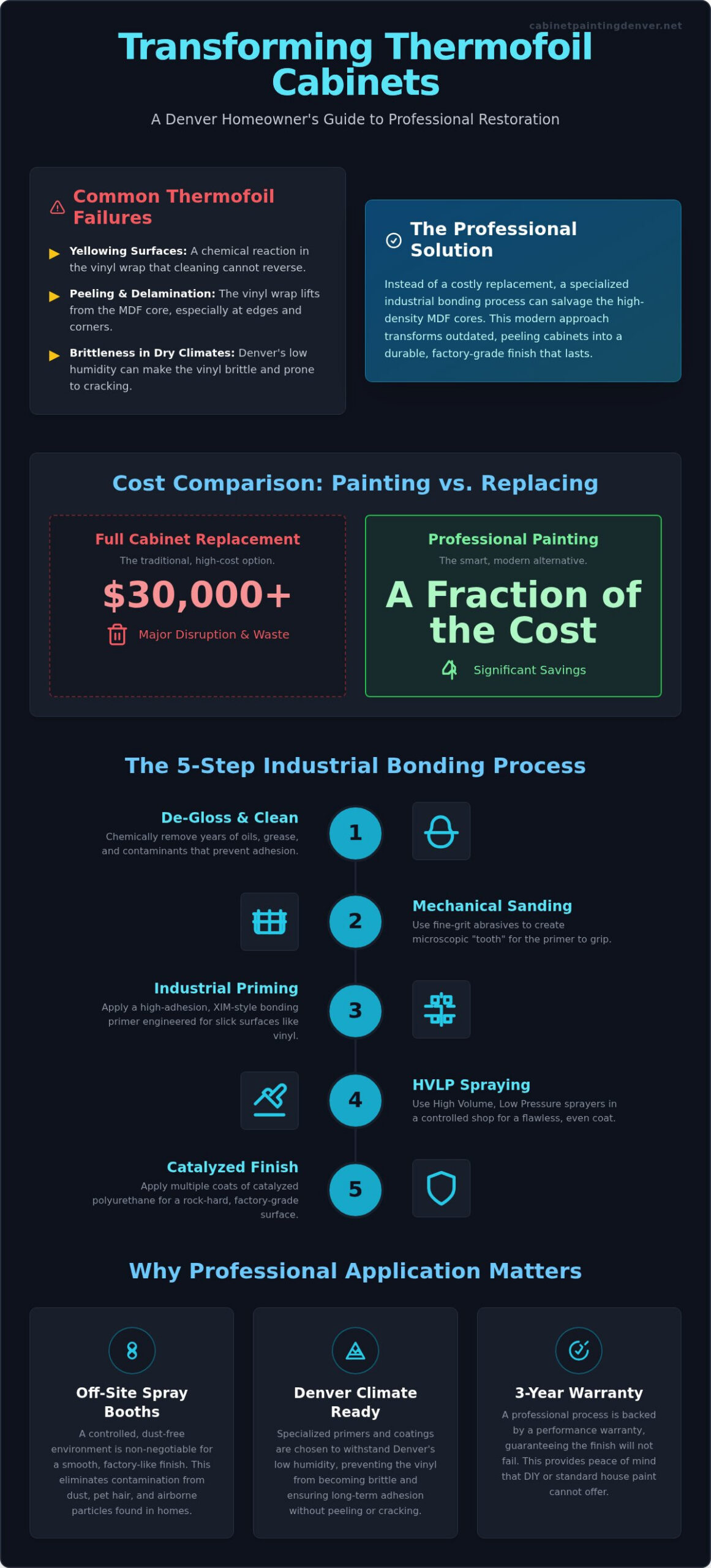
Successful painting thermofoil cabinets denver requires a multi-stage industrial approach. You cannot simply apply a standard topcoat to a non-porous vinyl surface. Our process ensures the finish remains durable for years rather than months. We follow a strict five-step protocol to transform your kitchen.
- Step 1: De-glossing and chemical cleaning. We remove 20 years of kitchen oils, grease, and contaminants that prevent paint from sticking.
- Step 2: Mechanical sanding. We use fine-grit abrasives to create “tooth” on the vinyl surface, allowing the primer to grip the material.
- Step 3: Industrial priming. We apply high-adhesion, XIM-style primers specifically engineered for plastics and vinyl.
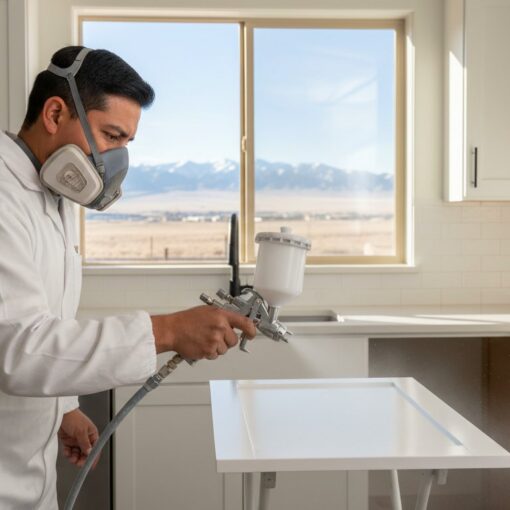
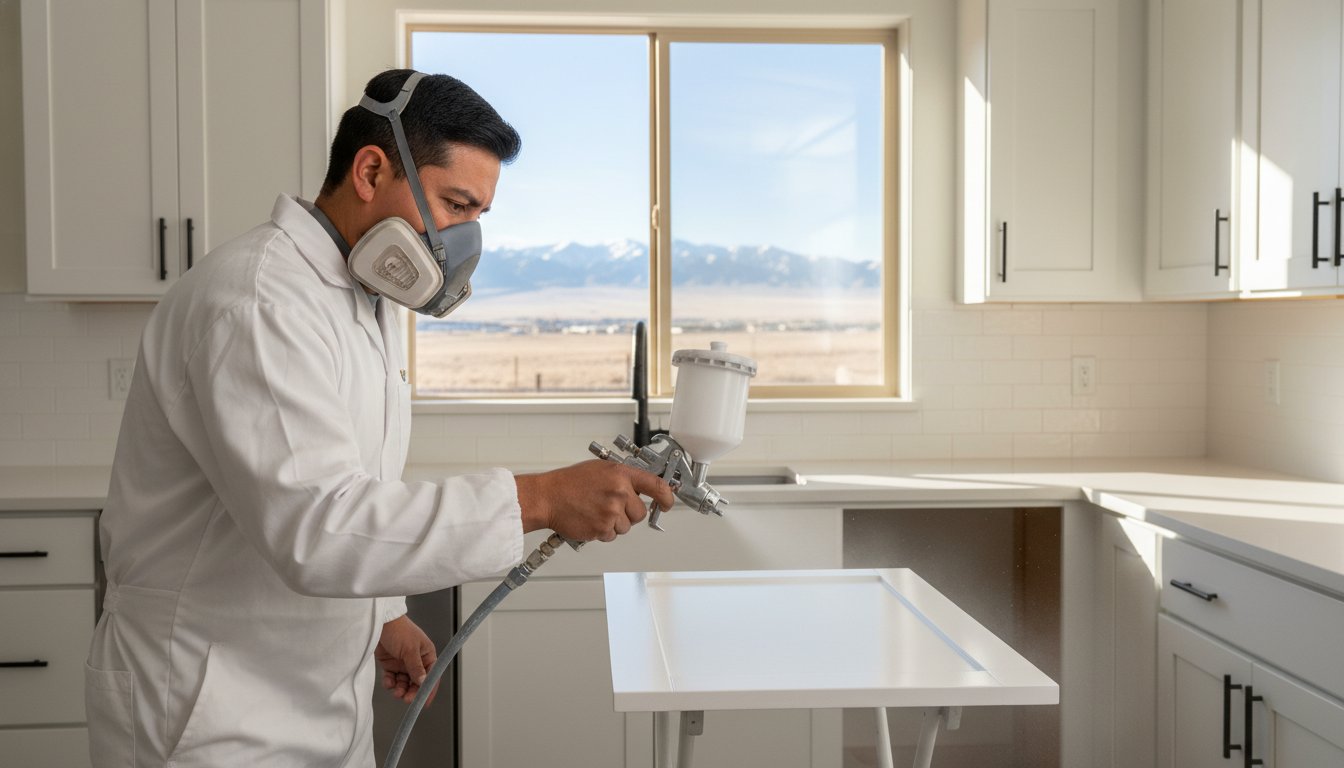
- Step 4: HVLP spraying. We spray all doors and drawer fronts in a controlled shop environment using High Volume Low Pressure equipment.
- Step 5: Catalyzed polyurethane. We apply multiple coats of a catalyzed finish to create a rock-hard, factory-grade surface.
Why Off-Site Spraying is Non-Negotiable
Achieving a factory finish on thermofoil is impossible in a standard kitchen environment. Dust nibs, pet hair, and airborne particles easily stick to wet paint. By moving the doors to our shop, we eliminate these contaminants. This controlled setting allows us to use industrial coatings that dry faster and more evenly than DIY alternatives. Shop-cured finishes provide immediate durability, so your cabinets are ready for daily use as soon as we re-install them. If you want results that look like high-end custom cabinetry, you can learn more about our professional cabinet painting services.
The Science of Adhesion: Preventing Future Peeling
Standard latex house paint will slide off thermofoil within months because it only sits on the surface. We focus on creating both a mechanical and a chemical bond. The mechanical bond comes from sanding, while the chemical bond occurs at the molecular level. High-adhesion primer is a specialized coating that creates a molecular bridge between non-porous vinyl and decorative topcoats. This bridge prevents the “edge-lift” that often plagues amateur attempts at painting thermofoil cabinets denver. By prioritizing this scientific approach, we ensure the new finish is as permanent as the original laminate.
2026 Cost Comparison: Painting vs. Replacing Thermofoil
Deciding between replacement and painting thermofoil cabinets denver requires an objective look at the total project scope. Full kitchen replacement in the Denver area often costs between $15,000 and $35,000. This high price point exists because thermofoil doors are typically paired with MDF cabinet boxes. These boxes often sustain damage during removal, forcing a complete tear-out rather than a simple door swap. Professional painting allows you to bypass the demolition phase entirely while achieving a comparable aesthetic result.
Refinishing offers a high return on investment for homeowners preparing for a sale or a long-term update. Industry data suggests that a $5,000 to $8,000 investment in professional cabinet refinishing can add up to $20,000 in home equity. By choosing painting thermofoil cabinets denver over replacement, you typically save between 70% and 85% of the cost of new cabinetry. Factors such as the total number of door openings, the current state of the vinyl, and your specific color selection will influence the final project requirements.
The Hidden Costs of Thermofoil Replacement
Replacement involves more than the price of new boxes and doors. When you pull out existing cabinets, you often trigger mandatory expenses for plumbing re-connection, electrical updates to meet current codes, and new countertop installation. These secondary costs can double your initial budget. Timeline is another critical factor. New cabinet orders currently face a 6-8 week lead time in the Front Range. In contrast, our professional painting process typically concludes within a 1-week timeline. For a more granular look at these variables, see our Cabinet Painting Cost: A Full 2026 Price Breakdown.
Budgeting for a Denver Kitchen Transformation
Standard 20-opening kitchens in suburbs like Littleton and Arvada are ideal candidates for this restoration process. While some “one-day” solutions promise lower entry prices, they often use standard latex paints that fail to bond with vinyl. Investing in high-performance, industrial coatings provides better long-term value because the finish won’t chip or peel under daily use. We include a 3-year performance warranty on all our finishes to protect your renovation investment. This warranty ensures that your kitchen remains a functional and visual asset for years to come, providing peace of mind that a DIY or budget-rate project cannot offer.
The Denver Climate Factor: Humidity and Thermofoil Failure
Denver’s environmental conditions are particularly harsh on laminated surfaces. Our local humidity often dips below 20%, which creates a hostile environment for the adhesive bonds inside your cabinetry. MDF cores naturally expand and contract with these moisture changes. When the core shrinks in our dry high-desert air, the rigid vinyl wrap becomes brittle and loses its grip. This tension leads to the “Edge-Lift” phenomenon, which is most visible near heat-generating appliances like ovens and dishwashers. Heat weakens the original factory adhesive, causing the vinyl to curl away from the corners and expose the brown fiberboard underneath.
Successful painting thermofoil cabinets denver requires products that account for this constant movement. We utilize industrial-grade coatings with enough flexibility to shift alongside the substrate during Colorado’s extreme seasonal transitions. Without this elasticity, a new finish would crack as the MDF core reacts to atmospheric changes. Additionally, our process mitigates the risks posed by Denver’s high-wind seasons. Dust and debris are constant threats during on-site applications, making a controlled environment necessary for a smooth, debris-free surface.
Curing in the High Desert
Denver’s 5,280-foot altitude and arid climate significantly alter the evaporation rate of paint solvents. If a coating dries too quickly, a problem known as “flash drying” occurs. This leaves behind brush marks, orange peel textures, or a weak film that won’t hold up to daily use. Professional sprayers must use chemical retarders to slow the drying process, ensuring the coating levels out perfectly for a factory-grade look. Our temperature-controlled shop is essential for maintaining a consistent cure year-round, regardless of whether it is a 90-degree summer day or a sub-zero winter morning.
Durability Against the Colorado Sun
High-altitude environments subject your kitchen to intense UV exposure, especially in homes with large windows. This radiation is a primary cause of the yellowing seen in original factory thermofoil. Our topcoats are formulated with UV-resistant properties that prevent fading and discoloration over time. These modern finishes maintain their color integrity far better than the original vinyl wraps. For more information on maintaining your kitchen’s appearance, see our Cabinet Painting Denver: Your Ultimate Guide to a Flawless Finish. If you are ready to protect your cabinetry from the Colorado climate, you can schedule a professional refinishing consultation today.
Choosing Denver’s Thermofoil Experts: The Cabinet Painting Denver Difference
Selecting a contractor for painting thermofoil cabinets denver requires a partner who understands the technical demands of synthetic substrates. We bring over 40 years of experience refinishing cabinets across the Front Range. This legacy allows us to navigate the complexities of laminate surfaces that general house painters often avoid. We utilize a proprietary multi-stage bonding process specifically engineered to address the unique adhesion requirements of vinyl and MDF. Our approach ensures that the new finish does not merely sit on the surface but becomes an integral part of the door structure.
Our service coverage extends across the entire Denver Metro area. We regularly complete projects for homeowners in Highlands Ranch, Aurora, Lakewood, and from Castle Rock to Boulder. We maintain a direct and professional communication style throughout every project. This transparency means you receive clear status updates and a functional list of requirements before we begin. We prioritize procedural clarity over sales jargon, ensuring you understand exactly how we will restore your kitchen to a factory-grade standard.
Our 3-year Performance Warranty
Most general painting companies refuse to guarantee work on thermofoil because they lack the industrial equipment necessary for a permanent bond. We operate differently. Our 3-year performance warranty covers peeling, chipping, and adhesion failure under normal residential use. We can offer this guarantee because our off-site spray booth and catalyzed finishes create a surface that exceeds original factory specifications. Our 3-year warranty provides Denver homeowners peace of mind by guaranteeing the bond between the new finish and the thermofoil substrate. If the finish fails due to an adhesion issue, we address it directly as part of our commitment to quality.
Ready to Modernize Your Kitchen?
Transforming your kitchen does not have to involve weeks of construction debris and specialized permits. Our process is designed for efficiency, typically taking 5 days from the initial door removal to the final re-installation. You can begin the process by scheduling a free in-home estimate. During this visit, we evaluate the condition of your existing MDF cores and the integrity of the vinyl wrap to ensure your cabinets are candidates for refinishing. For visual evidence of our results, you can view our Denver Kitchen Cabinet Painting Gallery. We provide the technical expertise needed to turn outdated, yellowing thermofoil into a modern focal point for your home.
Modernize Your Denver Kitchen with Confidence
Restoring your cabinetry doesn’t require a full demolition. Professional painting thermofoil cabinets denver provides a durable, factory-grade finish that addresses common issues like peeling and yellowing. We’ve established that the success of this transformation relies on industrial bonding primers and specialized off-site HVLP spraying. These methods allow you to achieve a high-end look while bypassing the $30,000 price tag often associated with a full kitchen replacement. Denver’s dry climate makes these precise technical steps necessary to prevent future delamination.
With over 40 years of local Denver experience, we provide the procedural clarity and technical expertise your home deserves. Our comprehensive 3-year performance warranty and factory-grade HVLP spray finish guarantee that your new surfaces will withstand the rigors of daily use. Don’t let outdated or damaged vinyl diminish your kitchen’s potential. You can Get Your Free Cabinet Painting Quote in Denver to begin your transformation. We’re ready to help you revitalize your space with a finish that lasts for years to come.
Frequently Asked Questions
Can you paint thermofoil cabinets that are already peeling?
Yes, you can paint them, but the loose vinyl must be removed first. If the underlying MDF core is solid and dry, we strip the failing laminate and apply industrial bonding primers directly to the wood fiber. This ensures the new coating adheres to a stable surface rather than a failing plastic wrap. If the MDF has water damage or swelling, the door may require replacement instead of refinishing.
How long does it take to paint thermofoil cabinets in Denver?
A standard project typically takes 5 to 7 business days to complete. We remove the doors and drawer fronts on the first day for off-site processing in our dust-free spray booth. While the doors cure in a controlled environment, we prep and paint the cabinet frames on-site. This split-process minimizes the time your kitchen is under construction while ensuring a factory-grade finish on the most visible surfaces.
Is it better to remove the thermofoil or paint over it?
The decision depends on the current adhesion of the vinyl. If the thermofoil is tightly bonded with no signs of lifting, we can clean, sand, and prime over it. However, if the edges are curling or bubbling, the entire wrap should be removed. Painting the underlying MDF often results in a smoother finish because the paint bonds directly to the wood fibers rather than sitting on a non-porous plastic layer.
What kind of paint do you use for thermofoil surfaces?
We use industrial-grade catalyzed polyurethanes and waterborne alkyd enamels specifically formulated for high-use surfaces. These coatings are superior to standard house paint because they create a hard, durable film that resists kitchen oils and physical impacts. Success with painting thermofoil cabinets denver relies heavily on the initial bonding primer, which acts as a bridge between the non-porous substrate and the decorative topcoats.
How much does it cost to paint thermofoil cabinets in Denver for 2026?
Project costs vary based on the number of door openings, the condition of the vinyl, and the specific color choice. While national averages suggest lower rates, the local market reflects the specialized labor and industrial materials required for high-altitude adhesion. Homeowners should expect a 10% to 20% surcharge for painting thermofoil cabinets denver compared to standard wood due to extra preparation steps. We provide custom quotes after an in-home evaluation.
Will the paint peel off my thermofoil cabinets like the vinyl did?
No, provided the surface is prepared with professional-grade bonding agents. The original vinyl often fails because the factory glue becomes brittle in Denver’s low humidity. Our process involves mechanical sanding and chemical etching to create a permanent bond. We include a 3-year performance warranty to guarantee that our finish won’t peel or delaminate under normal residential use, providing a level of durability that exceeds the original factory wrap.
Do I need to empty my cabinets before the painting crew arrives?
Yes, you must remove all items from the cabinets and clear the countertops before our team begins work. This requirement ensures that your belongings remain free from dust and overspray during the on-site phase of the project. It also allows our technicians full access to the cabinet frames for thorough cleaning, sanding, and masking. Proper preparation of the workspace is a mandatory step for maintaining a clean and professional environment.
How do I clean and maintain painted thermofoil cabinets?
Use a soft microfiber cloth and a mild, non-abrasive soap solution for regular cleaning. Avoid harsh chemicals, scouring pads, or excessive water, as these can dull the finish or damage the underlying MDF. Since the new coating is a catalyzed industrial finish, it is highly resistant to staining. Promptly wiping away spills and grease will maintain the factory-quality look for years. Regular maintenance is straightforward when using the correct task-oriented cleaning procedures.