Dreaming of a kitchen makeover without the jaw-dropping cost of a full remodel? A professional cabinet paint job can completely transform your space, but figuring out a realistic budget is often the biggest hurdle. Between confusing quotes and the fear of hidden fees, it’s easy to feel overwhelmed. As you start planning your project, understanding the average cost to paint kitchen cabinets 2026 is the critical first step to turning your vision into a stunning, affordable reality.
You’ve come to the right place. In this complete price guide, we’ll cut through the noise and give you a clear, reliable cost breakdown for a flawless, factory-like finish. We’ll explore the key factors that influence your final price-from cabinet count to paint quality-and demystify common pricing models. By the end, you’ll feel confident evaluating quotes from local painters and be fully equipped to make an informed decision for your home and your budget.
Key Takeaways
- Discover the projected 2026 price range for professional cabinet painting to set a realistic budget for your project.
- The average cost to paint kitchen cabinets 2026 is just a baseline; learn the key factors that can significantly raise or lower your final quote.
- Understand the true cost of a DIY project, including essential tool expenses, to accurately compare it against the value of a professional finish.
- Learn what every detailed quote should include so you can confidently hire a contractor and avoid hidden fees.
The National Average Cost to Paint Kitchen Cabinets in 2026
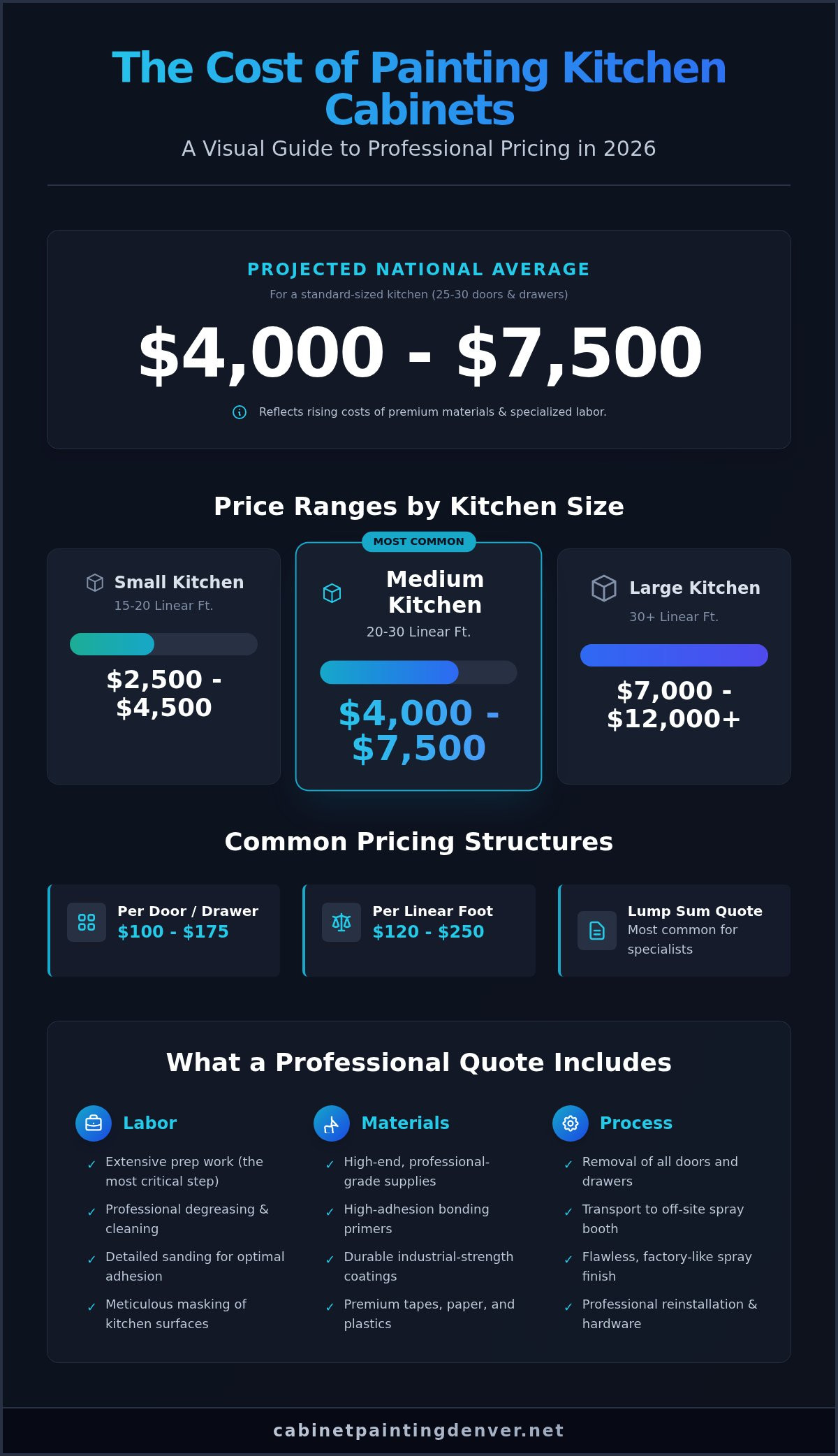
Looking ahead to 2026, homeowners can expect the national average cost to paint kitchen cabinets professionally to range between $4,000 and $7,500. This estimate is for a standard-sized kitchen with approximately 25-30 cabinet doors and drawers. The final price tag depends on factors like your location, the complexity of your kitchen layout, and the condition of your existing cabinets. The average cost to paint kitchen cabinets in 2026 reflects the rising expense of high-quality materials and the specialized labor required for a durable, factory-like finish.
To get a better sense of how professionals price these projects, watch this helpful breakdown:
2026 Professional Cabinet Painting Price Ranges
While the national average provides a good baseline, costs vary significantly based on the size of your kitchen. Here are the typical price brackets you can anticipate for a professional cabinet refinishing project in 2026:
- Small Kitchen (15-20 linear ft): $2,500 – $4,500
- Medium Kitchen (20-30 linear ft): $4,000 – $7,500 (This is the most common size and price range)
- Large Kitchen (30+ linear ft): $7,000 – $12,000+
Remember, these are estimates. Factors like intricate cabinet details, extensive repairs, or premium paint selections can increase the final cost.
Common Pricing Structures Explained
Professional cabinet painters use several methods to calculate their quotes. Understanding these can help you compare bids more effectively.
- Per Door/Drawer: Many painters charge a flat rate per piece they have to remove, prep, and paint. This typically ranges from $100 to $175 per door or drawer front.
- Per Linear Foot: Some contractors measure the length of your cabinetry and charge between $120 and $250 per linear foot. This method is common for general painters but less so for cabinet specialists.
- Lump Sum Project Quote: The most common model for dedicated cabinet refinishing companies. They provide a single, all-inclusive price after a detailed in-home consultation to assess the full scope of work.
What’s Included in a Standard Professional Quote?
A comprehensive quote from a reputable company should cover every step of the process, ensuring a high-quality and lasting result. A typical professional package includes:
- Labor: This is the most significant cost factor. It includes extensive prep work like degreasing, cleaning, sanding, and masking. The amount of prep needed can depend on the original Kitchen cabinet materials and construction, as different surfaces require different approaches.
- Materials: Professionals use high-quality supplies you can’t find at a big-box store. This includes bonding primers, industrial-strength coatings (like urethane trim enamel), masking tape, paper, and plastic.
- Process: The quote covers the entire workflow: removing all doors and drawers, transporting them to an off-site spray booth for a flawless finish, spraying cabinet boxes on-site, and professional reinstallation with new hardware if desired.
7 Key Factors That Determine Your Final Cabinet Painting Cost
While industry reports provide a general average cost to paint kitchen cabinets 2026, this figure is merely a starting point. Your final quote can vary significantly based on the unique details of your project. Understanding these variables helps you see exactly what you are paying for and justifies the investment in a high-quality, durable finish. Here are the key factors that professional painters, like those at Cabinet Painting Denver, consider when preparing your estimate.
Kitchen Size and Cabinet Count
This is the most significant cost driver. A project’s price is directly tied to the amount of surface area that needs to be prepped, primed, and painted. We calculate this based on the number of cabinet doors, drawer fronts, and cabinet boxes. A large kitchen with a center island, a tall pantry unit, or decorative glass-front doors will require substantially more labor and materials than a small, simple galley kitchen. That’s why professionals often measure in linear feet rather than relying on the kitchen’s overall square footage for a more accurate quote.
Condition and Material of Existing Cabinets
The current state of your cabinets dictates the intensity of the preparation phase. Cabinets with years of built-up grease and grime require extensive cleaning. If they have been previously painted, the old paint may need to be stripped, a labor-intensive process. Wood type also matters; oak cabinets with deep, prominent grain often require a special grain-filling process to achieve a smooth, modern finish, which adds to the project timeline and cost.
Desired Finish and Complexity
A single, solid color is the standard and most cost-effective option. However, more complex designs will increase the price. A two-tone look-for example, painting the island a different color than the perimeter cabinets-requires more setup, masking, and precision. Custom finishes like glazing, distressing, or antiquing are specialized techniques that demand extra steps and artistic skill, placing them at a premium price point.
Paint Quality and Type
Not all paints are created equal. While you could use standard latex wall paint, professionals use high-performance coatings specifically designed for cabinetry. These products, such as industrial-strength urethane enamels, cost more but provide a harder, more durable finish that resists chipping, scratching, and staining. Investing in a premium coating is essential for a long-lasting result. Understanding how these material costs impact your total investment is a key part of planning and Financing your cabinet painting project effectively. The primary types include:
- Latex/Acrylic Enamels: Easy cleanup but less durable.
- Oil-Based Enamels: Very durable but have strong odors and long dry times.
- Urethane Alkyd Enamels: The modern professional’s choice, offering the best of both worlds-the durability of oil with the easy application and low VOCs of water-based paints.
Professional Painting vs. DIY: A 2026 Cost & Value Comparison
When analyzing the average cost to paint kitchen cabinets 2026, the DIY vs. Pro debate is the single biggest variable. The temptation to save money by doing it yourself is strong, but it’s crucial to understand the hidden costs in time, tools, and potential frustration before you commit. This isn’t a weekend project; it’s a multi-week, highly detailed undertaking where mistakes can be costly and very visible.
The True Cost of a DIY Cabinet Painting Project
The sticker price of paint is deceptive. A successful DIY job requires a significant investment in both materials and specialized tools to avoid a finish that peels or shows brush strokes. When you factor in materials, equipment, and your own labor, the savings can shrink quickly. A detailed guide from ELLE Decor on the cost to paint kitchen cabinets confirms that professional fees account for expertise and equipment that are hard for homeowners to replicate.
- Material Costs: $500 – $1,200
This includes high-adhesion primer, premium cabinet-grade paint (like an alkyd urethane enamel), sandpaper, degreaser, wood filler, and quality painter’s tape. - Tool Costs: $400 – $1,500+
For a factory-like finish, a simple brush won’t do. You’ll need to buy or rent an HVLP or airless paint sprayer, a power sander, and proper protective gear (respirator, goggles). - Time Investment: 80 – 120 hours
For an average-sized kitchen, expect to spend 2-3 full work weeks on prep, sanding, priming, painting multiple coats, and curing. This is the most underestimated “cost” of all.
The Value of Hiring a Specialized Professional
Hiring a specialist is an investment in a guaranteed outcome. Professionals deliver value far beyond just applying paint; they provide a durable, beautiful finish that transforms your kitchen with minimal disruption to your life. Their efficiency and access to superior products are key factors that influence the average cost to paint kitchen cabinets 2026.
- Guaranteed Flawless Finish: Pros use controlled spray environments and techniques to deliver a smooth, hard-wearing surface free of drips, brush marks, or unevenness.
- Superior Durability: Cabinet painters use commercial-grade lacquers and conversion varnishes not sold in retail stores. These coatings cure harder and are more resistant to chipping and chemicals.
- Speed and Convenience: A professional team can complete the entire process in 3-7 days, while a DIY project can leave your kitchen in disarray for weeks.
- Warranty: Reputable companies stand behind their work with a warranty, giving you peace of mind that your investment is protected against peeling, chipping, or defects.
When Does DIY Make Sense?
Despite the significant advantages of hiring a professional, there are a few scenarios where a DIY approach might be the right choice for you:
- You have a very small project, like a single bathroom vanity.
- You are an experienced painter who already owns the necessary spray equipment and sanders.
- Your budget is the absolute top priority, and you are willing to accept the risk of a less-than-perfect, less-durable finish.
How Cabinet Painting Costs in Denver Compare to the National Average
While national averages provide a useful baseline, the price you’ll pay for professional cabinet painting is heavily influenced by local market conditions. Here in the Mile High City, several unique factors contribute to a pricing structure that can differ from the rest of the country. Understanding these local dynamics is key to accurately budgeting for your kitchen transformation and ensuring you partner with a reputable, high-quality local expert.
Why Denver Prices May Be Higher
The average cost to paint kitchen cabinets 2026 in Denver reflects our city’s vibrant and competitive economy. If you’ve noticed prices here are slightly higher than the national figures, it’s typically due to a combination of regional economic factors that impact all skilled trades:
- Higher Cost of Living & Labor: Denver’s thriving economy means a higher cost of living. To attract and retain top-tier, skilled painters who deliver flawless results, professional companies must offer competitive wages, which is reflected in the final project cost.
- Strong Housing Market Demand: A robust real estate market fuels a high demand for home improvement services. From Cherry Creek to Highlands Ranch, homeowners are investing in their properties, increasing the demand for quality craftsmanship and booking schedules further in advance.
- Metro Area Logistics: Operating a service business in a bustling metro area comes with unique challenges. Factors like traffic, parking, and the logistics of transporting specialized equipment and materials to different neighborhoods can add to the operational overhead.
Expected 2026 Cabinet Painting Costs in Denver, CO
Taking these local factors into account, here is a more tailored estimate for professional kitchen cabinet painting projects in the Denver metro area for 2026. Remember, these are estimates; the final price depends on your total number of doors and drawers, cabinet layout, and chosen finish.
- Small Kitchen (e.g., condo, small galley): $3,000 – $5,000
- Medium Kitchen (average single-family home): $4,500 – $8,500
- Large Kitchen (extensive cabinetry, island): $8,000 – $14,000+
The best way to get a precise figure for your unique project is to schedule a consultation. We provide detailed, transparent estimates that account for every aspect of your kitchen. Get a firm, no-surprise quote for your Denver kitchen.
Getting an Accurate Quote: How to Avoid Hidden Costs
Understanding the final price of your project goes beyond just looking at a number. A detailed, professional quote is your best tool for navigating the hiring process and ensuring the average cost to paint kitchen cabinets 2026 you were quoted is the price you actually pay. A vague estimate can hide shortcuts and unexpected fees, while a comprehensive proposal is the hallmark of a true professional who stands behind their work.
To protect your investment and ensure a beautiful, long-lasting finish, treat the quoting process like an interview. Here’s what to look for and what to avoid.
What a Detailed Quote Must Include
A trustworthy quote is a project blueprint. It should leave no room for interpretation and clearly outline every facet of the job. Insist on a written proposal that specifies:
- A Precise Scope of Work: It should detail exactly what will be painted (e.g., cabinet boxes, both sides of doors, drawer fronts) and what is excluded (e.g., insides of cabinets, hardware installation).
- The Exact Prep Process: Look for a step-by-step description of surface preparation, including degreasing, sanding, caulking, and priming. This is the most critical stage for durability.
- Specific Materials: The quote must name the brand and product line for both the primer and the topcoat (e.g., Sherwin-Williams Extreme Bond Primer and Emerald Urethane Trim Enamel).
- A Clear Timeline & Payment Schedule: It should define the project start and estimated completion dates, along with a breakdown of payments (e.g., deposit, progress, and final payment).
Questions to Ask Every Cabinet Painter
Arm yourself with the right questions to vet potential contractors. Their answers will reveal their level of professionalism and experience.
- Are you fully licensed and insured to work in Colorado?
- Do you spray the doors and drawer fronts in an off-site, controlled environment for a factory-like finish?
- What kind of warranty do you offer on your workmanship and the paint’s durability?
- Can you provide a portfolio of recent, local projects and a list of client references I can contact?
Red Flags to Watch For
An unusually low bid can be tempting, but it often signals trouble. Be wary of any contractor who seems to be cutting corners, as this can drastically affect the final quality and the real average cost to paint kitchen cabinets 2026 once repairs are needed. Watch for these warning signs:
- “Sight-Unseen” Quotes: A professional must see your kitchen in person to assess the cabinet condition, layout, and material before providing an accurate price.
- Large Cash Deposits: A request for more than 50% upfront, especially in cash, is a major red flag. Standard industry practice is typically a 20-40% deposit.
- Improper Materials: Any mention of using standard wall paint (latex) is a sign of an amateur. Cabinets require specialized, high-adhesion coatings designed for heavy use.
By demanding transparency, you ensure you’re hiring a true craftsman for your home. We provide transparent, detailed quotes. Request yours today!
Your 2026 Kitchen Refresh: A Smart and Stylish Investment
As we’ve explored, understanding the average cost to paint kitchen cabinets 2026 is the first step toward a revitalized home. The final price depends heavily on factors like kitchen size, cabinet condition, and your chosen finish. While a DIY project can save money upfront, investing in a professional painter ensures a durable, factory-like finish that dramatically enhances your home’s value and withstands daily use for years to come. Getting a detailed, transparent quote is the most critical step to budgeting accurately and avoiding surprise expenses.
For homeowners serving the Denver metro area, our team specializes in high-end factory-finish spraying to deliver those durable, long-lasting results your kitchen deserves. We believe a stunning transformation shouldn’t be a mystery. Let us provide you with the clarity and confidence you need to move forward with your project.
Frequently Asked Questions
Is it cheaper to paint or reface kitchen cabinets in 2026?
Painting is significantly cheaper than refacing. In 2026, a professional paint job will typically cost 50-75% less than refacing. For instance, a project that costs $5,000 to paint could easily cost $8,000 to $12,000 to reface. Painting revitalizes your existing cabinet doors and frames, while refacing involves replacing them entirely. This makes painting a far more accessible option for a dramatic kitchen transformation and a key factor in the average cost to paint kitchen cabinets 2026.
How much does it cost to have kitchen cabinets professionally sprayed vs. brushed?
Professionally spraying cabinets typically costs 15-25% more than brushing and rolling. The higher price for spraying accounts for the specialized equipment, extensive masking to protect your home from overspray, and the advanced skill required for a flawless application. While brushing is a more traditional method, spraying provides a perfectly smooth, factory-like finish with no brush strokes. Many homeowners find the superior result is well worth the additional investment for a truly high-end appearance.
Does painting kitchen cabinets add value to your home?
Absolutely. Professionally painting kitchen cabinets is one of the highest return-on-investment (ROI) home improvement projects. It provides a major visual upgrade to the kitchen, a key selling point of any home, for a fraction of the cost of a full renovation. A fresh, durable, and modern finish in a neutral color palette can significantly increase your home’s appeal to potential buyers, which can directly translate into a higher perceived value and a faster sale.
How long does a professional cabinet paint job last?
A high-quality, professional cabinet paint job should last 8 to 15 years. The lifespan depends heavily on the thoroughness of the preparation process, the quality of the primer and paint used (e.g., a durable urethane enamel), and the amount of daily wear and tear the cabinets endure. Proper cleaning and gentle use will help ensure the finish remains beautiful for over a decade, making it a durable and worthwhile home investment.
Do I have to empty all my cabinets before they are painted?
Yes, it is essential to completely empty your cabinets before the painters begin their work. This step protects your dishes, food, and cookware from sanding dust, paint fumes, and potential overspray. It also ensures the painting crew has unobstructed access to properly clean, sand, and paint all surfaces, including the interior lips of the cabinet boxes. Most professional companies require this to guarantee a clean job and prevent any damage to your belongings.
What’s the cost difference between painting oak vs. maple cabinets?
Painting oak cabinets is generally more expensive than painting maple, often by 10-20%. This is because oak has a deep, open grain that requires extra labor and materials to achieve a smooth finish. Professionals must apply a grain filler to fill in the wood’s texture, a step that isn’t necessary for maple’s naturally smooth, closed-grain surface. This additional prep work to hide the grain is a primary reason for the price difference between the two wood types.