The biggest misconception in home remodeling is that the difference between a DIY project and a professional result is simply the skill of the painter. In reality, the secret to a high-end finish lies in the chemistry of the coating. Most homeowners feel a deep sense of frustration when retail-grade paint begins to peel or chip within months of application. If you want a surface that stands up to grease and moisture, you need to understand what kind of paint is used on kitchen cabinets professionally versus what sits on the shelf at your local hardware store.
Cabinet Painting Service Areas in Denver & Surrounding Cities, Cabinet Refinishing in Denver County, Boulder CO,
Arvada, CO, Wheat Ridge, CO,
and Castle Pines CO. Englewood CO. Castle Rock CO, Centennial CO.
Cabinet Painting in Arapahoe County, CO
Including Centennial, CO, Greenwood Village, CO,
Cherry Hills Village, CO,
and Aurora, CO.
We know you want a factory-grade appearance without the unsightly brush marks or uneven texture of standard latex paint. This 2026 expert guide explains why professionals have moved toward industrial-grade urethanes and waterborne alkyd hybrids to meet strict new VOC regulations while maintaining extreme durability. You’ll discover how these specialized materials justify the cost of professional service by providing a smooth, hard-wearing finish that resists the daily rigors of a busy kitchen. We’ll preview the latest trends in satin and matte finishes and explain why specialized spraying techniques are the only way to achieve that sought-after factory look.
Key Takeaways
- Identify the functional differences between standard retail house paint and the industrial-grade coatings required for a durable cabinet finish.
- Understand what kind of paint is used on kitchen cabinets professionally to ensure your finish resists grease, moisture, and daily wear.
- Review how 2026 environmental standards have improved waterborne urethanes, making them a top choice for achieving professional results.
- Learn why high-adhesion primers are the most critical step in preventing peeling and blocking unsightly wood tannins.
- See how professional HVLP spraying techniques deliver a smooth, factory-grade appearance that’s impossible to achieve with a brush or roller.
The Critical Difference: Why Professionals Don’t Use Standard Wall Paint
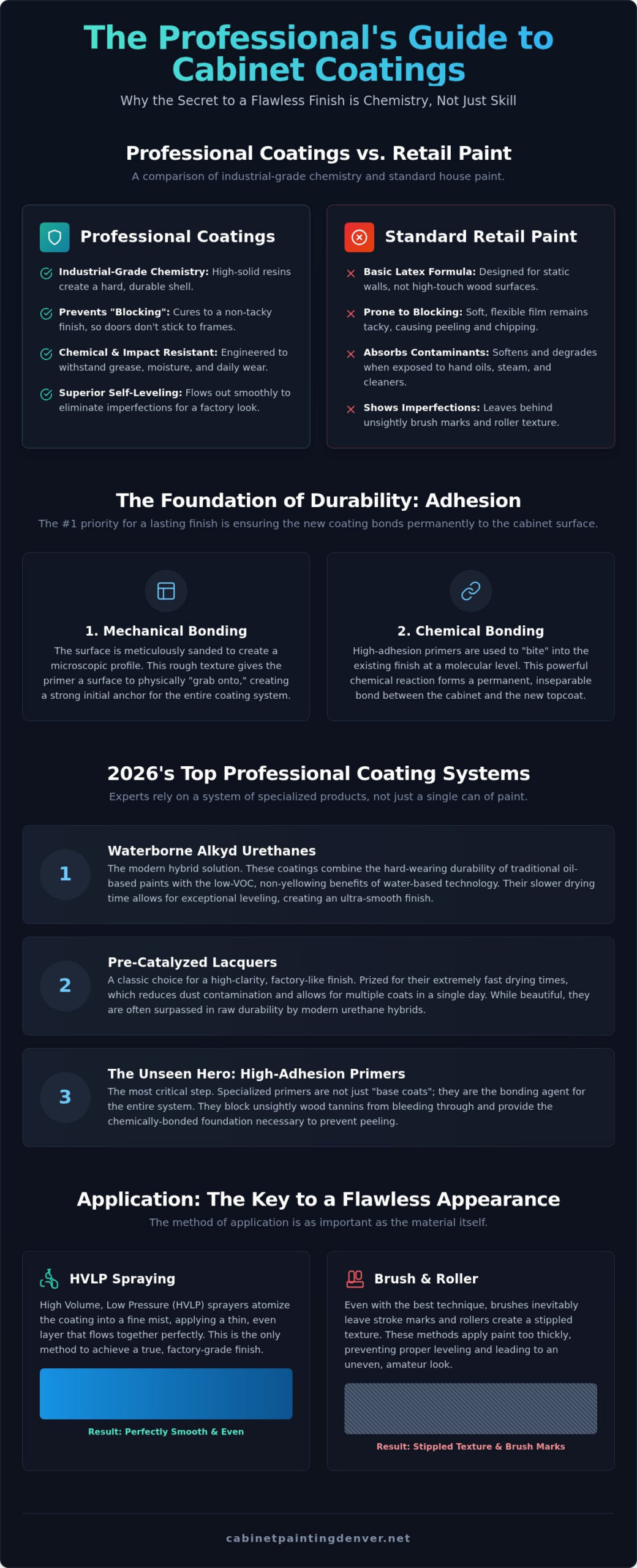
Standard latex paint is designed for drywall, not high-traffic wood surfaces. If you ask what kind of paint is used on kitchen cabinets professionally, you’ll find that experts rely on industrial coatings rather than retail-grade wall paint. Wall paints are formulated to be flexible enough to bridge small cracks in drywall. However, this flexibility makes them too soft for cabinets. When you use soft paint on a vertical surface that gets touched dozens of times a day, it quickly becomes tacky and attracts dirt.
Professional coatings utilize a higher volume of solids and specialized resins to create a rigid, durable shell. While the basic components of paint include pigments, binders, and solvents, the specific chemistry of professional cabinet finishes creates a much harder film once cured. This hardness prevents a phenomenon known as "blocking." Blocking occurs when the painted surface of a cabinet door sticks to the frame after being closed. In many DIY projects using standard paint, the doors will eventually peel the paint off the frames because the coating never truly hardens.
The Physics of Kitchen Cabinet Wear
Kitchens are harsh environments. Cabinets face constant exposure to hand oils, steam, and cleaning chemicals that would soften and degrade standard acrylic paint. Professional coatings are chemically engineered to resist these contaminants. They also offer superior impact resistance. When a heavy pot bumps a cabinet, a professional finish is designed to withstand the hit without chipping or cracking. High-performance leveling is also essential. Professional materials have a specific viscosity that allows the paint to "flow out" after application, which eliminates surface imperfections and creates a smooth, non-porous surface that is easy to wipe clean.
Why Adhesion is the #1 Priority
The most difficult part of cabinet refinishing is ensuring the new coating sticks to the old one. Most cabinets have a factory-applied clear coat or a deep wood stain that repels new paint. Professionals don’t just rely on the paint itself; they use a combination of mechanical bonding and chemical bonding. Mechanical bonding involves sanding the surface to create a microscopic profile for the paint to grab. Chemical bonding occurs when specialized primers bite into the existing finish at a molecular level. Adhesion is the chemical and physical attraction between the coating and the cabinet substrate that prevents the finish from lifting or peeling over time. Understanding what kind of paint is used on kitchen cabinets professionally helps homeowners see why these industrial materials are necessary for a result that lasts for years rather than months.
Top 3 Professional Cabinet Coatings Used by Experts in 2026
When determining what kind of paint is used on kitchen cabinets professionally, it’s clear that industry experts prioritize chemical resistance over ease of application. Unlike the products found in local paint stores, professional cabinet coatings are industrial-grade materials that require specialized HVLP (High Volume, Low Pressure) spraying equipment. These coatings also demand rigorous personal protective equipment (PPE), including organic vapor respirators, because of their high performance and chemical composition. The transition from standard paint to these specialized finishes is what creates the "factory" look that DIY methods cannot replicate.
Pre-catalyzed lacquers remain a staple for professionals seeking a classic, high-clarity factory look. These finishes are valued for their incredibly fast drying times, which allows painters to apply multiple coats in a single day while minimizing the risk of dust contamination. While they provide a beautiful aesthetic, they are often surpassed in durability by modern hybrids and multi-component systems.
Waterborne Alkyd Urethanes: The Modern Hybrid
Waterborne alkyd urethanes represent the bridge between traditional oil-based durability and modern environmental standards. These coatings utilize an oil-based resin suspended in a water carrier. This hybrid structure allows the paint to flow out and level smoothly, mimicking the look of a fine oil finish without the high VOC levels or yellowing associated with older solvent-based paints. Because they dry more slowly than lacquers, they have more time to "level," which helps eliminate surface imperfections. They’re an excellent choice for residential environments where homeowners are concerned about air quality but still demand a finish that is significantly harder than standard acrylic paint.
2K Polyurethanes: The Industrial Powerhouse
If you want the absolute highest level of protection, 2K (two-component) polyurethanes are the gold standard. These products consist of a base coating and a separate chemical hardener or catalyst. When mixed, a chemical reaction occurs called cross-linking. This process creates a molecular bond that is far stronger than the physical bond of drying paint. The result is a finish with unmatched resistance to heat, moisture, and household acids like vinegar or lemon juice. This is why understanding what kind of paint is used on kitchen cabinets professionally is so important for homeowners who want a long-term solution. This coating is the closest you can get to the original finish on high-end, brand-new cabinetry. For those seeking this level of durability, choosing professional cabinet painting ensures the material is applied correctly with the right catalysts and spray settings.
Comparing Solvent-Based vs. Water-Based Industrial Finishes
Historically, the choice between solvent and water-based finishes was a trade-off between durability and safety. Solvent-based lacquers were the industry standard because they cured to an extremely hard film and offered a depth of color that water-based options could not match. However, as 2026 regulations tighten, the industry has seen a massive technological leap. When homeowners ask what kind of paint is used on kitchen cabinets professionally today, the answer is increasingly high-performance waterborne industrial coatings. These modern formulations now rival the hardness of solvents while providing better color stability. Solvent-based products are prone to "ambering," a process where the finish yellows over time. Water-based coatings remain crystal clear; they are the superior choice for the bright whites and cool grays currently trending in kitchen design.
Turnaround time is another factor in material selection. Solvent-based finishes dry almost instantly, allowing for rapid recoating. While water-based coatings traditionally required longer wait times, 2026 industrial versions have shortened this window significantly. This efficiency reduces the total downtime for your kitchen, allowing for a faster re-installation process. Choosing the right material ensures the project stays on schedule without sacrificing the final quality.
Durability and Chemical Resistance Standards
Professional coatings must meet rigorous standards set by the Kitchen Cabinet Manufacturers Association (KCMA). These tests involve exposing the finish to common household substances, such as vinegar, lemon juice, and coffee, for several hours to ensure no staining or softening occurs. Modern 2K waterborne finishes are the top choice in 2026 because they provide the chemical resistance of traditional solvents without the hazardous off-gassing. These coatings utilize chemical cross-linking to create a surface that is virtually impenetrable by standard kitchen oils and acids.
VOCs and Environmental Impact in the Home
The primary advantage of water-based systems is the reduction of Volatile Organic Compounds (VOCs). Managing fumes during the cabinet painting process is much simpler with waterborne materials. These low-VOC options are safer for families and pets, as they do not release the harsh odors associated with traditional lacquers. Experts still use professional ventilation and containment strategies, such as plastic shielding and high-powered exhaust fans, to ensure a clean environment. This procedural clarity ensures that the air quality in your home remains safe while achieving a factory-quality finish. Understanding what kind of paint is used on kitchen cabinets professionally helps homeowners prioritize both the longevity of their kitchen and the health of their living space.
The Essential Role of Professional-Grade Primers and Sealers
Professional painters recognize that the primer is actually more important than the topcoat for long-term success. While the topcoat provides the aesthetic finish, the primer ensures that the coating stays attached to the substrate. If you want to know what kind of paint is used on kitchen cabinets professionally, you must first understand the role of specialized primers. These materials are engineered to solve specific problems, such as adhesion to high-gloss surfaces or blocking chemical bleed-through from the wood. Without the correct foundation, even the most expensive industrial topcoat will eventually fail.
Shellac-based primers are the ultimate "stain killers" in the industry. They are particularly effective on oily woods or cabinets with existing dark stains. For surfaces like laminate or thermofoil, professionals use bonding primers. These are specifically engineered to create a chemical link to non-porous surfaces that would otherwise repel paint. Additionally, high-build primers are essential for homeowners who want to hide the heavy grain of oak or ash cabinets. These thicker coatings fill the deep pores of the wood, creating a level surface for the final spray application.
Blocking Tannins and Stains
Tannin bleed is a common issue where the natural oils and acids in wood, like oak or cherry, seep through the paint. This often results in unsightly yellow or brown spots on white cabinets. Shellac-based primers create a permanent, non-porous barrier that wood oils cannot penetrate. Using standard water-based primers on raw wood or old stains is a significant risk. Because water-based primers are "breathable," they often pull the tannins to the surface, ruining the final look before the project is even finished. High-performance primers ensure that what kind of paint is used on kitchen cabinets professionally remains true to its original color for years.
Creating a Mechanical Bond
Achieving a factory-grade finish requires more than just spraying; it requires a physical connection to the surface. Professionals perform a "scratch test" to verify primer adhesion before applying the final topcoat. This involves applying a small amount of primer, letting it cure, and then attempting to scratch it off. If it holds, the surface is ready. Between every coat of primer and paint, experts perform detailed sanding to remove any microscopic imperfections. This process is a core part of professional cabinet refinishing, ensuring the final texture is as smooth as glass. To get started with a durable transformation, you can request a quote from Cabinet Painting Denver.
Achieving a Factory Finish with Cabinet Painting Denver
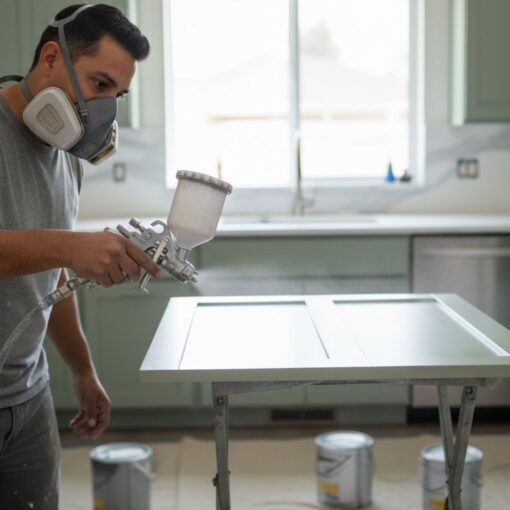
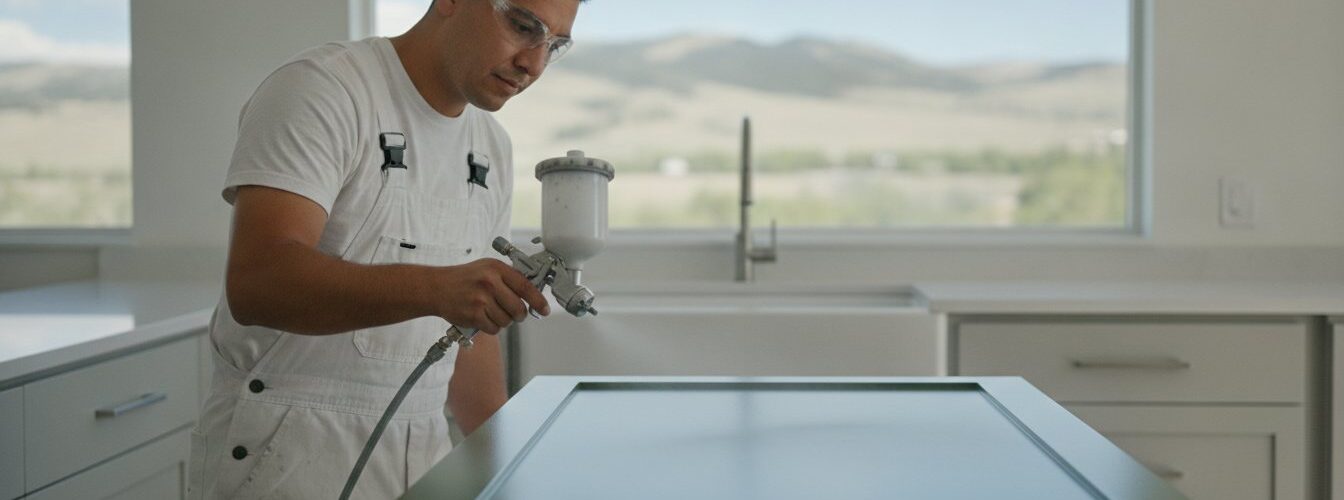
Understanding what kind of paint is used on kitchen cabinets professionally provides the foundation for a successful project; however, the application technique determines the final quality. Even the highest-grade 2K polyurethane will look subpar if applied with a brush or a standard retail sprayer. At Cabinet Painting Denver, we utilize High Volume, Low Pressure (HVLP) spraying systems. This technology allows for a micron-thin, perfectly even layer of material that levels out to a glass-smooth surface. Unlike brushes or rollers, HVLP spraying eliminates texture and ensures every corner and crevice receives consistent coverage. This method is the only way to achieve a true factory finish that rivals brand-new cabinetry.
Our workflow is designed to maximize durability and minimize disruption. We remove all doors and drawer fronts and transport them to our specialized facility for refinishing. The cabinet frames remain in your home, where they are meticulously prepared and sprayed using the same industrial-grade materials. This two-part approach ensures that the most visible parts of your kitchen are treated in a sterile environment, while the on-site work is handled with professional containment and ventilation. A Cabinet Painting Denver project offers a level of resilience that DIY attempts cannot match, specifically tailored to withstand the variable climate and high-use demands of Colorado kitchens.
Our Specialized Spraying Process
The doors and drawers are refinished in a controlled spray booth. This environment is essential for preventing dust, pet hair, or airborne debris from settling into the wet coating. Because we use professional-grade equipment, we can apply thicker, more durable layers of material without the risk of sags or runs. This controlled application allows the resins to bond effectively, creating a hard shell that resists chipping and scratching. The result is a non-porous finish that is significantly easier to clean than standard painted wood.
Why Professional Application Matters
DIY cabinet painting often leads to common pitfalls like "orange peel" texture, visible brush marks, or uneven color density. These issues occur when the paint is applied too thick or when the equipment is not calibrated correctly. Professional application eliminates these risks through procedural clarity and technical expertise. We take full accountability for the final result, providing a level of finish that is both beautiful and functional. If you are ready for a factory-quality transformation, get a free cabinet painting quote in Denver today. Choosing an expert ensures your kitchen cabinets look professionally manufactured rather than simply repainted.
Invest in a Lasting Kitchen Transformation
Achieving a durable cabinet transformation requires more than standard house paint. Understanding what kind of paint is used on kitchen cabinets professionally allows you to choose materials that offer industrial-grade resistance to grease and moisture. By selecting high-performance 2K coatings and shellac-based primers, you ensure a chemical bond that standard retail products simply cannot provide. These advanced materials create a hard, resilient shell that resists the daily wear and tear of a busy kitchen environment.
Cabinet Painting Denver provides local expertise in these specialized finishes. Our team utilizes advanced HVLP spraying technology to deliver a glass-smooth surface that is free of brush marks and imperfections. We combine technical knowledge of industrial-grade 2K coatings with a transparent, professional process designed for the unique needs of Denver homeowners. It’s time to move beyond the limitations of DIY and secure a lasting, factory-quality result for your home. Ready to revitalize your space? Get Your Free Professional Cabinet Painting Quote in Denver today and experience the difference of a professional industrial finish.
Frequently Asked Questions
Is professional cabinet paint different from standard retail paint?
Professional cabinet coatings are fundamentally different from the products found at large retail outlets. While standard retail paints are designed for drywall flexibility, professional coatings use industrial-grade resins and higher solids content to create a much harder film. These materials are specifically engineered for high-touch vertical surfaces. They provide superior resistance to hand oils and cleaning chemicals, ensuring the finish does not soften or peel like standard house paint often does.
Can I use Sherwin Williams Emerald Urethane for a professional finish?
Sherwin Williams Emerald Urethane is a high-quality hybrid paint popular for DIY projects due to its self-leveling properties. However, it is not the same as the industrial-grade 2K polyurethanes used for a true factory finish. While it performs better than standard latex, it lacks the extreme chemical cross-linking of professional-only materials. Professionals typically prefer coatings that require a separate catalyst to ensure the hardest, most durable surface possible for long-term kitchen use.
What is 2K paint for cabinets and why is it recommended?
2K paint refers to a two-component coating system consisting of a base resin and a chemical hardener or catalyst. When mixed, these components create a chemical reaction called cross-linking, which forms a molecular bond much stronger than traditional drying. This is what kind of paint is used on kitchen cabinets professionally when the goal is maximum durability. It is recommended because it provides unmatched resistance to heat, moisture, and common household acids like vinegar or lemon juice.
Do professionals use oil-based or water-based paint for cabinets?
Most professionals have transitioned to high-performance waterborne industrial coatings by 2026. Traditional oil-based paints were once the standard for hardness, but they tend to yellow over time and release high levels of VOCs. Modern waterborne alkyd urethanes and 2K water-based polyurethanes offer the durability of oil without the environmental or health risks. These coatings stay color-true, ensuring that white cabinets remain bright white for years without ambering or fading.
How long does professional cabinet paint take to fully cure?
While professional coatings are often dry to the touch within hours, the full curing process typically takes between seven and thirty days. During this time, the chemical cross-linking continues to harden the film to its maximum strength. Homeowners should handle their cabinets with extra care during the first week of use. Avoid using harsh cleaning chemicals or scrub brushes until the material has reached its full industrial hardness to prevent surface marring or indentations.
Why do my painted cabinets feel sticky and how do pros avoid this?
Sticky cabinets are usually the result of "blocking," where soft latex paint fails to harden completely and bonds to the frame when closed. Professionals avoid this by using industrial coatings with high block resistance and specific resin types that dry to a hard, non-tacky finish. Proper preparation and the use of specialized primers also ensure that the paint bonds correctly to the wood rather than remaining soft on the surface of the old finish.
What is the most durable finish for kitchen cabinets in 2026?
In 2026, 2K polyurethane is widely considered the most durable finish for kitchen cabinets. This coating system is engineered to withstand rigorous KCMA testing standards, including resistance to moisture, impact, and chemical exposure. It creates a factory-quality shell that is essentially a new surface for your wood. Understanding what kind of paint is used on kitchen cabinets professionally helps homeowners see why this multi-component system is the gold standard for high-traffic residential kitchens.
Do I need to strip my cabinets before a professional paints them?
You generally do not need to strip the existing finish down to raw wood. Professionals use a detailed preparation process that involves thorough cleaning to remove grease, followed by mechanical sanding to create a profile for the new coating. They then apply specialized bonding primers designed to adhere to old stains or factory clear coats. This approach creates a permanent bond without the messy process of chemical stripping, provided the original finish is still structurally sound.