A white kitchen is one of the most requested looks in Arvada and Wheat Ridge, and spraying is how that smooth, factory-style surface gets made. The question homeowners ask before approving the work is simple: how long will it actually last before the finish starts looking tired? The honest answer depends on a handful of factors, some of which you control completely and some of which come down to how your household lives in the kitchen.
The Short Answer on Lifespan
Professional maintenance guidance puts a well-applied painted cabinet finish in a fairly narrow band. In a lightly used space such as a bathroom vanity, the coating can hold 12 to 15 years or more. A moderate-use kitchen tends to land around 10 to 12 years. A busy family kitchen, where doors and drawers open all day and steam and grease are part of the routine, usually looks ready for a refresh somewhere in the 8 to 10 year range.
| How the space is used | Realistic lifespan with proper care |
|---|---|
| Low-use space, such as a bathroom vanity | 12 to 15+ years |
| Moderate-use kitchen | 10 to 12 years |
| High-use family kitchen | 8 to 10 years |
You will also see wider numbers in circulation. One refinishing company quotes a 5 to 10 year range for kitchen resprays, with the caveat that the span depends on the factors and how hard the space is used. That spread is not really a debate about paint chemistry. It reflects how differently projects are prepped and sprayed. A coating applied over a degreased, sanded, and primed surface behaves nothing like one sprayed over years of kitchen grease.
Why a Sprayed Finish Behaves Differently
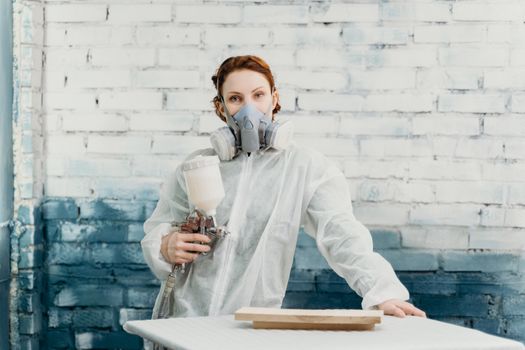
Spraying delivers paint as a fine, even mist instead of pushing it around with a brush or roller. That is how cabinets end up with a flat, smooth face and no brush marks, and it is also why a sprayed white kitchen reads as factory-made rather than hand-painted. Painters who spray for a living describe their coating systems as super durable, and the durability comes from the pairing of an even film with a hard, well-bonded surface.
An even film matters for longevity because thin and thick spots age at different rates. A heavy, thick coat traps moisture and can take hours longer to harden than a light mist coat. Uneven films tend to fail first at the edges, corners, and door faces that get touched most. Controlled spray passes keep the coating closer to uniform across a whole cabinet run, which means the finish wears out evenly rather than in patches.
What Actually Sets the Lifespan
Four things decide whether your white cabinets still look sharp in year eight or start collecting chips in year four.
Prep work is most of the answer
Painting cabinets is a multi-day job precisely because prep cannot be rushed. Degreasing, sanding, repairing dings, and priming so the topcoat has something to grab onto take as much time as the spraying itself. Cabinet painting as a whole involves 24 to 72 hours of drying time built into the schedule, and that is on top of the surface work. Skip the prep and even a premium coating will eventually lift.
The coating system matters more than the color
White is white. What sits under and above the pigment is where durability lives. The coating system is one of the variables professionals point to first when explaining how long a sprayed finish holds up, and it is the reason two kitchens painted the same shade can age very differently.
How hard the kitchen works
Door fronts near the dishwasher, the cabinet under the sink, and the drawers that get yanked a dozen times a day all take more abuse than a display cabinet in a dining room. A household that cooks three meals a day will always wear through a finish faster than one that orders in most nights. This is why the same coating can be an 8 year finish in one home and a 12 year finish in another.
Daily cleaning habits
Abrasive pads, solvent-heavy sprays, and scrubbing at stuck-on grease dull a sprayed topcoat over time. Gentle cleaning protects the film and keeps the sheen consistent from door to door.
Dry Time, Cure Time, and Service Life Are Not the Same Thing
Homeowners often mix these three timelines together, which makes the longevity question feel more complicated than it is. A cabinet that is dry to the touch is not yet cured, and a cured cabinet is not the same as a worn-out one.
| Milestone | Typical timeline |
|---|---|
| Dry to the touch (overall painting and drying window) | 24 to 72 hours |
| Full cure, latex-based coating | 1 to 2 weeks |
| Full cure, oil-based coating | Up to a month |
| Professional project on site | 3 to 5 days, plus curing afterward |
Most professional cabinet projects run three to five days on site, with additional curing time afterward before the coating reaches full hardness. That final hardening stage is what determines how resistant the finish is to fingernails, keys, and the corner of a cast iron pan, so the weeks after installation matter as much as the installation itself.
The First Month Sets Up the Next Decade
A freshly sprayed set of white cabinets is still developing its full hardness during the cure window. Treat that period like a break-in phase. Keep heavy items off the shelves, avoid dragging appliances across door fronts, and handle the edges of doors gently when you open them. Households that baby the finish for the first few weeks tend to get far more years out of it than households that treat day one like day one hundred.
Temperature and humidity inside the home affect how quickly the coating hardens too. A thick coat holds moisture longer and takes more hours to reach a hard film, which is part of why spraying in light passes beats flooding the surface. If your home is unusually humid or unusually cold during the project, expect the cure clock to run a little slower.
Care Routines That Add Years
- Wipe door fronts and drawer faces with a soft, damp cloth rather than an abrasive sponge.
- Address grease splatter near the range promptly instead of letting it bake on.
- Use mild cleaning products and avoid solvent-heavy sprays on the coating.
- Keep cabinet doors from slamming, since repeated impact stresses hinges and edges.
- Touch up small chips early, before moisture gets behind the film.
- Run the range hood when cooking to limit airborne grease settling on the finish.
When a Refresh Makes More Sense Than a Repair
Small chips and scuffs can be repaired and blended, especially on a white finish where color matching is straightforward. Once a finish shows widespread wear along door edges, yellowed or dulled faces, or peeling near the sink and dishwasher, patching becomes a losing game. At that point the coating has reached the end of its service life and a fresh spray is the more sensible spend.
For most Arvada and Wheat Ridge homeowners, the decision point arrives somewhere around the eight to twelve year mark, sooner in a hard-working family kitchen and later in a lightly used one. If your cabinets were sprayed over a properly prepped surface with a quality coating, you are likely closer to the top of that range than the bottom.
Getting a Realistic Estimate for Your Own Kitchen
No article can tell you exactly how many years your specific cabinets will hold up, because the answer depends on the condition of the wood, the prep the surface receives, the coating used, and how your household cooks and cleans. A sprayed finish backed by a three-year workmanship warranty gives you a concrete baseline to measure against, and an on-site consultation lets a painter assess the doors, frames, and wear patterns in your actual kitchen before quoting the job.
Frequently Asked Questions
How long does sprayed white cabinet paint last in Arvada and Wheat Ridge?
Plan on roughly 8 to 12 years in most homes, with low-use spaces reaching 12 to 15 years or more and busy family kitchens landing closer to 8 to 10. The variables are prep quality, the coating system, and how much traffic the doors and drawers see.
How soon can I use my cabinets after spraying?
The painting process includes 24 to 72 hours of drying time, and most professional projects run three to five days on site. Full cure takes one to two weeks with a latex-based coating and up to a month with an oil-based one, so light use comes well before full hardness.
Is sprayed paint more durable than brushed paint?
Spraying produces a more even film, and an even film wears at a consistent rate instead of failing at thin spots. Painters who spray professionally describe their coating systems as super durable. The bigger factor is still surface prep, since neither method holds up over grease or a poorly bonded primer.
What makes white cabinet paint fail early?
Rushed prep is the usual culprit, followed by thick, heavy coats that trap moisture and take hours longer to harden. Abrasive cleaners, grease left to build up near the range, and slamming doors all shorten the life of a finish that would otherwise last a decade.
Can painted cabinets be repainted later?
Yes. A sprayed finish that has reached the end of its service life can be resprayed once the old surface is cleaned, sanded, and prepared for a new coat. That is one reason refinishing remains a practical cycle rather than a one-time project for most kitchens.