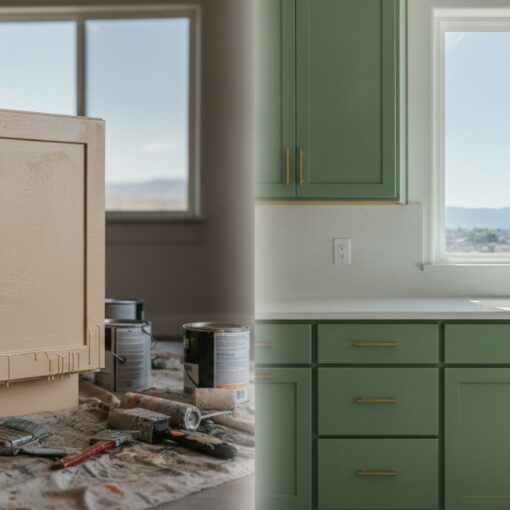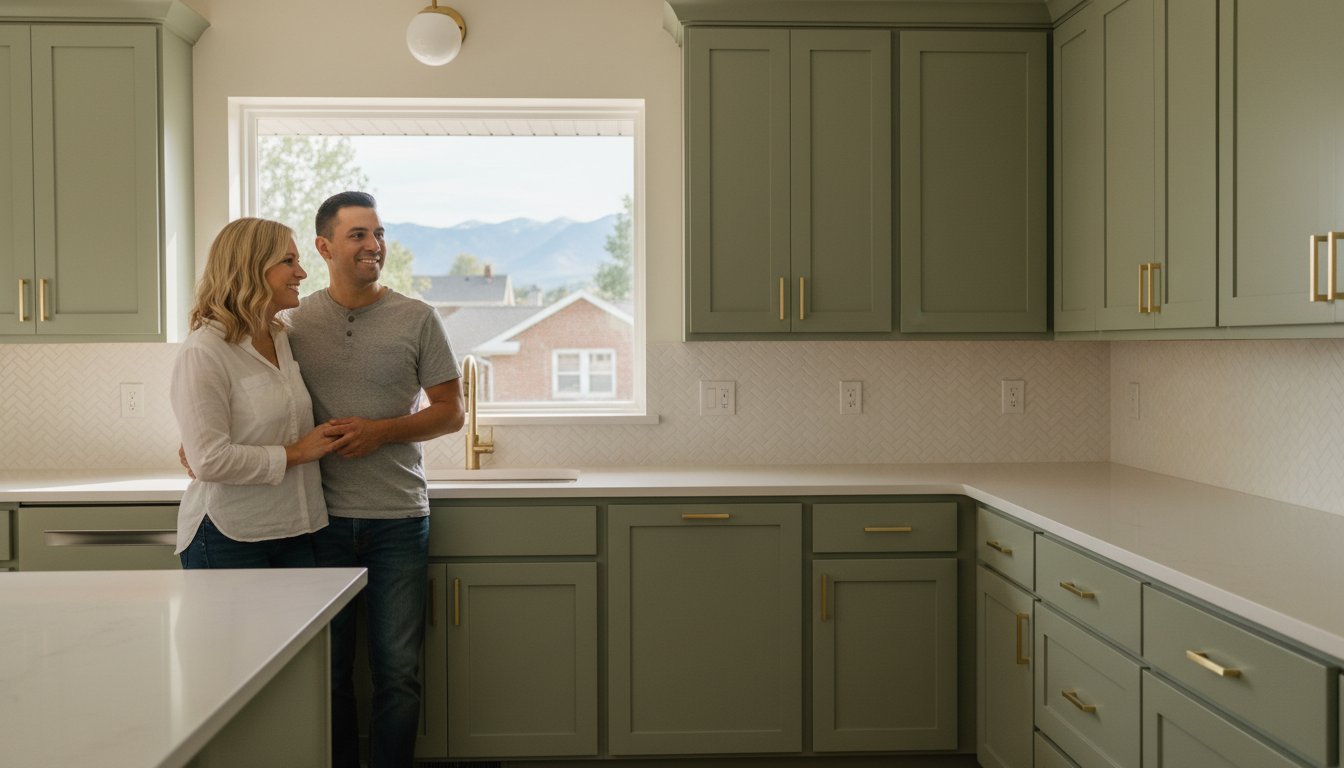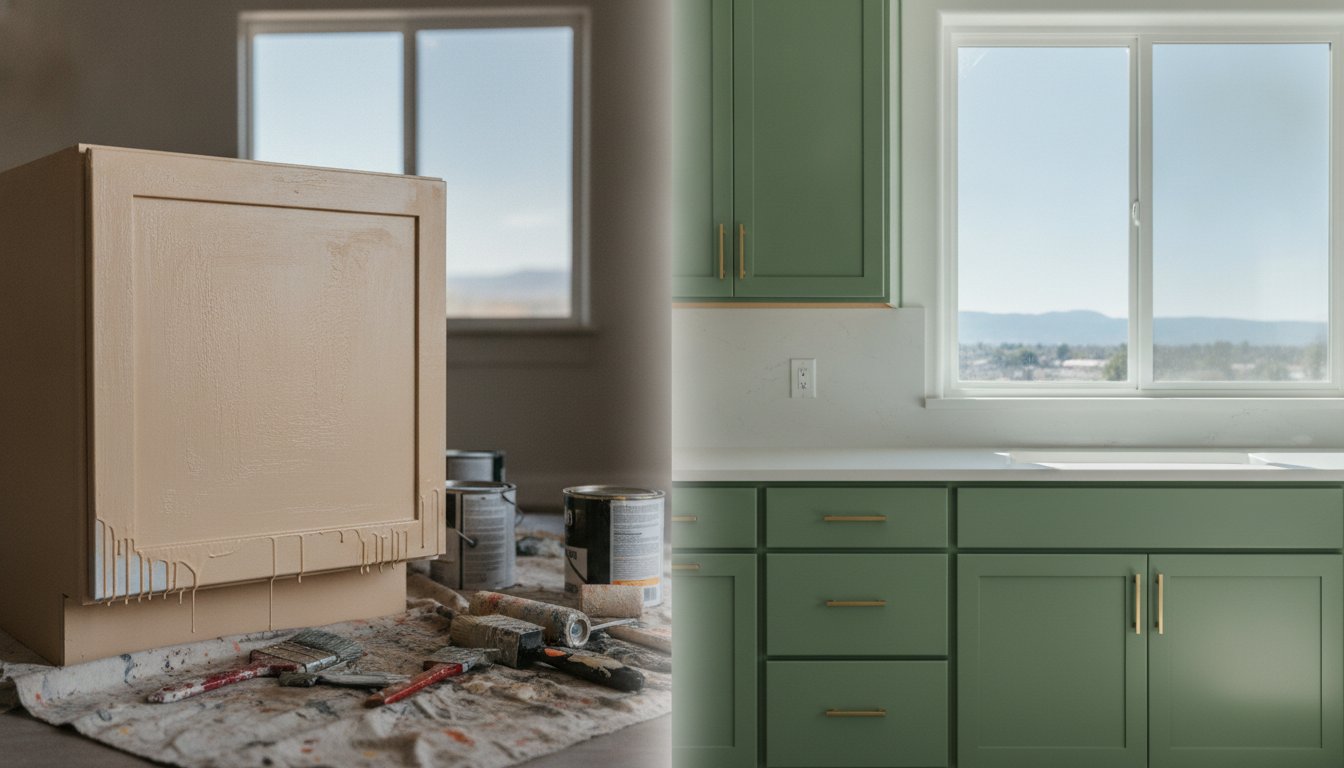
Nearly 65% of Colorado households own pets, which makes animal safety a primary requirement for any local home renovation. You likely want to update your home with professional Kitchen Cabinet Painting, but you’re probably concerned about VOC-related respiratory issues or fine sanding dust entering your HVAC system. It’s stressful to manage a kitchen update while worrying if your dogs or cats will lick wet paint or breathe in lingering fumes during the curing phase.
This guide outlines a professional pet-safe cabinet painting process that achieves a factory-grade finish while keeping your pets 100% safe. We’ll explain how a specialized “Shop-First” workflow removes the most hazardous phases of the project from your home to maintain strict indoor air quality. You’ll also receive a clear timeline for when it’s safe for your pets to return to the kitchen, ensuring a beautiful result without any health risks. This approach prioritizes procedural clarity and transparency so you can plan your household schedule with confidence.
Key Takeaways
- Understand why pets require higher safety standards due to their proximity to the floor and faster breathing rates compared to humans.
- Learn how a professional pet-safe cabinet painting process utilizes HEPA-filtered sanding and off-site spraying to eliminate in-home airborne toxins.
- Identify the specific low-VOC and Green-Guard Gold certified finishes that provide a durable surface without harmful off-gassing.
- Discover how to establish effective pet-free zones and manage household logistics during the most intensive phases of a kitchen or bathroom cabinet painting project.
- Gain a clear timeline for when it’s safe to reintroduce your animals to the kitchen following the final application and curing phase.
Understanding the Risks: Is Cabinet Painting Safe for Pets?
A professional pet-safe cabinet painting process involves more than choosing a specific label at the hardware store. It is a comprehensive methodology designed to minimize exposure to Volatile Organic Compounds (VOCs) and fine particulate matter. In the context of a high-quality kitchen update, safety is defined by how well a contractor contains and removes environmental hazards from your home during the project.
To better understand this concept, watch this helpful video:
Animals are significantly more vulnerable to chemical exposure than humans. Their smaller lung capacity and faster respiratory rates mean they inhale a higher volume of toxins relative to their body weight. Because many paint fumes are heavier than air, these gases concentrate near the floor where pets live and sleep. A professional process must account for three primary hazards:
- VOC off-gassing from drying finishes during the curing phase.
- Microscopic sanding dust that escapes standard household vacuums.
- Direct contact with wet surfaces or toxic cleanup solvents.
By 2026, simply using “low-VOC” paint is no longer the industry standard for safety. Modern protocols require complete airborne management through HEPA filtration and off-site processing. This ensures your Kitchen Cabinet Painting project doesn’t compromise the air your family breathes.
The Danger of VOCs and Off-Gassing
Traditional oil-based products release high levels of chemicals as they dry. This process can trigger respiratory distress in dogs and cats, manifesting as heavy panting, coughing, or lethargy. Birds require extreme caution. Their unique respiratory systems make them susceptible to even trace amounts of airborne irritants. A pet-safe approach eliminates these risks by utilizing modern waterborne acrylic alkyds that meet strict Colorado VOC limits.
Ingestion and Contact Risks
Pets are naturally curious and often investigate new smells by licking or sniffing closely. Wet cabinet bases present a direct risk of ingestion, while the solvents used to clean traditional brushes are highly toxic to animal livers. Off-gassing is the steady release of chemical vapors into the air as the finish reaches its final hardness. Using a pet-safe cabinet painting process ensures these vapors are managed through proper ventilation and superior product selection.
Our 5-Step Pet-Safe Cabinet Painting Process
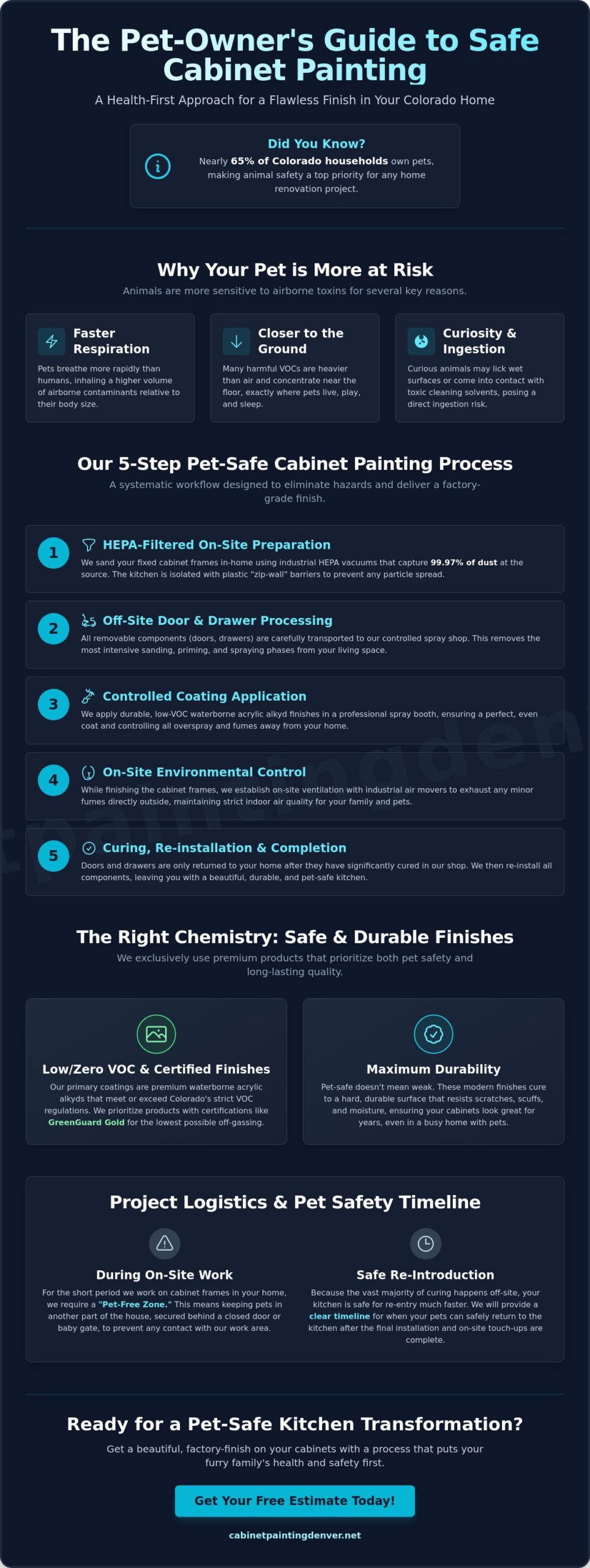
A transparent pet-safe cabinet painting process relies on a sequence of controlled actions. We don’t simply apply paint over your existing surfaces; we follow a procedural framework designed to eliminate household hazards. This five-step method ensures your animals remain unaffected by the project while we achieve a factory-grade finish.
- Step 1: HEPA-Filtered Preparation: We sand cabinet frames using industrial vacuum systems to capture 99.97% of particulates at the source.
- Step 2: Off-site Logistics: All doors and drawers are removed and transported to a controlled spray booth for processing.
- Step 3: Coating Application: We utilize industrial-grade waterborne acrylic alkyds that meet Colorado’s strict VOC regulations.
- Step 4: Environmental Control: We establish on-site ventilation and localized “bubble” containment for the remaining fixed frames.
- Step 5: Completion and Re-installation: Components return to your home only after they’ve reached a safe curing stage.
Industrial Dust Extraction and Containment
Fine sanding dust is a significant respiratory irritant for animals. We utilize Festool HEPA-certified vacuum systems during the preparation of cabinet frames to prevent dust from settling on floors or furniture. Our team installs plastic “zip-wall” barriers to isolate the kitchen from the rest of your home. This containment strategy is essential because the health effects of VOCs and airborne particulates are more pronounced in pets than in humans. We also seal all HVAC intake and outtake vents in the work area. This prevents dust from entering your central air system and circulating through other rooms.
The ‘Shop-First’ Advantage for Safety
The most effective way to ensure a pet-safe cabinet painting process is to remove the work from the home entirely. Approximately 70% of the total surface area of your cabinets consists of doors and drawers. We process these components in our off-site spray booth rather than in your kitchen. This “shop-first” approach reduces the total volume of paint fumes in your home by over two-thirds.
While the doors are in our facility, they receive an industrial finish in a dust-free environment. They remain in the shop until the coating is fully cured and no longer off-gassing. This means your pets aren’t exposed to the most intensive phase of the project. If you’re planning a kitchen cabinet painting update, this off-site workflow provides the highest level of safety for your furry family members. We only bring the finished products back once they are inert and safe for contact.
Choosing the Right Products: Low-VOC and Pet-Friendly Finishes
Selecting the correct coating is a technical requirement of a professional pet-safe cabinet painting process. Traditional oil-based paints rely on high-solvent formulations that release hazardous vapors during both application and drying. Modern waterborne acrylic alkyds provide a superior alternative. These products offer the hardness of oil with the safety profile of water, ensuring your cabinets remain durable without compromising indoor air quality.
We prioritize coatings with Green-Guard Gold certification. This standard ensures that a product meets rigorous chemical emissions limits for over 360 VOCs. It’s a critical benchmark for households with pets because animals spend more time indoors and live closer to painted surfaces. The EPA provides extensive data on the dangers of VOCs in paint, emphasizing the need for proper product selection to prevent respiratory issues. For a detailed breakdown of the specific formulas we utilize, you can read our guide on the best paint for cabinets.
Waterborne vs. Solvent-Based Coatings
Waterborne coatings eliminate the need for harsh thinners like mineral spirits or turpentine during the cleanup phase. This significantly reduces the toxic load within your Denver home. Old-school solvent paints carry a heavy chemical odor that can linger for several weeks. Modern waterborne alternatives are low-odor and reach a safe state much faster. For clarity on safety, the flash point of a waterborne coating is virtually non-existent because the primary carrier is water, making these products non-flammable and safer for residential environments.
Scratch Resistance for Active Pets
Durability is a fundamental safety feature for any pet owner. High-quality finishes must withstand the physical activity of dogs or cats that may paw at cabinet doors. If a finish is too soft, it can chip easily, which creates a risk of ingestion. Our industrial-grade topcoats create a hard, cross-linked bond that resists scratching and common household cleaners. This ensures the pet-safe cabinet painting process results in a surface that remains intact even with active animals in the house. You can find more information on how these finishes protect your investment in our cabinet refinishing guide.
Home Logistics: Managing Your Pets During the Project
A successful pet-safe cabinet painting process requires active coordination between the homeowner and the professional team. While we handle the technical containment, you must manage your pet’s movements to prevent accidental contact with wet surfaces. Establish a “Pet-Free Zone” using sturdy baby gates or temporary barriers before work begins. This prevents dogs or cats from entering the kitchen and disturbing the localized containment areas while the coatings are in their most vulnerable state.
Prepare for “Sanding Day” as the most intensive phase of the project. It’s the loudest and dustiest part of the process. Even with our HEPA-filtered vacuum systems, the sound of industrial machinery can cause anxiety in sensitive animals. We recommend keeping your pets in a far room or at a local daycare during these hours to minimize stress. This separation ensures they aren’t startled by the activity or tempted to investigate the equipment.
Ventilation Strategies for Denver Homes
Denver’s environment offers unique advantages for air quality management. We recommend using box fans in windows to create negative pressure. This setup pulls air out of the kitchen and exhausts it directly outside, preventing any stray odors from drifting into the rest of the home. Denver’s low humidity levels are highly beneficial for our waterborne paints. They allow the finish to cure faster than in coastal climates, which reduces the duration of any detectable fumes. Running an air purifier equipped with a carbon filter in adjacent rooms provides an extra layer of protection for your pets.
The ‘Safe-to-Return’ Checklist
Determining when it’s safe for pets to re-enter the kitchen is a procedural step. Don’t rely on visual cues alone. Follow this checklist before removing your barriers:
- Perform a “sniff test” to ensure no chemical odors remain in the air.
- Verify that all cabinet bases are no longer tacky to the touch.
- Wait at least 4 to 6 hours before allowing dogs to walk through the kitchen space.
- Wait 24 to 48 hours before allowing cats to jump onto painted counters or bookshelves.
- Mop the floors with a pet-safe cleaner to remove any micro-dust that may have settled outside the containment zone.
Managing these logistics ensures your kitchen update proceeds without health incidents for your furry family members. If you’re ready to start your project with a team that understands these requirements, contact us for professional Kitchen Cabinet Painting services that prioritize your pets’ safety.
Why Cabinet Painting Denver is the Safest Choice for Your Furry Family
Cabinet Painting Denver prioritizes the safety of your animals through rigorous procedural standards. We understand that a kitchen transformation shouldn’t come at the cost of your pet’s health. Our team follows a structured protocol that eliminates the risks associated with traditional painting methods. This commitment to a pet-safe cabinet painting process ensures a factory-grade finish while maintaining a toxin-free environment in your home. You can see the results of our specialized approach by visiting our Denver cabinet painting gallery. We focus on delivering high-end results for Kitchen Cabinet Painting and Bathroom Cabinet Painting with zero health incidents for your pets.
Our local expertise in the Denver market allows us to manage projects with full transparency. We don’t use vague safety claims. Instead, we provide a clear timeline for when it’s safe for your pets to return to the kitchen. This objective approach removes the anxiety often associated with home renovations. By choosing a specialist who understands animal physiology and local environmental factors, you protect your investment and your furry family members simultaneously.
Professional Grade Equipment
Our workflow utilizes industrial equipment designed to contain hazards at the source. We process the majority of your project components in our off-site shop. This removes chemical applications from your living space entirely. Our technicians receive specific training in procedural clarity and pet-safety awareness. This ensures every stage of the project meets high safety standards. We specialize in Kitchen Cabinet Painting, Bathroom Cabinet Painting, and Bookshelves cabinet painting. For more information on selecting the right team for your home, review our guide on hiring professional cabinet painters. Using professional-grade HEPA filtration and shop-based spraying is the only way to guarantee a truly pet-safe environment.
Get Your Free Pet-Safe Quote Today
The estimation process is straightforward for Denver residents. We provide clear documentation of our safety protocols during the initial walkthrough. We encourage homeowners to mention their specific pets so we can adjust our containment and ventilation strategies accordingly. Whether you have birds with sensitive respiratory systems or active dogs, we tailor the project timeline to fit your animal’s needs. Our team provides an objective statement of your current cabinet conditions and a direct request for the information needed to begin.
You can schedule your pet-safe cabinet painting estimate in Denver through our online portal. We maintain a functional and clear communication style from the first meeting to the final walkthrough. Your project will have a defined start date and a confirmed completion window so you can plan for your pet’s comfort. Contact us today to begin your high-end kitchen transformation with total peace of mind.
Secure a High-End Finish for Your Denver Home
Achieving a factory-grade kitchen update doesn’t require exposing your animals to toxic fumes or hazardous particulates. A transparent pet-safe cabinet painting process prioritizes procedural containment and the use of modern, waterborne industrial coatings. By processing 70% of the project in an off-site spray booth and utilizing HEPA-filtered dust extraction, we remove the most significant health risks from your living space. This methodical approach ensures your Kitchen Cabinet Painting or Bathroom Cabinet Painting project results in a durable finish without respiratory incidents.
You can now plan your renovation with confidence by following the logistics and safety standards outlined in this guide. Our team is ready to provide the technical expertise needed to protect your furry family members during every phase of the work. Request Your Free Pet-Safe Cabinet Painting Estimate to begin your custom project planning. We look forward to delivering a beautiful, safe transformation for your Denver home.
Frequently Asked Questions
Is the smell of cabinet paint harmful to dogs?
Paint odors from traditional solvent-based products are harmful because they contain high levels of VOCs. These fumes settle near the floor where dogs breathe. Exposure can lead to symptoms like coughing, sneezing, or nausea. While modern waterborne coatings have significantly lower odors, we still maintain strict ventilation protocols to ensure the air remains clean. Proper airflow is a requirement for any professional Kitchen Cabinet Painting project involving animals.
How long should I keep my cat out of the kitchen after painting?
You should keep your cat out of the kitchen for 24 to 48 hours after the final application. Cats are prone to jumping on countertops and may step in tacky paint or lick surfaces as they groom. This waiting period ensures the coating has reached a safe level of hardness. We provide a specific timeline for your home based on Denver’s current humidity levels and the product’s curing requirements.
Are water-based paints really safe for birds?
No paint is 100% safe for birds in the same room. Birds have respiratory systems that are uniquely sensitive to airborne irritants. Even water-based coatings with low VOC levels can pose a risk if birds remain in the immediate work area. We recommend moving birds to a different floor or a separate building for the duration of the project. This is a mandatory safety step to prevent health incidents during a Kitchen Cabinet Painting project.
What should I do if my pet licks wet cabinet paint?
You must contact your veterinarian or an animal poison control center immediately if your pet ingests wet paint. We provide the Safety Data Sheet (SDS) for all coatings used in our pet-safe cabinet painting process before the work begins. Having this document ready allows medical professionals to identify specific ingredients and provide the correct treatment. Don’t induce vomiting unless a professional specifically instructs you to do so.
Do I need to leave my house in Denver while the cabinets are being painted?
Residents typically don’t need to leave their Denver homes during the project. Our shop-first workflow involves removing doors and drawers to be sprayed in our off-site facility. This reduces in-home fumes by approximately 70%. We isolate the kitchen with plastic barriers and use HEPA-filtered dust extraction on the remaining frames. These procedural steps maintain the air quality in the rest of your living space for both humans and pets.
How do you prevent sanding dust from getting into my pet’s water bowl?
We utilize industrial vacuum systems that capture 99.97% of dust at the source to prevent particulates from spreading. We also install plastic barriers to seal the kitchen from other living areas. Despite these containment measures, you should move all pet bowls, beds, and toys to a different room. This prevents any stray micro-dust from settling on items your animal uses daily. We verify that all surfaces are vacuumed before removing our barriers.
Which paint brand is the most pet-friendly for kitchen cabinets?
We utilize industrial-grade waterborne acrylic alkyds that carry Green Guard Gold certification. This certification indicates the product meets the most rigorous standards for low chemical emissions. These coatings are specifically designed for high-traffic areas like kitchen cabinets while remaining safe for indoor environments. Our pet-safe cabinet painting process relies on these high-performance, low-VOC formulas to ensure a durable finish that doesn’t compromise your pet’s health.
Can I use an air purifier to help remove paint fumes faster?
Air purifiers are excellent tools for improving air quality during and after a painting project. You should use a unit equipped with an activated carbon filter, as standard HEPA filters don’t capture gas-phase pollutants like VOCs. Place the purifier in a room adjacent to the kitchen to help scrub the air as the paint cures. This addition supports our on-site ventilation strategies and provides extra protection for sensitive animals in the home.