
Your choice of filler is more important than your choice of paint when it comes to a professional cabinet transformation. Most DIY attempts at filling hardware holes in cabinets before painting fail because they treat the repair as a cosmetic fix rather than a chemical one. You likely understand the frustration of seeing a circular indent or ghost mark appear weeks after a project is finished. In Denver’s dry climate, wood movement often causes standard fillers to shrink or crack, which quickly ruins the appearance of your new finish.
This professional 2026 guide provides the exact materials and techniques used in high-end Kitchen Cabinet Painting to make old holes vanish completely. You will learn why two-part epoxy is the industry standard for a repair that remains stable even when new holes are drilled in close proximity. We will detail the specific steps to achieve a flawless factory finish and a permanent, smooth surface for your hardware transition. Since a minor kitchen refresh can offer a return on investment of up to 110 percent in the Mountain states, using the right methodology is essential for a durable and professional result.
Key Takeaways
- Identify why two-part chemical fillers are superior to standard wood putty for preventing the shrinkage and ghosting that often occurs in dry climates.
- Learn the professional 5-step sequence for filling hardware holes in cabinets before painting to ensure a permanent bond and a perfectly level surface.
- Understand the impact of Denver’s low humidity on wood contraction and the importance of proper cabinet acclimation before starting repairs.
- Recognize how professional equipment and specialized application techniques create the seamless, factory-quality finish required for high-end kitchen cabinet painting.
Why Invisible Repairs Matter for Professional Cabinet Refinishing
Filling hardware holes in cabinets before painting is not a simple cosmetic touch-up. It is a critical structural prep step for professional cabinet refinishing. If this step is ignored or performed incorrectly, “ghosting” occurs. This is an industry term for when a filler shrinks or expands at a rate that differs from the natural wood, leaving a visible ring or indentation under the paint. High-quality coatings cannot hide a subsurface failure; they actually highlight it.
To better understand the technical differences between various repair methods, watch this helpful video:
The “Jewelry” of the Kitchen: Hardware Relocation
Updating hardware is the most effective way to modernize a Denver kitchen. Current design trends have shifted from small, single-hole knobs to sleek, multi-inch center-to-center pulls. This transition requires drilling new holes and completely erasing the old ones. Professional filling provides the “blank canvas” necessary for a successful kitchen cabinet painting project. Without a seamless repair, the old mounting points remain visible as distracting shadows on your doors. You want the eye to focus on the new hardware, not the ghosts of the old handles.
Sprayed Finishes vs. Visible Defects
Professional results depend on the use of High Volume Low Pressure (HVLP) sprayers. While a traditional brush might hide minor surface variations within its stroke marks, a sprayed finish is thin and uniform. This level of precision reveals every bump, dip, or pinhole that wasn’t properly addressed. The Wood finishing process requires the repair to be perfectly level with the surrounding grain to ensure a consistent sheen. In open-concept Denver homes, natural light hits cabinets from multiple angles throughout the day. This lighting environment makes any poor patch job immediately obvious. Professional hole filling is the total elimination of surface imperfections to support a factory-grade finish.
Selecting the Best Filler: Wood Putty vs. Two-Part Epoxy Bondo
Choosing the right material is the difference between a repair that lasts and one that fails within months. Most DIY guides recommend standard water-based wood filler for every project. This is often a mistake for homeowners in the Denver area. Water-based fillers cure through evaporation. As the water leaves the putty, the volume of the material decreases. This shrinkage creates a visible circular indent under your new paint. For a successful project, filling hardware holes in cabinets before painting requires a material that maintains its volume throughout the curing process.
Professionals prioritize two-part chemical fillers like Bondo Wood Filler. These products consist of a resin and a hardener that you mix together immediately before application. The resulting chemical reaction creates a rock-hard bond that does not shrink. You can find that highlights why these high-performance options are necessary for structural repairs. Because epoxy-based fillers don’t rely on evaporation, they cure uniformly regardless of how deep the hole is.
Traditional Wood Filler: Pros and Cons
Traditional wood putty is best reserved for minor grain filling or tiny pinholes. It lacks the structural integrity needed to bridge a deep hardware void. If your cabinet doors experience temperature swings, these fillers can “pop” out or crack as the wood moves. While they are easy to sand and offer water-based cleanup, their lack of durability makes them a poor choice for hardware relocation. They are simply too soft to withstand the pressure of a new screw being driven nearby.
The Professional Choice: Two-Part Chemical Fillers
Two-part epoxy fillers are the gold standard in cabinets refinishing. Because they cure chemically, they are ready to sand in about 20 to 30 minutes. This speed significantly accelerates the project timeline compared to water-based options that may take hours to dry through. To use them effectively, mix small batches on a scrap piece of cardboard or a plastic lid. The material hardens quickly, so you must work efficiently to fill the holes before the resin sets. If you find the chemical mixing process too complex, you might consider reaching out to a professional cabinet painter to ensure the prep work meets factory standards.
Pros prefer epoxy because it becomes harder than the wood itself. It allows for drilling new holes right next to the old ones without the filler crumbling or losing its grip. This stability is the only way to guarantee a smooth, permanent finish in a climate known for low humidity and wood movement. By using a non-shrinking agent, you ensure that the ghost of your old hardware never reappears through the sheen of your new paint.
The Pro-Grade 5-Step Method for Filling and Hiding Cabinet Holes
Achieving a seamless look when filling hardware holes in cabinets before painting requires a disciplined mechanical process. In Denver, the “Mountain Modern” design trend often dictates a shift from traditional knobs to minimalist, long-bar pulls. This transition usually requires relocating hardware to the edges of rails and stiles, leaving several prominent holes in the center of your door panels. To make these disappear, you must follow a specific sequence that ensures the repair becomes a permanent part of the wood structure.
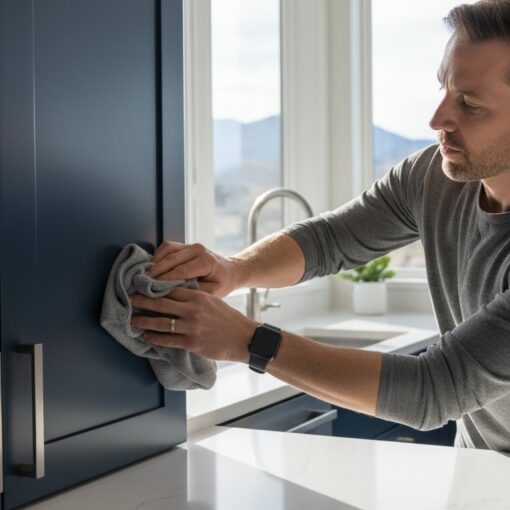
Step 1: Clean and de-gloss. Filler cannot bond to the oils, wax, or old lacquer found on used cabinets. Wipe the area with a de-glosser or denatured alcohol to ensure a clean surface. Step 2: Countersink the hole. Use a drill bit slightly larger than the hole to create a shallow bevel. This creates more surface area and a “shoulder” for the filler to grab, preventing the patch from vibrating loose over time. Step 3: Overfill the repair. Apply your chosen material so it sits slightly higher than the surrounding wood. Use tested and recommended wood fillers that are rated for high-strength repairs to ensure the patch doesn’t crumble when you drill new holes nearby.
The Secret to a Flat Surface: Block Sanding
Step 4 is the most critical for a factory finish. Never sand with your bare fingers; the soft pads of your fingertips will sand more material from the wood than the filler, creating a “dip” or “crater.” Instead, use a hard sanding block to shear the excess filler perfectly flush. Start with 120-grit sandpaper to remove the bulk of the mound, then progress to 220-grit to smooth the grain. This preparation is essential for the high-performance paint for cabinets used by professionals, as these coatings are designed to lay flat and will mirror any underlying texture.
Priming for Success
Step 5 involves sealing the repair. Wood filler is more porous than the surrounding wood and will “suck up” the moisture from your paint, leading to a dull spot known as flashing. Use a high-build, oil-based or shellac-based primer to seal the patch. Once the primer is dry, use a flashlight at a low angle across the door surface. This “raking light” will reveal any minor pinholes or scratches that are invisible to the naked eye. If you spot imperfections, apply a final thin layer of glazing putty, sand it lightly, and re-prime. This double-check ensures that the repair remains invisible once the final color is sprayed.

Managing Denver’s Dry Climate: Preventing Filler Shrinkage and Cracks
Denver’s semi-arid climate presents a unique challenge for filling hardware holes in cabinets before painting. With relative humidity levels frequently dropping below 20 percent, wood doors naturally lose moisture and contract. This movement exerts physical pressure on any material used to plug old handle holes. If a filler is too rigid or lacks a chemical bond, the surrounding wood can literally squeeze the patch out or create a hairline fracture around the perimeter. Denver homeowners should utilize two-part fillers to effectively combat the structural stresses caused by high-altitude dryness.
Acclimation and Moisture Content
Environment dictates the success of your prep work. Many homeowners make the mistake of performing the initial sanding and filling in a garage or workshop that lacks climate control. If you fill holes in a space with 40 percent humidity and then move the doors into a dry, air-conditioned kitchen, the wood will shrink rapidly. This leads to failed patches and visible indents. For a successful cabinet painting denver project, keep the doors in their final environment for at least 48 hours before starting the repair process. This is especially vital for “Mountain Modern” designs that incorporate reclaimed wood or rustic textures, as these materials are often more reactive to moisture changes than standard MDF or maple.
Identifying and Fixing “Ghosting” Early
Low humidity accelerates the drying time of primers, which can sometimes hide a failing patch until the final coat is applied. Check for “ghosting” immediately after the first layer of primer. A ghost is a faint ring or shadow that indicates the filler has settled or the wood has moved. If you see this, apply a thin “skim coat” of professional-grade glazing putty over the area. This secondary layer fills the microscopic gap created by the wood’s initial contraction. Professionals use high-solid primers to provide a thicker barrier that levels these minor surface variations. If your kitchen cabinets show signs of significant seasonal movement, consider hiring a specialist from Cabinet Painting Denver to ensure a stable, crack-free finish.
Using the correct chemistry is only half the battle. You must also manage the atmospheric conditions to ensure the patch remains stable for years. Filling hardware holes in cabinets before painting in Colorado requires a deep understanding of how local altitude affects material performance. By prioritizing acclimation and using high-build sealers, you prevent the environment from ruining your investment.
Ensuring a Flawless Finish: When to Call Denver Professional Cabinet Painters
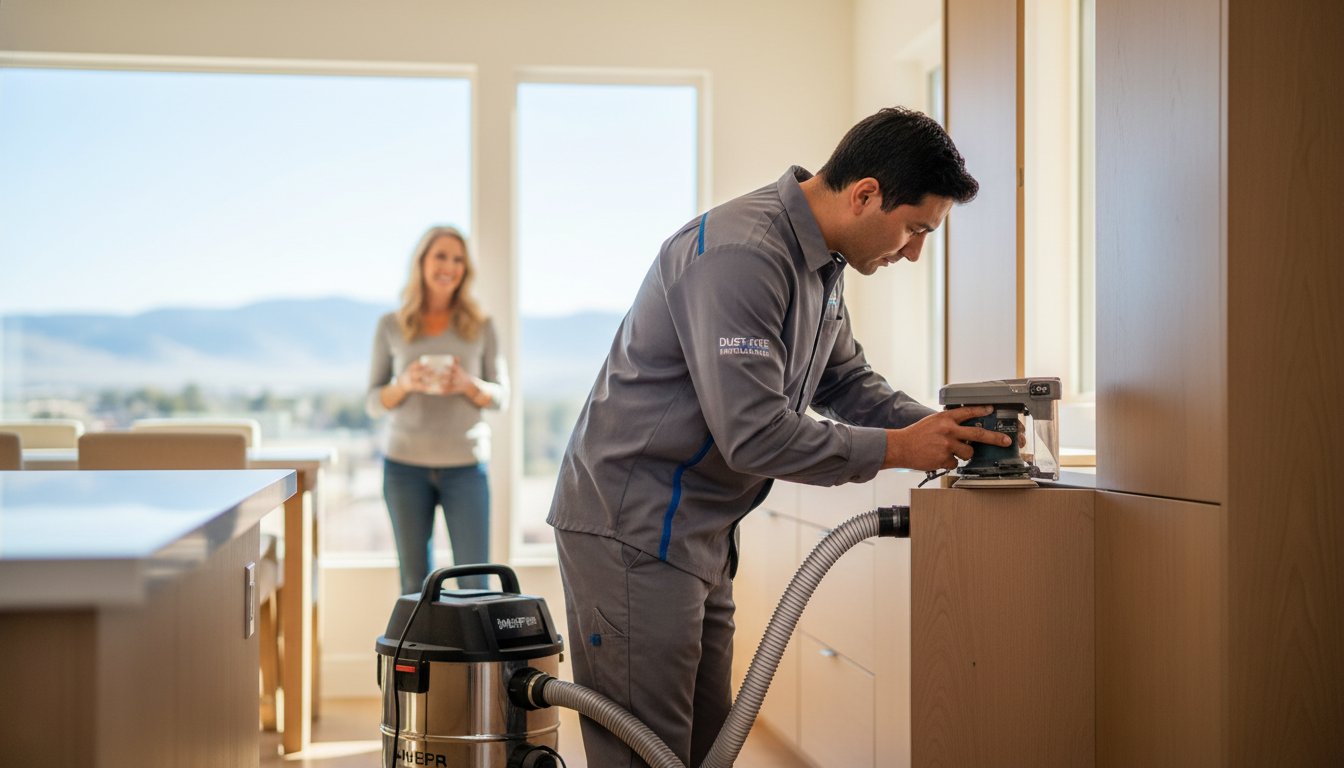
Executing the technical steps for filling hardware holes in cabinets before painting requires a high level of mechanical precision. While the process is straightforward, the margin for error is slim. A single mistake during the countersinking or block sanding phase can lead to permanent visible damage on a door panel. Professional results often depend on tools that most homeowners don’t have in their garages. A professional cabinet painter utilizes industrial-grade sanding stations with integrated dust extraction and HVLP sprayers to achieve a level of flatness that hand tools cannot replicate.
This emphasis on specialized machinery is common across many technical industries; for example, businesses in the manufacturing sector rely on Choice Bagging Equipment for the high-precision filling systems and professional guidance needed to maintain quality standards.
The risk of DIY attempts often outweighs the potential savings for high-end kitchens. If the filler isn’t mixed or applied with perfect consistency, the repair might fail months after the project is complete. Hiring a specialist ensures that the preparation is handled correctly from the start. This professional approach guarantees that the old mounting points remain invisible under the new finish for the life of the cabinets.
The Professional Installation Advantage
Accuracy is the hallmark of a professional project. Experts use precision jigs and steel templates to ensure every new handle is perfectly aligned across every drawer and door. This eliminates the risk of crooked hardware, which is a common issue when homeowners drill freehand. Professionals also manage the delicate re-installation process. They understand the specific cure times of modern coatings and know how to mount heavy pulls without causing “spinning knob” syndrome. This prevents loose hardware from rotating and scratching the fresh paint during the first few weeks of use.
Cost-Effectiveness of Professional Prep
Many homeowners find that the labor involved in a full kitchen update is more extensive than anticipated. The cost to paint kitchen cabinets typically includes expert prep work as a standard part of the service. This includes the thousands of tiny details like degreasing, sanding, and filling hardware holes in cabinets before painting. A professional crew can complete these tasks in a fraction of the time it takes an individual. This efficiency allows you to return to your normal kitchen routine much faster. A professional transformation provides the peace of mind that every surface is jewelry-ready and structurally sound. The final walkthrough confirms that the finish is flawless, with no ghosts of past hardware visible even under the direct light of a bright Denver morning.
Achieve a Lasting Factory Finish for Your Kitchen
Successful hardware relocation depends on both chemistry and mechanical precision. Using two-part chemical fillers is the only way to ensure that repairs remain stable despite Colorado’s low humidity. Proper block sanding and high-build priming create the stable surface necessary for a seamless, professional transformation. Mastering the process of filling hardware holes in cabinets before painting is the foundation of any high-quality update that stands the test of time.
If you want to ensure your cabinets look brand new without the risk of visible repair marks, our team is here to help. We are locally owned and specialize in factory-grade sprayed finishes for Denver homeowners. Our expert prep work includes invisible hardware hole filling and relocation designed for maximum durability in our specific climate. We focus on providing functional clarity and professional results for every project.
Ready to modernize your space? Get a Free Quote for Your Denver Cabinet Painting Project and take the first step toward a flawlessly smooth kitchen today.
Frequently Asked Questions
Can I use regular spackle to fill cabinet hardware holes?
You should not use regular spackle for this project. Spackle is designed for porous drywall and lacks the structural integrity required for wood surfaces. It will likely crack or fall out as the cabinet doors are opened and closed. For filling hardware holes in cabinets before painting, you need a product that bonds chemically to the wood fibers and withstands mechanical stress.
Will the filled holes show through the paint over time?
Filled holes will not show over time if you use a high-quality two-part chemical filler. These products eliminate the “ghosting” or circular indents that occur when standard fillers shrink during the curing process. The repair becomes a permanent part of the door structure. When combined with a high-build primer, the surface remains perfectly flat and indistinguishable from the rest of the wood.
Is Bondo better than wood filler for cabinets?
Two-part chemical fillers like Bondo are significantly better than traditional wood filler for deep hardware holes. Wood filler relies on evaporation to cure, which leads to shrinkage and potential failure in dry climates. Bondo cures through a chemical reaction that maintains its volume. This makes it the industry standard for a permanent, factory-grade finish on kitchen and bathroom cabinets.
How long do I need to wait for the filler to dry before sanding?
Two-part epoxy fillers are usually ready for sanding within 20 to 30 minutes of application. This rapid cure time is one of the primary reasons professionals prefer them. Traditional water-based fillers may require several hours or even a full day to dry completely through the center of a deep hole. Always check the manufacturer’s instructions for specific temperature and humidity requirements in your workspace.
Can I drill a new hole through the area I just filled?
You can drill new holes through areas filled with two-part chemical fillers without any issues. These materials become harder than the original wood and provide a stable base for new hardware screws. This is essential when your new handles are positioned very close to the old ones. Standard wood putty often crumbles under the pressure of a drill bit or screw, leading to a loose handle.
Do I need to sand the entire cabinet door or just the filled area?
You must sand the entire cabinet door to ensure the new paint adheres correctly to the old finish. While the filled area requires aggressive block sanding to achieve flatness, the rest of the surface needs a thorough scuff sanding. This creates a mechanical bond for the primer and paint. Skipping the full sand will lead to peeling or chipping across the entire door surface over time.
What is the best way to prevent the filler from shrinking in Denver’s dry air?
The best way to prevent shrinkage in Denver’s semi-arid environment is to use a non-evaporative filler and properly acclimate the wood. Allow your cabinets to sit in the kitchen for at least 48 hours before filling hardware holes in cabinets before painting. This ensures the wood’s moisture content is stable. Using a chemical-cure epoxy prevents the material from contracting as the air dries it out.
Should I fill the holes before or after I prime the cabinets?
You should fill the holes before you apply any primer to the cabinets. Filling on bare or de-glossed wood allows the material to bond directly to the substrate. Once the filler is sanded flush, the primer then seals both the wood and the repair. This creates a uniform surface that prevents the filler from absorbing the paint and causing dull spots in the final finish.