Did you know that a minor kitchen refresh can deliver a return on investment of up to 110% for homeowners in the Mountain states? Many Denver residents feel stuck with dated honey oak cabinets that don’t match modern aesthetics. When evaluating staining vs painting kitchen cabinets denver homeowners must consider more than just color. You likely want a solution that won’t chip in a high-traffic kitchen or degrade under Colorado’s intense UV exposure and dry air. It’s common to feel uncertain about which process will survive our local climate while providing a factory-quality finish.
This guide provides a professional analysis of both options to help you make an informed decision for your 2026 remodel. You’ll learn how specific finishes react to Denver’s seasonal humidity swings and which choice best supports the current trend toward warm, earthy neutrals like sage green and taupe. We’ll outline the requirements for a durable finish that increases home resale value and clarify the local contractor registration standards you need to know. This overview ensures your kitchen remains functional and stylish for years to come.
Key Takeaways
- Determine if your cabinet material is better suited for a dye-based stain or a professional paint application based on the wood’s current condition.
- Compare the durability of staining vs painting kitchen cabinets denver to select a finish that resists the “Bridge Crack” phenomenon common in dry climates.
- Recognize when Kitchen Cabinet Painting is the most effective solution for modernizing outdated grains with 2026’s popular earthy tones.
- Identify when high-quality hardwoods like cherry or walnut justify the organic warmth of a professional stain over a painted finish.
- Evaluate the return on investment and budget requirements for each method to maximize the resale value of your Denver property.
Staining vs. Painting: Defining the Two Main Cabinet Refinishing Paths
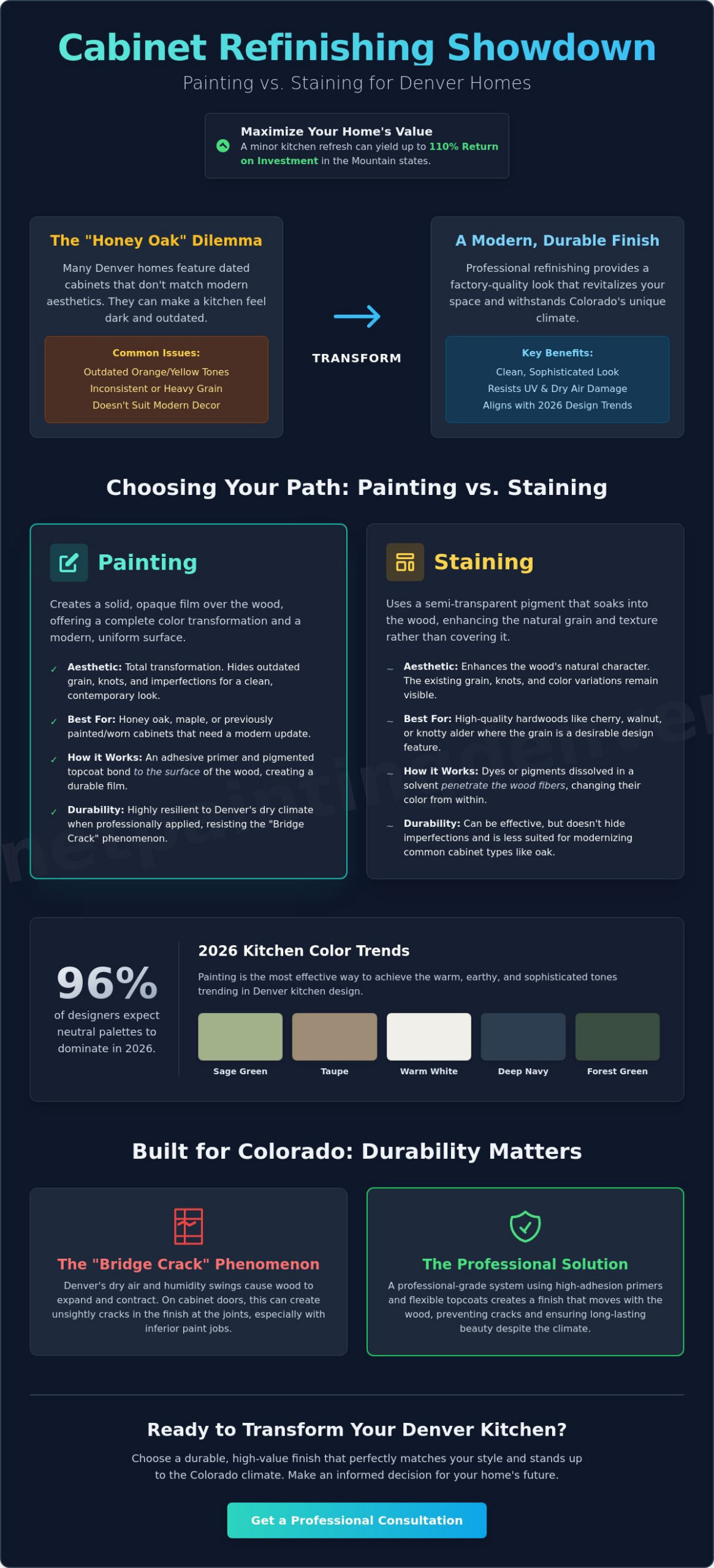
Choosing between staining vs painting kitchen cabinets denver is a decision that impacts both the visual appeal and long-term durability of your home. Homeowners must evaluate whether they want a total aesthetic transformation or a subtle character enhancement. Painting offers a complete color change that hides the wood’s original hue. Staining preserves the underlying grain and texture. The current condition of your cabinet boxes often dictates the most viable path. If your cabinets are made of common “honey oak” or show significant wear, a solid finish provides the coverage needed for a modern look.
To better understand this concept, watch this helpful video:
In 2026, Denver kitchen trends are shifting toward warmer, more inviting spaces. While 96% of designers expect neutral palettes like warm whites and soft tans to dominate, the choice of finish remains a technical requirement. Kitchen design now focuses on functionality and streamlined aesthetics. Many residents are opting for professional Kitchen Cabinet Painting to achieve these clean, earthy looks. This transition is especially popular in the 77% of renovated kitchens that now include walk-in pantries, as it creates a cohesive look across all storage areas.
How Paint and Stain Interact with Wood
The fundamental difference between these two methods lies in how the product bonds with the material. Wood finishing involves different chemical processes depending on the desired outcome. Stain utilizes dyes or pigments dissolved in a solvent to penetrate wood fibers, whereas paint uses binders to create a film that adheres to the surface. This surface adhesion requires professional-grade primers to ensure the finish doesn’t peel or chip in Denver’s dry air. Without a proper primer, the paint film cannot maintain its bond during the wood’s natural expansion and contraction cycles. Professional application ensures the pigment remains stable despite Colorado’s high UV exposure.
Aesthetic Impact: Solid Color vs. Natural Grain
Solid colors provide a visual weight that anchors a room. In modern Denver homes, flat-panel or shaker-style doors finished in sage green or taupe create a sophisticated, layered appearance. This approach is ideal for hiding inconsistent wood grains or outdated orange tones that no longer fit current styles. Conversely, staining preserves the organic texture and “story” of the wood species. It’s often reserved for premium hardwoods like walnut or cherry where the grain is a primary design feature. However, local trends show a clear movement away from natural wood tones toward solid, painted finishes that better accommodate multi-purpose islands and smart storage solutions.
The Benefits of Professional Cabinet Painting for Denver Homeowners
Professional painting serves as the primary solution for Denver homeowners dealing with the honey oak or orange-toned cabinets prevalent in older builds. When evaluating staining vs painting kitchen cabinets denver, painting offers the most comprehensive coverage for wood that has lost its aesthetic appeal. Unlike stain, which highlights existing grain and imperfections, paint creates a uniform surface. This makes it ideal for outdated maple or oak that might otherwise clash with modern interior design. It masks deep wood grains, providing a clean slate for any color palette.
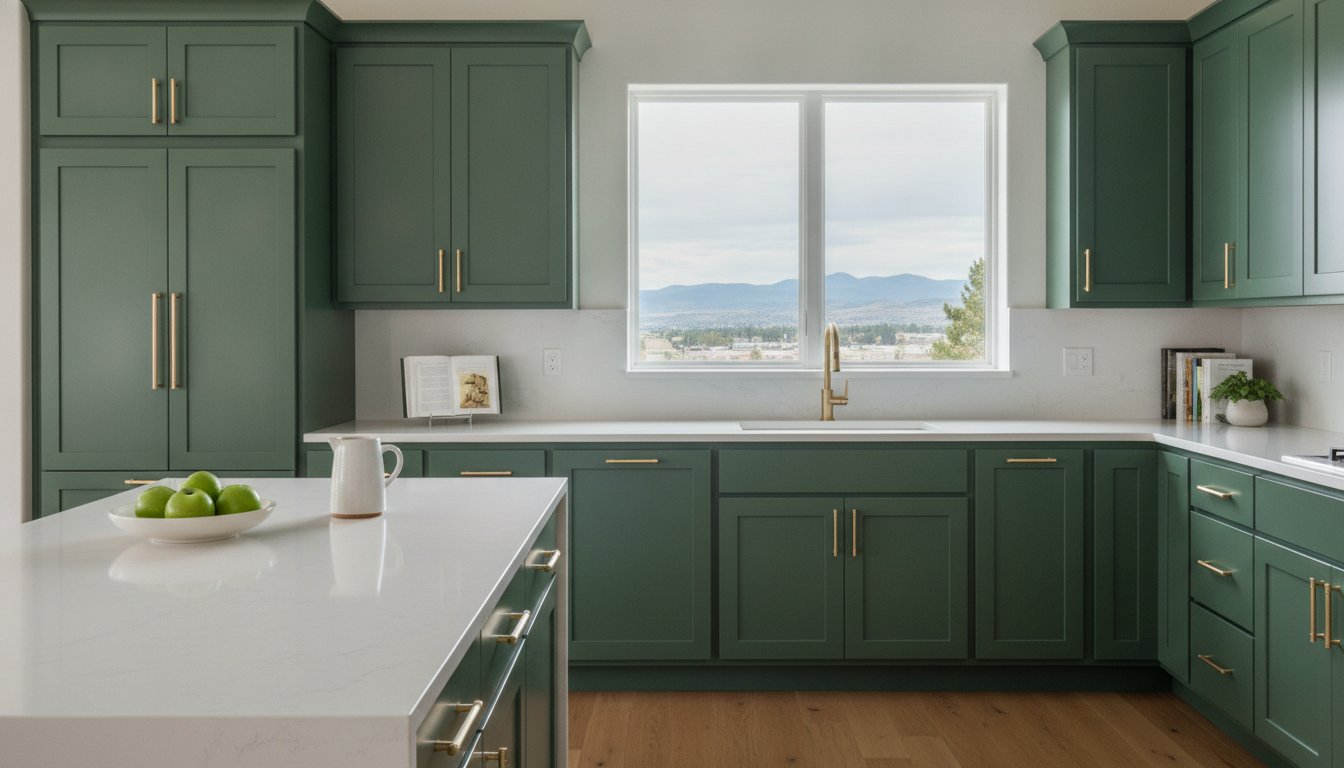
Modernizing an open-concept layout often requires a cohesive color scheme. Utilizing Kitchen Cabinet Painting allows for a seamless transition between the kitchen and living areas. For 2026, designers are moving toward deep navy and forest green to ground these large spaces. Classic white remains a staple for its ability to reflect light and create a sense of openness. This approach effectively hides the “honey oak” look that many homeowners find dated, replacing it with a finish that feels intentional and high-end.
Achieving a Factory-Quality Finish
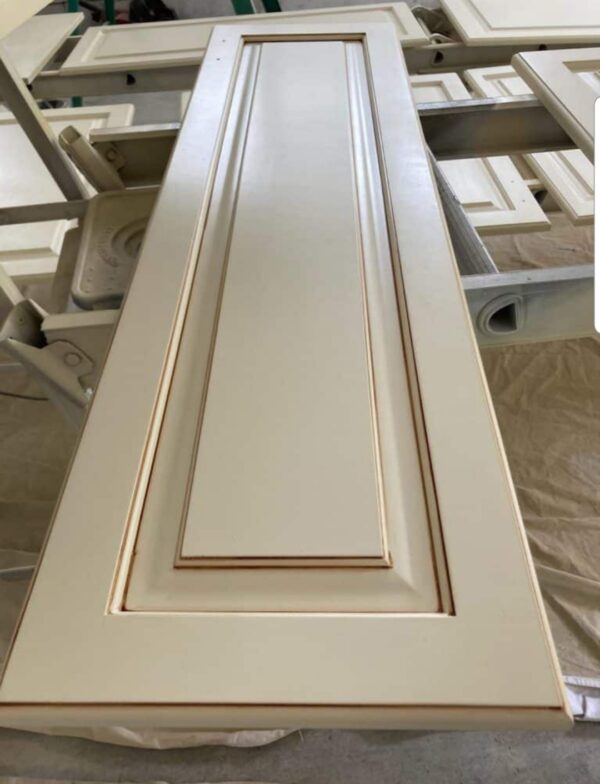
Durable results require more than a standard brush-and-roll application. DIY methods often leave visible textures and are prone to chipping in Colorado’s dry climate. Our cabinet painting Denver process utilizes professional HVLP (High Volume Low Pressure) spraying. This technique delivers a smooth surface that stands up to high traffic. We spray doors off-site in a controlled environment. This prevents dust and household debris from settling into the wet finish, ensuring professional clarity. High-quality primers are essential to maintain adhesion during Denver’s seasonal humidity swings.
The Transformative Power of Color
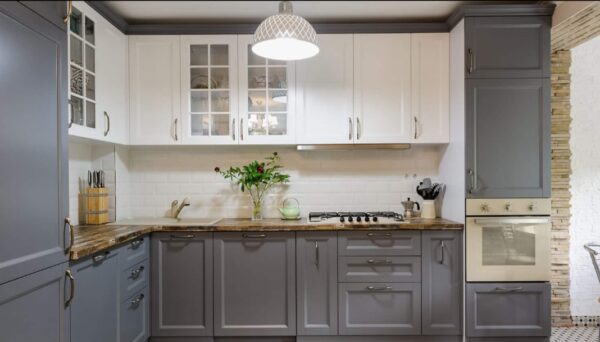
Color choice significantly impacts the perceived size of a Denver kitchen. Light paint colors, such as warm whites and soft tans, make smaller footprints feel expansive. These shades pair effectively with the honed quartzite countertops and handmade ceramic tiles trending in 2026. For homeowners seeking depth, two-tone designs are a functional choice. Applying a dark charcoal or terracotta to a kitchen island while keeping the perimeter cabinets light creates a sophisticated focal point. This versatility allows you to customize the space to match specific design goals. If you’re ready to update your space, consider how Kitchen Cabinet Painting can revitalize your home’s interior.
Understanding Cabinet Staining: When to Keep the Wood Grain
Staining is a specialized choice for Denver kitchens featuring premium hardwoods. While painting dominates the 2026 trend for neutral palettes, staining remains the standard for preserving the natural character of walnut, cherry, or mahogany. This method enhances the organic warmth of the wood species. It creates a layered look that pairs well with the mixed metal hardware trends seen in 2026. When considering staining vs painting kitchen cabinets denver, homeowners must realize that stain is more forgiving with minor physical wear. Scratches on a stained surface often blend into the grain, whereas chips on a painted surface are immediately visible. However, staining has rigid limitations. You can’t easily transition from a dark espresso finish to a light oak tone without extensive material removal.
The Grain Factor: Oak vs. Maple
Oak and maple react differently to finishing products. Oak features a prominent, open grain that creates a textured surface. Many Denver residents prefer to use a grain filler before painting oak to achieve a flat, modern appearance. Maple possesses a much tighter grain structure, making it a versatile canvas for both pigment and dye. A professional finish requires understanding that stain highlights wood defects like mineral streaks or sanding marks that paint would otherwise cover. If your cabinet boxes have significant structural blemishes, a solid paint finish is the more logical requirement for a high-quality result.
Refinishing vs. Restaining
The process of changing a stain color is technically demanding. It requires the complete removal of all previous topcoats and pigments to allow the new dye to penetrate the wood fibers. This makes cabinet refinishing for a restain significantly more labor-intensive than preparing a surface for paint. Labor for cabinet staining can range from $40 to $100 per hour, often making up 60% to 80% of the total project cost. In cases where the wood is in good condition but looks dull, a clear coat refresh is a more efficient alternative. This process restores the protective barrier without the risks associated with stripping and reapplying color.
Performance and Durability: Staining vs. Painting in Colorado’s Climate
Denver’s environmental factors present unique challenges for wood finishes. The city’s low humidity levels cause wood to shrink and expand significantly throughout the year. When analyzing staining vs painting kitchen cabinets denver, homeowners must account for this constant movement. Stain offers inherent flexibility because it lives within the wood fibers rather than on top of them. This allows the material to breathe without compromising the finish. Conversely, traditional paints can develop the “Bridge Crack” phenomenon. This occurs when the wood at a cabinet joint moves, causing a visible hairline fracture in the dried paint film along the seam.
Modern paint for cabinets is specifically engineered to mitigate these issues. Industrial-grade coatings provide higher elasticity than standard retail products. These specialized formulas maintain their integrity during seasonal shifts. While stain handles expansion well, it often fails under Denver’s intense UV exposure. The high altitude means stronger sun rays that break down wood dyes, leading to premature fading. High-quality pigmented paints act as a shield, reflecting UV rays and preserving the color for a much longer duration.
The Durability Comparison Table
This table compares how each finish performs under specific Colorado conditions.
| Feature | Professional Stain | Professional Paint |
|---|---|---|
| Scratch Resistance | High | Moderate-High |
| Moisture Resistance | Moderate | High |
| UV Stability (Denver Sun) | Low (Fades) | High (Pigmented) |
| Ease of Touch-up | Difficult | Moderate |
| Denver Climate Rating | 7/10 | 9/10 |
Addressing the Chipping Myth
Many homeowners worry that paint will inevitably chip in high-traffic areas. This failure is almost always the result of poor preparation rather than the product itself. Professional Kitchen Cabinet Painting requires a multi-step process involving de-glossing and thorough sanding. These steps create a mechanical bond that prevents the vast majority of common finish failures. Denver’s low humidity creates a dry environment where wood joint movement can stress rigid finishes, making professional application a procedural requirement. Industrial-grade topcoats provide a final layer of protection that resists oils, moisture, and impact. If you want a finish that survives Colorado’s climate, contact us for a professional cabinet painting Denver consultation.
The success of a painted finish depends on the chemistry of the coating. High-quality primers must be applied to ensure the topcoat stays bonded as the wood reacts to humidity changes. Without these industrial layers, the finish cannot withstand the daily rigors of a busy kitchen. By choosing a professional application, you ensure the surface remains smooth and durable despite the environmental stressors unique to the Mountain states.
Choosing Your Finish: A Professional Framework for Kitchen Transformations
Deciding on staining vs painting kitchen cabinets denver requires an objective evaluation of your home’s resale potential. In the Mountain states, a minor kitchen refresh can provide a return on investment of up to 110%. This makes professional cabinet painting one of the most efficient ways to increase property value. Painting is generally more cost-effective than a high-end restain because it requires less intensive labor than stripping wood to its raw state. While labor for staining can account for 60% to 80% of total project costs, a painted finish delivers a modern aesthetic at a more accessible price point. This financial efficiency is a primary driver for homeowners preparing a property for the 2026 market.
Your home’s architectural style should guide your final selection. A classic Wash Park Bungalow often benefits from the warmth of soft whites or traditional earth tones that respect the home’s history. Conversely, a Highlands Modern residence is better suited for the sleek, uniform look of professional painting in deep charcoal or forest green. These choices align with 2026 designer expectations, where 96% of experts anticipate a shift toward warm neutrals and earthy palettes. Consistency is key across all storage areas. Since 77% of renovated kitchens now include walk-in pantries, applying a uniform painted finish across both the kitchen and pantry cabinets creates a cohesive, high-end environment.
The 3-Question Decision Test
Use this framework to finalize your choice between a solid finish or a wood grain look:
- Question 1: Do you like the current grain of your wood? If the grain feels dated, like the orange-toned oak from previous decades, a solid paint finish is the best requirement to modernize the space.
- Question 2: How much light does your kitchen receive? Small or dark kitchens benefit from light paint colors that reflect natural light, whereas staining can sometimes make a cramped space feel smaller.
- Question 3: What is your long-term goal for the home? If you plan to sell soon, painting offers a higher probability of a quick return on investment and appeals to a broader range of 2026 buyers.
Get a Professional Denver Consultation
A local expert must evaluate your cabinets in person to determine the best technical path forward. Lighting in Denver varies significantly based on your home’s elevation and window placement. Seeing physical samples in your specific kitchen environment is a procedural requirement for a successful transformation. A professional can identify if your cabinet boxes are structurally sound for a high-quality paint bond or if they require specific prep work to handle Colorado’s dry air. You can review our cabinet painting cost breakdown to understand the investment required for your specific kitchen size. To begin your project, Schedule your free Denver cabinet refinishing estimate today!
Modernize Your Denver Kitchen with Confidence
Upgrading your kitchen is a strategic investment that requires a clear understanding of material performance. We’ve explored the technical requirements of staining vs painting kitchen cabinets denver, from the necessity of professional HVLP spraying to the impact of Colorado’s low humidity. Professional painting remains the most effective method for masking dated wood grains and achieving the warm, neutral palettes trending in 2026. This approach ensures a factory-quality finish that resists the “Bridge Crack” phenomenon and UV fading common in the Mountain states.
Our team consists of 5-star rated local cabinet experts who specialize in these unique climate challenges. We utilize professional HVLP spraying to deliver a durable, smooth surface for your kitchen, bathroom, or bookshelves. This process provides the high-quality transformation your home deserves while maximizing your property’s resale value. You can take the next step toward a functional and stylish kitchen by contacting us for a project evaluation.
Get your free Denver cabinet painting and refinishing quote today! We look forward to helping you achieve a modern finish that lasts for years.
Frequently Asked Questions
Is it cheaper to paint or stain kitchen cabinets in Denver?
Professional painting is generally more cost-effective than restaining because it requires less labor-intensive preparation. Restaining involves stripping the existing finish down to the raw wood fibers, which is a time-consuming procedural requirement. When evaluating staining vs painting kitchen cabinets denver, most homeowners find that painting provides a larger aesthetic transformation for a lower total investment.
Does painting kitchen cabinets hide the wood grain entirely?
Painting provides a solid color that completely masks the wood’s original hue and mineral streaks. While the pigment is opaque, the physical texture of deep grains like oak may still be visible under the paint film. Achieving a perfectly flat, glass-like surface on heavy-grain woods requires the application of a professional grain filler before the priming stage.
How long do painted cabinets last compared to stained ones?
A professional paint job with industrial-grade topcoats typically lasts 10 to 15 years. Stained cabinets have a similar lifespan but are more forgiving when it comes to minor scratches, as the damage often blends into the wood grain. Painted surfaces offer superior moisture resistance, which is vital in high-traffic areas near sinks and dishwashers.
Can you stain over already painted kitchen cabinets?
You cannot apply stain directly over a painted surface. Dyes and stains must penetrate the wood fibers to bond correctly, and the existing paint film acts as a permanent barrier. To transition from paint to stain, every layer of pigment must be chemically stripped or sanded away to reveal the raw wood beneath.
Which finish is better for resale value in the Denver housing market?
Solid painted finishes currently hold a slight edge for resale value because they align with the 2026 designer preference for warm neutrals. Buyers in the Mountain states frequently look for kitchens that feel bright and modern. Choosing a professional paint finish in a trending shade like taupe or soft white makes the home move-in ready for a broader audience.
How does Denver’s dry climate affect painted cabinet joints?
Colorado’s low humidity causes wood to contract, which can create hairline fractures at the joints of painted doors. These “Bridge Cracks” are a natural result of wood movement and don’t indicate a product failure. Utilizing high-quality, elastic primers helps the finish stay bonded even as the underlying material shifts during seasonal humidity swings.
What is the best wood species for staining vs. painting?
Maple and poplar are the preferred species for painting because their tight, smooth grains allow for a factory-quality finish. Premium hardwoods like walnut, cherry, and mahogany are the best candidates for staining. These species possess unique character and organic patterns that are best highlighted by a translucent dye rather than a solid pigment.
How long does a professional cabinet painting project take in Denver?
A standard kitchen project usually requires 5 to 7 business days to complete. This timeline accounts for the multi-step preparation process, including de-glossing, sanding, and drying times between coats. Doors and drawer fronts are often processed off-site in a controlled environment to ensure dust doesn’t compromise the final surface clarity.