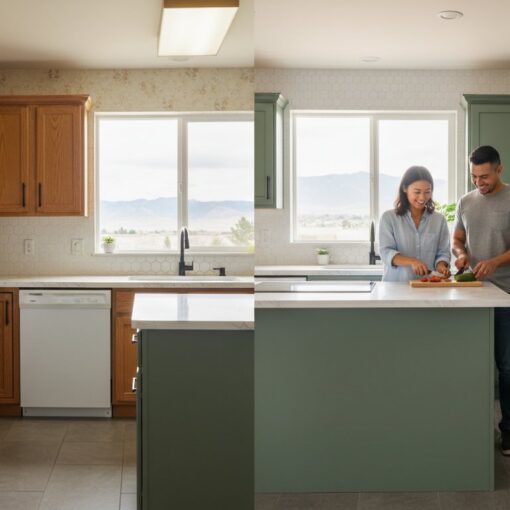
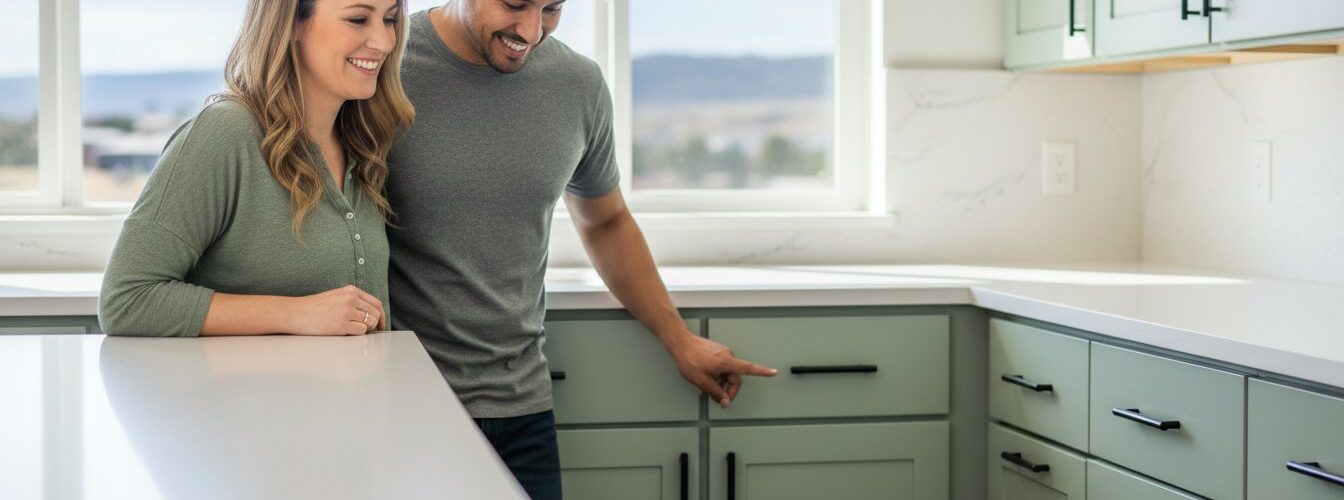
Professional cabinet painting is a high-precision logistical operation, not just a simple home improvement project. You probably worry about the fine dust, the chemical fumes, and how you’ll manage daily life when your kitchen is a restricted zone. It’s normal to feel anxious about a messy workspace or a finish that doesn’t last. However, understanding what to expect when having cabinets professionally painted can turn that uncertainty into confidence as you prepare for a factory-grade transformation.
The transition from dated cabinetry to a modern, nature-inspired palette doesn’t have to be a source of anxiety. Clear communication regarding kitchen access and strict adherence to current safety standards ensures your project remains efficient and secure. Whether you’re planning a Kitchen Cabinet Painting project or updating your built-in bookshelves, professional application techniques—like the high-precision services offered by Arizona Relevant Painting LLC—deliver a surface that resists the daily wear of a busy household. It’s an investment in your property’s resale value and your daily enjoyment of the space.
This guide provides a clear roadmap of the multi-day workflow, from the initial cleaning and degreasing to the final curing process. You’ll learn about the 2026 EPA lead-safe standards and the shift toward warmer, nature-inspired tones like mushroom and sage. We’ll outline how a split-site process ensures minimal disruption to your home while delivering a durable finish that can last up to 15 years. This transparency ensures you know exactly when you can use your kitchen and how to protect your investment during the critical curing phase.
Key Takeaways
- Understand the five-day professional timeline that utilizes off-site spraying to minimize dust and odors in your living space.
- Learn what to expect when having cabinets professionally painted regarding the deep cleaning and mechanical sanding required for long-term paint adhesion.
- Discover how high-build primers and HVLP spray technology create a smooth, durable finish that mimics a factory-new appearance.
- Identify strategies for maintaining kitchen functionality and planning meals while your cabinet doors are being processed off-site.
- Explore the final re-installation process, including hardware alignment and hinge adjustments, to ensure your cabinetry looks and functions perfectly.
The Professional Cabinet Painting Timeline: A 5-Day Roadmap
Professional Kitchen Cabinet Painting requires a structured, multi-day approach to ensure a durable and aesthetically pleasing result. Knowing what to expect when having cabinets professionally painted helps you coordinate your household activities while technicians transform your space. This process typically follows a strict five-day roadmap designed for maximum efficiency and quality control.
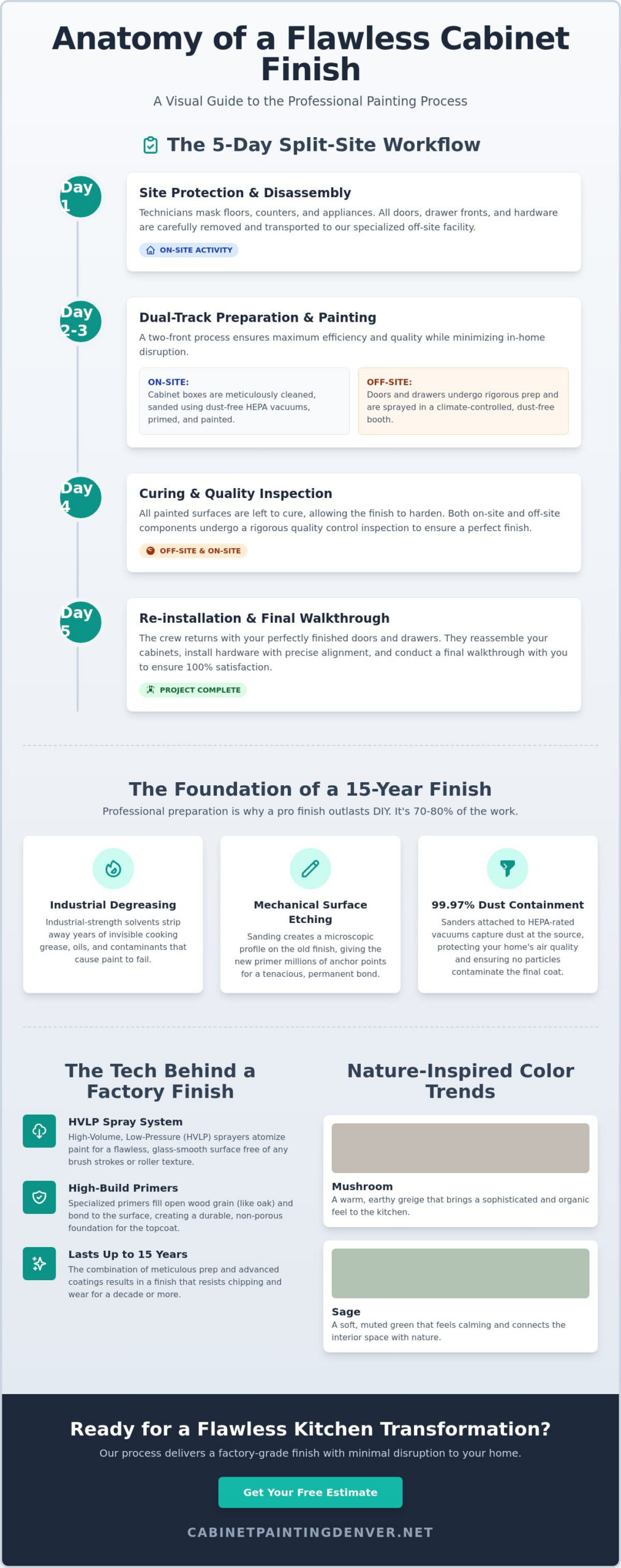
On Day 1, the team focuses on site protection and disassembly. Technicians mask floors, countertops, and appliances using professional-grade paper and plastic. They remove all doors, drawer fronts, and hardware for transport to a specialized shop. Days 2 and 3 involve a dual-track workflow. While the doors undergo a rigorous wood finishing process in a dust-free booth, the stationary cabinet boxes are cleaned, primed, and painted at your residence. Day 4 is dedicated to curing and rigorous quality inspections of all surfaces. On Day 5, the crew returns with the finished components for re-installation and a final project walkthrough.
To better understand this concept, watch this helpful video:
The Off-Site vs. On-Site Workflow
Executing the spray application at an off-site facility is the only way to achieve a true factory-grade finish. Doors and drawers are processed in a controlled booth where temperature and humidity are regulated. This environment prevents airborne dust, lint, or pet hair from settling into the wet coating. This split-site approach also protects your home environment. By removing the bulk of the surfaces to a shop, we minimize the accumulation of fumes and overspray in your living areas. We utilize professional HEPA filtration and localized ventilation to maintain air quality while painting the fixed cabinet frames.
Factors That May Adjust Your Schedule
Your specific kitchen configuration and materials will dictate the exact labor hours required. A standard kitchen might fit the five-day window, but larger spaces with complex islands or specialized projects like bathroom cabinet painting or bookshelves cabinet painting may take longer. The wood species also impacts the timeline. Open-grain woods like oak require detailed grain-filling or additional primer coats to ensure a smooth surface. Conversely, maple or cherry cabinets often allow for faster preparation. Denver’s dry climate usually accelerates the curing process, which is a significant advantage in 2026. However, technicians must monitor indoor temperatures to ensure the paint bonds correctly without drying too rapidly.
The Preparation Phase: Why Pros Outperform DIY
The primary difference between a DIY project and a professional result lies in the intensity of the preparation phase. Most homeowners underestimate the volume of cooking oils and skin proteins that accumulate on cabinetry over a decade of use. These contaminants act as a barrier to paint adhesion. When considering what to expect when having cabinets professionally painted, realize that labor constitutes 70% to 80% of the total project cost. This investment covers the meticulous preparation required to ensure the coating bonds at a molecular level rather than just sitting on top of the old finish.
Degreasing and Surface Etching
Standard household degreasers don’t have the chemical strength required for high-grade cabinet refinishing. Professionals use industrial-strength solvents to strip away wax, grease, and buildup that typical cleaners can’t touch. After cleaning, the surface requires etching. We utilize a combination of mechanical sanding and chemical de-glossers to remove the existing sheen. This process creates a “profile” on the wood, which acts like tiny teeth for the primer to grab onto. Without proper etching, even the most expensive paint will eventually peel or chip under daily use. If you want a finish that lasts, professional Kitchen Cabinet Painting is the most reliable solution.
Dust Containment Protocols
Homeowners often fear a house full of fine sawdust. To mitigate this, professionals employ HEPA-filtered vacuum sanders. These tools capture 99.97% of particles at the source, preventing dust from migrating to other rooms. As of 2026, EPA regulations have lowered dust-lead hazard levels to 5 micrograms per square foot for floors in older homes. Our containment strategy utilizes plastic sheeting and zip-walls to isolate the kitchen, which helps manage the health risks of paint fumes and particulate matter. Finally, the team uses tack cloths for a final wipe-down, ensuring a 100% debris-free surface before the application phase begins.
The preparation also includes repairing structural and aesthetic flaws. Technicians inspect every inch for minor dings, scratches, and grain imperfections. They use specialized high-build fillers to level these areas before priming. This step is critical for open-grain woods like oak, where the grain can otherwise show through the paint. Once repairs are complete, the masking process begins. Technicians cover floors, countertops, and appliances with heavy-duty paper and tape. This physical barrier ensures that only the intended surfaces receive the new coating. This level of protection is a hallmark of professional service that DIY attempts rarely match.
Application and Chemistry: Achieving the Factory Finish
Achieving a factory-grade finish requires more than just high-quality tools; it demands a sophisticated understanding of chemical bonding and application physics. When researching what to expect when having cabinets professionally painted, many homeowners assume the process involves standard latex house paint. However, professional Kitchen Cabinet Painting utilizes industrial-grade coatings specifically engineered for the high-friction environment of a kitchen. These products differ significantly from wall paint in their hardness, chemical resistance, and ability to level out during the drying process.
The application begins with high-build primers. These aren’t merely color blockers; they function as a foundational layer that seals the wood grain and prevents tannins or old stains from leaching through the new finish. Technicians apply these in thin, multiple layers rather than one thick coat. This approach ensures the primer cures evenly from the bottom up, creating a stable base for the topcoat. In Denver’s dry climate, the low humidity levels in 2026 facilitate faster drying times, but professionals must carefully manage airflow to prevent the coating from “skinning over” before it has leveled properly.
Choosing the Right Paint for Cabinets
Selecting the best paint for cabinets involves balancing aesthetics with long-term durability. Professionals typically use water-borne alkyds or urethane-reinforced acrylics. These coatings provide the extreme hardness of traditional oil-based paints without the high VOC levels or yellowing over time. In 2026, approximately 65% of homeowners select a satin sheen for its ability to hide fingerprints while providing enough luster to reflect light. Satin and matte finishes are increasingly favored over high-gloss options, which can highlight minor substrate imperfections. These industrial coatings are designed to resist the heat and moisture common near stovetops and sinks.
The Spraying Environment
A controlled environment is mandatory for a flawless result. We process doors and drawer fronts in a dedicated spray booth equipped with specialized ventilation. This setup allows for the use of HVLP (High Volume Low Pressure) sprayers, which deliver a fine mist that settles into a smooth, orange-peel-free texture. For the cabinet boxes remaining on-site, technicians use similar precision spraying techniques while maintaining strict containment. They manage overspray with high-capacity exhaust fans and localized masking. This dual-environment strategy ensures that every component of your Bathroom Cabinet Painting or bookshelves cabinet painting project receives a uniform, high-performance finish that brush or roller applications cannot replicate.
Living Through the Process: Managing Disruption
A professional painting project transforms your home, but it also temporarily alters your daily routine. Understanding what to expect when having cabinets professionally painted allows you to plan effectively for the five-day timeline. While the kitchen becomes a workspace during the day, it’s not completely off-limits. Most appliances, including the refrigerator and microwave, remain accessible during the evening hours once the crew has departed. Maintaining a functional home requires a proactive approach to meal planning and household safety.
Transitioning to slow cookers, air fryers, or outdoor grilling is a practical way to manage the downtime. Since the stovetop and oven must remain off during active spraying and drying phases, these alternative cooking methods are essential. We recommend setting up a temporary station in a dining room or living area for coffee makers, snacks, and small appliances. This minimizes the need to enter the isolated kitchen zone while work is in progress. Planning your meals ahead of time reduces the stress of a restricted kitchen. Many homeowners also use this window to handle other essential maintenance; for instance, those in the Parker area might visit Eagle Transmission & Auto Repair while their home is under renovation.
Modern coatings have evolved to be much friendlier for residential environments. In 2026, we utilize low-VOC hybrid paints that significantly reduce the chemical odors associated with traditional oil-based finishes. However, the workspace remains restricted for children and pets. Technicians use physical barriers like zip-walls to contain dust and fumes, and these areas must stay secure. Noise from HEPA-filtered sanders and ventilation fans will occur during business hours; homeowners working from home should plan for these sounds during the workday.
Maintaining Household Continuity
Establishing a “satellite kitchen” ensures your morning routine stays intact. Place your coffee station and frequently used pantry items in a separate room before the masking process begins. You can typically enter the kitchen area safely two to four hours after a spray session ends, depending on the specific coating used. Technicians will provide daily updates on when the air is clear and the surfaces are dry to the touch. This transparency helps you manage your evening activities without compromising the project’s quality.
The “No-Go” Zones
Safety protocols require the stove and oven to stay powered down during the application of primers and topcoats. Even low-VOC materials can be sensitive to heat sources during the drying phase. Accessing the refrigerator is usually possible, but it requires coordination with the masking team. They can create a functional flap in the plastic sheeting that allows you to reach the handle without compromising the dust seal. You should avoid the kitchen entirely when the paint is tack-free but not yet fully cured to prevent accidental smudges or airborne debris from settling into the finish.
If you’re ready to update your space with minimal stress, contact us to book your kitchen cabinet painting estimate.
Re-installation, Inspection, and Final Results
Day 5 represents the culmination of the logistical workflow. Technicians transport your doors and drawer fronts from the off-site spray booth back to your residence using protective padding to prevent surface abrasions. This final phase focuses on precision assembly. Aligning hinges and leveling doors is a critical step that ensures a perfectly symmetrical look across your cabinetry. Many homeowners don’t realize that even small deviations in hinge placement can disrupt the visual flow of a kitchen. Technicians spend significant time adjusting each component to ensure drawers slide smoothly and doors hang straight. Knowing what to expect when having cabinets professionally painted helps you appreciate the detailed labor involved in this final mechanical alignment.
If you’ve chosen to upgrade your hardware, this is when the new pulls and knobs are installed. Using new hardware often completes the transformation, providing a modern touch to the updated color palette. Once everything is in place, the team conducts a final walkthrough with you. This is your opportunity to understand what to expect when having cabinets professionally painted regarding the finished product’s appearance and long-term functionality. We verify that every door closes flush and every drawer operates without resistance before the project is officially signed off.
The Final Quality Inspection
We examine every surface to ensure it meets our factory-quality standards. This includes checking for consistent sheen and color depth under different lighting conditions, such as natural sunlight and LED overheads. We verify the smooth operation of all moving parts, including soft-close hinges and drawer glides. Our Cabinet Painting Denver commitment to precision means we don’t consider the job complete until every alignment is exact and the finish is free of imperfections.
Post-Project Care and Maintenance
Your cabinets require specific care during the initial 30-day “soft cure” period. While the paint is dry to the touch, it takes a full month for the industrial coating to reach its maximum hardness. You should avoid using harsh chemicals or scrubbing the surfaces during this time. To clean your newly painted cabinets, use a soft microfiber cloth dampened with mild soap and water. Avoid hanging wet dish towels over cabinet doors, as prolonged moisture can affect the bond before the cure is complete.
Denver’s dry air in 2026 helps the initial drying, but the internal chemical hardening still follows this 30-day rule. Following these maintenance steps protects your investment and ensures the finish lasts for the 8 to 15 years expected of a professional job. If you have additional spaces to update, contact us for a cabinet painting cost quote for your Bathroom Cabinet Painting or bookshelves cabinet painting projects.
Transform Your Home with Professional Precision
Professional cabinet painting is a high-precision logistical operation that balances factory-grade aesthetics with household continuity. By utilizing a split-site workflow and dust-free HEPA sanding technology, you can achieve a smooth, durable finish without the typical mess of a home renovation. Understanding what to expect when having cabinets professionally painted ensures you’re prepared for the 5-day average turnaround and the subsequent 30-day curing phase. This meticulous process provides a result that outperforms standard DIY attempts in both durability and surface texture.
The transition from dated cabinetry to a modern, nature-inspired palette doesn’t have to be a source of anxiety. Clear communication regarding kitchen access and strict adherence to current safety standards ensures your project remains efficient and secure. Whether you’re planning a Kitchen Cabinet Painting project or updating your built-in bookshelves, professional application techniques deliver a surface that resists the daily wear of a busy household. It’s an investment in your property’s resale value and your daily enjoyment of the space.
Take the first step toward your kitchen’s new look. Get Your Free Cabinet Painting Quote in Denver and discover how our structured process delivers a factory-quality spray finish for your home. You’ll enjoy a revitalized space that looks and functions like new.
Frequently Asked Questions
How long will my kitchen be out of commission?
Your kitchen will typically be a workspace for five business days. The first day involves masking and removal, while the middle days focus on the dual-site painting process. You can generally use your appliances in the evening hours after the technicians have finished their daily tasks. The final day is dedicated to re-installation and a project walkthrough.
Do I need to empty my cabinet boxes before the painters arrive?
You should empty the contents of your cabinets before the crew arrives. This allows for complete access to the cabinet frames and prevents your kitchenware from collecting fine dust. Clearing these spaces is a standard part of what to expect when having cabinets professionally painted to ensure the interior masking stays secure throughout the process. It also protects your belongings from any accidental contact during the cleaning phase.
Will my house smell like paint during the process?
Odors are minimal because we use modern low-VOC coatings. These water-borne alkyd and urethane-reinforced acrylic paints have a much lighter scent profile than traditional oil-based products. We utilize localized ventilation and HEPA filtration to manage air quality. Any remaining scent typically dissipates within a few hours after the application is complete.
Is there a lot of dust involved in professional cabinet painting?
Dust is strictly managed through the use of HEPA-filtered vacuum sanders. These tools capture 99.97% of particles at the source, preventing them from becoming airborne. We also install zip-walls and plastic sheeting to create a “clean room” environment. This containment strategy ensures that the rest of your home remains free from sanding debris.
Can I use my stove and oven while the cabinets are being painted?
The stove and oven must remain off during active painting and drying phases. Heat can negatively affect the curing process of the new coating and presents a safety hazard near masking materials. You can resume using these appliances once the technicians confirm the surfaces are tack-free and the masking has been safely removed.
What is the difference between a factory finish and a DIY finish?
A factory finish is achieved through HVLP spraying and industrial-grade coatings that level out to a smooth, orange-peel-free texture. DIY finishes often show brush marks, roller stipple, or drips. Professional coatings are also chemically engineered to resist the heat, moisture, and oils common in kitchens, providing a level of durability that standard house paint cannot match.
How long do professionally painted cabinets last?
A professional finish typically lasts between 8 and 15 years with proper maintenance. This durability is a result of meticulous mechanical sanding and the use of high-performance industrial primers. This extended lifespan is a key component of what to expect when having cabinets professionally painted by experienced technicians, especially compared to DIY finishes that may only last 5 to 8 years.
Should I replace my hardware when I have my cabinets painted?
The re-installation phase on Day 5 is the perfect time to upgrade your pulls, knobs, and hinges. Since the original hardware is already removed for painting, installing new pieces doesn’t add significant labor time. New hardware ensures that the mechanical function of your doors matches the updated aesthetic of your kitchen or bathroom cabinet painting project.