What if the difference between a kitchen that looks brand new for 15 years and one that starts peeling in 6 months isn’t the paint itself, but the 12 steps of prep work you never actually see? You’ve likely spent hours scrolling through design galleries, yet the fear of your Denver kitchen turning into a dusty, unusable construction zone for three weeks often halts progress. It’s stressful when contractors use “painting” and “refinishing” interchangeably; it leaves you unsure if you’re getting a quick cosmetic fix or a durable industrial coating. Understanding exactly what is included in cabinet painting services is the only way to protect your investment and avoid the 25% failure rate common in budget jobs.
You deserve a factory-smooth finish that stands up to 10 years of daily wear without the mess you’re dreading. I’ll show you exactly how professional teams manage your home’s transformation to ensure minimal disruption and maximum durability. This guide breaks down every stage of the process, from the chemistry of specialized degreasing to the precision of off-site spray booth curing.
Key Takeaways
- Learn why professional cabinet refinishing is a multi-day industrial process rather than a simple paint job.
- Discover exactly what is included in cabinet painting services, from surface de-glossing to the extensive protection of your home’s non-paint zones.
- Understand the specialized priming and HVLP spraying techniques required to achieve a durable, factory-grade finish.
- Find out how the re-installation phase ensures perfect door alignment and long-term mechanical functionality.
- Identify standard service exclusions like structural repairs and interior box painting to help you budget accurately.
Defining Professional Cabinet Painting Services in 2026
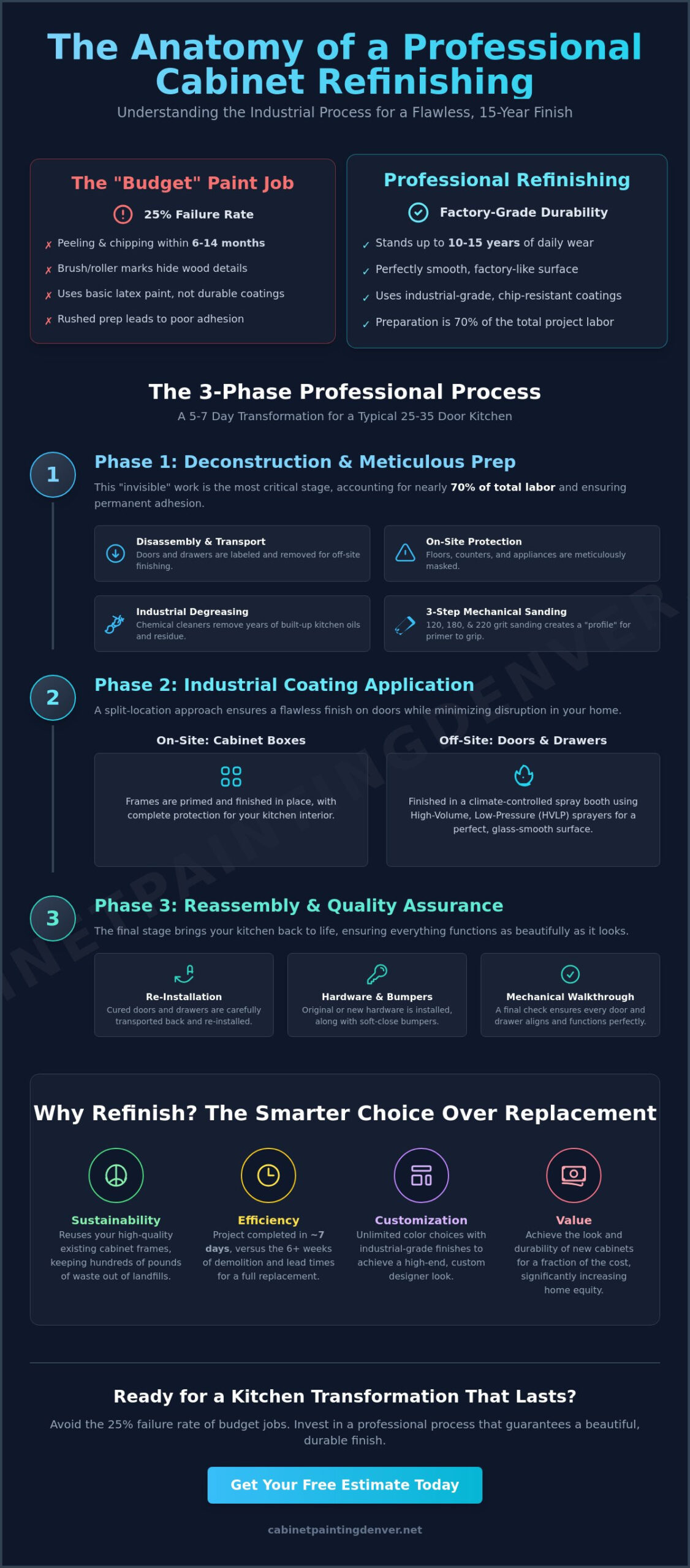
By 2026, the standard for kitchen renovations has shifted significantly. Understanding what is included in cabinet painting services requires looking beyond a simple coat of latex paint. This is a multi-day industrial refinishing process rather than a basic cosmetic touch-up. It involves mechanical cleaning to remove years of kitchen grease and chemical de-glossing to break the bond of the old finish. Unlike standard house painting, cabinet refinishing relies on sophisticated wood finishing techniques that ensure durability against heat, steam, and daily moisture. For a typical Denver kitchen with 25 to 35 openings, homeowners should expect a timeline of 5 to 7 business days from the initial masking to the final hardware installation.
To better understand how these professional standards impact your project scope and budget, watch this helpful video:
The Core Components of a Standard Contract
A professional agreement clearly defines the scope of work for boxes, doors, and drawers. The “boxes” refer to the cabinet frames that stay on your walls. These are prepped and painted on-site using rigorous masking protocols to protect your floors, ceilings, and appliances. The doors and drawer fronts are removed and taken to a climate-controlled spray booth. This off-site phase is vital for achieving a factory-smooth surface that’s impossible to reach with a brush or roller. Your contract should explicitly list the use of high-build primers and industrial-grade topcoats. These materials provide the thickness and self-leveling properties needed to hide wood grain and resist chipping. When you ask what is included in cabinet painting services, the answer should always include both on-site protection and off-site precision spraying.
Why Denver Homeowners Choose Refinishing Over Replacement
Most Denver kitchens built in the last 30 years feature high-quality solid wood or plywood frames. Tearing these out is often unnecessary and environmentally taxing. Choosing cabinet painting denver allows you to keep these structural assets while updating the aesthetic to match current design trends. It’s a sustainable choice that keeps hundreds of pounds of debris out of local landfills. Most importantly, it provides a custom, designer look for a fraction of the cost of a full replacement. You get the same durability as brand-new cabinets without the months of lead time. This approach lets you allocate your budget toward other upgrades like new quartz countertops or modern backsplashes while still achieving a total kitchen transformation.
- Sustainability: Reuses existing high-quality wood materials.
- Efficiency: Completed in 7 days compared to 6 weeks for replacement.
- Customization: Unlimited color options with industrial-grade finishes.
- Value: Increases home equity without the six-figure price tag of a full remodel.
The Preparation Phase: The “Invisible” Work Included
Preparation is the foundation of any high-end finish. In a professional 2026 project, prep work accounts for nearly 70% of the total labor hours. If a contractor rushes this phase, the coating will likely fail or peel within 14 months. When homeowners ask what is included in cabinet painting services, they often focus on the final color, but the real value lies in the cleaning and sanding protocols that happen before a brush ever touches the wood.
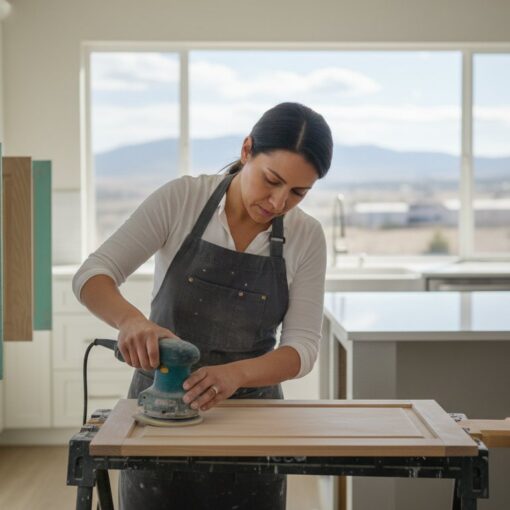
The process begins with a dual-stage cleaning method. Technicians use industrial-strength chemical degreasers to remove decades of accumulated kitchen oils and cooking residues. This is followed by mechanical abrasion using a 3-step sanding sequence involving 120, 180, and 220 grit sandpaper. Sanding isn’t just about smoothness; it creates a physical “profile” that allows the primer to bond permanently to the substrate. This level of detail ensures the project meets KCMA cabinet coating standards, which are the industry benchmark for factory-grade durability against heat, food acids, and moisture.
Masking and Containment Systems
Professional crews don’t rely on simple drop cloths. They install comprehensive containment systems using 4-mil plastic sheeting and telescoping zip-walls. This creates a localized spray booth that prevents fine dust from migrating to other rooms. Floors receive protection from heavy-duty Ram Board or 30-lb builder’s paper, which prevents damage from ladders and equipment. In Denver homes, contractors use high-volume HEPA air scrubbers and specific ventilation protocols to manage fumes and maintain air quality throughout the 3 to 5 day process.
Surface Repair and Grain Filling
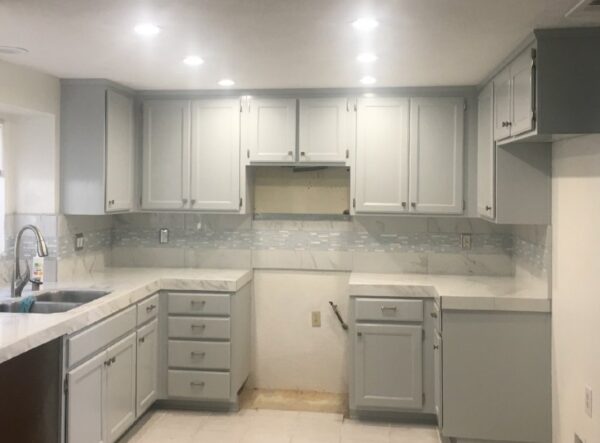
A core part of what is included in cabinet painting services involves restoring the physical integrity of the wood. Technicians fill old hardware holes with high-solids wood filler if you’ve selected a new handle layout. They also address water damage on sink bases and repair nicks or dents using two-part epoxy fillers. For the 65% of homeowners who still have 1990s-era oak cabinets, optional grain filling is a standard 2026 recommendation. This process involves applying a specialized paste to fill deep wood pores, resulting in a smooth, modern aesthetic. If you’re curious about how these repairs look in a finished kitchen, you can explore our project portfolio to see the results.
Priming and Finishing: Achieving the Factory-Smooth Look
The core of what is included in cabinet painting services revolves around the transition from raw or previously finished wood to a durable, factory-like surface. This process begins with high-adhesion primers. Most professionals opt for solvent-based or shellac primers because they provide a chemical bond that water-based DIY products can’t match. These primers block tannins from bleeding through and create a flat, stable base for the topcoat. Without this specific chemical barrier, oils from the wood or previous stains often ruin the final finish within 12 months.
Application methods define the final texture. Professionals typically choose between Airless and HVLP (High Volume Low Pressure) sprayers. Airless sprayers work well for large frames because they provide high production speeds, while HVLP units provide the surgical precision needed for doors and drawer fronts. A standard professional quote usually includes four total coats: two coats of specialized primer and two finishing topcoats. Between every single layer, technicians perform inter-coat sanding using fine-grit abrasives, often 320 or 400 grit. This step removes micro-nibs and ensures the final surface feels like glass. To verify the durability of these layers, many top-tier contractors measure their process against KCMA standards for cabinet coatings, which require finishes to withstand rigorous heat, cold, and chemical exposure tests.
Professional Grade Materials vs. DIY Paint
Local hardware store paint isn’t designed for the high-friction environment of a kitchen. Experts use industrial coatings like Italian 2K polyurethanes or conversion varnishes. These products contain hardeners that create a cross-linked film once cured. You can choose from various sheen levels, such as a 10% matte, a 30% satin, or a 60% semi-gloss. For a deeper look at these chemicals, read our guide on the best paint for cabinets to see why industrial durability is essential for 2026 standards.
Curing in the Denver Climate
Denver’s semi-arid climate, with humidity often dropping below 20%, significantly affects the timeline of what is included in cabinet painting services. While paint might feel dry to the touch in 30 minutes, the cure time is different. A full chemical cure takes 21 to 30 days. Most professionals use off-site shop curing for doors, utilizing controlled environments to prevent dust contamination. On-site frames dry quickly in the thin Mile High air, but you’ll need to wait at least 48 hours before heavy use to avoid marring the fresh finish. Professionals often use infrared lamps or heated drying racks to stabilize the coating before the doors even leave the shop.
Re-installation and the Final Mechanical Walkthrough
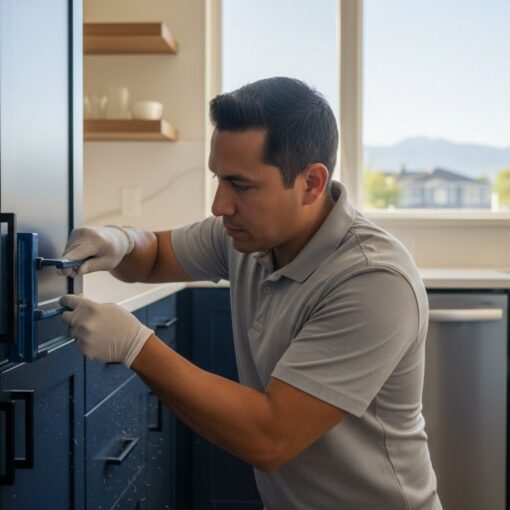
The final phase of what is included in cabinet painting services begins with the careful transport of cured components. Professionals don’t just toss doors into a van. They use specialized vertical racks or protective foam separators to move doors from the off-site spray booth back to your home. This prevents “blocking,” a technical term for when fresh paint sticks to other surfaces and peels upon separation. Once on-site, the team re-hangs the doors and drawer fronts with precision. They use manual adjustments to ensure every gap, known in the industry as a reveal, is consistent to within 1/16th of an inch across the entire run of cabinetry.
Installation also includes the mounting of hardware. Whether you’re keeping your original handles or have purchased new hardware for a 2026-style refresh, the team ensures everything is level. If you’ve chosen new hardware with different hole spacing, the pros will have already filled and drilled the new holes during the preparation phase. The goal is a seamless mechanical operation that matches the aesthetic quality of the new finish. Finally, the crew removes all perimeter masking, plastic sheeting, and floor protection, leaving the workspace in “broom-clean” condition.
Hinge Adjustment and Soft-Close Upgrades
Standard hinges often shift over years of use, which leads to doors that rub or sit crookedly. During re-assembly, professionals spend approximately 10 to 15 minutes per cabinet box fine-tuning the three-way adjustments on European hinges. This eliminates “wonky” doors that don’t close flush. Many homeowners take this opportunity to upgrade to integrated soft-close dampers. These mechanisms reduce the mechanical impact on the new finish by roughly 90 percent. Technicians also apply high-grade lubricants to drawer slides. This ensures smooth movement and prevents the harsh vibrations that can lead to premature paint chipping on drawer fronts.
The Final Quality Inspection
The “mechanical walkthrough” involves a high-intensity LED inspection to find any imperfections. Painters look for “holidays,” which are tiny missed spots often hidden in the deep corners of shaker-style trim or under the lip of the face frame. They also check for dust nibs that might have settled during the final drying hour. Once the lead painter is satisfied, they’ll guide you through the space for a final sign-off. Most reputable services provide a 2-ounce glass vial of matching paint as a touch-up kit. This allows you to handle minor accidents that might happen during high-traffic kitchen use. Understanding what is included in cabinet painting services means knowing you won’t be left with a mess or unfinished details.
Service Boundaries: What Is (and Isn’t) Usually Included
Understanding the limits of a contract prevents mid-project friction. Most homeowners assume that every square inch of wood receives a fresh coat, but standard professional quotes typically focus on the “visible exterior” only. This includes the front and back of doors, drawer fronts, and the exterior face frames of the cabinet boxes. The interiors of the cabinet boxes remain in their original state unless you specifically request otherwise. Painting these interiors can increase labor time by 40% because of the awkward angles and additional masking required.
Structural integrity is another common boundary. If your cabinet frames are cracked or the wood is rotting near the sink, a painter will likely flag this as a separate carpentry charge. Painters specialize in finishes, not structural engineering. Similarly, hardware replacement has specific rules. Swapping old hinges for new ones of the same size is usually part of the package. However, if you switch from single-hole knobs to two-hole pulls, the painter must fill, sand, and drill new holes. This precision work often adds a per-door fee based on 2025 labor standards for custom modifications.
It is also vital to distinguish between a standard paint job and cabinet refinishing. While painting adds a new opaque color over the existing surface, refinishing involves stripping the wood down to its raw state to apply a new stain. Knowing exactly what is included in cabinet painting services helps you decide if you need a simple color refresh or a full-scale restoration.
Common Add-on Services to Consider
To achieve a high-end look, many homeowners opt for upgrades that fall outside a basic scope. Painting the inside of glass-front cabinets is a popular choice, as these areas are visible to guests. You might also consider installing new crown molding or light valances before the painting begins so the new trim matches the cabinets perfectly. Another 2026 trend involves “two-tone” designs, where the kitchen island is painted a contrasting color from the perimeter cabinets. This requires separate batches of paint and additional cleaning of the spray equipment.
Red Flags in a Cabinet Painting Quote
A low price often hides significant shortcuts. If a quote doesn’t explicitly mention mechanical sanding or de-glossing, the paint will likely peel within twelve months. According to industry data, 85% of coating failures result from poor surface preparation. You should also watch for painters who use standard latex wall paint. Professional cabinet finishes require KCMA-rated (Kitchen Cabinet Manufacturers Association) coatings that resist grease and moisture. Finally, never hire a pro who refuses to provide a written warranty for adhesion. A reputable service should guarantee their work against peeling or bubbling for at least two years.
Ready for a Modern Kitchen Transformation?
Choosing a professional team means you aren’t just getting a fresh coat of paint; you’re investing in a multi-step restoration process. By 2026 standards, the highest quality results come from a specialized spray-only finish that mimics a factory appearance. You now understand what is included in cabinet painting services, from the intensive cleaning and masking phase to the final mechanical walkthrough where every door is perfectly aligned. Our locally owned and operated Colorado team focuses on these technical details to ensure your cabinets withstand daily wear for years to come.
Don’t settle for brush marks or peeling surfaces when you can have a durable, flawless finish. With hundreds of 5-star Denver reviews, we’ve perfected the art of kitchen rejuvenation. Our process eliminates the guesswork and delivers a sleek aesthetic that completely changes the feel of your home. Take the first step toward your dream kitchen by clicking the link below for an expert consultation.
Get Your Free Cabinet Painting Quote in Denver Today
Your beautiful, updated kitchen is just a few steps away.
Frequently Asked Questions
Do I need to empty my cabinets before the painters arrive?
Yes, you must remove 100% of the contents from your cabinets before the crew arrives on the first day. This includes all dishes, food items, and small appliances. Clearing the shelves ensures that 0% of your personal belongings are exposed to overspray or sanding debris during the process. It also gives the painters full access to the frames and hinges for a cleaner, more professional finish.
How long does a professional cabinet painting service take?
A standard kitchen project typically takes 3 to 5 business days to complete from start to finish. For a kitchen with 25 cabinet doors, the team spends the first 8 hours on preparation and masking. The remaining 4 days involve cleaning, priming, and applying 2 coats of specialized lacquer or enamel. Approximately 90% of projects finish by Friday if the crew starts the process on Monday morning.
Will there be a lot of dust in my house during the process?
You won’t experience a mess because teams use 6-mil plastic sheeting to create a sealed containment zone. Professional sanders are connected to HEPA vacuums that capture 99.97% of airborne particles. This setup prevents wood dust from migrating to other rooms, keeping your living space clean throughout the project. The crew also uses floor protection to shield 100% of your hardwood or tile surfaces from any stray debris.
Is the inside of the cabinets usually painted?
Standard projects focus on the exterior faces and frames, as 90% of homeowners prefer to keep the original wood or laminate interior. If you want the insides coated, it adds roughly 40% more labor to the timeline. Understanding what is included in cabinet painting services helps you decide if painting the shelving fits your specific goals. Painting the interiors also requires a longer 48-hour curing period before you can safely replace dishes.
Can you paint over previously painted or laminate cabinets?
Yes, professionals can paint over laminate or old paint by using specific high-adhesion bonding primers. The process requires scuff-sanding the surface with 100-grit sandpaper to create a mechanical bond. This ensures the new finish adheres to the non-porous laminate, preventing the topcoat from scratching or chipping off over time. Industry tests show that properly primed laminate can withstand 7 years of heavy daily use without any finish failure.
What happens if the paint starts to peel after a few months?
Professional contractors provide a written warranty that covers peeling or bubbling for at least 2 years. If the coating fails due to improper preparation, the company returns to sand and recoat the affected area at zero cost to you. Check your contract to confirm if the warranty covers both labor and materials for the full duration. Roughly 85% of high-end services provide a 3-year guarantee to ensure the finish stays durable.
Do I need to buy the paint myself or is it included in the quote?
The contractor provides all necessary materials, including the paint, primer, and masking supplies. This is a standard part of what is included in cabinet painting services to ensure the use of industrial-grade coatings. Using professional-grade products ensures the finish meets the 10-year durability standards expected for high-traffic kitchen environments. You don’t need to visit a hardware store or guess which sheen works best for your specific cabinet material.
Can I stay in my house while the cabinets are being painted?
You can stay in your home, but you’ll have 0% access to your kitchen for 3 to 4 consecutive days. The work zone is sealed off to prevent fumes from spreading, though you might notice a slight scent. Plan to set up a temporary meal station in another room for the 72-hour period while the coatings cure. Surveys show 95% of families find that eating out or using a microwave works well.