
What if the most expensive quote you received actually guarantees your paint will peel before the end of 2026? It sounds backward, but price rarely reflects the technical precision required for a kitchen transformation. You likely believe that a professional finish should look like a factory-new installation, but you’re unsure how to vet cabinet painting companies to avoid the painters who spend 14 days in a home for a job that should take five. It’s stressful to think about your cabinets looking like a DIY project gone wrong within six months of the final payment.
You deserve a kitchen that looks like it just came off a showroom floor. This guide provides a rigorous framework to help you master the screening process and secure a factory-quality finish with confidence. We’ll break down the specific questions you must ask about high-volume low-pressure (HVLP) equipment, surface preparation protocols, and industrial coating technology to ensure your investment remains flawless for the next 10 years.
Key Takeaways
- Learn why distinguishing between general painters and specialists is the key to avoiding a costly refinishing disaster that could double your project costs.
- Discover the essential 5-step preparation process and why a dedicated off-site spray shop is mandatory for achieving a durable factory finish.
- Master how to vet cabinet painting companies by verifying Denver-specific business credentials and spotting deceptive stock photos in a contractor’s portfolio.
- Apply the “Three-Year Rule” when interviewing references to ensure the company’s workmanship remains flawless years after the project is complete.
- Understand how to navigate competing estimates using the “Middle Ground” rule to maximize your ROI compared to full cabinet replacement.
Why Vetting Cabinet Painters is Critical in 2026
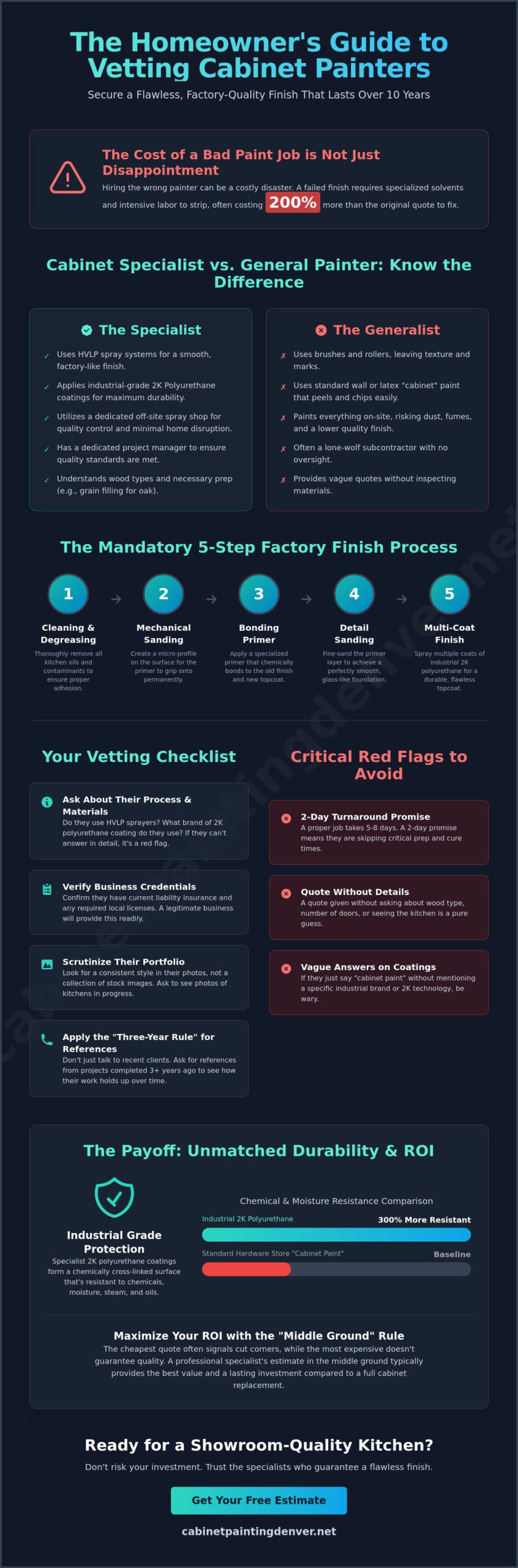
In 2026, the kitchen remains the most valuable room in your home, but the materials used in cabinetry have become increasingly complex. Modern surfaces often involve factory-applied finishes that require specific chemical bonding agents to ensure adhesion. Knowing how to vet cabinet painting companies is no longer a luxury; it’s a necessity to protect your home’s equity. If a coating fails, the cost to strip it and start over is often 200% higher than the original quote. This happens because specialized solvents and intensive labor are required to remove improperly applied paint without damaging the underlying wood or substrate.
To better understand the professional standards required for a successful business in this field, watch this helpful video:
The Specialist vs. The Generalist
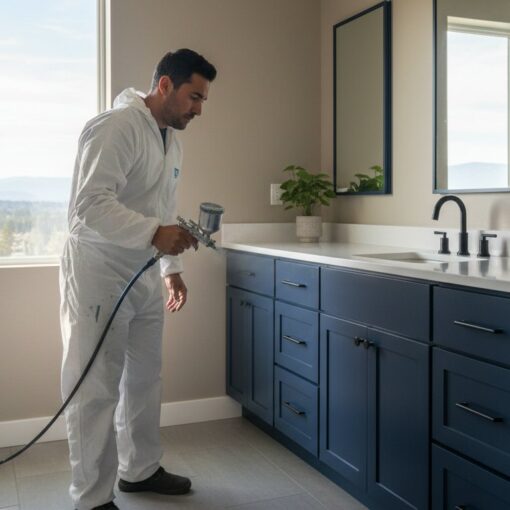
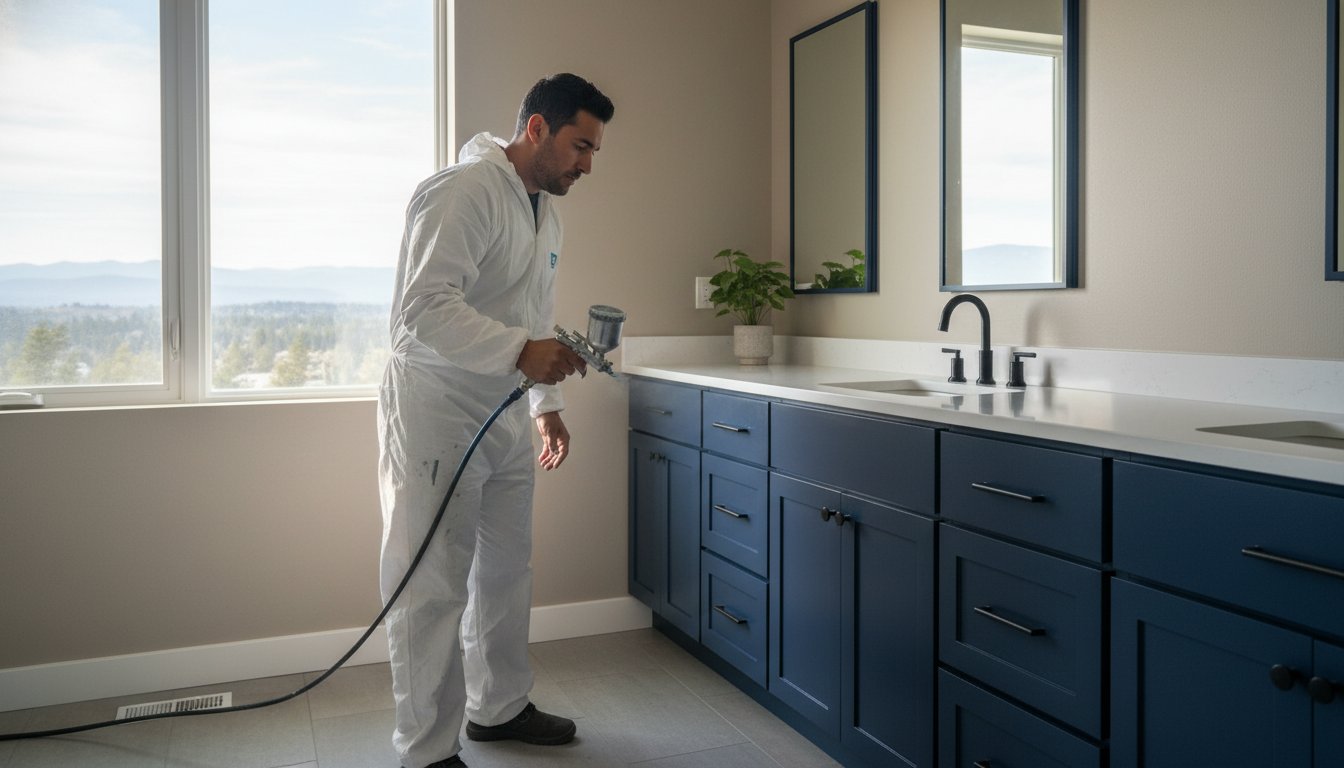
General house painters are excellent at covering large surface areas like siding or drywall. However, cabinet refinishing is a fine-finishing trade that demands a different skill set. Wall paint is never acceptable for kitchen cabinetry because it doesn’t have the chemical resistance to withstand skin oils, steam, and cleaning detergents. Professionals use HVLP (High-Volume Low-Pressure) spray systems to achieve a factory-grade look. These systems atomize the coating into a fine mist, preventing the brush marks and “orange peel” texture associated with rollers. For a deeper look at the equipment and standards you should look for, check out our Hiring Professional Cabinet Painters: The Ultimate 2026 Guide.
The “Red Flag” First Impression
Pay close attention to how a company handles your initial inquiry. If they can’t explain their prep process or the specific brand of coating they use, they’re likely not specialists. A major red flag is a contractor who provides a quote without asking about the wood type or the number of openings in your kitchen. Oak requires grain filling, while laminate requires specific primers. Without these details, a quote is just a guess. It’s also vital to spend time verifying license and insurance to ensure the business is legitimate and follows local regulations. You want a company with a dedicated project manager rather than a lone-wolf sub-contractor. A manager ensures that quality standards are met at every stage, from degreasing to the final topcoat.
Setting your expectations for a professional transformation means looking for a factory-grade finish. This isn’t just about the color you choose. It’s about a surface that feels like smooth baked enamel and can withstand the rigors of a high-traffic kitchen. In 2026, the best companies use 2K (two-component) coatings that cure much harder than traditional oils or water-based paints. If a contractor can’t explain the science behind their finish, they won’t be able to deliver the results your kitchen deserves. Understanding how to vet cabinet painting companies properly ensures you don’t end up with a peeling mess six months down the road.
Evaluating the Technical Process: Factory Finish Benchmarks
The technical execution of a project determines whether your kitchen looks “painted” or “manufactured.” When you learn how to vet cabinet painting companies, you’ll find that the timeline is the first red flag. A company promising a 2-day turnaround is cutting corners on cure times and preparation. A professional transformation for an average-sized kitchen typically requires 5 to 8 business days. This allows for a rigorous 5-step process: cleaning, mechanical sanding, priming, detail sanding, and multi-coat finishing.
The chemistry used in the shop is just as vital as the labor. You should specifically ask if the company uses Italian 2K polyurethanes or industrial-grade enamels. These coatings are significantly different from the latex or “cabinet paints” found at local hardware stores. Industrial 2K products utilize a chemical hardener that creates a cross-linked film. This results in a surface that is 300% more resistant to chemicals and moisture than standard water-based finishes, meeting 2026 durability standards for high-traffic kitchens.
Surface Prep and De-Gressing
Kitchen cabinets are magnets for cooking oils and skin lipids. If these aren’t removed, the paint will eventually peel in sheets. Professionals use industrial degreasers to strip the surface before any sandpaper touches the wood. Be wary of contractors who suggest “liquid sandpaper” as a primary prep tool. It is a chemical shortcut that fails to provide the necessary “tooth” for the primer to grab onto. A mechanical bond is the physical interlocking of the coating into the microscopic profile created by manual or orbital sanding of the wood surface. Without this physical profile, the finish lacks the structural integrity to survive daily use. Industry data suggests that 90% of finish failures are rooted in inadequate degreasing and sanding protocols.
The Spraying Setup
The best results come from a hybrid approach where doors and drawer fronts are processed in a dedicated, climate-controlled spray shop. This environment eliminates dust contamination and allows for horizontal spraying, which prevents runs and sags. For the fixed frames remaining in your home, the company must establish containment zones using plastic sheeting and HEPA-filtered air scrubbers to manage overspray and fumes. You should insist on an HVLP (High Volume Low Pressure) finish for these on-site components. This technology provides a finer atomization of the paint, resulting in a smooth, factory-like texture. For a visual benchmark of what this looks like, review the Cabinet Painting Denver: Your Ultimate Guide to a Flawless Finish. If you want to ensure your project meets these technical standards, consider consulting with a specialist who prioritizes industrial-grade equipment.
Verifying Business Legitimacy and Insurance in Denver
To understand how to vet cabinet painting companies, you must start with the Colorado Secretary of State’s online database. A legitimate business will maintain an “In Good Standing” status. This isn’t just a formality; it ensures the entity is legally recognized for tax and liability purposes in the City and County of Denver. If a company isn’t registered, they’re operating in the shadows, which leaves you with zero legal recourse if the project fails.
Don’t assume a “handyman” license is sufficient for a full kitchen remodel. Colorado law allows certain exemptions for small-scale repair work, but cabinet refinishing is a specialized trade involving volatile organic compounds and high-end spray equipment. If a contractor operates under a handyman exemption, they often lack the rigorous insurance requirements of a dedicated painting corporation. This creates a massive loophole where the homeowner becomes the de facto employer, making you liable for any accidents on your property.
Insurance and Liability Deep Dive
Never accept a verbal “we’re covered” as proof of protection. You need to see a Certificate of Insurance (COI) sent directly from their insurance provider to your email. This prevents contractors from presenting expired or forged documents. Ensure the policy includes the “non-negotiable trio”: General Liability, Workers’ Comp, and Bonding. If a technician falls in your kitchen, Workers’ Comp covers their medical bills so your homeowner’s insurance doesn’t have to. By 2026, a “limited lifetime warranty” typically only covers the chemical integrity of the paint product itself. You must verify a separate labor guarantee that covers peeling or bubbling caused by improper sanding or priming.
The Contract and Payment Schedule
Financial red flags are easy to spot if you know where to look. You should never pay more than 25% to 33% of the total project cost as a deposit. This initial payment covers material procurement and secures your dates on the calendar. If a contractor asks for 50% or more upfront, they’re likely using your money to finish a previous client’s job. A professional contract must include these specific clauses:
- Hardware Re-installation: Explicitly stating they will re-mount all doors and drawers.
- Clean-up Protocol: Daily removal of masking tape and dust.
- Touch-up Kits: Providing a labeled container of the exact batch paint used for your doors.
When you learn how to vet cabinet painting companies, you’ll notice that low-ball estimates often hide “miscellaneous supplies” fees. These can add 10% to the final bill at the last minute. Insist on a fixed-price contract that includes all primers, topcoats, and masking materials in the initial quote.
Reviewing Portfolios and Real-World Denver References
Learning how to vet cabinet painting companies requires a sharp eye for detail. You shouldn’t just look at a gallery; you need to scrutinize it. Many contractors use high-resolution stock photos from paint manufacturers to fill their websites. You can spot these by looking for generic, ultra-modern kitchens that don’t match the architectural styles found in Denver neighborhoods. If the lighting looks too perfect or the kitchen looks like a showroom rather than a lived-in home, ask for the specific neighborhood where that project was completed. Authentic portfolios should feature local home styles, such as Wash Park bungalows or Highlands ranch-styles, rather than generic studio setups.
The “Three-Year Rule” is your best defense against a low-quality hire. Most cabinet paint looks flawless on day one, but the real test happens after 36 months of daily use. Ask the company for two references from jobs completed in 2023. If the finish is still intact around the dishwasher and trash pull-out after three years, you know their bonding primer is high-grade. When you browse Google or Yelp, be wary of “review gating.” This happens when a company uses software to filter out unhappy customers before they can post publicly. A perfect 5-star rating with dozens of reviews but no written text is a red flag because it suggests the company is buying fake praise to hide a 20% or 30% dissatisfaction rate.
The Portfolio Inspection
Consistency is key when viewing a professional portfolio. Look for high-resolution “before and after” shots taken from the same angle. You need to see the “danger zones,” which include the inside corners of door panels and the edges of drawers. If the photos are blurry or taken from ten feet away, the contractor might be hiding “orange peel” textures or drips. A 5-star rating with zero text is a red flag because it provides no context about the crew’s behavior or the project’s durability. You want to see photos of the sink area specifically, as this is where 85% of paint failures occur due to water exposure and heavy cleaning.
Speaking to Local References
When you call a Denver reference, skip the small talk and get specific. Ask these three questions to get a clear picture of their experience:
- Did the crew maintain a clean workspace and use HEPA-filtered sanders to prevent dust?
- Was the project completed within the 5-day or 7-day window originally promised?
- Did the final invoice from the 2025 project match the initial 2024 quote exactly?
Ask about the crew’s punctuality. In a busy market like Denver, a crew that arrives at 8:15 AM instead of 8:00 AM every day can push a project back by 10% over a week. Verification of the final price is also vital. If a company has a habit of adding “surprise” material fees at the end of the job, their initial low bid is meaningless. Real-world feedback is the final step in how to vet cabinet painting companies effectively.
Final Selection: Comparing Estimates and ROI
Choosing the right contractor is the final hurdle in your journey of learning how to vet cabinet painting companies. When you have three or four bids on the table, don’t automatically click the “accept” button on the cheapest one. The “Middle Ground” rule is a standard industry benchmark for a reason. Bids that fall 40% below the average often indicate a lack of insurance, subpar materials, or a crew that skips the essential sanding and priming phases. Conversely, the highest bid might simply reflect a company that’s overbooked and charging a premium to squeeze you in. Look for the estimate that provides a detailed line-item breakdown and sits comfortably in the median price range.
The return on investment for this project is substantial compared to a full kitchen overhaul. In Denver, a full cabinet replacement can easily exceed $30,000, while professional painting typically costs 65% to 75% less. This allows you to allocate funds toward other upgrades like quartz countertops or high-end appliances. Beyond the math, use the bidding phase to test communication. If a contractor takes five days to return a text during the sales process, they’ll likely be just as slow when you have a question during the actual project. Professionalism during the estimate is a direct preview of the service you’ll receive.
Before any drop cloths hit your floor, ensure the paperwork is airtight. You need a signed contract that specifies the exact paint brand, the number of coats, and a clear timeline. Verify their lead-safe certification if your home was built before 1978 and request a current Certificate of Insurance (COI) sent directly from their provider.
Understanding the Price Breakdown
Labor accounts for roughly 70% to 85% of your total estimate because proper prep work is time-intensive. However, don’t overlook material costs. Premium Italian 2K polyurethanes or specialized cabinet coatings cost three times more than standard latex paint but offer the durability needed for high-traffic kitchens. You can find specific local data in our Cabinet Painting Cost: A Full 2026 Price Breakdown to see how these variables impact your bottom line. Ask about value-adds like installing soft-close hinges or drilling for new hardware, which are cheaper to do while the doors are already off.
Trusting Your Instincts
The “Vibe Check” is a legitimate part of knowing how to vet cabinet painting companies. This team will be in your kitchen for five to seven days. If the estimator provides a scribbled note on a napkin rather than a typed PDF, it’s a red flag regarding their organizational skills. Trust your gut. If the communication feels forced or dismissive, keep looking.
Ready for a professional Denver estimate? Get your free cabinet painting quote here and start your kitchen transformation with a team you can trust.
Transform Your Kitchen With Confidence
Choosing the right professional changes everything about your home renovation experience. You’ve learned that a true factory finish requires a specialized off-site spray facility rather than a makeshift garage setup. Verifying that a contractor holds active liability insurance in the State of Colorado protects your property from unforeseen risks. When you master how to vet cabinet painting companies, you ensure your 2026 project delivers a high ROI and lasting durability.
Our team maintains a 5-star local Denver reputation by combining technical precision with verified local references. We handle every door and drawer in our dust-controlled environment to achieve 100% smooth results. Don’t settle for brush marks or quick fixes that fail within 12 months. Your kitchen deserves a professional touch that stands up to daily wear and tear while looking brand new for years.
Ready to start your transformation? Get a Professional Quote from Denver’s Top-Rated Cabinet Painters and see why homeowners trust our specialized process. We’re excited to help you create the kitchen of your dreams.
Frequently Asked Questions
How can I tell if a cabinet painting company uses real industrial coatings?
Ask for the Technical Data Sheet (TDS) of the product they intend to use. Industrial coatings like 2K polyurethanes differ from the standard architectural paints found at retail hardware stores. 90 percent of finish failures occur because contractors use latex trim paint instead of catalyzed coatings. Check if the product requires a specific hardener mixed at a 10 to 1 ratio.
Is it a red flag if a company doesn’t have a physical spray shop?
Yes, the absence of a dedicated off-site spray facility is a major red flag for high-end results. Professional finishes require a dust-free, climate-controlled environment to cure properly. 85 percent of premium cabinet painters utilize a shop with a spray booth and drying racks to avoid house-borne contaminants like pet hair or dust. It’s the only way to ensure a factory-grade finish.
What questions should I ask about the prep work specifically?
Ask exactly how they remove grease and what grit sandpaper they use for mechanical profiling. When you’re learning how to vet cabinet painting companies, you should specifically ask if they use a chemical deglosser or a TSP alternative. 100 percent of successful bonds depend on removing 100 percent of surface contaminants before the first coat of primer hits the wood.
How do I verify a contractor’s insurance in Denver, Colorado?
Request a Certificate of Insurance (COI) that lists you as the additional insured and verify it through the Colorado Secretary of State website. You can also check the Denver Department of Excise and Licenses to ensure their business registration is active as of 2026. A legitimate company carries at least 1,000,000 dollars in general liability coverage to protect your property from accidental damage.
What is the typical warranty for professional cabinet painting in 2026?
A standard professional warranty in 2026 covers peeling or bubbling for 5 years. Most reputable companies exclude damage from water leaks or physical impact. Ensure the warranty is written into the final contract. 70 percent of industry leaders now offer a transferable warranty to add value for homeowners who might sell their property within the coverage period.
Should I expect a cabinet painting company to remove my doors and drawers?
You should expect a professional company to remove all doors and drawer fronts for off-site processing. Painting these components while they’re hanging leads to drips and missed edges. 95 percent of top-rated contractors transport these items to a shop to ensure a factory-like finish. This process allows them to spray in a horizontal position which creates a smoother surface.
How do I know if a cabinet painter’s reviews are legitimate?
Look for verified tags on platforms like Google and check for photos attached to reviews. Use the newest first filter to see if 10 or more reviews appeared in a single week, which often indicates fake entries. Legitimate feedback usually includes specific details about the crew members or the 3 to 5 day timeline. Real reviews often mention specific challenges the crew solved.
What should be included in a professional cabinet painting contract?
A professional contract must include the specific brand of paint, the number of coats, and a clear project timeline. It should also outline the cleanup process and the payment schedule. When you learn how to vet cabinet painting companies, you’ll see that 100 percent of valid contracts also include a formal dispute resolution clause and proof of active workers’ compensation for all employees.