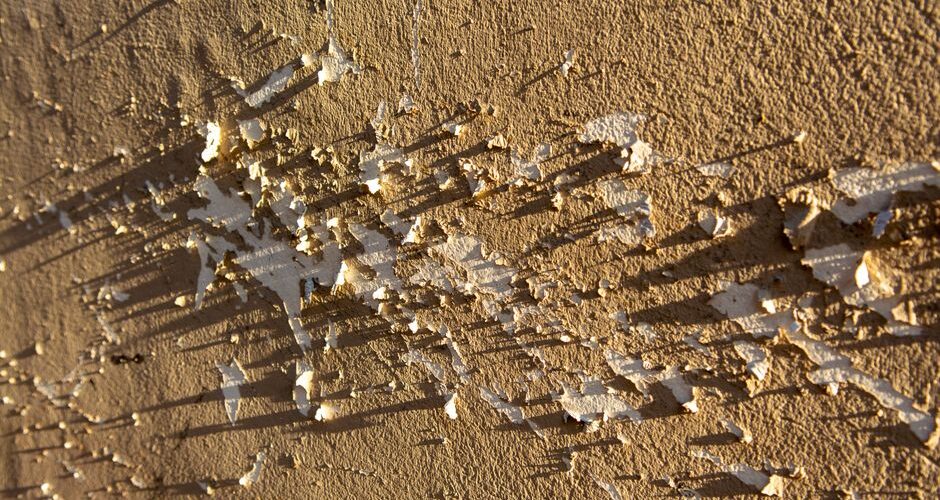
Your cabinet paint is chipping because the coating was never hard enough to live on cabinets in the first place. Most Denver County cabinet failures at the six-month mark trace back to wall-grade latex, often Emerald, applied by brush and roll instead of a two-component 2K poly sprayed in a controlled environment. The chipping is not your fault and it is not normal wear. A real fix means stripping the latex film and spraying a factory 2K poly finish, which is exactly what Cabinet Painting Denver, family-owned since 1984, does for homeowners in LoDo, Cherry Creek, Highlands, and Capitol Hill.
Table of Contents
- Why does cabinet paint chip in Denver within 6 months?
- What are the warning signs that your Denver County cabinets were painted with the wrong product?
- Latex wall paint vs factory 2K poly — which one actually holds up on cabinets?
- How do you fix a bad latex cabinet paint job in Denver County?
- What does it cost to fix chipping cabinets in Denver County, and is it cheaper than replacing them?
- How does Cabinet Painting Denver deliver a real factory finish for Denver County cabinets?
- Can you paint over chipping cabinets instead of stripping them?
- Key Takeaways
- References
Why does cabinet paint chip in Denver within 6 months?
Cabinet paint chips in Denver within six months because most cabinet painting jobs use wall paint applied by brush and roll, and that film never hardens into a cabinet-grade coating. Wall-grade latex stays soft and flexible. Cabinets need a film that cures hard enough to resist fingernail contact, hand oils, cleaning chemicals, and the repeated impact of doors closing.
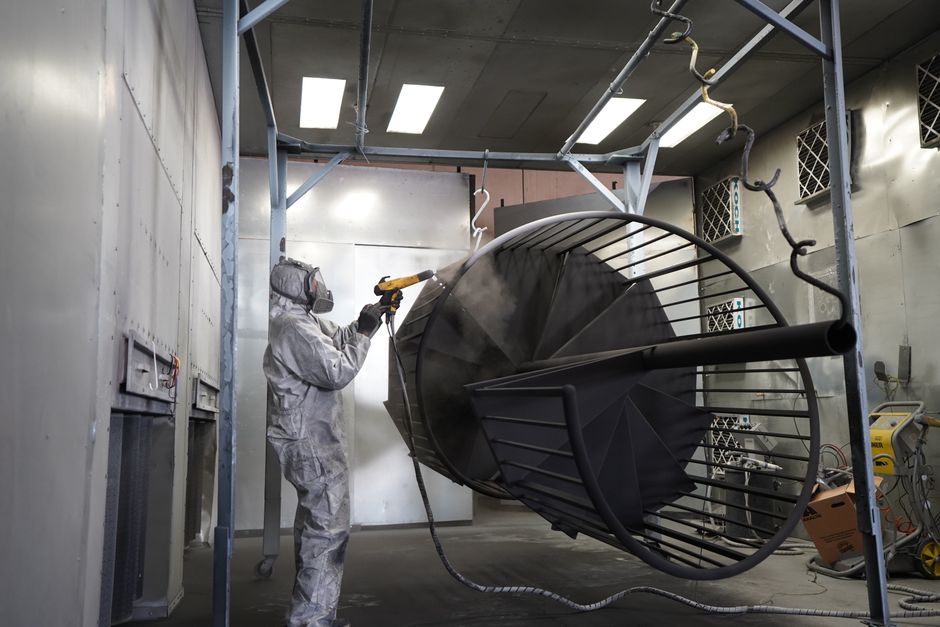
The term 2K stands for "komponent," meaning the coating arrives as two separate parts: a resin carrying pigment and a hardener or activator, mixed at application. According to cabinetspainting.com, 2K coatings cure by cross-linking chemical reaction rather than by solvent evaporation. That chemical cure is what gives a 2K poly finish its hardness and resistance to years of touching and cleaning.
Denver's dry, high-altitude air changes how fast a film sets and how well it bonds to the substrate. A soft single-component coating can skin over quickly in dry air while staying weak underneath. The result is a film that looks acceptable for a few weeks, then begins failing at the exact points where hands touch and doors move.
You can check four failure signs tonight. Look for chipping at door edges, a dark ring around the knob, a tacky feel on the surface, and visible brush strokes. Any one of those signs points to the wrong coating. All four together confirm a wall-paint job on cabinets, and that job will keep failing until the coating itself is replaced.
What are the warning signs that your Denver County cabinets were painted with the wrong product?
The first warning sign is usually a chip at the door edge, because that is where the soft film takes the most mechanical stress. Edge chipping shows up before anything else. It starts small, then grows as the film lifts away from the substrate.
The second sign is a dark ring around the knob or handle. Hand oils and skin contact break down soft latex films, and the ring is the visible evidence of that breakdown. The dark ring is not dirt you failed to clean. It is the coating itself degrading under repeated contact.
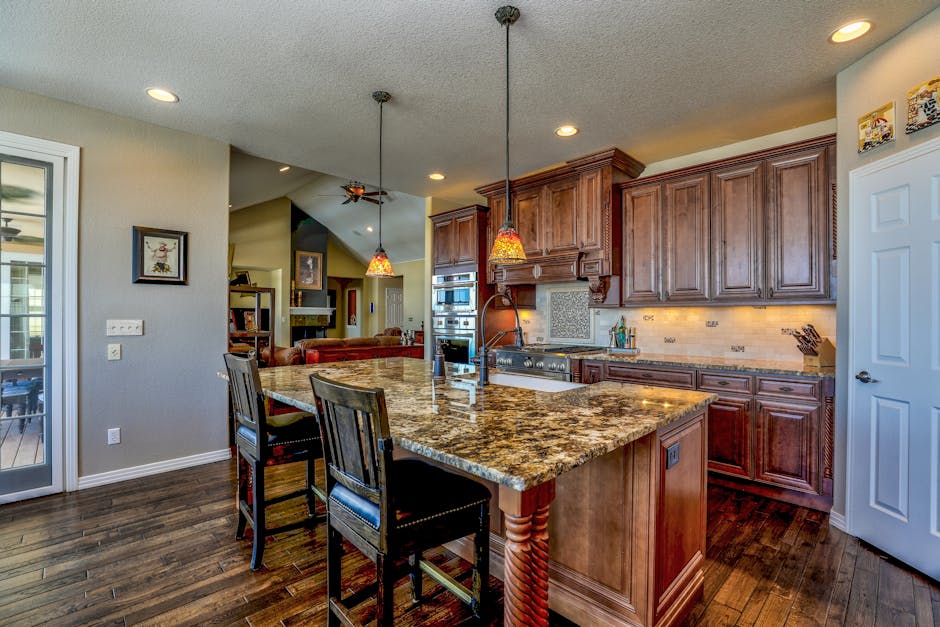
The third sign is a tacky feel, especially in humid months. A properly cured cabinet coating should feel hard and dry to the touch at all times. Tackiness means the film never fully cured, or it is softening again under heat and moisture.
The fourth sign is grain telegraphing through the film, where you can see the wood grain pattern through the paint. That happens when a thin, soft coating shrinks into the grain over time. Brush and roller texture is another tell that no spray booth was involved in the original job.
Chipping at handle edges is a hardness problem, not a prep problem. Touch-up paint will fail again in weeks because the underlying film is still soft. Homeowners in LoDo, Cherry Creek, Highlands, and Capitol Hill should photograph the chip and the knob ring for a free assessment before attempting any spot repair.
Latex wall paint vs factory 2K poly — which one actually holds up on cabinets?
Factory 2K poly holds up on cabinets. Latex wall paint does not. The difference comes down to how each coating cures and how hard each film becomes.
| Factor | Latex wall paint | Factory 2K poly |
|---|---|---|
| Hardness | Soft, remains flexible | Hard, cures by chemical cross-linking |
| Yellowing | Yellows over time, especially in low light | Resists yellowing |
| Chip resistance | Chips at edges and handles | Resists chipping from contact and cleaning |
| Warranty | Typically none on cabinets | Workmanship coverage from refinishers |
Single-component products dominate the market because they are easier to apply, not because they perform better on cabinets. According to cabinetspainting.com, 1K coatings cure by evaporation and are the default choice for painters who do not want to invest in spray equipment and mixing discipline.
Refinishers who spray 2K polyurethane report it will not break down from years of touching and cleaning, while ordinary cabinet paint can. The chemical cross-linking in a 2K system creates a film that behaves more like a factory-cured coating than a dried paint layer.
A soft film cannot be fixed with a harder topcoat over it. The layers move differently, expand and contract at different rates, and delaminate. The only legitimate correction is removing the soft film and starting with a properly bonded, properly cured coating system.
How do you fix a bad latex cabinet paint job in Denver County?
You fix a bad latex cabinet paint job by stripping the latex, not by painting over it. The full correction sequence starts with degreasing every surface to remove hand oils and cooking residue. Then the latex film is stripped away completely.
After stripping, the wood is sanded at 150 grit, then 220 grit, to create a clean mechanical bond for the primer. A bonding primer goes on next. On oak cabinets, grain filling is required where the open grain would otherwise telegraph through the new film.
Doors and drawers are sprayed off-site in a booth, away from kitchen dust and humidity swings. The coating is a 2K poly conversion varnish applied in two coats plus a topcoat. According to cabinetspainting.com, preparation steps include degreasing, scuff sanding with dustless HEPA sanding, grain filling on oak, sanding between coats, and allowing cure time.
The 7-14 day cure window is when the chemical cross-linking finishes. "Hard as factory" means the film reaches full hardness during that window, after which it resists the daily abuse cabinets take. Your kitchen stays usable during the 5-7 day process, and Cabinet Painting Denver runs W-2 crews, no subs, no app workers.
Stripping is the step cheap jobs skip, which is why their "fix" fails again. A recoat over failing latex bonds to the failing layer, not to the cabinet, so it releases with the old film.
What does it cost to fix chipping cabinets in Denver County, and is it cheaper than replacing them?
Fixing chipping cabinets in Denver County runs $4,200 to $9,800, and yes, it is significantly cheaper than replacing the boxes. The fix lands near the cost of a proper new paint job because the labor is in the strip and prep, not in the final spray.
| Area | Cost per opening |
|---|---|
| LoDo | $89-$149 |
| Cherry Creek | $89-$149 |
| Highlands | $89-$149 |
| Capitol Hill | $89-$149 |
Pricing is per opening at $89-$149, not per kitchen, because every door and drawer face carries the same strip, sand, prime, and spray labor. A full kitchen replacement reference quote sits around $25,000, according to cabinetsrefinishing.com. Refinishing typically costs about 70% less than replacement.
Fixing saves your existing boxes, which is the whole point when the boxes are sound and only the coating failed. Ripping out solid cabinet boxes because a painter used the wrong coating is an unnecessary expense. The correction targets the failed film, not the cabinet structure.
How does Cabinet Painting Denver deliver a real factory finish for Denver County cabinets?
Cabinet Painting Denver delivers a real factory finish through Professional Kitchen Cabinet Painting with Factory Finish – Denver, a process built on removing doors and drawers to a dust-free shop for degrease, sand, repair, pre-catalyzed lacquer primer, and industrial water-borne acrylic enamel in 2-3 coats. Boxes are sprayed on-site while the kitchen stays usable.
The company is family-owned since 1984, with 50+ years of combined experience. The process runs 5-7 days total, and the kitchen stays usable throughout. Durability is 10+ years in Colorado's dry climate. Pricing starts from $3,200 per kitchen, and the process is best for 15-40 doors and drawers in oak or maple kitchens from the 1990s through 2010s.
Service area is Denver County only: LoDo, Cherry Creek, Highlands, Capitol Hill, Washington Park, Sloan's Lake, Berkeley, Park Hill, and Central Park Stapleton. The company does not serve Boulder, Aurora, Lakewood, or other surrounding municipalities.
For a free Denver County fix estimate, text photos to 303-591-2089 for a same-day exact quote, or email factoryfinishcabinet@gmail.com. The photo assessment shows whether the failing film is latex and what the correction will require.
Can you paint over chipping cabinets instead of stripping them?
No, painting over chipping cabinets does not work. A new film bonds to the failing layer, not to the cabinet, so it releases with the old film when the old film lets go.
Spot touch-ups on a soft latex film look worse within a month because the sheen and hardness never match. The touched area cures differently and reflects light differently, and the underlying softness remains.
A light scuff and recoat is legitimate only when the existing coating is a hard, well-bonded factory finish. In that case, the new film bonds to a stable surface. Diagnosis requires eyes on the door, which is why the photo quote exists.
Key Takeaways
- Cabinet paint that chips at six months in Denver is almost always wall-grade latex applied by brush and roll, not a cabinet coating failure.
- 2K means two components, resin and hardener, mixed at application and cured by chemical cross-linking rather than evaporation.
- Denver's dry, high-altitude air punishes soft single-component films and rewards properly cured 2K poly.
- The four checkable signs of a failing job are edge chipping, a dark ring around the knob, a tacky feel, and visible brush strokes.
- Fixing a bad Denver County job runs $4,200-$9,800 and is priced per opening at $89-$149, not per kitchen.
- Cabinet Painting Denver is family-owned since 1984, runs W-2 crews, no subs, no app workers, and finishes in 5-7 days while the kitchen stays usable.
- Real durability is 10+ years in Colorado's climate, with a 7-14 day cure before the film reaches full hardness.