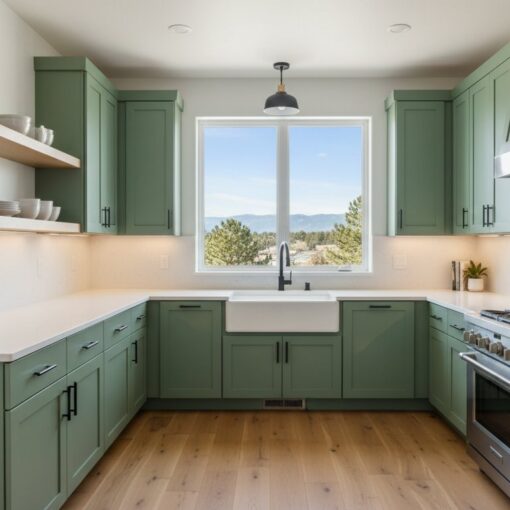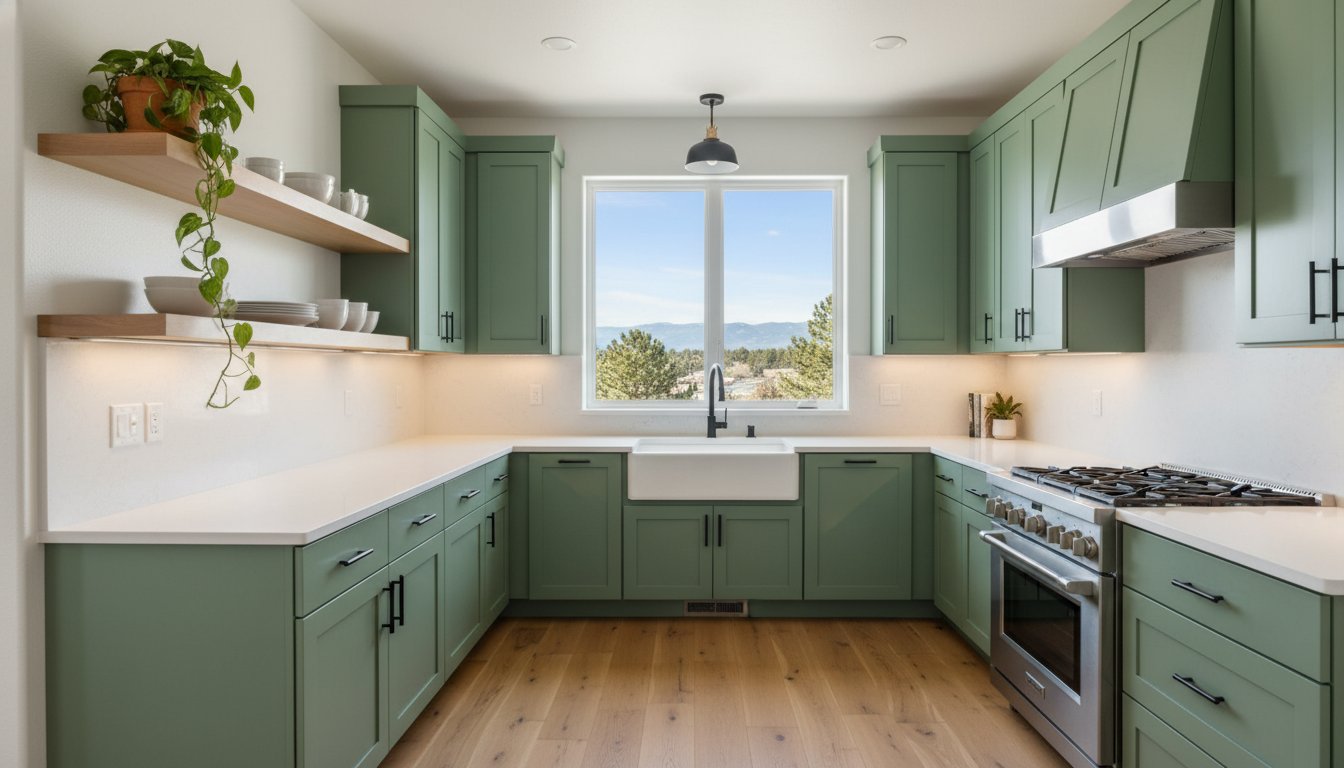
A factory finish is the standard cabinet manufacturers advertise and most repaints never reach. It is thin, even, free of brush texture, and bonded tightly enough to survive years of daily wipe-downs. When homeowners in Centennial ask what separates a luxury refinish from a standard repaint, the answer is almost never the color. It is the process behind the color, and the amount of labor that happens before the first coat is sprayed.
Cabinet Painting Denver delivers a factory-grade sprayed finish on kitchen cabinets across the Denver metro area, backed by a 3-year warranty. This guide explains what a modern refinishing schedule should include, what to ask a contractor before booking, and where shortcuts show up two years later. It is written for homeowners comparing bids, not for trade professionals.
What a Factory Finish Actually Means
Factory cabinets are finished in a controlled shop. Doors and drawer fronts are hung or laid flat, sprayed with consistent air pressure, and cured in a space with stable temperature and low airborne dust. Nothing is brushed on site next to a running dishwasher. The result is a coating film with uniform thickness across the face, the edges, and the recessed panel.
A refinish done well reproduces that condition as closely as a home allows. The best residential work follows the same logic: parts come off, surfaces are prepared and cleaned, material is applied with spray equipment rather than a roller, and the finish is allowed to cure before the kitchen goes back into service. A luxury refinish is therefore less about a premium product name and more about control over dust, temperature, film build, and dry time.
The practical payoff is visible in raking light. Run a hand along a door face finished with a proper spray schedule and you feel no ridges, no lap marks, and no raised grain. That smoothness is what buyers notice during a home showing, and it is what holds up to cooking grease and repeated cleaning.
The Prep Work That Decides the Outcome
Most failures in cabinet finishing trace back to preparation, not topcoat. Kitchen cabinets live under a film of cooking oil that is invisible until a new coating refuses to bond. A thorough schedule treats cleaning as a separate stage rather than a quick wipe between sanding passes.
- Remove doors, drawer fronts, hardware, and any glass or panels that should stay finish-free.
- Label every part and record its location so reassembly does not become guesswork.
- Degrease all surfaces, including the undersides, edges, and the inside faces of door frames.
- Sanding: scuff and level the existing finish so the new coating has a mechanical key.
- Repair scratches, dings, split seams, and failing caulk lines before finishing begins.
- Mask the cabinet boxes, appliances, counters, and flooring with paper and plastic, not tape alone.
- Control dust at the source with sanding equipment and negative air where the site allows.
Ask any contractor how they clean and test for grease, and how they handle a cabinet with a chipped edge or a peeling spot near the sink. The answer tells you whether the finish you are paying for will still be intact after a few winters of dry indoor air.

Spray Application: Where the Smooth Surface Comes From
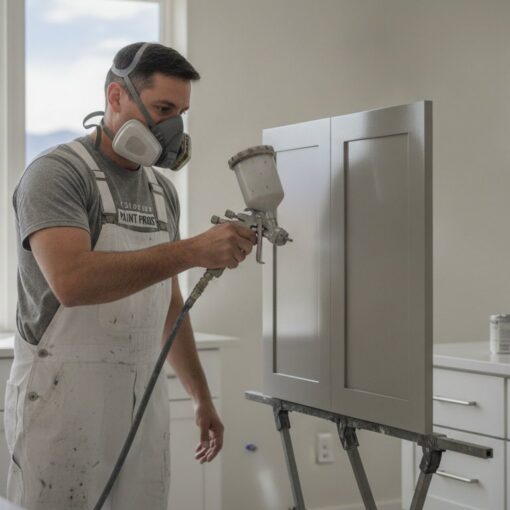
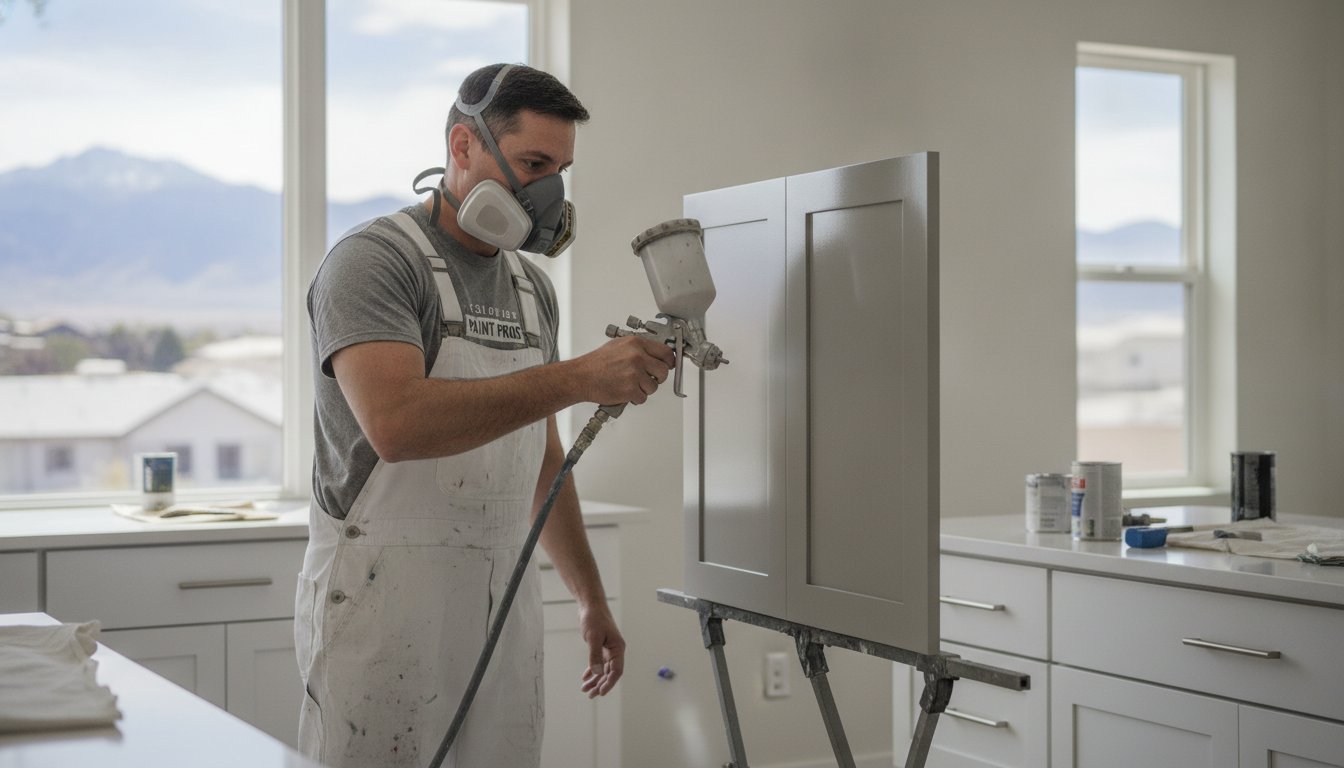
Cabinet Painting Denver uses an HVLP sprayed finish, which stands for high volume, low pressure. The equipment atomizes the coating into a fine mist and delivers it at lower pressure than conventional spray systems, which reduces overspray and lays material down in thinner, more even passes. That control is why a sprayed door reads as smooth rather than stippled.
Spraying at a homeowner’s property adds requirements that shop finishing does not have. The work area needs protection, the air needs to be reasonably free of dust, and the temperature needs to stay within the coating’s stated range through application and cure. A luxury refinish plan should name those conditions out loud before the first day of spraying. If a bid skips the masking scope, the dust control method, or the dry time between coats, it is a repaint in refinishing clothing.
Doors and Drawers Off the Boxes
Doors and drawer fronts should be finished flat and separately from the cabinet boxes. Laying parts horizontally prevents runs, keeps the film even from edge to edge, and allows both faces to be coated without the part resting on wet material. Boxes are typically finished in place after masking. Any company spraying doors while they hang on the cabinet is trading durability for speed.
Primer, Topcoat, and Cure Time
Bonding primer does the structural work. It grabs the sanded surface below and gives the topcoat something consistent to sit on, which matters on cabinets that have been painted before. The topcoat supplies color, sheen, and washability. Cure is the final variable and the one most often rushed. Cabinets feel dry long before they are hard, and hardware should not go back on, nor doors be closed against the frames, until the finish has had the time the product requires.
Color and Sheen Choices for 2026 Kitchens
Color preference is personal, and no contractor should push a palette as if it were a rule. What a refinishing professional can do is show how a color behaves in the actual light of your kitchen. North-facing rooms read cooler, and Centennial kitchens with large south or west windows read warmer and brighter than a sample chip suggests. A sprayed sample door on your own cabinet door, viewed at different times of day, beats a photograph every time.
Sheen is the more technical decision. Higher gloss reflects more light and shows surface imperfections more readily, which is why a flawless spray job is a prerequisite rather than a bonus. Lower sheens hide minor texture and are forgiving in high-traffic family kitchens. Ask how the sheen you prefer affects cleaning, touch-up, and the visibility of seams, then choose with that information in hand.

Luxury Refinish Compared With a Quick Repaint
| Stage | Quick repaint | Factory-style refinish |
|---|---|---|
| Application method | Roller or brush on hanging doors | Spray equipment with parts removed |
| Surface preparation | Light scuff and wipe | Degrease, sand, repair, then prime |
| Dust and site protection | Minimal masking | Full masking of boxes, counters, floors |
| Finish texture | Visible stipple and brush lines | Smooth, even film across faces and edges |
| Cure management | Doors reinstalled the same day | Finish allowed to cure before reassembly |
| Workmanship coverage | Varies, often limited | 3-year warranty through Cabinet Painting Denver |
The comparison is not about insulting a budget repaint. It is about matching expectations to the outcome you want. Homeowners planning to sell want a finish that photographs well and survives a buyer’s inspection. Homeowners staying put want a surface that still looks right after years of cooking, cleaning, and seasonal humidity swings.
Centennial Homes and Front Range Conditions
Centennial sits in the Denver metro area, and Front Range homes put cabinets through a specific set of stresses: very dry indoor air in winter, strong sun through west-facing windows, and kitchens that run hot and humid during cooking then cool quickly. A finish with proper film build and a full cure handles that cycling better than a thin coat applied in a hurry. Cabinets nearest the range and sink take the most abuse, which is where prep shortcuts appear first.
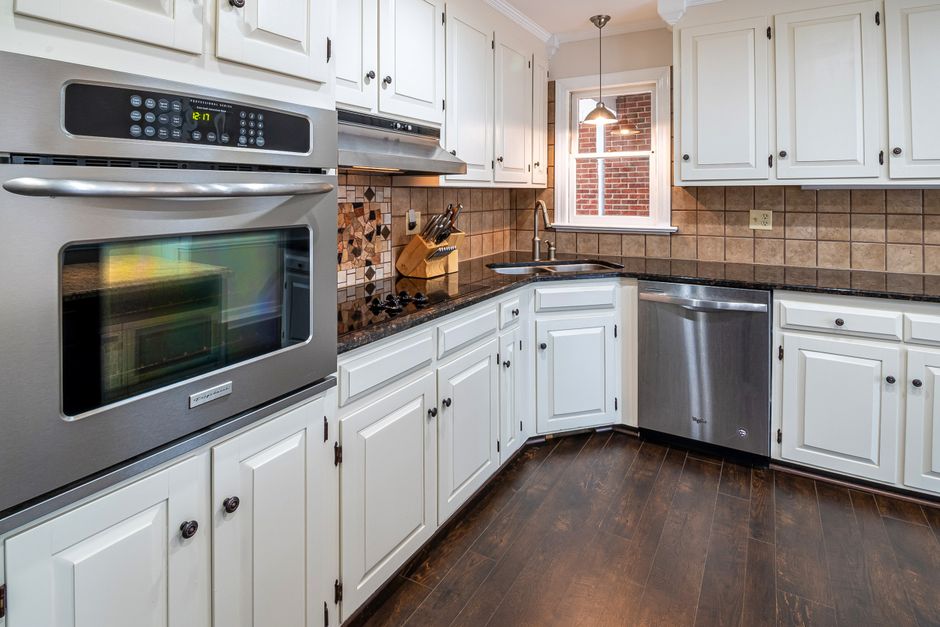
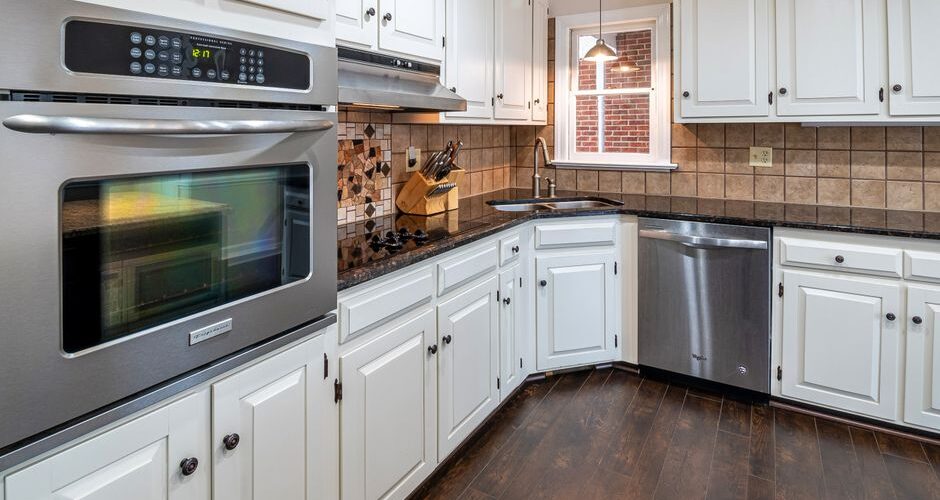
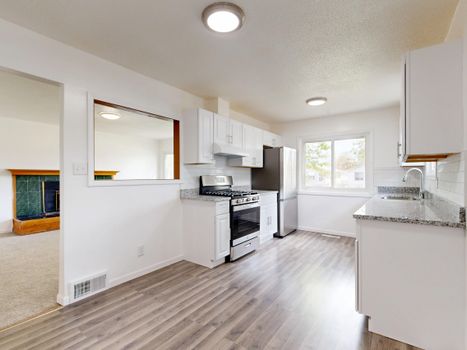
Older Centennial kitchens often have cabinets worth keeping. Solid boxes, sound joinery, and a layout that still works are assets, and refinishing preserves them far more affordably than tearing out and replacing cabinetry. Newer homes with builder-grade finishes benefit too, because the upgrade is the coating quality and the color, not new boxes.
Estimates, Scope, and What to Confirm
Cabinet Painting Denver offers free estimates and on-site consultations, which is the right moment to walk the kitchen together and settle scope. Bring your questions about spray equipment, dust control, dry time, hardware reinstallation, and what the 3-year warranty covers. Confirm in writing how many coats are included, whether interior cabinet faces are part of the price, and how long the kitchen stays out of service.
Get the schedule in writing and compare bids line by line rather than by total. Two quotes can look similar and describe completely different amounts of labor. A luxury refinish in Centennial should read like a process document, not a color card, because the process is what you will live with long after the newness of the shade wears off.
Frequently Asked Questions
How long does a cabinet refinishing project take?
Timeline depends on the number of doors and drawers, the condition of the existing finish, and how much repair is needed before spraying. Cure time is the variable homeowners underestimate, since doors and drawers must stay off until the coating is hard enough for hardware and daily use. Your written estimate should state the working days and the cure window before you commit.
Can refinishing cover cabinets that were already painted?
In most cases yes, provided the existing coating is sound and properly cleaned. Loose, peeling, or chalky paint has to be addressed first, and areas around the sink and range often need extra attention because of grease and moisture. A contractor should inspect those spots during the on-site consultation and explain how they will be prepared before new material goes on.
What does the 3-year warranty cover?
Cabinet Painting Denver backs its workmanship with a 3-year warranty. Ask for the written terms during your free estimate so you know exactly which conditions are covered, what maintenance is expected, and how a claim is handled. Warranty language varies between companies, and reading it before the work starts is far easier than resolving a question afterward.
Do I need to empty the kitchen before work begins?
Plan to clear the counters and remove everyday items from the cabinets being finished, since doors and drawers come off and surfaces get sanded. Masking protects counters, appliances, and flooring, but personal items and fragile decor should be moved out of the work zone. Confirm the access and drying area your contractor needs before the first day.