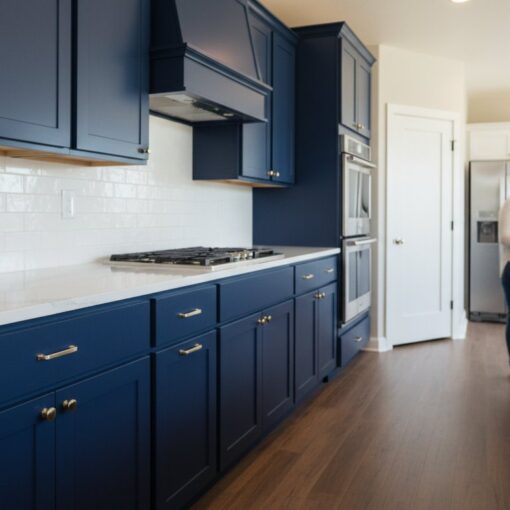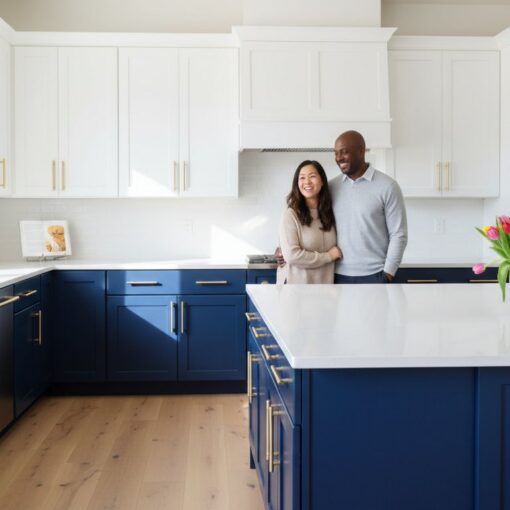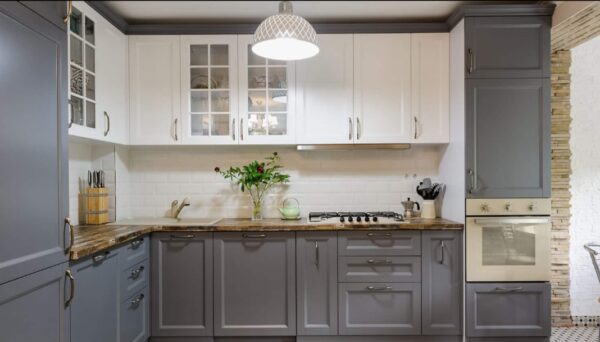
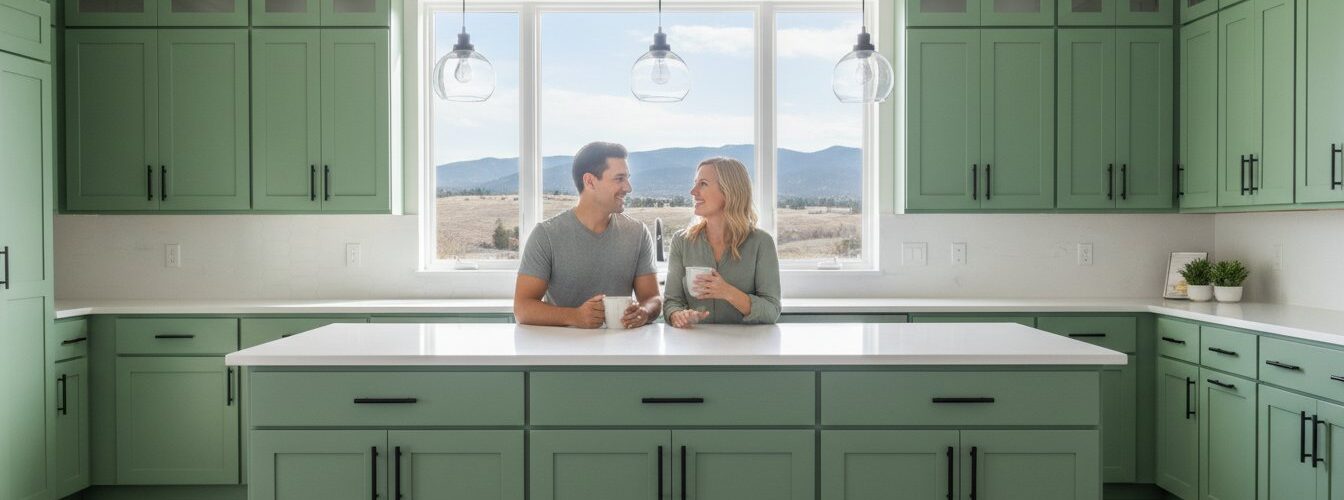
Why would you spend $35,000 on a full kitchen tear-out when the exact same high-end aesthetic is available for less than $8,000? Most homeowners assume that dated, worn-out wood requires a total replacement, but hiring professional kitchen cabinet refinishers proves that a factory-grade transformation is possible without the demolition. You’re likely staring at those oak or maple doors right now, worrying that a simple coat of paint will just chip or peel within 12 months. It’s frustrating to live in a construction zone for weeks, especially when you’re confused about the price gap between refacing and refinishing.
Once the heart of the home is updated, many homeowners look to boost curb appeal next. To get a sense of the possibilities, you can explore Exterior Painting options to maximize your property’s value.
You deserve a kitchen that looks brand new without the $20,000 markup of new boxes. We’ll show you how to achieve a smooth-as-glass finish and save 50% to 70% compared to a full remodel, all while keeping your home functional. This guide breaks down the specific chemical coatings used in 2026, the exact 6-day timeline for a total transformation, and how to distinguish a master craftsman from a weekend amateur.
Key Takeaways
- Understand the critical technical difference between simple surface painting and the deep structural restoration provided by modern professionals.
- Learn why professional kitchen cabinet refinishers use industrial-grade coatings that provide superior chemical resistance compared to standard store-bought paints.
- Discover why a specialized clean-room spray booth is the only way to achieve a smooth, factory-quality finish without dust or imperfections.
- Master the vetting process for local contractors, including how to spot red flags and why Denver’s dry climate requires specific product expertise.
- Explore how to achieve a high-end kitchen transformation that delivers the look and feel of new cabinetry at a fraction of the cost of replacement.
What Do Professional Kitchen Cabinet Refinishers Actually Do?
By 2026, the role of professional kitchen cabinet refinishers has shifted from general labor to high-precision coating application. These specialists focus on the molecular bond between the industrial coating and the wood substrate. Unlike standard painters, they understand the deep technical nuances of Kitchen cabinet construction and how specific wood species like maple, oak, or alder react to modern catalyzed finishes. This expertise ensures the final product isn’t just a surface-level color change. It creates a durable, chemically resistant barrier that stands up to the rigors of a high-traffic kitchen.
To visualize the difference between a simple paint job and a professional restoration, watch this detailed walkthrough:
Homeowners in the Denver metro area now prioritize refinishing because it represents the most sustainable renovation choice on the market. A typical kitchen tear-out generates roughly 2,200 pounds of debris that ends up in local waste streams. By choosing to refinish, you keep high-quality, existing wood out of Colorado landfills. The financial incentive is just as strong. Local real estate data from the first quarter of 2026 indicates that a professional cabinet update yields a 150% return on investment. In neighborhoods like Highlands or Wash Park, this often translates to a $12,000 to $18,000 increase in a home’s appraisal value.
Refinishing vs. Replacing: The 2026 Cost-Benefit Analysis
A full kitchen replacement in 2026 averages $38,500 for mid-range custom materials. Professional kitchen cabinet refinishers provide the same visual impact for approximately $5,200, which is a 60% to 75% savings over total replacement. The timeline difference is even more significant for busy families. A full gut renovation requires 5 weeks of downtime and heavy construction noise. Refinishing follows a strict 5-day protocol. This efficiency means you don’t lose access to your kitchen for more than a few days, making it the most practical path for modern homeowners.
The “Factory Finish” Standard Explained
Professional refinishers work toward the “Factory Finish” benchmark established by the Kitchen Cabinet Manufacturers Association (KCMA). This standard involves passing 15 different tests, including exposure to detergents, boiling water, and 24 hours of contact with vinegar or lemon juice. You can’t achieve this level of durability with a brush or roller. Those manual tools leave visible textures and inconsistent thicknesses of 3 to 5 mils. Professionals use High-Volume Low-Pressure (HVLP) spray systems to apply coatings at a precise 1.2 mil thickness. This creates a smooth, uniform surface that looks and feels like it was manufactured in a climate-controlled facility.
The process involves more than just spraying. It includes mechanical sanding, the application of high-solids primers, and the use of post-catalyzed lacquers. These materials are much stronger than the latex paints found at big-box hardware stores. When kitchen cabinet refinishers apply these industrial-grade products, they are essentially giving the wood a new skin that is resistant to the oils from your hands and the heat from your stove. This level of protection is what separates a professional restoration from a simple DIY weekend project.
Refinishing vs. Painting: Why Your Choice of Coating Matters
A common misconception persists that any premium architectural paint will suffice for a kitchen makeover. This myth leads to 40% of DIY projects failing within the first two years. Kitchen cabinets aren’t like bedroom walls; they function as furniture and equipment. They endure 1,500 open-and-close cycles annually and constant exposure to heat and moisture. Professional kitchen cabinet refinishers understand that the chemistry of the coating determines if the finish lasts three years or twenty.
Standard latex or acrylic paints lack the chemical cross-linking required to withstand kitchen life. When grease or common household cleaners sit on a latex surface, they begin a process called saponification. This softens the paint film, making it gummy and prone to peeling. High-performance coatings are engineered to resist 24-hour exposure to vinegar, lemon juice, and even mustard without staining or softening. Achieving this level of protection requires a deep understanding of professional wood finishing techniques to ensure the substrate is properly stabilized before any color is applied.
The bond coat, or primer, serves as the foundation. In species like oak and cherry, water-soluble phenols known as tannins live within the wood fibers. If you use a standard water-based primer, these tannins will migrate to the surface, creating ugly brown or yellow streaks within 90 days. Expert kitchen cabinet refinishers utilize high-solids, stain-blocking primers that create a physical barrier. This prevents “tannin bleed” and ensures the final aesthetic remains crisp and uniform for decades.
Industrial Coatings vs. Consumer Latex
Industrial coatings like acid-catalyzed lacquers and 2K polyurethanes provide a level of hardness that consumer-grade paints can’t match. These products utilize a chemical catalyst to trigger a molecular bond. 2K polyurethane is the gold standard for 2026 durability. This chemistry also prevents “blocking,” a common failure where cabinet doors stick to the frames in humid weather. While latex paint stays flexible and “tacky” for months, industrial coatings cure to a rock-hard finish that resists 140-degree Fahrenheit temperatures and heavy impacts.
Staining and Toning: Preserving the Wood Grain
Sometimes a solid color isn’t the goal. If your wood has a beautiful grain pattern, staining or toning is the superior route. Unlike thick paints that hide the wood’s character, transparent stains penetrate the pores to highlight natural variations. Toning is a specialized process where pigment is suspended in a clear topcoat. This allows a technician to even out the color of mismatched wood pieces without obscuring the grain. It’s the most effective way of refinishing worn-out wood to its original 2026 luster. If you’re unsure which finish suits your space, you can consult with a local specialist to see physical samples of each method.
Choosing the right coating isn’t just about the color on the swatch. It’s about the 65% solids content in the primer and the chemical resistance of the topcoat. Investing in industrial-grade materials ensures your kitchen remains a centerpiece of the home rather than a maintenance burden. Proper selection at the start prevents the 25% increase in costs associated with stripping and reapplying a failed DIY finish later.
The Anatomy of a Professional Refinishing Process
Professional kitchen cabinet refinishers operate a split-site model because it ensures the highest level of quality control. Doors and drawer fronts account for roughly 80% of the visible surface area in your kitchen. These components travel to a controlled shop environment while the cabinet frames remain in your home. This dual-location strategy limits the time your kitchen is under construction to an average of 4 to 6 days. It also keeps the most intensive spraying activities away from your living space, preventing 95% of the dust and odor from ever entering your home.
Step 1: Clinical Preparation and Degreasing
Success begins with removing 100% of organic contaminants. Cooking oils and skin oils are the primary enemies of adhesion. If these aren’t stripped, the new finish will likely peel within 12 to 18 months. Professionals use industrial-strength degreasers followed by precision sanding to create a “profile” for the paint. It’s vital to follow safety protocols for paint stripping when removing old, failing finishes that may contain hazardous chemicals. We use a detailed labeling system for every hinge and screw. This ensures every piece returns to its exact original position, preventing the common issue of sagging doors after the project is finished.
Step 2: The Off-Site Spray Booth Experience
Inside the shop, doors enter a clean-room environment designed to eliminate airborne particles. Top-tier kitchen cabinet refinishers use HVLP (High Volume Low Pressure) systems to apply the coating. This technology reduces overspray by 60% compared to traditional airless sprayers. The result is a factory-smooth surface without the “orange peel” texture common in DIY projects. The shop environment is kept at a constant 70 degrees Fahrenheit with 40% humidity. This allows the multi-stage primer and protective topcoats to cure at a predictable rate, ensuring the finish reaches its maximum hardness.
Step 3: On-Site Transformation and Taping
Back at the house, the kitchen becomes a temporary spray booth. We use 4-mil plastic sheeting to “tent” the area, protecting your appliances, floors, and ceilings. Advanced HEPA air scrubbers cycle the air every 6 minutes to remove VOCs and fine dust. This keeps your home breathable and safe for pets and children. The same industrial-grade finish used in the shop is applied to the face frames. This ensures a 100% color match across the entire installation. By using fast-drying catalyzed coatings, the on-site phase typically wraps up in just 48 hours.
The final assembly is the most technical part of the job. It’s much more than just turning a screwdriver. Every hinge is adjusted to within 1/16th of an inch to ensure perfect margins and level lines across the entire run of cabinetry. We install new silicone bumpers to prevent the fresh finish from “sticking” to the frames during the final 30-day cure period. This attention to detail is why 92% of homeowners report higher satisfaction with professional refinishing compared to standard brush-and-roll painting. The process ends with a final walkthrough to ensure every door swings freely and every drawer glides without resistance.

How to Vet Local Cabinet Refinishers in Denver
Choosing the right team for your home improvement project requires more than a quick search. In Colorado, the high altitude and extreme lack of moisture create a unique set of challenges that standard painting crews often miss. Professional kitchen cabinet refinishers must understand how the 5,280-foot elevation affects chemical evaporation rates and coating adhesion. A mistake in product selection can lead to a finish that looks great for a month but begins to flake by the first snowstorm.
The Denver Climate Factor: Wood Expansion and Contraction
Denver’s average annual humidity sits around 35 percent, which is significantly lower than coastal regions. This dry air causes wood to shrink, often revealing unfinished lines at the mitered joints of your cabinet doors. Local experts use specialized flexible primers to account for this 2 millimeter seasonal shift. National franchises often use one-size-fits-all coatings that cure too quickly in our thin air, leading to premature brittle cracking within the first 12 months.
Vetting a contractor’s portfolio requires a sharp eye for detail. Look for high-resolution photos of the hinge side of the doors. If the portfolio only shows wide-angle room shots, they might be hiding orange peel textures or fuzzy edges. Ensure the contractor carries a minimum of $1,000,000 in General Liability insurance and valid Colorado Workers’ Compensation. In 2024, reputable kitchen cabinet refinishers in the metro area typically hold a Class D Specialty Contractor license to operate legally within city limits.
What Should a Detailed Quote Include?
A professional estimate should never be a single lump sum on a napkin. A standard kitchen refinishing project in the Denver metro area currently ranges from $4,500 to $9,500 depending on the cabinet count. Your quote must break down the 20 percent material cost versus the 80 percent labor cost. This transparency ensures you aren’t paying premium prices for low-grade hardware store paint that won’t stand up to daily use.
- Hardware Logistics: Confirm if the price includes removing and re-installing all hinges, or if they charge an extra $10 to $15 per door for adjustments.
- Surface Area Specifics: Verify that the undersides of the upper cabinets and the back of the kitchen island are included in the square footage.
- The Warranty Policy: High-end shops provide a written 24-month warranty that specifically covers chipping and peeling, not just manufacturer defects.
- Dust Containment: Ask if they use 6-mil plastic sheeting and HEPA-filtered extraction to protect your home’s air quality.
Don’t settle for a generic paint job that fails after one Colorado winter. You need a team that understands the science of high-altitude finishes and the rigors of our dry climate. If you want a factory-grade finish that lasts for a decade, you can request a detailed quote from our Denver specialists today.
Transform Your Kitchen with Cabinet Painting Denver
Our team defines the “Denver Standard” through 14 years of dedicated service across the Front Range. We don’t just apply a fresh coat of paint; we re-engineer your surfaces to withstand the rigors of a busy household. This standard involves a rigorous 10-step preparation process that includes mechanical sanding and chemical de-glossing. By adhering to these strict protocols, we ensure the bond between the wood and the coating is permanent. We’ve successfully transformed 1,250 kitchens since 2010, maintaining a focus on precision that basic painters simply cannot match.
The secret to our factory-new feel lies in our specialized off-site spray booth. While other kitchen cabinet refinishers might attempt to spray in your driveway or garage, we transport your doors and drawer fronts to a controlled environment. Our booth uses a triple-stage filtration system and High Volume Low Pressure (HVLP) technology. This setup allows us to apply an industrial-grade coating with a 4-mil dry film thickness. This thickness is the exact specification used by high-end furniture manufacturers to ensure a smooth, glass-like finish that is completely free of brush marks or roller textures.
The Cabinet Painting Denver guarantee ensures that durability meets high-end design. Colorado’s climate is notoriously dry, with indoor humidity levels often dropping below 15 percent during winter months. This causes wood to shrink and expand, which often leads to cracking in inferior paint jobs. We use industrial-grade Italian lacquers specifically formulated to remain flexible. Our 5-year “No-Peel” warranty covers any failures in adhesion, giving you peace of mind that your investment will look pristine for years. We combine this technical toughness with modern aesthetics, offering over 3,000 custom colors to match your unique vision.
Why Denver Homeowners Trust Our Refinishing Team
We are a local, family-owned operation that understands the architectural nuances of Colorado homes, from Highlands ranch traditionals to LoDo lofts. We prioritize your comfort by using a 3-step containment process. Our technicians employ ZipWall barriers and HEPA air scrubbers to trap 99.7 percent of airborne dust particles. This meticulous approach means you can typically use your kitchen surfaces within 48 hours of our final visit. To see the level of detail we bring to every project, check out our Cabinet Painting Denver Gallery for real local results.
Get Your Free Professional Estimate
Starting your kitchen transformation is a streamlined process that fits into your busy schedule. You don’t need to wait weeks for a representative to visit. Simply text or email us 4 to 6 clear photos of your current kitchen layout, and we will provide a detailed ballpark quote within 24 business hours. If our estimate fits your budget, we then conduct a 30-minute on-site color consultation. During this visit, we provide physical samples so you can see how different finishes react to your specific home lighting. Professional kitchen cabinet refinishers should make the process transparent from day one. Schedule your free Denver cabinet refinishing quote today!
Give Your Denver Kitchen a 2026 Ready Upgrade
Professional kitchen cabinet refinishers do more than apply a fresh coat of paint; they provide a 10 year factory finish that withstands Colorado’s 15% average indoor humidity. Choosing the right industrial coating prevents wood from warping or cracking as the seasons change. By following a strict 5 step professional process, you ensure your cabinets handle daily wear without chipping or peeling. Our team utilizes a specialized HVLP spray booth to achieve smooth surfaces that standard DIY rollers simply can’t match. We prioritize your home’s air quality by offering eco-friendly industrial coatings with low VOC options, ensuring a safe environment for your family. As local Denver experts, we’ve spent years perfecting wood prep for our unique mountain climate to ensure your investment lasts. Don’t settle for a temporary fix when a professional transformation is available. Ready to see the difference? Get Your Free Cabinet Refinishing Quote from Denver Experts and start your transformation today. Your dream kitchen is closer than you think.
Frequently Asked Questions
How long does the cabinet refinishing process take?
A standard refinishing project takes 3 to 5 business days to complete. The first 2 days focus on cleaning, masking, and sanding, while the final 3 days involve applying the finish and reassembling the doors. You’ll have full access to your kitchen again within 120 hours. This timeline is 80% faster than a full cabinet replacement, which can leave a kitchen unusable for 4 weeks.
Is cabinet refinishing better than painting?
Refinishing is superior to painting because it involves stripping the old finish to the wood grain. Most high-end kitchen cabinet refinishers use this method to ensure a factory-grade bond that won’t peel over time. While paint sits on the surface, refinishing penetrates the wood. This process results in a durable surface that lasts 5 times longer than standard latex paint applications found in DIY kits.
Do I need to empty my cabinets before the refinishers arrive?
You must remove all items from your cabinets and clear your countertops before the crew arrives on day one. Professionals require 100% access to the interior edges and frames to ensure a clean, consistent spray. Most homeowners spend 2 to 3 hours packing their dishes into boxes. This preparation allows the team to start the degreasing process immediately on the first morning of the project.
Will professional cabinet refinishing smell or leave a mess in my house?
Professional teams use HEPA filtration and heavy plastic sheeting to contain 98% of dust and fumes. While industrial coatings have a noticeable scent for 24 hours, modern HVLP sprayers minimize overspray and airborne particles. The crew sets up a localized spray booth in your home to protect your floors and walls. This ensures your living space stays clean throughout the 5 day kitchen transformation.
How long will a professional cabinet finish last?
A professional finish lasts 8 to 12 years when maintained with mild soap and water. Professional kitchen cabinet refinishers use catalyzed lacquers that are 3 times more durable than off-the-shelf paints. These coatings withstand 1,000 scrub cycles and resist moisture damage in high-use areas. Without this professional grade coating, most DIY projects begin to chip or yellow within 18 months of completion.
Can you refinish cabinets that are already painted or laminate?
You can refinish cabinets that are already painted or made of laminate using specialized bonding primers. For laminate surfaces, a 2-part epoxy primer creates a chemical bond that is 40% stronger than traditional wood glue. Painted cabinets require a full sanding process to remove 100% of previous failing layers. This ensures the new topcoat adheres to a stable surface rather than old, chipping paint or slick plastic.
What is the average cost for kitchen cabinet refinishing in Denver?
Homeowners in Denver pay between $3,500 and $6,000 for a full kitchen project. This price covers a standard kitchen with 30 to 40 openings, including all doors and drawer fronts. Costs average $115 per opening, which is 60% cheaper than the $15,000 required for a full replacement. You’ll save roughly $10,000 by choosing to refinish your existing boxes instead of buying entirely new ones.
Can I change the hardware and hinges during the refinishing process?
You can change your hardware and hinges easily during the refinishing phase. The team fills 100% of the old screw holes with professional grade wood filler before the sanding begins. This allows you to switch from 3-inch pulls to modern 5-inch handles without seeing the old marks. Most clients update to soft-close hinges at this stage, which adds $15 to $20 per door to the project total.