The promise of a “no-sand” cabinet update is often a shortcut to a peeling disaster. Liquid deglossers cannot replicate the precision-engineered mechanical bond created by a professional sanding cabinets for painting service. Most homeowners want a kitchen that looks new without the fear of paint chipping after only a few months. This concern is valid, as the foundation of any coating determines its ultimate lifespan and resistance to daily wear. You may feel confused by conflicting marketing claims, but the technical reality of adhesion remains constant.
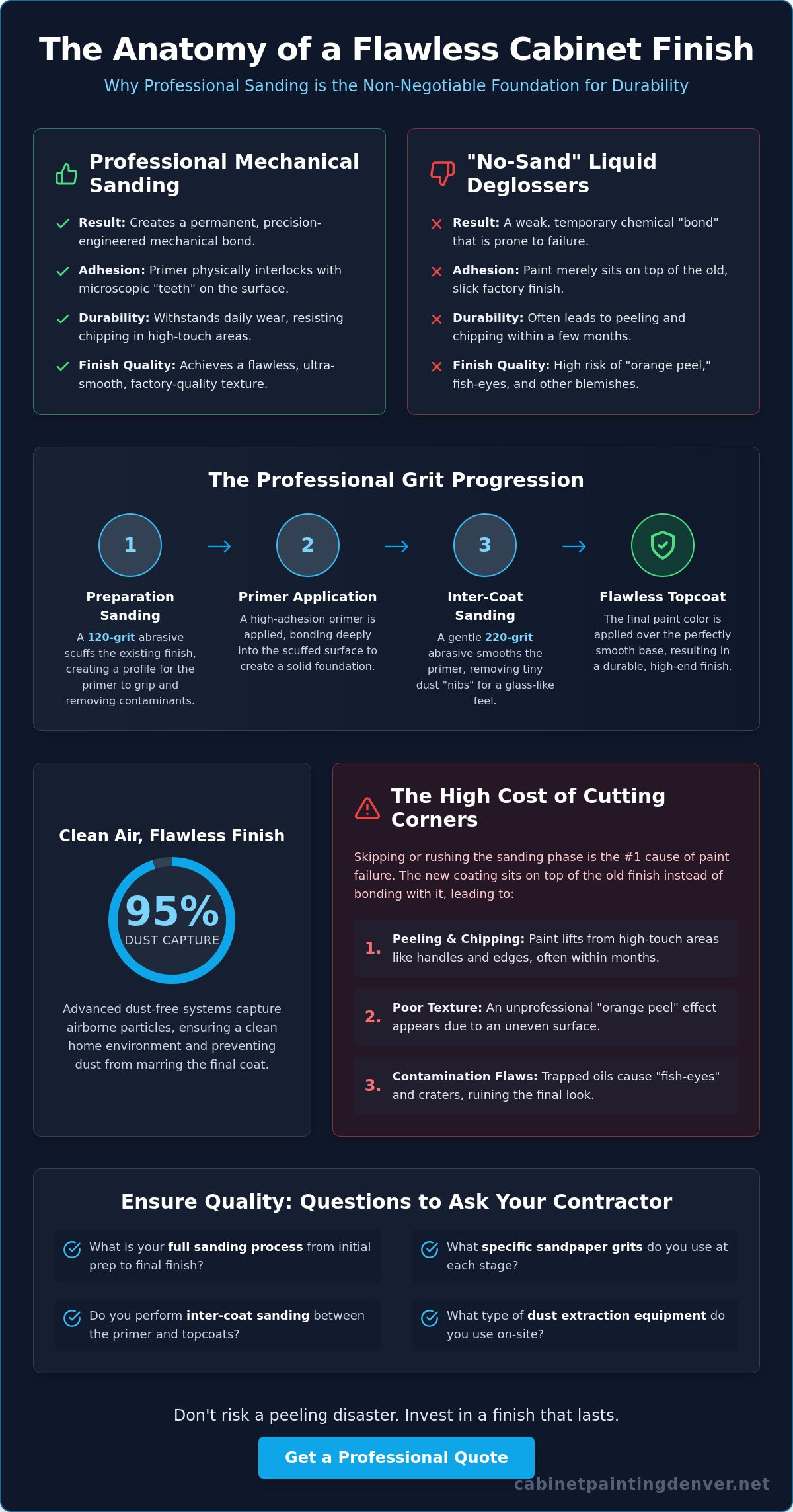
Our process utilizes advanced dust-free systems to capture up to 95% of airborne particles, ensuring a clean and controlled environment throughout the project. You’ll discover why professional mechanical abrasion is the essential requirement for a durable, factory-quality cabinet transformation that won’t fail. This overview details how our rigorous preparation creates a flawless bond and adheres to the latest 2026 standards for professional kitchen, bathroom, and bookshelf cabinet painting. We prioritize procedural clarity to ensure your cabinets achieve a high-end finish that stands the test of time.
Key Takeaways
- Understand why scuffing existing factory finishes is the only way to ensure primer penetrates and bonds to the surface properly.
- Learn the technical difference between 120-grit preparation and 220-grit finishing to achieve a smooth, professional result.
- Identify why a professional sanding cabinets for painting service is superior to “no-sand” chemical alternatives for high-traffic surfaces.
- Discover how dustless extraction technology maintains air quality and prevents wood dust from spreading throughout your home during the project.
- Gain a checklist of questions to ask your contractor about their sanding schedule and equipment to ensure they aren’t cutting corners.
Why Sanding Cabinets for Painting is a Critical Professional Requirement
A professional sanding cabinets for painting service is the only way to establish a permanent mechanical bond between the substrate and the new coating. In the context of professional refinishing, a mechanical bond refers to the physical interlocking of the primer with the wood surface. Most factory-installed cabinets feature a high-performance topcoat designed to repel moisture and stains. While this protection is ideal for daily use, it prevents new paint from adhering. We must scuff this surface to create a profile that allows the primer to penetrate and grip effectively.
To better understand the technical requirements of this process, watch this helpful video:
Beyond adhesion, sanding removes residual surface contaminants that standard cleaning might miss. Kitchen environments naturally accumulate grease, cooking oils, and steam residue. If these substances remain, they act as a barrier, causing the paint to delaminate or “bead up” during application. Meticulous preparation ensures every square inch of the cabinet box and door is ready for a high-end transformation. This foundation is what separates a temporary DIY project from a durable, factory-quality finish.
Mechanical Bond vs. Surface Leveling
Professional sanding serves two distinct purposes: creating adhesion and ensuring a level surface. We don’t aim for aggressive wood removal that alters the cabinet’s shape. Instead, we perform precision scuff-sanding to create microscopic “teeth.” This process involves understanding sandpaper grits to choose the correct abrasive for each stage of the project. We also address grain raises and minor factory imperfections. This step ensures the final texture is smooth rather than gritty or uneven under the new paint film.
The Consequences of Inadequate Preparation
Skipping or rushing the sanding phase is the primary cause of paint failure in residential projects. Without mechanical preparation, the paint sits on top of the old finish rather than becoming part of the surface. This leads to several critical issues:
- Peeling and Chipping: Paint will likely lift around high-touch areas like handles and edges within months of completion.
- Poor Texture: Inadequate sanding often results in an “orange peel” effect, where the finish looks dimpled and unprofessional.
- Contamination Reactions: Hidden oils can cause “fish-eyes” or cratering in the wet paint, ruining the factory-quality look.
A durable finish requires more than just a fresh color. It demands a foundation that can withstand the rigors of a functional kitchen or bathroom environment. By investing in a comprehensive sanding cabinets for painting service, you ensure the longevity of your investment and avoid the costs associated with premature failure.
Professional Sanding Mechanics: Grits, Tools, and Technology
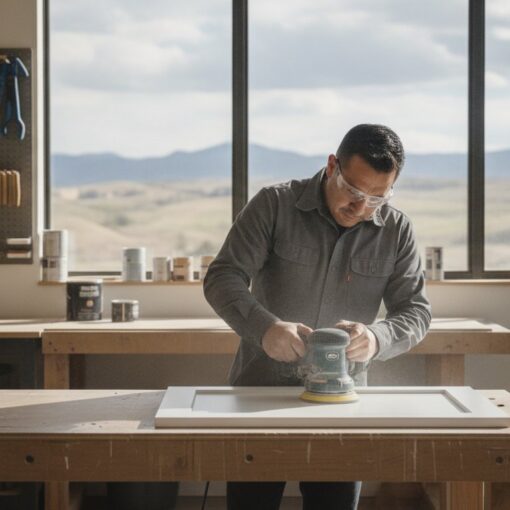
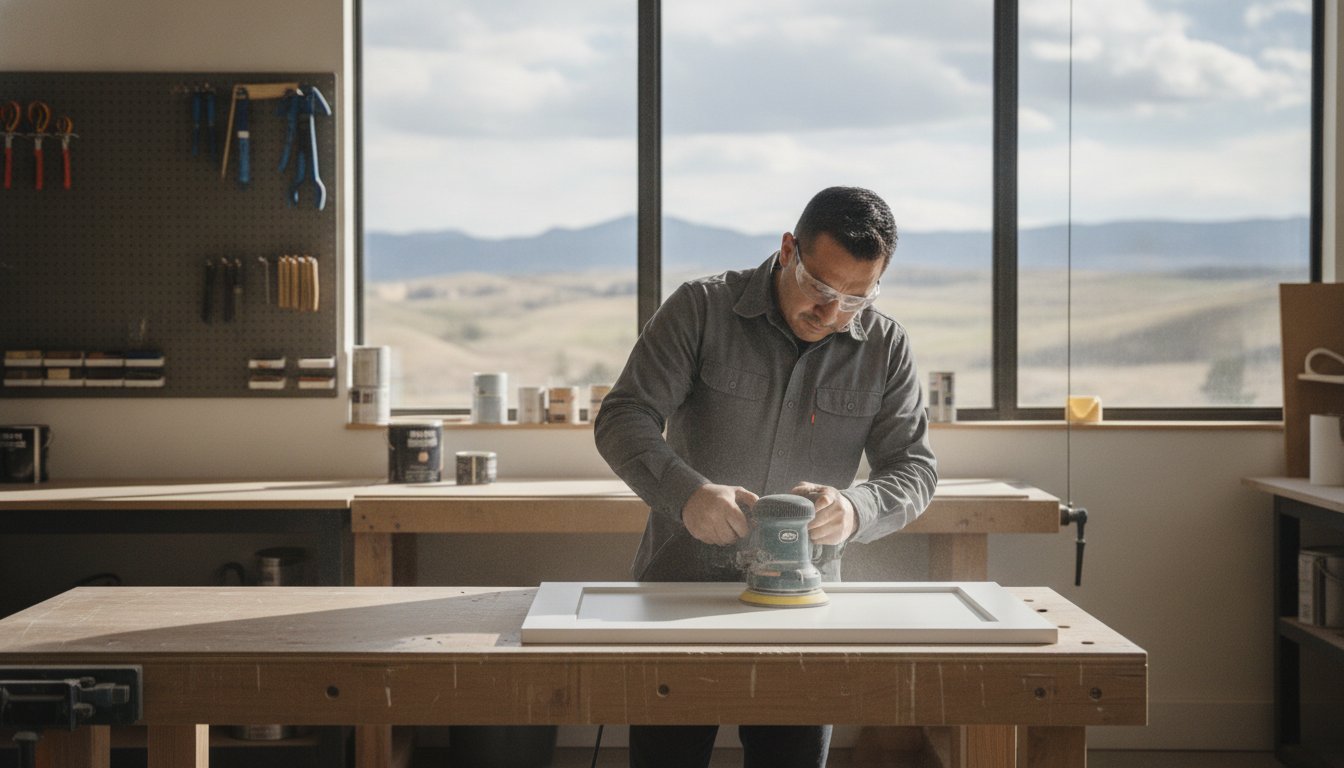
Achieving a factory finish requires more than effort; it requires a systematic approach to abrasion. A professional sanding cabinets for painting service utilizes random orbital sanders for large, flat surfaces like door panels and cabinet boxes. These tools provide an even scratch pattern that prevents swirl marks. Detail hand-sanding remains necessary for profile edges and intricate moldings where machines cannot reach. This combination ensures every surface is prepared to the same high standard.
Inter-coat sanding is a critical step often overlooked by non-professionals. Between the primer and the final topcoat, we lightly sand the surface to remove “nibs” or small dust particles that settled during the drying process. This creates an ultra-smooth foundation for the final color. Our team applies these precision methods to every kitchen cabinet painting project to ensure a clean, high-performance result.
The Precision Grit Progression
We utilize a specific sequence of abrasives to achieve a mirror-smooth surface. The process begins with 120-grit paper to break the existing factory seal and create the necessary mechanical profile. After the initial primer application, we transition to 220-grit paper to level the primer and remove any grain raises. For the ultimate factory feel, we may use 320-grit or higher between final coats to produce a velvety, high-end texture that is soft to the touch.
Dustless Technology in Professional Services
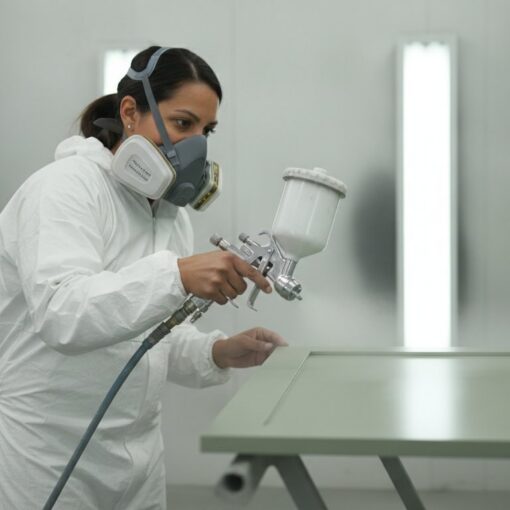
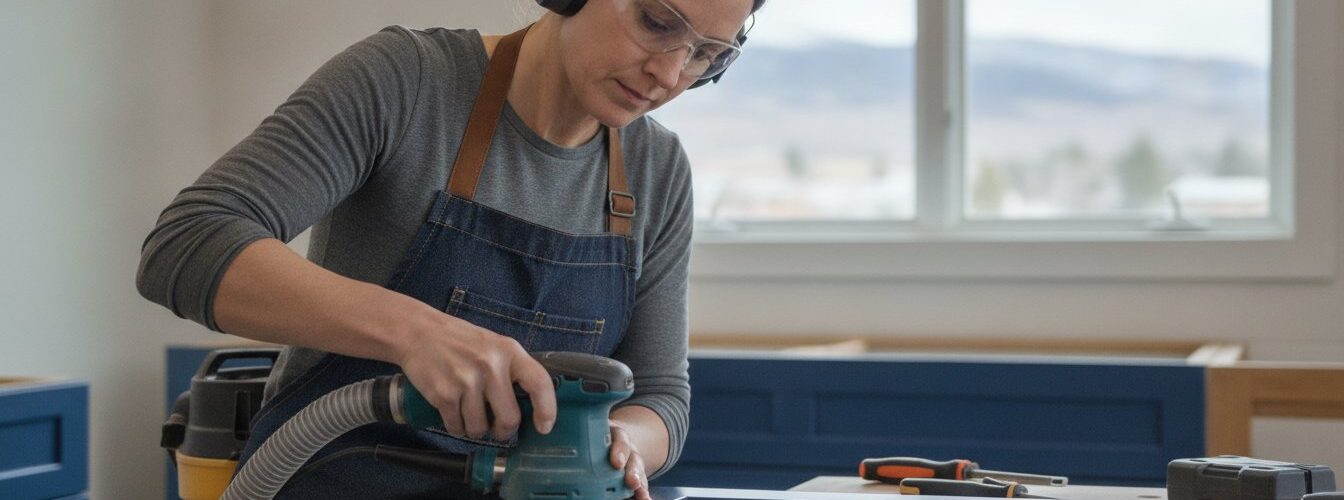
Modern professional equipment integrates HEPA-filtered vacuum extraction directly into the sanding head. Unlike a standard shop-vac that often exhausts fine dust back into the room, these systems capture 99% of particulates at the source. This technology protects your kitchen surfaces and HVAC system from fine wood dust contamination. Adhering to professional safety standards ensures that both the workspace and the home environment remain protected from particulate hazards during the sanding phase. This dust-controlled environment is essential for maintaining air quality and preventing debris from landing in the wet paint film.
By using professional-grade extractors, we maintain a clean job site from start to finish. This approach eliminates the heavy cleanup typically associated with cabinet updates. It also ensures that the final finish is free from embedded dust, which is a common failure point in DIY attempts or low-budget services. Meticulous dust management is a requirement for any high-performance coating system in 2026.
The ‘No-Sand’ Myth: Liquid Deglossers vs. Mechanical Prep
The “no-sand” marketing approach suggests that liquid deglossers provide a sufficient foundation for new coatings. These products use chemical solvents to dull the gloss of an existing finish, theoretically allowing the new paint to stick. However, this method relies entirely on a chemical bond, which is significantly weaker than a mechanical one. In a professional sanding cabinets for painting service, we prioritize physical abrasion because chemicals cannot replicate the physical interlocking required for long-term durability. Adhesion is a physical requirement that liquid solutions simply cannot meet on high-performance surfaces.
Relying on liquid deglossers often leads to premature failure in high-use areas. Kitchens are environments with high moisture, heat, and frequent physical contact. Chemicals alone don’t provide the structural integrity needed to prevent the paint from lifting when exposed to these conditions. Our professional standards dictate that mechanical preparation is the only reliable way to ensure a high-end transformation remains intact for years. We’ve seen numerous projects where “no-sand” kits failed within months, requiring a full strip and refinish.
How Liquid Deglossers Fall Short
Chemical deglossers are incapable of leveling the substrate. If your cabinets have existing scratches, dents, or grain raises, a liquid solution will simply coat over them, leaving the imperfections visible in the final finish. Additionally, these chemicals often leave behind a microscopic residue. This residue can react negatively with the chemistry of modern, high-performance cabinet paints, leading to poor drying or “alligatoring.” Liquid products also fail to address wood fibers that swell when moisture is introduced. Only mechanical sanding can shear these fibers down to create a truly smooth surface ready for primer.
The Professional Standard for Durability
A reputable contractor won’t substitute chemicals for physical labor. Industry-leading warranties for cabinet coatings almost always require mechanical sanding as part of the preparation protocol. Choosing a “no-sand” service might save time initially; however, the long-term cost is often much higher. When the finish begins to peel in six months, the entire coating must be removed. This remedial work is far more expensive than investing in a proper sanding cabinets for painting service from the start.
Ensuring paint longevity in high-traffic environments requires a commitment to procedural clarity. We don’t cut corners because we understand the technical requirements of adhesion. By providing a comprehensive sanding process, we guarantee the primer has a clean, profiled surface to grip. This rigorous approach is what allows us to deliver a factory-quality finish that withstands the daily demands of a busy household. We prioritize the physical integrity of the bond to ensure your investment lasts for the life of the kitchen.
Evaluating a Cabinet Sanding Service: What Homeowners Should Ask
Selecting the right provider involves more than comparing bottom-line costs. A professional sanding cabinets for painting service must include specific technical requirements to ensure a factory-quality finish. You should ask for a detailed description of the tools and materials the contractor intends to use. High-end results require a combination of random orbital sanders for flat panels and meticulous hand-sanding for profile edges. If a contractor relies solely on hand-sanding, the finish may lack the uniformity of a machine-leveled surface.
The sanding sequence must also be tailored to your specific cabinet material. For example, oak cabinets have a deep, open grain that requires aggressive initial sanding to manage texture. In contrast, MDF (Medium Density Fiberboard) requires a lighter, high-grit approach to avoid compromising the resin-bonded fibers. Proper containment is equally vital. Ensure the service includes plastic shielding for appliances and active air filtration to maintain a clean environment. According to industry data from 2026, dust-free sanding systems can reduce airborne particulates by up to 95%, which is the standard you should expect for your home.
Essential Questions for Your Contractor
- “What specific dust-control measures do you use during the sanding phase?” Confirm they use HEPA-integrated extractors rather than standard shop vacuums. This is the only way to prevent fine wood dust from settling in your HVAC system.
- “Do you sand between every coat of paint to ensure a smooth finish?” Inter-coat sanding is a requirement for a professional result. It removes airborne contaminants that land in the wet film, ensuring the final coat is velvety to the touch.
- “How do you handle sanding in intricate door profiles and corners?” Machines cannot reach every crevice. A quality sanding cabinets for painting service utilizes specialized contour pads and hand-sanding techniques for Shaker-style or raised-panel details.
Identifying Red Flags in a Quote
Transparency in the bidding process is a hallmark of a professional contractor. If a quote omits “preparation” or “sanding” as a specific line item, the provider is likely cutting corners. Be wary of contractors who claim their specific brand of paint “doesn’t require sanding.” This is a common marketing myth that ignores the physical requirements of adhesion. Finally, the absence of professional extraction equipment on the job site is a clear indicator of an amateur setup. Without these tools, your kitchen will likely be covered in fine dust that is difficult to remove. If you are ready to start your project with a team that prioritizes precision, contact us for a professional kitchen cabinet painting consultation.
Cabinet Painting Denver: Our Dustless, Precision Sanding Process
Our commitment to a factory-quality finish begins with a localized understanding of Denver’s unique environmental conditions. The dry climate in Colorado affects how wood fibers react to moisture and how coatings cure over time. A professional sanding cabinets for painting service must account for these variables to ensure the new finish doesn’t just look good initially but remains bonded for years. We utilize a systematic approach to preparation that addresses the specific needs of Denver homeowners, moving beyond basic scuffing to create a precision-engineered surface profile.
Cleanliness is a priority in our operational standards. We utilize Festool sanding equipment integrated with HEPA extraction systems to maintain a dust-controlled environment. These systems capture up to 95% of airborne particulates at the source, preventing fine wood dust from migrating into your living spaces or HVAC ductwork. This high-performance equipment is essential for achieving the clean substrate required for professional cabinet refinishing. By removing dust immediately, we ensure that no debris is trapped beneath the primer or topcoat layers.
Our team possesses the technical expertise required to handle Denver’s most common cabinet materials. Oak requires deep grain management, while Maple and Cherry demand a more delicate touch to avoid burning the wood or creating uneven textures. We adjust our sanding cabinets for painting service based on the density and grain structure of your specific cabinetry. This procedural clarity ensures that every door and drawer front receives the exact level of abrasion needed for a flawless, high-end transformation.
The Cabinet Painting Denver Difference
We follow a strict 5-step preparation protocol that prioritizes mechanical bonding over chemical shortcuts. This process starts with a thorough cleaning to remove surface oils, followed by our precision sanding sequence. We maintain transparent communication throughout the project, providing objective updates on the status of your cabinetry. Our local expertise allows us to identify potential adhesion issues before they occur, ensuring your kitchen, bathroom, or bookshelf cabinets are prepared according to the highest industry standards for 2026.
Start Your Kitchen Transformation Today
Choosing a professional service means you don’t have to compromise between a durable finish and a clean home. Our specialized kitchen cabinet painting process is designed to deliver a factory-quality look that withstands daily wear and tear. We provide detailed quotes that outline every step of our preparation and finishing work, ensuring there are no hidden gaps in the scope of service. If you’re ready to revitalize your space with a team that doesn’t cut corners, Contact Cabinet Painting Denver for a Professional Consultation.
Achieve a Durable Cabinet Transformation Through Precision Preparation
A factory-quality finish in 2026 requires a commitment to technical precision. Mechanical bonding through a professional sanding cabinets for painting service remains the only reliable foundation for high-performance coatings. You now understand that liquid deglossers cannot replace physical abrasion, especially in high-traffic kitchen environments. Our dustless HEPA-filtered sanding process ensures your home remains clean while we create the necessary profile for permanent adhesion.
We utilize a detailed 5-step preparation protocol tailored to Denver’s unique climate and diverse home styles. This rigorous approach prevents common failures like peeling or chipping. We provide the expertise needed for kitchen, bathroom, and bookshelf cabinet painting projects throughout the metro area. You can take the first step toward a flawless transformation by requesting a professional assessment of your cabinetry today. Your cabinets deserve a finish that stands the test of time.
Get Your Free Professional Cabinet Painting Quote in Denver
Frequently Asked Questions
Does sanding cabinets for painting create a lot of dust in my house?
Professional systems minimize dust through the use of HEPA-filtered vacuum extraction. These tools capture approximately 95% of airborne particulates directly at the sanding head before they can migrate into your living space. We also utilize plastic shielding and active air filtration as part of our standard containment strategy to protect your kitchen and HVAC system.
Can I use a liquid deglosser instead of sanding my kitchen cabinets?
Liquid deglossers are not a suitable replacement for a professional sanding cabinets for painting service. While chemicals can dull a surface, they only provide a weak chemical bond that often fails in high-moisture environments. Mechanical sanding creates a physical profile that allows the primer to interlock with the wood, ensuring long-term durability that chemicals cannot replicate.
What happens if you don’t sand cabinets before painting them?
Skipping the sanding phase is the most common cause of total paint failure. Without mechanical abrasion, the new coating sits on top of the old factory finish rather than bonding to it. This leads to immediate chipping around high-touch areas like handles. You may also see “fish-eyes” or beads in the paint where residual oils were not removed by the sanding process.
Do you need to sand between coats of primer and paint on cabinets?
Sanding between every coat is a requirement for a factory-quality finish. This step removes “nibs” or microscopic dust particles that land in the wet film during the drying process. By lightly scuffing the primer and mid-coats with high-grit abrasives, we ensure the final surface is velvety smooth and free of texture imperfections.
What grit sandpaper should be used for professional cabinet painting?
We utilize a specific grit progression starting with 120-grit paper to break the existing factory seal. This grit provides the necessary “teeth” for the primer to grip the substrate. After the primer is applied, we transition to 220-grit paper for surface leveling. For the final topcoats, we may use 320-grit or higher to achieve a mirror-smooth result.
How long does the sanding phase of a cabinet painting service take?
The time required depends on the kitchen’s scale and the complexity of the door profiles. For a standard project with 20 to 25 doors, the initial preparation and sanding usually take one full day of labor. Subsequent inter-coat sanding adds several hours to each following day of the project to maintain the finish quality between applications.
Is it necessary to sand all the way down to the bare wood?
It’s rarely necessary to remove the original finish entirely unless the existing coating is already peeling. Our goal is to scuff-sand the surface to remove the gloss and create a mechanical profile. Sanding to bare wood is a much more aggressive process that is typically reserved for staining projects or when the original paint is structurally unsound.
How do professional painters sand the tight corners of cabinet doors?
Tight corners and intricate moldings are sanded by hand using specialized contour pads and folded abrasives. While orbital sanders are efficient for flat panels, they cannot reach into the 90-degree angles of Shaker-style or raised-panel doors. Our technicians perform meticulous manual sanding in these areas to ensure the primer bonds evenly across the entire door surface.