
Why does a budget-friendly cabinet update often end up costing double within the first eighteen months? In high-moisture environments, the difference between a standard coat of paint and a professional factory finish is the difference between lasting durability and immediate peeling. Most homeowners in Denver recognize that outdated vanities lower property value, but the uncertainty regarding the cost to refinish bathroom cabinets often leads to project delays or poor hiring decisions.
We agree that procedural clarity is essential when planning a home improvement project. This 2026 guide provides a transparent framework for budgeting, focusing on real-world factors that drive professional pricing. You’ll discover why measuring by “openings” provides a more accurate estimate than square footage and how off-site spraying techniques deliver a superior result compared to brush-and-roller methods. We will also outline the specific labor requirements and regional price drivers in the Denver area, ensuring you have the confidence to choose a finish that withstands daily use.
Key Takeaways
- Understand why professional estimators use the “price per opening” model to provide accurate quotes based on the number of doors and drawers.
- Identify how the total cost to refinish bathroom cabinets depends on the current wood condition and the specialized prep needed for high-moisture environments.
- Evaluate the cost-effectiveness and high return on investment of professional painting compared to the expense and disruption of a full bathroom remodel.
- Learn how off-site spray finishing ensures a smooth, factory-quality surface that outperforms traditional brush-and-roller applications.
- Recognize how Denver’s unique low-humidity climate affects finish adhesion and why local expertise is vital for long-term cabinet durability.
What Determines the Cost to Refinish Bathroom Cabinets?
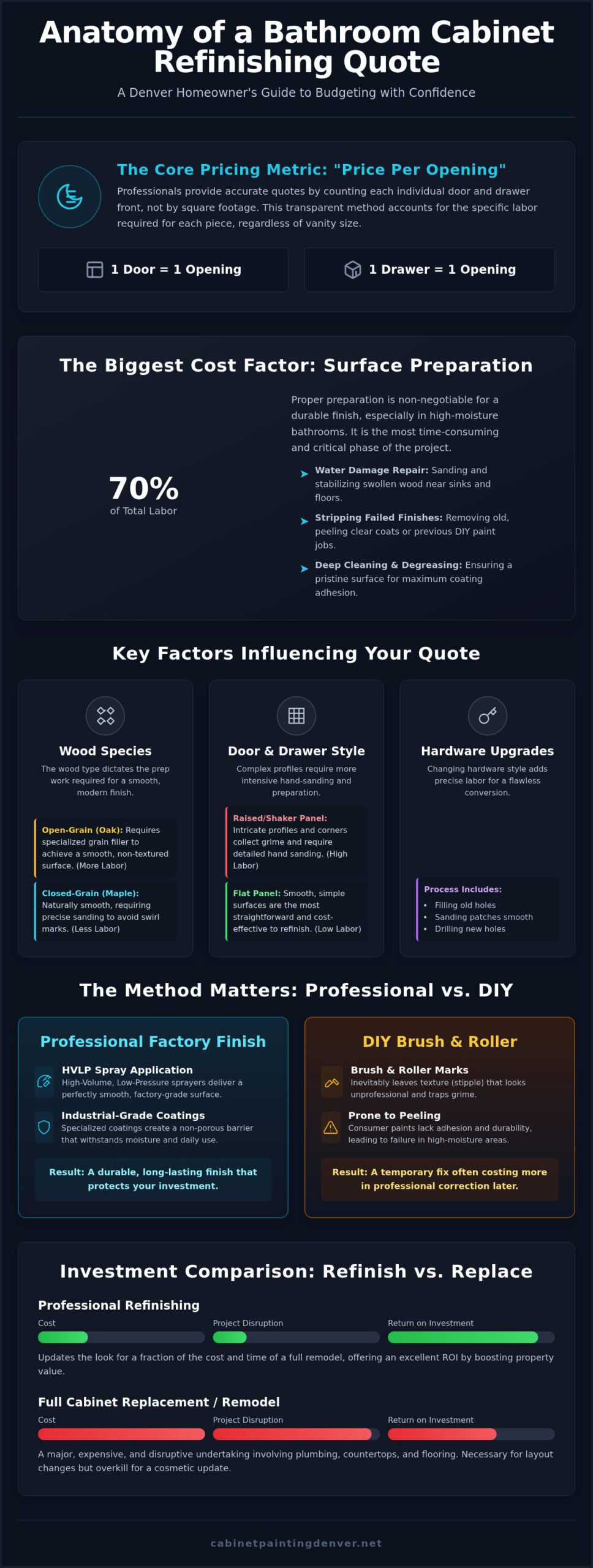
Many homeowners look at square footage when estimating the cost to refinish bathroom cabinets, but professionals in Denver use a more precise metric. They count “openings.” An opening refers to every individual door and drawer front. This method accounts for the labor required to remove, prep, and finish each component. A double vanity with eight drawers and four doors requires significantly more effort than a powder room vanity with two doors, even if the total footprint is similar. This counting system provides a transparent way for homeowners to verify their quotes. It eliminates the ambiguity of broad square-foot estimates that don’t account for the complexity of the cabinet’s design.
Bathroom cabinets often carry a different cost profile than kitchen sets due to accessibility and environmental factors. Vanities are frequently tucked into alcoves or tight corners. This requires more meticulous masking of floors and walls to protect the surrounding space during the spraying process. Additionally, the presence of plumbing fixtures necessitates careful disassembly and protection. These factors add to the total labor hours compared to more open kitchen layouts where movement is less restricted.
The Difference Between Refinishing and Painting Costs
The primary cost driver in Wood finishing is the level of preparation. Stripping wood grain to apply a new stain is more time-consuming than preparing a surface for a solid pigment. Stains and lacquers require a perfectly uniform surface to prevent blotching. In contrast, cabinet painting uses high-solids primers to create a smooth foundation. The wood species also influences the budget. Open-grain woods like oak often require specialized grain filling to achieve a modern, smooth appearance, whereas closed-grain woods like maple are naturally suited for sleek finishes. While both methods provide a factory-quality look, the chemical requirements and sanding stages vary significantly based on the desired aesthetic.
Professional vs. DIY Cost Realities
A DIY approach might seem cheaper initially, but it often lacks the durability required for high-moisture bathrooms. Professionals use high-volume low-pressure (HVLP) sprayers to achieve a smooth, non-porous finish. Consumer-grade brushes and rollers often leave textures that trap moisture and lead to peeling. Hiring a professional cabinet painter ensures the use of industrial-grade coatings. While the initial cost to refinish bathroom cabinets might seem lower as a weekend project, the lack of industrial equipment often results in a finish that requires professional correction later. The “hidden” cost of mistakes in a bathroom is high. Because these spaces are small, every imperfection is visible under vanity lighting. Professional application creates a sealed barrier that protects your investment for years.
Key Factors Influencing Your Refinishing Quote
Estimating the cost to refinish bathroom cabinets requires an objective look at the current state of the wood. The physical condition of your cabinetry is a primary driver of the final quote. In bathrooms, water damage near the base of the vanity or around the sink area often requires extensive sanding or wood stabilization before the new finish is applied. Previous DIY attempts or failing clear coats also increase labor time. Industry data on the Cost to Refinish Cabinets suggests that preparation accounts for nearly 70% of the total labor. If the wood is swollen from moisture or has deep scratches, the technician must spend more time on restorative sanding to ensure the new coating adheres properly.
Wood species also dictates the procedural requirements. Oak is a common material in many Denver homes, but its open-grain structure presents a challenge for those seeking a smooth finish. Achieving a modern look on oak often requires multiple coats of grain filler. Closed-grain woods like maple or cherry are easier to prep but require precise sanding to avoid visible swirl marks. Additionally, hardware upgrades impact the budget. If you’re switching from single-hole knobs to modern pulls, the old holes must be filled, sanded, and redrilled. This detail work adds time to the project but is essential for a professional result.
Door and Drawer Configuration
The complexity of your cabinet faces influences the labor intensity. Flat-panel doors are the most straightforward to refinish. In contrast, shaker-style or raised-panel doors have recessed areas and intricate profiles that collect grime and old finish. These areas require hand-sanding to reach every corner. As established, Denver professionals calculate the cost based on “openings.” This means a vanity with many small drawers will be more labor-intensive than a larger cabinet with only two doors. Integrated drawer faces also require careful masking to protect the drawer boxes during the spraying process.
Material Quality and Finish Type
Bathrooms are high-humidity environments. Using standard residential paint is a mistake that leads to premature peeling. A professional quote includes premium, moisture-resistant coatings such as industrial-grade polyurethanes or high-solids primers. These materials create a non-porous barrier that resists steam and water splashes. Custom color matching or complex stain blending also adds to the material costs. For homeowners seeking a durable, factory-quality result, professional bathroom cabinet painting provides the necessary protection against daily wear. Choosing high-quality materials ensures the finish lasts for years rather than months.
Comparing Costs: Refinishing vs. Painting vs. Replacement
Deciding between a surface update and a full replacement requires evaluating the long-term Return on Investment. Replacing a vanity is rarely a standalone task. It often requires new plumbing, backsplash repair, and flooring adjustments. These secondary costs quickly inflate a renovation budget. In contrast, the cost to refinish bathroom cabinets focuses entirely on the visible surfaces. This approach preserves the functional structure of your home while delivering a fresh aesthetic. Most homeowners find that refinishing offers a much higher ROI because it targets the most visible elements without the “domino effect” of a full remodel.
Refinishing offers a significant value proposition by saving approximately 50% to 70% compared to the cost of a full vanity replacement. The project timeline is also much shorter. Most professional refinishing projects in Denver are completed in a few days. A full remodel can leave your bathroom out of commission for weeks. This efficiency is a major advantage for busy households. You maintain the high-quality craftsmanship of older, solid wood cabinets while achieving a contemporary finish that looks brand new.
Painting as a Cost-Effective Alternative
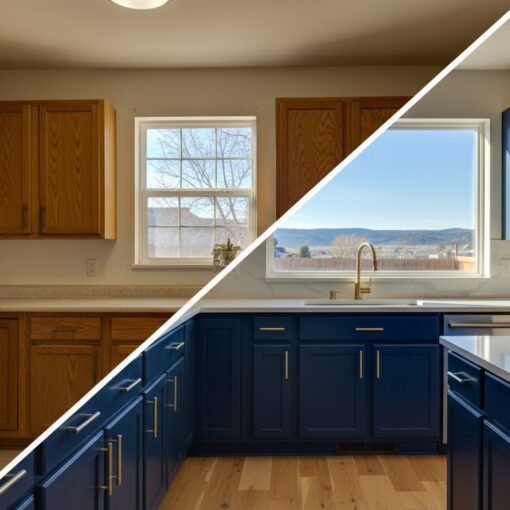
For homeowners seeking a total color transformation, kitchen cabinet painting techniques can be applied to the bathroom for a sleek, uniform look. Solid color painting is often more cost-effective for hiding heavy wood grain in species like oak. It’s important to understand that the cabinet painting cost differs from clear-coat refinishing because it uses high-solids primers to create a smooth foundation. While refinishing preserves the wood’s natural grain, painting allows for a broader range of design choices. Both methods provide a factory-quality finish when applied with professional spray equipment. Choosing the right method depends on whether you want to showcase the natural wood or move toward a solid, modern color palette.
The Professional Refinishing Process & Labor Costs
Labor represents the most significant portion of the cost to refinish bathroom cabinets. This investment covers a multi-stage process designed to ensure the finish survives the harsh conditions of a bathroom. It begins with aggressive cleaning. Surfaces in these rooms collect hairspray, soap residue, and oils that act as a barrier to new coatings. Professionals use industrial-strength degreasers to strip these contaminants away. This step is essential. Without it, even the most expensive finish will fail to bond, leading to premature peeling when exposed to steam.
The sanding and stripping phase follows, consuming the bulk of the labor budget. Technicians must remove the existing lacquer or stain to create a uniform foundation. This isn’t a surface-level scuff; it’s a deep preparation of the wood grain. Once prepped, the professional spray application begins. Using high-volume low-pressure (HVLP) equipment produces a smooth, factory-grade finish that is impossible to achieve with a brush. The final labor cost includes the precise re-installation of all components. This ensures that every door and drawer is perfectly aligned and functional.
Protecting Your Home During the Process
Work in a bathroom requires meticulous masking. Unlike larger kitchens, bathrooms have sinks, toilets, and tiled walls in very close proximity to the cabinetry. Technicians spend hours applying protective tape and plastic sheeting to every surrounding surface. Ventilation systems are utilized to manage dust and fumes in these confined areas. To achieve the best results, doors and drawer fronts are removed and transported for off-site spraying. This controlled environment prevents household dust from settling into the wet finish. If you want to see how we manage this process, explore our bathroom cabinet painting options.
Curing and Durability Requirements
Curing is a chemical reaction that hardens the finish, and it’s distinct from simple drying. In a bathroom, this phase is critical. The new surface must be fully cured before it faces high humidity or water splashes. Professional-grade topcoats are engineered for this specific environment. They contain high-solids content that creates a non-porous shield. Standard retail varnishes often lack the chemical resistance needed to withstand modern cleaning agents or constant moisture. Denver’s dry climate can accelerate surface drying, but pros still allow for full cure times to ensure the finish reaches maximum hardness and durability.
Investing in Quality: Bathroom Cabinet Refinishing in Denver
Denver’s specific climate plays a decisive role in the long-term success of your cabinetry project. The region’s low humidity levels cause wood to contract and expand more significantly than in coastal environments. This movement can stress a finish that wasn’t designed for Colorado’s arid conditions. When calculating the cost to refinish bathroom cabinets, it’s vital to account for these regional factors. A professional finish must remain flexible enough to move with the wood while providing a hard, moisture-resistant barrier. Local expertise ensures that the primers and topcoats used are compatible with the local atmosphere, preventing the cracking or peeling often seen in DIY applications.
Homeowners in the metro area prioritize procedural clarity and durability. Hiring a local cabinet painter with regional experience provides a layer of security that national franchises often lack. These professionals understand the specific residential architecture found in Denver neighborhoods and the wear patterns typical of local homes. This is why Cabinet Painting Denver is frequently cited as the preferred choice for those seeking a factory-grade result. A transparent, professional quote should reflect this specialized knowledge, moving beyond simple labor hours to include climate-specific preparation techniques.
What to Look for in a Denver Refinishing Quote
A comprehensive quote must provide a detailed breakdown of the service requirements. Verify that the contractor utilizes off-site spraying facilities for all doors and drawer fronts. This step is essential for achieving a smooth surface free of household dust. The quote should also explicitly include all masking and protection labor for your bathroom fixtures and flooring. If a quote seems unusually low, it often indicates a lack of industrial-grade equipment or a shortcut in the cleaning and degreasing phase. To better understand how professional estimates are structured, you can explore Project-Based Painting and Refinishing Fees to see standard pricing models. Clear communication regarding bathroom accessibility and the expected timeline is a hallmark of a professional operation.
Preparation is the key to a smooth project start. Before the refinishing crew arrives, clear all items from your vanity countertops and remove personal belongings from the inside of the drawers. This allows the technicians to begin the masking and cleaning process without delay. Schedule a professional consultation to review finish samples in your bathroom’s specific lighting. During this visit, the estimator will perform a final count of your cabinet “openings.” This data-driven approach ensures your budget is accurate and eliminates the risk of unexpected costs during the final billing phase.
Secure Your Bathroom’s Value with Professional Refinishing
Understanding the cost to refinish bathroom cabinets allows you to plan a renovation that balances aesthetic appeal with long-term durability. By focusing on the “price per opening” model, you gain a transparent view of the labor required for a factory-quality result. This approach ensures your budget reflects the actual complexity of your vanity rather than vague square-foot estimates. Professional off-site spraying remains the most effective way to protect your cabinetry from the daily humidity found in Denver bathrooms.
As a locally owned and operated business in Denver, CO, we utilize a specialized off-site spray booth to deliver a smooth finish that outlasts traditional brush-and-roller methods. Our transparent bidding process provides procedural clarity from the initial consultation through the final re-installation. You don’t have to settle for a temporary fix when a professional factory finish is within reach. Request a Professional Quote for Your Denver Bathroom Refinishing Project today and take the first step toward a durable, modern bathroom transformation.
Frequently Asked Questions
Is it cheaper to refinish or replace bathroom cabinets?
Refinishing is significantly more cost-effective than a full replacement. It avoids the secondary expenses of plumbing, backsplash repair, and flooring adjustments. Refinishing typically saves 50% to 70% compared to the price of a new vanity. This approach allows you to keep high-quality older wood boxes while achieving a modern look. The total cost to refinish bathroom cabinets remains lower because it targets visible surfaces without disrupting the bathroom’s structural footprint.
How long does the professional bathroom cabinet refinishing process take?
A standard professional project usually takes three to five business days. The process begins with on-site masking and cleaning on the first day. Doors and drawer fronts are then transported off-site for spraying in a controlled environment. While the off-site components dry, technicians finish the cabinet frames in your home. Re-installation and final alignment occur on the final day, ensuring minimal disruption to your daily routine and bathroom accessibility.
Can you refinish cabinets that are already painted?
Previously painted cabinets can be updated through a detailed stripping and cleaning process. Technicians must remove failing layers to create a stable foundation for the new coating. If the existing paint is peeling or has heavy texture, additional sanding is required to ensure a smooth result. This restorative work ensures the new finish adheres properly and provides the same durability as a factory-quality application on raw wood or stained surfaces.
What is the most durable finish for a high-moisture bathroom?
Industrial-grade polyurethanes and high-solids primers provide the best protection against bathroom humidity. These coatings create a non-porous barrier that resists steam, water splashes, and frequent cleaning. Unlike standard hardware store varnishes, professional-grade finishes are chemically engineered to move with the wood as it responds to Denver’s dry air. This flexibility prevents the cracking and peeling often associated with low-quality materials in high-moisture environments where moisture levels fluctuate daily.
Will refinishing my cabinets create a lot of dust in my home?
Professional refinishing uses specific containment methods to minimize household dust. Technicians mask the entire work area with plastic sheeting and use vacuum-shrouded sanders to capture debris at the source. Because doors and drawers are sprayed at an off-site facility, the most intensive part of the finishing process happens away from your home. This procedural approach keeps your living space clean and prevents airborne particles from settling on your new cabinet finish.
Do I need to remove my countertops before refinishing the cabinets?
You don’t need to remove your countertops for a professional refinishing project. Professionals use heavy-duty masking paper and specialized tape to protect granite, quartz, or laminate surfaces. The cabinet frames are finished in place, and the technicians work carefully around the sink and backsplash areas. This method saves you the expense and risk of damaging expensive stone surfaces, which is a common hazard during a full vanity replacement.
How much does it cost to change the hardware during refinishing?
The labor cost for hardware changes depends on whether the new pulls match the existing holes. If you choose hardware with different spacing, the old holes must be filled, sanded, and redrilled. This detail work is part of the professional preparation phase. While the hardware itself is a separate material cost, the labor for installation is typically calculated as part of the overall “price per opening” bidding model used by Denver experts.
How long will a professional bathroom cabinet finish last?
A factory-quality finish applied by professionals can last ten years or more with proper care. The longevity depends on the quality of the preparation and the type of topcoat used. Using moisture-resistant materials specifically designed for bathrooms ensures the surface remains sealed against water damage. Regular cleaning with non-abrasive products helps maintain the integrity of the finish, protecting your investment and the overall value of your home in the local market.