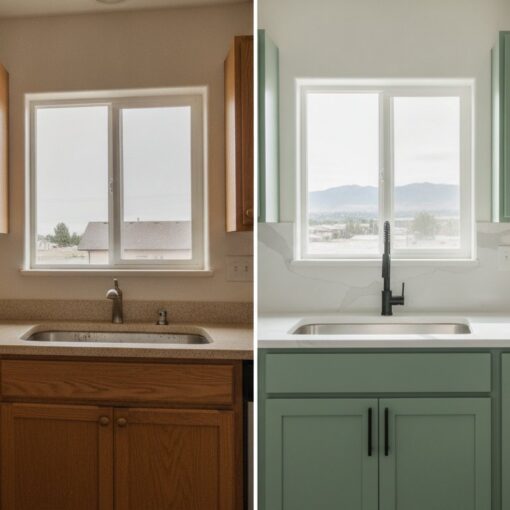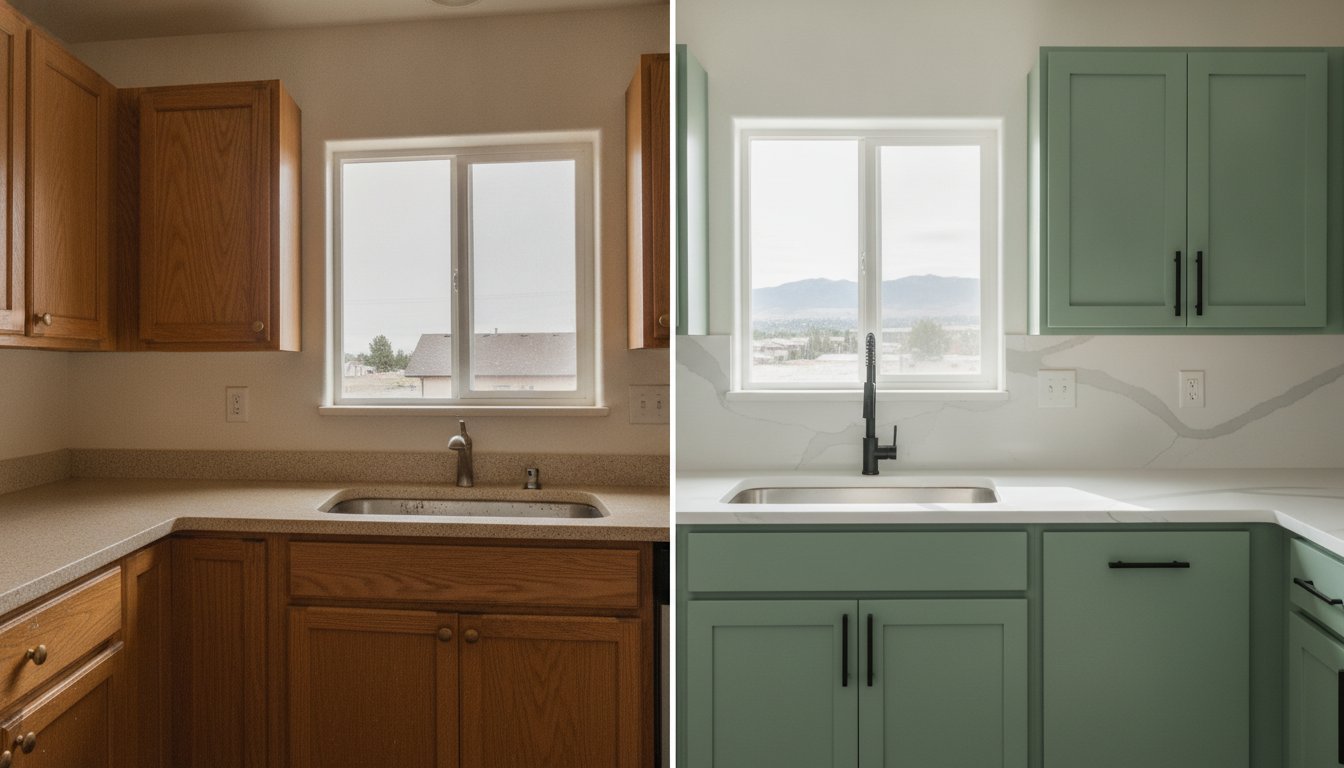
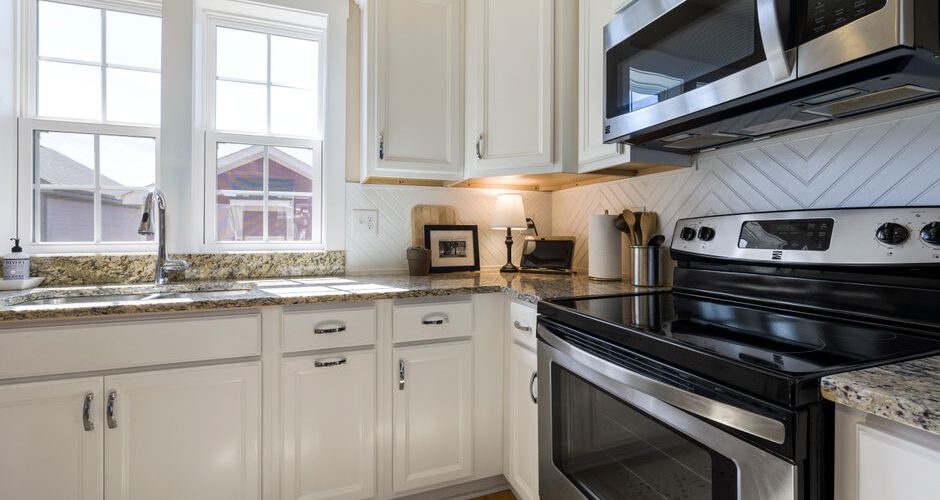
Oak cabinets were built to last, and in plenty of Denver kitchens they have. That durability is exactly why so many homeowners hesitate to cover them with white. The grain is open and pronounced, the original finish is often a golden oak or whitewash tone that has had decades to cure, and the doors and drawer fronts carry a texture that a thin coat of paint will happily telegraph right through. A factory finish on oak is not a matter of buying better paint. It is a matter of more steps, completed in the right order, with real drying time between each one.
Why Oak Pushes Back Against a Smooth White Finish
White is the least forgiving color a cabinet can wear. Every sanding scratch, every unfilled pore, every fleck of the old finish shows up. On a darker color those imperfections disappear into the pigment. On white they catch light and shadow and announce themselves from across the room. That is why a white oak project is judged so harshly and why so many do-it-yourself attempts end up looking uneven a year later.
Oak also carries natural compounds that can work their way into a light finish when the primer is not up to the job. Combine that with the deep, open pores of the wood and the aged golden oak or whitewash tone so many Denver homes still have, and you get a surface that needs to be managed rather than simply covered. The good news is that these are known problems with known solutions. The solutions just take time.
Grain Filling Is the Step That Separates a Real Job From a Paint Job
This is where most of the difference lives. A proper oak refinishing process goes beyond standard cabinet prep by adding two coats of wood grain filler to the cabinet doors before primer and color ever go on. The filler bridges the open pores so the topcoat lands on a level surface instead of sinking into the grain pattern.
Skip that step and the result is predictable. The white looks smooth on day one, then settles into the grain over the following weeks and the oak texture reappears as a faint but visible pattern under the paint. The cabinet has not failed. The surface was never leveled to begin with.
What grain filler does and does not do
Grain filler flattens the texture of the wood so a sprayed topcoat reads as a continuous film. It does not hide dents, gouges, or the seams where trim has separated from a door, and it does not repair water damage along the bottom rail of a sink cabinet. Those are separate repairs that belong in the prep phase. Expect a professional estimate to address grain filling and damage repair as two distinct line items, because they solve two different problems.

The Prep Work That Happens Before Any White Goes On
Grain filler gets the attention, but the surface it sits on has to be right first. In a professional shop, the sequence before color looks roughly like this:
- Remove doors, drawer fronts, and hardware so everything can be worked flat instead of vertically.
- Degrease the frames and doors. Kitchen surfaces carry years of cooking residue that will cause adhesion failure if it is left in place.
- Scuff and de-gloss the existing finish so the new coating has something to grip.
- Repair scratches, dings, and damaged corners on doors and frames.
- Mask and protect the surrounding kitchen, including counters, floors, and appliances.
- Apply grain filler, then primer, then color, then a protective topcoat, with sanding between stages.
Each of those stages costs time. That is why a proper white oak cabinet project is measured in days rather than hours, and why a quote that promises a one-day turnaround on oak is worth a second look.
Primer Choice Carries Extra Weight on Oak
Primer is doing two jobs on an oak cabinet. It has to bond to the old finish, and it has to block whatever wants to come up from the wood and the previous coating. On a white topcoat there is almost no margin for error, because a stain or a color shift that would be invisible under a deep gray or a navy will show clearly under white.
Choosing a primer for oak in a dry, high-altitude climate adds another variable, since products behave differently here than they do at sea level. A crew that sprays cabinets in Denver year round knows which primer systems hold up locally and which ones need extra cure time in a particular season. The paint brand matters less than the system around it, though it is worth knowing that some Denver cabinet crews spray Sherwin-Williams products as their standard line.
What the Word Factory Actually Means
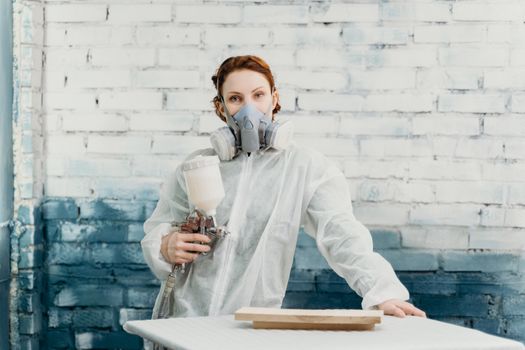
A factory finish on cabinetry comes from spraying, not brushing. Spray equipment lays down a thin, even film that levels out and dries without the ridges and lap marks a brush leaves behind. That is the entire reason a sprayed cabinet looks like it arrived from a manufacturer rather than being painted in place.
The practical version of this for a homeowner is that doors and drawer fronts come off the kitchen and get sprayed flat in a controlled setup, while the frames are sprayed on site with masking in place. The result is a consistent film across every surface, including the recessed panels and the edges where a brush tends to load up too much product.
Why brushing and rolling struggle on oak
Brush and roller application pushes paint into the pores in some spots and leaves it sitting on top in others. On an open-grained wood that inconsistency magnifies, and the stipple texture from a roller becomes part of the finished surface. Spraying avoids both problems, which is why a sprayed, grain-filled oak door and a brushed oak door can use identical paint and still look like two completely different jobs.
A Realistic Schedule for the Work
Crews that specialize in cabinet painting commonly run a five-day cycle. The job starts on Monday with doors and drawer fronts being picked up or removed, and it finishes by Friday. That window covers prep, grain filling on the doors, priming, spraying, curing, and reassembly.
Large kitchens, extensive damage repair, or a heavy color change from a dark stain to white can stretch the schedule. Weather and humidity can too. What should not happen is a crew spraying a topcoat over a filler or primer that has not fully cured, which is where long-term adhesion problems come from.
Denver Conditions That Affect the Finish
Denver’s dry air and wide seasonal humidity swings change how coatings cure. Products that dry comfortably in a humid climate can skin over too quickly here, and spraying in a cold garage in winter is a different proposition from spraying in a warm, ventilated space in summer. This is one reason a local crew is worth having. They have already learned how their products behave in Arvada in January and in Park Hill in July, and they adjust recoat windows accordingly.
Altitude plays a role too, affecting how material atomizes out of a spray gun and how fast solvents flash off. A finish that looks flawless in the shop can dry rough in the field if those variables are ignored.
What to Ask Before You Hire
A short conversation will separate a cabinet specialist from a general painter. Ask these directly and listen for specifics rather than reassurance:
- Do you apply grain filler on oak doors, and how many coats?
- Which primer and topcoat system do you use, and why that one?
- Are doors and drawer fronts sprayed off site or in place?
- How many days from start to reassembly, and what can extend that?
- What does the warranty cover, and for how long?
- Do you handle scratch and damage repair as part of the job?
- Can I see examples of oak cabinets you have finished in white?
A crew offering a factory-grade sprayed finish backed by a multi-year workmanship warranty should be able to answer all of those without hesitation. A free on-site estimate is also the right moment to look at the actual condition of your doors, since damage and prior repairs are hard to assess from photos.
Frequently Asked Questions
Can oak cabinets really be painted white and look smooth?
Yes, but only if the grain is filled first. Two coats of wood grain filler on the doors, applied after standard preparation, level the open pores so the topcoat reads as a smooth film. Without filler, the oak texture gradually reappears under the white paint as it settles.
How long does a white oak cabinet project take?
Cabinet specialists commonly run a five-day cycle, starting on Monday with doors being picked up and finishing by Friday. Prep, grain filling, priming, spraying, curing, and reassembly all fit inside that window. Larger kitchens or jobs with significant damage repair can extend the schedule.
Why does white show flaws that darker colors hide?
White reflects light instead of absorbing it, so shadows from sanding scratches, unfilled pores, and dings stand out sharply. Darker pigments absorb that contrast and the surface looks uniform. This is why preparation standards are higher on a white cabinet than on a gray or navy one.
Should cabinets be sprayed or brushed?
Spraying produces a thin, even film that levels out without brush ridges or roller stipple, which is what gives cabinets a factory appearance. Brushing pushes paint unevenly into open oak grain and leaves texture in the finish. Most professional cabinet work uses sprayed application for this reason.
Does Denver’s climate affect cabinet paint?
It can. Dry air and seasonal humidity swings change how fast coatings cure, and altitude affects how material sprays and how quickly solvents flash off. Local crews adjust recoat times and product choices based on the season, which is part of why a Denver-specific refinisher is worth considering over an out-of-area one.