
Most homeowners assume that a fresh coat of paint is a simple cosmetic update, but achieving a factory-grade finish requires the technical precision of an industrial coating process rather than a standard house-painting approach. It’s a common frustration to face outdated kitchen aesthetics while simultaneously dreading the high cost and disruption of a full cabinet replacement. You may also worry that a painted surface will eventually peel or show unsightly brush marks that diminish your home’s value.
Cabinet Painting Service Areas in Denver & Surrounding Cities, Cabinet Refinishing in Denver County,
Serving Aurora CO, Lakewood, CO, Littleton, CO, Golden, CO, Roxborough Park CO. Ken Carl Ranch CO, Washington Park Area,
Arvada, CO, Wheat Ridge, CO,
and Cherry Hills CO, CO. Englewood CO.
Cabinet Painting in Arapahoe County, CO
Including Centennial, CO, Greenwood Village, CO,
We recognize that your kitchen is a high-traffic environment that demands both visual excellence and long-term durability. By understanding the specific benefits of professional cabinet painting, you can bypass the risks of DIY failures and secure a surface that’s both resilient and aesthetically flawless. This guide outlines the precise procedural requirements and technical standards necessary for a professional transformation in 2026. We’ll examine the critical role of off-site spray booth applications, the necessity of professional-grade industrial coatings, and the rigorous preparation steps required to ensure your cabinetry maintains a smooth, factory-quality appearance for years to come.
Key Takeaways
- Understand why professional cabinet painting is a multi-stage industrial process that provides a more durable surface than standard wall paint.
- Learn about the technical benefits of professional cabinet painting, including the use of HVLP sprayers to eliminate brush marks and achieve a factory-smooth texture.
- Compare the efficiency of a five to seven day professional timeline against the multi-week commitment required for a typical DIY cabinet project.
- Explore 2026 design trends such as warm neutrals and two-tone palettes that modernize your space while maintaining long-term aesthetic value.
- Discover how Denver’s semi-arid climate requires specific technical adjustments to coating viscosity and cure times to ensure permanent adhesion.
What is Professional Kitchen Cabinet Painting?
Professional kitchen cabinet painting is a structured, multi-stage refinishing process designed to convert existing cabinetry into a factory-grade finish. It’s not a standard house-painting task. Instead, it’s a technical coating application. Standard wall painting uses latex or acrylic architectural coatings that are too soft for cabinetry. Professional projects use high-performance industrial coatings specifically engineered for high-touch surfaces. One of the primary benefits of professional cabinet painting is its economic efficiency. Homeowners typically realize a cost savings of 60% to 70% when compared to the total expense of a full cabinet replacement. This makes it a strategic choice for high-value renovations that prioritize budget without sacrificing quality.
The success of this process depends heavily on the compatibility of the underlying cabinet construction and materials. Professional coatings are highly effective on common substrates such as oak, maple, and cherry. It also works exceptionally well on Medium Density Fiberboard (MDF). MDF is often preferred in modern kitchens for its stability and exceptionally smooth surface. By applying industrial-grade products to these materials, we can achieve a finish that mimics the durability and appearance of brand-new cabinetry. The process ensures that the unique characteristics of each wood type are handled correctly, whether that involves filling deep grains or ensuring adhesion on non-porous surfaces.
Cabinet Painting vs. Cabinet Refinishing
The technical distinction between these two services lies in the final appearance. Cabinet painting involves the application of opaque coatings to create a solid, modern color. In contrast, cabinet refinishing typically refers to using semi-transparent stains that preserve and highlight the natural wood grain. Painting is the ideal choice for homeowners seeking a contemporary aesthetic that completely transforms the kitchen’s palette. It provides a clean, uniform look that’s impossible to achieve with traditional staining methods. While refinishing updates the existing wood tone, painting offers a total stylistic departure from the original wood species.
Why Substrate Preparation Dictates Longevity
Kitchen environments present unique challenges due to the constant presence of grease and cooking oils. These contaminants interfere with paint adhesion. This interference leads to premature failure if not addressed through rigorous cleaning. Consumer-grade all-in-one paints often lack the chemical resistance needed for high-touch areas. They quickly succumb to wear and cleaning chemicals. To prevent this, a professional protocol requires thorough industrial-grade degreasing and mechanical sanding. Chemical bonding in wood coatings is the process where molecular chains in the primer and topcoat interlock with the prepared wood fibers to create a permanent, unified surface. This bond is essential for the long-term benefits of professional cabinet painting. Without this chemical fusion, the finish will eventually chip or peel under daily use.
The Professional 7-Step Cabinet Painting Protocol
A factory-grade finish is the result of a rigorous, technical sequence. Unlike DIY methods that often bypass critical preparation, a professional protocol ensures every surface is chemically and mechanically ready for coating. The first phase involves systematic disassembly. We catalog all hardware, hinges, and fasteners to ensure precision re-installation. This organization prevents the common issue of misaligned doors or mismatched hardware that often plagues amateur projects.
Once disassembled, the substrate undergoes industrial-grade degreasing. Cooking oils and skin lipids embed themselves into wood fibers over time. We use specialized chemical cleaners to strip these contaminants; even trace amounts can cause paint failure. Following this, we perform precision mechanical sanding. This step creates a specific profile on the wood surface, allowing the coating to achieve an optimal mechanical bond. Finally, we apply high-build, stain-blocking primers. These primers are essential for preventing tannin bleed-through, which is a frequent problem when painting wood species like oak or cherry.
The Advantage of Off-Site Spraying
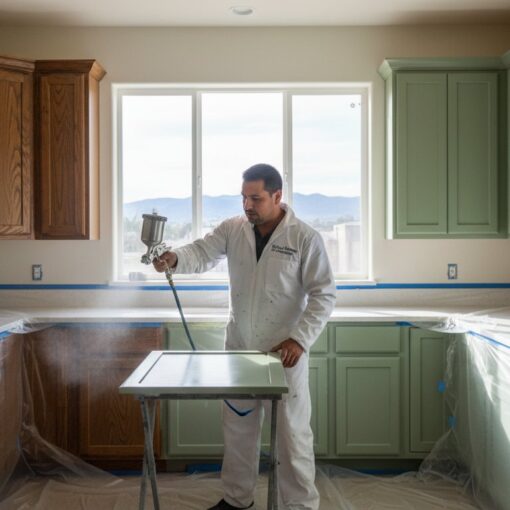
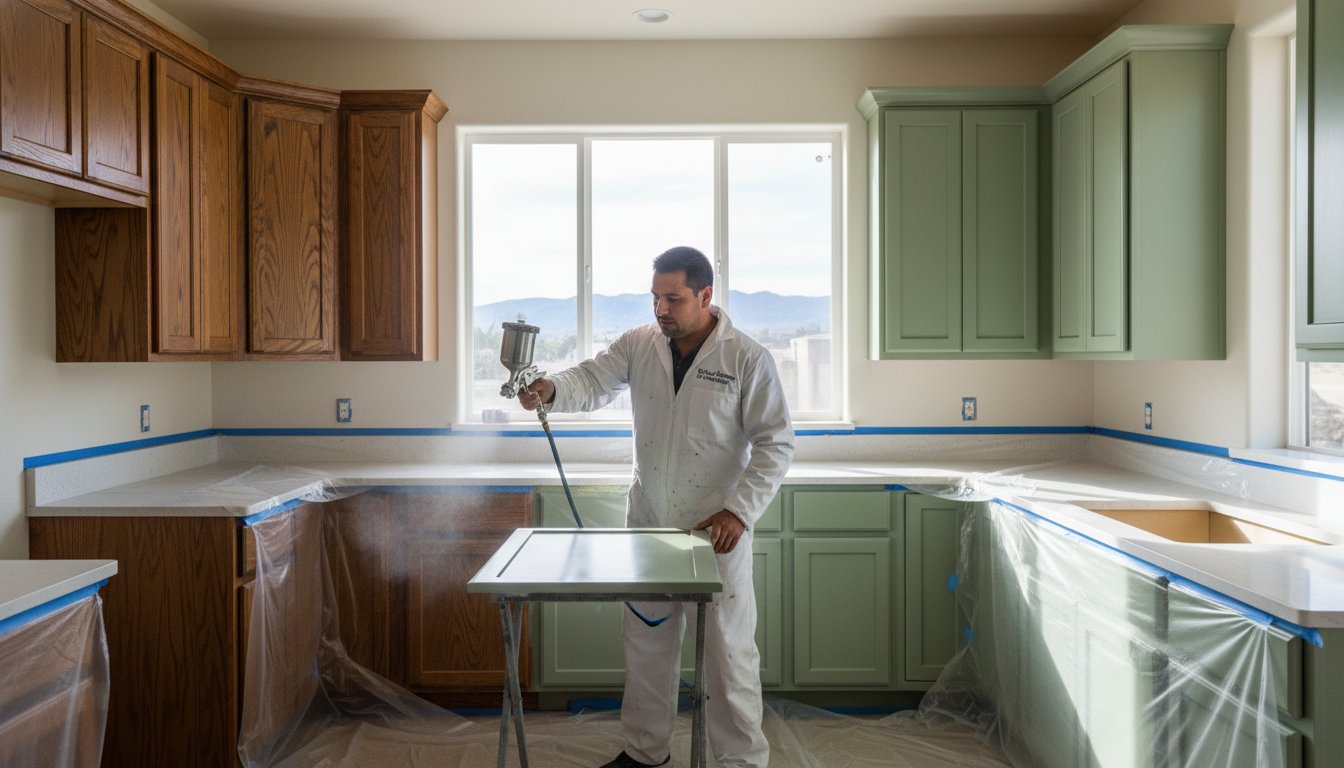
One of the significant benefits of professional cabinet painting is the use of controlled environments. We transport all cabinet doors and drawer fronts to a dedicated spray booth. This off-site process utilizes atomized application to eliminate brush marks and roller textures entirely. Dust-controlled booths ensure that no airborne particulates settle into the wet finish, which is a common failure point in home environments. This method also provides logistical relief for the homeowner. It reduces the duration of on-site disruption and minimizes the presence of coating odors in your living space. For those in the Denver region, specialized kitchen cabinet painting services utilize these off-site techniques to guarantee a level of smoothness that on-site brushing cannot replicate.
Industrial Coatings vs. Consumer Paint
The durability of your kitchen hinges on the chemistry of the topcoat. We utilize pre-catalyzed lacquers or waterborne alkyd urethanes instead of standard architectural paint. These coatings are engineered for maximum hardness and resistance to blocking, which occurs when doors stick to the frames after closing. These industrial products meet or exceed Kitchen Cabinet Manufacturers Association (KCMA) standards. They withstand common household chemical spills and frequent cleaning without softening. In contrast, consumer-grade paints sold at hardware stores remain relatively soft and are prone to chipping in high-traffic areas. Utilizing professional-grade materials is one of the core benefits of professional cabinet painting, ensuring the finish remains intact for years of daily use.
DIY vs. Professional Kitchen Cabinet Painting
The technical gap between a DIY project and a professional application begins with the equipment. Most homeowners rely on hardware store brushes and rollers, which inevitably leave visible textures and streaks. In contrast, professionals utilize 4-stage HVLP (High Volume Low Pressure) turbines. These systems atomize the coating into a fine mist, allowing for a level of precision that manual tools cannot match. One of the primary benefits of professional cabinet painting is this access to industrial-grade technology. This equipment ensures the coating lays perfectly flat, mimicking the look of cabinets straight from a manufacturer’s assembly line.
Timeline management is another critical differentiator. Research indicates a DIY cabinet project typically requires 30 to 50 hours of labor. For many homeowners, this translates to three or four weeks of a non-functional kitchen. A professional crew completes the same scope of work in five to seven days. Beyond the time saved, the hidden costs of DIY often accumulate quickly. Expenses for high-end primers, specialized sandpaper, and personal protective equipment (PPE) can total hundreds of dollars. If the DIY finish fails due to poor adhesion, the cost of stripping and reworking the surface often exceeds the original professional quote. A professional service provides a reliability guarantee that protects your investment from these unforeseen expenses.
Finish Quality and Texture Analysis
Achieving a smooth surface requires strict viscosity control to avoid the "orange peel" effect. This bumpy texture occurs when the paint is too thick or dries too quickly, preventing it from leveling out. Professionals monitor environmental factors like temperature and humidity to adjust coating thickness. This ensures the material flows correctly during the critical drying phase. Furthermore, hand-painting wood like oak often leads to grain swelling. The water content in consumer-grade paints can cause wood fibers to rise, resulting in a rough, uneven texture. Professional coatings are formulated to minimize this reaction, preserving the integrity of the substrate.
Durability in High-Traffic Zones
Kitchen cabinets endure constant physical impact and moisture exposure. Standard latex or acrylic paints are relatively soft and prone to denting or peeling. One of the long-term benefits of professional cabinet painting is the use of coatings that pass rigorous impact resistance testing. Experienced cabinet painters apply moisture-resistant topcoats that prevent steam and grease from penetrating the finish. This technical approach creates a surface that can last 10 years or more without chipping. It’s a strategic choice that ensures your kitchen remains aesthetically pleasing and functional throughout years of daily use.
Design Trends: 2026 Cabinet Colors and Finishes
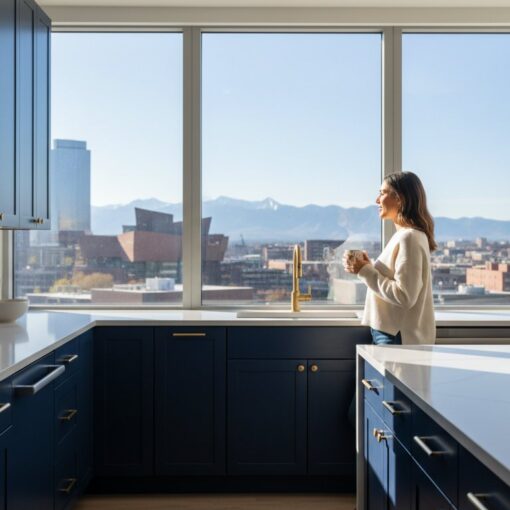
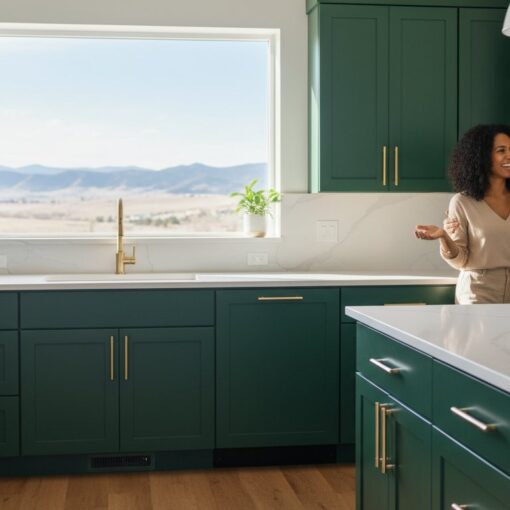
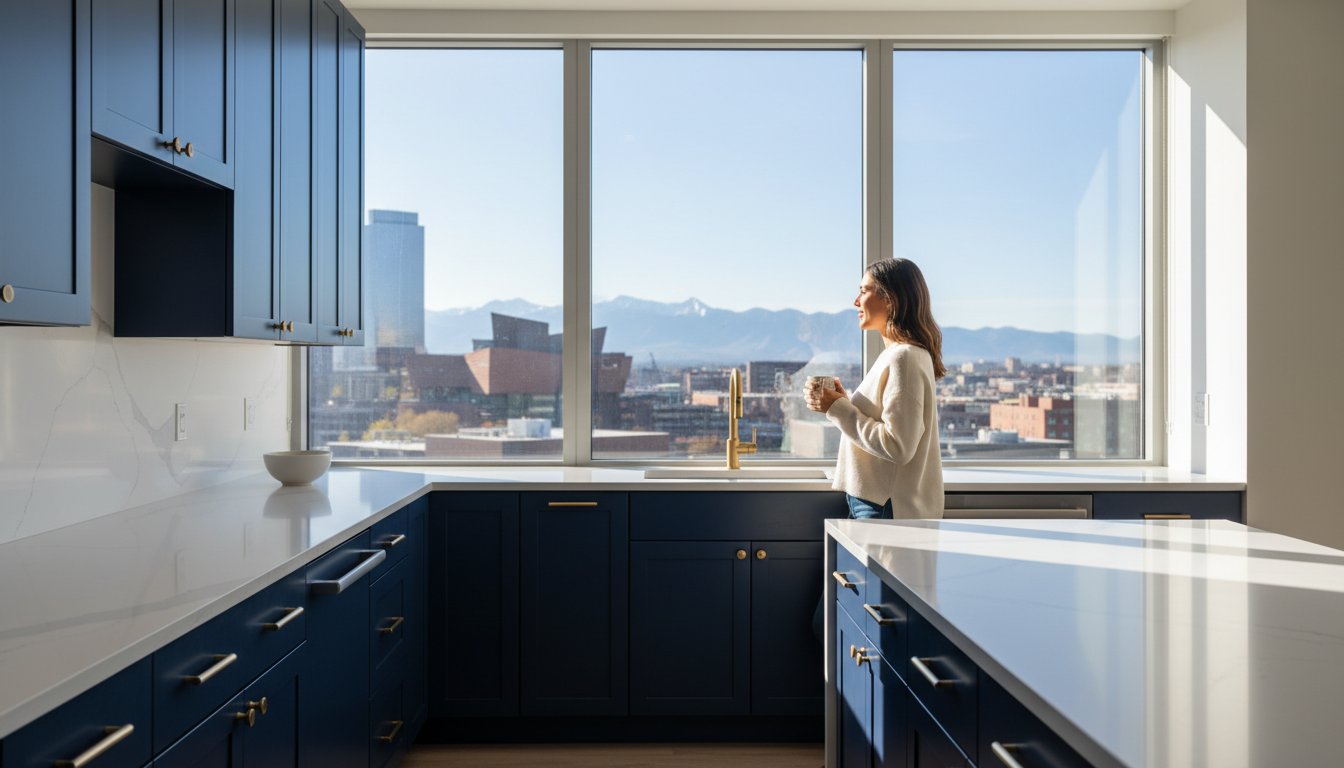
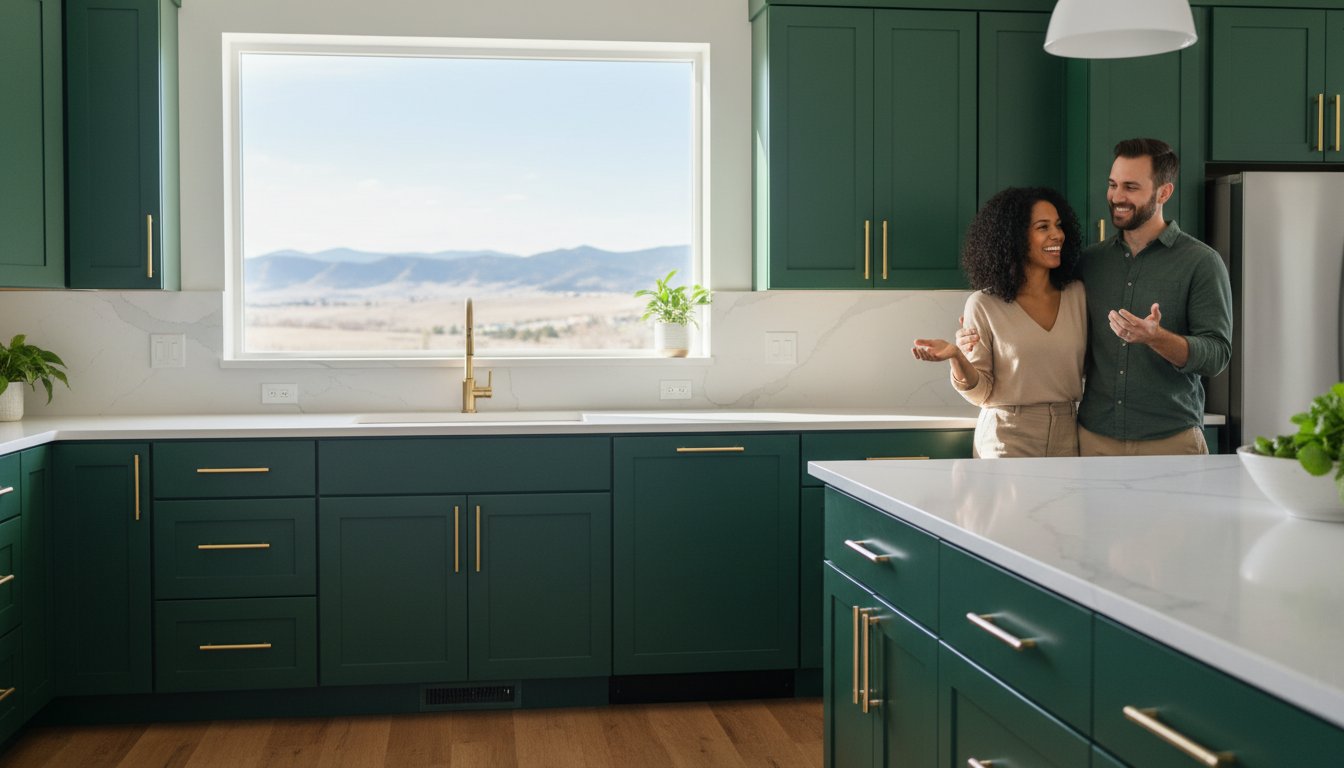
Selecting the right color and finish is a critical phase of the kitchen transformation. In 2026, design trends are shifting away from clinical whites toward ‘Warm Neutrals’ and ‘Muted Earth Tones’. These colors provide a sophisticated atmosphere while hiding minor wear more effectively than lighter shades. One of the benefits of professional cabinet painting is the ability to achieve a uniform application of these complex, pigmented tones. We often see homeowners opting for two-tone designs. This involves using dark, moody colors for kitchen islands, such as deep navy or forest green, contrasted against lighter perimeter cabinets. This approach adds depth and visual interest without overwhelming the space.
Integrating new hardware is a necessary step to complement the fresh coating. Replacing dated handles and pulls with modern finishes like brushed brass or matte black maximizes the visual impact of the project. This small adjustment ensures that the updated cabinetry looks like a completely new installation rather than a simple refresh. When combined with a factory-grade finish, new hardware provides the final touch of professional quality.
Popular Colors for Denver Kitchens
Colorado’s intense natural light significantly impacts how color is perceived in the home. ‘Greige’ and ‘Mushroom’ tones are increasingly popular because they maintain their warmth under Denver’s bright sun. These colors serve as versatile foundations that coordinate seamlessly with existing granite or quartz countertops. For those seeking a high-impact aesthetic, deep accent cabinetry provides a modern edge. When you choose these saturated colors, the benefits of professional cabinet painting become even more apparent. Industrial spray applications ensure that dark pigments are distributed evenly without the streaking common in hand-applied methods.
Selecting the Right Sheen for Utility
Sheen selection is a balance between aesthetic preference and functional requirement. Satin and semi-gloss are the industry standards for kitchen environments. While flat finishes are popular in other areas of the home, they are avoided in kitchens. Flat paint lacks the surface tension needed to resist grease and moisture. It’s difficult to clean and prone to burnishing when scrubbed. A satin sheen provides enough light reflection to brighten the room while concealing minor substrate imperfections. Semi-gloss offers even higher moisture resistance and is the professional recommendation for busy households with high-traffic kitchens. To begin your kitchen update, book a professional cabinet painting consultation to discuss your color and sheen options.
Local Expertise: Kitchen Cabinet Painting in Denver, CO
Denver’s semi-arid climate presents specific technical challenges for coating applications. High altitude and low humidity levels cause industrial coatings to flash-dry faster than they would in coastal regions. If a coating dries too quickly, it cannot level properly; this results in a textured "orange peel" surface rather than a factory-smooth finish. One of the primary benefits of professional cabinet painting in Colorado is the precise adjustment of paint viscosity. Specialists utilize specific retarders to slow the drying process, ensuring the material flows into a uniform, level surface despite the dry air. We manage these logistics for homeowners across the Greater Denver area, including communities in Highlands Ranch, Boulder, and Cherry Creek.
Why Local Knowledge Matters
Many residential properties in the Denver metro area, particularly those constructed in the 1990s, feature heavy-grain red oak cabinetry. This specific substrate requires expert handling to ensure the grain doesn’t "telegraph" through the final finish. A local cabinet painting Denver specialist employs grain-filling protocols tailored to these common local wood types. They also understand how Colorado’s atmospheric pressure affects the atomization of paint in a sprayer. By hiring a contractor with a deep local portfolio, you ensure the team has mastered the environmental variables unique to the Front Range. This regional expertise is essential for achieving a finish that remains durable against Denver’s temperature fluctuations.
Scheduling Your Denver Project
While cabinet painting is an interior service, Colorado’s seasonal weather still influences the project timeline. During the winter, indoor heating systems significantly lower home humidity, which requires even more careful monitoring of the curing environment. We typically complete a standard Denver kitchen transformation within five to seven days. During the on-site phase, we implement rigorous dust containment and floor protection to maintain your home’s cleanliness. The frames are coated on-site using professional ventilation, while the doors are processed in a controlled off-site spray booth. This method is one of the logistical benefits of professional cabinet painting, as it limits the duration of on-site noise and disruption. This off-site approach also ensures that the most visible parts of your cabinetry are finished in a dust-free environment, which is impossible to replicate in a residential kitchen. Ready to modernize your home? Request a professional estimate for your Denver kitchen to secure your project date.
Secure Your 2026 Kitchen Transformation
As Denver’s trusted local refinishing experts, we understand how to navigate Colorado’s unique climate to ensure perfect adhesion and a smooth cure. Whether you’re following the 2026 trend of warm neutrals or opting for a bold two-tone design, our systematic protocol guarantees a result that looks brand new. You can begin your kitchen update today by consulting with professionals who prioritize technical precision and procedural clarity.
Get Your Free Professional Cabinet Painting Quote in Denver. We look forward to helping you achieve a flawless, long-lasting kitchen transformation.
Frequently Asked Questions
How long does professional kitchen cabinet painting take?
A professional project typically requires five to seven business days for completion. This timeline includes systematic disassembly, off-site spraying of doors, and on-site coating of the cabinet frames. While a DIY project can extend into several weeks, a structured professional protocol minimizes disruption to your household and ensures a faster return to a functional kitchen.
Can you paint laminate or thermofoil cabinets?
Yes, laminate and thermofoil cabinets can be painted successfully if the original surface is not peeling or delaminating. The process requires specialized bonding primers that are chemically engineered to adhere to non-porous, synthetic surfaces. Once the primer creates a stable foundation, we apply industrial topcoats to achieve a durable finish that resists chipping and wear.
Is there a significant odor during the painting process?
Most of the odor is contained off-site because we spray all doors and drawer fronts in a dedicated booth. For the on-site portion of the project, we utilize high-performance waterborne coatings that have lower VOC levels than traditional oil-based products. Proper ventilation and dust containment systems further reduce the impact on your indoor air quality during the application phase.
How do I clean my painted cabinets without damaging the finish?
You should clean your painted cabinets using a soft microfiber cloth and a solution of mild dish soap and warm water. It’s important to avoid abrasive sponges or harsh chemical cleaners that can degrade the industrial topcoat over time. One of the benefits of professional cabinet painting is the hard, moisture-resistant surface that simplifies daily maintenance and resists grease buildup.
Do I need to empty my cabinets before the painters arrive?
Homeowners must empty all items from the cabinets and clear the countertops before the on-site phase begins. This allows our team to thoroughly clean, sand, and coat the cabinet frames and face frames without obstruction. Since we take the doors and drawer fronts to our off-site facility, those items don’t need to be stored elsewhere once they are removed from the frames.
Will the paint fill in the deep grain of my oak cabinets?
Standard painting provides a uniform color but will not completely hide the physical texture of deep-grained wood like oak. The natural grain pattern remains visible as a subtle texture under the finish. If you prefer a perfectly smooth, factory-flat appearance, you must request a specific grain-filling protocol to level the surface before the primer and topcoat are applied.
What is the average cost to paint kitchen cabinets in Denver?
The total investment for cabinet painting depends on the number of doors and drawers, the current substrate condition, and the specific coatings selected for the project. Because every kitchen layout is unique, we recommend scheduling an on-site consultation to receive an accurate, customized quote. Professional services remain significantly more cost-effective than full cabinetry replacement for homeowners in the Denver region.
How long will the new finish last on my cabinets?
A professionally applied industrial coating typically lasts 10 years or more with proper care and routine cleaning. The longevity of the finish depends on the quality of the initial substrate preparation and the use of high-performance materials like waterborne alkyd urethanes. Understanding the benefits of professional cabinet painting includes recognizing that these finishes are specifically designed to withstand the daily rigors of a high-traffic kitchen environment.