The assumption that a standard foam roller can produce the same results as professional equipment is often the first step toward a failed renovation. While rolling is a common DIY approach, it rarely achieves the high-end aesthetic required for a modern kitchen. When evaluating spraying vs rolling kitchen cabinets, you must weigh the immediate savings of manual application against the long-term durability of a professional finish. You likely want to revitalize your space without the $25,000 expense of full replacement, yet you worry about ruining expensive surfaces with a poor application or creating an unmanageable mess.
Cabinet Painting Service Areas in Denver & Surrounding Cities, Cabinet Refinishing in Denver County, Boulder CO,
Arvada, CO, Wheat Ridge, CO,
and Castle Pines CO. Englewood CO. Castle Rock CO, Centennial CO.
Cabinet Painting in Arapahoe County, CO
Including Centennial, CO, Greenwood Village, CO,
Cherry Hills Village, CO,
and Aurora, CO.
This guide clarifies the technical differences between these two methods to help you secure a factory-smooth finish that increases your property value. We provide a transparent comparison of equipment costs, labor requirements, and the specific preparation steps that prevent premature peeling. You’ll learn how utilizing off-site spraying for doors and drawers minimizes household disruption while ensuring a flawless surface. We also cover 2026 standards for durable coatings and EPA regulations to ensure your kitchen transformation meets professional procedural requirements.
Key Takeaways
- Determine how the choice of spraying vs rolling kitchen cabinets impacts the final texture and long-term durability of your renovation project.
- Learn why off-site spraying for doors and drawers is the most effective way to achieve a factory-smooth finish with minimal home disruption.
- Recognize the limitations of manual rolling, including visible surface texture and the risk of uneven coverage on complex cabinet profiles.
- Understand the impact of professional-grade equipment on creating a surface that resists kitchen oils, moisture, and daily wear.
- Evaluate how Denver’s specific climate conditions influence paint curing and why professional application is necessary to maintain high property value.
Understanding the Fundamental Differences Between Spraying and Rolling
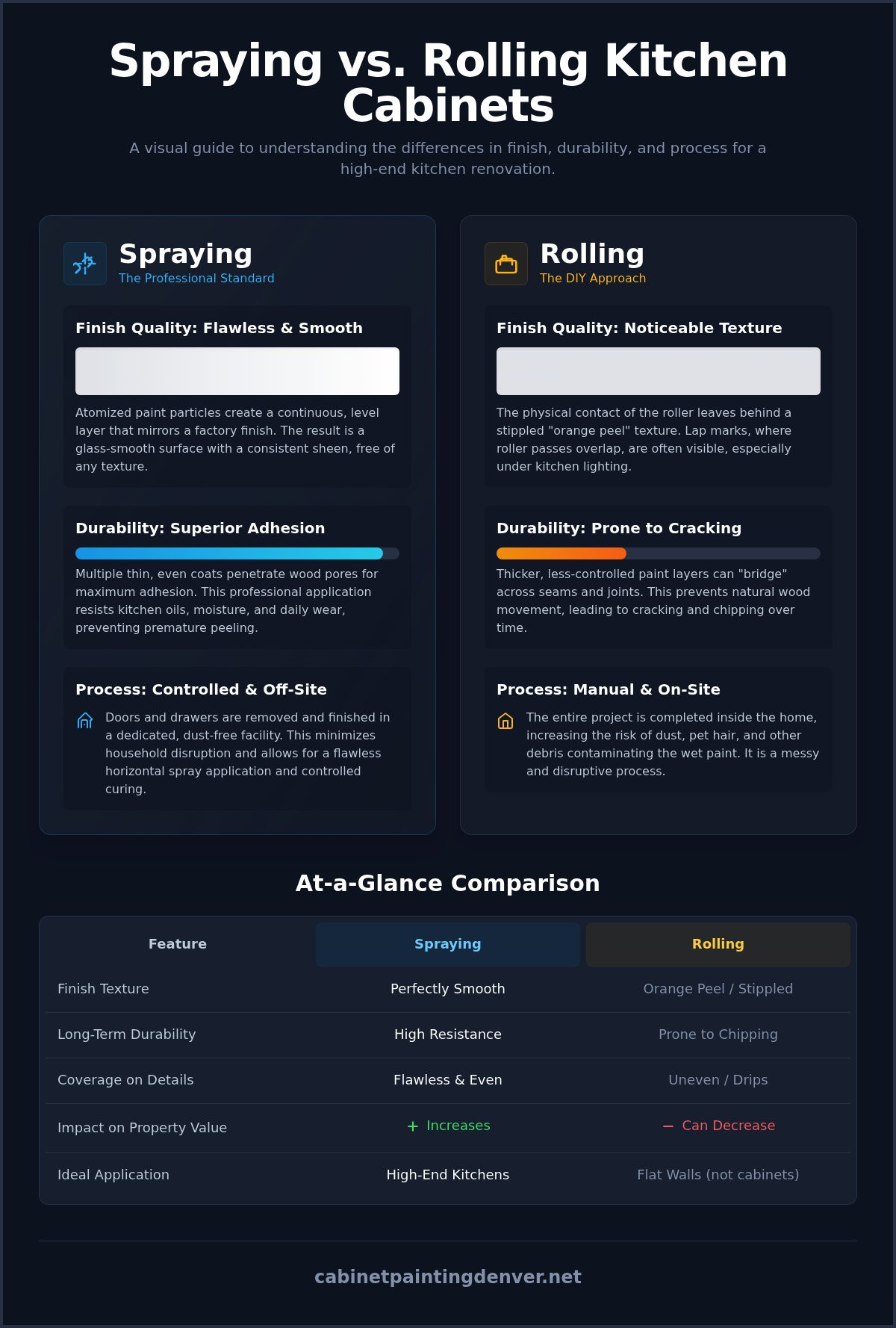
The choice between spraying vs rolling kitchen cabinets fundamentally changes the physical properties of the paint film. Spraying utilizes a mechanical system to break liquid paint into microscopic droplets, which then settle onto the surface to form a continuous, level layer. Rolling relies on a manual applicator, such as a high-density foam or microfiber sleeve, to physically push paint onto the wood. This distinction creates a significant "texture gap." Even the highest quality rollers create a slight "orange peel" effect because the applicator must pull away from the wet surface, lifting the paint slightly as it detaches. This mechanical displacement prevents the paint from leveling perfectly, leaving a permanent, dimpled pattern that diffuses light and reduces the cabinet’s sheen.
The Mechanics of Paint Atomization
Professional results depend on the science of atomization. When using a High-Volume Low-Pressure (HVLP) system, air pressure converts the coating into a fine mist. This process allows for precise control over various coating application methods, ensuring that the paint particles penetrate deep into the wood pores rather than just sitting on top. Because the mist is uniform, the paint levels out before it begins to cure. This results in a glass-smooth surface that mirrors the finish found on new, high-end furniture. In the Denver market, achieving this level of smoothness is essential for maintaining property value during a kitchen transformation. Professional spraying also allows for thinner, more consistent layers, which reduces the risk of drips while providing superior coverage.
The Manual Application Process
Rolling is a contact-based method. As the roller sleeve moves across the cabinet, it applies pressure to transfer the coating. This mechanical action often introduces air into the paint, leading to micro-bubbles or "stippling" once the surface dries. While rolling is an efficient choice for large, porous wall surfaces where texture is acceptable, it’s problematic for cabinetry. Lap marks, which are visible lines where one pass of the roller overlaps another, are common. These imperfections are difficult to sand out and often become more visible under kitchen lighting. When homeowners weigh spraying vs rolling kitchen cabinets, they often overlook how rolling tends to apply a thicker, less controlled layer of paint. While this might seem like a benefit for coverage, it often leads to "bridging" across joints and seams, which can crack as the wood naturally expands and contracts over time.
The Spraying Method: Achieving a Factory-Quality Finish
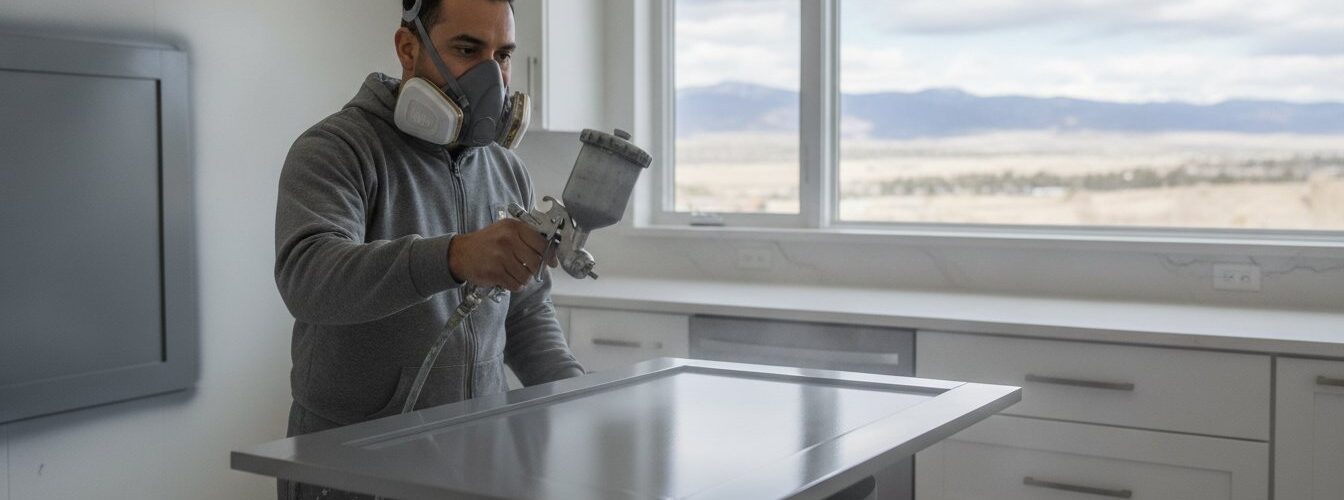
The professional spraying workflow starts with exhaustive site preparation, which is the primary logistical difference in the spraying vs rolling kitchen cabinets debate. Professional spraying relies on specialized equipment to bypass the limitations of manual application. High-Volume Low-Pressure (HVLP) systems are the preferred choice for furniture-grade work because they offer superior control over the spray fan and material flow. Unlike airless sprayers, which are designed for high-speed production on large surfaces, HVLP units minimize overspray and allow for the fine atomization necessary for a factory-smooth result. Managing airflow and dust is the final component of the workflow. Professionals often use portable spray booths or negative air machines to ensure that airborne contaminants don’t settle into the wet finish.
The Importance of Off-Site Door Refinishing
Off-site spraying for doors and drawers represents the industry gold standard for a reason. Spraying doors in a controlled, off-site environment prevents debris contamination from household activities like cooking or pet movement. This method allows for horizontal spraying, which enables the paint to level naturally without the risk of drips or sags that often plague vertical application. Professional drying racks facilitate uniform curing by providing consistent airflow around all surfaces simultaneously. This controlled process ensures that the most visible parts of your kitchen receive a flawless, durable coating that is impossible to replicate in a standard home environment.
Mastering the Spray Pattern
Consistency in the finish depends on the 50% overlap rule. This technique ensures that each pass of the sprayer blends perfectly with the previous one, eliminating thin spots or stripes that can occur with inexperienced handling. Properly managing overspray and dry spray is vital in a residential setting; otherwise, the finish may feel gritty to the touch. When executed correctly, this process results in the glass-like finish that defines high-end kitchen cabinet painting. Homeowners often find that the precision of this method is the deciding factor when comparing spraying vs rolling kitchen cabinets for their renovation. If you’re looking for a factory-quality transformation, professional kitchen cabinet painting offers the most reliable path to a durable result.
Rolling Cabinets: Is it a Viable DIY Option?
Rolling is often the default choice for homeowners attempting a weekend project. It makes sense for low-visibility areas like laundry rooms or basement utility cabinets where aesthetic perfection isn’t the priority. However, for a primary kitchen, the "DIY Look" is difficult to avoid. You can identify rolled cabinets by the stipple texture on flat panels and heavy paint buildup in the corners. These imperfections occur because rollers cannot reach tight recesses, forcing the use of a brush for "cutting in." This creates a mismatch in texture across the cabinet face that disrupts the visual flow of the room.
The hidden costs of rolling involve time and material volume. While DIY materials in 2026 typically cost between $200 and $600, the manual process requires at least three coats for full opacity. Each coat requires extended drying times to prevent the roller from pulling up the previous layer. This often leads to uneven thickness. Thick patches of paint take longer to cure and remain soft, while thin areas lack the protection needed for daily kitchen use. This inconsistency is a primary cause of premature peeling, as the paint film fails to bond uniformly to the substrate.
Pros and Cons of Manual Application
Manual application offers a low barrier to entry for those on a strict budget. The primary benefit is the minimal equipment investment; you only need basic rollers, brushes, and trays. You also gain the ability to work in small sections, painting one or two cabinets at a time without masking the entire room. The trade-off is the quality of the finish. Visible brush marks remain in every corner and detail line, and the "orange peel" texture is unavoidable on flat panels. For homeowners prioritizing property value, these visual flaws often outweigh the initial savings of the DIY approach.
The Reality of "Self-Leveling" Paints
Many 2026 paint formulations, such as acrylic enamels, are marketed as "self-leveling." These products are designed to flow out and minimize roller marks during the drying phase. However, no paint can completely eliminate the physical texture left by a microfiber or foam sleeve. In Denver’s semi-arid climate, the low humidity causes paint to dry rapidly. This accelerated drying time often prevents self-leveling paints from fully flattening before they set. When comparing spraying vs rolling kitchen cabinets, remember that professional spraying bypasses this environmental hurdle by applying atomized layers that don’t rely on a slow flow-out period to achieve a smooth surface.
Durability and Aesthetics: Head-to-Head Comparison
The debate of spraying vs rolling kitchen cabinets often centers on immediate appearance, but the true divergence lies in long-term performance. A sprayed finish typically offers a lifespan of 8 to 12 years before requiring a refresh, whereas rolled finishes often show signs of wear within 3 to 5 years. This durability difference stems from how the paint bonds to the wood. Sprayed particles create a cohesive, high-density film that resists the penetration of moisture and kitchen oils. Conversely, rolled applications are more susceptible to "blocking," where the thicker paint remains slightly soft, causing doors to stick to frames and eventually peel.
Total project time also varies significantly between these methods. While rolling requires less initial masking, the actual application and drying phases are extended. Rolling a standard kitchen can take 4 to 6 days due to the multiple coats and long cure times needed between layers. Professional spraying requires 2 to 3 days of intensive preparation and masking, but the application itself is completed in hours. This efficiency minimizes the time your kitchen remains out of commission. For homeowners, the trade-off is clear: more prep time leads to a faster return to a functional kitchen.
The Durability Gap
Thin, multiple layers applied via spraying create a resilient shell that handles daily impacts better than a single thick coat. Professional cabinet refinishing utilizes specialized coatings that are tested for chemical resistance against common household cleaners and food acids. Rolled paint often lacks this tight molecular structure, leaving it vulnerable to staining and heat-induced softening near ovens or dishwashers.
Aesthetic Impact on Modern Kitchens
Modern kitchen lighting, especially LED under-cabinet strips, highlights every surface imperfection. Rolled cabinets reveal a "hand-painted" look that many buyers associate with low-budget renovations. A sprayed finish provides the "factory look" that aligns with high-end appliance finishes and contemporary design trends. This professional aesthetic is a key driver for increasing property value in competitive markets like Denver. If you want a result that withstands the rigors of a busy kitchen, contact a specialist for a professional spraying quote to ensure your cabinets receive a durable, high-performance coating.
Professional Cabinet Painting in Denver: Making the Right Choice
Choosing between spraying vs rolling kitchen cabinets in the Denver metro area requires an understanding of local environmental variables. While the technical differences remain constant across the country, Colorado’s specific atmospheric conditions can accelerate certain application risks. Homeowners must evaluate the cost to paint kitchen cabinets against the long-term equity gains of a professional finish. The decision often rests on whether the goal is a temporary color change or a permanent, high-value transformation that withstands the rigors of a busy household.
Local Environmental Considerations
Denver’s semi-arid climate and high altitude significantly impact paint chemistry. Low humidity levels cause water-based coatings to flash dry rapidly. In a rolling scenario, this often results in visible "lap lines" because the previous stroke dries before the next one can blend into it. Professional spraying mitigates this by applying a uniform mist that settles simultaneously. Additionally, the windy seasons along the Front Range introduce high levels of airborne dust. Professionals manage this through sealed on-site enclosures and off-site spraying for removable components. This ensures a debris-free surface that DIY rolling cannot guarantee in an open-air home environment.
The ROI of Professional Results
A high-quality sprayed finish acts as a value multiplier for homes in competitive Denver markets. Real estate appraisals in high-end neighborhoods prioritize factory-standard finishes that match modern architectural trends. A visible roller texture can detract from a home’s value by suggesting a low-budget renovation. When you hire a cabinet painting denver specialist, you invest in a procedural workflow that includes industrial-grade primers and mechanical atomization. This approach yields a significant visual impact for a fraction of the replacement cost, providing a superior return on investment compared to a labor-intensive DIY project.
The final verdict on spraying vs rolling kitchen cabinets depends on your specific goals. If you’re updating a low-traffic rental property or hidden utility cabinets, rolling is a viable, low-cost solution. However, for primary living spaces where aesthetics and durability are paramount, professional spraying is the only logical choice. It eliminates the "hassle factor" of living in a construction zone for weeks and delivers a resilient, glass-smooth finish that lasts for years. To achieve a factory-new look that stands up to the Colorado climate, professional application is the standard requirement.
Secure Your High-Value Kitchen Transformation
Deciding between spraying vs rolling kitchen cabinets determines whether your renovation looks like a weekend DIY project or a high-end factory installation. While rolling is a functional choice for low-visibility areas, it cannot match the durability or aesthetic precision of professional application. Utilizing specialized HVLP equipment ensures a seamless finish that resists the oils and moisture common in active kitchens. This method provides the glass-smooth surface required for a modern, high-end aesthetic.
Professional results are particularly critical in the Denver market, where property values depend on high-standard finishes. Our process includes specialized off-site door refinishing to eliminate household debris contamination and provide a flawless surface. We serve the entire Denver metro area, providing a cost-effective alternative to full kitchen remodels. You don’t have to risk the quality of your home’s most important room with inconsistent manual application or visible texture.
Get Your Free Cabinet Painting Quote in Denver
Take the first step toward a durable, professional kitchen update today. It’s the most efficient way to achieve the factory-new look your home deserves.
Frequently Asked Questions
Is spraying cabinets more expensive than rolling?
Professional spraying usually involves a higher initial investment compared to manual rolling. Research indicates that a sprayed finish can add a premium of 20% to 30% to the total project cost. This reflects the specialized equipment and intensive preparation required to protect your home from overspray. While rolling is cheaper for DIY projects, it lacks the longevity and factory-quality finish of a professional sprayed application.
Does spraying use more paint than rolling?
Spraying generally consumes more paint than rolling because the atomization process creates a fine mist. Some material is lost to overspray or remains in the equipment lines during the transfer process. While a roller applies paint directly to the surface with minimal waste, it often requires more coats to reach the same opacity. Despite the higher material usage, spraying provides a more uniform thickness that is essential for a high-end finish.
How long does a sprayed finish last compared to a rolled one?
A professional sprayed finish typically lasts between 8 and 12 years with proper maintenance. In contrast, rolled finishes often show signs of wear, such as peeling or texture degradation, within 3 to 5 years. The superior durability of spraying comes from the high-density film created by atomized particles. This shell resists kitchen oils and moisture more effectively than the porous, uneven layers typically produced by manual rolling methods.
Can I spray my cabinets myself if I rent a machine?
Homeowners can rent spray equipment, but achieving a professional result is challenging for beginners. Spraying requires precise control over the spray pattern and fan speed to avoid drips or grittiness. Without a controlled environment or off-site booth for doors, airborne dust can easily ruin the wet finish. Most DIYers find that the learning curve and extensive masking requirements make rolling a safer, albeit lower-quality, option for non-professionals.
Will spraying my cabinets make a mess in my house?
Professional painters use extensive masking and containment systems to prevent overspray from reaching other areas of your home. By utilizing off-site spraying for doors and drawers, the most significant portion of the work occurs in a controlled booth. This approach minimizes the chemical odor and dust within your living space. When evaluating spraying vs rolling kitchen cabinets, remember that professional containment ensures your home remains clean and functional throughout the project.
What kind of paint is best for spraying vs. rolling?
Durable acrylic enamel or alkyd paints are the standard for both methods in 2026. However, spraying requires specific paint viscosities to ensure the equipment atomizes the liquid correctly. Professional choices often include urethane-modified alkyds that cure to a hard, washable finish. While rolling can handle thicker paints, these often leave heavy texture. Sprayed applications utilize thinner, more precise layers that create a smoother, more resilient surface than traditional house paints.
Can you roll the frames and spray the doors?
This hybrid approach is common, but it results in a texture mismatch between the smooth doors and the stippled frames. While spraying the doors off-site provides a factory look, rolling the cabinet boxes in the kitchen leaves visible orange peel texture. When considering spraying vs rolling kitchen cabinets, professionals recommend spraying both the frames and the doors for a seamless look. This ensures the entire set has a uniform sheen and texture.
Why do professional painters prefer spraying over rolling?
Professional painters prioritize spraying because it’s the only way to deliver a factory-quality finish that meets client expectations. The speed of application allows contractors to complete projects faster once the masking is finished. Spraying also provides better adhesion and a more durable shell, which reduces the likelihood of future touch-ups or warranty claims. It’s the industry standard for high-value renovations where surface quality directly impacts professional reputation.