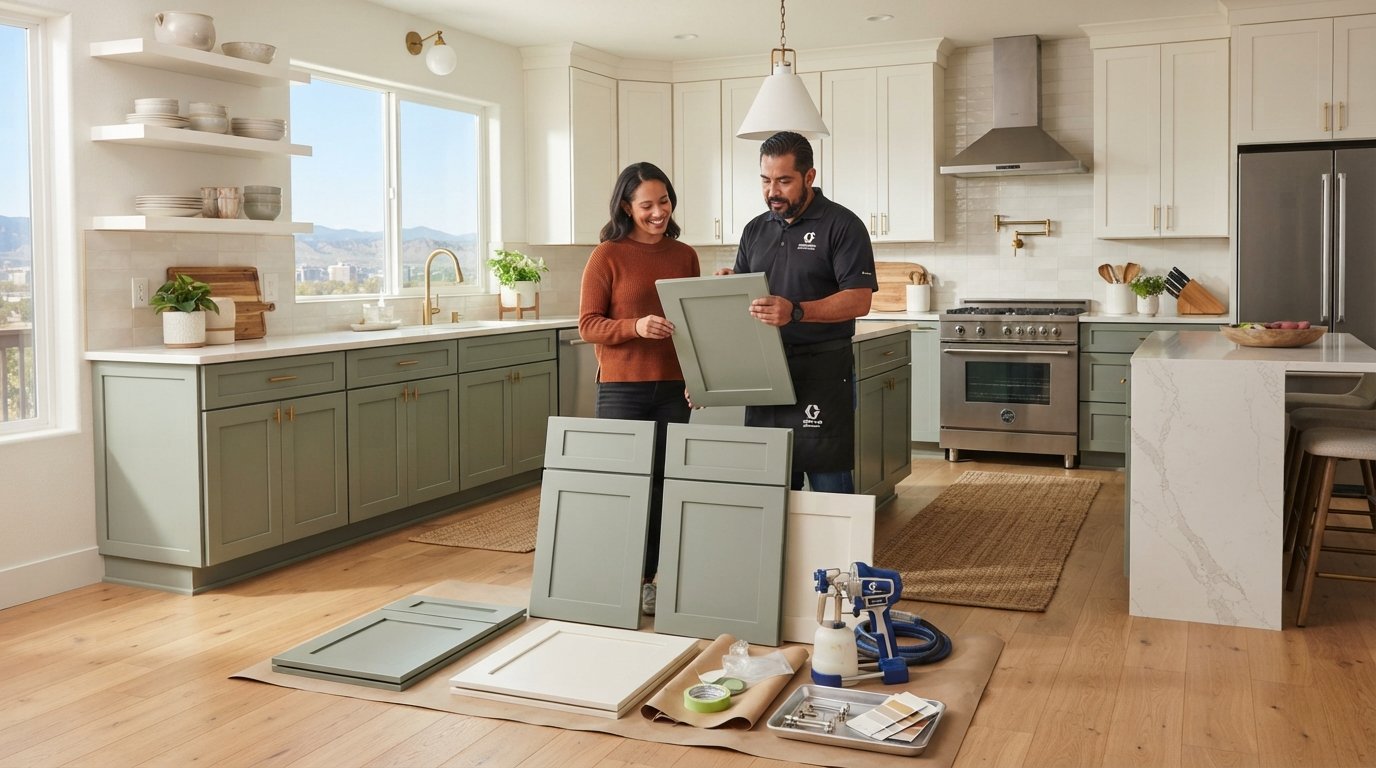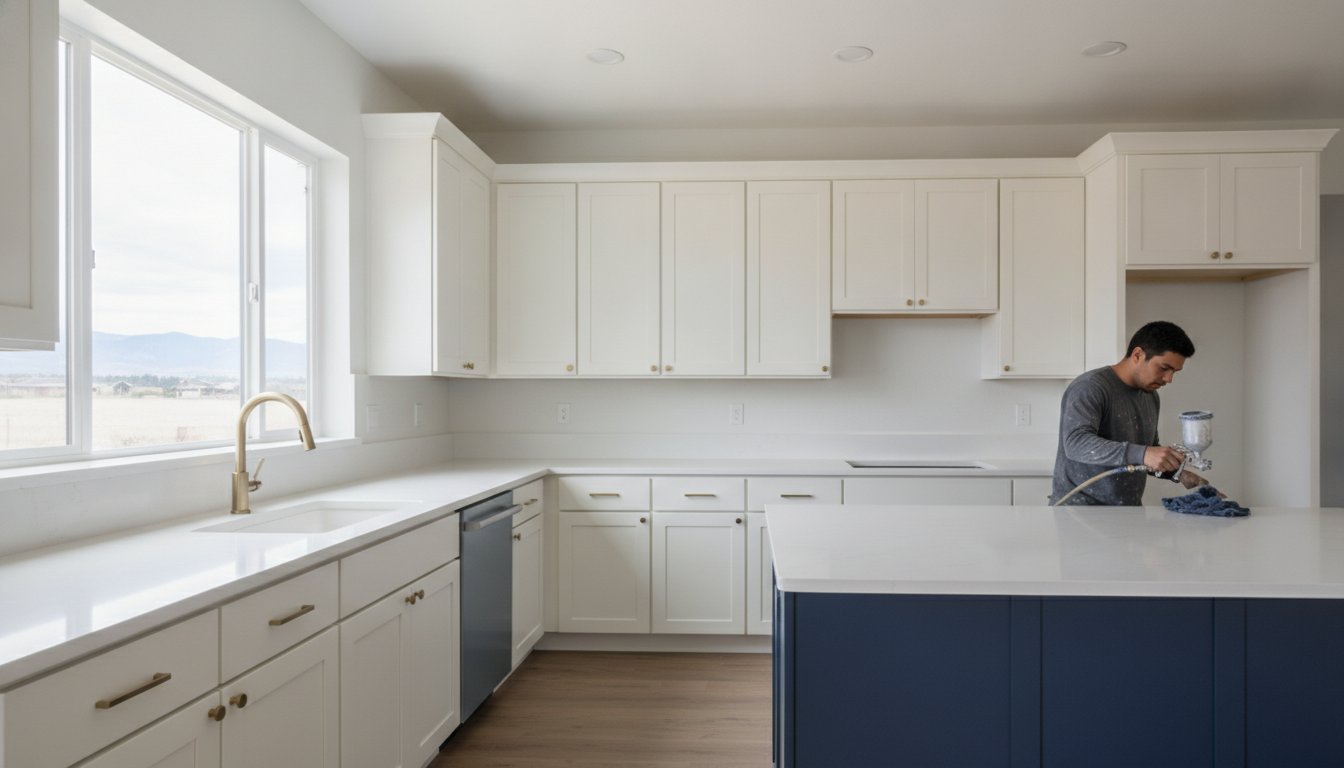

Replacing your kitchen cabinets simply to change their color is often an unnecessary waste of your renovation budget. Most homeowners feel trapped by outdated wood finishes but correctly hesitate at the high cost and disruption of full custom cabinetry. It’s common to desire a modern aesthetic while fearing a messy project that leaves your kitchen unusable for weeks. Understanding the pros and cons of painting kitchen cabinets is the first step toward achieving a high-ROI update that delivers a factory-quality finish.
Cabinet Painting Service Areas in Denver & Surrounding Cities, Cabinet Refinishing in Denver County, Boulder CO,
Arvada, CO, Wheat Ridge, CO,
and Castle Pines CO. Englewood CO. Castle Rock CO, Centennial CO.
Cabinet Painting in Arapahoe County, CO
Including Centennial, CO, Greenwood Village, CO,
Cherry Hills Village, CO,
and Aurora, CO.
This guide provides a professional breakdown of why specialized spray refinishing is a superior alternative to replacement. You’ll discover how professional-grade coatings provide a durable surface that increases home value in days rather than months. We’ll examine the technical requirements for smooth results and the specific trade-offs involved in the process. This objective analysis ensures you have the clarity needed to decide if professional refinishing is the right investment for your kitchen transformation.
Key Takeaways
- Professional kitchen cabinet painting provides a high-ROI alternative to replacement. This process delivers a factory-quality finish while maintaining your current layout.
- Analyzing the pros and cons of painting kitchen cabinets helps you determine if your cabinetry is structurally sound enough for a long-term investment.
- Specialized spray application techniques offer superior durability. They provide a smoother texture than standard brush or roller methods.
- Use our structural assessment checklist to identify moisture damage and other indicators that dictate if your cabinets are suitable for refinishing.
- Modern refinishing protocols reduce project timelines by utilizing off-site spraying for removable components to minimize household disruption.
Evaluating Kitchen Updates: Pros and Cons of Painting Kitchen Cabinets
Deciding how to update a kitchen requires balancing aesthetic desires with structural realities. The primary trade-off involves weighing the speed and cost of a visual transformation against the long-term integrity of the existing cabinet boxes. Homeowners must analyze the pros and cons of painting kitchen cabinets to avoid spending money on cabinetry that requires structural repair rather than a surface update. In 2026, professional refinishing has emerged as the leading ROI-focused update because it addresses the visual "outdated" factor without the waste of a full tear-out.
To better understand this concept, watch this helpful video comparing different cabinet finishes:
A successful project depends on distinguishing between basic "painting" and professional refinishing. While a standard paint job might look acceptable initially, it often fails to withstand the heat and moisture of a high-traffic kitchen. Professional standards require industrial-grade coatings and specialized equipment to ensure the finish bonds permanently to the substrate.
| Pros | Cons |
|---|---|
| Significant cost savings compared to full replacement. | Cannot fix poor kitchen layouts or structural damage. |
| Project completion in days; not months. | Wood grain (like Oak) may remain visible through the finish. |
| Unlimited color customization for modern aesthetics. | Requires professional spray equipment for a smooth result. |
| Sustainability by keeping quality wood out of landfills. | Lower-quality coatings can peel or chip easily. |
Why Homeowners Choose Painting
Modernization is the most frequent driver for this service. Painting updates the kitchen footprint immediately, allowing homeowners to follow 2026 Denver market trends like deep greens or muted bicolors. It’s a sustainable choice that preserves high-quality wood structures while providing a fresh look. Unlike stock cabinets, professional painting offers unlimited color choices, ensuring the kitchen matches the home’s specific interior design.
The Role of Professional Standards
The durability of the finish depends entirely on the application method. Professional refinishing utilizes HVLP (High Volume Low Pressure) spraying rather than brushes or rollers. This technique creates a factory-quality surface that is impossible to achieve with manual tools. Using industrial-grade coatings ensures a lifespan that matches the original cabinetry, resisting the daily wear of oils, steam, and cleaning agents. Without these professional standards, the "pros" of the project quickly vanish as the finish degrades.
The Advantages: Why Cabinet Painting is a Top Choice in 2026
Professional refinishing offers a high-value path to kitchen modernization. It avoids the waste of structural removal while delivering a completely fresh aesthetic. When evaluating the pros and cons of painting kitchen cabinets, the financial and logistical benefits often make this the preferred choice for homeowners seeking a rapid update. This method allows you to retain high-quality existing wood structures while achieving a surface finish that looks brand new.
Cost-Effectiveness and ROI
The most immediate advantage is the financial savings compared to full replacement. Analyzing the cost to paint kitchen cabinets reveals it’s a small fraction of the expense required for a full tear-out. This efficiency allows you to reallocate your renovation budget toward high-end hardware, new countertops, or updated appliances. In the Denver market, a modernized kitchen significantly boosts resale value. By choosing professional refinishing, you’re investing in a high-ROI update that buyers prioritize without the massive overhead of new cabinetry materials.
Speed and Project Timeline
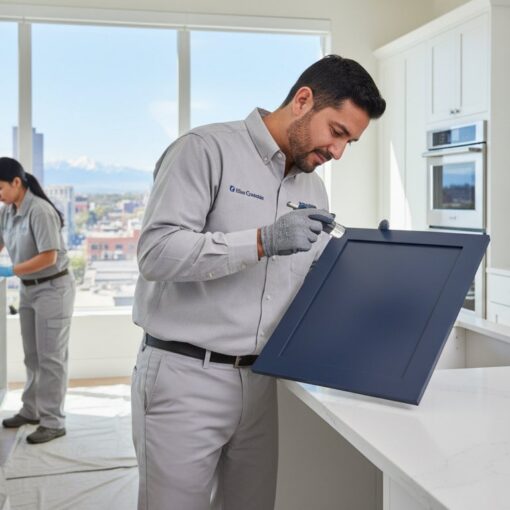
Traditional renovations often leave a kitchen unusable for months. Professional refinishing reduces this timeline to just a few days. The process is highly efficient because technicians spray doors and drawer fronts off-site in a controlled environment. This "clean" renovation approach eliminates the majority of in-home dust and chemical odors. You can maintain kitchen functionality for most of the project duration. It’s a procedural advantage that makes it much easier to schedule around busy family lives compared to a full construction zone.
Beyond speed and cost, this method protects and preserves original high-quality wood. Many older homes feature solid wood boxes that are structurally superior to modern, mass-produced particle-board alternatives. Refinishing preserves these durable assets while allowing for complete color customization. You aren’t limited to a manufacturer’s stock catalog. You can match any designer palette or current 2026 color trend to fit your home’s specific style. If you’re ready to see how a professional finish can transform your space, you can explore our kitchen cabinet painting services to learn more about the process.
Choosing professional spraying over manual brushing ensures a smooth, factory-quality surface. This durability is essential for high-traffic areas where cabinets face constant exposure to heat and moisture. By utilizing industrial-grade coatings, you ensure the finish remains resilient against daily wear for years to come. This combination of speed, savings, and quality makes professional refinishing the leading choice for modern kitchen updates.
The Potential Drawbacks and Realistic Expectations
Professional refinishing offers a transformative aesthetic, but it is not a solution for every kitchen. It doesn’t address fundamental layout flaws or structural decay. If your cabinet boxes are sagging or suffering from significant water damage, surface coatings won’t restore their integrity. Understanding these limitations is a vital part of weighing the pros and cons of painting kitchen cabinets before committing to a project. Realistic expectations regarding texture and maintenance ensure you’re satisfied with the long-term results.
Material Limitations and Wood Grain
The species of wood in your kitchen significantly impacts the final texture of the finish. Maple and Poplar have tight, closed grains that yield a glass-like surface when professionally sprayed. Conversely, Oak has deep, porous grains. While industrial coatings cover the color of the wood, the physical texture of the grain often remains visible. This textured look is a standard characteristic of painted Oak; it isn’t a defect in the application. Additionally, paint cannot hide deep physical damage. While minor surface scratches are filled during the preparation phase, structural gouges or heavy dents may remain visible without extensive wood filling and sanding.
The Consequences of Poor Preparation
The durability of a new finish is directly tied to the cleaning phase. Kitchens naturally accumulate airborne grease and cooking oils that prevent coatings from bonding correctly. If these contaminants aren’t meticulously removed, the paint will peel or "fish-eye" shortly after application. This is why professional cabinet refinishing requires industrial-grade de-glossers and specialized cleaning protocols. Using an incorrect primer is another common failure point. Surfaces must be chemically etched or mechanically sanded to ensure the industrial coating adheres to the substrate. Skipping these procedural steps to save time results in a finish that lacks the resilience of a factory-applied coating.
Maintenance requirements also shift once cabinets are painted. Painted surfaces show grease, fingerprints, and dust more readily than stained wood. You must use pH-neutral cleaners and soft cloths to maintain the topcoat. Harsh chemicals or abrasive sponges can dull the sheen or micro-scratch the surface over time. Setting these realistic expectations ensures your investment remains a long-term asset to your home’s value. While the visual reward is high, the surface requires disciplined care to stay in peak condition.

Is Your Kitchen a Candidate? The Assessment Checklist
Determining if your kitchen is suitable for refinishing requires a technical assessment of current conditions. While analyzing the pros and cons of painting kitchen cabinets, you must verify that the underlying structure supports a long-term finish. A cosmetic update cannot compensate for foundational failure. Use the following checklist to evaluate your cabinetry before scheduling a project:
- Structural Integrity: Inspect the cabinet boxes for sagging or shifting. Boxes must be square and firmly attached to the wall.
- Moisture Assessment: Check the areas around the sink, dishwasher, and baseboards for wood rot or swelling.
- Layout Functionality: Confirm the "work triangle" meets your needs. Painting is a visual update; it won’t fix a cramped or inefficient floor plan.
- Material Identification: Identify if your surfaces are solid wood, MDF, or laminate. Each requires a specific preparation protocol.
- Hardware Review: Decide if you’re keeping existing hinges and handles. If you’re switching to different sizes, you’ll need to fill and drill new holes before the spray process begins.
Structural Integrity vs. Cosmetic Issues
You must distinguish between surface wear and structural damage. Loose hinges, minor scratches, and outdated colors are cosmetic issues that professional refinishing solves effectively. However, if the cabinet frames are rotted from long-term water leaks or the shelving is collapsing, the cabinets are beyond the scope of a painting project. Evaluating the "bones" of your kitchen ensures your investment is placed into a durable asset. If the boxes are made of high-quality plywood or solid wood, they’re excellent candidates for a factory-quality spray finish.
Surface Compatibility and Material Checks
Different materials react uniquely to industrial coatings. Solid wood species like Maple or Poplar provide the smoothest results. Oak is highly durable but features a deep grain that remains visible under the paint. MDF (Medium Density Fiberboard) is an ideal candidate for painting because it’s dimensionally stable and doesn’t expand or contract like natural wood. Thermofoil presents a specific challenge; if the plastic coating is peeling or "delaminating," it must be completely removed or repaired before any coating is applied. Failure to address material-specific needs leads to premature peeling.
Testing the current finish is a standard procedural step. Professional refinishers check for previous wax applications or silicone-based cleaners that can cause adhesion failure. If you’re unsure about your material type or structural condition, you should consult a professional cabinet painter for a technical audit. This assessment prevents costly mistakes and ensures your Denver home receives a finish that lasts for years. If your cabinets pass this checklist, you can contact Cabinet Painting Denver to schedule a professional evaluation of your kitchen’s potential.
Achieving a Factory Finish with Professional Cabinet Painting
The technical execution of your project determines whether the result looks like a professional upgrade or a temporary fix. When you weigh the pros and cons of painting kitchen cabinets, the "pro" side only wins if the application achieves a true factory finish. This level of quality requires a multi-step protocol that begins long before any coating is applied. Technicians must perform rigorous cleaning and chemical de-glossing to remove every trace of kitchen contaminants. This process ensures that high-solids primers and industrial topcoats form a permanent mechanical bond with the cabinet surface.
The Spraying vs. Brushing Difference
Manual application methods like brushing or rolling cannot replicate the appearance of new cabinetry. Brush marks and roller textures immediately ruin the "new cabinet" illusion by leaving visible ridges that trap dust and grime. Professional HVLP (High Volume Low Pressure) spraying creates an atomized mist that settles into an even, glass-smooth layer. This technique ensures consistent coverage in deep crevices and intricate profiles where brushes often leave unsightly drips. Understanding the pros and cons of painting kitchen cabinets helps you appreciate why professional tools are non-negotiable for a durable result. Chemically cured industrial coatings used in the spray process offer far greater resilience than standard hardware store paints. These coatings provide a hard surface that resists the thermal expansion and contraction common in kitchen environments.
Partnering with Denver Experts
Environmental factors play a critical role in the curing process. Denver’s high altitude and low humidity levels affect how industrial coatings dry and bond. A local cabinet painting denver specialist understands these atmospheric variables and adjusts application techniques accordingly. This local expertise ensures the finish reaches its maximum hardness without becoming brittle. When you’re vetting a contractor, you should review their portfolio specifically for the absence of brush marks and the precision of their hardware alignment.
The final phase of a professional project involves meticulous re-assembly. Technicians align doors and drawer fronts to ensure perfectly even gaps, which is essential for a high-end look. This procedural attention to detail, combined with industrial-grade materials, creates a finish that’s indistinguishable from brand-new custom cabinetry. By choosing professional spraying over manual methods, you maximize the longevity of your investment and ensure your kitchen transformation stands up to years of daily use.
Modernize Your Kitchen with Professional Refinishing
Professional refinishing is the most efficient method for achieving a modern aesthetic without the extreme costs and delays of full cabinet replacement. By analyzing the pros and cons of painting kitchen cabinets, you can verify if your current cabinet structures are suitable for a long-term investment. Success depends on moving beyond manual application to utilize professional spray techniques that ensure a factory-quality finish. This approach preserves your high-quality wood while delivering a resilient surface that stands up to the demands of a busy kitchen.
Our team specializes in high-durability coatings and serves the entire Denver metro area with expert precision. We focus on transforming your kitchen into a modernized space in days rather than months. If your cabinet boxes are structurally sound, you’re ready to experience a high-ROI update that looks brand new. You can achieve a stunning transformation that increases your home’s value with minimal disruption to your daily life.
Get Your Free Cabinet Painting Quote in Denver
Frequently Asked Questions
How long does a professional cabinet painting job last?
A professionally applied finish typically lasts between eight and ten years with proper maintenance. This durability stems from industrial-grade coatings and specialized spray application techniques that bond to the wood surface. Unlike standard house paint, these materials resist grease, heat, and moisture common in Denver kitchens. Regular cleaning with pH-neutral solutions helps maintain the integrity of the topcoat for a decade or more.
Will painting my kitchen cabinets look cheap or DIY?
Professional refinishing delivers a factory-quality finish that looks indistinguishable from brand-new cabinetry. The "cheap" look associated with painted cabinets usually results from brush marks or roller textures. By utilizing HVLP spray equipment, technicians create an atomized mist that settles into a glass-smooth surface. This procedural precision ensures your kitchen looks modernized and high-end rather than a temporary home improvement project.
Can you paint cabinets that are already painted or stained?
You can successfully refinish cabinets regardless of their current finish. Stained wood requires thorough de-glossing to ensure the primer adheres, while previously painted surfaces need careful inspection for peeling or failing layers. If the existing paint is sound, it’s cleaned and mechanically etched to accept the new industrial coating. This versatility is one of the primary pros and cons of painting kitchen cabinets to consider during your renovation planning.
What is the best type of paint to use for kitchen cabinets?
High-solids primers and industrial-grade coatings designed for high-traffic surfaces provide the best results. These are often water-borne alkyds or polyurethanes that offer superior hardness and chemical resistance. Standard latex or acrylic wall paints don’t provide the necessary durability for kitchen environments. Professional refinishers select coatings that cure to a hard, resilient film, protecting your cabinetry from daily exposure to oils, steam, and cleaning agents.
How do I clean and maintain my painted cabinets?
Maintenance requires gentle cleaning to preserve the industrial topcoat. You should use a soft microfiber cloth dampened with warm water and a mild, pH-neutral dish soap. Avoid abrasive sponges, scouring pads, or harsh chemical cleaners containing ammonia or bleach, as these can dull the sheen or micro-scratch the surface. Promptly wiping away grease and spills prevents contaminants from sitting on the finish and potentially causing long-term damage.
Is it better to paint or reface kitchen cabinets?
Painting is the superior choice for homeowners with structurally sound cabinet boxes who want to maximize their ROI. Refacing involves replacing doors and drawer fronts entirely, which significantly increases material costs. Considering the pros and cons of painting kitchen cabinets, professional painting provides a similar aesthetic transformation at a fraction of the expense. If you’re satisfied with your current door style, refinishing offers the fastest path to a modernized kitchen.
Do I need to empty my cabinets before they are painted?
You must empty all items from your cabinets before the project begins. This step ensures that cleaning agents, primers, and coatings don’t contaminate your dishes or food. It also allows technicians to thoroughly clean and mask the interior edges and frames of the cabinet boxes. Removing your belongings protects them from fine dust generated during the mechanical etching phase and ensures the most efficient workflow for the installation team.
Can you paint laminate or thermofoil cabinets?
Laminate and thermofoil surfaces are paintable if they aren’t peeling or delaminating from the core material. These non-porous surfaces require specialized bonding primers that chemically etch the substrate to create a strong anchor for the topcoat. If the thermofoil is bubbling or pulling away, it must be repaired or removed before refinishing. When properly prepared, these materials accept industrial coatings well and result in a durable, smooth finish.