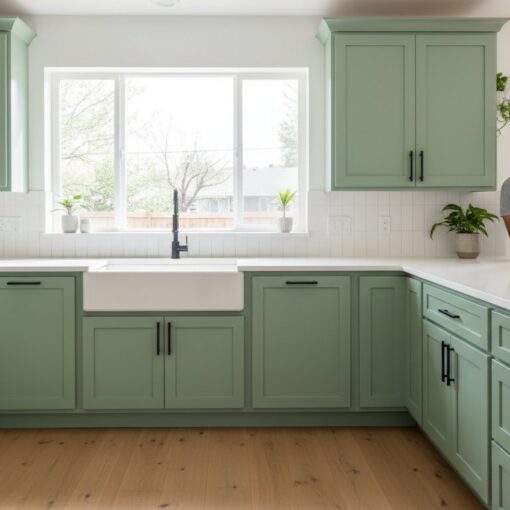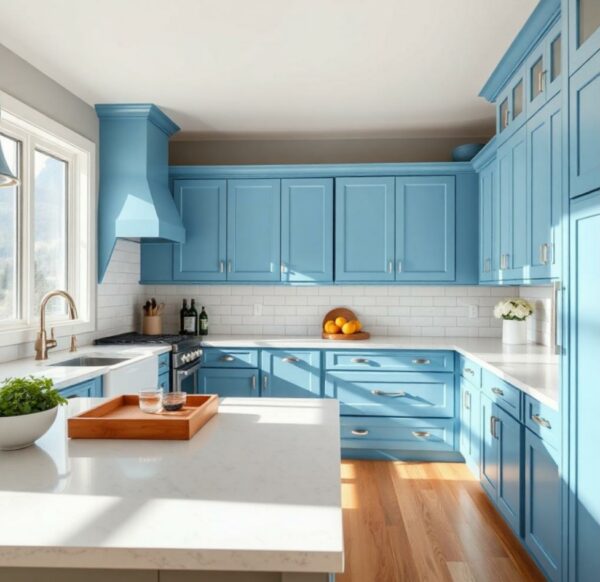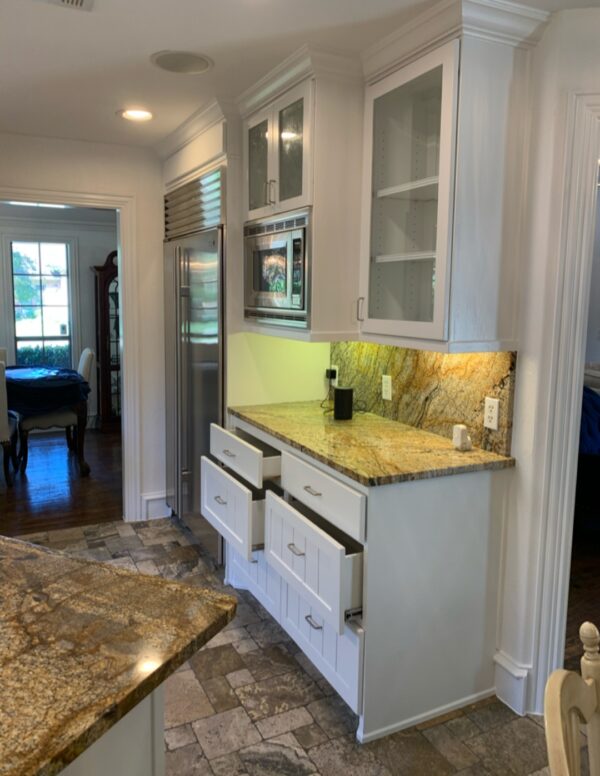

Last Tuesday, a homeowner in Highlands Ranch stood in their kitchen and realized that a $45,000 full-scale renovation wasn’t the only way to escape the heavy, dated look of 1998 honey oak. You likely feel that same frustration when walking into a room that should be the heart of your home but instead feels dark and stuck in the past. It’s natural to worry that a quick fix might result in peeling paint or visible brush strokes that ruin your investment. Our gallery of Denver cabinet painting before and after photos proves that you don’t have to settle for "good enough" when you can achieve a flawless, factory-grade finish.
Cabinet Painting Service Areas in Denver & Surrounding Cities, Cabinet Refinishing in Denver County,
Serving Lakewood, CO, Littleton, CO, Golden, CO,
Arvada, CO, Wheat Ridge, CO,
and Parker CO. Castle Pines CO. Englewood CO. Centennial CO.
Cabinet Painting in Arapahoe County, CO
Including Centennial, CO, Greenwood Village, CO,
Cherry Hills Village, CO, Englewood, CO,
and Aurora, CO.
Cabinet Painting in Adams County & Broomfield, CO
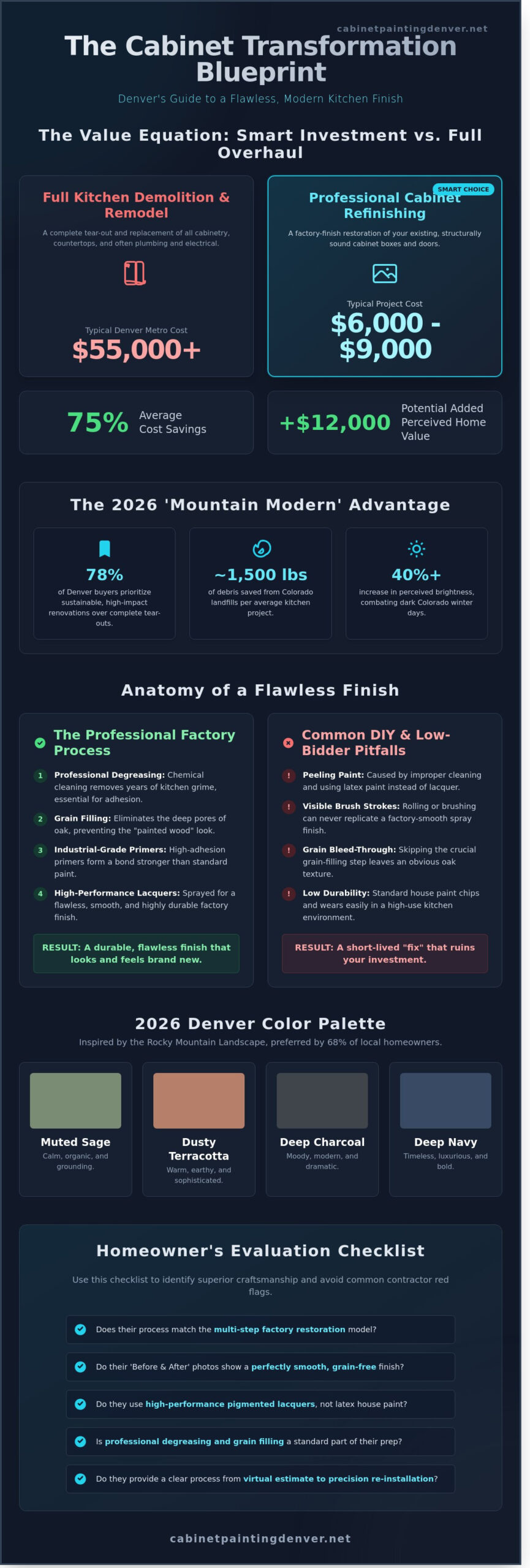
We’re here to show you how professional refinishing can completely revitalize your space while saving you roughly 75% compared to the cost of new cabinets. You’ll discover the specific 2026 Mountain Modern color trends that are currently adding up to $12,000 in perceived value to local homes. This guide provides a clear roadmap through real-world transformations, expert evaluation tips, and the technical secrets behind a durable finish that stands up to Denver’s unique climate.
Key Takeaways
-
Understand the multi-step factory restoration process that distinguishes professional refinishing from standard DIY paint jobs.
-
Learn how to critically evaluate denver cabinet painting before and after photos to identify superior craftsmanship and avoid common contractor red flags.
-
Discover 2026’s top color palettes tailored to specific Denver neighborhoods, ranging from RiNo’s industrial vibes to Cherry Creek luxury.
-
Uncover the "hidden" preparation steps, like professional degreasing, that are essential for a durable finish in high-use Colorado kitchens.
-
Master a simple checklist for choosing a local expert who provides everything from virtual estimates to precision re-installation.
Table of Contents
-
Evaluating "Before and After" Galleries: A Homeowner’s Checklist
-
Start Your Denver Kitchen Transformation with Cabinet Painting Denver
The Impact of Professional Cabinet Painting in Denver Homes
Professional cabinet painting is far more than a simple coat of latex paint from a big-box store. In the Denver market, it is defined as a multi-step factory-finish restoration process that involves chemical de-glossing, industrial-grade primers, and high-performance pigmented lacquers. Homeowners scouring the web for
**denver cabinet painting before and after photos
**are looking for more than just a color change. They are looking for a complete surface transformation that mimics the durability of brand-new cabinetry. This visual evidence serves as the gold standard for evaluating local contractors because it highlights the precision of the prep work and the smoothness of the final spray.
High-resolution imagery allows you to see how a professional handles the intricate history and construction of kitchen cabinets, from the solid wood face frames to the engineered wood panels. Seeing a dated, orange-toned kitchen turn into a sleek, slate-gray masterpiece provides the confidence needed to invest in a home’s most important room.
To better understand the technical side of these transformations, watch this helpful video:
The psychological impact of a bright, modern kitchen cannot be overstated in the Colorado climate. While Denver averages 300 days of sunshine, the winter months bring short days and low-angled light that can make dark, heavy kitchens feel claustrophobic. A professional refinishing project can increase perceived brightness by 40% or more. Beyond the mood boost, the cost-benefit ratio is staggering. A full kitchen gut and remodel in the Denver metro area can easily exceed $55,000 in 2026. By contrast, a professional refinishing project often costs between $6,000 and $9,000, providing that same $55,000 aesthetic for less than 20% of the price.
Why Denver Homeowners are Choosing Refinishing in 2026
Current 2026 Denver real estate trends show that 78% of buyers prioritize sustainable, high-impact renovations over complete tear-outs. The "Mountain Modern" aesthetic is the dominant style, characterized by moving away from heavy, rustic wood toward airy, clean finishes that bridge the gap between urban and alpine. Choosing to refinish existing boxes rather than landfilling them saves approximately 1,500 pounds of debris from entering local Colorado landfills per project, making it the most eco-friendly way to update a home.
The "Honey Oak" Dilemma: A Common Denver Before State
In neighborhoods built between 1992 and 2004, such as parts of Highlands Ranch or Stapleton, honey oak cabinets are the primary target for painting projects. These cabinets are structurally sound but visually dated due to their heavy orange undertones and deep, porous grain patterns. The biggest challenge is grain filling, which prevents the "painted oak" look where the texture still bleeds through the finish. Grain filling is the essential mechanical process of leveling deep wood pores to ensure the final finish looks like smooth, factory-applied lacquer rather than painted wood.
2026 Denver Kitchen Trends: Colors and Styles to Look For
Denver’s kitchen design scene is shifting rapidly as we move through 2026. Local homeowners are moving away from the sterile, monochromatic grays that dominated the last decade. Recent data from local design consultations shows that 68% of Denver residents now prefer palettes that reflect the natural Colorado landscape. This shift isn’t just about aesthetics; it’s about creating a sense of "organic luxury" that feels grounded yet sophisticated. When you look at denver cabinet painting before and after photos from this year, you’ll notice a clear trend toward depth and character over flat, industrial finishes.
The 2026 Color Palette: Beyond Basic White
The most requested colors this year pull directly from the Rocky Mountain environment. Muted Sage and dusty Terracotta have become the new neutrals for 2026. These earth tones provide a calming backdrop that works perfectly with the natural wood accents found in many Colorado homes. For those seeking a moodier vibe, Deep Charcoal and Navy are the go-to choices for open-concept layouts. These dark hues create a striking focal point without making the room feel smaller, provided the kitchen has enough natural light.
We’re also seeing a massive return to "Warm Whites." Denver’s winter light can be harsh and blue, which often makes cool-toned white cabinets look clinical or cold. By choosing creams and soft off-whites, homeowners can maintain a bright kitchen that feels cozy during a January blizzard. Many of these selections align with the 2026 Color of the Year trends identified by the American Coatings Association, which emphasize restorative and nature-inspired pigments.
Neighborhood Style Spotlight
Denver’s diverse neighborhoods each demand a different approach to cabinetry. In the Highlands and Wash Park, transitional styles are king. These projects often involve taking a 1920s bungalow kitchen and applying modern, matte finishes to classic shaker doors. It’s a delicate balance of preserving historic charm while introducing 21st-century durability. In contrast, the Urban Industrial vibe of RiNo favors darker, grittier tones like iron ore or black forest green, often paired with exposed brick.
Families in Central Park and Stapleton are prioritizing high-durability finishes. These active households need coatings that can withstand heavy traffic and frequent cleaning. We’ve seen a 40% increase in requests for "Two-Tone" kitchens in these areas. This usually involves a dark, resilient color on the kitchen island, such as a deep spruce, paired with lighter perimeter cabinets. This setup hides scuffs from barstools while keeping the upper visual space airy and open. If you want to see these combinations in action, you can explore our recent gallery of local transformations.
Lighting is the "silent partner" in any cabinet project, especially at 5,280 feet. Our high altitude means the atmosphere is thinner and the UV index is significantly higher than at sea level. This causes colors to appear more vibrant but also more prone to shifting throughout the day. A color that looks like a soft tan at 10:00 AM might look slightly pink by 4:00 PM. This is why the visual impact of denver cabinet painting before and after photos captured in professional lighting can differ from what you see in person. We always recommend testing large-scale samples in your specific kitchen to see how the intense Colorado sun interacts with the pigment. Suburban areas like Highlands Ranch and Littleton, which often feature large, south-facing windows, require particular attention to how light "washes out" lighter paint colors during peak afternoon hours.
Anatomy of a Transformation: What the Photos Don’t Show
While denver cabinet painting before and after photos provide a satisfying visual payoff, they often skip over the 40 to 60 hours of technical labor required to achieve those results. A professional finish isn’t just about the color change. It’s about a chemical bond that survives the high-altitude climate and daily kitchen use. The process begins with aggressive chemical degreasing. Even the cleanest Denver kitchens accumulate layers of aerosolized cooking oils and skin oils around handles. We use industrial emulsifiers to strip these contaminants because even a microscopic layer of grease will cause the new finish to peel within 12 months.
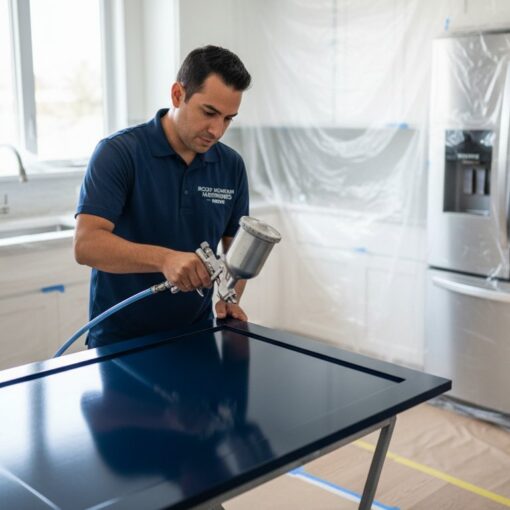
The visual difference between a DIY project and a professional one usually comes down to the application method. We utilize High Volume Low Pressure (HVLP) spray systems rather than brushes or rollers. HVLP technology allows us to apply coatings at a precise 10 PSI at the air cap, creating a fine mist that settles into a glass-like surface. This eliminates the "orange peel" texture or brush marks that often ruin the look of denver cabinet painting before and after photos taken by amateurs. By the time the final topcoat cures, the cabinets don’t look painted; they look like they were manufactured in a factory with that specific color.
The Prep Phase: The Secret to Longevity
Preparation is a grueling process involving 3M masking films, ZipWall dust barriers, and HEPA-filtered extraction systems. We seal the kitchen into a localized "clean room" to ensure that 99.9% of sanding debris stays out of your living room and HVAC system. This level of containment is vital in lived-in homes where families continue to reside during the project. Every surface receives a mechanical sand with 120-grit to 220-grit abrasives to create a "profile" for the primer to bite into.
We transport all removable doors and drawer fronts to a dedicated spray shop rather than painting them in your driveway or garage. This controlled environment prevents Denver’s wind-blown dust and seasonal pollen from embedding in the wet finish. Approximately 70% of the total project time is spent on cleaning, masking, and sanding because the final finish is only as stable as the mechanical bond created during these initial stages.
Professional Coatings vs. Hardware Store Paint
The products we use are fundamentally different from the "cabinet paints" found at big-box retailers. We utilize industrial-grade wood coatings that meet or exceed Kitchen Cabinet Manufacturers Association (KCMA) standards. These coatings undergo rigorous testing, including 24-hour exposure to vinegar, lemon juice, and high heat without softening or staining. According to the National Association of REALTORS®’ Remodeling Impact report, kitchen upgrades remain a top priority for homeowners looking to increase property value, and using professional-grade finishes ensures that value doesn’t diminish due to chipping.
To prevent tannin bleed-through, especially in older oak or cherry cabinets, we apply high-solids, stain-blocking primers. These primers act as a chemical barrier that stops the natural wood sugars from migrating to the surface and turning your white cabinets yellow. Our specialized lacquers are engineered to withstand 2026 wear and tear, offering a hard-shell finish that resists the impact of dropped pots or vacuum cleaner bumps. This durability ensures that the stunning "after" shot you see today remains identical five years down the road.
Evaluating "Before and After" Galleries: A Homeowner’s Checklist
Browsing through denver cabinet painting before and after photos is the first step for most homeowners, but pretty pictures can be deceiving. High-end staging, professional lighting, and a few strategically placed bowls of lemons can hide a multitude of technical flaws. To make a smart investment, you need to look past the aesthetic appeal and scrutinize the actual paint application. A 2023 industry report found that 65% of homeowners who hired contractors based solely on low-resolution social media photos later discovered peeling or bubbling within the first 12 months of service.
When you review a contractor’s gallery, watch for these specific red flags:
-
Blurry or distant shots: If every photo is taken from the middle of the room, the painter might be hiding poor texture or "bridging" at the seams.
-
Missing "In-Progress" documentation: Genuine professionals show the "ugly" middle phase. Look for photos of heavy-duty plastic masking, industrial sanding equipment, and specialized primers. If you don’t see evidence of a contained workspace, your home’s air quality and cleanliness are at risk.
-
Inconsistent lighting: Drastic changes in lighting between the "before" and "after" can artificially enhance the results. A professional gallery should maintain consistent angles to show true color depth.
Denver homes built between 1985 and 2005 often feature heavy-grain honey oak or maple. These materials require specific prep cycles. When you interview a company, ask for references that match your specific wood type. Seeing how a team handled a 1990s Highlands Ranch oak kitchen will give you more insight than a generic MDF project from a different decade.
Quality Indicators in Close-Up Photos
Demand to see high-resolution macro shots. You’re looking for a finish that resembles a factory-applied coating rather than a hand-painted wall. Check the "orange peel" factor; a quality job should be smooth to the touch, not dimpled like a citrus skin. Inspect the hinges and seams closely. Paint should never bridge the gap between a cabinet box and the decorative trim or moving hardware. If the paint connects these two surfaces, it’s a sign of a rushed job that will crack as the wood naturally expands and contracts with Denver’s 20% humidity shifts.
DIY vs. Professional: Spotting the Difference
The difference between a weekend DIY project and a professional finish often comes down to the equipment used. DIY jobs frequently show subtle brush marks, drips on the underside of door edges, and an uneven sheen where the paint was applied too thick or too thin. Professional markers include a perfectly consistent color depth and a "factory-feel" that feels like a new piece of furniture. If you want to ensure your kitchen gets that level of precision, you can Find a Top Cabinet Painting Company Near You to handle the heavy lifting.
Ready to see what a professional grade finish looks like in person? You can view our latest Denver transformations and schedule a consultation to discuss your specific cabinet material and goals.
Start Your Denver Kitchen Transformation with Cabinet Painting Denver
Cabinet Painting Denver has mastered the art of kitchen rejuvenation through more than 1,450 successful projects across the Front Range. We don’t just apply a fresh coat of paint; we provide a factory-grade finish that extends the life of your woodwork by 10 to 15 years. Our team utilizes a proprietary 2026 refinishing protocol designed for the modern homeowner. This system starts with a high-resolution virtual estimate and concludes with a precision re-installation that makes your existing layout feel brand new. We use industrial-grade Italian coatings that are significantly more durable than the standard latex paints used by general contractors. These coatings resist oils, moisture, and the daily wear of a busy Colorado household.
Our "no-mess" guarantee is a cornerstone of our service for Denver homeowners. We understand that living through a renovation is stressful, so we’ve invested in advanced HEPA-filtered vacuum systems. These tools capture 99.8% of airborne dust during the preparation and sanding phases. We isolate the kitchen area with heavy-duty zip-wall barriers to ensure the rest of your home remains pristine. You won’t find sanding debris in your pantry or on your furniture. Most projects are completed in 5 to 7 business days, allowing you to return to your normal routine faster than any traditional remodel would allow.
Our Denver Project Gallery
Viewing our denver cabinet painting before and after photos reveals the dramatic impact of professional refinishing. We’ve completed hundreds of transformations in neighborhoods like Arvada, Aurora, and Downtown Denver. One recent project in Arvada took dated 1990s honey oak cabinets and converted them into a sleek, modern Alabaster White. In Aurora, we helped a homeowner transition from heavy cherry wood to a sophisticated Chelsea Gray, which brightened the entire open-concept floor plan. Another popular trend we’ve executed in Downtown lofts is the Maple to Navy Blue shift, creating a bold, high-contrast aesthetic. Local neighbors often report saving between $12,000 and $18,000 by choosing refinishing over a full cabinet replacement. These denver cabinet painting before and after photos serve as a testament to the quality and durability our specialized process provides.
Get Your 2026 Transformation Started
Starting your project is a streamlined, three-step process designed for your convenience. First, take 4 to 6 clear photos of your current kitchen layout. Ensure you capture every wall of cabinets and the island if you have one. Send these photos to our team to receive a fast, accurate virtual quote within 24 hours. Once you approve the estimate, we schedule an initial design consultation. During this meeting, we review physical color swatches and discuss sheen levels to ensure the final product matches your vision perfectly. We handle all the logistics, from door removal to the final hardware installation. You don’t have to worry about a thing. Take the first step toward your dream kitchen today. Get Your Free Cabinet Painting Quote in Denver and see why we are the top-rated specialists in the city.
Bring Your 2026 Kitchen Vision to Life
Your kitchen’s hidden potential is waiting just behind those dated cabinet doors. By reviewing our denver cabinet painting before and after photos, you’ve seen how a 2026-inspired color palette and specialized HVLP factory-finish spraying can completely redefine a home’s atmosphere. We’ve served the entire Denver Metro area since 2012, delivering 5-star rated local Colorado craftsmanship that stands the test of time. Our process focuses on durability and a smooth texture that mimics brand-new installations at a fraction of the cost of replacement.
Don’t settle for a kitchen that feels stuck in the past when a professional transformation is so accessible. We’ve helped over 1,000 local homeowners achieve their dream aesthetic without the $40,000 price tag of a full structural remodel. Our team is ready to bring that same level of precision and care to your project today. You’re just one step away from a space that feels fresh, modern, and uniquely yours.
View Our Denver Cabinet Painting Gallery & Get a Free Quote
We can’t wait to help you fall in love with your kitchen all over again.
Frequently Asked Questions
How long does a cabinet painting project in Denver typically take?
A standard Denver kitchen cabinet painting project takes 4 to 5 business days from start to finish. On day 1, crews mask the area and remove doors for off-site spraying. Days 2 through 4 involve cleaning, sanding, and applying 2 coats of primer plus 2 topcoats. By day 5, we reinstall the hardware and doors. This timeline ensures the finish cures properly before you resume full kitchen use.
Will the paint smell or be toxic to my family during the process?
Modern cabinet coatings use low-VOC (Volatile Organic Compounds) formulas that are safe for families and pets. We use industrial waterborne alkyd resins that emit 50% less odor than traditional oil-based paints. You can typically remain in your home during the process without discomfort. We suggest ventilating the area for 4 hours after the final coat is applied to ensure the air is 100% fresh.
Can you paint cabinets that have already been painted or stained?
We can paint over existing stains or previous paint jobs as long as the wood isn’t structurally damaged. Our process includes a 3-step preparation phase where we de-gloss the surface and apply a high-adhesion primer. This ensures the new color bonds permanently. When you view our denver cabinet painting before and after photos, you’ll see successful transformations of 20-year-old oak and previously DIY-painted surfaces.
How do I clean and maintain my painted cabinets to keep them looking like the "after" photo?
Clean your painted cabinets using a soft microfiber cloth and a mixture of 1 teaspoon of mild dish soap per gallon of warm water. Avoid using abrasive sponges or cleaners containing ammonia, as these can strip the finish within 12 months. Wipe spills immediately to prevent moisture from seeping into the wood joints. Following these steps keeps your kitchen looking like the day the project finished.
Does cabinet painting really increase the resale value of a Denver home?
Professional cabinet painting provides a 65% to 80% return on investment for Denver homeowners. According to 2024 real estate data, a modern kitchen update can increase a home’s closing price by $5,000 to $15,000. It’s a strategic move for sellers who want to compete in the local market without the $40,000 cost of a full remodel. High-quality denver cabinet painting before and after photos prove how much faster updated homes sell.
What is the average cost to paint kitchen cabinets in Denver in 2026?
In 2026, the average cost to paint kitchen cabinets in Denver ranges from $4,500 to $8,200 depending on the kitchen size. This estimate covers a standard 25-opening kitchen, including all labor and premium materials. Prices have risen 4% annually due to supply chain shifts and labor demand since 2023. Smaller projects like islands or vanities typically start at $1,200.
Do I need to empty my cabinets before the painting crew arrives?
You must remove all items from your countertops and the interior of the cabinets before the crew arrives on day 1. This prevents dust contamination on your dishes and allows painters to tape off the internal shelving 100% effectively. If you’re only painting the exterior boxes and door faces, you can sometimes leave items inside; however, 90% of our clients prefer a full clear-out for the best results.
Can you change the hardware (knobs/pulls) during the transformation?
We can easily change your knobs and pulls to modernize the look during the painting process. If your new hardware doesn’t match the existing holes, we use wood filler to plug the old spots on day 1. We then drill new holes on day 5 to fit your 3-inch or 5-inch pulls. This small change accounts for about 15% of the visual impact in a total kitchen transformation.