
Why does a $2,500 online estimate suddenly jump to $5,200 the moment a contractor walks through your front door? It’s a common frustration for Denver homeowners who find that generic web tools often ignore the complex reality of a modern kitchen layout. You likely feel that a quote should be a firm commitment, not a starting point for hidden hardware fees or surprise island surcharges. We agree that transparency is the only way to plan a renovation without stress. That’s why we’ve developed this guide to using a professional cabinet refinishing price calculator based on the actual 2026 market conditions in the Mile High City.
You’re going to learn the exact counting methods professionals use to determine labor costs, ensuring your budget remains intact from start to finish. Recent 2024 data from Houzz indicates that 29% of homeowners prioritize kitchen renovations above all other rooms, yet confusion over service types often leads to 15% budget overruns. We’ll show you how to calculate your specific door count and identify the Denver-specific labor drivers that impact your final total. This breakdown gives you the clarity needed to distinguish between painting and refinishing so you can book your consultation with total confidence.
Key Takeaways
- Understand how 2026 shifts in Denver’s labor and material costs impact your kitchen renovation budget compared to previous years.
- Master the “Price per Opening” model to accurately count doors and drawers for a more precise project estimate.
- Use our professional cabinet refinishing price calculator to generate a 95% accurate quote tailored to your home’s specific layout.
- Compare the significant cost savings of refinishing versus replacing, including how to avoid hidden expenses like demolition and plumbing.
- Discover why professional spraying techniques deliver a factory-grade finish that standard brush-and-roller methods simply cannot achieve.
What is a Cabinet Refinishing Price Calculator?
A cabinet refinishing price calculator serves as a digital starting point for homeowners planning a kitchen refresh. It’s a specialized tool that aggregates current market data to provide a preliminary budget range before any contractors arrive at your door. By 2026, these estimates have shifted significantly from early 2020s data. This change reflects a 12% increase in high-durability coating costs and a tighter market for skilled architectural painters in the Mountain West. Understanding the basic anatomy of a kitchen cabinet, including the difference between solid wood and MDF, helps you input more accurate data into these tools.
While an online estimator provides a helpful ballpark, it can’t replace a firm professional quote. Digital tools assume standard conditions, but a physical inspection identifies hidden issues like grease saturation or structural damage that software might miss. Using a cabinet refinishing price calculator helps you narrow down your financial expectations so you can approach local professionals with a clear range in mind.
To better understand how these costs are calculated, watch this helpful video:
Why National Averages Fail Denver Homeowners
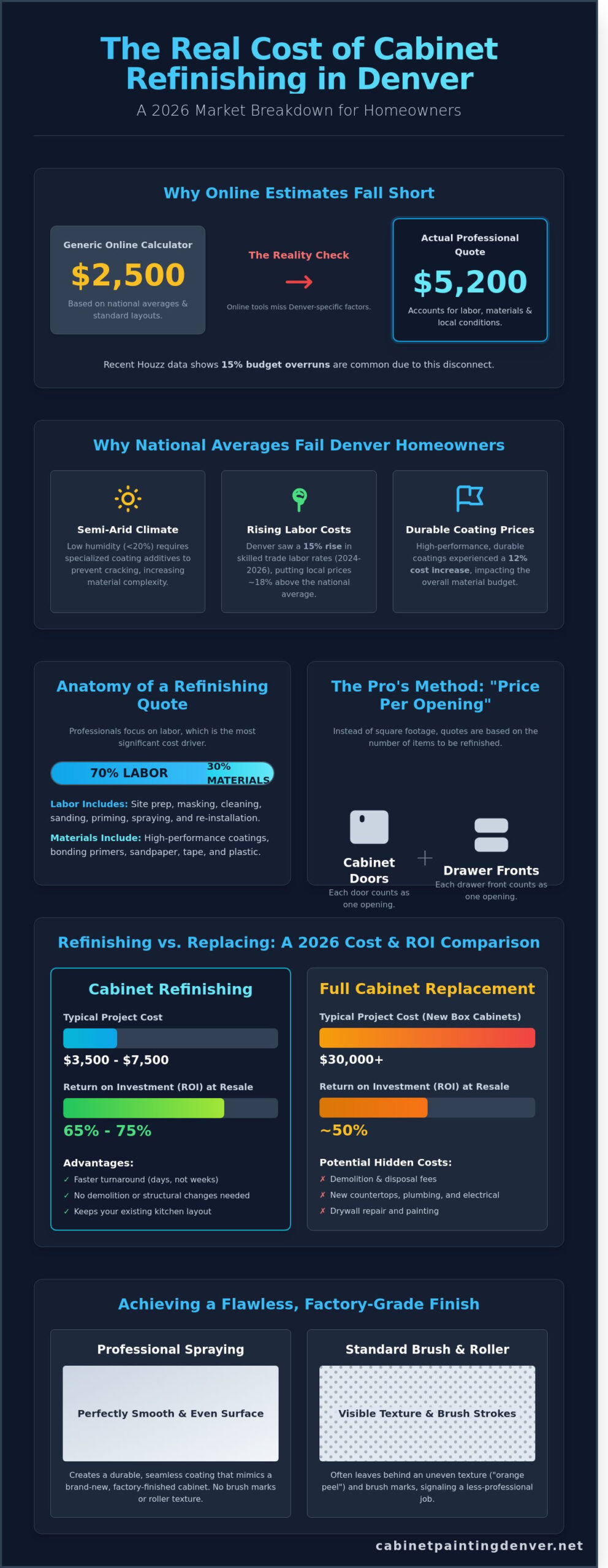
National cost databases often overlook the specific environmental factors of the Front Range. Colorado’s semi-arid climate, where humidity levels frequently drop below 20%, significantly impacts how industrial coatings cure. Professionals in Denver must use specific retarders or specialized spray setups to ensure the finish doesn’t dry too quickly and crack. Additionally, the Denver metro area saw a 15% rise in labor rates between 2024 and 2026. High demand for housing and specialized trade skills means local prices sit roughly 18% higher than national averages found on generic home improvement sites. Local logistics, such as navigating I-25 or I-70 traffic, also add to the service fees that national calculators don’t track.
The Goal of Using a Cost Estimator
The primary objective of using an estimator is to establish financial guardrails. It allows you to decide if your project falls into a standard bracket, which usually covers basic oak or maple frames, or a custom bracket involving heavy grain filling or intricate dental molding. You can also use these numbers to evaluate your Return on Investment (ROI). In the 2026 Denver real estate market, a professionally refinished kitchen typically recovers 65% to 75% of its cost during a home sale. This is a much higher yield than a full kitchen gut, which often only sees a 50% recovery rate. Using an estimator helps you confirm that refinishing is the smarter financial move for your specific property value.
- Budgeting: Identify if you need to save $3,500 or $7,500 for your specific layout.
- Comparison: See how refinishing costs stack up against the $30,000 average for new box cabinets.
- Scope: Determine if your cabinet count qualifies for “small,” “medium,” or “large” project pricing.
The Anatomy of Professional Cabinet Refinishing Costs
Understanding how a cabinet refinishing price calculator functions requires looking at the specific units of labor involved in a kitchen transformation. Most Denver professionals don’t bid a project based on the square footage of the room. Instead, they use a “price per opening” model. This approach accounts for the reality that labor typically consumes 70% of the total project budget. The remaining 30% covers high-performance coatings, bonding primers, and consumables like sandpaper and masking tape.
Data from the Cabinet Refinishing Services Market suggests that the demand for professional-grade finishes is rising as homeowners seek durable alternatives to total kitchen remodels. It’s a strategic move for those who want a factory-level finish without the five-figure price tag of new custom boxes. However, true refinishing often costs more than a simple paint job. While painting might involve a quick scuff-sand and a topcoat, refinishing often requires stripping existing stains or chemical clear coats back to the raw wood. This process demands specialized equipment and more hours on-site, which shifts the math in a cabinet refinishing price calculator compared to a basic color change.
The Door and Drawer Count Method
In professional painting terminology, an “opening” refers to any individual door or drawer front. If you have a cabinet with two doors, that counts as two openings. Large pantry doors or double-oven panels usually count as two or even three openings because their surface area and weight require additional handling and spray time. Drawer fronts require a different labor profile. While they are smaller than doors, they often involve complex hardware removal and detailed edge work that standard flat panels lack. Professionals also factor in the “box” or the cabinet frames. This surface area is usually calculated as a percentage of the total opening count to ensure the face frames and end panels match the new doors perfectly.
Variable Factors That Change the Math
- Wood Species: Oak cabinets have deep, open grains. To achieve a smooth, modern look, painters must apply grain fillers. This adds a specific labor step that maple or cherry cabinets don’t require.
- Current Finish: Stripping away a failed DIY paint job from 2022 is more expensive than prepping a factory-stained surface. The chemical strippers and extra sanding time increase the baseline cost.
- Customization: If you want a two-tone kitchen with a navy island and white perimeter cabinets, expect a slight increase. This covers the extra masking and equipment cleaning required when switching between different coatings.
If you’re planning a project and want to see how these variables apply to your specific kitchen layout, you can request a detailed quote to get a professional assessment of your cabinetry.
Refinishing vs. Replacing: A 2026 Cost Comparison
Choosing between refinishing and replacing your kitchen cabinets is a decision that impacts both your bank account and your daily life. In 2026, a mid-range cabinet replacement for a standard Denver kitchen typically ranges from $18,000 to $26,000. Professional refinishing, however, usually costs about 35% to 55% of that total. When you use a cabinet refinishing price calculator, you’ll see the immediate savings, but the sticker price of the cabinets is only one part of the story.
Full replacement carries heavy “hidden” costs that homeowners often overlook. Demolition and hauling fees can add $800 to $1,500 to your bill. Because new cabinets rarely match the exact footprint of old ones, you’ll likely need new countertops, which cost an average of $3,500 to $6,000 in the Colorado market. You also have to factor in plumbing disconnects and reconnections for your sink and dishwasher. According to industry data, the average cost to refinish cabinets avoids these secondary expenses entirely by working with your existing layout.
The timeline difference is equally dramatic. A professional refinishing project in Denver is typically completed in 5 to 7 business days. A full kitchen remodel often leaves your home a construction zone for 4 to 8 weeks. For local homeowners concerned about their carbon footprint, refinishing is the superior choice. It prevents approximately 1,500 pounds of wood and laminate waste from entering local landfills, making it the most sustainable way to modernize a home.
The Real Cost of DIY Refinishing
Many homeowners consider the DIY route to save money, but the 2026 costs for professional-grade equipment are steep. Renting a high-end HVLP (High Volume, Low Pressure) sprayer costs roughly $120 per day in the Denver metro area. You’ll also spend between 40 and 60 hours on labor, including degreasing, sanding, and multi-stage curing. If the finish fails due to improper prep, professional “rescue” services often charge 25% more than a standard job because they must strip the failed DIY product before starting over. Your cabinet refinishing price calculator estimates are most accurate when you factor in the value of your own time at your current hourly wage.
ROI and Resale Value in the Denver Market
In the competitive Colorado real estate market, a kitchen update is the fastest way to increase a home’s appraisal value. Data from 2026 home sales shows that kitchens with updated cabinetry can see a return on investment of 65% to 78%. Buyers currently favor “earthy neutrals” like soft terracottas and muted forest greens, which have overtaken the stark whites of previous years. A fresh, professional finish provides a “new home feel” that helps properties sell 12 days faster on average than homes with dated, worn wood surfaces.
How to Use a Calculator to Get a 95% Accurate Quote
To get a precise figure from a cabinet refinishing price calculator, you need more than just a rough guess of your kitchen size. Accuracy depends on a detailed physical inventory of every component that requires paint or stain. Start by counting every individual door and drawer front. Don’t count the cabinet boxes yet; focus on the removable pieces first. Most Denver professionals use a “per opening” pricing model, so a single large pantry door counts the same as a small spice cabinet door. Once you have your base count, identify special items like wine racks, glass-front frames, or built-in desks. These features require more detail work and masking time than standard flat panels.
You’ll also need to apply the 2026 Denver labor multiplier to your estimate. According to data from the Bureau of Labor Statistics, construction and trade wages in the Denver-Aurora-Lakewood area rose by 4.2% in 2024. Projecting this trend forward to 2026 suggests a total labor cost increase of roughly 8.5% compared to two years ago. High demand for skilled finishers in neighborhoods like Cherry Creek and Washington Park continues to drive these local market rates above the national average.
Step-by-Step Inventory Checklist
- Check for hidden storage: Look for cabinets above the refrigerator or microwave that you rarely use. Don’t forget the back side of a kitchen island or the small doors under a breakfast bar.
- Account for Lazy Susans: These often feature two doors joined by a center hinge. Count these as two separate doors because they require double the prep and finish work.
- Measure linear feet for trim: For crown molding or light valances, measure the total length in feet. A standard 10×10 kitchen typically contains 20 to 30 linear feet of decorative trim.
- Evaluate hardware: If you’re switching from 3-inch pulls to 5-inch pulls, you’ll need to fill old holes and drill new ones. This adds about 15 minutes of labor per drawer.
Calculating Your “Add-On” Features
- Island contrasts: Painting an island a different color than the main cabinets adds cost because it requires a separate equipment setup and cleaning cycle.
- Soft-close upgrades: Swapping standard hinges for soft-close hardware is a top 2026 request. This involves removing the old hinge and mounting new hardware, which takes roughly 10 minutes per door.
- Occupancy status: Working in an empty house can increase efficiency by 15% for the crew. If the home is occupied, technicians spend more time daily on site protection and dust containment.
Before you finalize your budget, ensure your cabinet refinishing price calculator accounts for these specific Denver variables. To get a detailed breakdown of your project costs, schedule a professional consultation with our local team today.
Beyond the Math: Choosing Cabinet Painting Denver
A digital cabinet refinishing price calculator is a great tool for initial budgeting, but it can’t replace a pair of expert eyes. Our team has spent over 12 years navigating the specific challenges of Colorado homes. We understand how the 15% average indoor humidity in Denver affects wood contraction and paint adhesion. While a generic algorithm treats every cabinet the same, we look at the species of wood and the existing finish to determine the best prep strategy for your specific kitchen layout.
The Cabinet Painting Denver Difference
Our process utilizes 2026-grade finishing technology that goes far beyond what you’ll find at a big-box hardware store. We use industrial-strength HVLP sprayers to apply high-solids coatings. This method eliminates the brush marks and roller textures common with standard contractors. The result is a factory-smooth surface that’s durable enough to withstand daily life. As a locally owned business, we’ve transformed over 450 kitchens across the Front Range. We invite you to explore our gallery of Denver kitchen transformations to see the quality we bring to every local zip code.
Ready for a Precise Quote?
Moving from a cabinet refinishing price calculator to a firm bid is a simple process. When our estimator visits your home, they spend about 30 minutes measuring your linear footage and inspecting the integrity of your cabinet boxes. To get the most out of this visit, please clear your countertops and note any hardware you’d like to upgrade. We take pride in our “no surprises” policy. This is why we provide detailed cabinet painting cost breakdowns for every project we undertake.
During our in-home visit, you’ll receive:
- A thorough inspection of your cabinet doors to identify potential hidden repairs or structural issues.
- Professional color advice based on your kitchen’s specific natural light levels.
- A clear, written timeline for your project’s completion that respects your family’s schedule.
- A final price quote that remains valid for 30 days.
We don’t believe in high-pressure sales tactics. We’re here to provide the data and technical expertise you need to make an informed decision for your home. Contact us today for your no-obligation project assessment and let’s start your kitchen’s next chapter together.
Take the First Step Toward Your 2026 Kitchen Transformation
Navigating kitchen renovations in 2026 requires more than just guesswork. You’ve learned how a cabinet refinishing price calculator bridges the gap between a rough estimate and a 95% accurate budget projection. By choosing refinishing over a full replacement, you can save significant funds while achieving a factory-quality spray finish that stands the test of time. Our team brings over 10 years of Front Range experience to every project, ensuring your home benefits from a 5-star rated local Denver service. We focus on precision and durability, using professional-grade techniques that outperform standard DIY methods. These high-end finishes provide the aesthetic of a brand-new kitchen without the massive waste of a total demolition.
Don’t let budget uncertainty stall your home improvement goals. Use the data from your calculations to make an informed decision that adds real value to your property. When you’re ready to move from planning to production, we’re here to help. Our specialists ensure the process is seamless and stress-free from start to finish.
Get Your Free, Precise Cabinet Refinishing Quote in Denver
Your dream kitchen is closer than you think, and we can’t wait to help you bring it to life.
Frequently Asked Questions
How much does it cost to refinish cabinets per door in Denver?
Professional refinishing in the Denver metro area typically costs between $50 and $100 per door and drawer front according to 2024 regional labor data. This price range covers the cleaning, sanding, and application of industrial-grade coatings. Larger doors or those with intricate raised panels often fall at the higher end of this scale due to the extra 20 percent of labor required for detailed preparation.
Is it cheaper to paint or refinish kitchen cabinets in 2026?
Painting is generally 15 percent to 25 percent more affordable than a full clear-coat refinish because the process requires fewer stripping steps. While a cabinet refinishing price calculator might show higher material costs for premium stains, labor remains the primary budget driver. Homeowners save an average of $1,200 on medium-sized kitchens by choosing solid paint colors over complex wood restoration and grain matching.
Does a cabinet refinishing calculator include the cost of new hardware?
Most digital estimation tools exclude the cost of new hinges and pulls because hardware prices fluctuate between $3 and $50 per piece. A cabinet refinishing price calculator focuses on the labor and coatings required for the wood surfaces. You should add a separate line item for hardware in your budget, as these materials typically add 10 percent to 15 percent to the total project cost.
How long does a professional cabinet refinishing project take to complete?
A professional crew completes a standard kitchen refinishing project in 5 to 7 business days. This timeline includes 2 days for on-site preparation and 3 to 5 days for off-site shop spraying of the doors. Larger kitchens with more than 40 openings may extend the schedule by 48 hours to ensure proper curing times before the final reinstallation.
Can I get an accurate quote by just sending photos of my kitchen?
You can receive a preliminary estimate with 90 percent accuracy by sending clear, well-lit photos of every cabinet wall in your kitchen. Professionals use these images to count doors, drawers, and side panels without needing an initial house call. However, a final contract requires an on-site visit to inspect for grease buildup or previous finish failures that affect 12 percent of local restoration projects.
What is the most expensive part of a cabinet refinishing project?
Labor and preparation work account for 70 percent to 80 percent of the total project cost. Cleaning, sanding, and masking the kitchen takes 3 times longer than the actual spraying process. High-quality materials like Italian 2K polyurethanes represent only 15 percent of the budget, but they’re essential for a finish that lasts 10 years or more under heavy use.
Is grain filling included in a standard refinishing estimate?
Grain filling is an optional upgrade that adds 20 percent to 30 percent to a standard refinishing estimate. Standard service for oak or ash cabinets leaves the natural wood texture visible under the new color. If you want a smooth surface, the technician must apply 2 to 3 coats of specialized filler and sand them flat before the priming stage begins.
Why do Denver labor rates for cabinet painting vary so much?
Labor rates in Denver vary by 40 percent based on the contractor’s insurance coverage and the specific equipment they use. Legitimate businesses carry $1 million in general liability insurance and use HEPA-filtered extraction systems to manage dust. Lower bids often come from solo operators who lack these protections or use consumer-grade paints instead of industrial wood coatings that meet local environmental standards.