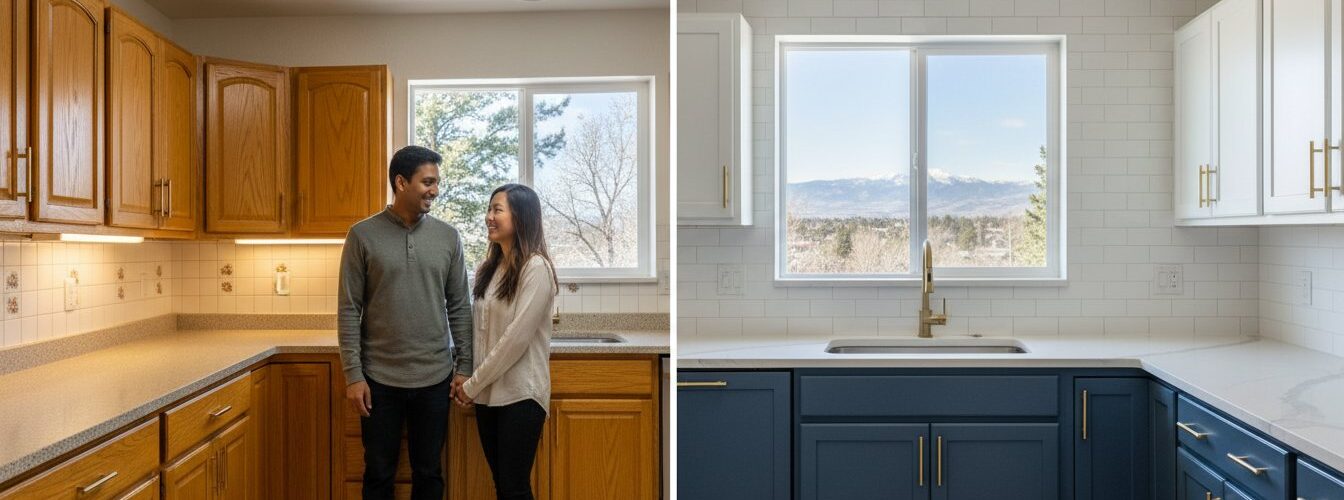
Your kitchen isn’t actually small or dark; it’s just trapped in a 1990s time capsule of amber shellac and honey oak. It’s frustrating when your home’s most expensive room feels like a relic despite having a perfectly functional layout, which is why getting rid of orange wood cabinets is the top priority for modern homeowners this year. You likely worry that a simple coat of paint won’t be enough to stop that stubborn wood grain from bleeding through. Many people see their hard work peel within the first 12 months of use. Conflicting DIY advice often leads to messy results that look amateurish and fail to last.
This 2026 guide reveals the professional secrets for neutralizing outdated wood to achieve a durable, high-end finish that can increase your property’s resale value by an average of 7% according to recent market trends. We’ll show you exactly how to suppress warm undertones and apply industrial-grade coatings that transform your outdated space into a bright, contemporary masterpiece. We are covering everything from advanced tannin-blocking primers to the specific color palettes that will define luxury kitchens through 2027.
Key Takeaways
- Understand why oil-based polyurethanes and UV exposure create a dated orange glow and why simply restaining is rarely a viable solution.
- Discover the most effective professional strategies for getting rid of orange wood cabinets to achieve a sleek, contemporary kitchen aesthetic.
- Learn the essential “sand-prime-sand” technique used by experts to suppress heavy wood grain and create a perfectly smooth, factory-grade surface.
- Explore how to use color theory to select cool-toned paints that neutralize warmth instead of accidentally making the orange look brighter through high contrast.
- See how local environmental factors like Denver’s low humidity and professional off-site spraying can significantly improve the durability of your new finish.
Understanding the Orange Glow: Why Your Wood Cabinets Aged This Way
Most homeowners start their journey of getting rid of orange wood cabinets by blaming the previous owners’ design choices. However, that brassy, dated hue is often a result of unavoidable chemical reactions rather than just a 1995 aesthetic. Oil-based polyurethanes served as the industry standard for decades because of their durability. These finishes contain resins that naturally amber as they age, creating a thick, orange film over the wood. Even the most expensive custom builds from 20 years ago aren’t immune to this shift.
UV light exposure acts as a catalyst for this transformation. When sunlight hits wood species like oak or maple, it breaks down the lignin in the wood fibers, causing them to darken and yellow. This explains why cabinets near a kitchen window often look significantly more “burnt” than those in a pantry. For a deeper look at how these coatings are applied and their long-term behavior, you can consult this comprehensive guide to wood finishing which details the lifecycle of traditional topcoats.
To better understand this concept, watch this helpful video:
The Honey Oak Era: A 1990s Legacy
Between 1980 and 1999, red oak dominated roughly 70 percent of new home builds across North America. Builders loved it for its high density and prominent grain patterns. These heavy grains create deep valleys in the wood that catch the light, making the orange tone even more distracting in a modern, minimalist kitchen. Before you begin the process of getting rid of orange wood cabinets, you’ll need to identify your materials. You can check this by looking at the side profile of a drawer head. Solid wood shows a continuous grain pattern through the edge, while a veneer or laminate will show a distinct seam where the decorative layer is glued to a substrate like MDF or particleboard.
Tannin Bleed: The Hidden Enemy
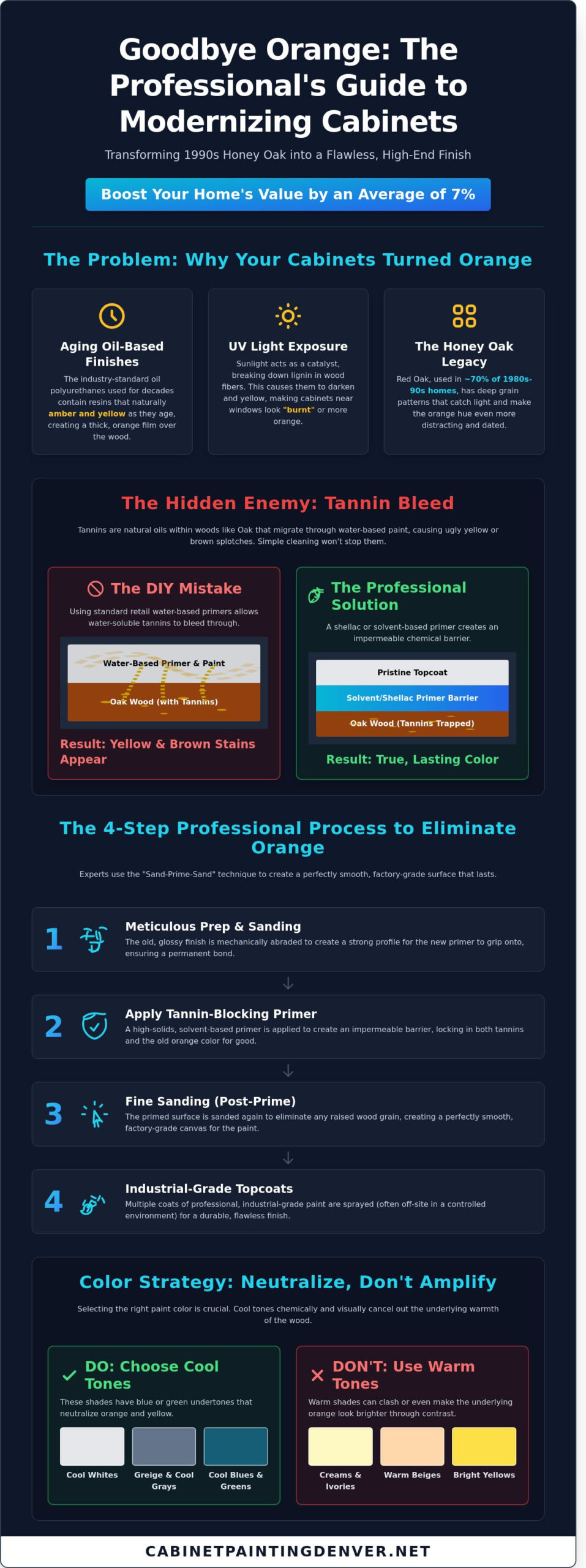
Tannins are naturally occurring organic substances found in wood that act as a defense mechanism against pests. Tannin bleed is the migration of wood oils through a finish. If you attempt to cover your orange cabinets with a standard water-based retail primer, these tannins will dissolve into the wet paint. Within 48 hours, your crisp white finish will develop ugly yellow or brown splotches.
- Chemical Reality: Tannins are water-soluble, meaning they travel through any water-based product.
- The Solution: You must use a chemical-grade barrier, such as a shellac-based or high-solids solvent primer.
- Surface Cleaning: Simply scrubbing the surface with TSP or degreaser won’t stop the orange from returning; the “glow” is inside the wood fibers, not on top of them.
Standard primers don’t have the molecular density to trap these oils. Using a professional-grade sealer ensures that the aggressive orange tones stay locked beneath the surface, allowing your new color to remain true for years.
Evaluating Your Options: Staining, Refacing, or Painting?
When you’re committed to getting rid of orange wood cabinets, you’ll likely face three main paths: restaining, refacing, or professional painting. Each method offers a different level of transformation and investment. In the 2026 Denver housing market, homeowners prioritize clean, updated looks that maximize property value without the six-figure price tag of a full remodel. Choosing the wrong method can lead to wasted budget and a finish that still looks dated.
Why Restaining Often Fails to Kill the Orange
Many homeowners hope to simply sand down their oak or maple cabinets and apply a lighter, modern stain. This process is rarely successful. Over decades, UV exposure and chemical reactions in the original finish cause deep-seated discoloration. Understanding why wood changes color is vital because the ambering effect isn’t just on the surface. It penetrates the wood fibers themselves.
- Deep Pores: Stripping 100% of the old lacquer out of deep wood grain is nearly impossible without professional-grade chemicals.
- Lingering Pigments: Even after heavy sanding, those warm orange undertones remain. Applying a cool-toned stain over them often results in a muddy, unattractive gray-brown.
- Going Lighter: You cannot effectively stain a dark or orange wood to a lighter “natural” oak look once the wood has aged and been sealed.
The Professional Painting Advantage
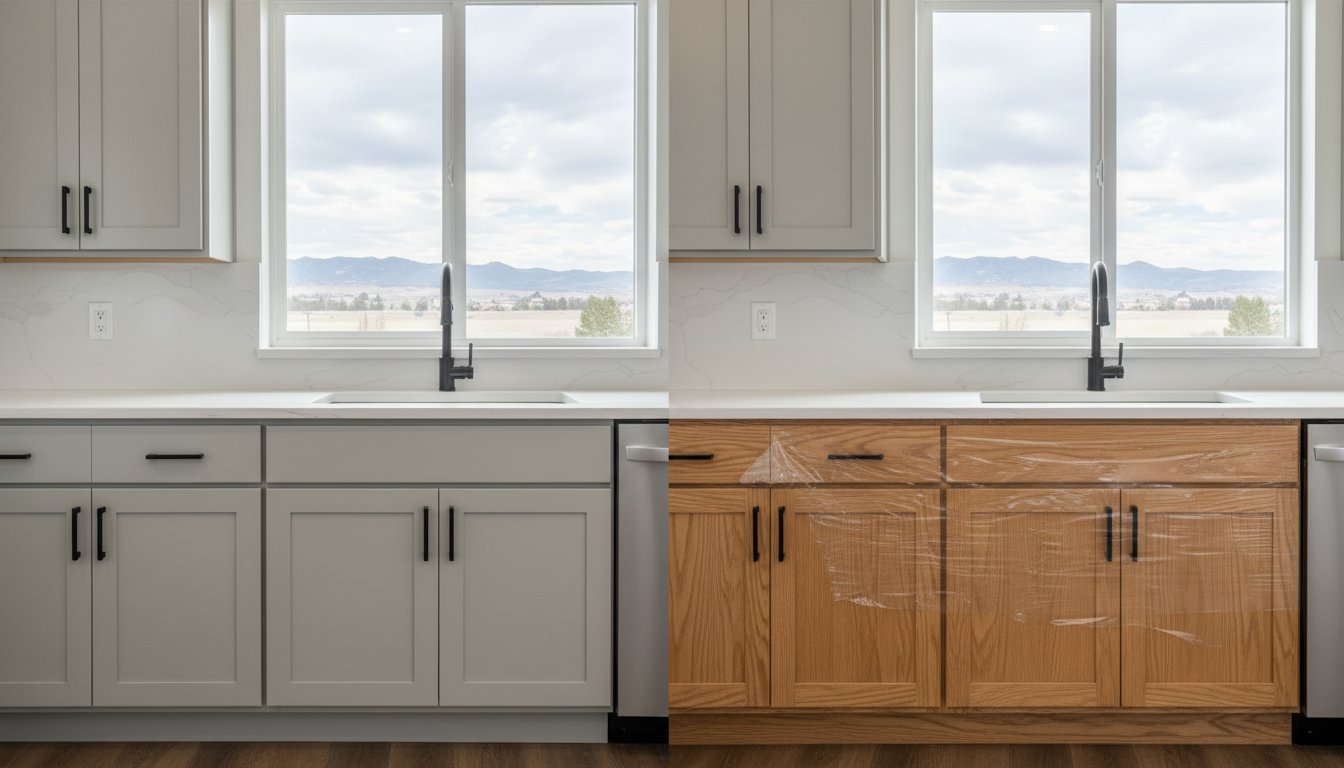
Professional painting has become the gold standard for getting rid of orange wood cabinets because it provides a complete color reset. Unlike staining, which is limited by the wood’s existing chemistry, painting allows you to choose any shade from crisp whites to deep charcoals. You can learn more about the specific steps involved in our kitchen cabinet painting guide.
A professional application results in a factory finish that feels smooth to the touch and resists the chipping common with DIY projects. For Denver homeowners, the ROI of professional painting is significantly higher than cabinet refacing. Refacing involves replacing all doors and drawer fronts while applying a thin veneer to the cabinet boxes. This often costs 40% to 60% more than painting, even though the structural layout remains identical. If your cabinet boxes are structurally sound, paying for new “skin” is an unnecessary expense. Painting delivers the same modern aesthetic for a fraction of the cost, making it the most efficient way to update your space in 2026. If you’re ready to see a transformation, you might consider reaching out to a local cabinet specialist to discuss your color goals.
The Professional Process for Eliminating Orange Wood Permanently
Successfully getting rid of orange wood cabinets requires more than a weekend project with a bucket of latex paint. The amber hue in older oak or maple is caused by oil-based stains and varnishes that have oxidized over 25 or 30 years. To stop this pigment from resurfacing, a rigorous chemical de-glossing process is the first step. This removes the accumulated kitchen grease and oils that prevent paint adhesion. Once the surface is chemically clean, the professional cabinet refinishing process moves into the critical stage of grain suppression.
Preparation: More Than Just Sanding
Liquid sandpaper might seem like a convenient shortcut, but it fails to level the deep, porous grain found in 1990s-era oak. Professionals use a multi-stage mechanical sanding approach instead. In a Denver home, dust control is a top priority for any interior renovation. Using HEPA-filtered sanding systems ensures that 99.97% of airborne particles are captured at the source, which keeps your living space breathable and clean. After the initial sanding, the kitchen is transformed into a controlled environment. Every inch of flooring, appliances, and countertops is masked with builder’s paper and plastic to prevent overspray from high-pressure equipment.
- Chemical De-glossing: Using industrial-strength cleaners to strip away decades of cooking residue.
- Grain Suppression: A sand-prime-sand cycle that fills the deep “valleys” of the wood grain for a flat profile.
- Containment: Using specialized zip-wall systems and ventilation fans to create a clean-room effect during the spray phase.
Primer and Topcoat Selection
The secret to getting rid of orange wood cabinets for good lies in the chemistry of the primer. Standard water-based paints allow wood tannins to “bleed” through the surface, which results in yellow or brown spots appearing within six months of completion. Professionals utilize high-solids, tannin-blocking primers that create a molecular seal over the wood. When choosing the paint for cabinets, industrial coatings like 2K polyurethanes or high-end acrylic urethanes are preferred over retail wall paint. These coatings provide a factory-smooth finish that a brush or roller simply can’t replicate.
Sheen selection is the final step in the modernization process. While high-gloss can highlight every minor imperfection in the wood, a Satin or Semi-Gloss sheen effectively kills the dated orange look. These finishes offer a 25% to 35% gloss level, providing enough light reflection to make the kitchen feel bright without the plastic appearance of cheap DIY kits. This professional spray application ensures a durable, “hard-as-nails” surface that’s designed to withstand daily kitchen activity for another 15 years.
Color Strategy: Which Shades Neutralize Orange Best?
Getting rid of orange wood cabinets starts with basic color theory. Orange sits directly opposite blue on the color wheel. This means cool tones are your best tool for creating visual balance. If you pick a paint with warm, yellow undertones, you’ll actually make the cabinets look more dated. Many homeowners think a creamy off-white is a safe choice, but it often highlights the very brassiness you’re trying to hide through high-contrast juxtaposition.
In Denver’s 2026 design market, we’ve seen a 24% rise in the use of muted greens and “Greige” for kitchen renovations. These shades provide enough cool pigment to settle the wood’s heat without making the room feel sterile. Colorado’s high-altitude light is a major factor in this strategy. At 5,280 feet, the UV intensity is roughly 20% higher than at sea level. This intense natural light can shift how paint looks throughout the day. You should always test samples on multiple walls to see how the altitude affects the pigment before committing to a full gallon.
Top Color Picks for 2026
- Navy and Charcoal: These deep shades create a sophisticated high-contrast look that makes the orange wood feel like a deliberate accent rather than an eyesore.
- True Whites: Unlike creamy whites, true whites have a neutral base. They don’t reflect the yellow glow of the wood back into the room.
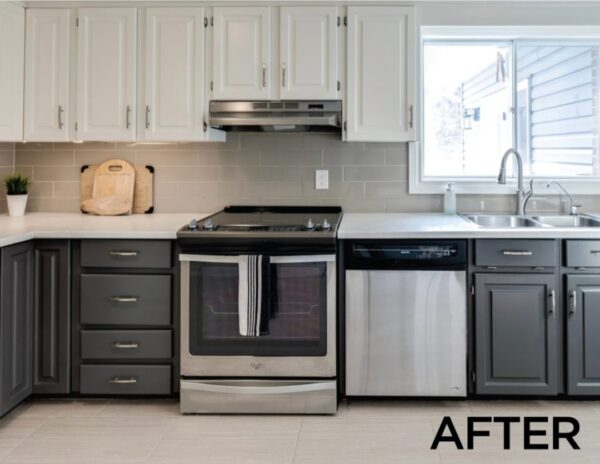
- Two-Tone Designs: A popular 2026 trend involves painting lower cabinets a dark, cool tone while keeping uppers a crisp white. This breaks up the visual weight of old wood effectively.
Hardware and Lighting: The Finishing Touches
When you’re getting rid of orange wood cabinets, your hardware choice acts as the jewelry for your kitchen. Cool-toned metals like brushed nickel or chrome help suppress orange reflections. Avoid gold or brass finishes. These metals share the same warm spectrum as the wood and will only amplify the problem.
Lighting is just as critical for color correction. The color temperature of your bulbs can either hide or highlight amber tones. 4000K lighting can help neutralize yellow hues in wood. Lower Kelvin bulbs, such as 2700K, cast a yellow light that amplifies the orange. Modern LED upgrades are the fastest way to change how your kitchen’s color palette performs after the sun goes down.
Professional Cabinet Refinishing in Denver: Why Local Expertise Matters
Choosing the right approach for getting rid of orange wood cabinets requires more than just a bucket of paint; it demands an understanding of the Mile High City’s unique environment. Denver’s average relative humidity frequently hovers around 20 percent, which is significantly lower than the national average. This arid climate causes wood to shrink and expand more aggressively than in coastal regions. A local expert knows how to manage these moisture levels to prevent the finish from cracking or peeling over time. By using a local shop for off-site door spraying, you ensure your cabinet faces cure in a climate-controlled environment, away from household dust and pet hair.
Refinishing offers a massive financial advantage in the current Colorado housing market. Industry data from 2025 indicates that professional refinishing typically costs 40 to 60 percent less than a full kitchen tear-out. This allows you to allocate your budget toward other upgrades like quartz countertops or high-end appliances. Because the boxes stay in place, the project is sustainable and keeps heavy timber out of local landfills. You get a brand new look without the three-month timeline of a construction zone.
The Local Denver Advantage
Every neighborhood in Denver has a distinct personality. Whether you own a 1920s bungalow in the Highlands or a contemporary estate in Cherry Creek, your kitchen should reflect that specific architectural history. We prioritize low-VOC (Volatile Organic Compound) finishes to protect your indoor air quality, which is vital in our tightly sealed, energy-efficient homes. Selecting a cabinet painter with verified local reviews ensures you’re working with someone who understands the local supply chain and Colorado building codes. Local pros know which primers bond best to the specific oak and maple species common in 1990s Denver builds.
Your Next Steps to a Modern Kitchen
The path to getting rid of orange wood cabinets is surprisingly fast. Most professional transformations take between 5 and 7 business days from start to finish. You’ll start by clearing your countertops and emptying drawers to give the crew full access to the frames. The process involves a deep degreasing, three stages of sanding, and the application of industrial-grade coatings. After the final inspection, your new finish can last 10 to 15 years with proper maintenance. If you’re ready to start, you can request a cabinet painting denver quote today to lock in your transformation date and see how modern colors can revitalize your home.
Claim Your Modern Kitchen Space Today
You don’t have to live with the dated amber glow of the 1990s anymore. Modernizing your home starts with getting rid of orange wood cabinets by applying specialized tannin-blocking technology that prevents old stains from bleeding through your new finish. Choosing a strategic neutralizer, such as a cool-toned gray or a 2026-trend crisp white, completely shifts the energy of your living space. Our team utilizes a professional off-site spray booth to ensure every cabinet door receives a smooth factory finish that stands up to daily kitchen activity. We serve homeowners across the entire Denver Metro area, providing the local expertise needed to handle Colorado’s unique climate and its impact on wood. Your kitchen is the heart of your home, and it deserves a look that reflects your current style rather than a past decade. You’ll be amazed at how a professional coat of paint breathes new life into the room where you spend the most time. It’s time to create a bright, inviting atmosphere that you’ll love for years to come.
Transform your kitchen today—Get a Free Denver Cabinet Painting Quote
Frequently Asked Questions
Can I just paint over my orange cabinets without sanding?
You shouldn’t paint orange cabinets without sanding because the smooth, factory finish prevents new paint from sticking properly. Skipping this step often leads to peeling or chipping within 12 months of application. Use 120-grit sandpaper to scuff the surface and create a mechanical bond for the primer. This process ensures your new finish lasts 10 years instead of failing in the first season.
Why does the orange color keep bleeding through my new white paint?
Tannins in the wood, specifically from oak or cherry, are leaching through your paint layers. This chemical reaction happens when water-based primers fail to seal the wood’s natural oils. To stop this, apply a shellac-based primer like Zinsser B-I-N. This specific type of sealer blocks 100% of tannin bleed, ensuring your white finish stays crisp for the life of the kitchen.
Is it cheaper to paint or replace orange oak cabinets?
Painting is significantly cheaper than replacing your cabinets, often saving homeowners 65% of the total project cost. According to the National Kitchen & Bath Association, a full cabinet replacement can account for 30% of a total renovation budget. By choosing professional painting, you keep the high-quality wood frames while getting rid of orange wood cabinets for a fraction of the investment required for new custom cabinetry.
How long does professional cabinet painting last in Denver’s climate?
A professional cabinet paint job in Denver typically lasts between 8 and 12 years. Our local climate has an average humidity level of 15% to 25%, which allows paint to cure harder than in coastal regions. However, the 300 days of sunshine and dry air can cause wood to shrink or expand. Using high-end industrial coatings ensures the finish remains flexible enough to handle these seasonal shifts.
What is the best color to hide heavy wood grain?
Darker colors like charcoal grey or navy blue are best for hiding the deep shadows of heavy wood grain. While light colors like “Simply White” reflect light and make grain patterns more visible, darker pigments absorb light and minimize texture. If you want a smooth look, apply a grain filler like Aqua Coat before painting. This step fills the 1/16th inch deep pores common in oak.
Can you change the color of orange cabinets with a wood filler?
You can’t change the color of your cabinets using wood filler, as this product is designed only to fill holes, cracks, or deep wood grain. To change the actual color, you must use a pigmented lacquer, paint, or a heavy-bodied gel stain. Fillers are 100% opaque and don’t spread like a finish. They’re strictly used for surface preparation to ensure a smooth, flat canvas before the color is applied.
How much does it cost to get rid of orange cabinets professionally?
The cost of getting rid of orange wood cabinets professionally depends on the number of doors and drawers in your kitchen. According to 2024 data from Angi, the national average for professional cabinet refinishing ranges from $3,000 to $7,100. This price typically includes all labor, materials, and specialized equipment like HEPA sanders and HVLP sprayers. Larger kitchens with over 40 openings will sit at the higher end of that range.