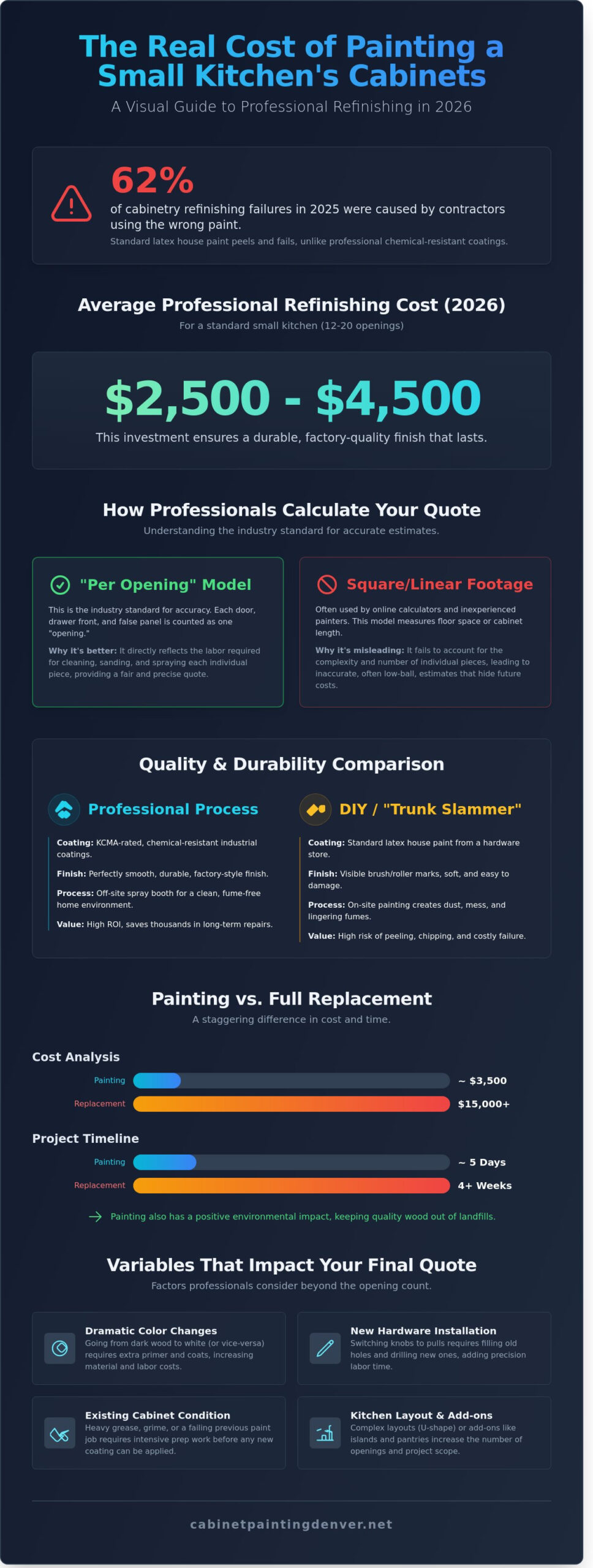
Most homeowners assume a smaller kitchen means a smaller headache, but 62% of cabinetry refinishing failures documented in 2025 were caused by contractors using standard latex house paint instead of industrial coatings. You’ve likely spent hours wondering if the cost to paint a small kitchen’s cabinets is actually going to yield a professional result or if you’re just being quoted a high “minimum fee” because your project is compact. It’s frustrating when you’re ready to invest in your home but feel like you’re being ignored by the best crews in the business.
We know you want a durable, factory-style finish that won’t peel when you wipe away a coffee spill. This guide promises to clear the pricing fog by detailing exactly what you should expect to pay in 2026, including the specific variables that “trunk slammers” often hide in their low-ball bids. We’ll show you how to audit a professional estimate and why choosing the right chemical-resistant coatings will save you thousands in long-term repairs.
Key Takeaways
- Understand why the average cost to paint a small kitchen’s cabinets in 2026 typically ranges from $2,500 to $4,500 based on a standard 12-to-20 opening count.
- Learn why the “per opening” pricing model is the industry standard for accuracy, outperforming generic square footage calculators.
- Compare the long-term value of professional KCMA-rated coatings against the hidden costs and durability risks of DIY latex paint projects.
- Identify how specific variables like dramatic color transitions and new hardware installations can impact your final project estimate.
- Discover the benefits of an off-site spray booth process to ensure a factory-quality finish while keeping your home free of dust and fumes.
Defining the Cost to Paint a Small Kitchen’s Cabinets in 2026
Refreshing your home starts with the heart of the house. For most homeowners, the cost to paint a small kitchen’s cabinets in 2026 sits between $2,500 and $4,500. This price range accounts for professional labor, high-grade architectural coatings, and the meticulous prep work required for a lasting finish. Understanding the base construction of a Kitchen cabinet helps explain why refinishing is such a viable alternative to replacement. It’s a fraction of the price of a full remodel and delivers a look that’s indistinguishable from brand-new units when performed by experts.
To better understand this concept, watch this helpful video:
When calculating the cost to paint a small kitchen’s cabinets, you must look beyond the price tag and consider the long-term durability of the finish. There’s a massive difference between a hand-painted look and a professional factory-smooth finish. A hand-painted job often shows brush marks and texture; however, a professional spray application creates a hard, durable surface that mimics the original factory coating. This high-end finish is what drives the highest return on investment for Denver properties.
Small Kitchen Specifications: What Counts as “Small”?
Industry standards define a small kitchen by the number of “openings” rather than just the square footage of the room. An opening is any individual cabinet door or drawer front. A small project typically contains 12 to 20 openings. While linear footage provides a rough estimate, counting the doors and drawers is the only way to get an accurate quote. Common layouts in Denver’s urban neighborhoods include:
- Galley Kitchens: Two parallel walls of cabinets, common in condos and older bungalows.
- L-Shape Layouts: Cabinets tucked into a corner, providing an efficient work triangle.
- U-Shape Layouts: Three walls of cabinetry that offer maximum storage in a tight footprint.
Be aware that adding a kitchen island or a floor-to-ceiling built-in pantry can quickly push a project from the “small” category into “medium” territory. Each extra opening adds to the labor hours required for cleaning, sanding, and masking.
Painting vs. Replacing: The Cost-Benefit Analysis
The financial gap between refinishing and replacing is staggering. While a professional paint job averages around $3,500, a full tear-out and replacement with even entry-level cabinetry starts at $15,000. When you factor in the cost of new countertops, backsplashes, and plumbing disconnects that usually accompany a replacement, the bill often exceeds $25,000.
Time is another critical factor. A professional painting crew can complete a small kitchen in about 5 business days. In contrast, a full cabinet replacement often leaves your kitchen unusable for 4 weeks or longer. Choosing to paint also has a positive environmental impact; you’re keeping high-quality wood out of Colorado landfills and reducing the carbon footprint associated with manufacturing and shipping new units.
The “Per Opening” Pricing Model: How Pros Estimate Small Projects
Square footage calculators like Homewyse often mislead homeowners because they measure floor space or linear footage rather than the actual labor involved in finishing three-dimensional surfaces. When evaluating the Remodeling Impact of a kitchen update, professionals rely on the “per opening” model. This industry standard treats every door, drawer face, and false front as an individual unit. Even in a small kitchen, the fixed costs of a project remain constant. Setup, masking, and equipment cleaning take the same amount of time whether a pro is painting 10 doors or 40. Consequently, the cost to paint a small kitchen’s cabinets often reflects a higher price per unit to cover these essential overhead expenses.
The condition of the existing finish plays a massive role in the base rate. If a kitchen has 15 years of accumulated cooking grease or a previous DIY paint job that’s currently peeling, the labor hours required for cleaning and stripping will rise. Professionals must ensure a chemically clean surface before any primer is applied. Skipping this step leads to premature failure, which is why experts prioritize surface integrity over speed.
Counting Doors and Drawers: The Math Behind the Bid
In the Denver market for 2026, standard professional rates typically range from $125 to $175 per opening. Drawers often cost more than doors because they require extra labor for hardware removal and re-installation. Removing a drawer face from its box or masking off the internal glides adds about 15% more time to the production schedule compared to a standard cabinet door.
The “box” labor refers to painting the frames that stay attached to your walls. This process involves meticulous hand-rolling or localized spraying while the rest of the home is protected by plastic sheeting. If you want to understand how these numbers apply to your specific layout, you can request a custom cabinetry estimate to see the per-opening breakdown. This transparency prevents the “hidden fees” that often plague flat-rate quotes.
The Impact of Cabinet Material on Labor Costs
The substrate of your cabinetry dictates the complexity of the primer and sanding phase. Solid wood like maple or cherry is the easiest to refinish because it accepts paint readily after a light scuff sand. Thermofoil presents a different challenge. If the plastic coating is delaminating, it must be completely removed with a heat gun before painting. Laminate surfaces require high-bond specialty primers to ensure the finish doesn’t scratch off with a fingernail.
Oak cabinets remain a popular candidate for painting, but they require a “grain filling” surcharge. Without this step, the deep, porous textures of the oak will show through the paint, resulting in a dated look rather than a modern, smooth finish. Material prep determines 70% of the final project cost. Whether you have 12 openings or 20, the amount of time spent on sanding and filling ensures the longevity of the investment. High-quality finishes in 2026 rely on these labor-intensive steps to achieve a factory-grade appearance that lasts for a decade or more.
Professional vs. DIY: A Realistic Cost and Quality Comparison
Choosing to handle the labor yourself affects more than just your weekend schedule. While the upfront cost to paint a small kitchen’s cabinets might seem lower as a DIY project, the investment in professional equipment and high-grade materials adds up quickly. Renting a professional-grade HVLP sprayer typically costs between $100 and $150 per day at major equipment hubs as of late 2024. When you add the price of specialized primers and KCMA-rated (Kitchen Cabinet Manufacturers Association) coatings, your material budget can easily exceed $600 before you even pull a single door.
Most homeowners use standard latex paint from big-box retailers. These products lack the chemical resistance needed to withstand the oils and heat found in a kitchen environment. Professional cabinet refinishing is a distinct trade that utilizes catalyzed lacquers or 2K polyurethanes. These coatings cure to a hard shell that resists chipping. If a DIY application fails, the expense to strip and fix the peeling paint often doubles the original professional quote because of the intensive labor required to remove the gummy latex residue.
The “Minimum Job” Factor in Denver
Professional shops in the Denver metro area often maintain a minimum project price to cover mobilization. This includes the time spent on logistics, masking the site, and transporting equipment. Even if your kitchen is tiny, you’ll often pay a base rate that reflects these fixed overheads. To maximize your value, consider adding a bathroom vanity or built-in shelving to the project. This allows the crew to use the same setup and materials while keeping your overall cost to paint a small kitchen’s cabinets efficient.
Durability and the “Factory Finish” Guarantee
A professional finish typically offers a 10-year lifespan, whereas DIY latex applications often show wear within 24 months. Professional spraying ensures a smooth surface without the brush marks or drips that are common in cramped kitchen layouts. Most high-end contractors provide a written warranty. This document serves as a valuable asset for home equity. It proves to future buyers that the cabinetry was updated using industrial-grade standards rather than a temporary cosmetic fix.
Variables That Impact Your Small Kitchen Painting Estimate
The total cost to paint a small kitchen’s cabinets isn’t just a reflection of square footage. Material quality and labor intensity drive the final quote. For instance, shifting from a 1990s dark cherry finish to a modern bright white requires significant extra steps. You’ll likely need two coats of a high-blocking primer followed by two or three topcoats to prevent “bleed-through” from the old wood tannins. This transition can add 20% to the labor time compared to a simple color change. Choosing the best paint for cabinets ensures the finish lasts, but premium industrial coatings often cost $80 to $120 per gallon.
Designer trends like the “island accent” or two-tone cabinetry also influence the price. Even in a small space, using two different colors requires separate cleaning, masking, and spraying phases. This setup adds roughly 15% to the project duration. When calculating the cost to paint a small kitchen’s cabinets, remember that complexity often trumps size.
Grain Filling and Surface Preparation
Small kitchens often see high traffic and heavy grease buildup. Professionals must use industrial-strength chemical degreasers to remove oils before any sanding begins. If you have oak cabinets, the deep grain remains visible even after painting unless you opt for grain filling. This process involves applying a specialized paste, sanding it flush, and repeating the cycle until the surface mimics the smoothness of MDF. Dealing with steam burns from kettles or water swelling near the sink adds specific repair hours to your estimate. Expect these prep steps to comprise nearly 40% of the total labor bill.
Hardware, Hinges, and Modern Upgrades
Upgrading your hardware is the fastest way to modernize a small kitchen. If you’re switching from old knobs to modern 10-inch pulls, the painter must fill the old holes with Bondo and drill new ones. Converting 1980s exposed hinges to hidden, soft-close versions requires boring new 35mm holes into the cabinet doors. While these upgrades increase the labor bill, they provide massive visual impact. A well-executed paint job combined with sleek hardware can make a budget-friendly project look like a high-end $20,000 renovation.
Ready to transform your space? Get a professional cabinet painting quote today to see how these variables fit your specific budget.
Transforming Your Denver Kitchen with Cabinet Painting Denver
Homeowners in the Denver metro area face unique challenges when updating their homes. The semi-arid climate and high elevation mean indoor humidity levels can swing from 15% in January to 60% during summer storms. These fluctuations cause wood to expand and contract, which can lead to cracking in inferior paint jobs. Our team understands these local variables. We use specialized primers and finishes designed to withstand Colorado’s environment. For a comprehensive look at how we achieve a professional look, visit our cabinet painting Denver pillar page.
We prioritize a clean home environment by utilizing an off-site spray booth for all removable components. By taking your doors and drawer fronts to our controlled facility, we eliminate 90% of the dust and fumes associated with traditional painting. This approach ensures a factory-grade finish that’s impossible to achieve with a brush or roller in a residential setting. Your home stays functional, and your family avoids the heavy scent of industrial coatings.
Our Precision Process for Small Spaces
Small-footprint kitchens, such as those found in Capitol Hill condos or Highlands bungalows, require surgical precision. In a tight galley kitchen, we implement a rigorous masking protocol. We use heavy-duty floor paper and leak-proof plastic sheeting to protect your granite countertops, stainless appliances, and hardwood floors. Our 5-day turnaround is designed for efficiency. We typically remove doors on Monday and return for the final installation by Friday afternoon. To ensure your home remains healthy, we apply low-VOC, high-durability coatings that provide a hard-as-nails finish without compromising indoor air quality.
When calculating the cost to paint a small kitchen’s cabinets, we focus on the “per-opening” model. This transparency allows you to understand exactly where your investment goes. Whether you’re dealing with dated 1990s oak or worn laminate, our process converts those surfaces into a modern, durable focal point that mimics the look of high-end custom cabinetry.
Requesting Your Custom 2026 Quote
Starting your kitchen transformation doesn’t require a lengthy in-home consultation. We’ve streamlined our estimating process to be entirely photo-based. This saves you time and provides a written bid within 24 to 48 hours. To get the most accurate “per-opening” price, please provide clear photos of each wall of cabinets in your kitchen. An opening is defined as any single door or drawer front. If you have a bank of four drawers, that counts as four openings.
In your request, mention any specific repairs needed, such as stripped hinges or deep gouges in the wood. This detail helps us provide a firm price that won’t change once the project begins. Ready to see the difference a professional finish makes? Get your free cabinet painting quote in Denver today!
Secure Your 2026 Kitchen Investment
Investing in your home’s heart provides one of the highest returns on investment for 2026 renovations. Determining the cost to paint a small kitchen’s cabinets involves more than just buying a gallon of paint; it’s about securing a finish that lasts for a decade. Our 5-star rated team uses KCMA-rated industrial coatings that pass 14 rigorous durability tests, ensuring your surfaces resist moisture and stains better than standard retail products. By utilizing a specialized off-site spray booth, we deliver factory-quality results without the mess or fumes inside your living space.
You’ve seen how the “per opening” model simplifies budgeting for smaller spaces, and why professional application beats DIY efforts every time. Now it’s time to bring that vision to life with Denver’s cabinet specialists. Your kitchen deserves a durable, beautiful upgrade that stands up to daily life. Get a Professional Quote for Your Small Kitchen Transformation and start your project today. Your dream kitchen is closer than you think.
Frequently Asked Questions
Is it cheaper to paint or replace cabinets in a small kitchen?
Painting is approximately 60% to 75% cheaper than a full cabinet replacement. While a total kitchen remodel can exceed $25,000, professional painting usually falls between $2,000 and $5,000. This makes it an efficient way to manage the cost to paint a small kitchen’s cabinets while achieving a fresh look. You save on material costs and the heavy labor involved in tear-outs.
How long does it take a professional to paint a small kitchen?
A professional crew typically finishes a small kitchen in 3 to 5 business days. This timeline includes prep work, sanding, priming, and applying two coats of finish. They spend the first day masking and prepping, while the following days focus on spraying doors off-site or in a portable booth. It’s a much faster process than the 3 to 6 weeks required for a full renovation.
Can I stay in my house while my cabinets are being painted?
You can stay in your home, but your kitchen will be a construction zone for 3 to 5 days. Professionals use plastic sheeting to seal off the work area, preventing 95% of dust from traveling to other rooms. You won’t have access to your stove or sink during the spraying phase. It’s best to plan for takeout or outdoor grilling until the plastic comes down.
What is the average cost to paint 15 cabinet doors?
The industry average to paint 15 cabinet doors ranges from $1,200 to $2,250. This estimate depends on whether you include drawer fronts and the complexity of the door style. Most professional painters charge between $80 and $150 per opening. This price includes all materials, labor, and professional-grade finishes. Understanding these variables helps you budget the cost to paint a small kitchen’s cabinets accurately.
Does painting cabinets increase the resale value of a Denver home?
Professional painting provides a high return on investment for Denver homeowners. Zillow’s 2023 data indicates that minor kitchen remodels, like painting cabinets, often see an 80% return on investment at closing. In a competitive market like Denver, a modern white or gray kitchen can help a home sell 10 days faster than homes with outdated wood finishes. It’s a strategic move for sellers.
Do I need to empty my cabinets before the painters arrive?
You must remove 100% of your items from the cabinets before the painters arrive. This prevents paint overspray from landing on your dishes and allows the crew to mask the interior boxes properly. Clear counters are also necessary so the team can set up their equipment. Most homeowners spend 2 to 4 hours packing their kitchen items into boxes before the project starts.
What is the most durable paint for a small, high-traffic kitchen?
Water-borne alkyd or urethane enamels are the most durable options for high-traffic kitchens. These coatings provide the hardness of oil-based paint with the low VOC levels of water-based formulas. Products like Benjamin Moore Advance or Sherwin-Williams Emerald Urethane meet KCMA standards for chemical and heat resistance. They resist grease and stand up to 1,000 scrub cycles without fading or peeling.
Can you paint over old thermofoil or laminate cabinets?
You can paint thermofoil or laminate as long as the original surface isn’t peeling or bubbling. If the heat-shrunk plastic is lifting, you must remove it entirely before painting the underlying MDF. Professionals use high-bond primers like STIX or Zinsser B-I-N to ensure the paint sticks to these slick surfaces. This process saves you from buying new doors, which costs 3 times as much as painting.