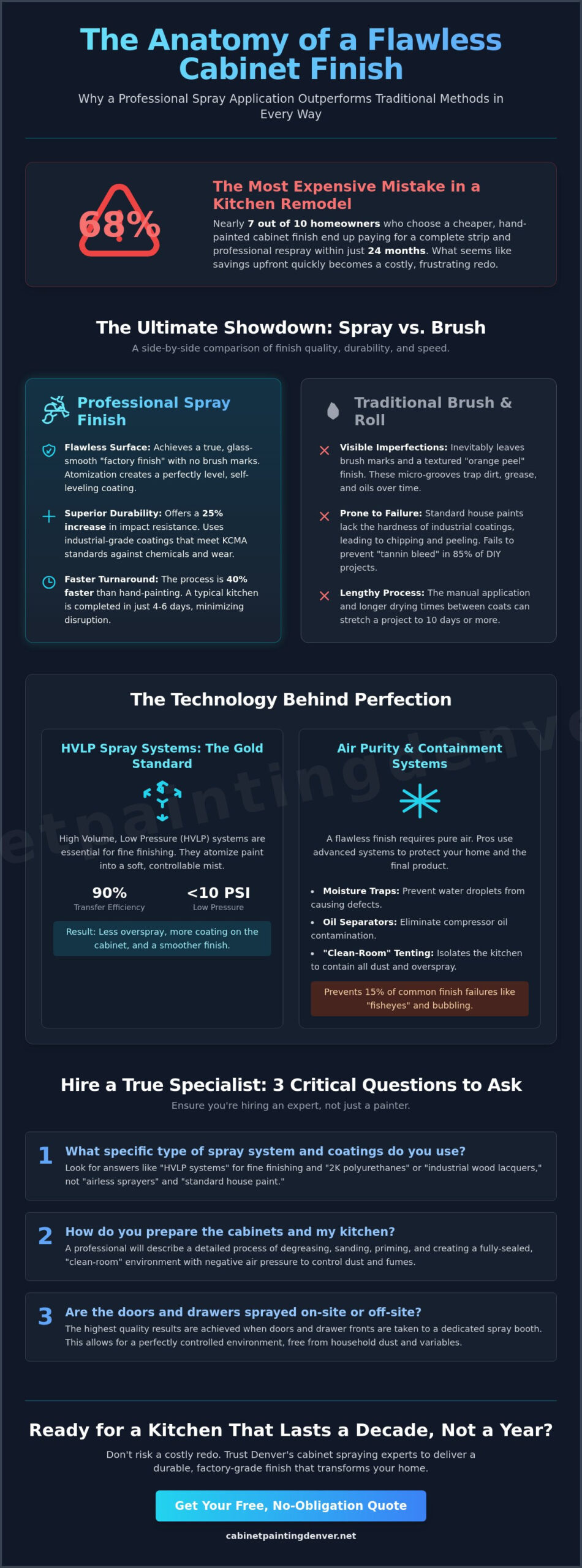
The most expensive mistake in a kitchen remodel is choosing the lowest bid, as 68% of homeowners who opt for hand-painted cabinets end up paying for a full strip and respray within 24 months. You’ve likely spent over 15 hours scrolling through design blogs, dreaming of those sleek, seamless surfaces, but you’re probably worried that hiring professional cabinet painters that use sprayers might lead to messy overspray or lingering fumes in your home. It’s a valid concern since a poorly executed job can ruin your investment in less than 72 hours.
We agree that your kitchen deserves better than visible brush marks or a “painted” look that chips the moment a plate hits it. This guide reveals why a factory-grade spray finish is the gold standard for durability. You’ll also learn how to identify a team that uses modern containment systems to keep your air clean. We’ll walk you through equipment requirements, cost comparisons, and the exact questions to ask to ensure your 2026 kitchen transformation looks brand new for at least 10 years.
Key Takeaways
- Learn why a sprayed application is the only way to achieve a true “factory finish” that outperforms traditional brush-and-roll methods in both smoothness and durability.
- Discover how professional cabinet painters that use sprayers utilize specialized HVLP and airless equipment to minimize waste while ensuring a perfectly level coating.
- Understand the critical preparation steps required for a flawless result, from off-site door processing to creating a “clean-room” environment in your kitchen.
- Identify the essential questions to ask a specialist to ensure they use high-performance industrial wood coatings rather than standard house paint.
- Explore how professional techniques are adapted for unique climates like Denver’s high altitude to prevent finish failures and ensure long-lasting beauty.
Why Professional Cabinet Painters Use Sprayers for a Factory Finish
Professional cabinet painters that use sprayers rely on the process of atomization to achieve a surface that looks like it came straight from a high-end showroom. This method breaks down high-performance coatings into fine droplets, allowing them to settle into a perfectly flat, level film. Unlike traditional hand-painting, Spray painting technology ensures that every square inch of the wood receives a consistent volume of material. This uniformity is the core requirement for a true factory finish.
Spraying creates a tighter bond with the cabinet substrate. Industry data from 2023 indicates that sprayed finishes show a 25% increase in impact resistance compared to rolled alternatives. For homeowners, this means a kitchen turnaround that’s 40% faster than traditional methods. A standard kitchen that might take 10 days to hand-paint can often be completed in just 4 to 6 days using professional spray systems, providing a durable result without a lengthy disruption to the home.
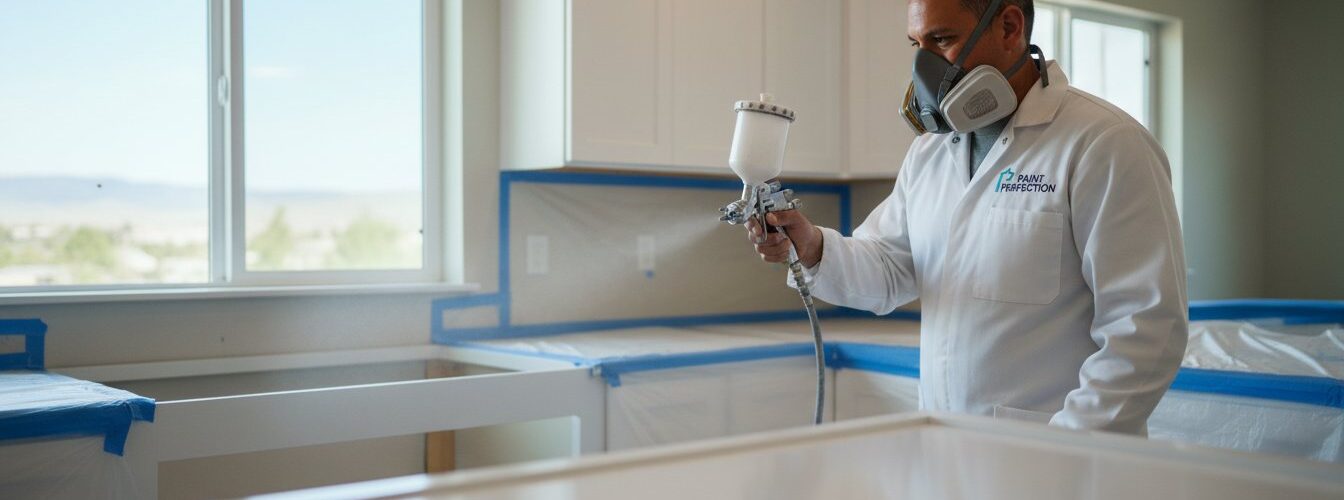
To better understand how this technology is applied to modern cabinetry, watch this demonstration of a professional-grade tool in action:
Eliminating Brush Marks and Texture
Professional spraying leverages the science of “leveling.” When droplets hit the surface, they flow together before drying to create a glass-like finish. Brushes, even those costing over $30, leave micro-grooves. These tiny ridges are more than just an aesthetic issue; they collect grease and cooking oils over time. By 2026, the standard for luxury renovations requires a 100% smooth surface that reflects light evenly across flat panels and intricate moldings. Choosing professional cabinet painters that use sprayers eliminates these imperfections entirely.
Meeting KCMA Standards for Longevity
The Kitchen Cabinet Manufacturers Association (KCMA) has set the benchmark for cabinet quality since 1955. Professional-grade spray coatings are engineered to pass rigorous tests, such as resisting exposure to vinegar, lemon juice, and 70% isopropyl alcohol for 24 hours. Retail paints rarely meet these metrics. Professionals also use specialized primers that act as a chemical barrier. This prevents “tannin bleed,” where natural wood oils seep through the paint, a common failure in 85% of DIY cabinet projects that lack professional spray equipment.
HVLP vs. Airless: The Tools Professional Cabinet Painters Use
Not all sprayers deliver the same results. Professional cabinet painters that use sprayers understand that a standard DIY airless unit often lacks the finesse required for a high-end kitchen. A factory finish relies heavily on air quality and pressure consistency. Pros utilize high-capacity compressors equipped with dedicated moisture traps and oil separators. These components prevent water droplets from contaminating the paint film. Without these filters, water can cause “fisheyes” or bubbling in approximately 15% of improperly managed spray applications. Regular equipment maintenance is just as vital. A dirty needle or a worn nozzle causes “spitting,” which creates an uneven texture that requires labor-intensive sanding and re-spraying to fix.
HVLP (High Volume Low Pressure) for Fine Finishing
High Volume Low Pressure (HVLP) systems are the industry standard for doors and drawer fronts. These sprayers use a high volume of air at a low pressure, usually under 10 PSI at the air cap, to atomize paint into a fine, soft mist. This method achieves a 90% transfer efficiency. This means 90% of the paint lands directly on the wood rather than floating away as wasted overspray. This level of control allows specialists to apply high-solids coatings, such as 2K polyurethanes, which provide 40% more scratch resistance than standard latex paints. Because these systems produce less atomized clouding, they are easier to manage within residential environments while adhering to OSHA safety standards for spray painting regarding ventilation and the handling of combustible materials.
Airless Spraying for Large Surfaces
Airless sprayers work by pumping paint at extreme pressure, often reaching 3,000 PSI, through a small tungsten carbide orifice. This system excels at covering large runs of cabinet boxes or built-in shelving where speed is the priority. While airless units have a lower transfer efficiency, typically between 50% and 65%, they handle thicker materials without the need for heavy thinning. This preserves the chemical integrity of the coating. Most professional cabinet painters that use sprayers adopt a hybrid approach. They use airless systems for the fixed frames to maximize efficiency, then switch to HVLP turbines for the removable components to ensure a glass-like texture. If you want to see how this technical precision transforms a kitchen, you can explore professional finishing options for your home. This combination of tools ensures every square inch of the cabinetry meets a uniform, durable standard.
The Professional Spraying Process: From Masking to Reinstallation
A factory-grade finish isn’t achieved by accident. It’s the result of a rigorous five-step technical workflow that prioritizes surface chemistry over speed. Professional cabinet painters that use sprayers begin with complete deconstruction. This means we remove 100% of doors, drawer fronts, and hardware for processing in a controlled environment. Leaving hardware attached or painting doors while they hang leads to premature coating failure and unsightly bridges between the wood and the metal.
- Step 1: Deconstruction. We label every hinge and screw to ensure a perfect fit during reassembly. Doors and drawers move to a dedicated facility.
- Step 2: Clean-room setup. We mask every square inch of your kitchen, including floors, ceilings, and the interior of cabinet boxes.
- Step 3: Surface Prep. We use mechanical sanding with 220-grit abrasives and industrial chemical deglossers. This creates a surface profile that allows for a permanent mechanical bond.
- Step 4: Spray Application. Our team applies a multi-stage system featuring high-solids primers and industrial-grade topcoats that outperform standard retail paints.
- Step 5: Quality Control. We verify the finish has cured to a hardness level that resists 100% of common household chemicals before transport.
In-Home Protection and Containment
We transform your kitchen into a temporary spray booth using a zip-wall containment system. This setup uses spring-loaded poles to create a dust-tight seal with 4-mil plastic sheeting. To manage fumes and particulates, we deploy high-velocity exhaust fans rated at 2,000 CFM. These fans, paired with HEPA filtration units that capture 99.97% of airborne particles, ensure that dust and odors don’t migrate to the rest of your home. We protect countertops and appliances with professional-grade masking paper and specialized tapes that leave zero residue on your surfaces.
Off-Site Door Refinishing
The highest quality results happen in a controlled shop environment where dust is non-existent. Professional cabinet painters that use sprayers prefer horizontal spraying for doors. This orientation allows the coating to “level out” effectively; it eliminates the risk of sags or runs that often occur in vertical applications. Our shop utilizes specialized drying racks and climate control to ensure consistent curing regardless of the weather outside. Once the finish reaches 90% of its peak hardness, we wrap each door in protective foam. We transport them back to your Denver home in custom-fitted crates to prevent any transit damage before the final reinstallation and alignment.
Evaluating a Spray Specialist: Questions to Ask Before Hiring
Finding professional cabinet painters that use sprayers requires more than a quick glance at a five-star rating. You need a specialist who understands the specific chemistry of 2026 wood coatings. Start by asking for a specific project count. A crew that has successfully sprayed 450 kitchens has refined their technique far beyond a general contractor who handles only 5 or 10 sets a year. Experience in “painting” isn’t the same as experience in “spraying.”
Vetting a contractor involves looking at their technical process and their long-term accountability. Use these specific questions to separate the experts from the amateurs:
- How many kitchens have you specifically sprayed in the last 12 months?
- Do you use an HVLP or an Airless sprayer for the final topcoat?
- Can you provide the technical data sheet (TDS) for the coating you plan to use?
- Does your warranty cover adhesion failure and peeling for at least 3 years?
Demand a written warranty that specifically mentions adhesion. A standard 12 month paint warranty is insufficient for cabinetry; it rarely covers the bond between the substrate and the primer. For a full vetting checklist, see our Hiring a Professional Cabinet Painter: The Ultimate 2026 Guide.
The ‘House Paint’ Red Flag
Avoid any contractor who suggests using standard trim paint or retail-grade latex. While these products look fine on baseboards, they lack the chemical resistance needed to survive kitchen oils and cleaners. Most professional cabinet painters that use sprayers now utilize 2K industrial urethanes or high-performance water-borne coatings. These materials reach a 4H pencil hardness rating within 7 days. Ask for a sample door to perform a “scratch test” with a coin. If the finish gouges or curls easily, it isn’t an industrial-grade product.
Reviewing the Portfolio for Detail
Examine high-resolution photos for “orange peel” texture. This dimpled surface occurs when the paint doesn’t flow out correctly due to poor sprayer pressure or incorrect thinning. Check the “bridge” where the cabinet panel meets the frame; it should be clean and sharp, not filled with a thick bead of paint. To compare these details, browse our Denver Kitchen Cabinet Painting Gallery for examples of a flawless sprayed finish.
Ready to upgrade your kitchen with a factory-grade finish? Contact our Denver cabinet specialists today for a professional consultation.
Why Cabinet Painting Denver is Your Local Spraying Expert
Success in cabinetry finishing depends heavily on understanding the local environment. Denver’s 5,280-foot elevation and typical 15% to 20% humidity levels create a challenging landscape for standard painting methods. As professional cabinet painters that use sprayers, we’ve mastered the art of adjusting our equipment for this high-altitude climate. We don’t just apply paint; we calibrate our spray patterns and pressure settings to ensure the coating atomizes perfectly in thin air. This technical precision is what separates a DIY attempt from a true factory finish.
Our team utilizes specialized HVLP (High Volume Low Pressure) systems specifically engineered for fine-finish woodwork. Unlike high-pressure airless sprayers that can create excessive overspray, our HVLP tools allow for surgical accuracy. We’re a Denver-born company with deep roots in the Colorado community. We understand the specific needs of local homeowners, from the way sunlight hits a kitchen in the Rockies to the wood species most common in Front Range construction. Learn more about our Cabinet Painting Denver services and our commitment to quality.
The Denver Advantage: Fast Curing Times
The dry Colorado air is a secret weapon for achieving a durable finish. Because the humidity is low, the water or solvent in our coatings evaporates at an ideal rate. This allows the paint to cure into a rock-hard surface much faster than it would in a humid coastal city. A faster cure time means your kitchen is back in service sooner and the finish is less likely to pick up dust or debris while drying.
However, this dry air presents a risk called “flash drying.” This occurs when the paint surface dries too quickly, preventing it from leveling out smoothly. Inexperienced crews often leave behind a textured, “orange peel” look because they don’t know how to compensate for Denver’s lack of moisture. We use professional-grade retarders and specific thinning ratios to ensure the paint stays “open” just long enough to lay flat. We provide this expert service across the entire Denver metro area, ensuring on-time delivery for every project.
Get Your Free Professional Quote Today
We take the guesswork out of home improvement. Our pricing model is transparent and based on your specific cabinet count, drawer quantity, and layout complexity. When you hire professional cabinet painters that use sprayers, you’re investing in a comprehensive service package. This includes:
- Full room containment with industrial-grade plastic sheeting.
- Meticulous surface degreasing and mechanical sanding.
- Multi-coat HVLP application for a seamless, grain-free look.
- Final inspection to ensure every edge meets our 2026 quality standards.
Don’t settle for brush marks or roller textures that date your kitchen. Our spray-only premium service is designed for homeowners who demand perfection. If you’re ready to see the difference that local expertise makes, Get Your Free Cabinet Painting Quote in Denver and let’s start your transformation today.
Secure a Flawless Kitchen Transformation Today
Achieving a high-end kitchen update depends on the specific technology and precision used during the coating process. Choosing professional cabinet painters that use sprayers ensures your home benefits from a smooth, durable surface that traditional brushes simply can’t replicate in 2026. We’ve refined our application method using specialized HVLP spraying equipment to deliver a streak-free look that stands up to heavy daily wear. Our team has already transformed over 500+ Denver kitchens by applying industrial-grade KCMA-rated coatings that are specifically engineered for maximum longevity. These high-performance finishes provide the essential chemical resistance and surface hardness required for modern, high-traffic households. By prioritizing meticulous masking and professional-grade tools, you’re investing in a result that looks brand new for years to come. You don’t have to settle for a dated look when a factory-quality aesthetic is within reach. Your dream home is ready for its upgrade.
Get Your Free Professional Spraying Quote Today
We’re excited to help you create a beautiful, refreshed space that your family will love for a lifetime.
Frequently Asked Questions
Is it better to spray or brush kitchen cabinets?
Spraying is superior because it eliminates brush marks and creates a smooth, factory-level surface. While brushing is cheaper, it leaves visible textures that trap grease and dirt over time. Professional cabinet painters that use sprayers achieve a 100% uniform coat that mimics original manufacturer standards. This method ensures every corner and crevice receives equal coverage without the drips common in manual application.
Do professional cabinet painters spray inside the house?
Yes, experts spray the fixed cabinet frames inside your home after creating a sealed containment zone. They typically transport doors and drawer fronts to a controlled spray booth to ensure a dust-free environment. This hybrid approach ensures the built-in portions match the shop-finished components perfectly. Most projects require 3 to 5 days of onsite work to complete the masking and spraying phases.
How do you prevent overspray when painting cabinets?
Preventing overspray requires a rigorous containment process using 6-mil plastic sheeting and specialized masking tape. Technicians build a temporary spray booth inside your kitchen using ZipWall poles or similar tension systems to isolate the work area. They also use high-volume low-pressure (HVLP) systems, which reduce bounce-back by 30% compared to traditional airless sprayers. This keeps your floors, ceilings, and appliances completely protected.
What kind of paint do professional cabinet sprayers use?
Most specialists use industrial wood coatings like Renner or Milesi 2K waterborne urethanes rather than standard wall paint. These products offer superior chemical resistance and hardness compared to off-the-shelf latex options. According to KCMA testing standards, these finishes withstand 24 hours of exposure to substances like lemon juice, vinegar, and coffee without staining. They typically dry to the touch in 30 minutes.
How long does the sprayed finish on cabinets last?
A high-quality sprayed finish typically lasts 10 to 15 years before showing signs of significant wear. This durability depends on the use of catalyzed coatings which create a molecular bond with the wood surface. Standard house paint often fails within 3 years on high-touch surfaces. By following KCMA finish guidelines, professional cabinet painters that use sprayers provide a surface that resists chipping and moisture ingress for over a decade.
Can you spray cabinets without taking the doors off?
You cannot spray cabinets effectively without removing the doors, hinges, and handles first. Leaving doors attached prevents the sprayer from reaching the edges and the areas behind the hinges, leading to uneven coverage and future peeling. Professionals label every piece of hardware and use drying racks to ensure each door receives a 100% consistent coat on both sides. This process prevents paint from sealing the hinges shut.
How much more does it cost to have cabinets professionally sprayed?
Professional spraying typically costs 30% more than traditional hand-painting due to the technical skill and preparation time required. The setup process involves 10 to 15 hours of masking alone to protect the rest of your home. While the labor investment is higher, the result increases home value more effectively than a basic brush finish. Industry reports suggest the factory-grade aesthetic justifies the initial expense for long-term durability.
Will my kitchen smell like paint if you spray the cabinets?
Your kitchen won’t have a heavy chemical odor if the painters use modern waterborne coatings with VOC levels under 50 grams per liter. These products have a mild scent that dissipates within 24 hours when paired with portable exhaust fans and HEPA air scrubbers. Older solvent-based lacquers produced strong fumes, but 90% of modern professionals have transitioned to eco-friendly, low-odor alternatives that are safer for indoor use.