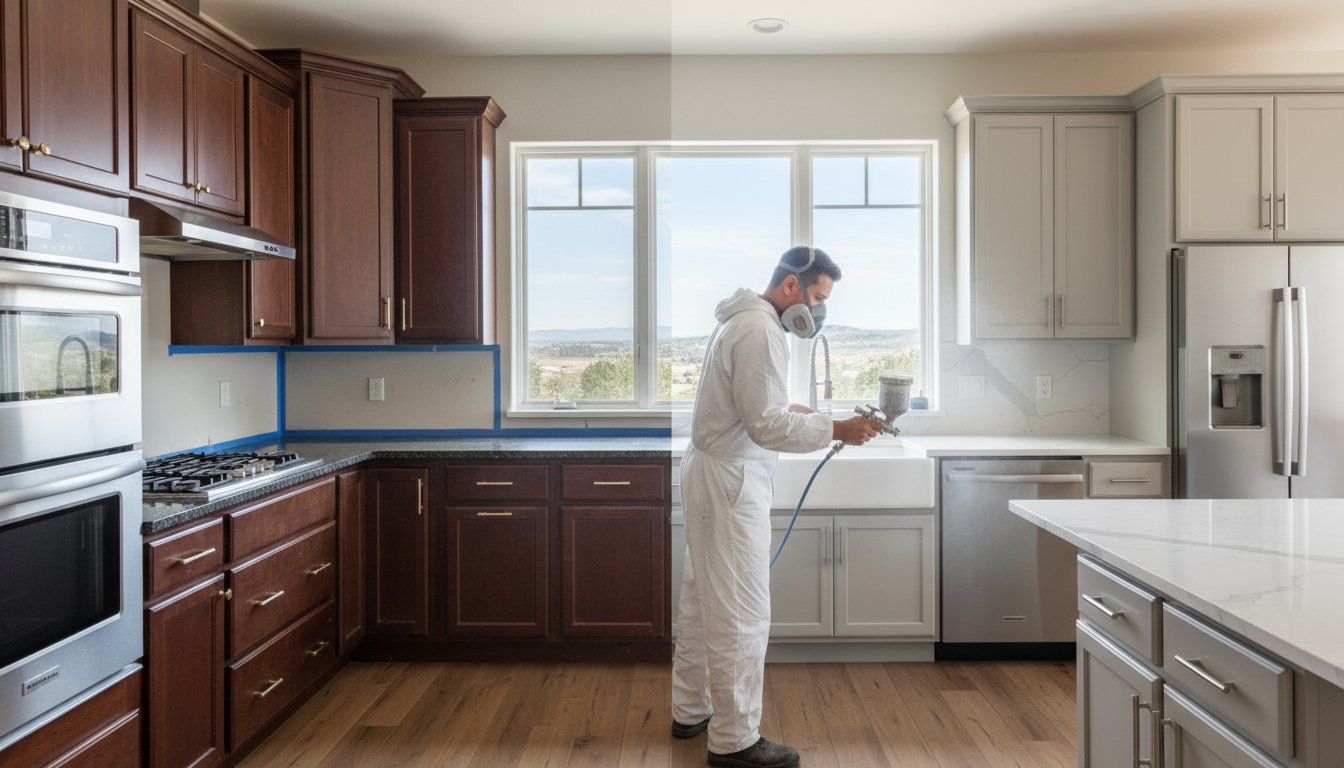
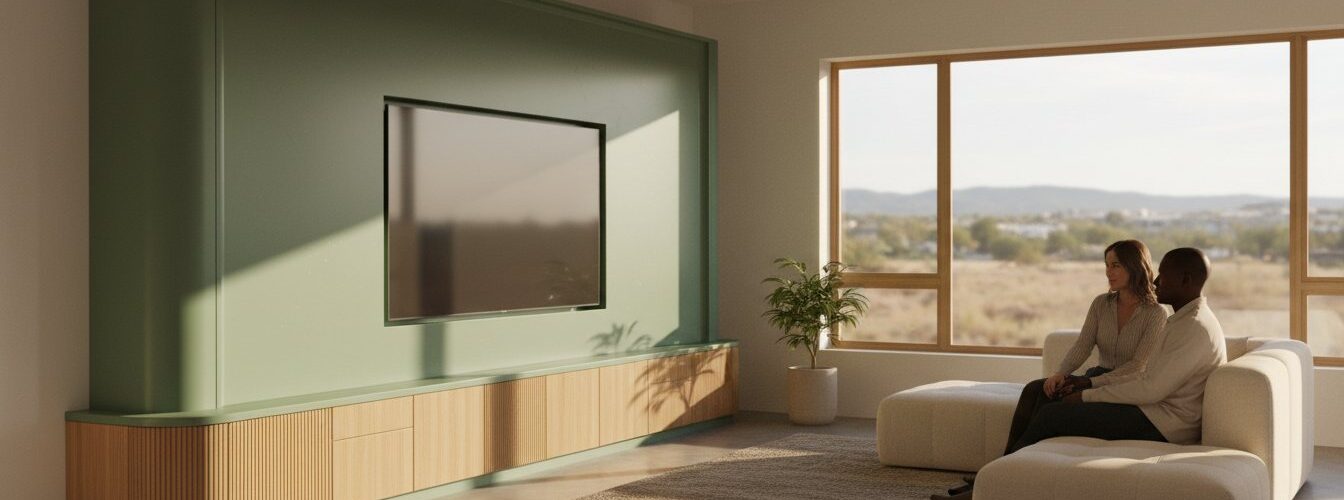
That massive oak unit dominating your living room isn’t just a relic of the early 2000s; it’s a structural goldmine waiting for a 2026 upgrade. You likely feel frustrated by outdated wood tones clashing with your modern decor, but refinishing built-in entertainment center units is the secret to a high-end look without the custom price tag. Most homeowners believe the only way to achieve a sleek, integrated media wall is through total demolition. However, you can preserve the structural integrity of your home while fixing visible wear and messy cable layouts for a much lower investment.
You’ll gain a factory-smooth finish and a modernized living space for a fraction of the cost of new cabinetry. As of January 2026, professional refinishing costs typically range between $7.78 and $15.37 per square foot. This guide covers how to integrate smart technology, apply trendy fluted finishes, and use professional techniques to transform your outdated built-in into a modern focal point that significantly increases your home’s value. From hidden wiring solutions to the rise of Japandi-style warm wood tones, you’re about to learn how to turn an eyesore into an architectural highlight.
Key Takeaways
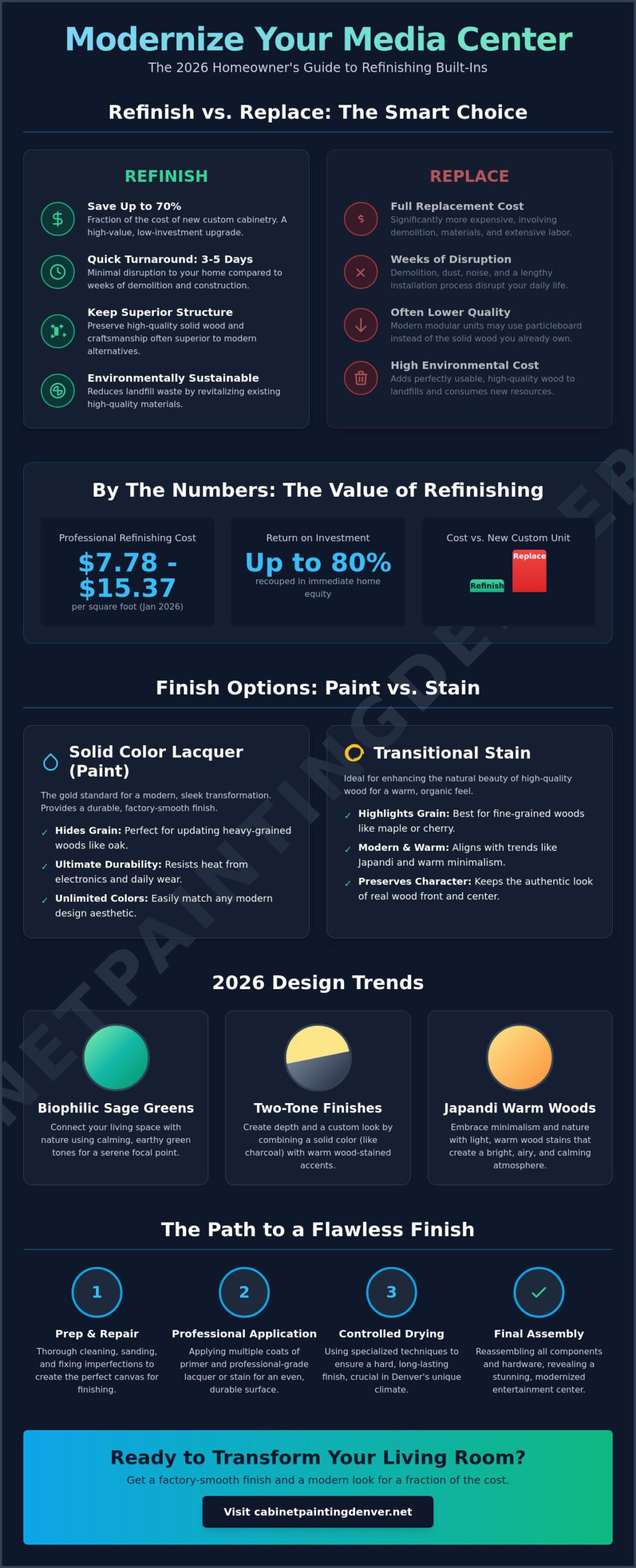
- Save up to 70% on your living room upgrade by choosing restoration over replacement to preserve high-quality wood.
- Choose between grain-hiding lacquers or modern transitional stains to match your home’s unique aesthetic goals.
- Follow a proven professional process for refinishing built-in entertainment center systems to ensure a durable, factory-smooth result.
- Adopt 2026 design trends like biophilic sage greens and two-tone finishes to replace dated wood tones.
- Understand how Denver’s specific climate requires specialized moisture-controlled drying techniques for a long-lasting finish.
Transform Your Living Space: The Benefits of Refinishing vs. Replacing
Homeowners often look at a 20-year-old oak unit and see a problem to be demolished. That’s usually a costly mistake. Most custom built-ins from previous decades feature solid wood and superior craftsmanship that modern modular furniture simply doesn’t offer. Choosing a refinishing built-in entertainment center project allows you to keep that rock-solid structural backbone while updating the aesthetics for 2026. You’re essentially getting a custom media wall for a fraction of the price of new construction.
It’s also a significant win for environmental sustainability. Keeping high-quality wood out of landfills reduces your carbon footprint and prevents the waste of perfectly good materials. Since you aren’t waiting for new custom millwork to be fabricated, shipped, and installed, the disruption to your daily life is minimal. Most professional crews complete the transformation in just three to five days. You avoid the dust, noise, and stress of a weeks-long construction project.
To better understand the scale and potential of these projects, watch this helpful video showing the transformation of a large media unit:
The decision to refinish rather than replace offers several measurable advantages:
- Cost Efficiency: You save between 60% and 70% compared to the cost of purchasing and installing new custom cabinetry.
- Structural Integrity: Older units often use high-grade plywood or solid hardwoods that resist warping better than modern particleboard alternatives.
- Customization: You can modify existing units by removing dated decorative trim or adding modern hardware to change the silhouette entirely.
Refinishing vs. Refacing for Media Centers
Refacing involves replacing doors and drawer fronts, but it’s often overkill for media centers. These units usually have complex shelving and integrated moldings that are difficult to match with new doors. Professional cabinet refinishing is the better path here because it treats the entire structure as a single canvas. In the Denver market, refinishing typically costs significantly less than a full custom replacement. By using advanced Wood finishing techniques, you achieve a factory-smooth look that makes the entire unit appear brand new without the need for new materials.
The ROI of a Modernized Entertainment Center
Real estate trends in 2026 show a strong preference for “updated traditional” features. Buyers want the character of built-ins but without the heavy, dark stains of the past. A modernized focal point can increase a home’s appraisal value by thousands of dollars. In fact, professional refinishing can recoup up to 80% of its cost in immediate home equity. It turns a dated eyesore into a premium architectural feature that anchors the room. It’s a strategic move for any homeowner considering a refinishing built-in entertainment center project to modernize their home while protecting their investment.
Paint vs. Stain: Choosing the Right Finish for Your Built-In
Choosing the right finish is the most critical decision in your refinishing built-in entertainment center project. It determines whether your piece blends into the architecture or stands out as a bold statement. While maple or cherry often take stain beautifully, species like red oak have heavy grain patterns that can look dated. Solid color lacquers are the gold standard for homeowners who want to modernize these older units. Unlike standard wall paint, professional-grade lacquers provide a hard, non-porous surface that resists the heat generated by modern gaming consoles and media players.
Shelf surfaces in an entertainment center endure significant wear. Constant sliding of equipment, remotes, and decor requires a coating with high chemical and scratch resistance. Choosing the right sheen also impacts the room’s feel. Matte finishes are popular for a contemporary, “no-shine” look, while Satin offers a subtle glow that’s easier to clean. Semi-gloss provides the highest durability but can create harsh reflections from TV screens or integrated LED lighting. Most modern media walls in 2026 favor the Satin finish for its balance of elegance and resilience.
When to Choose Solid Paint Finishes
If your built-in was installed in the 1990s, it’s likely honey oak with a prominent, “busy” grain. Solid paint finishes are the best way to hide these patterns and create a seamless, minimalist aesthetic. When selecting a product, look for high-performance options with high solid counts. You can check out this guide on the best paint for cabinets to understand how different chemical compositions affect long-term durability. These coatings ensure your shelves won’t stick to your electronics over time, which is a common failure in DIY projects.
Modern Staining Techniques for 2026
Stain isn’t just for traditional homes anymore. In 2026, we’re seeing a massive shift toward transitional stains like deep charcoal, warm walnut, and the “cerused” look. Cerusing involves using a contrasting white or light gray pigment to highlight the wood grain while darkening the rest of the surface. This technique creates a high-end, textured appearance that feels organic yet modern. Because these processes involve volatile organic compounds, our teams strictly adhere to professional refinishing safety standards to ensure your home’s air quality remains safe throughout the application.
Testing is non-negotiable for a successful result. Always apply stain samples to the underside of a shelf or a hidden corner before committing to the entire unit. If you’re unsure which direction fits your home best, the experts at Cabinet Painting Denver can help you navigate these design choices with a professional consultation to ensure your media wall looks flawless.
The Professional Refinishing Process: From Prep to Factory-Smooth Finish
Many online tutorials suggest “no-sand” shortcuts, but those methods inevitably fail on a large-scale refinishing built-in entertainment center project. Professional restoration requires a technical approach that respects the wood’s chemistry. It starts with deep cleaning. You must remove decades of furniture polish, skin oils, and household dust that prevent new coatings from sticking. We use industrial-grade degreasers because even a tiny patch of residue can cause a “fisheye” defect in the final finish. This is a critical step that quick-service painters often skip to save time.
Mechanical sanding comes next. We aren’t just scuffing the surface; we’re creating a specific microscopic profile for the primer to grip. For open-grain woods like oak, we offer grain filling. This extra step fills the deep “valleys” in the wood, allowing for a modern, glass-smooth appearance that aligns with 2026 design trends focusing on sleek, refined surfaces. Without this step, your “modern” update will still show the dated texture of the original wood.
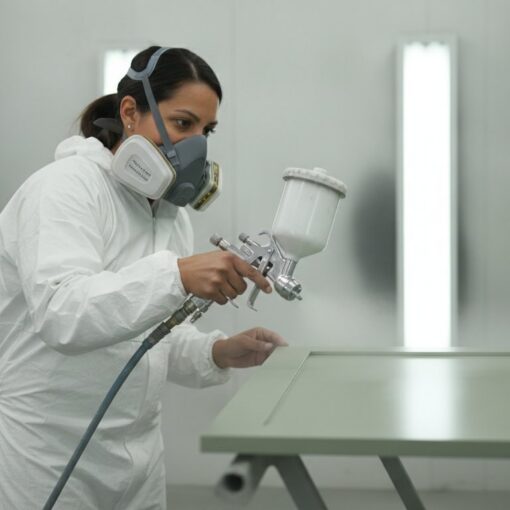
To achieve a factory-smooth result, we use High Volume Low Pressure (HVLP) spray systems. Unlike brushes or rollers, HVLP creates a fine mist that settles into a perfectly level film. This is mandatory for built-ins with deep cubbies and intricate moldings where brush marks would be glaringly obvious. The result is a finish so smooth it looks like it was manufactured in a factory rather than painted in your home.
The Importance of Specialized Primers
You can’t use standard wall primer for high-use cabinetry. We utilize oil-based or shellac-based primers because they are the industry standard for built-ins. These products seal in tannins so that woods like cherry or mahogany won’t “bleed” through your new paint. Without these specialized blockers, you might see yellow or pink stains appearing within weeks of completion. These primers also act as a bridge for non-porous backing boards, ensuring the entire refinishing built-in entertainment center remains durable for years.
Handling Integrated Electronics and Hardware
Modern media walls are complex. We meticulously mask integrated lighting and soundbar mounts to prevent overspray. If you’re updating your hardware, we fill the old holes with high-performance wood filler and redrill for modern pulls. We also ensure that the new finish is cured to withstand the heat generated by DVRs and gaming consoles, which can reach internal temperatures of 120 degrees Fahrenheit. This technical attention to detail is what separates a professional restoration from a quick weekend paint job.
2026 Design Trends for Entertainment Centers and Built-In Bookshelves
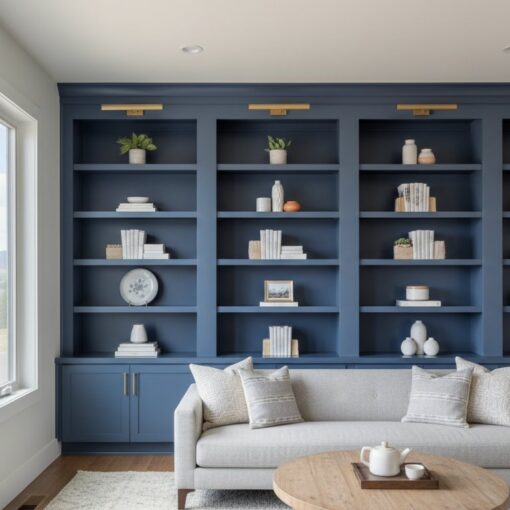
In 2026, the “all-white” aesthetic is officially taking a backseat to more expressive, moody palettes. A refinishing built-in entertainment center project is your chance to embrace these shifts and turn a dated unit into a modern masterpiece. Two-tone designs are leading the way. By choosing a darker charcoal or deep navy for the base cabinets and a lighter cream or soft wood tone for the upper shelves, you create visual weight that grounds the room. This two-tone sophistication makes the unit feel like architectural furniture rather than just a storage wall.
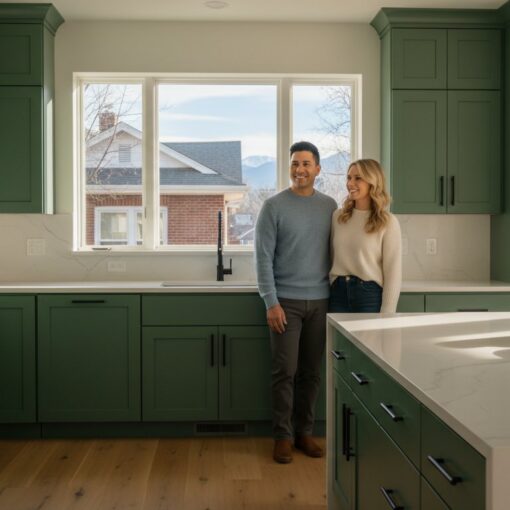
We’re also seeing a rise in biophilic colors. Sage greens and earthy terracottas are replacing sterile neutrals. These tones bring a sense of the outdoors inside, which is a hallmark of current interior design. For those who want a more dramatic look, the “Dark Academia” aesthetic is perfect. Deep forest greens and moody navy blues create a cozy, library-like atmosphere. When combined with integrated LED tape lighting, these dark colors reveal incredible depth and highlight the factory-smooth finish discussed earlier. These lights are often synced with smart home systems to adjust the ambiance based on what you’re watching.
Modernizing the Backing Board
Don’t ignore the back of your shelves. Contrast painting is a powerful tool for adding immediate dimension to a room. Using a different color or even a textured grasscloth wallpaper on the backing board provides a high-end, custom look. If you’re working with a massive unit in a small room, use lighter shades like “Greige” or “Soft Linen” for the backing to make the piece feel less imposing. This application of color theory can make a heavy 1990s unit feel lighter and more integrated into a modern living space.
Minimalist Styling Post-Refinish
Once the project is finished, the styling must match the new aesthetic. The “Less is More” approach is vital for 2026. Group items by texture rather than just color to create visual interest without clutter. You’ll find that three well-placed ceramic vases look better than a shelf packed with small trinkets. Finally, ensure your wire management is hidden. A successful refinishing built-in entertainment center project is often ruined by visible cables. If you’re ready to update your home’s focal point with these modern trends, the team at Cabinet Painting Denver can help you select the perfect 2026 palette for your space.
Professional Built-In Refinishing in Denver: What to Expect
Refinishing a large unit in the Mile High City presents unique challenges that national franchises often overlook. Denver’s semi-arid climate, where humidity often drops below 15%, significantly impacts how coatings cure. If a finish dries too fast, it can’t level out, leaving you with a textured “orange peel” look. We use specific moisture-controlled drying processes and retardants to ensure the lacquer flows perfectly. This technical adjustment is what makes refinishing built-in entertainment center units successful in our dry mountain air.
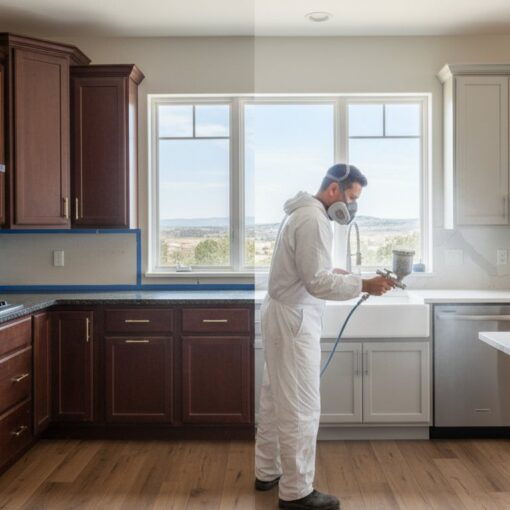
Protection is our top priority. We don’t just throw down a few drop cloths; we create a localized spray booth within your living room. Using zip-wall systems and heavy-duty masking, we seal off the work area to ensure zero overspray reaches your furniture or flooring. You won’t have to worry about fine dust settling into your upholstery. Our “Factory-Smooth” guarantee means you get a surface that feels like glass, completely free of the brush marks and roller textures common in DIY attempts.
Your timeline is predictable and efficient. Most projects follow a strict Monday-to-Friday schedule. On Monday, we focus on deep cleaning and degreasing. Tuesday is dedicated to mechanical sanding and our specialized priming process. Wednesday and Thursday are the “clean” days where we apply the final sprayed topcoats. By Friday afternoon, we handle the reassembly and the big reveal. You’ll have your living room back and ready for a movie night just in time for the weekend.
Why Choose Cabinet Painting Denver?
We’ve spent more than 10 years refining our craft specifically for the Colorado home. While many painters focus exclusively on walls or kitchens, we have a specialized focus on bookshelves and media centers. These pieces require a different level of detail due to their intricate moldings and deep shelving. You can view our local project galleries and see the quality of our work by exploring our guide to cabinet painting denver. We understand the architectural styles found in neighborhoods from Wash Park to Highlands Ranch.
Get Your Free Built-In Transformation Quote
Starting your project is simple. You can provide photos of your current unit to receive an accurate virtual estimate within 24 to 48 hours. During our consultation, we’ll help you choose colors based on your home’s specific lighting, which often changes dramatically at Denver’s high altitude. Don’t let an outdated unit drag down your home’s aesthetic any longer. Transform your entertainment center today with a free quote.
Ready to Modernize Your Denver Home?
Your living room deserves a focal point that reflects current design standards rather than the dark stains of decades past. By choosing a refinishing built-in entertainment center project, you save up to 70% compared to custom replacement while gaining a durable, factory-smooth surface. You’ve seen how professional HVLP spray techniques and 2026’s biophilic color palettes can turn a bulky oak unit into a sophisticated media wall that anchors your entire home. This process preserves the high-quality wood you already own while giving it a second life.
As a locally owned and operated business in Colorado, we understand how to protect your home and deliver results that stand up to our unique climate. Our team has earned 5-star Denver reviews by focusing on the technical prep work that DIY hacks often ignore. It’s time to stop clashing with your decor and start enjoying a space that feels brand new. Get Your Free Entertainment Center Refinishing Quote today and take the first step toward your home’s transformation. You’ll love the way your modernized built-in looks and the immediate value it adds to your property.
Frequently Asked Questions
How long does it take to refinish a built-in entertainment center?
A professional refinishing built-in entertainment center project typically takes between 3 and 5 business days from start to finish. We spend the first two days on intensive cleaning and sanding to ensure a perfect bond for the new coating. The remaining days are dedicated to the technical spraying process and final reassembly. This structured schedule allows for proper curing times so your shelves are ready for use by the weekend.
Will the paint on my shelves peel if I move heavy books or electronics?
Your shelves won’t peel or stick when you use industrial-grade lacquers rather than standard house paint. These high-performance coatings are specifically engineered for the high-friction environment of a media center. They resist the constant sliding of heavy books and the 120-degree heat generated by modern gaming consoles. Professional application ensures the finish remains hard and durable for at least 10 years without lifting or bubbling.
Do I need to empty the entire unit before the refinishing team arrives?
You need to empty the entire unit of electronics, cables, books, and decorative items before our crew arrives. Having a completely clear unit allows us to perform the deep degreasing and mechanical sanding required for a factory-smooth finish. It also protects your sensitive media equipment from the fine dust generated during the prep phase. We’ll handle the masking of the surrounding walls and floors once the unit is clear.
Can you change the color of a very dark stained built-in to a light color?
We can absolutely change a dark-stained unit into a light color like off-white or soft sage. This transformation is a core part of a refinishing built-in entertainment center service. We use high-opacity bonding primers that act as a total block for dark pigments and wood tannins. This ensures that your new light color stays true and doesn’t develop yellow or brown spots from the old stain bleeding through the surface.
Is there a strong odor during the refinishing process?
There is a temporary chemical odor during the spraying phase, but it’s managed with professional ventilation equipment. We use high-powered exhaust fans and zip-wall containment systems to keep fumes localized within the workspace. While the smell is noticeable during the workday, it typically dissipates within 24 hours after the final coat is applied. Most homeowners choose to stay in a different part of the house while we are actively spraying.
How do you handle built-ins that have integrated lighting or glass doors?
We handle integrated features by removing what can be moved and masking what cannot. Glass doors and shelves are taken down to be cleaned and finished separately for the best results. Integrated LED strips or puck lights are meticulously taped off with precision masking film. This careful preparation ensures that your lighting and glass remain pristine while the surrounding wood gets a total modern makeover without any unsightly overspray.